
Above is a quote from a US marine asking how Iraqis would react to disclosure of the Baghdad Canal murders.
I talked two days ago by alleged British Army abuses in Iraq. Today I want to draw attention back to the crimes of the American military. Under the Freedom of Information Act, CNN has got hold of 23 hours of interrogation tapes that detail the actions and motives of US marines that killed three Iraqis, dumping their bodies in a Baghdad canal. A group of soldiers were present for the executions; three soldiers were sentenced, each for 20 years or more. Sgts. Mayo, Leahy and Hatley are each appealing their convictions.
In analysis of the new information on these tapes, CNN’s Anderson Cooper focuses on the soldiers motives. Frustrating military policy is cited as a contributing factor in the soldiers’ decisions to murder. The soldiers balked at the impossible steps needed to prove a crime and continue detention of Iraqis. Soldiers were convinced that (after inevitable release) prisoners would returns to the streets, return to arms and fire upon the US military once more.
You can read the full analysis from CNN here. It includes a slideshow with photos of the canal, map of the area, photos of the military prison in Germany where the three soldiers are held and portrait shots of the men and (separately) their wives.
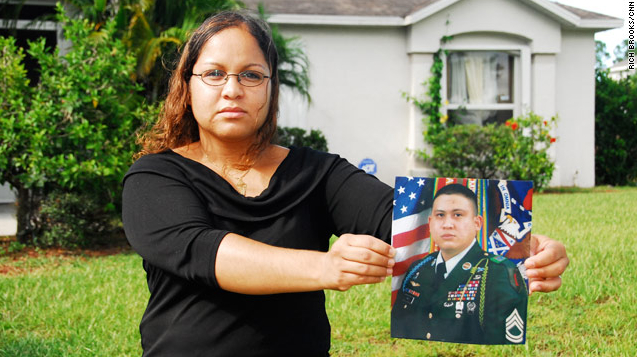

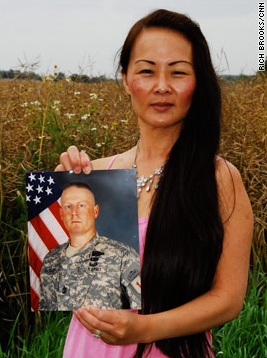
It was the portraits of the wives that intrigued me. Firstly, because they weren’t something I expected to see, and secondly because I they are so similar to images of grieving family members. Not surprisingly, the wives consider their husbands heroes and not killers; they campaign for their release.
I conclude that military families can lose their loved ones in circumstances other than death in the field.
___________________________________________________________
Photos: From top, clockwise © Johanna Mayo, Rich Brooks/CNN; Kim Hatley, Rich Brooks/CNN; Jamie Leahy Derek Davis/CNN

 Prison Photography
2 comments
Comments feed for this article
November 19, 2009 at 10:29 am
Stan Banos
I wish they would have shot those responsible for putting them in their impossible, immoral situation to begin with. The photos of their wives certainly puts a “human” face on the whole affair; how about an essay of Iraqi wives with photos of their lost loved ones…
November 19, 2009 at 11:39 am
petebrook
Stan. The whole ‘chain of command angle’ is glaring to an appreciation of this case and the Bushism, “Bad apples” is an oxymoron … but if you’d allow me to continue the metaphor – It’s bad trees (military) in a bad orchard (theatre of war) and everything is diseased because the military brought its own vicious apple-fungus to bear.
The idea about Iraqi wife portraits is a good one, but it might suffer from the prevailing politic of the viewer. Portraits can be easily politicised and abused. That is why I like work like Christopher Sims or Chanarin and Bloomberg (Chicago series) who play with and interrupt our existing expectations of war imagery.