

Larry Sultan is gone. When someone is gone I try to identify a piece of wisdom that should not go with them. (Go straight to the bottom of this post for Sultan’s wisdom without my preface.)
Six years ago, my partner and I stood in front of one of his large Valley prints at SAM’s Baja to Vancouver exhibition. During the early months of our relationship, we’d picked apart topics of passive violence, misogyny and late capitalism as a matter of course. Sultan’s photograph spurred debate on, again, and in novel directions.
Sultan’s photographic series are all deliberate, different and exemplary. He identified something that needed to be done (differently) and worked his way to a solution. This was his genius.
Evidence shifted thinking not only the fine art world and the academy but also in popular culture. It preempted a widening reverence for the tangible image – a trend that dominates our post-film nostalgia for found and vernacular photography. Joerg’s recent musings about curator and editor can predate self-publishing online technologies and hark back to Sultan and Mandel ferreting about government archives.
The Valley is iconic. Although, it is interesting to hear Sultan describe a project that I thought stripped (pun intended) the porn industry to its boring facts. Not so:
“The sex industry can be such a tired, worn out subject but when it’s imported into kitchens and dining rooms of a middle class suburban home something new opens up. At least for me it did.”
Pictures from Home goes alongside Toledano’s Days with My Father for the privilege of emotional inclusion it gives the audience.
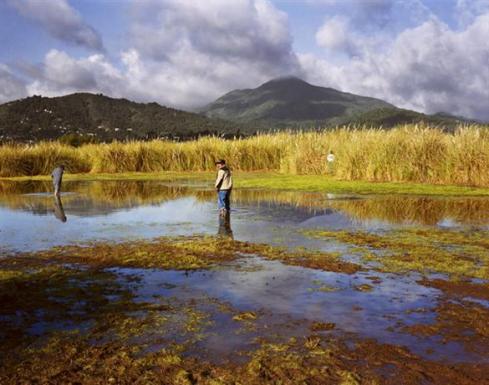
And, finally, Homeland is a beautiful reconciliation of Sultan’s new Bay Area living:
“Light’s too hard where I live, it’s hard to work in it. The character of light means a lot to me. It’s how I begin to photograph, it’s usually with the light. So it’s a bit problematic. L.A. light, that kind of foggy, smoggy, soft light—I miss that. It’s the light of my childhood. There are certain sounds, feelings of the air, and all of that which you can’t photograph but you can find the equivalent of, in light. But who knows, maybe I can find a new version of that in Northern California.”
The marshes of Corte Madera and fog of Marin County provided Sultan his respite from direct San Francisco sunshine.
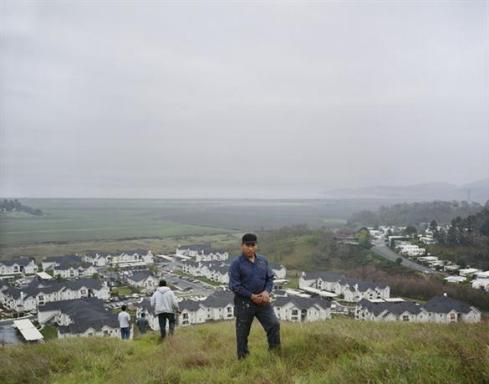
Sultan died at 63. Relatively young. Yet, the inquisitive spirit of his work means he got more than enough done before his early departure. A oeuvre by which one is humbled.
Sultan’s interview with Ben Sloat featured on American Suburb X yesterday originally appeared on Big, Red and Shiny in April, 2008.
The stand-out quote is simultaneously a lament AND a call for rigorous photographic practice:
Which accumulated representations are you battling with? What do you need to stop doing because its been done before?

 Prison Photography
Leave a comment
Comments feed for this article