
You are currently browsing the category archive for the ‘Uncategorized’ category.

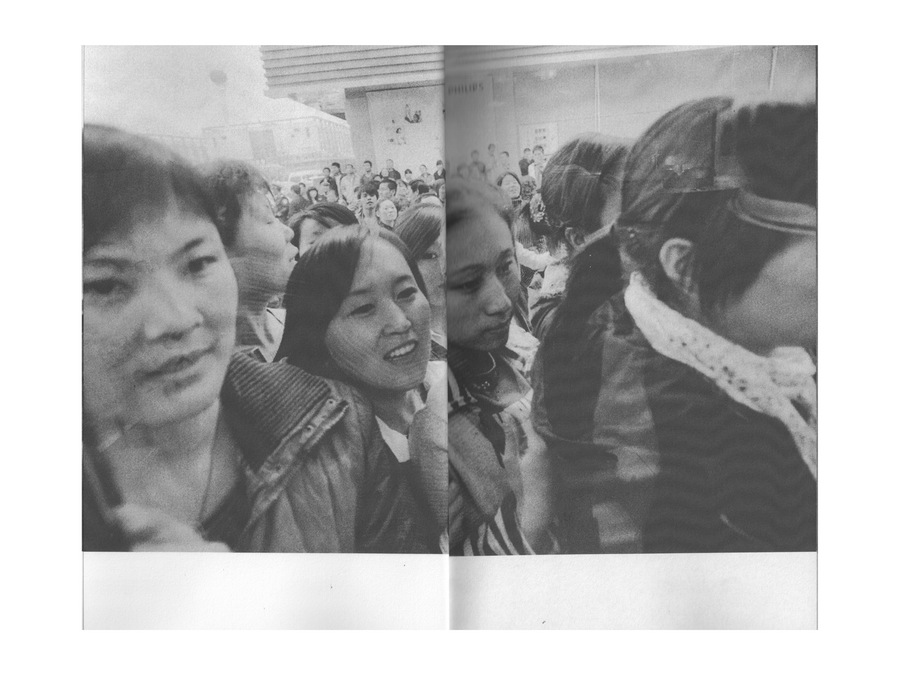



“I made these pictures while employed as an English tutor to one of China’s most celebrated actresses, Fan Bingbing. The job took me all over China, to Macau and Hong Kong and Bangkok, travelling with the starlet and her entourage of assistants and sycophants. We stayed in luxury hotels, dined with media moguls and raced with police escort to single-song performances at soccer stadiums (Ms. Fan is also a noted pop singer). The opulence and spectacle of fame were shocking, but without a frame of reference her renown meant little to me. I came to recognize celebrity as the sum of its parts—an elaborate reality masking as humble performance.” — Rian Dundon
–
FAN, a book by Rian Dundon
Essays by Jonathan Landreth and Erik Be
Design by Modes Works
5.5″ x 8.5″ (13.97 x 21.59 cm)
Black & White Bleed on White paper
208 pages
ISBN-13: 978-9187829260 / 9187829266
–
It’s always nice to be able to applaud politicians who make good decisions and I think it is important to pause and acknowledge when they do so.
From Californians United for a Responsible Budget
PRESS RELEASE
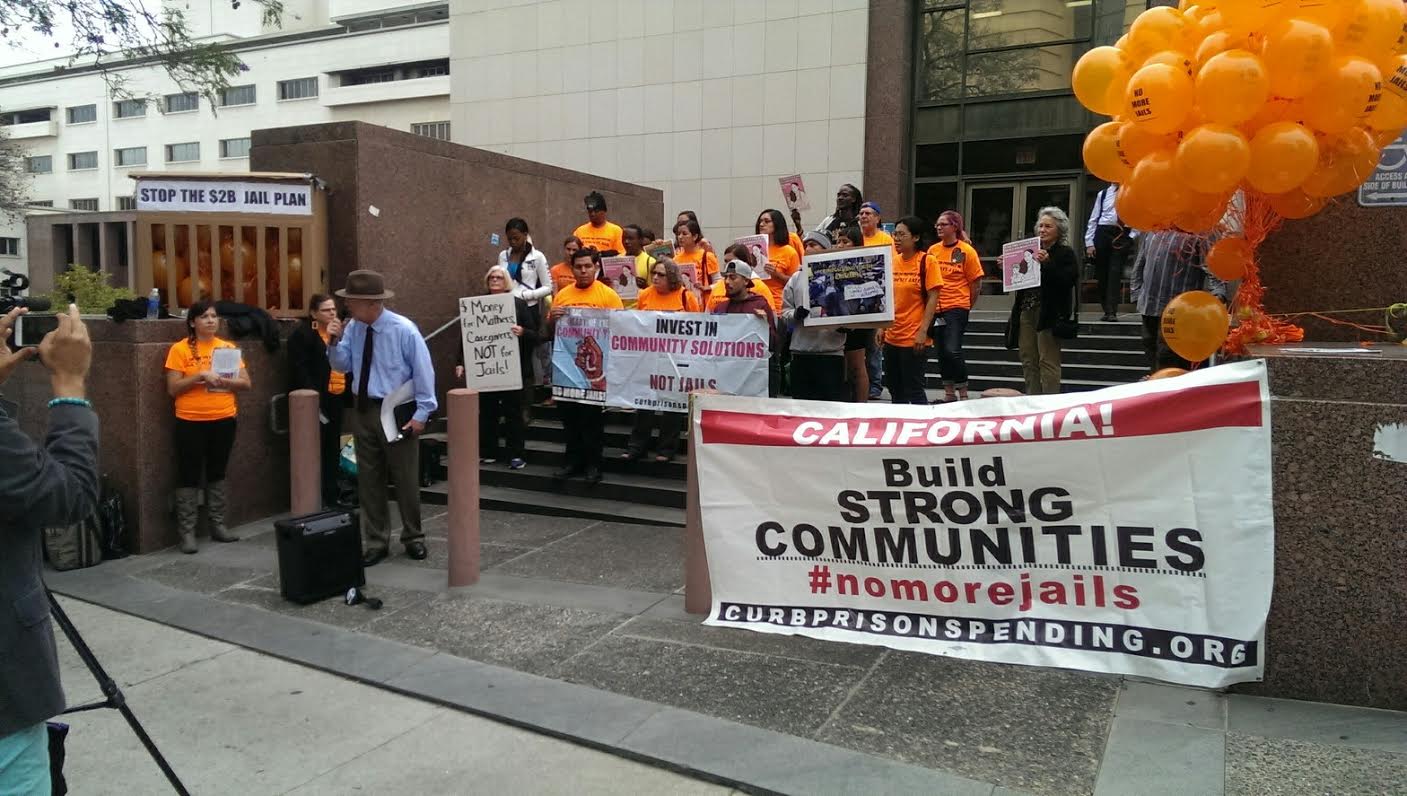
Today, the LA County Board of Supervisors voted 3 to 2 in favor of halting the proposed $2 billion jail plan, including a women’s jail and the “Consolidated Correctional Treatment Facility” in lieu of an independent analysis of what alternatives to treatment exist in Los Angeles County. Californians United for a Responsible Budget supports this motion and all efforts to prioritize alternatives.
“We commend the Supervisors for approving this game changing motion,” said Mark-Anthony Johnson of Dignity and Power Now. “We support Supervisor Kuehl in halting the Sheriff’s $2 billion jail plan. Expanding custody operations in a system where Black and Brown people with mental health conditions are more likely to be targets of sheriff violence undermines the growing momentum for diversion and alternatives to incarceration. The violence of lockup, especially against those with mental health conditions, cannot be fixed by building more. What will keep people safe is diversion from the jails and we are filled with hope by the leadership presented to assess what community based services are available in our community.”
The motion, introduced by Supervisor Kuehl and supported by Supervisors Solis and Ridley-Thomas, was applauded by about 100 community members who came out to oppose the notion that effective mental health treatment can take place in a jail facility.
“We are pleasantly surprised by the move by our Supervisors to halt the entire jail plan, especially the women’s jail,” said Diana Zuñiga of Californians United for a Responsible Budget. “The push to assess the community based services already in place is something long overdue for Angelenos. We hope that we not only assess what is out there, but leave room to envision what services can be expanded in our community instead of more jails. People need quality treatment, supportive housing, employment opportunities and sustained connection with their children in their communities, not another jail.”
Organizations, community members, and formerly incarcerated people pushed for concrete projections and benchmarks on how the District Attorney’s comprehensive diversion plan, split sentencing, risk-based pre-trial release, and proposition 47 will reduce the jail population.
“This is the time to move funding from the proposed jail plan to community based services that need these billions of dollars to keep people out of lockup,” stated Mary Sutton of Los Angeles No More Jails. “We are happy about this motion by the Board and hope to work with them to re-direct 50% of realignment dollars to community based organizations instead of in the pockets of law enforcement.”
MEDIA CONTACTS
Diana Zuniga — (213) 864-8931, Californians United for a Responsible Budget
Mark-Anthony Johnson – (818) 259-1322, Dignity and Power Now
 Albert Cobarrubias Justice Project
We were very grateful for David Bornstein’s thoughtful and comprehensive article on the growth and potential of participatory defense. His New York Times column is called “Fixes, which looks at solutions to social problems and why they work.” Check it out!
 Guiding Families to a Fair Day in Court
By DAVID BORNSTEIN, NEW YORK TIMES
…Today, Jayadev says, when a loved one is arrested, the most that many families feel they can do is hope for a good lawyer. Participatory defense expands their sense of agency. And if the goal is to build the political will to end mass incarceration, he says, “This seems like the most natural mass movement building approach — because it is about people seeing their own power in their own communities, as intimate as the fate of their own families.” CLICK HERE TO READ MORE>>>
Albert Cobarrubias Justice Project
In case you missed it, De-Bug/ACJP was featured in a front page story in the New York Times for our social biography video concept. Check it out:
A Flattering Biographical Video as the Last Exhibit for the Defense
By STEPHANIE CLIFFORD, NEW YORK TIMES, MAY 24, 2015

GILROY, Calif. — About 3,000 miles from New York, members of a camera crew gathered around Anthony Quijada, trying to do for their not-famous, not-rich client what some high-priced lawyers are doing for theirs in New York courts: Make a video that can keep him out of prison.
Lawyers are beginning to submit biographical videos when their clients are sentenced, and proponents say they could transform the process. Defendants and their lawyers already are able to address the court before a sentence is imposed, but the videos are adding a new dimension to the punishment phase of a prosecution.
Judges “never knew the…
View original post 49 more words
Participatory Defense is one of the most exciting developments in community organising in the country right now.
In a court system previously considered a space for silence and passivity, families and friends are now helping defense teams mount narratives of defendants’ lives and contributing to a wider view for the court’s consideration. Preparing for court is a huge task but dividing the tasks up among many community members simultaneously makes it manageable and demonstrates to the judge and/or jury that the defendant is loved, supported, valued, wanted.
Participatory Defense proves that a person is more than the crime for which they appear in front of court.
Silicon Valley DeBug and its specialised Participatory Defense arm, The Albert Cobarrubias Justice Project, has diverted clients away from a cumulative 1,800 years of incarceration!
Albert Cobarrubias Justice Project
We’ve told this story at dinner tables, conferences, and courthouse hallways. Here is the story of how participatory defense came to be…
 (A participatory defense meeting from 2009 at Silicon Valley De-Bug
This is the story of Participatory Defense – a community organizing model for families and communities to impact the outcome of cases of their loved ones and change the balance of power in the courts.
Eight years ago, we started doing community organizing around police accountability. We knew how to march, rally, hold press conferences. But when a case hit the most critical stage – the courts, we didn’t know how to flex that organizing power. Ironically, we were relinquishing the strength of collective action at the time it was most needed – when a case hit the judicial process. Even though many of us were critical of the courts, there was an unspoken belief from many that…
View original post 1,129 more words

Shocking.
It gets worse. 1 in 2 Black women have an incarcerated family member.
The Essie Justice Group writes:
On May 20, 2015, the Du Bois Review published Racial Inequalities in Connectedness to Imprisoned Individuals in the United States,[1] a groundbreaking article exposing the devastating effects of mass incarceration on the women who are so often left behind to pick up the pieces.
The article reports that 1 in 4 women in the United States currently has an imprisoned family member.[2] Forty-four percent of black women—just over 1 in 2.5—have an incarcerated family member, compared to 12 percent of white women. Black women have over 11 times as many imprisoned family members as white women, and are more likely to be connected to multiple people in prison. Over 6 million black women in the United States have a family member currently imprisoned.
While the racial inequalities are striking, the number of women overall affected by the incarceration of family members and loved ones is staggering. The study makes clear that women in the United States currently have unprecedented levels of connectedness to people in prison. With men making up 90 percent of the 2.2 million people currently incarcerated, women who have incarcerated loved ones are often left raising children, managing family finances, and facing stigma in their communities and workplaces. As a result, these women are at greater risk for a whole host of harmful health and economic outcomes.
As Anita Wills, a member of Essie Justice Group, explains, “In 2003, when my son Kerry was sentenced to 66 years in prison, I was devastated. I had to keep it together for my son and grandsons. I am now 68 years old and raising my 17-year-old grandson. This is not how I envisioned living my retirement years.”
Terryon Cross, whose father is in prison, says, “I’ve grown up with incarceration all around me. When my son Yancy was born, I was 16 years old. I want more than anything for my four-year-old to grow up without me having to drive to prison to see and hug our family. I don’t want him to think this is normal, even though it is happening all around us.”
This trailblazing article sheds light on the scope of mass incarceration’s effect on families and loved ones—particularly women—and alerts us to the fact that this group has been under-studied and often ignored. It helps lay the groundwork for a better understanding of the consequences of mass imprisonment in the United States and its particularly devastating impact on women with incarcerated loved ones.
–
[1] The article was co-authored by Hedwig Lee and Tyler McCormick of the University of Washington, Seattle; Margaret T. Hicken of the University of Michigan, Ann Arbor; and Christopher Wildeman of Cornell University.
[2] “Family members” include male and female relatives such as aunts, uncles, and cousins, as well as children, partners, and parents. It is important to note that this analysis focuses only on people serving sentences in prison, and not those in jail. Had the article included people in jail, the number of women affected by family member incarceration would be much higher.
–
Essie Justice Group is an organization that works directly with women with incarcerated loved ones. Media contact: Gina at gina@essiejusticegroup.org.
–
Image: Cell-block, Angola Prison, Louisiana, 2014. Giles Clarke/Getty Images.
This is a very interesting view into the official process shared by a corrections department and prisoner advocates. The minutes (from what must have been a short meeting) refer to the different steps in the Step Down program, which is basically the only way a CA prisoner in solitary can get out. The numbered steps, the numbered participants, the exceptions between steps and the program as a whole indicate an abstraction consistent with the unknown prisoners,staff and environment inside of prisons. But it also demonstrates the unique combination of bureaucracy and fear in the CDCr culture. This combination and rush to label prisoners as dangerous gang-members led to the massive increase in number of prisoners in solitary AND shows that something as drastic as “Shutting Down the SHU” is a political pipedream. It hurts to modify instead of disassemble an abusive system but it’s either that modification or status quo. Bravo to the four advocates meeting with the 6 CDCr officials for this meeting.
 Prisoner Human Rights Movement
At the request of Sitawa, these Minutes are posted here. These are from February 20th, 2015.
 Minutes of the Mediation Team meeting with CDCR, Feb 20, 2015, page 1
 Minutes of the Mediation Team meeting with CDCR, Feb 20, 2015, page 2
 Minutes of the Mediation Team meeting with CDCR, Feb 20, 2015, page 3

 Prison Photography