
You are currently browsing the tag archive for the ‘Big Oil’ tag.
From the latest Photographers Speak interview:
Dean Brierly: Do you find any points of intersection between your commercial and fine art work?
Bob Witkowski : When I arrived in DC after a year’s graduate work in photojournalism at the University of Missouri, I found myself in the position of having to survive while trying to stay committed to my “art” at the time. My first break was to get access to the Gulf Oil Refinery in Philadelphia through the aegis of the American Petroleum Institute and its Director of PR, Robert Goralski, one-time correspondent for NBC News. I was paid nothing! I had little money at the time as well. I spent everything I had on several bricks of Kodachrome 25 and drove up to Philly and spent six days in paradise shooting 20 hours a day. It was at the refinery that I discovered I could be true to making images I loved while making industrial images that were sensuous, beautiful and a complete sellout. So I finally had something to drag around in a slide projector to show to industry trade groups and corporations around the DC, Baltimore and Richmond areas. It wasn’t an easy sell at first, and I paid my dues like anyone else for several years, but eventually it paid off for me professionally. I was fortunate to shoot in the golden days of corporate annual reports before Reaganomics altered everything.
How differently an industry can be perceived.
ELSEWHERES

© Jorge Duenes/Reuters
Everyone is blurting loud sounds:
David Burnett asks, “Where are the kids who should be on the street protesting?”
Mark Powers talks about a dead Pope in the age of Popes and TV.
Peter Marshall, who is a UK-political-photography-blog-treasure, has a naff day with some far-right marchers and a bunch of banged up camera lenses.
Mrs. Deane is back on Mars with Vincent Fournier.
Grant Willing, the darkest man in photography blogging (humble arts), delivers an interview to Jerenie Egry for too much chocolate.
Horses Think reminds of the MoCA exhibition in which the American road-trip was also the data for one of the most influential pieces of contemporary architectural theory. (Well, not totally, they did some walking as well.)
Ben‘s is flipping out, while Stan says we should all make hay, and he loves the UN’s photo comp policy u-turn.
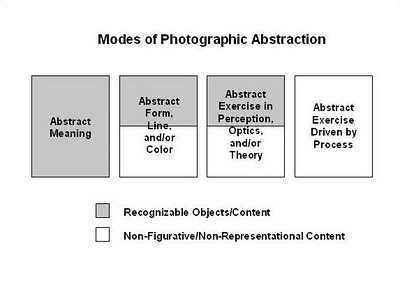
DLK Collection is dealing with the return of photographic abstraction. While, only two days prior DLK had asked who was steering the big wobbly ship of conversation on photography?
Just when we were all getting hopeful about the exchange economy of the internet, Joerg delivers an absolute bummer of a summary of his view on book reviewing. But, I think – as Joerg wonders – that he might be reading the wrong blogs.
In the same stroke of an ink quill, Joerg has busted out a great post about the intervals between being photographed as a child, the digital storage problem of the future and research about the way the memory deals with a vast quantity of photographs.
Then, Ben‘s back running a poll on if The Photographers Gallery is “shite”.
The New Yorker Passport Photo Booth is bigging up Mari Bastaskhevski, Bastashevski, Bastashevsi … although I don’t know exactly how to spell Mari’s surname , because Photo Booth spell it three different ways!
It’s a shame because Mari is one of the most courageous photographers working in modern times. I want to say more about her work, but I am still digesting it. Good stuff.
AND MORE OTHERWHERES
Monoscope throws David Gentleman’s 1970 England World Cup stamp (recently discovered) on to your computer screen. Talking of stamps, Steve McQueen …
Heading East talks sense again.
The photographer who made flags out of people!
Foto8 goes all World Cup. The Telegraph profiles a photographer of Zapatista veterans. Blog61 gets all reminiscent. (Early signs from these guys are good).
Robert Hariman refers to abstracted images of border patrol lights and oil slick swirls as the “hieroglyphs of human limitation”.
Given that Marina Abramović entered into “some sort of trance-like state” during the performance-art piece The Artist is Present, Jim Johnson asks, “Would she even have noticed had the chair across from her were vacant?”

 Prison Photography