
You are currently browsing the monthly archive for December 2008.
Lloyd DeGrane‘s work is long-term and it is honest. DeGrane would like to see more transparency surrounding American correctional facilities, “I think people, taxpayers should see what they’re getting for their money”. I came across DeGrane in James R Hugunin’s 1996 curated exhibit Discipline and Photograph.
DeGrane carried out his Prison series between 1990 and 2001, when he photographed within the state maximum security Stateville Correctional Center, Illinois and Cook County Jail in Chicago. The three photos featured here each depict scenes at Stateville.
DeGrane took the time to discuss the role of photography in sites of incarceration, a photographer’s best approach, the names and labels given to him by inmates and images of the spaces between cells.
Did you await each photo opportunity? While working, were you alone or accompanied on the corridor or wing?
“I was usually escorted by a counselor – an unassuming, non-threatening person. Sometimes I’d go into a unit and walk around by myself, being careful not to get out of the view of a correctional officer. Stateville is a maximum security facility so some of the inmates were violent offenders. I talked to the inmates directly, sometimes going into their cells. For the most part the officials let me browse freely and talk to any inmates I wanted. Things, to a point, were pretty transparent. When I came into a unit someone would usually yell out my arrival”.

Isolation Unit, Stateville Correctional Center, 1992. Lloyd Degrane
What is happening in the Isolation Unit photograph?
“This is the isolation unit – I called it ‘the jail within the prison’. Inmates who committed an offense in the prison were taken out of the general population and held there 23 hours a day with one hour for outside exercise. That [the display of legs and arms] was the first reaction to me being on the wing”.
“The inmates, for reasons unknown to me, thought I was a state official of some kind. But, after I got to talking with a few people independently I was able to photograph several inmates with no problems, with the exception of one inmate who would try to throw excrement at the guards”.

Lockdown Protest, Stateville Correctional Center, 1993. Lloyd Degrane
Explain the situation here, with the trash and food on the floor.
“That was taken in 1993. Inmates were ending a five day lock-down and totally disgusted by the lunch served (cold baloney sandwiches every day). So, they threw the servings out of their cells onto the floor. The floor of the wing is commonly known as ‘the flag’.”
“Guards eventually had to clean it up. I noticed when I came back the next week that the roach problem was severe. I had to tuck my pant legs into my socks so the roaches wouldn’t crawl up my legs”.

Protective Custody Unit, Stateville Correctional Center, 1992. Lloyd Degrane
The interaction between the guard and inmate in the protective custody unit is fascinating – it melds contortion, humanity, routine and unlikely types for the prison environment.
“The inmate was in the protective custody unit. That’s a pregnant guard that’s looking at him. He didn’t have a mirror so the only way he could see what was happening outside his cell was to stick his head out of the food tray slot.”
Did the subjects of your images, specifically inmates, see the photographs after they were produced/exhibited?
“I always made a small photo for the inmates. Sometimes they got them and sometimes the warden or captain (for reasons I do not know) didn’t get around to giving them the photo. But, I was able to get a little deeper into the lives of the inmates that received photos.”
How do you work?
“The images are made slowly and carefully. No surprises. Observation and discussion with the inmates and then photos. That was my modus operandi. It’s like going into someone’s home, they know you’re there! So, it’s best to be respectfully curious. Some inmates wanted nothing to do with me (I think they had committed other crimes on the outside and didn’t want to be recognized). Other inmates didn’t mind at all. I talked with people all the time. I think taxpayers should see what they’re getting for their money. Transparency is key. But, many prison officials believe the opposite and in their facility, they rule!
Final thoughts on the prison system?
Prisons – and not correctional facilities (as the State of Illinois has named their institutions) – the concrete human warehouses behind razor wire are just that! Buildings that confine people. It’s an existential experience in a world that is both separate from America but a big part of the American economy. One sees homemade signs along Interstate 55 that read, ‘Don’t shut our prison down’, ‘Save the prison, Save our jobs’ outside Pontiac, Illinois, home to another maximum security facility that may close because of state budget cuts.
Don’t get me wrong though, some people belong in prison. I met many men who raped innocent women, killed children, beat other men to death for a few dollars and some who murdered their cellmates. I was glad that I didn’t meet them in a dark alley in Chicago. But, one thought that always went through my mind was, most of these people will get out some day. Will they change for the better or just be better criminals?
You kept an index of how the prisoners referred to you. It’s length, variety and contradictions reflect well the complexity of social experience within correctional facilities. Can you remind us of the index?
This is my index of how inmates referred to me. Picture Man, White man, The Man White Mother Fuckin’ Press Man, Black Gang Lover, Spic Gang Lover, White Prisoner Lover, Straight Dude Looking for Something – Policeman, The Photo Man, The European, The Springfield Connection, A Fair Man, An O.K. Photographer, An Artist, Homes, Homey, Fuckin’ Photographer, Homo, Fuckin’ Camera Man, The Camera Man, Inmate Lover, The Police, Friend and Cute Mother Fucker (The label given to me by Richard Speck).
This blog is 10 weeks old. At that same age an infant is lifting its head and neck without help, blowing bubbles, smiling and cooing. I reckon this blog is straining its neck, blowing hot air, cooing to no-one, but certainly smiling to itself. So, things look good. I’d like to propose a vague rhythm for my posts. Now, read carefully for I shall say this only once.
Every week or so you’ll see long, well-researched and edited pieces about critical prison issues. Between these “anchor” posts, to keep the juggernaut powering on the information-super-motorway, I’ll post items a little more flimsy. They’ll definitely be prison and photography related, and usually with great visuals and little text. This is a warning to all you early readers to decipher the serious stuff from the really serious stuff.
So, without further ado let me bring to you a quite incredible image. In browsing the United Nations’ official photography galleries I came across this curious image tagged as “Prison”
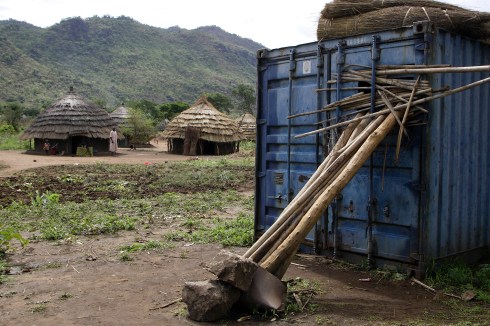
The container serves as a detention facility. Human rights and protection officers made an inspection of the capabilities of the local police and prison service. UNMOs from Torit were engaged in a long range patrol to Chukudum along with various civilian sections of UNMIS in order to assess the security and social conditions of the area.
Sudan, at last count, with 12,000 prison inmates had the lowest prison population of any North African country. In fact, Sudan is doing very well at not locking its population away. It is joint fifth, with Angola, of all the African nations for the lowest prison population (36 per 100,000 people). Sudan is surpassed by Mali (34), Nigeria (33), Gambia (32), and Burkina Faso (at a mere 23 inmates per 100,000 people)! Source.
These figures should absolutely be compared to US figures where 1,000 of every 100,000 American adults are behind bars. 1 in every hundred US adults is under the jurisdiction of federal or state corrections! It’s madness, it’s broken and it’s costing a fortune. (I warned my politics might creep through every so often).
Torit and Chukudum are in the very southeast of Sudan, close to the borders of Uganda and Kenya. This site is over a thousand miles from the Darfur region. It’s even further to the border and refugee camps of Chad. I have no comment on Darfur here. I only wanted to point out that as we grasp and grapple to understand the people in the world around us and we conjure makeshift plans and patchwork solutions, sometimes they involve small personal sacrifices and sometimes they involve locking other human beings in shipping containers.
As of August 2002, Sudan had 125 sites of incarceration – 4 federal prisons, 26 local government prisons, 46 provincial prisons, 45 open and semi-open prisons and 4 reformatory centres for juveniles. I wonder what the nomenclature is for this box? The picture was taken in April, 2007 by Tim McKulka, who has also done some photography covering the Angola Prison Rodeo in Louisiana, an event of which I have opinions. Indeed, I have a piece up my sleeve on my hard drive, awaiting…
Note: Ignoring the pink elephant in the room, I have previously avoided talking about Abu Ghraib. What could I add to a topic so exhaustively dissected? However, after listening to Philip Gourevitch speak at a local bookstore I am urged to write.
Mention ‘Prison’ and ‘Photography’ and the collective conscience defaults to the Abu Ghraib pictures. There is no escaping this fact as there is no escaping those images. The Abu Ghraib photographs inform and corrupt key dialogues of our global society – war & power; geopolitics & the psychology of surveillance; Iraq & imperialism; Western & Islamic relations; and military operations & media-constructed otherness. Add to that list, uncomplicated human cruelty.
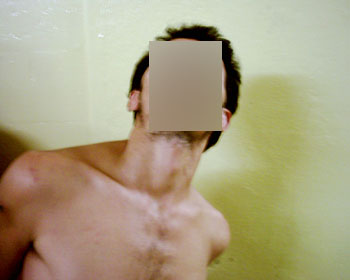
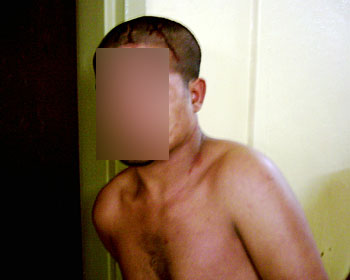
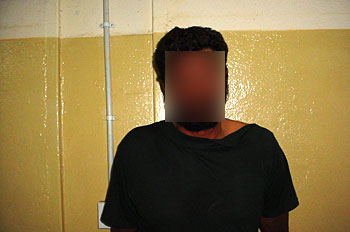

Those images have seeped into more spheres of conscious and sub-conscious thought than the most successful of photojournalist essays. This is emergence and pre-eminence of the Abu Ghraib photographs as the most current strongest visual “player”. Former strongest players have included Robert Capa’s images of the Normandy Invasion; or (Nick) Huỳnh Công Út’s photograph of Kim Phuc running from a napalm attack on Trang Bang, Vietnam; or Eddie Adams’ photograph of police chief General Nguyễn Ngọc Loan executing a Vietcong prisoner, Nguyễn Văn Lém. As Gourevitch said, “If a photojournalist had taken those [Abu Ghraib] images he or she would have been celebrated and decorated for their public service.”
Those photographs are many things. They are evidence of a corrupted system bereft of accountability. They are the most important images of the War on Iraq. When recollected, they should never be separated from the exacting malevolence of the Rumsfeld Department of Defense. They are already established as the most commonly shared images of global culture. The hooded prisoner is a 21st century icon. Perhaps, partly, this is why Americans rallied to make an immediate icon of Obama; to purge a nation’s collective visual memory, and to replace negative, shameful images with positive, hopeful, primary-coloured pop-motifs.


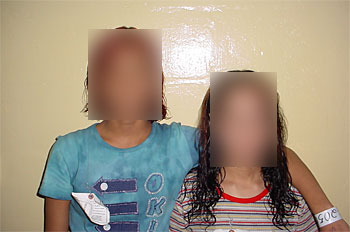
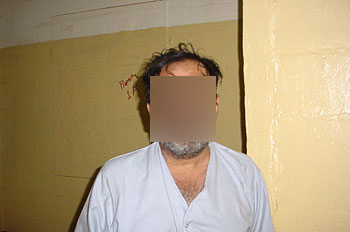
Gourevitch talked about the craft of the interview. The Paris Review, which he has edited since 2005, recently released the third of a four volume anthology of interviews with 20th century writers. Gourevitch noted the simplicity of the method and pointed out that in 1953 when the Paris Review was founded, no publications were interviewing writers. Literary criticism had become high brow and, to many, obsolete; it talked about the text but never the artist. The Paris Review was the first legitimate peek into the private lives, motivations and pathologies of poets and authors. Fellow writers could scrutinise every spoken word and omitted detail of their contemporaries. The Paris Review, in its early days, served as the exposé – the gossip column – for the literary world.
For fifty years, until his death in 2003, George Plimpton was editor of the Paris Review. It is fitting that Plimpton’s large shoes should be filled by a writer and journalist who has made an art form of the interview. Gourevitch’s acclaimed book We Wish to Inform You That Tomorrow We Will Be Killed With Our Families was based on information gleaned from an unhurried, matter-of-fact tour of Rwanda where he simply talked to people. Rwandans didn’t have their own journalists clearing the way for testimony in the immediate aftermath of the genocide and Gourevitch found support for his theory that “All people need to talk”. He described Rwandans culturally as the opposite of effusive, but maintained this didn’t mean they were unwilling to share their experiences.
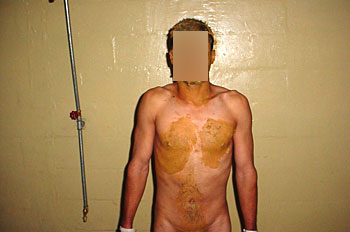


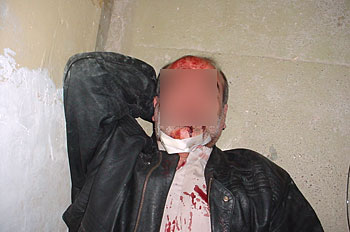
For Standard Operating Procedure, accompanying the profound Errol Morris movie (which has unsurprisingly suffered stymied distribution in the US), Gourevitch sat in on 100 hours of Morris’ questions (approximately half of Morris’ interviews).
Following Gourevitch’s presentation, I asked him if there were any atypical motivations for the American servicemen and servicewomen agreeing to the interview process. Was there any information they were keen to convey? Gourevitch was quite clear. There was a single shared motivation for Sabrina Harman, Lynndie England and colleagues. The interviews are one long exercise in self-representation. Prior, the soldiers had been silenced, criminalised and later written off as “bad apples” by a military narrative designed to shield the senior accountable authorities. The media was partly complicit and the soldiers “were pissed off”, stated Gourevitch.
From the moment the US military command learnt of the pictures, the soldier/guards of Abu Ghraib were set up for the fall. The military sequestered the reservists away and lined up a raft of charges for each soldier. The US military sat on those charges hoping that if it could retrieve and control the images, it wouldn’t have to bring the matter to public attention through trial. The US military visited homes of the soldiers’ family members back in the US. They demanded computers and deleted files. After some time, it was clearly apparent to the families of the Abu Ghraib soldiers that their sons and daughters were being made scapegoats. An exact single source of the images has never been pinned down, but Gourevitch contends it was a disgruntled family member who finally unleashed the digital photographs to a world swiftly buying into the prevailing Department of Defense narrative.
We Have Seen Their Actions, Let’s Hear Their Words
The Abu Ghraib photographs can and should be understood only in the context of their production, which is to say, by a group of individuals trained as soldiers and ordered to guard prisoners in a decrepit facility; by photographers who were compelled to document precisely because they couldn’t comprehend the atrocities; by a group of soldiers influenced and hardened by one another; by a group of soldiers under no direct or pre-written guidelines; by a group of soldiers with complex thoughts, manipulations and haunted memories. Morris did us a public service with his movie and it is fitting that the accompanying book by Gourevitch features no images.
Of course, what the global community needs now is an equally comprehensive documentary project bringing together the testimonies of all those held and tortured at Abu Ghraib.
Note: I wanted to avoid resorting to the common and most shocking images of Abu Ghraib that we’ve seen so often – box, blanket, hood, wires, scrotum, pyramid, puddles, dogs, blood, shit, thumbs, leash, limbs, body bag – and I don’t exactly know why. Salon put together a responsible collection of all 291 Abu Ghraib images if you need to put those infamous images back into the context of the prison facility.
The Artistic Legacy of Abu Ghraib
Ridiculously, artists that have chosen to reflect the systematic abuses at Abu Ghraib have come under fire.
Clinton Fein’s ingenious reconstructions of the Abu Ghraib crimes drew criticism for many selfish reasons (an unwelcome return to problematic images despite their obvious construction, a project of a sadist, a re-opening of a cultural wound?). The intelligence of Fein’s project was that it challenged our premature numbness to the original Abu Ghraib photographs and forced a renewed pathos toward a subject that we’d never known anyway. Are we supposed to feel something toward Fein’s models?
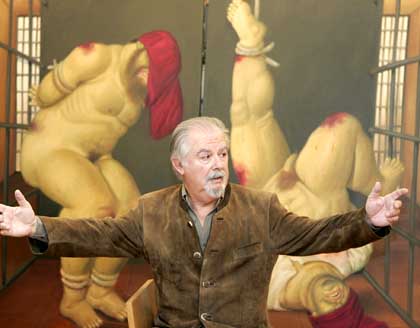
Colombian painter Fernando Botero gestures front of his new paintings depicting the horrors of U.S. guards’ abuse of captives at Iraq’s Abu Ghraib prison, Monday April 11, 2005 in Paris, France. Botero says he became so upset that he felt compelled to produce works showing his trademark chubby characters naked and being blooded by Americans. (AP Photo/Francois Mori)
Fernando Botero‘s work has won plaudits around the US. I think his work is excellent for many obvious reasons, so don’t call me a cynic when I say Botero’s work is more easily accepted because his Beryl Cook cherub-grotesque style, and the fact he is a Latin American commenting on a war to which Latin America remained external. Put another way, he serves up the shit sandwich with relish, whereas Fein left it in the bowl. Here’s an official presentation, here’s Berkeley enjoying the show and here’s the AP writing about it before it caravanned around America.
And finally, Chris Bartlett (Photographer) and Daniel Heyman (Painter) have teamed up to produce the Detainee Project which creates portraits of individuals illegally detained throughout America’s war on Iraq. George Soros helped Bartlett give detainees dignity and representations beyond hoods, nudity and dogs.
I have been supremely busy lately. I have eight projects in various stages of draft, but want to throw up some quality images, accompanying words and give a general shout out to Bangladesh’s photographic community.
Through my day job, I am familiar with Shahidul Alam‘s fine photography. I am more impressed by his stewardship of his nation’s photojournalist community, here, here and here. It was at Alam’s Blog that I discovered the images of Momena Jalil. I’ll simply repost the photographs and let them and the text speak for themselves.

Mother and Daughter in Cell, Momena Jalil, 2008
They were some 21 women. Some with with children who were free but had nowhere to go. So they stayed with their mother in captivity. It was a rare chance for us; it was the opening of the new women’s prison on eight acres of land situated on the Western edge of Kashempur. We were allowed because we were women and in those ten minutes we learnt what we could not have learnt in a lifetime. Losing one’s freedom strips us of the right to live. It is the strangest feeling, a chilling feeling. Freedom denied is freedom lost in the cradle of the life.

Cell, Momena Jalil, 2008. Having spent a year in prison already, 25-year-old Rahima still cannot reconcile with her living conditions.
‘It is difficult to cope with all that goes within the walls of a prison,’ she says. ‘There were times when the prison guards molested me…they do sexually abuse women,’ she says softly, hiding her face behind her white saree. As soon as the guards walk in her expression changes and she mutters, ‘we have no problems at all.’
From Jalil’s post it is obvious the system has affected the women very differently.
‘How can you not love the darkness, the stench, the suffocation and the crowds?’ asks fifty-year-old Khaleda in her raw husky voice. Her big eyes and rough expressions complement her loud and dominating voice. ‘After spending twenty-five years I don’t think I would ever want to go back. I get a taste of everything here – be it having tonnes of friends or being tortured, all of it is ‘fun’, she says sarcastically.
Khaleda knows the secrets of the prison, yet she refuses to speak up. ‘You know why I came here? My husband married another woman for no reason. He brought her home with her two children. I had done nothing. But he still did that. So I ate the two kids,’ she laughs aloud. ‘And then I got involved in a trafficking case and a lot more.’
In twenty-five years, Khaleda has seen the darkest sides of the prison. She has lived inside crumbled cells with no space to even sit or breathe. ‘I don’t like the idea of being moved to this new unit of the women’s prison. I love the people there. The Dhaka Central Jail is overcrowded, stinky, a torture hole but it’s still been my home for the past so many years,’ she says.
Khaleda is one of 200 women who are waiting to be shifted to the first female jail in Kashempur that recently opened.
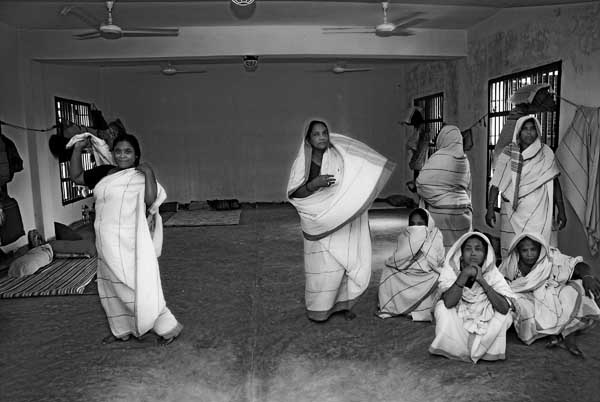
Women in a Cell, Momena Jalil, 2008
She was a mother, a daughter, a sister, a home-maker, a beloved wife but today she is only a prisoner behind bars serving a life sentence. She could have been many things but situation, time, circumstance and fate took all her rights to live free in society. Society finds them unfit because they cross the line of the law; they were not born to be criminals but time took them where they committed crimes… some killed step-children, some were found trafficking in-between borders, they were too many and we had too little time to know what crimes they were in for. We had ten minutes, the guards were rushing us, it’s unthinkable to let journalists roam inside a prison. But we have been there, my colleague and I; we saw faces up close, people who live among us, their faces hold the rumours of sisters, mothers…
Two weeks ago I attended a talk by Van Jones, the founder of the Ella Baker Center. He advocates for social equality and the rights & opportunities of incarcerated youth. Recently, if he didn’t have enough on his plate, he has added saving the environment to his roster of causes. Jones’ energy is contagious and he quickly convinces you that there indeed is “one solution to our two major problems”.

Jarnail Basraa lines up solar cells for a solar energy panel at Evergreen Solar's headquarters in Marlborough, Massachusetts. After decades on the fringe, solar power is closing in on America's mainstream as surging fossil fuel prices and mounting concern over climate change spur states, businesses and homeowners into a quickening embrace with alternative energy. (REUTERS)
Hold on! What? Two problems? Aren’t there more problems than that? Yes, and so Jones, like President Elect Obama, argues that all these can be traced back to economics and environment. Furthermore, Jones argues for a single root solution to these two issues that solves the many related problems. Jones envisages a government-supported, corporate-boosted, people-activated Green Economy that shifts investment from “a 20th century pollution-based & consumption-oriented economy” to “a 21st century clean, solution-oriented economy”. The magic being that the jobless urban poor with the worst cases of asthma, cancers and pollutant-based health problems are the ones to take full advantage of this new platform. Jones asks, “Do we really want to further entrench ourselves in “eco-apartheid” in which the affluent retreat to the hills and the remainder suffer the smog?”
Jones admitted he is not the most likely of authors for a book of this type, but following quick inspection, it (and he) makes sense. Jones seeks routes out of poverty for the urban poor and the formerly incarcerated. His native California is more desperate for solutions than most states.

Solar panels soak up some rays near the Ironwood State Prison in Blythe, Calif. Last week, the state unveiled a 1.18 megawatt solar-power plant at the prison that provides enough electricity to power a quarter of the facility
Jones is thinking big. The creation of jobs, personal prosperity and regional economic growth would need to be unprecedented if it were to mop up the wasted lives and wasted dollars of the California Youth Authority & the CDCR let alone the gross deficit of California’s halting economy (For your interest I read that over 20% of California households owe more on money toward their mortgage than their house is actually worth).
It seemed that I had, accidentally, skirted the same issues Jones works with. How do you give enough previously disenfranchised people enough work and pride to reverse social histories of crime and transgression? If the state intervenes, prematurely or not, where friends and family cannot succeed, it absolutely must begin when the offender is committed to an institution. And yet, as I noted in my previous post only 5,400 inmates are involved in PIA work. (This figure doesn’t factor for the number of inmates in retraining programs, which fluctuates. I’ll get back to you) The fact remains, the CDCR is overcrowded and not investing in rehabilitation adequately. All education and vocational training is fully subscribed.

Ironwood Solar Field
The unremarkable photograph (above) of the first CDCR solar field at Ironwood State Prison, which I wrongly attributed to Wasco, and used as for closing cynical footnote about watercolour painting is perhaps worth revisiting.
The fields are in the middle of nowhere, because most newly constructed prisons are in the middle of nowhere. I wonder if there could be a conspiracy of persuasion to bring SunEdison or any of their partners and competitors to these remote locations with an inactive but very willing pool of men, set up factories and operations and train inmates during their sentences?
I would like to ask Van Jones if he considers the current CDCR and/or the developing green economy infrastructure flexible enough to execute a long term retraining programme within California’s prison system. How plausible is it that the new green economy can benefit the imprisoned population of America? I believe Jones when he says we can reach out to the urban poor and provide training schemes. I believe Jones when he expects government support to launch thousands, even millions, of jobs and through doing so gives rise to a multitude of career paths that emerge, shape and change along with the renewable energy industry.

Ironwood Solar Field (REUTERS)
That said, I am skeptical that this herculean social project could dovetail easily with the federal and state prison systems of America. People are suspicious of corporations involved in state corrections; people may be shocked to inaction when learning of the massive investment and rarified leadership required for a large scale prison works programme; people know that historically the prison is hard to access; people may suspect no return on its tax dollars.
Logistically, anything is possible. But culturally many things are proscribed. The political will to enact a sweeping reform of prison training based upon a new-green-economy-doctrine may wither quickly when confronted with public opinion and economic depression. I fear prisoners will get ignored for another generation and pushed oncemore to the bottom of the priority list.

 Prison Photography