
You are currently browsing the yearly archive for 2011.

Hillary Clinton at Uncle Nancy’s Coffeehouse, Newton, Iowa April 21, 2007 © Richard Colburn
Richard Colburn‘s Iowa Caucus is a poke in the eye to the super-production value of big media. His famous politician subjects are vulnerable and open, maybe confused or amused. I guess being exposed is a fair reflection of their experience meeting voters in the high-stakes early battle-state of Iowa. But I don’t get the impression Colburn is being cruel or ironic.
How does he isolate these public figures?
Colburn, like his images, might be very disarming. For me, this project has just become a barometer for other political portraiture.
I like these gentle versions of politicians. Instead of hawkish advisors, backroom deals and lobbyist “donations”, I’m thinking about grandparents and pie and mowing the lawn.
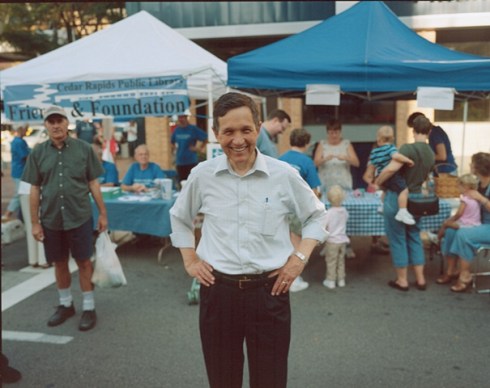
Congressman Dennis Kucinich at the Cedar Rapids Farmers Market. October 6, 2007. Withdrew January 25, 2008. © Richard Colburn

First off, some disclosure. M. Scott Brauer is a close friend, but I have a lot of friends who produce stuff and it’s never a prerequisite for promotion.
I enjoy this project.
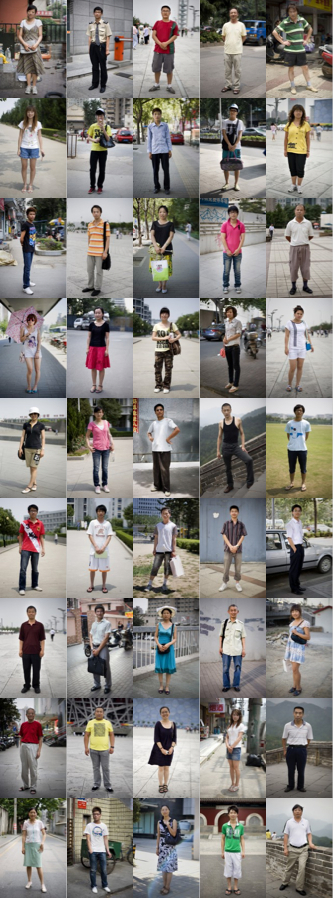
‘We Chinese‘ is several things. It is part break-up/part love-letter for Scott after relocating back to the States after years spent in China. It is a project to hum in the back of our minds whenever we think – or talk – about photography in China today. A nation of 1 billion can never be summed up by a single image or series, but good photography can provide firm foundations for thought.
Scott asked each subject two standard questions. The responses “range from prosaic to poetic, from rote to inspired, and from unemotional to patriotic.”
My favourite response is that of Wangbaoning, aged 20, who is unemployed but works for free as a building security officer. As compared to his assured fellow countrymen and women, his second answer is decidedly undecided.
What does China mean to you?: It stands for a unified China at this stage realizing hopes to be the master of its own affairs into the future.
What is your role in China’s future?: I haven’t really thought about it at this point, we’ll see, depends on motivation.
ALSO WORTH A LOOK
M. Scott Brauer’s Best Photographs of 2010

Nutraloaf, a product from the cafeteria of the Chittenden Regional Correctional Facility, sits atop an inmate’s bunk bed at the facility in South Burlington, Vt., March 21, 2008. (AP Photo/Andy Duback)
Last August, with Is Prison Food Unconstitutional? was the first time (on the blog) that I had considered the nutritional health of US prisoners.
Despite the catchy headline bait, the number of organic food programs within prisons serving their canteens is still limited. The reality is that prisoners eat poor quality food.
Earlier this month, CBS reported that “the USDA recalled more than 200,000 pounds of ground beef products sent to prisons in Oregon and California after inspectors found that some were discolored and smelled funky.” The packed-on dates were between July and November 2010. This beef went only to prisons, not to retailers.
Bryan Finoki, usually residing at Subtopia, has launched a call for Prison Food Critics.
“It seems as though the connections between the two [prisons and food] can be seen across a fascinating spectrum of cultural, moral, and economic landscapes, sharing fascinating intersections with histories of pop food magnates, innovative smuggler networks, Auschwitz-era recipe books, the politics of prison labor, and race-infused hunger strikes, just to start! […] Prisons don’t just deserve their own inmate food writers – they absolutely need them!”
Finoki meanders through prison food law, the cultural history of Nutraloaf and even theorises food as warfare, “Food is a very primal weapon, and its disguise under the cloak of non-lethality would surely not escape our astute prison food writer. In fact, no one has studied the long-term effects of prison food or the Nutraloaf.”
I am just left to wonder if writing is enough? Isn’t the juicy, dripping, all-colour image part-and-parcel of foodie blogs, recipe mags and eatery advertisements?
Shouldn’t the articles Finoki calls for be accompanied by dressed food photography?
WANTED! Prison Food Photographers!
SUSTAINABILITY PREVIOUSLY ON PRISON PHOTOGRAPHY
Science in Prison, Change Within Ourselves
Benjamin Drummond, Sara Joy Steele, Nature and Washington State Prisons
Last November, I delivered a lecture entitled Photography and Haiti’s Prisons in the Aftermath of the Earthquake. (Listen here, prep here.)
The lecture was more about how scant photographic evidence compounded the scare-mongering in written media following the escape of over 4,000 prisoners from Haiti’s National Penitentiary, Port-au-Prince.
I also paid tribute to The New York Times for their tenacious investigation of a prison massacre cover-up at Les Cayes Prison, 100 miles west of Port-au-Prince.
I encouraged students to have both critical stances on these contested and emotional narratives, but also keep a look out for media follow ups to the situation in Haiti regarding prison conditions, the reconstruction of the justice/prison system, and policing in the capitol.
Today Bite Magazine! published a 10 image essay by Boots Levinson of the ongoing “round-up” of prisoners.
Prior to the earthquake, Haiti’s prisons were renowned for corruption. Levinson’s images show us policing activities but they do not answer whether these prisoners were guilty of a serious crime in the first place.

#PICBOD
So successful was Jonathan Worth’s Photography & Narrative (#PHONAR) course, that Coventry University has decided to repeat the open and free, web-based format once-more. Classes are already underway for the Picturing the Body (#PICBOD) course. I am pleased to say I shall be involved again. More on that later.
Visit the site #PICBOD website.
Each year, UNICEF Germany grants the “UNICEF Photo of the Year Award” to photo series that best depict the personality and living conditions of children across the globe.
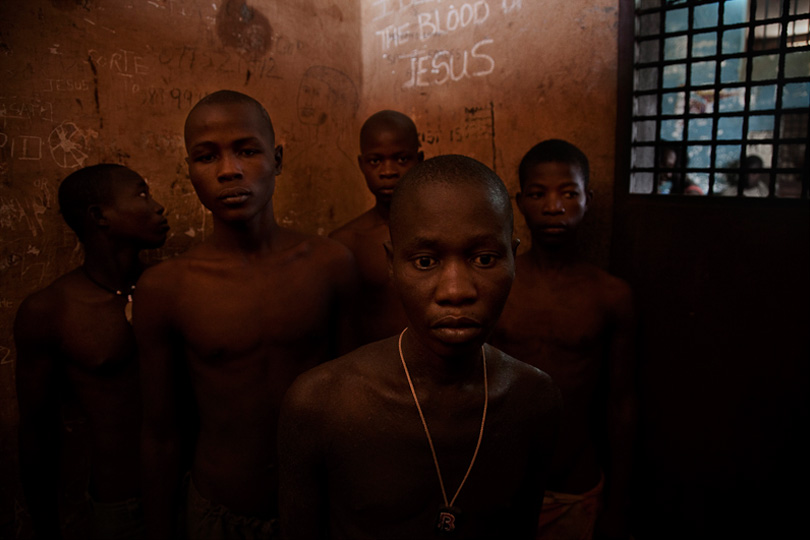
Among the 2010 Honorable Mentions was Spanish freelancer Fernando Moleres for his documents of children in Central Prison, usually known as Pademba Road Prison, in Sierra Leone’s capital Freetown.
Click here, scroll down and click on his name to see the full UNICEF portfolio. Click here for Moleres’ full portfolio.
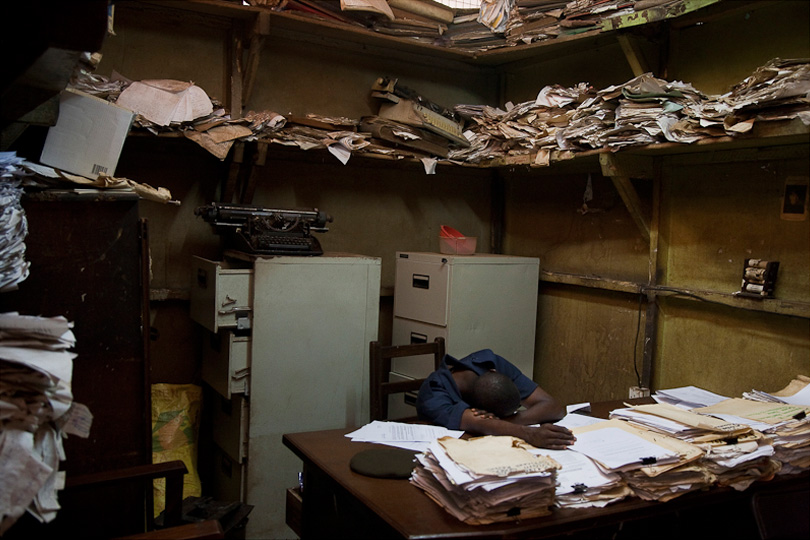
It’s often difficult to engage an audience with “new” images of prisons, but Moleres succeeded with the image of the collapsed official at his desk (above). The disorganisation of paperwork in this image works as metaphor for a broken institution – much as Hogarth’s littered furniture and bodies are metaphors for broken society.
It also works as a foil (for those who are familiar with) to Jan Banning’s Bureaucratics portfolio; even those of Banning’s subjects amid seeming disarray, never appear defeated like Moleres’ prison administrator.
“Pademba Road Prison was built for 300 prisoners, but it has more than 1,100 prisoners at present, many of whom are children,” explains Moleres.
Conditions are appalling and hearing trials is based more on chance than process. “Countless cases of unspeakable misery – that’s the life of those who are imprisoned here,” says Moleres. “There are no beds, mattresses or sanitary facilities. No electricity and no water. Hardly any food. Their relatives often don’t know anything about the fate of the prisoners.”
A broken, hectic institution.
Moleres continues with three examples, “Teenagers like 16-year-old Lebbise*, sentenced without trial to three years in prison because he allegedly stole 100,000 Leones (25 Euros). 17-year-old Hilmani*, sentenced without trial because he allegedly stole his uncle’s scooter. 17-year-old Manyu*, sentenced without trial to three years in prison because he allegedly stole two sheep. He died in prison in spring 2010.”
*Names changed
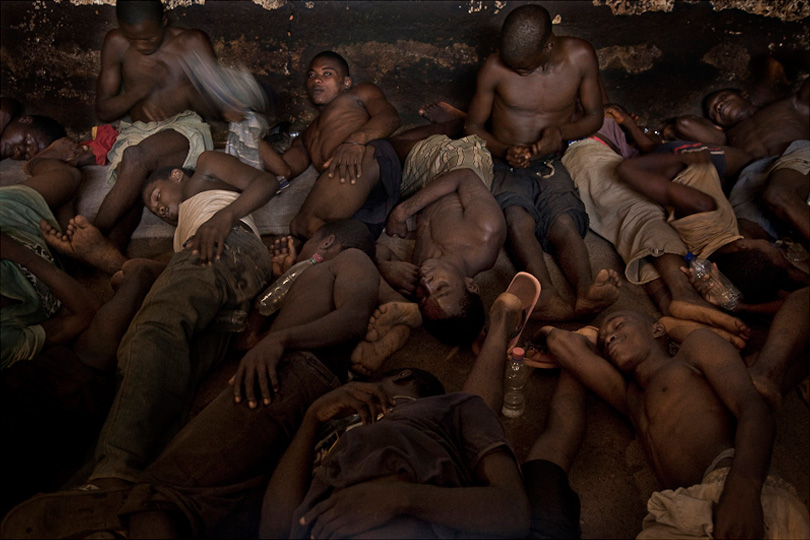

As an audience to this type of imagery, we should note that, in 2006, Lynsey Addario photographed in Pademba Road Prison as well as jails in Uganda. On the evidence of the photographs, conditions have not improved.
Moreles paints a picture of a wasteful, desperate and predatory environment in Pademba Road Prison. This is the common view of prisons in many African countries, and sadly the reality for children caught in these systems. Many of Moleres’ photographs repeat the scenes of prisons photographed by others working in Africa, eg, Nathalie Mohadjer (Burundi), Julie Remy (Guinea), Joao Silva (Malawi) and Tom Martin (Burundi).
The common threads of these portfolios is tension, filth, depleted light, malnutrition, overcrowding and the solitary gaze of a forlorn child.
Prisons are most destructive to young lives that are not prepared for induction to the unpredictable environment. I would say this of prisons in America and the UK just as readily.
UNICEF is right to shed light upon the most upsetting (and unseen) realities for the most disenfranchised children in our global society.
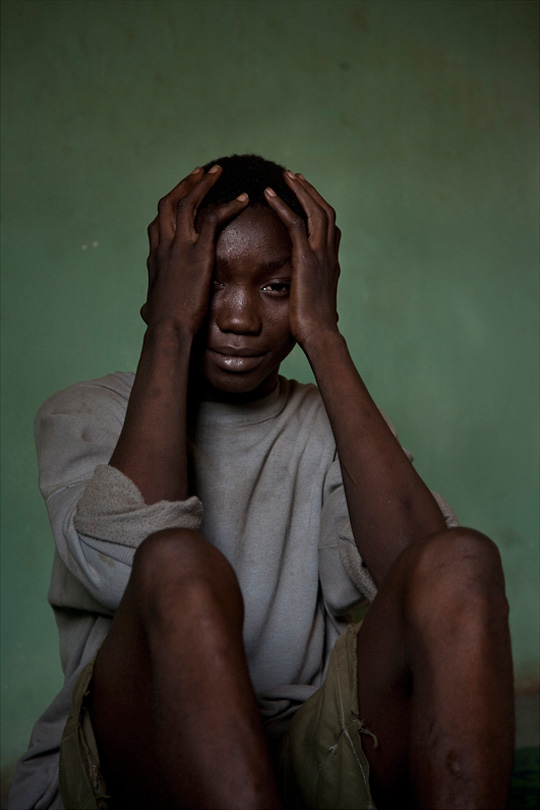
FERNANDO MOLERES
Moleres also won the Luis Valtuena International Humanitarian Photography Award for his story on the prison system in Sierra Leone.
Molores has photographed children and the issues that affect their since 1992. in over 30 countries. He has been recipient of a Mother Jones Grant, (1994), the “Juan Carlos King of Spain” International Prize (1995), an Erna and Victor Hasselblad Foundation Grant, Sweden (1996), a finalist for the Eugene Smith Prize (1997), World Press Photo award for “Children at work” daily life series (1998), W. Eugene Smith Prize, 2nd prize (1999), World Press Photo, Art category (2002), Revela International Award, Spain, (2009), Honorable Mention Philantropy Award (2010) and an Honorable mention for the Gijon international Prize.
http://www.fernandomoleres.com/
UNICEF PHOTO OF THE YEAR
The prizes for the UNICEF Photo of the Year, 2010 went to First: Ed Kashi; Second: Majid Saeedi; Third: GMB Akash.
© Poulomi Basu
The border areas between India and Pakistan are dangerous and in many areas lawless.
Indian women have very recently become part of the military response to arms dealing, drug smuggling and people trafficking.
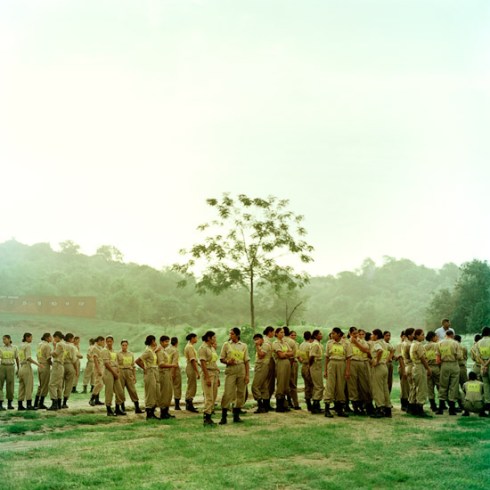
“On September 2009, India’s first ever batch of women soldiers of The Border Security Armed Force were deployed in these infamous borders of Punjab, Jammu & Kashmir as the country’s first line of defence,” says Basu.
Poulomi Basu spent time with the young women (aged 17-25), both Hindus and Muslims, at boot camps, homes and on the front-line documenting their “transformation from women to soldiers.”
Basu believes these women are not only fighting their enemies but also the military tradition and the attitudes of a patriarchal society. Less than 1% of India’s 1.2 million armed forces are women.
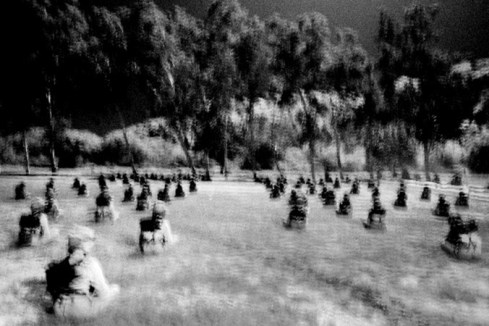
To Conquer Her Land is about new forms of stress – related to combatant life – that has never existed for Indian women before in history. Basu says To Conquer Her Land wrestles with “intricate issues of conflict, psychological warfare, class, youth, gender, love, peace, the concept of home, an undefined idea of patriotism, and the strength of the mind.”
The series is a beguiling mix of fine art portraiture, B&W documentary images and PJ style theatre-of-war shots. The mixture can be quite disorienting; blurry B&W akin to Japanese art photography interrupted by delicate double and group portraits in colour. Basu even goes all Robert-Capa on us!
© Poulomi Basu
ALSO WORTH A LOOK
Photographer, Rachel Papo’s Serial #3817131 follows young Israeli girls through the mandatory military service.
Papo and Basu’s work have things in common, although Papo’s work is concerned with her own biography. Papo says, “Serial #3817131 represents my effort to come to terms with the experiences of being a soldier from the perspective of an adult. My service had been a period of utter loneliness, mixed with apathy and pensiveness, and at the time I was too young to understand it all. Through the camera’s lens, I tried to reconstruct facets of my military life, hopeful to reconcile matters that had been left unresolved.”
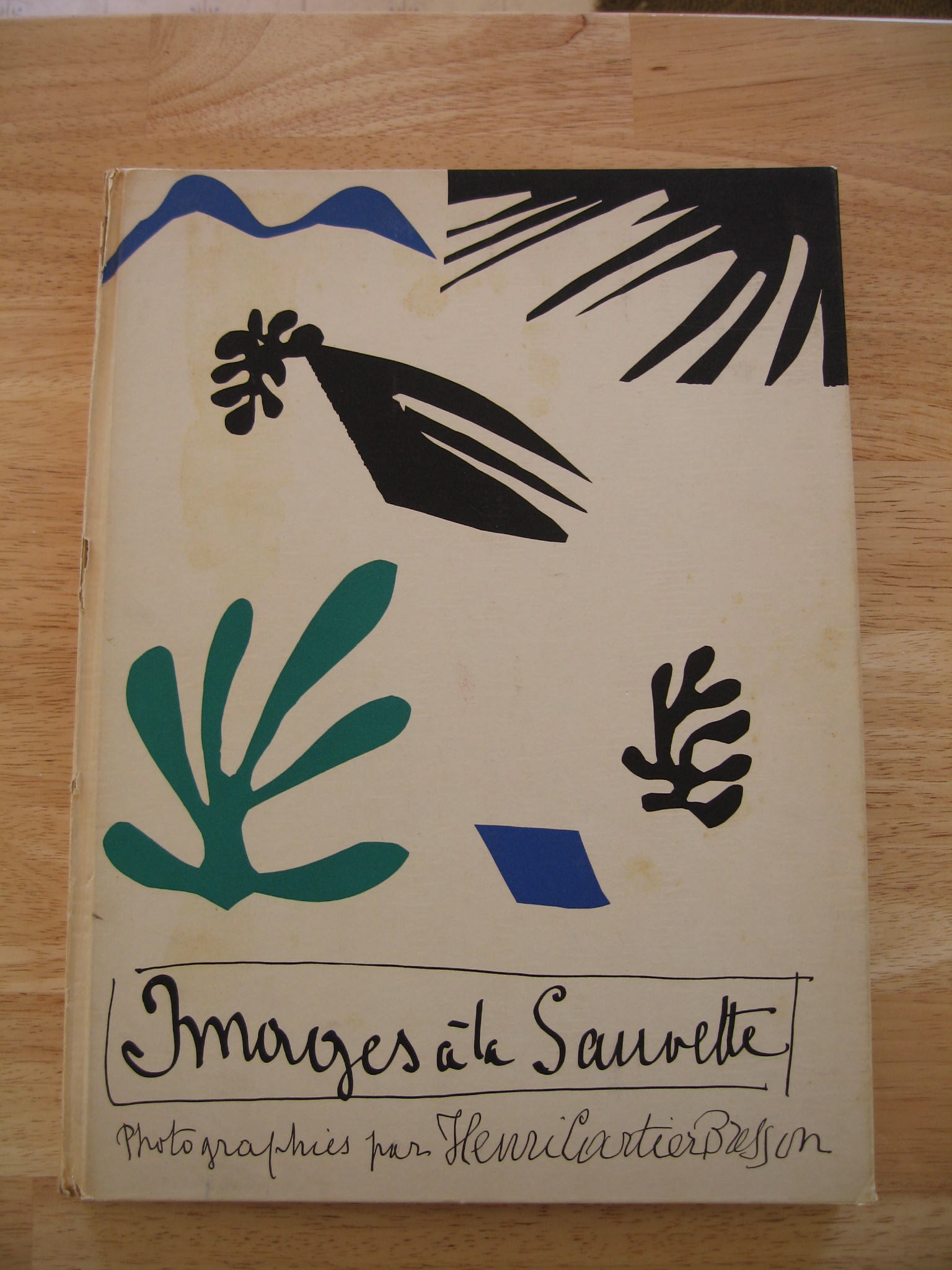
“Images à la Sauvette (The Decisive Moment) is a monograph of Cartier-Bresson’s best work, but it has overriding unifying factors that elevate it into a great photobook. The first is the concept of the ‘decisive moment’ itself, which defines the elegance of Cartier-Bresson’s imagery… No one achieved it more often or better, but allied with it was Cartier-Bresson’s thoroughly clear-eyed view of the world-astute, non-sentimental, beautiful, profound… Images à la Sauvette is one of the greatest of all photobooks”
Parr & Badger, The Photobook: A History, Vol. I, p.208
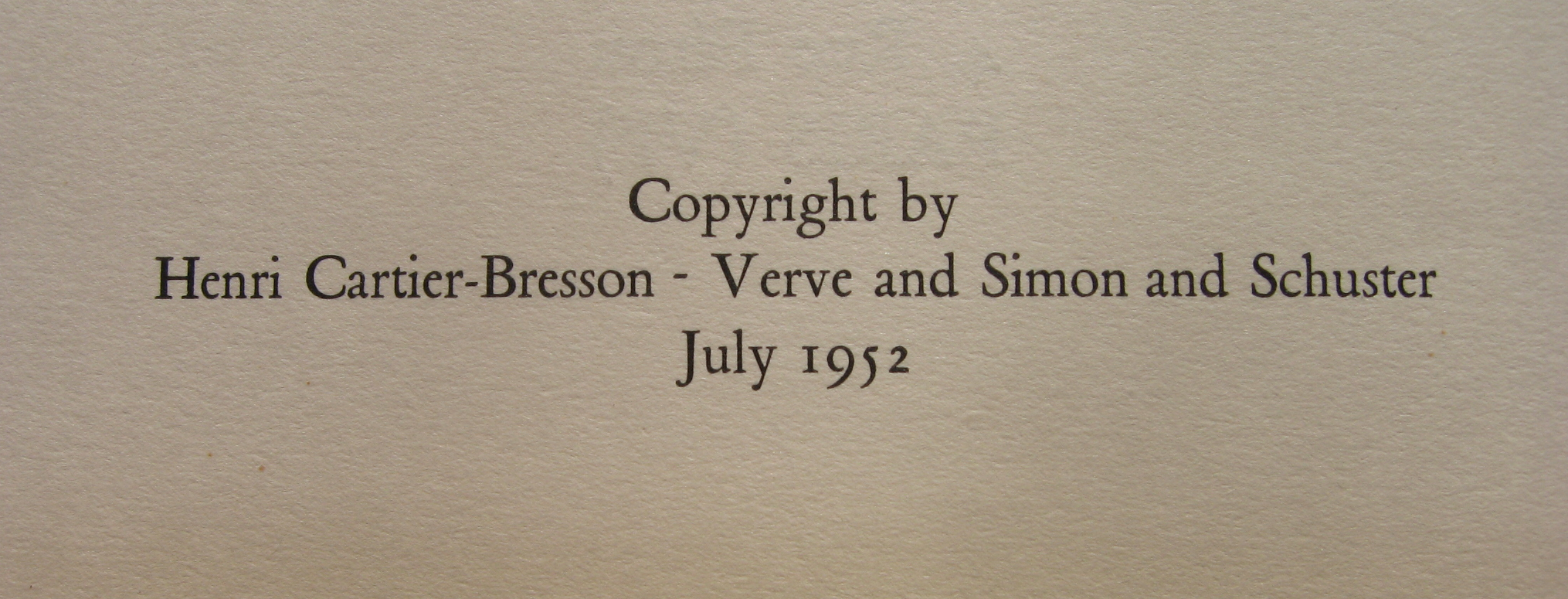
Last year, I mentioned the time I found one of the greatest photography monographs of all time in a bin full of donated books at Seattle’s Books to Prisoners program.
Well, now it’s up for sale on eBay. At $850 (or buy it now $1,300) it’s an absolute steal.
So, if you’ve got some spare change and fancy covering the postage on 400 packages of books to US prisoners, then pop on over and buy it.

Says Trolley Books:
The Arabic version of Alixandra Fazzina’s latest book A Million Shillings – Escape from Somalia (Trolley, 2010) was officially launched last Friday the 14th of January at the government buildings in Aden, Yemen, by António Guterres, the UN High Commissioner for Refugees.
Whilst the English version of the book keeps getting much attention and critical acclaim, both by the media and official institutions, it is hoped that the Arabic version will help it reach an even wider audience across the world, and to continue to advocate for the cause of these people who deserve a better treatment and better conditions, both at home and in the receiving countries.
The case for why this important book should be published in the language of the lands which it describes is as huge as my embarrassment that it had never, would never have, occurred to me.
My embarrassment is compounded by the fact that I rarely ever think about photobooks published outside of the English language.
FURTHER READING/VIEWING
Book review: A Million Shillings: Escape From Somalia by Alixandra Fazzina, Sean O’Hagan, the Guardian.
Gallery: A Million Shillings: Escape From Somalia, Alixandra Fazzina photographs of refugees and migrants from civil war-torn Somalia, the uprooted people who risk all to cross the Gulf of Aden in search of a better life.
Exodus, British Journal of Photography article on the work of photojournalists covering migration. Details extreme danger of Fazzina’s work in Somlalia.
Review: A Million Shillings: Escape from Somalia by Alixandra Fazzina, by Wayne Ford.
A Million Shillings also made it on to Sean O’Hagan and Colin Pantall‘s Best Books Lists for 2010.


 Prison Photography