
You are currently browsing petebrook’s articles.
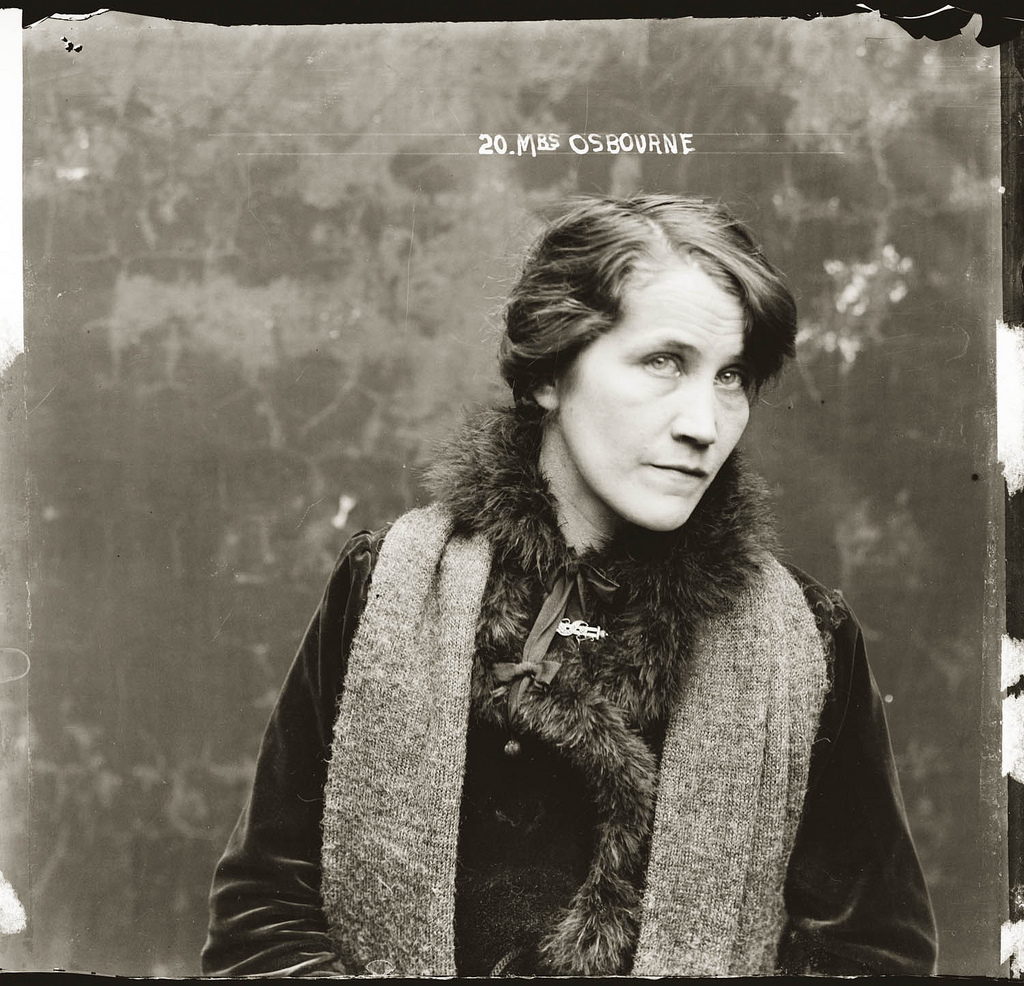
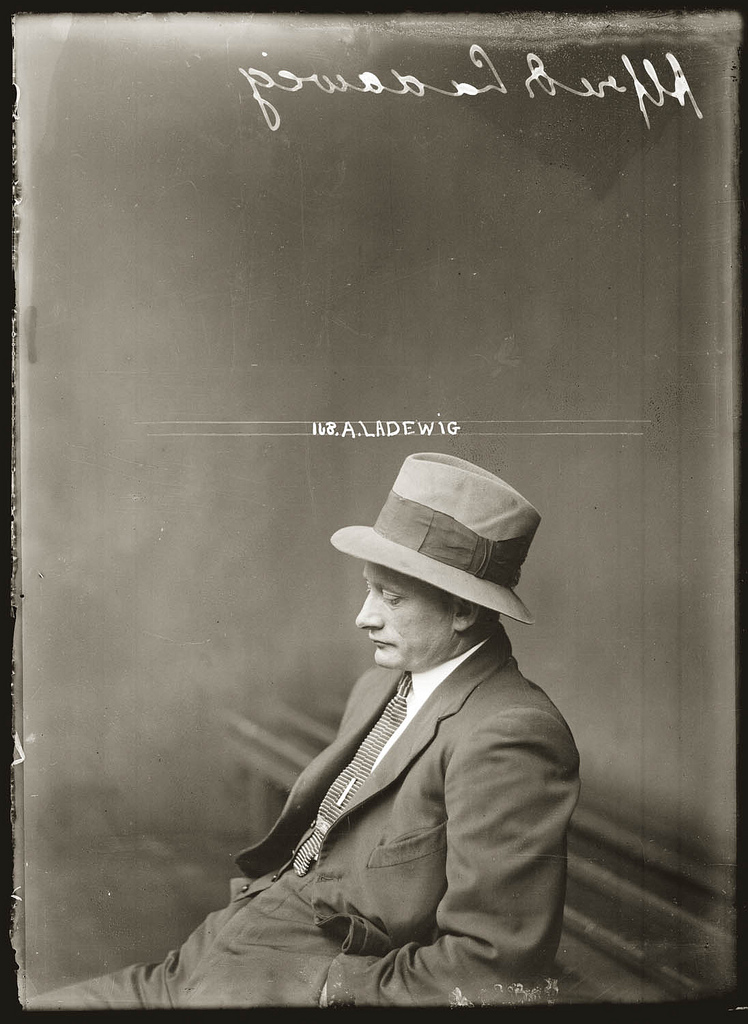
Rina and Ali, the boombastic team at KALW Informant, alerted me to a set of portraits from 1920’s Australia of individuals categorised as criminals.
These are portraits, not mugshots. Luminous, cathartic, full of weight. They’re the pre-August Sander, pre-Richard Avedon, pre-Irving Penn masterpieces of an anonymous police photographer.


PREVIOUSLY ON PRISON PHOTOGRAPHY
The collection is very similar to a set of mugshots from the archives of the Louisiana Division/City Archives in New Orleans.
______________________________________________
All images from the Historic Houses Trust website and the New South Wales Police Archives, Sydney.

This time last year Laura Sullivan for NPR reported on the US broken Bail Bond System. I celebrated her work and later, upon it’s resurfacing called Sullivan “An American Hero”
NPR contacted me recently to let me know Sullivan’s series won an Excellence in Broadcast Journalism Award.
Bravo!
From NPR:
NPR News is being honored with a 2010 Alfred I. duPont-Columbia University Silver Baton Award for excellence in broadcast journalism for a three-part investigative series revealing deep and costly flaws in the U.S. justice system’s bail bond process, it was announced today. Reported by NPR Correspondent Laura Sullivan and edited by Senior National Editor Steven Drummond, “Bonding for Profit” exposed deep inequities in the treatment of rich and poor defendants, how the bail industry is vested in maintaining those inequities and the surprising cost to taxpayers. The series aired on the NPR newsmagazines All Things Considered and Morning Edition, and is available online at npr.org: www.npr.org/series/122954677/behind-the-bail-bond-system
After months-long research into the perpetual and expensive overcrowding problem in U.S. prisons, Sullivan discovered that the bond system may be a major factor in keeping jails stuffed. “Bonding for Profit” focused on the dilemma of more than a half million petty, nonviolent offenders stuck in jail for months due to the simple reason of not being able to make bail – which is sometimes as little as $50 – at a $9 billion a year cost to taxpayers. In three reports, Sullivan revealed how stark options often force inmates to take prosecutor deals in exchange for early release, and how the bondsman lobby fights pretrial release programs proven to save millions of dollars.
The “Bonding For Profit” series produced emotional feedback from listeners, and has been cited by The Justice Department, the American Bar Association and lawmakers in Virginia, North Carolina and Florida in initiatives to examine current bail practices. The Awards Jury also praised Sullivan’s writing, saying it “crackles with insight and storytelling based on hard facts.”
The duPont-Columbia Awards will be presented at a ceremony on January 20 at Columbia University in New York. Accepting the awards on behalf of the organization are Laura Sullivan and Steve Drummond. Information about all of the winners announced this year is available at: www.dupont.org
The Alfred I. duPont-Columbia University Awards honoring overall excellence in broadcast journalism were established in 1942 by Jessie Ball duPont in memory of her late husband. Administered since 1968 by Columbia University’s Graduate School of Journalism, the awards are considered the broadcast equivalent of the Pulitzer Prize, which the Journalism School also administers.
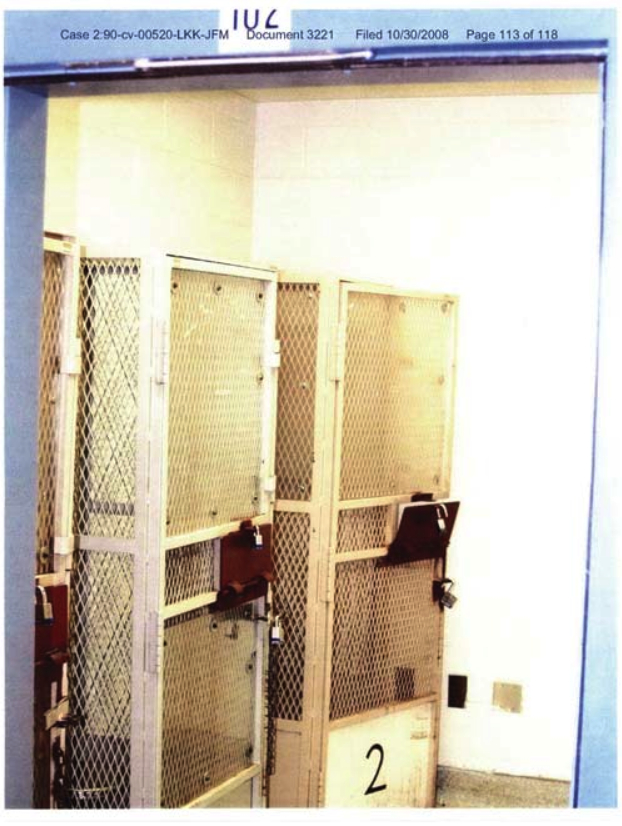
Governing Through Crime recently noted that photographs more than legalese may have swayed the opinion of Justice Breyer during December’s SCOTUS discussion of Schwarzenegger vs. Plata.
VIEW ALL PHOTOGRAPHS SUBMITTED HERE.
Breyer saw the photos in an amicus brief submitted by a coalition of religious group (PDF) in support of the plaintiff:
“It’s a big record. What I did was I – it refers to on-line evidence – I went and looked at the pictures, and the pictures are pretty horrendous to me. And I would say Page 10 of the religious group’s brief (PDF), for example, shows you one of them. And what [the religious groups] are saying is obvious. Just look at it. In conditions such as these, you cannot have mental health facilities that will stop people from killing themselves, and you cannot have medical facilities that will stop staph and tubercular infection.”
Schwarzenegger v. Plata is a federal class-action suit challenging health care conditions in the California prisons. In 2009, a California-based three-judge federal court found that massive overcrowding in the state’s prisons contributed to untreated mental illness, suicides and other preventable deaths of inmates. The overcrowding, the judges ruled, violated the Eighth Amendment rights of prisoners to be free from cruel and unusual punishment.
The three judge panel ordered the release of 35,000 – 45,000 prisoners to ease overcrowding and restore constitutional rights. Schwarzenegger and the CDCr authroities immediately appealed. SCOTUS are currently deciding if the three judge panel was within jurisdiction to order the mass release of prisoners; AND if overcrowding does directly cause poor medical and mental health-care.
Commentators have noted the apparent empathy of many Justices. It is common knowledge that California’s prison policy has been tumorous and it is no surprise it has come to the most drastic court ordered release of prisoners in US history to solve the problem. The Atlanta Post reports California Sheds Light On The Need for Criminal Justice Reform.
Thanks to John Malsbary for the tip.
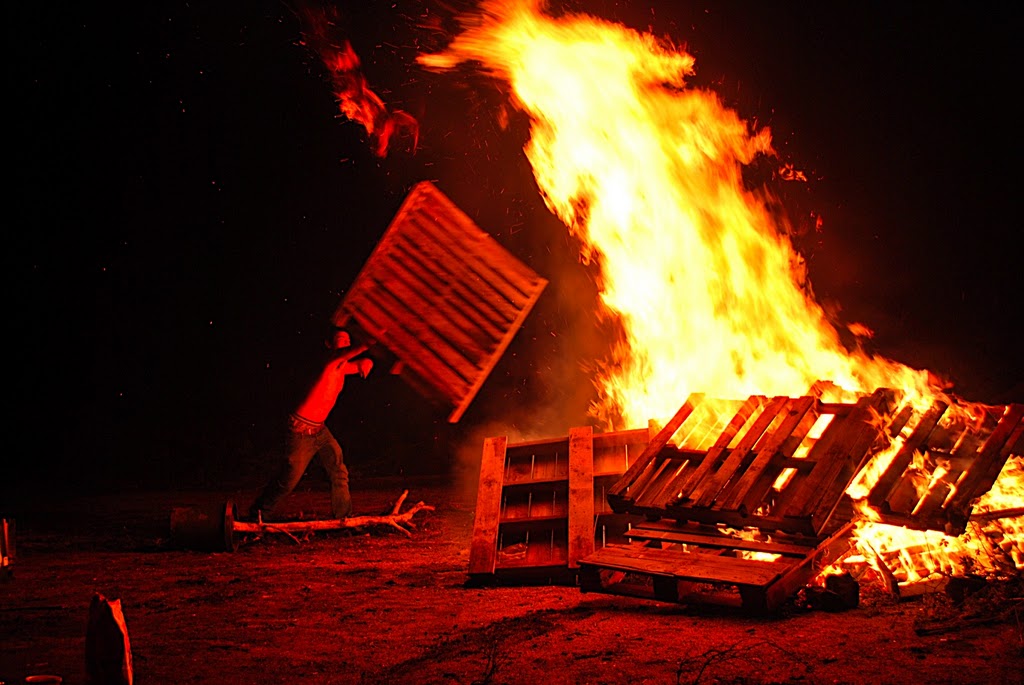
2011 is the new 2010. Should be an interesting one. I brought in the new year with the King of Beers, bongo drums, Extra Dry Korbel and 80 burning palettes. Now back in Seattle and back to work.
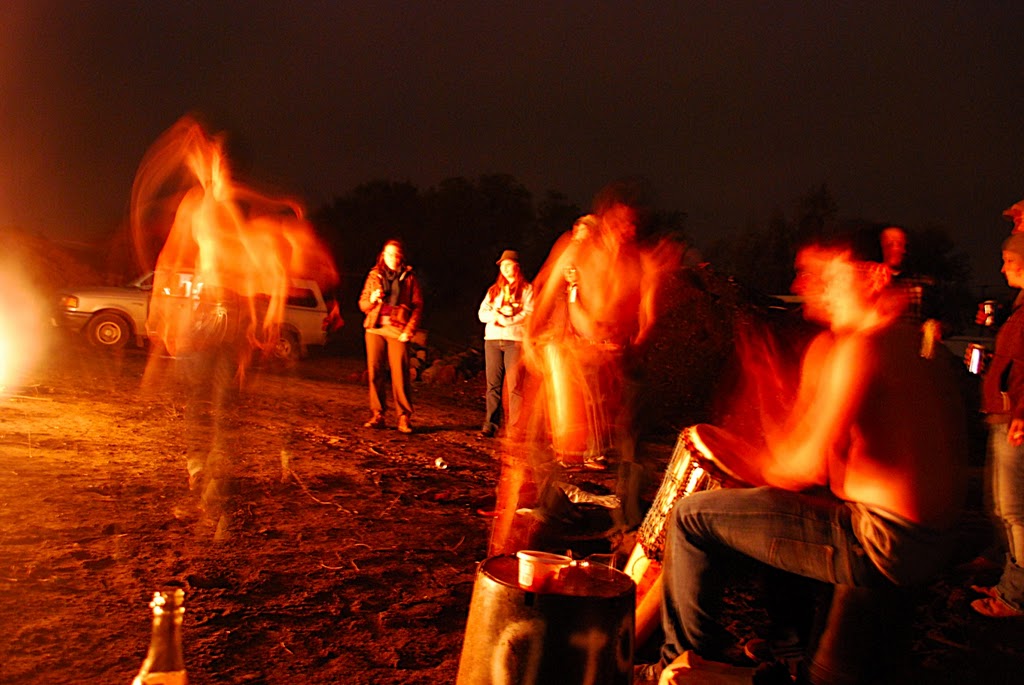


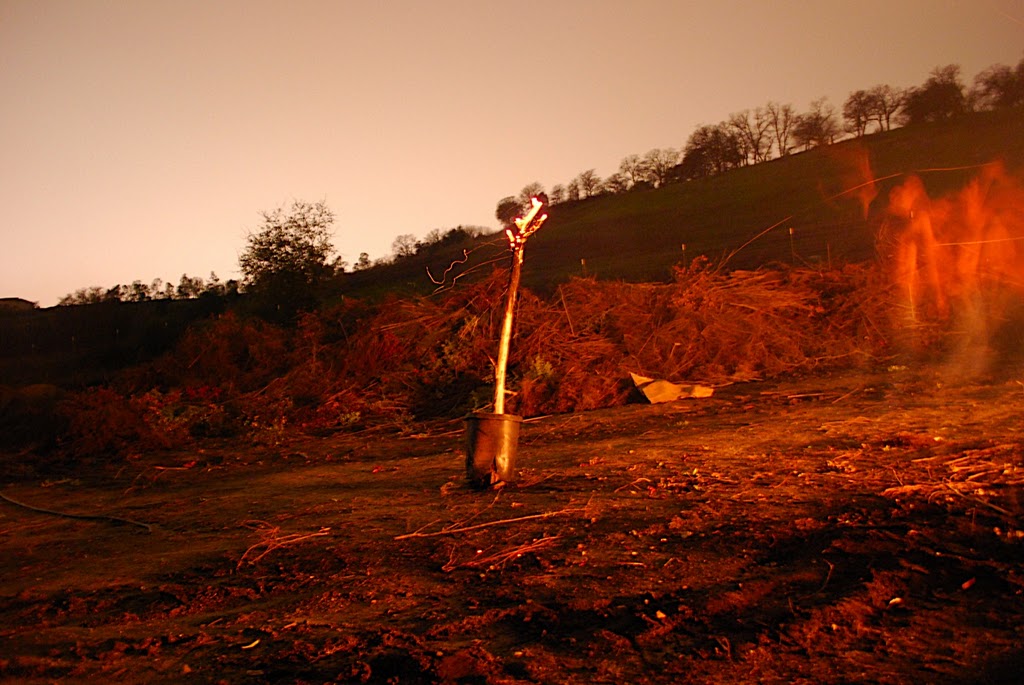
Thanks to Joel for the images.

Mrs. Reagan sitting on Santa Claus (Mr. T) lap after reviewing White House Chrismas Decorations with the press. 12/12/83.
Source: White House photo via Reagan Library, # C18929-22.

Pre-cast Concrete Prison Cell. Computer Rendering by Matt Scott
I was interested to read A Typical Day for PFC Bradley Manning, a blog post by David E. Coombs, the lawyer for Wikileaks’ leaker suspect Bradley Manning.
Manning has been in Quantico Confinement Facility, a maximum security military prison since July of this year. Manning is under Prevention of Injury (POI) watch. Whether Manning is a danger to himself or not we cannot know, but we can consider the strict regime such status brings in terms of scrutiny and the control the prison authority has over his waking (and sleeping) body.
Excerpts:
At 5:00 a.m. he is woken up (on weekends, he is allowed to sleep until 7:00 a.m.). Under the rules for the confinement facility, he is not allowed to sleep at anytime between 5:00 a.m. and 8:00 p.m. If he attempts to sleep during those hours, he will be made to sit up or stand by the guards.
The guards are required to check on PFC Manning every five minutes by asking him if he is okay. PFC Manning is required to respond in some affirmative manner. At night, if the guards cannot see PFC Manning clearly, because he has a blanket over his head or is curled up towards the wall, they will wake him in order to ensure he is okay.
He is prevented from exercising in his cell. If he attempts to do push-ups, sit-ups, or any other form of exercise he will be forced to stop.
He does receive one hour of “exercise” outside of his cell daily. He is taken to an empty room and only allowed to walk. PFC Manning normally just walks figure eights in the room for the entire hour. If he indicates that he no long feels like walking, he is immediately returned to his cell.
When PFC Manning goes to sleep, he is required to strip down to his boxer shorts and surrender his clothing to the guards. His clothing is returned to him the next morning.
The body disciplined, no?

© Quico Garcia
In September, Ariel Rubin’s VICE article The Children of Kampiringisa was accompanied by Quico Garcia’s pictures, mostly portraits of the child prisoners.
The article describes a fetid facility, where child “offenders” (sometimes they’ve been dropped off by parents for poor behaviour) share cells with Kampala’s homeless children. The overcrowded facility breaks international law. Instead of rehabilitation, children endure malnutrition and diseases such as Malaria that – due to lack of medicines – they must “wait out.”
Upon entry into the rehabilitation prison, children are cooped in the “black house”—a barred room where they sleep on the floor, scramble for space and may to procure a filthy blanket. After 25 days they are moved to a dormitory with their own bed.
Garcia’s images for the piece do not show any of the squalid conditions. To the contrary his portraits are intimate and devoid of the trauma Rubin describes. One presumes, the Kampiringisa authorities would not allow photographs of the most desperate spaces and inmates.
VICE’s editorial decision to pair Rubin’s succinct and stark description of Kampiringisa with Garcia’s portraits leads to a dissonance between text and image and potentially misleads the reader/viewer.
Read the article here and view more of Quico Garcia‘s work from Kampiringisa here.
Until three weeks ago, Aaron Bady was a blogger with limited reach. His post Julian Assange and the Computer Conspiracy; “To destroy this invisible government” written from his Mac laptop in Berkeley (Bady’s a final year PhD student in African Literature) sent his stats skyward and altered the way journalists were thinking about Wikileaks … even if they still shied away from the type of analysis Bady eschewed.
Alex Madrigal (another remarkable writer of insight and entertainment) explains in The Unknown Blogger Who Changed WikiLeaks Coverage, The Atlantic, how Bady’s work was spread, read, answered and commended by bloggers and mainstream journalists alike.
Julian Assange and the Computer Conspiracy; “To destroy this invisible government” is as simple as it is opinion-shaping. In the spirit of Wikileaks, Bady relies on two primary sources by the same author and of the same year – Assange’s State and Terrorist Conspiracies (2006) and Conspiracy as Governance (2006) (both available in this single PDF).
Bady breaks Assange’s writing – which should feasibly be interpreted as an underpinning to Wikileaks’ philosophy – into pieces, making it digestible; making it illuminating:
[Assange] decides that the most effective way to attack this kind of organization would be to make “leaks” a fundamental part of the conspiracy’s information environment. Which is why the point is not that particular leaks are specifically effective. Wikileaks does not leak something like the “Collateral Murder” video as a way of putting an end to that particular military tactic; that would be to target a specific leg of the hydra even as it grows two more. Instead, the idea is that increasing the porousness of the conspiracy’s information system will impede its functioning, that the conspiracy will turn against itself in self-defense, clamping down on its own information flows in ways that will then impede its own cognitive function. You destroy the conspiracy, in [Assange’s] words, by making it so paranoid of itself that it can no longer conspire:
The more secretive or unjust an organization is, the more leaks induce fear and paranoia in its leadership and planning coterie. This must result in minimization of efficient internal communications mechanisms (an increase in cognitive “secrecy tax”) and consequent system-wide cognitive decline resulting in decreased ability to hold onto power as the environment demands adaption. Hence in a world where leaking is easy, secretive or unjust systems are nonlinearly hit relative to open, just systems. Since unjust systems, by their nature induce opponents, and in many places barely have the upper hand, mass leaking leaves them exquisitely vulnerable to those who seek to replace them with more open forms of governance.
The leak, in other words, is only the catalyst for the desired counter-overreaction; Wikileaks wants to provoke the conspiracy into turning off its own brain in response to the threat. As it tries to plug its own holes and find the leakers, [Assange] reasons, its component elements will de-synchronize from and turn against each other, de-link from the central processing network, and come undone. Even if all the elements of the conspiracy still exist, in this sense, depriving themselves of a vigorous flow of information to connect them all together as a conspiracy prevents them from acting as a conspiracy.
Theorised and defined as conspiracy, Wikileaks’ challenge to – and Bady’s distillation of – the structure of secret diplomatic communications compliments David Campbell’s analysis of a networked world. It also precedes my comment to Campbell; that the praxis of government, corporate and public relations will change drastically in the wake of Cablegate and Wikileaks. In response, Campbell agrees that this maybe inevitable.
Hopefully the implications of Wikileaks will be a transparent future for the betterment of all; the dismemberment of closed and closeted power that operates unchallenged for decades as American diplomacy has.
AARON BADY
On a personal level, Bady’s quality of writing is invigorating, and in the larger context it shows how far thoughtful (blog) writing can reach. I need to be careful here as Bady has strong criticisms of ego, journalism and the limitations of thoughtful writers to apply themselves solely to material – as does Assange – but I just want to say that Bady’s piece is not a flash in the pan.
Bady’s writing is of the highest order. I’ve heard many criticisms about Facebook, and many of them very good, but no position has maginified the acute problem of Zuckerberg’s philosophy as Bady’s The Soul of Mark Zuckerberg: What DuBois can tell us about Facebook.
Since the publication of his breakthrough piece, Bady has followed up with tenacious balance and muck-raking in equal measure. As an example, did you know US companies in Afghanistan are pimps for paedophiles? Bady:
As Boing Boing boils it down, we now know that Dyncorp, “a company, headquartered in DC with Texas offices, helped pimp out little boys as sex slaves to stoned cops in Afghanistan.” Not actualy that surprising. What we didn‘t know, though, was that Afghanistan’s Minister of Interior was told to hush things up by President Karzai and that he then requested the American assistant ambassador put pressure on journalists to keep quiet about it, because it could “endanger lives.”
Follow Aaron’s blog and on Twitter: @zunguzungu

 Prison Photography