
You are currently browsing petebrook’s articles.

Blimey! It’s actually happening. Prison Photography on the Road is fully funded … and then some.
I’ve got the cash, the collaborators and the car. All I need are places to lay my head.
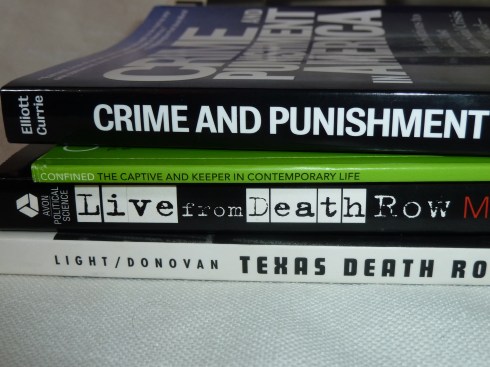
To make the prospect of opening your place to an itinerant more appealing I’m offering four books to sweeten the deal:
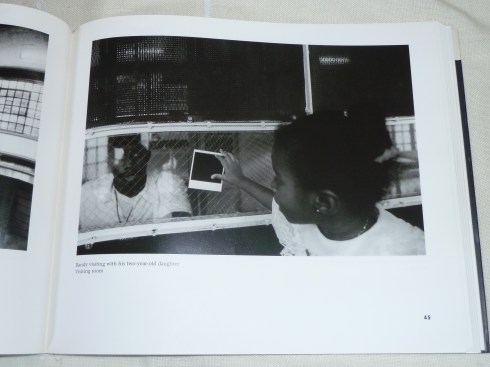
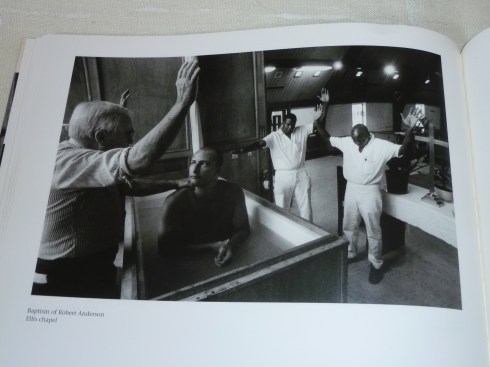
Texas Death Row by Ken Light and Suzanne Donovan – one of the most remarkable photobooks of prison subject matter given Light’s unprecedented access.
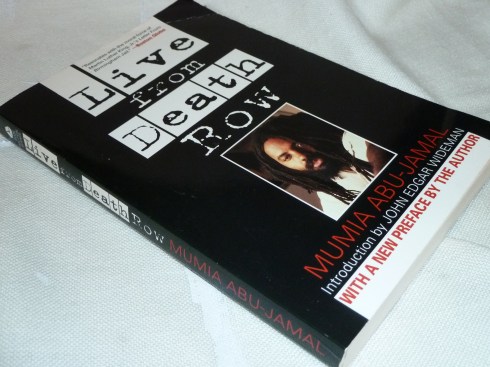
Live from Death Row, by Mumia Abu Jamal – commentary on the physical and psychological hardship of death row and on the U.S. prison systems by America’s most famous incarcerated activist. A landmark work.
Crime and Punishment in America, by Elliott Currie – one of the earliest analyses of the growing U.S. prison system written for the lay person. “Currie concludes that America can combat the problem of violent crime if it wants to. The question is, are affluent Americans willing to make the effort, or will they continue to set up their own ermine-lined ghettos, while pouring tax-money into prisons rather than schools,” says Timothy Mason.
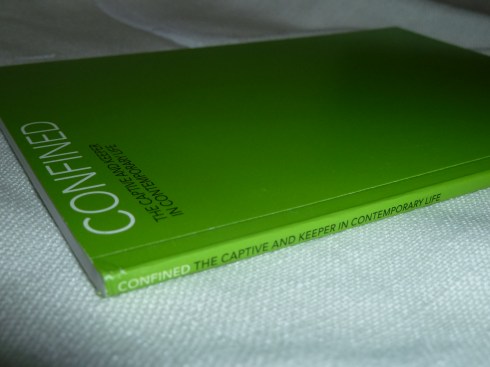
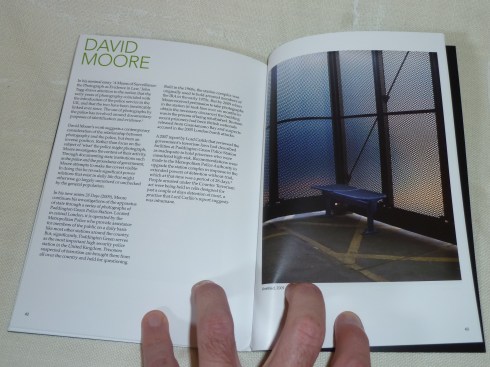
Confined exhibition catalogue including the work of photographers Juergen Chill, Edmund Clark, John Darwell, Dornith Doherty, Ben Graville, David Maisel and David Moore. And with a foreword by yours truly.
LEGALESE
All you have to do to be entered into the draw for these four books is to send an email with your name and home city to me at prisonphotography [at] gmail [dot] com. Please include ‘PPOTR Book Giveaway’ in the subject line.
The PPOTR book giveaway is open to anyone in the world.
For those of you who enter and live in the U.S., know that by doing so there’s a chance I’ll be taking up temporary residence on your sofa.
The winner will be announced a week from today, on the 4th October.
PICTURES!







Magnum photographer, Mikhael Subotzky has made available a print at the $1,000 funding level of my Kickstarter project Prison Photography on the Road.
It is a framed photograph made by a student during one of his photography workshops in South African prisons.
Photographer: Incarcerated student of Mikhael Subotzky
Title: Maplank in the Workshop, Pollsmoor Prison, 2005
Year: 2005
Print: B&W, silver gelatin print on fiber paper, 35x50cm (frame approx 50x65cm)
Edition: # 1/9
Print, PLUS postcard, mixtape and self=published book = $1000. BUY NOW
A NOTE ON THE PRINTS SALE
As with all the unsold prints if Mikhael’s doesn’t get snapped up, it’ll return to its maker, and possibly a darkened drawer.
There is one week left of fundraising. Even though I’ve passed my fundraising target, I don’t want to see the figure stop rising as I have very special plans for the extra dough in the form of spin off projects (the scope of which all depend on who much extra is secured).
Please visit this page for all the details on available prints. Tell all your loaded photofolk friends to pay a visit and pick up a print.

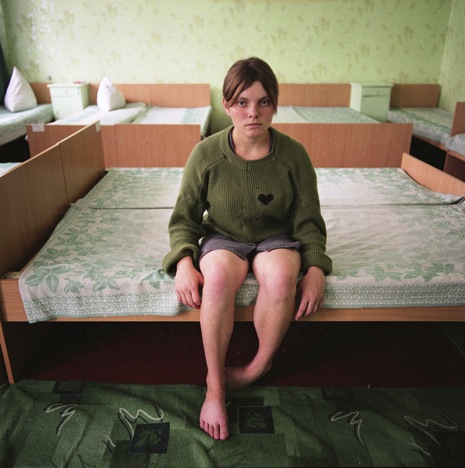
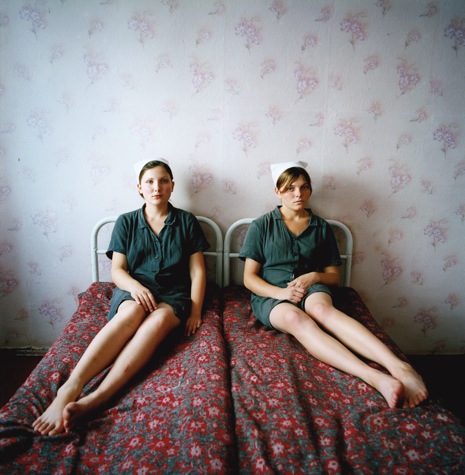
Last month the New Yorker Photobooth ran a sneak preview of Michal Chelbin‘s tentatively titled Locked series. At the time, I responded with some personal frustration that her portraits didn’t tell me enough of the subject’s experience. Having invited Chelbin to answer a few questions it is clear she uses ambiguity and mystery as tactics in her photography.
Q & A
When I first saw works from Locked I was fascinated, but I was also frustrated because I know so little about this region of the world. This was compounded by the incredible beauty of your portraits. After people have seen your portraits, what do you hope people will do, go on to think, talk about or read?
While I shoot almost all my work in Russia or the Ukraine, I feel that my interest is not social or geographical, but rather a mythological one. I return to these countries because they provide me with the visual contrasts that are the basic set up I am searching for – between old and new, odd and ordinary, as well as fantasy and reality.
When I record a scene, my aim is to create a mixture of plain information and riddles so that not everything is resolved in the image. A series of questions is asked when looking at these photographs – Who is this person? Why is he dressed like this? What does it mean to be locked? Is it a human act? Is it fair? What do we see when we look at a locked person? What do we usually think of when we hear the word “prison?” Do we try to find that his living conditions are reasonable, to comfort ourselves? Do we punish him with our eyes? Can we guess what a person’s crime is just by looking at his portrait? Does a killer still look like a killer? Is it human to be weak and murderous at the same time?
My intentions are to confuse the viewer and to confront him with these questions, which are the same questions with which I myself still struggle with.
You’ve worked on this project for three years. You’re obviously very committed. Why prisons? Why prisoners?
Three years ago, while visiting the Ukraine, I passed along a high brick wall. Next to it stood two men. Our eyes crossed and I can still remember their eyes today – they expressed this mesmerizing human blend of fear and cruelty. I was later told this was a men’s prison and from that moment I wanted to see what was inside.
Why three years?
All my projects take more than one year to complete usually. I didn’t just go to one prison for several days and that’s it – this might have worked for a documentary photographer, but not for portraits, at least not for me. I shoot a lot in each trip but chose very few so to have a complete body of work require several trips. I wanted to visit several prisons, which meant [spending] more time. It takes time to organize.
How does Locked relate to your earlier bodies of work?
I think it is a direct continuation of Strangely Familiar and The Black Eye. I try to focus on people who have what I refer to as a legendary quality about them – a mix between odd and ordinary. I search for faces and eyes who express the complexities of life and for a gaze that transcends from the private to the common. I found it in the prison too.

From the series Strangely Familiar © Michal Chelbin

From the series The Black Eye © Michal Chelbin
How did you get inside the prisons?
Unfortunately, due to the nature of the project and the subject matter, I can not disclose how I got access.
You asked the subjects what they had been sentenced for. Is this information you’ll share with us, the audience?
I asked each subject what was he sentenced for, but only after the photo session was over. I didn’t want to this knowledge to influence me while shooting. I am thinking quite a bit about whether to share or not share this information. Usually people who see the images ask me what this person did and most viewers do want to know. But I don’t want it to become something “documentary”, like “this is a portrait of a rapist etc”.
I think that when the work will be shown in an exhibition, I will put this info available for the viewers but not next to the photograph (like in a separate list). Same in the monograph – maybe a list of plates in the end of the book, but not next to the image.
What makes a good portrait?
God … I wish I knew. Well, I can say that my images take the form of portraits and focus on visual contrasts. I find people to be the perfect subjects; they possess contrasting qualities that seemingly cannot co-exist in them as humans.
I like it when a photograph leaves a taste of mystery, or in other words, I think it works when an image presents more questions than answers. For me, the image is like a gate to thousand possible stories, some appealing and some troubling.
People often ask me about my interpretation to my photographs, since the images can be read in different, sometimes contradicting ways. My answer is that I honestly don’t know, and my opinion doesn’t really matter.
Were there any surprises or difficulties during the project?
There were hardly any difficulties with the subjects. Most of them agreed to be photographed. Especially in portraiture, it is impossible to photograph someone who doesn’t want to be photographed. So if someone refused, I respected it.
POSTSCRIPT
I neglected to ask Chelbin why the majority of her subjects are youths. As she said, Locked is a continuation of her other series Strangely Familiar and The Black Eye which are about gymnast/circus performers and young athletes, respectively. Through her lens, juveniles encapsulate contradiction.
I found this quote (my bolding) by Chelbin from an interview with Creative&Live about Strangely Familiar in which she describes her approach:
“Many of my subjects are adolescents, in this difficult age between innocence and experience and I try to create an informal scene, in which they directly confront the viewer. As performers I think they mature very quickly – with the seductive costumes, the show it self might be more for adults then for kids. They always had a fake smile on their face, “a mask”, so my first instruction was to tell them not to smile. It allowed me to focus on them as individuals.”
I am left to wonder if – outside the frame of her portraits – any of Chelbin’s incarcerated subjects have cause to smile?

FURTHER READING
A Conversation with Michal Chelbin, on Nympthoto
Interviews: Michal Chelbin and The Black Eye, on photo-eye
Spoken Word: Michal Chelbin, on Workprints
Sailboats and Swans: The Prisons of Russia and Ukraine, on TIME’s Lightbox

Families of youth incarcerated at the Walnut Grove Youth Correctional Facility in Mississippi listen to testimony at a hearing about alleged inmate abuse. © Phoebe Ferguson/NPR
A couple of months ago colleagues and I discussed Inside San Quentin, Inmates Go To College, a story about the San Quentin Prison University Project, aired on NPR. Our discussion wasn’t about the content of the story as we’re all very familiar with that excellent education program. (I do encourage you to listen to the piece).
Rather we noted the sharp increase in the number of stories about prisons on NPR over the last 12 months.
I wanted to point it out for my own peace of mind. In several interviews recently I have bemoaned the lack of meaningful national media coverage of prisons and sentencing issues. I don’t want to mislead anyone and suggest that good analysis is entirely absent because that isn’t true. It’s just that NPR is doing the heavy lifting at the moment.
Stories in the past year have included: female entrepreneurs in an Oregon prison; Laura Sullivan’s two-parter on private prisons and immigration in Arizona (one and two); Buddhist meditation in an Alabama prison; youth incarceration in Mississippi, in two parts (one and two); and the sanctuary of prison libraries.
The difficulty of re-entry was at issue in the segment For Many Ex-Offenders, Poverty Follows Prison.
Not to mention Laura Sullivan‘s heroic journalism – in three parts – on the inequities of the bail bond system (one, two and three.)
This American Life has had at least two stories about the criminal justice system. One on a corrupt juvenile court in Walnut Grove in Mississippi and the other about a father/son adoption story behind prison walls.
There’s also the series Prison Diaries from a while ago.
Glad I got that off my chest.

Photographers attempt to capture a picture of Julian Assange, believed to be in this prison van, leaving Westminster Magistrates Court on December 7, 2010 in London, England. (Photo by Peter Macdiarmid/Getty Images)
Today I came across this image by Peter MacDiarmid. It converges a few threads I’ve noted before.
I don’t know how many times Assange went to court along the public streets of London but it’s worth looking at another of McDiarmid’s images, this time of Assange in the interior of a custody van.
SERCO, the company providing the custody van is as global as Wikileaks itself and specialises in lock-ups and government services.
The Wikileaks saga has gone relatively quiet recently. Bradley Manning’s circumstances are no longer top of the hour. The Bradley Manning Support Network describes his conditions of detention:
Although Bradley has not yet been tried, he has been held in solitary confinement since May 2010. He has been denied meaningful exercise, social interaction, sunlight, and has occasionally been kept completely naked. These conditions are unique to Bradley and are illegal even under US military law as they amount to extreme pre-trial punishment.
Contrary to this account are reports that Manning is no longer in total lockdown. In April, he was transferred to a medium security facility in Fort Leavenworth.
If we are to compare experiences, remember, Assange in the scenario above was also under pre-trial detention.
Solitary confinement or not, Bradley Manning – regularly the subject of bullying -is not in the best shape to cope with incarceration. In 2007, early in Manning’s army career, doctors reported he was “mentally unstable” and recommended he be “discharged immediately”. The recommendation was rejected and due to a shortage of computer intelligence analysts, Manning was recycled back into service and pushed through the system.
Currently, Manning is heavily medicated with anti-depressants.
The U.S. military has made no comment on Manning’s psychological condition other than to say it is being investigated. He faces court marshal in December 2011. Manning faces 52 years if he is found guilty. That’s a long time for someone who, according to this credible 18-minute presentation, is a shell already.
The theatre surrounding Assange’s charges, detention, court dates and bail are in stark contrast to the near invisibility of Manning’s transfers and detention. With Assange remaining bold, vocal and in the public eye, Manning’s invisibility is even more conspicuousness. By numerous definitions, it seems Bradley Manning is already fading away.

British photographer Sebastian Lister is having a joint exhibition with Russian photographer Sergey Ponomarev entitled Russian Prison Theatre – A Photographic Journal at Pushkin House, London’s Russian Cultural Centre.
Earlier this year, I put Sebastian’s work into perspective with two contrasting posts; the first about the stereotypes of Russian prison imagery and the second about meaningful theatre programs as documented by Sebastian.
About the exhibition:
In 2009, British theatre director Alex Dower worked with prisoners in Perm Prison Colony 29, as part of Territoria International Contemporary Theatre Festival, staging three short stories – Chekhov’s The Burbot, Isaac Babel’s My First Goose, and prisoner Albert Sadrutdinov’s Butterfly.
Alex was accompanied by two leading photographers. The result is a set of extraordinary photographs that together provide a deep insight into contemporary Russian prison life – the prisoners, their work and their guards – as well as a view of a remarkable theatre project that captured the imaginations of the group of prisoners and took them on a journey beyond the narrow confines of their lives.
This collection of award-winning images presages the continuation of the companies work, in a prison in Kazan in November 2011.
Exhibition runs from Friday 16 Sept – Friday 7 October 2011, 4pm to 7pm Monday to Friday (and Sat 17 Sept – Sun 18 Sept, 11am to 4pm), at Pushkin House, 5A Bloomsbury Square, London, WC1A 2TA. Entrance is free.
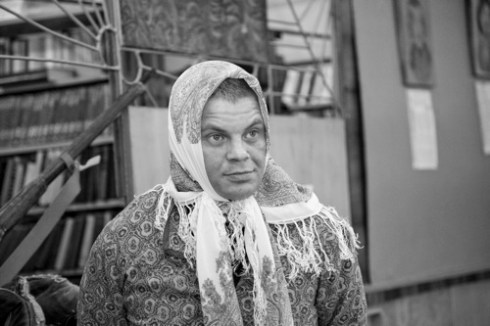
Sergei as Babushka © Sebastian Lister

Spanish photographer Fernando Moleres has embarked on a singlehanded and single-minded mission to improve the lives of juvenile prisons in Sierra Leone. His interview Visa Pour l’Image: Fernando Moleres’ struggle to help juvenile prisoners in Sierra Leone at the British Journal of Photography is a must read.
Moleres speaks of the incredible difficulty to raise money for his work – not his photography work, but his work to connect these children with their families (many of whom are unaware their children are incarcearated) and also his work to provide bail so as to “prevent the children seeing the walls of a jail in the first place.”
Moleres is clearly disillusioned by the lack of forthcoming support from groups he’d expect to be solid allies. Here’s some choose quotes that are a challenge to politicians and NGOs alike (my bolding):
“[In African prisons] you have more chances of dying in these prisons than anywhere else – you can die of diseases, malnutrition. Also, injustice is more flagrant than anywhere else. There are barely any lawyers, some detainees have spent years in prison without even going in front of a court. There is a deep injustice – deeper than in any other country such as Russia, India, Israel or the United States.”
“People don’t realise the extent of the injustice present in these prisons. They are forgotten by everyone. When I was asking for help to NGOs – the Red Cross, Médecins du Monde, etc. – no one, absolutely no one wanted to help me. Of course, I was there on my own initiative; so I didn’t have a project they could study, send to Europe for the green light, which would then be rescinded… There’s so much bureaucracy that in these cases it would just not be possible.”
“I’m the only one paying for all of this. I’m spending my own money. This exhibition, which is travelling around Spain at the moment, has received an award from the NGO Medecins du Monde. During the award ceremony, I asked them if they could help me finance this project. Their answer was no.“
“I think it would be easy for an organisation to force Sierra Leone to do something. The United Nations, for example, would be the perfect organisation to do so. Talking about the United Nations, when I was in Sierra Leone, a representative from the organisation came to the prison to visit the detainees. I went with him. He talked with a few dealers, the guards, etc. But when other detainees came to see him to denounce the injustice of the entire system, his answer was: “I’m not here to solve your personal problems.” This man, whose name is Antonio Maria Costa [his official title is Executive Director of the United Nations Office on Drugs and Crime (UNODC) and Director-General of the United Nations Office in Vienna], has access to the country’s vice president and home affairs minister. He could have done something about it, but he chose not to.“
Depressing stuff.
For my more general thoughts on Moleres’ work from Sierra Leone and other photographers who’ve documented juvenile detention in Africa see Fernando Moleres: ‘Merciless Justice’ from January, 2011.

Schedule, 50x50cm, Ed. 3+2P/A
The two airliners flown into the World Trade Center towers were props of a devastatingly selfish and lunatic ideology. Ten years ago, my Dad and I watched the telly in his front room and watched the first tower burn and the second plane hit. It was just before 2 in the afternoon.
The visual shock of fireball plumes at eighty storeys above ground, or the dispersal of debris and bodies, or the engulfing clouds of dust over Lower Manhattan, cannot compare to the emotional shock and trauma spread far and wide as a result of those two murderous impacts on that clear September morning.
As I watched footage of the 9/11 Memorial in New York my heart went out to the victims’ families and I cannot imagine difficulties faced for those in their many journeys of healing.
Just as the events of September 11th 2001 make no sense, so too has the American response. I want to say simply that while sympathies for the victims and victims families are essential, sympathies for the Bush administration’s decade of war are not.
A few weeks ago, I got an email from James Pomerantz asking, “Have you seen this craziness?” James was referring to Francisco Reina‘s Strauss’ Legacy.

Peacemaker 03, 50x35cm, Ed. 3+2P/A
Strauss’ Legacy may be incendiary, angry and even a bit cack-handed, but as I’ve already suggested there have been many reactions to 9/11 and, I for one, am not ready to dismiss a photographic project based purely on the fact that the imagery is coarse and confusing. U.S. foreign policy since 9/11 has been coarse and confusing.
From Reina’s statement:
Strauss’ Legacy focuses on the so-called neocons and the way in which their presence in the American presidential administration on September 11, 2001 shaped events. Particularly close attention is given to the role played by a number of multinational corporations in a conflict which began under the name “Operation Enduring Freedom” and turned into a perfect market niche for multi-million dollar earnings. […]
Ideas were espoused by Strauss’s disciples and followers, leading to the creation of the Project for the New American Century (PNAC) in 1997.
PNAC is a highly controversial organization. Many people claim that the project advances the notion of total military and economic world dominance based on the idea that the 20th century was the “American Century,” and that this supremacy must continue into the 21st century. The only way to achieve this domination is by scaring the public with the specter of a dark enemy whose mere existence posed a threat to the survival of the American nation, thereby making it possible to carry out their ambitious plans. This is one of the goals of the neocons, and they were prepared to do whatever it took to attain it. September 11, 2001 was the match that lit the fuse on the savagery that continues today.
9/11 was a catastrophic day. For the 3,000+ people that died then and the hundreds of thousands that have died since in the folly that was the War on Iraq and in the unwinnable war in Afghanistan. Profits and gains have been made but very few of them have been for American families.


 Prison Photography