
You are currently browsing the category archive for the ‘Opinion’ category.

Daniel Ellsberg, left, at a news conference in 1973 in Los Angeles. In 1971, Mr. Ellsberg passed to a reporter for The New York Times a copy of a secret report casting doubt on the war in Vietnam. Associated Press
Based upon Cablegate commentary and mutterings thus far, it is reasonable to describe an opponents’ “Hierarchy of Targets”.
At the top of the pyramid is Julian Assange, second is the suspect (possibly Bradley Manning?), then come the collective of highly-skilled professionals working for Wikileaks, next are the supporters of Wikileaks (journalists, liberals, conspiracy nuts, libertarians, hackivists, net-neutrality fans, free-speech advocates, Bush-haters, China-haters, Gaddafi haters … lots of haters, you get the point). And finally – as I said, based upon commentary – toward the bottom of the pile would be Wikileaks’ major media partners, The New York Times, The Guardian, Der Spiegel and Le Monde.*
The leading newspapers of these four major powers should be and are beyond reproach. The absence of criticism toward these newspapers is telling.
Given the impossibility of controlling this outflux of data, the US Government is relying on tactics of distraction – and retribution – to elevate Assange and then take him down.
The US Government is probably well aware of the information yet to be leaked. Remember, while the cables number 251,287, of which 15,652 are “Top Secret”, only 1,344 have been published thus far.
NEWSPAPERS THEN, THE INTERNET NOW
The Nixon Whitehouse tried to smear the reputation of Daniel Ellsberg, the man who leaked the Pentagon Papers. Nixon’s painting him as a loose-nut, breaking into his psychotherapists surgery and stealing private health files to later sling shit. The thing is, before Nixon got to that he was trying to take down the media too. First he got an injunction on The New York Times. Next Ellsberg went to The Washington Post so they were next to be silenced. Through remarkable networks Ellsberg got copies of the Pentagon Papers out to 17 papers and the deluge was impossible to control.
For the Pentagon Papers leak, Ellsberg photocopied 7,000 papers himself, then photocopied those again. He delivered boxes of files by hand. 1971 was a pre-computer age; it’s easy to forget.
It is also easy to forget that Nixon administration shut down the New York Times’ publication of the Pentagon Papers for four whole days. Ellsberg’s leak brought about The New York Times vs. The United States of America, and ever since the separation between government and free press has been constitutional protected (if not always used to advantage by partisan “news” networks.)
Because of that court case – as much as the unlimited distribution possibilities of the internet – Assange and Wikileaks didn’t have to worry about any government closing down the four newspapers it had chosen as allies and partners.
As newspapers had gone before, so internet server companies followed; Assange predicted both the pressure from the government and the capitulation from Amazon and other server companies.
AREN’T WIKILEAKS AND NEWS ONE AND THE SAME?
Given that Wikileaks is only releasing individual cables after a partner has researched, redacted and discussed editorial ethics and responsibility, and given that in that light there is no difference in substance of Wikileaks’ publishing and that of its partners, why is Wikileaks singled out?
Assange claims to be a journalist. Given his blatant care (partnering with thousands of professional journalists) thus far in protecting the safety and identity of people mentioned in the cables, it seems like a fair claim.
I agree with the point of view that the Afghan or Iraq War Logs were not the equivalent to the Pentagon Papers; they told us only what we knew. We knew war was violent, we knew nasty alliances existed, we knew civilians were slaughtered, we knew no-one was in control as they claimed, we knew Iraqi’s carried out sectarian killings on one another and we could guess the allied forces turned a blind eye. Alternatively, in the way that the U.S. Embassy Cables are challenging a super power with legitimate accusations of Imperialism against it, the Embassy Cables leak could be an equivalent.
Interestingly, Ellsberg is in no doubt. If he was leaking the Pentagon Papers today, he’d be using the internet.
*Somewhere in the hierarchy of targets, there’s an argument to include Wikileaks’ methods and technologies (encryption, mirror sites, Wikileaks’ documents-cache poised for release should things not go Assange’s way). However, to keep it neat, I prefer the hierarchy of targets be made of people, not tactics.
There’s so much to be read and said about the unraveling stories and analysis of the Wikileaked Embassy Cables. The coverage by the Guardian, the New York Times’ Lede Blog and Kevin Poulsen and friends at Wired.com have been my main sources.
I cannot recommend highly enough David Campbell’s analysis – Wikileaks: From the personal to the Political.
Here’s some important snippets:
Wikileaks does publish the cables with the redactions made by media partners. (The Guardian explains how it does this here). So at the time of writing, Wikileaks has released only 1,203 of the 251,287 cables contained in the leak. This makes the coverage of the cables a prime example of networked journalism from which all partners, including the public, win.
…
In 2009, Wikileaks and Julian Assange won the prestigious Amnesty International New Media Award for exposing hundreds of alleged murders by the Kenyan police, an act which led to a United Nations investigation.
…
Assange is holding up a copy of The Guardian displaying a front-page story on the earlier release of the Afghan war logs. He is standing with his laptop. In the background is Don McCullin’s famous 1968 photograph of a shell-shocked marine from Hue in Vietnam. Signifying, first, the relationship between Wikileaks and its media partners, second, the role of the Internet, and third, the historical memory of the Vietnam War that hangs over current American military operations…
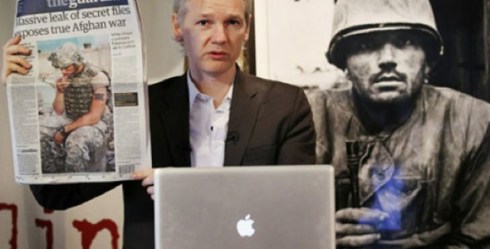
And just two more things from me.
1. If Julian Assange and his employees were Chinese they’d be lauded in the US as heroic dissidents and champions of free speech.
2. When was the last time rape was the headline story across the globe for a 48 hour period? Rarely? Never? Ever? Unfortunately, in this instance, I think the topic of rape will merely serve as a prop in the distraction techniques of mass media as existing powers attempt to divert the issue – from the global cultural sea change upon us – to the witch-hunt of America’s newest most-wanted. Dialogue about women’s rights, societal violence, machismo and misogyny is vitally important, but again it is diluted, set aside. The discussions that are occurring are, for the most part, not the right ones.

Source: http://www.time.com/time/world/article/0,8599,1903971,00.html
Last week, Ahmed Khalfan Ghailani, 36, the first suspect transferred from Guantanamo military prison to stand a civilian trial was found guilty of only 1 of the 285 charges brought against him – a charge relating to involvement in the 1998 bombing of the American Embassy in Nairobi, Kenya.
PBS reports:
Prosecutors branded Ghailani a cold-blooded terrorist, but the defense portrayed him as a clueless errand boy, exploited by senior al-Qaida operatives and framed by evidence from contaminated crime scenes. Ghailani was convicted of one count of conspiracy to destroy U.S. property. He faces a minimum of 20 years and a maximum of life in prison at sentencing on Jan. 25.
Only one charge was successfully prosecuted because civil courts don’t look kindly upon the involvement of torture in extracting testimony for evidence.
From the New York Times:
Many observers attributed any weakness in the prosecution’s case to the fact that the Judge Lewis A. Kaplan of United States District Court in Manhattan, who presided over the trial, refused to allow prosecutors to introduce testimony from an important witness, who was discovered after interrogators used coercive techniques on Mr. Ghailani.
If this trial is a precedent for other trials of Gitmo detainees to follow, prosecutions are going to have a tough time of it.
The extent of torture used by American powers across the globe is picked apart in the ACLU’s ‘Torture Report’.
Experts have dissected govt. documents (released under the Freedom of Information Act) to piece together the practice of enhanced interrogation techniques; practices that have ultimately derailed the prosecution cases against hundreds of GWOT detainees.
(Found via)
I was going to write a little something about That interview with Antoine d’Agata in Vice, but Darren’s got it covered:
“What is most troubling about D’Agata’s work is not specifically its content, but the rather trite assumption that life as a drug-addicted prostitute (in some conveniently distant place) contains more “truth” than that of, say, a suburban housewife or a plumber […] It remains a tiresome (if quite familiar) misapprehension that extremes of living can bring us closer to the most fundamental aspects of what it is to be human – as though there were no other kinds of truth.”
“The “reality” that he frames as an existential crisis is in fact an economic one, so his rhetoric is more like a transparent pretext for the way he has chosen to aestheticise what he photographs – a denial of his implied privilege. [d’Agata’s work] is beautiful and often daring, just not in the ways that he would have us believe.”
Well said Darren.
Put another way, and I heard this a few years back, “Oh d’Agata, he’s the Magnum photog who fucks and sucks his way around the world, yeah?”

© Kenneth Libbrecht. SnowCrystals.com
As heavy as the snow is falling here in Seattle, I dump these stories that I’ve noticed recently. All worth reading/seeing.
1) – The 2010 Lennart Nilsson Award (Recognizing Extraordinary Image Makers in Science) has gone to CalTach Physicist Kenneth Libbrecht. (Found via Jim)
2) – Rob Hornstra visited Abkhazia’s only prison.
3) – Moscow’s Butyrka remand prison is to install sunbeds for inmates.
4) – MIT has developed a camera that uses echos of light to see around corners. No doubt an attractive tool for SWAT teams, riot police and extraction teams in hostage situations and maybe prisons. I say this having written about ‘Through the Wall Surveillance’ before.
5) – French photographer, Olivier Laban-Mattei won the 2010 Grand Prix Paris Match for his coverage of Haiti. He was one of the many photographers who documented the death of Fabienne Cherisma. (Found via The Travel Photographer)
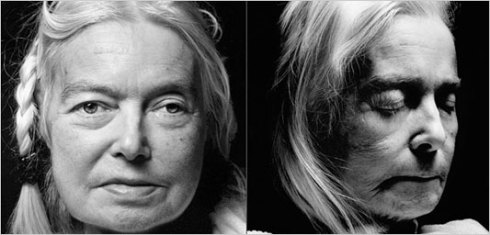
Edelgard Clavey, 67. First portrait: December 5 2003 / Second portrait: January 4 2004. © Walter Schels
6) – Walter Schels‘ photo project “Life Before Death”, includes 24 sets of before-and-after portraits ranging from a 17-month-old baby to a man of 83. Now on show at the Wellcome Collection, London. (More in this interview at LensCulture)
7) – More excellent opinion from John Edwin Mason, this time about the differences between the photo-op at Kenny Kunene’s lavish 40th birthday party and the responsible photography of Oupa Nkosi documenting the wealth and work of Black South Africans.
“No surprise, then, that Kunene has become the poster boy for shamelessly conspicuous consumption in county where, as the Guardian points out, 1.6% of the… population earns a quarter of all personal income. Only 41% have a job and just 58% have attended secondary school; 9% don’t have access to water, 23% don’t have toilets and 24% don’t have electricity. Average life expectancy is 52, the lowest since 1970. Zwelinzima Vavi, the South Africa’s most important labor leader, pointed to Kunene’s party when warning of elites who “scavenge on the carcass of our people” like hyenas.”
8 ) – Simon Sticker‘s 100 + 1 tips for the iconic Africa picture is the latest rant about stereotypes in conversation/photography on Africa.
National Photographers Association of Canada (NPAC) blog
9) – During the summer, I recommended the NPAC blog. Often working photographers will take over the posts for five posts in a week. Between the 8th and 12th November, Jen Osborne took the helm.
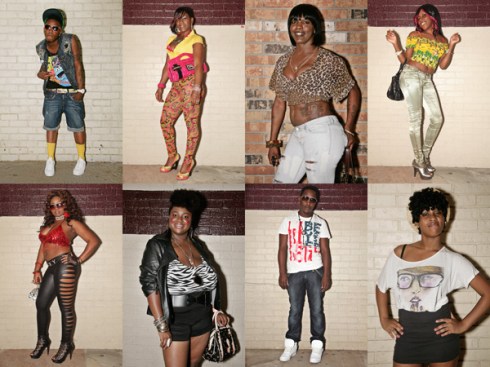
© Jen Osborne. Bounce is a very popular music movement originating in New Orleans, USA. It came from the streets and is a mix between Rap, Jazz, and Electronic music. It is popular amongst young adults due to its hard, fast and sexual nature, which inspires eccentric fashion trends. It also appeals to the gay community because Bounce music now contains various gay entertainers.
Jen’s five days of blogging:
Day 1 – The Importance of Learning – Working on the fly with ‘Bounce’ dancers in New Orleans.
Day 2 – Bad associations can sabotage good work! – On access to Talavera Bruce prison, Rio de Janiero. Sketchy fixers, smuggled prison cellphones and released female prisoners.
Day 3 – Thinking Locally – Drug addiction, mental illness and homelessness in her home city Vancouver.
Day 4 – Vicarious Trauma – Vicarious trauma, a newly defined term applies to “wide range of people working with clients or subjects suffering from traumatic experiences; doctors, journalists, social workers, lawyers …”
Day 5 – Doing It Because You Want To – “It is important to have your own projects to work on – projects that make you as the photographer gratified. I think it is important to do meaningful work because it will always be there for you, even when the jobs aren’t.”
Great stuff.
10) – Ed Ou, reflecting on the Joop Swart Masterclass makes all young photojournalists smile with his stirring optimism:
“It is exciting to spend time with photographers from around the world and never mention the “death” of our industry. While there may be smaller budgets and fewer outlets, there will always be room for good photography. The only way to brave the bad times is to just keep shooting.”

© Ed Ou. Nurse Larissa Soboleva holds two-year-old Adil Zhilyaer in an orphanage in Serney, Kazakhstan. Adil was born blind and afflicted Infantile Cerebral Paralysis (ICP) and hydrocephalia as a result of his mother’s exposure to radiation during years of Soviet weapons testing during the Cold War. He was abandoned by his parents and is now cared for in an orphanage.

After looking at the TSA’s list of airports with Full Body Scanners, I’ve decided to drive to California for the Christmas Holidays. I’d already made the decision to stay in Seattle for Thanksgiving, so no immediate problems.
This post obviously spurred by the story of unlikely hero, John Tyner.
Some of you might be thinking that it’s not a big deal because those images are not saved, stored or transmitted, right. Wrong.
From the list below, if you’re flying anywhere meaningful in the US, some TSA agent is going to ogle your fancies.
Happy Holidays!
Airports who currently have imaging technology:
- Albuquerque International Sunport Airport
- Hartsfield-Jackson Atlanta International Airport
- Baltimore/Washington International Thurgood Marshall Airport
- Boston Logan International
- Bush Houston Interncontinental Airport
- Boise Airport
- Bradley International Airport
- Brownsville
- Buffalo Niagara International Airport
- Charlotte Douglas International
- Chicago O’Hare International
- Cincinnati/Northern Kentucky International
- Cleveland International Airport
- Corpus Christie Airport
- Dallas/Fort Worth International Airport
- Denver International Airport
- Detroit Metro Airport
- Dulles International Airport
- El Paso International Airport
- Fort Lauderdale-Hollywood International
- Fort Wayne International Airport
- Fresno Airport
- Gulfport International Airport
- Grand Rapids Airport
- Harrisburg International Airport
- Harlingen/Valley International Airport
- Honolulu International Airport
- Indianapolis International Airport
- Jacksonville International Airport
- John F. Kennedy International Airport
- Kansas City International
- LaGuardia International Airport
- Lambert/St. Louis International Airport
- Laredo International Airport
- Lihue Airport
- Los Angeles International
- Luis Munoz Marin International Airport
- McAllen Miller Airport
- McCarran International Airport
- Memphis International Airport
- Miami International Airport
- General Mitchell Milwaukee International Airport
- Mineta San José International
- Minneapolis/St.Paul International Airport
- Nashville International Airport
- Newark Liberty International Airport
- Louis Armstrong New Orleans International Airport
- Oakland International Airport
- Omaha Eppley Field Airport
- Orlando International Airport
- Palm Beach International Airport
- Philadelphia International Airport
- Phoenix International Airport
- Pittsburgh International Airport
- Port Columbus International
- Raleigh-Durham International Airport
- Richmond International Airport
- Rochester International Airport
- Ronald Reagan Washington National Airport
- Salt Lake City International Airport
- San Antonio International Airport
- San Diego International Airport
- San Francisco International Airport
- Seattle-Tacoma International Airport
- Spokane International Airport
- T.F. Green Airport
- Tampa International Airport
- Tulsa International Airport
Airports receiving imaging technology soon:
- Chicago Midway International Airport
- Houston William P. Hobby Airport
- Saipan International Airport
UPDATE 11.12.2010, 12.30pm PST: Forsell didn’t win. Announced 11.12.2010 in Bristol, UK Yvonne Venegas won for her portrayal of Maria Elvia de Hank, millionaire wife of an eccentric former mayor of Tijuana. Julian Roeder and Rob Hornstra also made the final three.
This will not put me off making predictions in the future. I’ll just have to adopt unpredictable criteria and decision making to mirror the many diverse jury panels. And I stand by everything I said about Forsell’s ‘Life’s a Blast’.
– – – – –
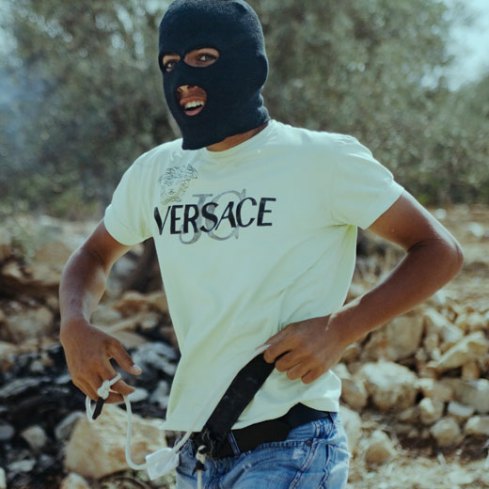
© Linda Forsell
I’ll admit to being rather deflated after looking over the shortlisted photographers for this years Magnum Expressions Award. Many of the portfolios of 15 images had only one or two photographs that held my attention.
The Magnum Expressions Award is in reaction to the brave new world photographers face; new communities, new audiences, new distribution channels and bold ways of working. It is an award designed – so it says – to reward young photographers surfing the shifting sands beneath the industries footings.
It should be said that most of the 19 shortlisted artists have hunted down engaging subjects. Bepi Ghiotti‘s Sources is an enigmatic thesis on man and nature. Yvonne Venegas’ fly-off-the-wall study of Maria Elvia De Hank wife of an eccentric millionaire and former Tijuana mayor bristles with ambivalence toward the subject.
I was pleasantly surprised to see the presence of two photographers who’ve briefly pricked my attentions. Anastasia Taylor-Lind and Irina Rosovsky both deliver strong entries. (On PP, Taylor-Lind, here and Rosovsky here).
These would be my 3rd through 6th placed finalists, but who’s listening to me, eh?
In at second is Jenn Ackerman. This high finish has little to do with my interest in photography that exposes the shortcomings of the US prison system and everything to do with the excellent way Jenn portrays the daily battles and extreme stress of a prison operating as a makeshift and unsuitable lock-up for men with severe mental health disorders – Trapped: Mental Illness in America’s Prisons. (I’ve featured Jenn’s work here on PP before.)

© Linda Forsell
‘LIFE’S A BLAST‘ BLOWS THE COMPETITION AWAY
And, winning by a country mile is Linda Forsell. Gold star.
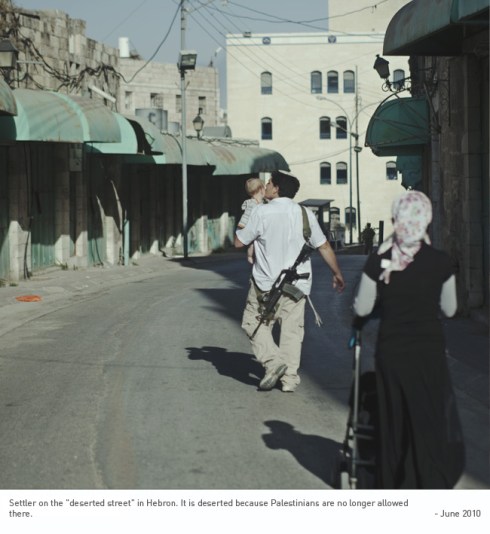
Forsell’s Life’s a Blast is the sweetest, never-escaping-bitter view of Palestine, Gaza & Israel I’ve ever clapped my eyes on. It’s about family more than ideology, but it is never glib. It is work as conscious of history as it is the mores of fashion photography. It’s a slow-ride through the lives of people associated by a larger conflict but not solely defined by it; a stunning presentation of gazes drenched in humanity.
Against all odds, Forsell forces the viewer to think on the stories of her subjects; on the seconds before the shutter snapped and the years yet to come. I have not seen a single project that so swiftly dismantles many of the entrenched tropes of conflict photography. Life’s a Blast shifts perceptions like only the very best of photography can.
© Linda Forsell
The Oracle gathering? An International Mob of Mystery? Well, not exactly but given that Oracle is the main meeting of the world’s most influential people in the museum/fine art photography scene it is amazing the gathering flies under the radar year on year.
I’ve done some internet sleuthing to tell you some of what you need to know about the Bilderberg of the photography world.
Okay, it might not be so cloak and dagger as I have set it up, but The Annual International Conference for Photography Curators dubbed ‘Oracle’ has no web presence and no connection to the circles outside of the attendees. This (presumably intended) detachment is – simply put – a shame. Granted, these are people predominantly involved in museum curating, but still wouldn’t it be great to know what they are talking about when they meet each November?! Museums still feed into the photography ecosystem, and often define it.
Oracle began in 1982 as an informal gathering. In 2003, Deidre Stein Greben wrote, “Attendance at Oracle […] has grown from ten to more than 100 over the last 20 years.”
With such an organically unhurried growth, why should curators care to share their dialogues? Hell, the week might be the closest thing many of them get to a holiday. Add to that the fact that there’s no external promotion or grand narratives to push, it makes sense that no-one would take on the extra workload of interfacing with the public and all that entails.
I also think of photography curators as a similar breed to university professors; the culture of research, writing and custodianship of department agendas does not dovetail with blogging the discoveries and knowledge from their daily work. (David Campbell summarises well how the reluctance of universities to adopt social networking is to their detriment.) It’s a shame. How good would a Sandra Phillips blog be?!
The 2010 Oracle is ongoing right now in Israel (Jerusalem, I think).
This is where my sleuthing gets patchy but other host institutions/cities have included; Museum of Fine Arts, Houston (1992); George Eastman House, Rochester (1993); Washington (1999); Finnish Museum of Photogaphy, Helsinki (2000); Goa, India (2003); Museum of Contemporary Photography, Chicago (2004); Artimino, Florence (2005); Prague, Czech Republic (2006); Center for Creative Photography, Tucson, AZ (2007) and Paris, France (2009).
My guess is attendance is invitation only or some approximation thereof. Just because I gleaned a smattering of names, I’ll share them. Attendees have included Britt Salvesen, Director of photography and prints at LACMA; Doug Nickel, Professor of Photographic History at Brown University; Sunil Gupta, Artist, photographer, curator and educator; Allison Nordstrom, Curator of photography at George Eastman House; David E. Haberstich, Associate Curator of Photographs at the Smithsonian; Celina Lunsford, Director of the Fotografie Forum Frankfurt; Olivia Lahs-Gonzales, Director of the Sheldon Art Galleries in St. Louis; Dr Sara Frances Stevenson, Chief Curator of the Scottish National Photography Collection, National Galleries of Scotland (retired); Mary Panzer, freelance writer & curator of photography & American culture; Ms. Agne Narusyte, Curator, Vilnius Art Museum Photographic Collection, Vilnius, Lithuania; Shelly Rice, Professor of Arts at NYU Tisch School of Arts; Enrica Viganò, curator and fine art photography critic; Duan Yuting, founder of the Lianzhou International Photo Festival; Mark Haworth-Booth, Head of Photographs, Victoria & Albert Museum; Anne Wilkes Tucker, photography curator at the Museum of Fine Arts, Houston; Sandra S. Phillips, Senior Curator of Photography at San Francisco Museum of Modern Art.
Quite the list. And I can think of many other photography curators who presumably would attend (Rod Slemmons, Anthony Bannon, Brian Wallis, Charlotte Cotton, Malcolm Daniel?) Who knows?
It’s not a totally closed shop though. Despite the 2006 shuttering of the Oracle listserv, some plucky “Independents” have set up a NING type forum, Oracle Independents. It is sporadically updated with links to articles and events about historically significant photography. Currently there are 40 members, some names recognisable. But this doesn’t get us to the meat of those dialogues currently ongoing in Jerusalem.
Last thing to say, is that the museum world is separate from the worlds of gallery, photojournalist, fine art, auction house, social documentary, magazine, fashion and art-school photographies. Even if we did have a line in on the world’s leading curators’ discussions, the information may have no bearing on our aims, art or careers. Heck, we might not even be interested. But it’d be nice wouldn’t it?
Not wanting to be pessimistic, but unable to help myself, consider this quote from Marvin Heiferman, freelance author, editor and curator and “champion of the blue-collar nature of the silent majority of photographs.” Bear in mind he’s talking about very early Oracle, but nonetheless, the quote highlights potential disconnects between different orbits of the photography world.
“When I started looking at this new [Postmodern] work, I loved its nonchalance, intelligence and cheekiness, the fact that it was interested in both seeing and seeing through images. The photo world, though, wasn’t as amused, and didn’t have a clue what the small group of us was getting so jazzed up about. Toward the end of my stint at Castelli in the early 1980s—and then when I went off on my own to work with photographers and artists and produce exhibitions—I attended some of the early annual meetings of Oracle. This was a conference of photography curators from around the world who gathered together supposedly to talk about the future of the field, and was funded by Sam Yanes at the Polaroid Corporation. Polaroid supported a lot of progressive photographic projects in the 1970s and ’80s. It was, to say the least, disappointing to me that most of the attendees were more excited to fuss over 19th- and 20th-century work and issues of preservation and storage. But there were a handful of us—including Andy Grundberg, who was writing for the New York Times, and Jeff Hoone from Syracuse—who did our best to raise interest in the new work we were so excited by. No one seemed to care.” (Source)

 Prison Photography