
You are currently browsing the category archive for the ‘Photography: Non-Prison’ category.
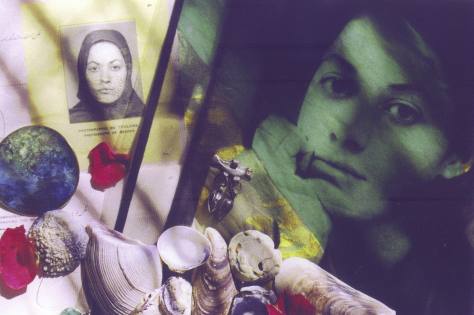
© Rana Javadi. (This image is not in the show, but the artist is.)
Photoquai‘s mission : to highlight and make known, artists whose work is previously unexhibited or little known in Europe, to foster exchanges and the exchanging of views on the world.
The 2009 Photoquai biennial is directed by Anahita Ghabaian Etehadieh, an Iranian gallerist and founder of the Silk Road Gallery, Tehran – the only space in Iran dedicated to exhibiting photography.
Photoquai shows the work of 50 contemporary photographers from around the world, unknown or little known photographic talents in European terms, who come from Latin America, North America, Asia, Oceania, Africa and the Near and Middle East.

© Nomusa Makhubu
Presumably, Photoquai will propel debates about diversity and representation. I desperately wanted to write something important about Photoquai.
It is a photo-festival hell-bent on avoiding the usual names and well-worn paths of sight and (re)appreciation. But …
As part of my due diligence (sat on my arse, browsing the web, dipping into sources) I was stopped in my tracks by Colin Pantall’s “rant”:
The idle, rapid-fire online viewing of photography has it’s knock on effects to writing about photography. Both are debased. I am as guilty as the next person.
So why should you listen to my opinion when I’ve not left my desk in the hour since I became aware of PhotoQuai? Read the following reviews from people who actually went and stood in front of the prints.
Jon Levy of Foto8 gives a pretty anemic description of his preview tour, but is ultimately thankful that new events are still blossoming despite the “undoubtedly harsh” climate for photojournalism.
Diane Smyth at 1854, the BJP blog, first has an overview of Photoquai. Smyth then provides a description of an “unusual exhibition in the Pavillon des Sessions at the Louvre. Portrait croises pairs a selection of 40 images from the Musee du Quai Branly’s extensive archive with indigenous sculptures and artworks from around the world.” Personally, the curatorial premise of this exhibit seems problematic – mainly because the pairings would seem to devalue the original meanings and conditions of production, if not strip them completely.
Marc Feustel of eyecurious loved the ambition but was “pretty disappointed” by the quality throughout. He felt guilty for criticising a small, brave, new-festival-on-the-block but couldn’t forgive the “photographers who should be tried for Photoshop crimes against photography.”
If you look through Jim Casper’s LensCulture gallery, you’ll sympathise with Feustel’s point.
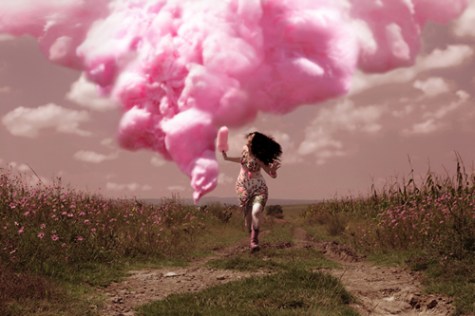
© Daniela Edburg
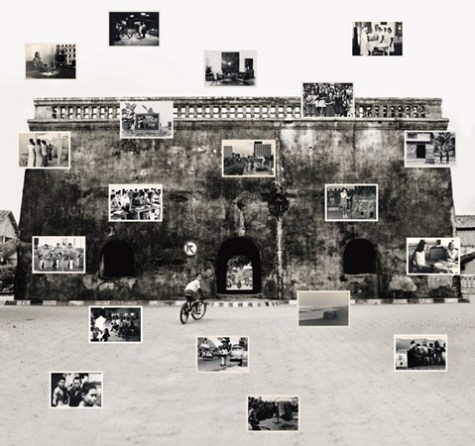
© Nadiah Bamadhaj
Conclusions:
Iranian photography gets special attention on the 30 year anniversary of the revolution, and the approximate 20 year anniversary of the end of the Iran/Iraq war.
Afghanistan photography inevitably remains within the implications of its ban during Taliban rule.
Only a few well-known names are knocking about, noticeably Abbas Kowsari.
Pablo Hare is the darling so far.
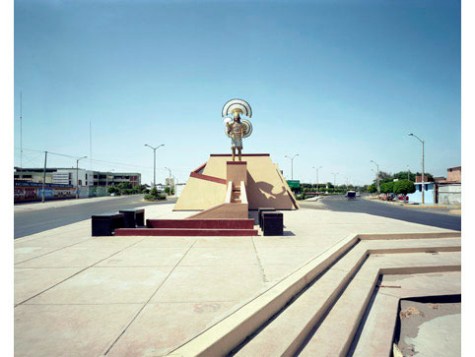
© Pablo Hare
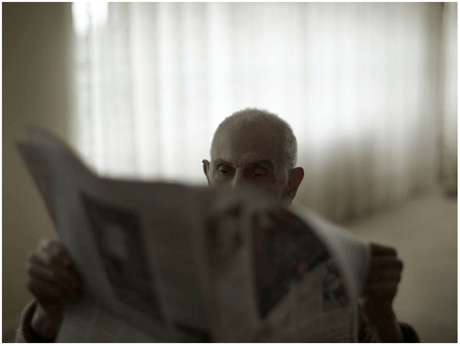
Philip Toledano‘s Days With My Father has got some coverage recently, and rightly so. There is a perfect balance and appropriate tone throughout the series which is inescapable. Aline Smithson included it in Photographing Family – her well reasoned Too Much Chocolate piece about the imperative of family to photographers.
It is even more remarkable because it is such a departure from his cynical but pointed political work America The Gift Shop.

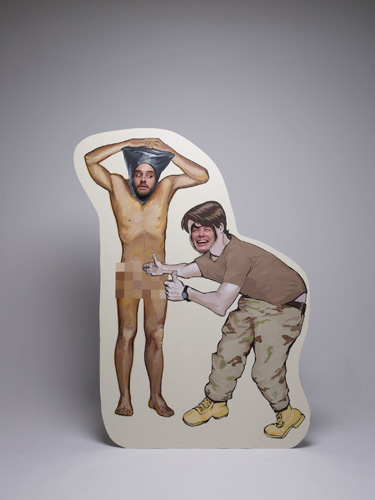
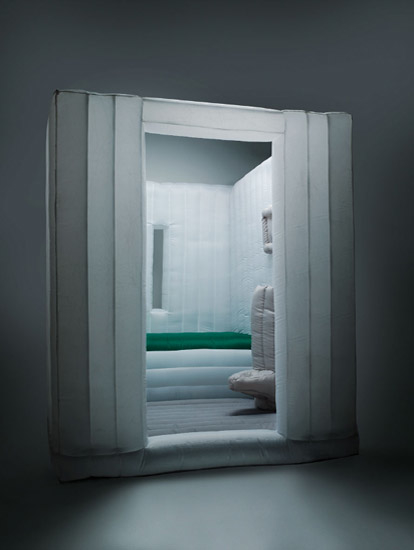
In a Decemebr, 2008 interview with Joerg, Toledano explained that for the really complex stuff he had to turn to China:
“Only the inflatable Guantanamo Bay prison cell and the Abu Ghraib bobblehead were made in China. The rest was made in America. To find Chinese manufacturers, I Googled ‘bouncy castle manufacturers, China’ or ‘bobblehead manufacturers, China’ and then emailed a few companies. It was really simple. And then, for the bobblehead, for instance, I sent the manufacturer the actual photo from Abu Ghraib, and they’d email me photos of progress, with me commenting along the way. The whole project, from start to finish, probably took me about six to eight months, all told. That’s the amazing thing about the web – ANYTHING is possible now.”
© Michael Jang
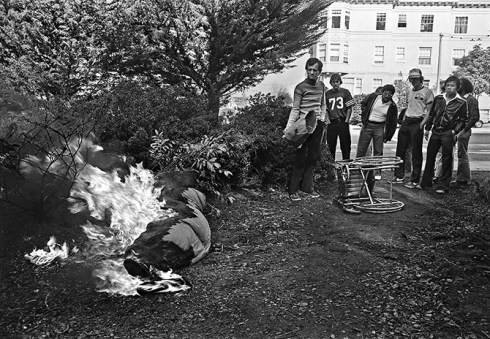
As far as I know, Michael Jang has not taken a photograph inside a prison … but he has been to many other altered sites.
My good friends Brendan Seibel (words) and Keith Axline (photos) did the real deal this week with an interview and gallery over at Raw File.
Blake followed a train of thought set up by Bryan this week about photography’s late-bloomers. Jang might have words of encouragement along the same lines. He hasn’t exactly had the typical career track; he was exhibiting at a high school seven years ago.
And photographs can change:
Put [a photo] away and let it age like a fine wine. … Some of the work I question, like the Beverly Hilton or the Jangs, if it would have been good when it first came out, or appreciated. I think maybe not. I think maybe you need to age 30 years so that we can look back on it.
Jang comes across as a man who has as few answers as the rest of us:
In the ’70s you could pick a subject: freaks, twins, brothers and sisters, and you’d be the first one to get it. Everyone’s done everything now. You’ve got dead body parts — we’ve done everything. So how do you carve out a niche for yourself now as a photographer? Is it more about the best person who can market themselves? The best schmoozer? The person who can make the connections? It’s a whole new ball game. I don’t know what I would do now.
Times were raw and opportune back then:
In the ’70s I happened to get a guy who committed suicide in Golden Gate Park. I knew I had the only pictures — I sold that stuff to the 11 o’clock news. But now it’s like, “send it to us for free” and you go, “yeah, I can get my name on there.” That kind of sucks for photographers making a living, right? It’s just so diluted now.
And, Jang’s response to the uncertainty? Keep shooting.
My daughter had friends that were in a band in high school and I said, “Oh man, can I shoot this?” and she said, “No! … Oh please? … No!” So what happened is they played the band shell in Golden Gate Park one day on a Saturday. Look, that’s fair game. They’re out in public. So I go there and I’m laying back; I don’t want to embarrass my kid. Eventually I start shooting and one kid kind of comes up and he starts talking to me and I end up telling him that I shot The Ramones. And that was it.
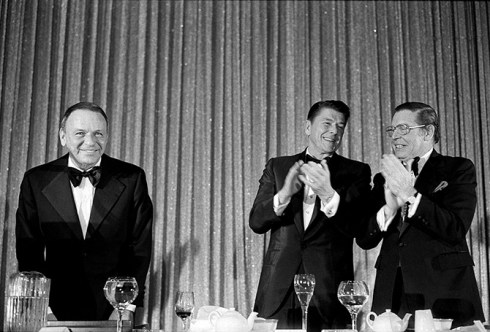
© Michael Jang
Jang also photographed around Preston, ID where Napoleon Dynamite was filmed.

Source
Why?
There have been two prevailing attitudes toward the proposed conference/symposium dealing with issues of race and diversity in photography:
a) That it is absolutely necessary & b) It is a terrifying prospect.
The first point speaks for itself, and the second point becomes clear when one considers the kerfuffles, misunderstanding and (dare I say it) vitriol that has accompanied much online discussion.
I have been in contact with some, but by no means all, people who could contribute to an extended dialogue. These include Amy Stein, Ben Chesterton, Colin Pantall, Daniel Cuthbert, Daryl Lang, Jean-Sebastien Boncy, Joerg Colberg, John Edwin Mason, Mark Page, Matt Lutton, Michael Shaw, M. Scott Brauer, Nathalie Belayche, Qiana Mestrich and Stan Banos. They have been very generous in response.
Originally, I suggested mixing things up by means of an in-person meet. This was intended to directly address the inadequacies of online discussion. However, when Qiana Mestrich of Dodge & Burn alerted us to SPE‘s conference in March, 2010: “Facing Diversity: Leveling the Playing Field in the Photographic Arts” it was clear that we may just end up replicating (on a smaller scale) SPE’s efforts.
The early feeling was that to piggyback on the back of an existing photography festival could leverage most involvement and impact. Boncy has had good feedback from Houston Fotofest and Lang believes that PDN would want to collaborate and lend a hand for an event at New York Photo Festival. These are very, very encouraging early signs.
In terms of organisation, these prospects are a far cry from the normal activities bloggers. Bearing in mind that this idea was conceived to challenge the tried and tired modes of photography blog discourse, it is difficult to conceive of good reasons to forsake our collective blogging strengths (wide-reaching audiences, maximum engagement, a breadth of coverage and investigation and first rate methods).
We haven’t abandoned a desire for a face-to-face meet and indeed we’ll continue to lobby established photography festivals and industry expos for the inclusion of extended discussions about race and diversity.
But, we are aware of our strengths. Simply put; a focused and concerted online effort will impact and forward dialogue more than a bunch of bloggers gathering in a single room could.
Early plans
This will be an Online Symposium. I would like see a concerted effort among photobloggers: I offer an open invitation to all those who wish to get involved.
The online symposium will look something like this:
– Occurring mid/late spring 2010
– A one week long, coordinated series of photo-features, interviews, op-eds, inquiries and articles.
– All written works will aim to compliment and build upon one another, not repeat or needlessly criticise.
– All written works will be subject to peer-review (a grand term for “read by another blogger”) prior to publication.
– It will incorporate the widest mix of experiences in the industry as possible. Discussion may vary from academic speculations on representations to the everyday experience of the working photographer.
Aims
– To communicate the wide experiences, attitudes, facts and myths in photography as they relate to race and diversity.
– To achieve respect and understanding among photographers, contributors and readers.
– To test the reach and strength of blog-networks as they relate to photography.
– To be progressive instead of reactive in our tone and objectives.
– To leave a legacy and record of this community action that will be of use and reference for continued learning.
What Should You D0?
– Please think seriously about your experience and knowledge and if you’d like to share that as part of this community project.
– Spread the word. If you don’t wish to get involved, perhaps you know someone who would have a valuable contribution?
– Share your ideas, initially through comments below, or directly with me [prisonphotography at gmail point com] and later on a devoted website.
Thanks! Please don’t hesitate to be in touch/throw ideas about. The projects’ outcomes depend on the quality and commitment of your input.

 Prison Photography