
You are currently browsing the category archive for the ‘Portland Photographer’ category.

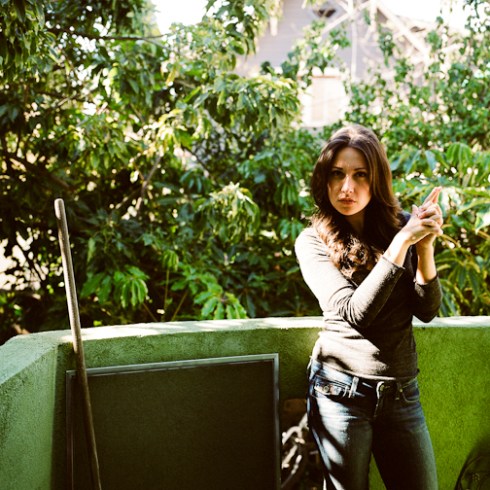
I first saw Julie Verdini‘s work in last month’s show DIALOGUEat Newspace curated by Laura Moya. On opening night, her print had a little red dot placed beneath it so Julie was grinning. Continuing my informal series, Eye on PDX, I asked Julie a few questions about her work.
What are better, humans or trees?
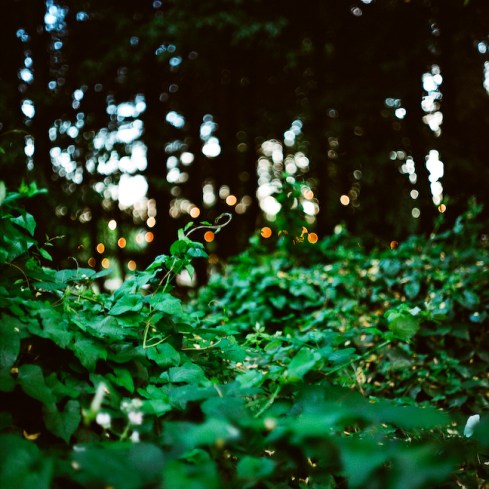
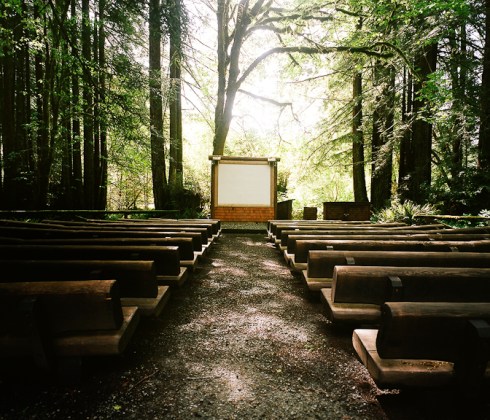
Trees are unrivaled in their ability to be silent and still. Without staring at a screen or being caught in deep R.E.M. sleep, humans have difficulty remaining aware and immobile. Trees’ receptivity make them a welcomed ally for an artist; they mirror creative energy and I find them to be great company.
Humans however, are far superior at moving, having distinct personalities and drinking spirits.
What are your influences?
The landscape influences me mostly. I definitely pay tribute to the new topographic movement and William Jenkins‘ idea of “stylistic anonymity.” I think its interesting that when this type of work was initially shown, many devalued its artistic merit. I appreciate how freeing the medium from stylistic implications allows for subtlety and historical perspective. I find nature to be so visually dramatic, photographically speaking, that I just try to get out of its way.
The habit of documenting typologies has always been inherent to my photography practice. Bernd and Hilla Becher are fine tuned examples of this technique mastered. Finding patterns and making connections exercises your visual thinking in such a playful way; it’s like being four years old perpetually. I appreciate how typologies can starkly document yet carry a whole set of theoretical implications about the human race.
I am influenced by Werner Herzog in part because my background is film-making. With environmental consciousness on the rise we frequently see portrayals of nature as victim to human destruction. Herzog speaks so bluntly about the vileness, disorder, chaos and “overwhelming murder” within nature during his time in the Amazon. The idea that nature is an unstoppable force that will prevail, long after our species has perished is one I find my camera seeking. I think that when you work with the landscape their is always a dialogue of the destroyer versus the destroyed. I find that some of my images speak critically of man’s relationship to nature while others come across as symbiotic or even idealistic. So the narrative comes from the environment itself, from each situation.
How do you characterize the photo scene in Portland?
Interested and open. Having lived here many years, the town is small enough to recognize names and faces. My personal experience points to the opportunities for education (Newspace, NCP, ASMP). But, my view could be slanted since I teach and am constantly thinking and talking about photography in an educational context.
Fine art opportunities exist here for certain (albeit through a very limited amount of top-notch organizations and galleries). However, I often feel I operate as a satellite and only occasionally cross paths with other fine art photographers. I would be interested to see opportunities for community growth beyond classes and occasional shows. However, I may not be the best person to asses the pulse of any social scene — after all, I am most often found in a cluster of trees rather than a crowd of humans.






– – – – – – – – – – –
Eye on PDX is a continuing, weekly series that features images and brief statements by photographers currently living in Portland, OR.

Zachary Allen moved to Portland more recently than I, which is recent indeed. I knew of his work and I was aware he had studied with Ian Van Coller in Bozeman, Montana, and that Zachary had also assisted Ian in South Africa in 2010. When I found out he was here in PDX I didn’t hesitate to contact him and grab a coffee.
In some ways, Zachary’s work is difficult to feature because much of his work is in-process; he stresses that Roseland (my personal favourite of his portfolios) is a twenty year project! Roseland is about land-use and residential planning in Virginia.
Still, I asked Zachary to pull together some images and pen a quote to introduce himself to the Portland photo scene.
Zachary:
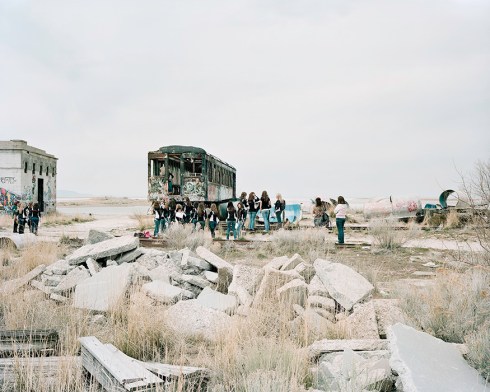
“Over the last couple of years I’ve been making photographs documenting my trips into the landscape. I’ve been attempting to stay away from a strict theme based project, which seems like the only acceptable form of photography these days. I kinda ended up with a bunch of mini projects at the end of three years. These mini projects explore several themes, such as nests, town relocations, and the intersection of nature and human influence, but the main thread has been the idea of being a “photographer” in the field. I’m interested in how we as photographers approach the landscape and interact with it. The photos from In The Field explore both my personal outings into the landscape and trips I have accompanied other photographers on. I think there is something really interesting when several people go out into the field just to have a look.”



Zachary Allen is a photographer, printmaker, and educator currently based in Portland, OR. He can be contacted on zachary@zacharysallen.com. Follow his work: Twitter, Book Experiments, and Broken Spine, a Tumblr exploring artists’ books.

– – – – – – – – – – –
Eye on PDX is a continuing, weekly series that features images and brief statements by photographers currently living in Portland, OR.
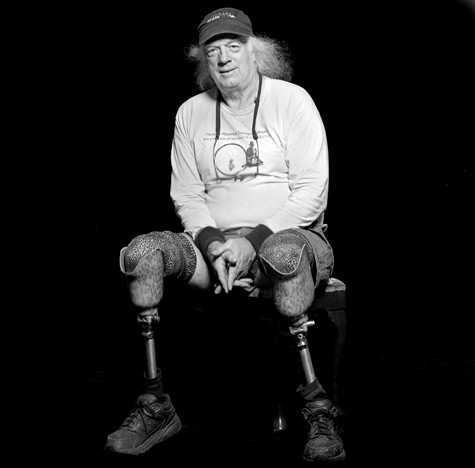
On September 1, 1987, while engaged in a protest against the shipping of U.S. weapons to Central America in the context of the Contra wars, S. Brian Willson and other members of a Veterans Peace Action Team blocked railroad tracks at the Concord, California Naval Weapons Station. An approaching train did not stop, and struck the veterans. Willson was hit, ultimately losing both legs below the knee while suffering a severe skull fracture with loss of his right frontal lobe. Subsequently, he discovered that he had been identified for more than a year as an FBI domestic “terrorist” suspect under President Reagan’s anti-terrorist task force provisions and that the train crew that day had been advised not to stop the train.
Mark Colman has lived in Portland, Oregon for five years. In the past 12 months, he has been working on a portrait project called Faces of Occupy. Each portrait is accompanied by words from the sitter; many of them thoughtful, loving and persuasive statements.
In addition to many original Portland Occupiers, Colman has photographed international figures including Ralph Nader, Dr. Vandana Shiva and Chris Hedges.
Please spend some time with each of the individuals upon whom he has trained his lens. As we know, Occupy touches upon many complex issues, and these are issues that deserve time. Any summary from me would be reductive. I did just have one question for Mark though. I asked what Occupy meant to him.
“Occupy is a way to spread awareness of many things that are wrong for 99% of Americans,” says Colman. “Whether it’s corporate personhood, Wall Street bailouts, illegal bank foreclosures, the government’s increasing attempts to take away our freedoms and constitutional rights with legislation such as the National Defense Authorization Act (NDAA), police brutality, lack of a livable minimum wage. The list is long, but the sooner people wake up, the sooner we will begin to solve these problems.”
So far, Colman has made 43 portraits.
“I plan on having 99 people by year’s end,” he says.
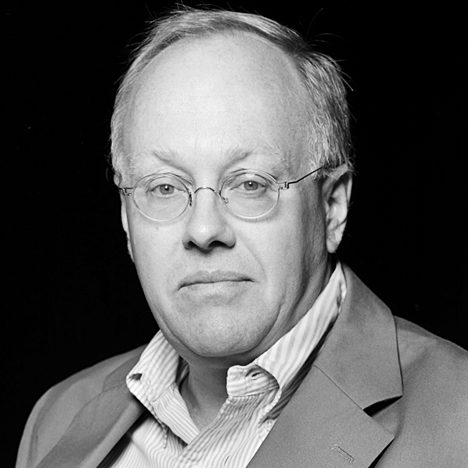
Chris Hedges: “The Authorization to Use Military Force Act, the Patriot Act, the FISA Amendment Act, you know it’s just one piece of legislation after another to strip Americans of their most cherished constitutional rights. I mean even the Obama Administration has not found it within itself to restore habeas corpus. All of this was put in place by Bush, but it was codified by the Democrats. In some ways Obama is worse because he’s used the Espionage Act now six times to go after whistle blowers and leakers.”

“A united educated public is the biggest threat to those that seek to exploit us for power and profit. We are learning and evolving. Where Occupy is headed is up to those who take a stand and get involved. We can take care of each other and work together to improve our quality of life.”
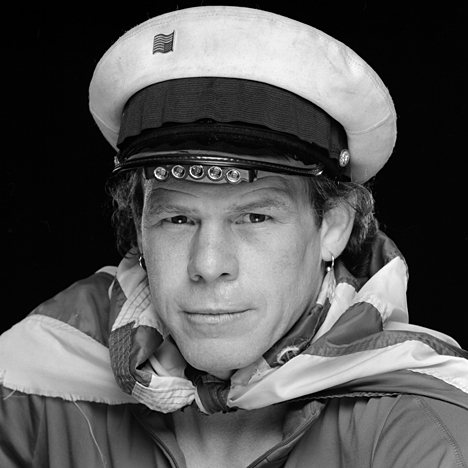
“My first civics lesson came at five years old: I couldn’t watch any cartoons – the Watergate Hearings were on every channel.”
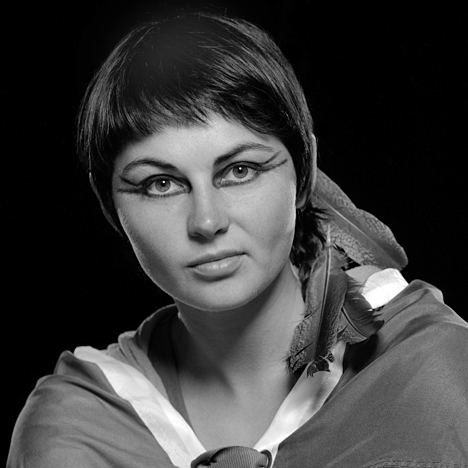
“We the people of Cascadia are learning – some slowly, some quickly – what it takes to live in harmony with the land; the principles of permaculture permeate. The blue, white and green stripes and symbolic doug fir of our flag acknowledge what is true wealth. Clean water, clean air, healthy ecosystems – that is what makes healthy, loving people. We say enough with greed, corruption, and exploitation.”

“Label us socialist, communist, trouble-makers, even Al Qaeda, just rest assured that we, The 99-percenters, will go away only when you, The Monopoly Capitalists, become content with being only millionaires instead of multimillionaires and when you allow some viable form of Democratic Socialism to become America’s form of government.”

Ward Shortridge makes portraits in Portland and other cities, but mainly in Portland, Oregon where he lives. Ward used to work as a psychiatric social worker. Good portraits often come from the same place as good counselling.
“The best photographs, like the best therapy, occur when I don’t talk too much, when I engage my subjects with unconditional acceptance and love, when I let go of my desire for a particular result and take my direction from the life that is presented to me,” says Ward.
This post is the second in a new series called Eye on PDX. Once a week, I’ll post some images and words by a different photographer working in Portland, the town I now call home. Think global, shoot local.
Ward Shortridge’s website and blog.
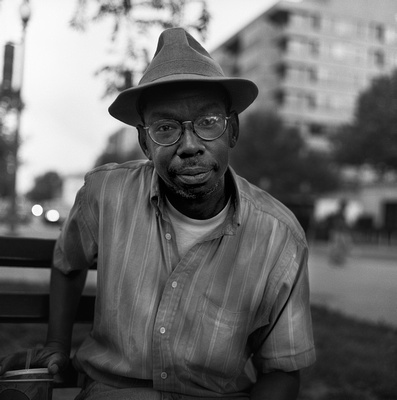

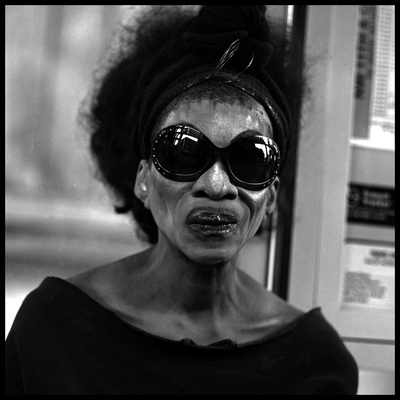

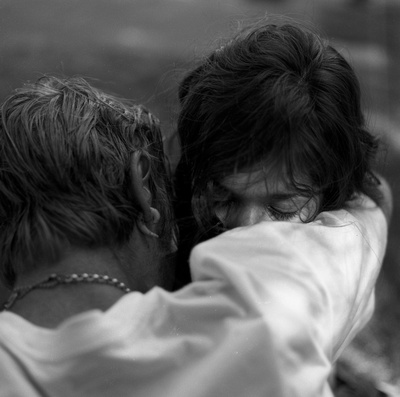

Alabama & Gracen © 2011-12 Bobby Abrahamson
North Portland Polaroids, Bobby Abrahamson
St. John’s is one of the more interesting neighbourhoods in Portland. Geographically isolated from the rest of the city, many people in St. John’s – for the longest time – considered themselves distinct from the rest of the city. That sentiment still remains, but throughout the nineties and early noughties there was an influx of youngsters looking to make home and St. Johns in the historically more blue-collar North Portland afforded the cheapest homes. This isn’t to say that gentrification has taken place – by the standards of other cities, the curious and lovable outpost of St. Johns cradles as much of it’s original modesty and allure to outsiders (me and others like me) than ever before.
Photographer, Bobby Abrahamson, bought a house in St. Johns just over a year ago, but his making of portraits using 5×7 Polaroid film preceded his move into the neighbourhood. North Portland Polaroids is a gentle homage to the photographer’s immediate surroundings and supports the theory that one needn’t travel the earth to make interesting photography.
As well as being acquainted with Bobby and really liking the work, another winning factor is the Portland-based collaborative championing of North Portland Polaroids. It is currently being shown at two stalwarts of the PDX photo-scene – Blue Sky Gallery (downtown) and Ampersand (Alberta Arts District, NE).
Abrahamson was in discussions with Myles Haselhorst at Ampersand about producing a book before a show at Blue Sky was confirmed. When Blue Sky said ‘Yes’, instead of the two venues competing against one another they coordinated their ventures. Ampersand is a bookstore with gallery space and finely curated photobooks and ephemera, whereas Blue Sky is a more traditional gallery space with programming and workshops. In terms of international exposure, Blue Sky is the place in this city, but in terms of making books with local binderies and a keen curatorial eye, Ampersand fits the bill.
Just as Weegee “took over” New York last Fall, now is Abrahamson’s moment in Portland. North Portland Polaroids is of and for this town.
I’d like to hear readers’ suggestions of other keenly local projects that have been embraced by the locals, the subjects. [Comment below, please]
I should take this opportunity to say that living in Portland has worked out very well for me; the photography community here is active but relaxed; intelligent and open. Ampersand, The Grid Project, Lightleak, NewSpace, Blue Sky and Critical Mass/Photolucida are all PDX businesses, non-profits and ragtag bunches of friends with capital in the culture of photography. I digress but perhaps those observations speak to my own fondness for photography in Portland … and as to why I write this post.
LISTEN
Bobby Abrahamson, Julia Dolan (Minor White Curator of Photography curator at the Portland Art Museum) and Myles Haselhorst (Owner, Ampersand) on KBOO Portland Community Radio. Here.
LOOK
BOOK: NORTH PORTLAND POLAROIDS
Buy the book at the Ampersand website.
5 x 7 in.
Perfect bound soft cover
100 pages
46 photographs
Printed on Mohawk Superfine paper
Foreword by Julia Dolan, The Minor White Curator of Photography, Portland Art Museum
Designed & published by Ampersand
Printed & bound in Portland, Oregon
Edition of 150
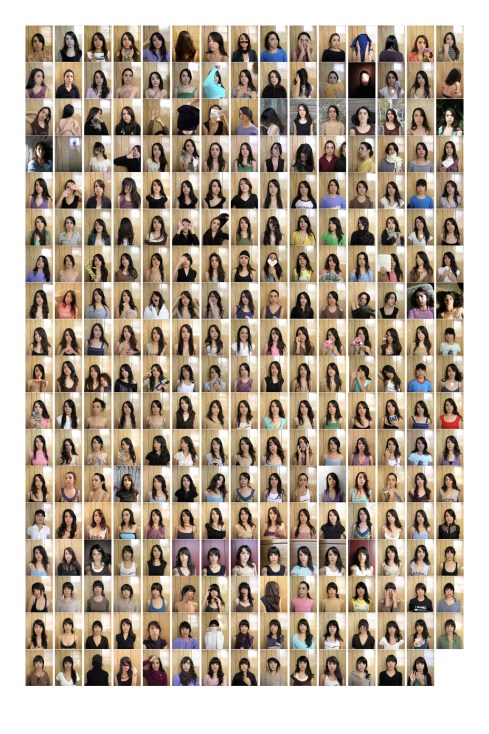
© Amy Elkins 269 self-portraits, part of Beyond This Place: 269 Intervals
Last week, I reviewed Photographs Not Taken (ed. Will Steacy, published by Daylight) for Wired.com. It is a book I have enjoyed thoroughly, which may seem a bit perverse as the majority of the tales seem to be about literal death and sullen loss. The other essays are all essentially about metaphorical death – death of an idea; the abandonment of an ideal; fractured and sudden awareness of mortality; or a shattering of photographer-bravado.
Bryan Formhals, many months ago, hollered for more writing by photographers. PNT would be the most recent, stand-out collection of essays to support that call.
PNT features two essays about prison.
Stefan Ruiz talks about his frustration with the limitations on camera during a seven-year stint teaching art at San Quentin State Prison.
“Most of the time […] I was a photographer in a visually amazing place with all these great subjects, and I couldn’t take a picture,” writes Ruiz.
Amy Elkins recounts a visit she and her brother made to see her dad in federal prison in 2005. She ends up describing a thousand or more photographs she didn’t take.
Call it compulsion, call it therapy, her response during the final 9 months of her dad’s imprisonment was to turn the camera on herself. Amy began making self-portraits began in 2006. Her self-portrait series, Beyond This Place: 269 Intervals became a mini internet sensation in 2007, by which time her dad was out but Amy was not out of the habit. Her self-portraits continue in Half Way There and Everybody Knows This is Nowhere.
“All three projects overlap with my father’s story,” says Amy “Half Way There continues as he lived in a re-entry house for 365 days under strict supervision. Everybody Knows This is Nowhere becomes more about re-entering the world and starting over. All in all I’ve shot over 6 years of these portraits.” Amy still photographs herself daily.
You can view the legacy blog posts here and Amy speaks about the relationship between her self-portraiture and family-life briefly toward the end of this conversation with Joerg.
AMY ELKINS’ PHOTOGRAPHS NOT TAKEN
We had been talking here and there. Once a week. Fourteen and a half minutes before hurried goodbyes were exchanged with uncertainty. It was our allotted time to share what we were experiencing. My new chapter in New York. His, in a federal prison, three thousand miles away. My father’s stories were endless. His seventy bunk-mates. Spanish ricocheting off of the concrete walls until it became static, white noise, a flock of birds. The mess hall. The books that had their covers torn off. The Hawaiian friend he made who sang like an angel. The night he woke to flashlights banging along the metal bunks, looking for inmates with blood on their clothes.
The teams that were formed. The chess matches and basketball games. Prison Break on the television in the rec room. The pauses in his voice. We had shared just under fifteen minutes a week for months from across the country. I mostly listened, the imagery leaping to mind, as his words came through the line. These were the things I wanted to make photographs of. By the time I actually had my one and only visit with him while he was in prison, my imagination had grown wild and I was so emotionally charged that I had to place my hands together in order to keep them from shaking, and to hide the amount of cold sweat pooling in them. There were metal detectors, x-ray machines, electronic drug tests, and questionnaires before my brother and I were led into locked waiting rooms, before we were led into a barbed wire walkway, before we were led to the visitors’ area. No cameras, cell phones, keys, wallets, jewelry, hats, purses, food, or gifts were allowed. Just myself, my brother, my father, and a small square yard of short brown grass containing picnic tables, a walkway, and vending machines, wrapped in barbed wire fences, two rows deep. My father, looking aged by stress, wore a tan uniform that seemed to fall all around him like robes. His hair had grown somewhat wild and was whiter than I remembered it. His eyes were youthful and tired.
The photograph was in my head. The moment of panic, of not knowing what to talk about or how to catch up in reality, while families reeled all around us with children and their mothers or grandparents. The vending machine coffees and board games. I longed for this moment to stay preserved, as if it would become more real if I could hold it captive on film.
Or that my story would be more intriguing if I could prove what it looked like. The photograph not taken, a portrait of what we had become, the fear that my family had failed me, the confrontation of unconditional love, a portrait of uncertainty. Instead, I sat with my hands tucked against the worn-out wood of the picnic tables, watching and listening to the sounds of what we were able to be for a moment.
THE SELF
The story runs deep. But how about the images? There’s a touch of naivety in Amy’s self portraits, but no more than any other young artists sussing his or her emotions. The portraits are paired with quotes by her father delivered in those weekly 15 minute calls, a text/image play that adds some depth.
Whatever life these photos have had or will have, I’d like to think they’re ultimately for future generations of her family; mementos of the quirky granny who grew up in the first quarter of the 21st century; the favourite aunt with certainty of narrative but evidence of younger faltering.
After all, we might be miffed if we missed that shot of those things over there, time and time again, but we have no excuse for not recording ourselves. We might hit old age and regret not having the photos to match our memories.
Short-sighted folk may criticise 269 Intervals for its seeming indulgence or vague manipulation; it is strange that images to represent a family temporarily smashed apart by the efficiency of the law are of a pretty las (occasionally in a state of undress) but take a long sighted view and admit you are intrigued by photo-a-day projects. Who hasn’t thought about doing one themselves? … If only you I had the discipline. Between Kessels, Karl Baden, Hugh Crawford, Noah Kalina and Homer Simpson, Amy is in good company.

Amy Elkins was born in Venice Beach, CA, and received her BFA in Photography from the School of Visual Arts in New York City. Her work has been exhibited nationally and internationally, including Kunsthalle Wien in Vienna, Austria; the Carnegie Art Museum in California; and the Minneapolis Institute of Arts in Minnesota. Elkins is represented by Yancey Richardson Gallery in New York, where she recently had her second solo exhibition.

3 Years out of a Death Row Sentence (river)
It may have been her family member sucked into the U.S. prison system or it might be Amy Elkins‘ curiosity about the darker undercurrents of humanity that led her to pick up a pen and write to Americans on death row and serving life without parole.
Four years ago, Amy opened up communication channels with seven prisoners. “My original fascination was with the idea of being pulled away from society and how that affects people; how it affects memories,” said Amy during a sun-drenched interview in the garden of a Portland coffee shop.
“The whole project has been about searching,” says Amy. “I searched out these men on the internet, then I had to search my motives as to why I write these.” Later, Amy searched news clips and court transcripts to piece together the stories of the persons to whom she’d reached out.

26/44 (Not the Man I Once Was). Portrait of a man having thus far served 26 years in prison (18 of which were out of a deathrow sentence), where the ratio of years spent in prison to years alive determined the level of image loss.

13 Years out of a Death Row Sentence (river)
Unlike the fates of her condemned correspondents, Amy’s project Black is the Day, Black is the Night has no prescribed end-point.
As she has got know her pen-pals, collaborations have developed; common cell-house objects constructed, photographed and bought; portraits made from the last words of the executed; obscured quotes from the poems of her pen-pal friends; pixelated portraits of dead men walking, whose stories are dominated by the narratives of courts and institutions. Black is the Day, Black is the Night contributes new chapters … in some cases they might ultimately double as eulogies.
Of most interest to Prison Photography are Elkins’ composite landscapes. The catalyst for each is the description of a memory by one of Amy’s pen-pals – childhoods spent under cloudless skies, a born-again fascination with baptism rivers of the South, and wide open desert. Inmates had no access to images and Amy had only access to these scenes through their words. If reality exists for them or us, it’s a feeble reconstruction several steps removed. Searching again, this time through Google images.
To create the distorted landscapes and pixelated portraits, Amy uses a couple of mathematical formulas driven through photoshop. The numbers involved in each formula relate to the age of the pen-pal and the numbers of years they’ve been incarcerated. Amy wants to keep the algorithm under her hat, but it appears the longer they’ve been locked-up the more vague the visages become.
13/32 (Not the Man I Once Was)
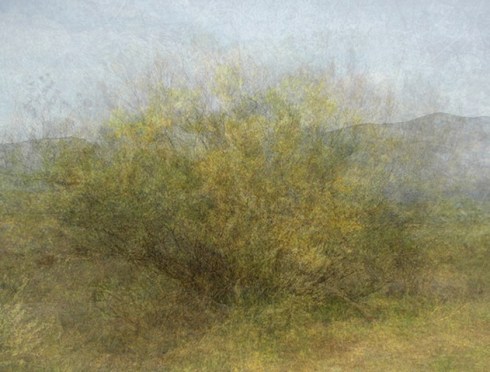
12 Years out of a Death Row Sentence (Dying Wish Retama Tree)

14 Years out of a Death Row Sentence (Dying Wish Retama Tree)
Currently, there are approximately 1,500 American citizens on death row.
“To be honest I’d never considered that this country has such a huge population of people on death row,” says Amy.
She began her research by signing up to one of the many online prison pen-pal services. The prisoners are categorized; one option ‘DEATH ROW INMATES’. “I clicked it and it was 50 pages; a sea of faces looking back at me. […] to click on one button and get hundreds of people looking for contact with the outside world. […] it’s difficult to describe. Nerve-racking and unnerving?”
Simultaneously engrossed and “freaked out”, Amy was conscientious in how she progressed. “It was never a photo project! I was just writing. I wrote with them for a year before I did anything with it. […] Part of that had to do with creating my own comfort levels,” explains Amy. “I deliberately contacted people who’d been in for 13 years or more. I didn’t want to write with someone who was angry. I wanted to be in touch with people who were at some sort of peace with the situation, who could look back and have some perspective.”
Of her seven original corespondents, three remain.
One was executed. The letters stopped coming and the news was confirmed through internet news stories. “No one went to his execution – no one from his family, no one from the victim’s family. He was poverty stricken. There was doubt in his case. He very well could not have done any of the things he was accused of. Every letter he wrote said ‘I am innocent’.”
Another pen-pal was released after serving 15 years, “He never contacted me [post-release]. He’s getting on with life. I hope he’s doing well,” says Amy.
A third pen-pal in Nevada wrote to explain that he was working on a novel and had developed a romantic writing relationship with another woman. He broke it off. “I was fascinated by that. It’s weird to be out here free and have them in there with relatively nothing and see them decide not to write. I respect that. They have so little, but they are careful about their time,” says Amy.
Amy’s pen-pal at San Quentin is erratic in his letters, writing after long periods of silence and often emerging from one [mental health] crisis or another. Amy has never felt that they’ve been able to develop a sustained relationship.
Her pen-pal in Mississippi writes on the 10th of every month but his letters are shorter now as he presses his last remaining options for appeal against execution. “From his letters he’s describing that it’ll be up before the year is out,” sighs Amy.
The sixth is in Georgia.

17/35 (Not the Man I Once Was) Portrait of a man having thus far served 17 years out of a deathrow sentence, where the ratio of years spent in prison to years alive determined the level of image loss.
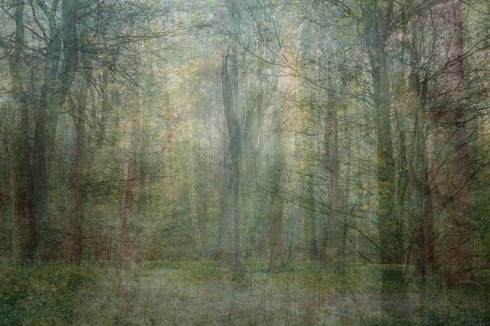
7 Years out of a Death Row Sentence (forest)

9 Years out of a Death Row Sentence (forest)
The most sharing, personal and colorful letters are from a lifer in the renowned Secure Housing Unit (SHU) at California’s Pelican Bay State Prison. Pelican Bay was America’s first SuperMax and currently the focus of the California Prisoners Hunger Strike. Of all her pen-pals, Amy can predict most this man’s future “The guy in Pelican Bay is going nowhere.”
On any given day in the U.S., there are 20,000 people held in solitary confinement.
“In California, solitary is a 6’x9′ cell with no windows and a steel door. I don’t think anyone would do well in that situation. People are extracted [from general population] and placed into these cells already upset and then they left to themselves. I don’t think prisoners are going to read the bible 30 times and then be okay,” speculates Amy, “I go stir crazy if I’m in my house for a day without going outside.”
Amy describes the Pelican Bay prisoner’s letters of unusual “formal British” tone. Unusual because he is originally from Tijuana, Mexico. “He must have been reading a lot of books?” wonders Amy.
“His first letter was 15 pages long and he said, very poetically, that he sits in his cell 23 hours a day. Once a day, he is shackled, walked down a corridor, on his own, and let into a concrete pen with 25 foot walls and a metal grate over it. He doesn’t describe it like ‘this is all I have, I can’t stand it here.’ He says he has 60 minutes of freedom, where he just gazes up at the sky; the only aspect of the outside world he can have. And even still, he watches the sky through a metal grate so it is not a pure version of open sky.”
Amy put out an open call for people to send her pictures of the sky. “I started making composites and sent them to him,” says Amy. “He didn’t understand the computer or photoshop. He hung them all up in his cell and wrote me back about how excited he felt being surrounded by skies. That was the first person I made something for and got feedback on. It felt like a collaboration. I started pulling images from other people’s letters. Other guys shared things about past experience, in some case decades prior. I’d repeat the process, make composites and send them.”
The prisoner at Pelican Bay has been in prison for 21 years, in solitary for 16 years. He has experienced another of Amy’s intrigues – juvenile offenders sentenced as adults.
“He went to Juvie, and he’s had no break in his incarceration,” says Amy.
“His mugshot was of him as a 13 year old boy. His profile read ’34 year old man, Pelican Bay State Prison’. But that was the last photo taken of him in the system. I’ve never been politically driven or hugely into criminal law. I’m just a portrait photographer interested in psychology and cultural anthropology. There is something about someone in that level of isolation, I just wanted to reach out. If that makes any sense.”

15/30 (Not the Man I Once Was)

4 Years Out of a Deathrow Sentence (ocean). A penpal 26 years into his sentence in a landlocked prison, described an early childhood memory that haunted him, of walking further and further into the ocean during low tide until the sudden depth and darkness before him overcame him with fear.
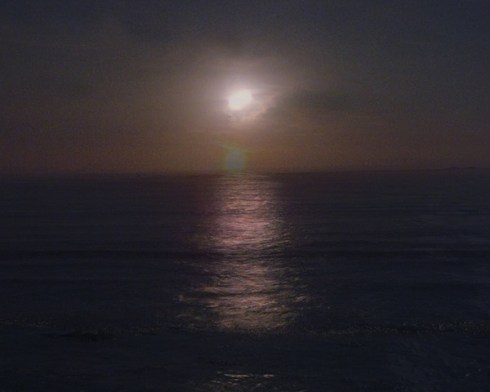
26 Years out of a Death Row Sentence (ocean)
Questions of whether or not Amy’s project in some way exploits these men have been floated before. She worked on the Black is the Day, Black is the Night “obsessively” during her Lightwork residency earlier this year.
“During my exit interview, the director expressed concern. How could I be this person in the world, who is fortunate enough to live a nice life, have a gallery, have nice things and focus on these individuals? He wanted to make sure I was ready for those types of questions. But, those question could be asked of all documentary work. It’s not about that; it is about getting the stories out in the world and having people think. I don’t know what people have in their minds [about me]. I’m not some “privileged girl” writing to “savage men”. No. I didn’t come in the project with any type of judgement. I like that I can talk about their stories in a way that’s not conventional. I think it’s correct that we can write; be trusting and share. […] I always write them back and I’m pretty open about my life as well.”
And the pen-pals reactions? “I don’t know if it’s that they’re bored or genuinely fascinated, but they’ve always expressed that they find it intriguing,” says Amy. “They’ve been sought out and they’re being interacted with. I’m not a housewife or someone for a church reaching out in those ways. I am their age and I’m reaching out with mail that’s perhaps a little more interesting than the average.”

Correspondence
To date, Amy has never profited from the project, but if – in the future – someone wanted to pay $10,000 for a landscape? “I’d sell. I’d send them the money. I have sent money to my pen-pals in the past. I have become friends with these men.”
The title, Black is the Day, Black is the Night, derives from a quote in a poem Amy received. “It spoke about that environment so well. The idea of being pulled away from anything. Experiencing no variance. Everything is the same; everything is dark. The poem is mind-blowing. Better for him to describe the situation than me.”
As the afternoon sun waned, and Amy and I squinted at the sky, that much was obvious.
All images © Amy Elkins

 Prison Photography