
You are currently browsing the category archive for the ‘Uncategorized’ category.

NYC103226 © Bruce Gilden / MAGNUM Photos
Gilden makes no bones about his style. He’s brash and in-yer-face. It’s his visual brand.
He doesn’t change his brand. With his surprise tactics, Gilden makes fun of New Yorkers as much as Texan millionaires as much as Guantanamo soldiers. (Might he also employ subtler approaches than the video below suggests?)
And why should he change his visual brand? He’s worked hard at it and we have supported it his whole career.
On the front page of magnumphotos.com today are a few of his shots from the Haiti earthquake aftermath. Should Gilden have changed his approach for his 2010 Haiti portfolio?
No, I don’t think Gilden should change his style; I think Gilden should’ve just stayed away.
This is my own personal opinion and I am not interested in any crusade against Gilden’s assumed approach or ethics. I just didn’t want to let his work pass without saying that I find it quite uncomfortable. This project isn’t the sort of thing I want to look at.
GILDEN REPEATS TOWELL’S MISTAKE?
A couple of weeks ago John Sevigny had a serious pop at Larry Towell (also of Magnum) for “gratuitous, racist and disgusting” work. I posted it, the Click picked it up and there was a short discussion at Lightstalkers.
I see where Sevigny’s coming from but I also appreciate comments which add a bit more subtlety to the debate – namely that exposed breasts are not always to be sexualised or considered part of an unequal power dynamic. This is just imposing ones own sensitivity upon another culture. More problematic is the fact the bare-chested woman is unable to move from the hospital bed away from Towell’s directed lens. Anyway, I digress, Gilden’s Haiti work is the topic at issue.
The situation with Gilden is slightly different. I must pause here and state that Gilden has photographed Haiti many times before (1988, 1989, 1990, 1992, 1995); he has perhaps been as many as a dozen times? And yet, I feel as though Gilden’s images of victims (many amputees) in the MSF hospital are feeding the same distant disdain we reserve for drunk and bloodied hipsters in our faux-fashion magazines (Vice). Isn’t Gilden’s work going to get caught up in a visual culture that often replaces even slightly careful representation with the thrill of gore and body fluids?
I take issue with Gilden’s style as used in Haiti, now. To me personally, Gilden’s style mocks its subjects. I can’t get away from that. I would fully anticipate Gilden arguing (very well) just the opposite – that he cares deeply about different shapes, colours, countenances and circumstances of all the people at whom he launches his lens and flash.

NYC103269 © Bruce Gilden / MAGNUM Photos
After the MSF hospital Gilden goes on to make a typology of survivors’ structures and portraits of beggars, tent city dwellers and the mentally ill.
So, I want to ask. Do I have a point? Do you share my aversion to Gilden’s work in the aftermath of this natural disaster of a quarter-million fatalities?
Magnum has made a public commitment to funding work in Haiti, but should we maybe have hoped that the members had encouraged Gilden to perhaps sit this one out?

With the PG&E power plant in the background, from left, Terry Phillips, Jusuw a May-Loto, Meritiana Loto and Justice Phillips relax on their porch on Harbor Row in Hunters Point. Residents successfully lobbied to shut down the pollution power plant in 2005, the single largest stationary source of air pollution in the city at the time. © Alex Welsh
THE DOCUMENTS OF A PHOTOJOURNALIST
Last April, San Francisco’s Superior Court played host to legal wrangling between the San Francisco Police Department and a young aspiring photojournalist. The ignition to court battle was the gang murder of Norris Bennett in the marginalized Hunter’s Point neighbourhood.
A young (then unnamed) photojournalism student had photographed at the murder scene of Bennett. The SFPD issued a warrant for the images and seized them during a search of Welsh’s domicile.
The photojournalist invoked California’s shield law to regain possession of his images and have them withdrawn as evidence. In July, at the time of the ruling, my colleague, Brendan Seibel, wrote a splendid piece about it for Wired’s Raw File.
THE DEFINITION OF JOURNALIST
A shield law is legislation designed to provide a news reporter with the right to refuse to testify as to information and/or sources of information obtained during the newsgathering and dissemination process.
What is interesting is that the ruling soon became involved in determining whether or not the young photojournalist was “a journalist”. Seibel explains:
The warrant was overturned and the student won the case. First amendment activists and free press advocates celebrated the ruling.
THE COMPETITION OUTING OF A PHOTOJOURNALIST
Fast forward to November 2009 and Alex Welsh (San Francisco State University) wins Gold in the Documentary category at CPoY for the portfolio Hunters Point, ‘We Out Here’.
Welsh is the anonymous photographer.
The final photograph of Welsh’s winning portfolio is of an SFPD officer administering CPR to Norris Bennett’s body, with the added tragic caption that Norris was the second brother of the same family to be murdered.
I must say I was well aware of Welsh’s work at the time of its win. I posted it on my auxiliary blog Photography Prison, linked to Dvafoto’s respect and noted Welsh’s interview with NPPA … but I never put the pieces together.
That was until this week when I read The SF Weekly’s S.F. State student who invoked Shield Law reveals murder scene photo in national contest by Peter Jamison:
Legally, this is a very interesting story and ethically it is quite troublesome. Obviously, we don’t know the exact nature of Welsh’s digital files from Friday April 17th. We don’t know if his images held information pertinent to the case. Whether he did or not is of no consequence if you look at this case from only a legal argument position.
NORRIS BENNETT
If one searches Norris Bennett’s name on the internet, the returns are hundreds of articles about the shield law case, none about him, his murder or the investigation since. I don’t know if his murderers have been identified or how his family has coped in the aftermath.
To discuss this case without a curiosity for news on how his community and family fares would not be right. So while we may mull and judge the behaviour of Welsh, the SFPD and San Francisco’s Superior Court we should also think about the behaviour of mainstream media to forsake the emotional and familial stories following Norris Bennett’s murder.
Bennett was young. Welsh wanted to document the “strength, perseverance and hope of youth”. You can decide through Welsh’s images if he does them – and Bennett – justice.
A link between violent video games and actual bodily harm perpetrated by gamers has never been substantiated. Sure it’d be nice to not have games where you can pick up prostitutes before beating their pimps to death, but they exist so we must acknowledge and intelligently challenge such platforms of “entertainment”.
We should be quick to challenge all forms of manipulation and abuse as they occur within the infrastructure of gaming culture which, let’s face it, is pretty much exclusively aimed at youth.

Air Power Over Hampton Roads air show, Hampton Roads, Virginia #2 by Christopher Sims
US military recruitment relying on the allure of gaming seems like such an abuse.
Sims’ Hearts and Minds is a sharp view at a nation’s collective hopes for a significant body of its (male) youth.
Christopher Sims operates a lot like Paul Shambroom in that both their photographies prod at our military-infused society without ever showing us real blood or even real warriors. To this extent, Sims has even stalked fake blood.
Hearts and Minds should be exhibited in the future in parallel with the results of Alyse Emdur‘s project Photograph a Recruiter that asks high school students to submit their own photos of military recruitment drives. As captivating as Sims’ work is we should not be fooled into thinking that we are privileged witnesses to an unusual or rarefied event; young people are routinely manipulated by institutions.
Emdur’s project acts is the compliment to Sims’ endeavour and both would prosper in mutual visual dialogue.
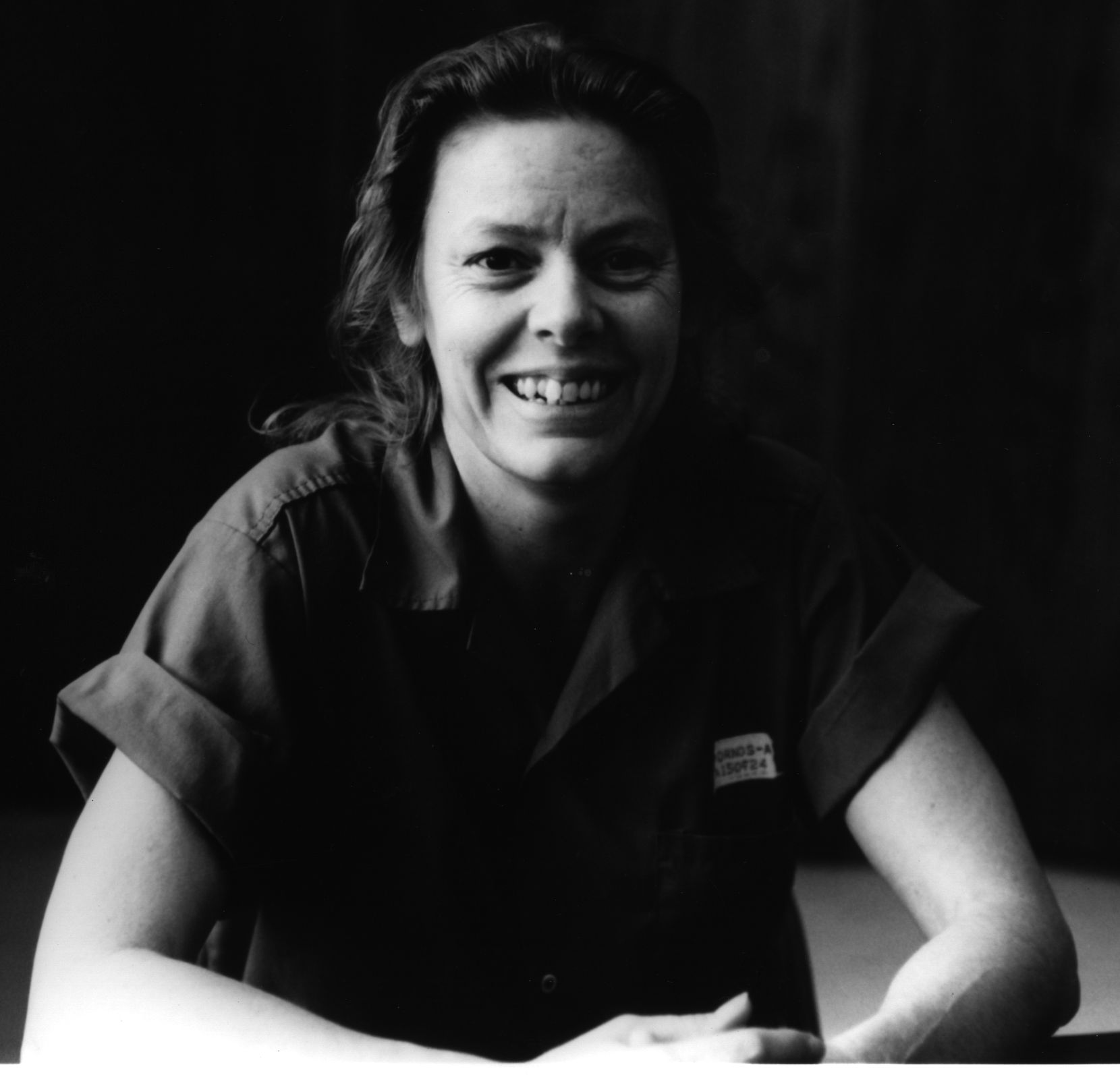
Hulu has just posted Nick Broomfield‘s two documentaries on Aileen Wuornos.
The Selling of a Serial Killer (1992) was made two years after the seven murders off highway 75, Florida. Broomfield demonstrates the efforts by Wuornos’ lawyer (Steve, a hippie musician known as Dr. Legal), her sponsor and friend (Dawn) and the Florida Sheriff’s Department to cash in on her story.
Life and Death of a Serial Killer (2003) opens with a recap of the main characters and a reminder that the police chief and officers resigned following allegations they’d sold their stories to a Hollywood studio. It is illegal to profit from state work in such a way. Dawn and Steve were in on the deal too!
In Life and Death, Broomfield is subpoenaed to court to testify on Steve’s “seven joint ride” to the prison in which Aileen was held; he was on his way to deliver legal advice. Broomfield filmed the ride for his first documentary.
Aileen changes her stories time and time again. Details she discloses to Broomfield when she thinks the camera isn’t running she won’t repeat elsewhere. She sabotages her own defense. Eventually, Aileen wants to be executed and repeatedly attempts to maneouver proceedings to secure her death.
Broomfield’s conclusion is that Aileen is clearly insane. On the evidence of her last ever TV interview (below) it is hard to dispute.
24 hours before this interview Aileen passed a state psychological assessment that deemed her of sound mind.
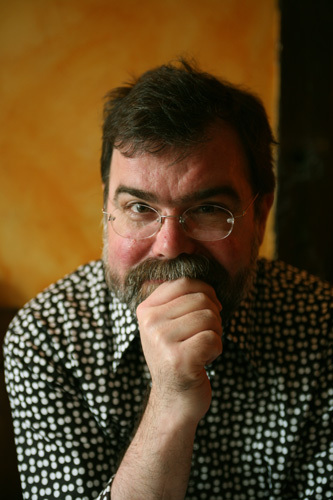
Jim Casper, founder, creator and overlord of LensCulture has asked for a helping hand. I expect it takes a lot of time and resources to keep LensCulture ticking. What has he delivered for you this year, and what are you going to give back?
For me, his interview with Klavdij was this years highlight.

Fred Ritchin suggests using technology and photography as meta-evidence to validate, qualify and describe the act of photography and of photojournalism.
I am of the opinion … that a special frame placed around the photograph (perhaps a thicker one) indicating that a photograph is “non-fiction” — meaning that it is subjective, interpretive, but the image itself has NOT been manipulated beyond accepted darkroom techniques such as modest burning and dodging — would be helpful.
As well, those images that are staged, such as photo opportunities orchestrated by politicians or other celebrities, would have to be labeled as such in the caption. Whenever possible the staging itself should be revealed by using a second image made from another vantage point to show that what viewers are looking at is not spontaneous but a media event (this second image could be placed under the first, and revealed by rolling over the initial photograph with the computer’s cursor). Or a single photograph can be made from a perspective that reveals the staging (the mob of press, media handlers, special lighting, etc.), not one that conceals it.
Jonah Raskin: What do you have to say about the latest technology?
Eduardo Galeano: Machines are not to blame. We have become servants of our machines. We are the machines of our machines. Without a doubt, the new tools of communication can be very useful if they are in our service—not the opposite. Cars drive us. Computers program us. Supermarkets buy us.

 Prison Photography