
You are currently browsing the category archive for the ‘Words’ category.

It was interesting to watch Marion Jones speak on Monday’s Daily Show. She was locked up for 6 months for lying to federal investigators during the Balco scandal. Jones’ imprisonment included a 45 day stint in solitary confinement.
Jones is now in the very early stages of prison reform advocacy:
“I’m in the process of looking for organizations that I can partner with, get their stories out there, share my experience, use my voice. When I was in prison, some of the women there talked to me and shared their stories with the hope that, because I have a voice on the outside, people will want to hear what I have to say.”
“Too many times, you’ll hear, ‘Aw, there’s just prostitutes or drug-heads or the bottom rung of our society in there.’ Before you jump to a conclusion and make any ignorant or rash comment, take a break – remember, that’s what I’m trying to get out there – find out what you can about the situation and make a smarter response. I’ll do whatever I can do to talk about awareness and change.”
“The whole trouble lies in the fact that people think that there are conditions excluding the necessity of love in their intercourse with man, but such conditions do not exist. Things may be treated without love; one may chop wood, make bricks, forge iron without love; but one can no more deal with people without love than one can handle bees without care.”
Tolstoy, Resurrection (pt. ii, ch. xxv)
Tolstoy called for the presence of love within the Russian criminal justice system. Resurrection (1899) was Tolstoy’s last novel, and intended as an exposition of injustice of man-made laws.
From Harpers: “Resurrection is at its heart an engagement with justice, both with the criminal-justice system and with justice as a concept with essential social, political, and religious aspects. Its author has grown weary of a political debate that pits conservative upholders of autocratic rule against liberal reformers convinced they can shape a just system by issuing laws and regulations. He looks with somewhat more bemusement, even admiration, at those who take a revolutionary perspective—who are convinced of the fundamental injustice of the Russian system and who are committed not to reforming it but to sweeping it away.”
TOLSTOY TODAY?
It is impossible to argue for mass decarceration, let alone abolition, in the US today without being quickly boxed as a lunatic. And yet, one must be clearly delusional if they’re willing to flee logic, waste tax dollars and ignore discrimination to maintain the prison industrial complex. If the two ends of the spectrum are madness what does that tell us?
Single figure percentage decreases won’t make a amends for the damage mass incarceration has wrought upon the soul of America.
Let’s be radical and put more love in the system. Let’s put more love in society. Let’s build schools not prisons. It’s easier to make good men than to repair broken ones.
Last month, I mentioned Jane Evelyn Atwood’s TV interview and to Jane’s appeal in support of Gaile Owens‘. A campaign operated to have Gaile’s death sentence commuted to life imprisonment. Gaile will be eligible for parole in late 2011.
Jane contacted me this morning with this piece of good news. “Please be informed that Gaile Owen’s sentence has been commuted by the Governor of the State of Tennessee to a life sentence. She will no longer be executed on September 28. Thank you for your support, thank you for helping save Gaile Owen’s life.”
Why stop here? Please inform yourself and others about domestic violence and the violence it can engender.
Family Violence Prevention Fund www.endabuse.org
National Domestic Violence Hotline http://www.ndvh.org/
Photo-editor-at-large, Mike Davis has been fielding questions recently.
Q. Do you believe that a photo has the potential to make an article better or, on the contrary, can it distract the reader?
Davis: Neither, actually. A photograph can do something that words cannot. So the best images don’t make an article better, they engage viewers in a way that the article can’t.
From the latest Photographers Speak interview:
Dean Brierly: Do you find any points of intersection between your commercial and fine art work?
Bob Witkowski : When I arrived in DC after a year’s graduate work in photojournalism at the University of Missouri, I found myself in the position of having to survive while trying to stay committed to my “art” at the time. My first break was to get access to the Gulf Oil Refinery in Philadelphia through the aegis of the American Petroleum Institute and its Director of PR, Robert Goralski, one-time correspondent for NBC News. I was paid nothing! I had little money at the time as well. I spent everything I had on several bricks of Kodachrome 25 and drove up to Philly and spent six days in paradise shooting 20 hours a day. It was at the refinery that I discovered I could be true to making images I loved while making industrial images that were sensuous, beautiful and a complete sellout. So I finally had something to drag around in a slide projector to show to industry trade groups and corporations around the DC, Baltimore and Richmond areas. It wasn’t an easy sell at first, and I paid my dues like anyone else for several years, but eventually it paid off for me professionally. I was fortunate to shoot in the golden days of corporate annual reports before Reaganomics altered everything.
How differently an industry can be perceived.
ELSEWHERES

© Jorge Duenes/Reuters
Everyone is blurting loud sounds:
David Burnett asks, “Where are the kids who should be on the street protesting?”
Mark Powers talks about a dead Pope in the age of Popes and TV.
Peter Marshall, who is a UK-political-photography-blog-treasure, has a naff day with some far-right marchers and a bunch of banged up camera lenses.
Mrs. Deane is back on Mars with Vincent Fournier.
Grant Willing, the darkest man in photography blogging (humble arts), delivers an interview to Jerenie Egry for too much chocolate.
Horses Think reminds of the MoCA exhibition in which the American road-trip was also the data for one of the most influential pieces of contemporary architectural theory. (Well, not totally, they did some walking as well.)
Ben‘s is flipping out, while Stan says we should all make hay, and he loves the UN’s photo comp policy u-turn.
DLK Collection is dealing with the return of photographic abstraction. While, only two days prior DLK had asked who was steering the big wobbly ship of conversation on photography?
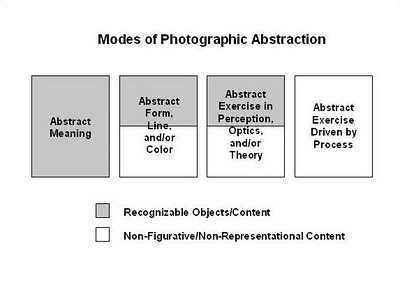
Just when we were all getting hopeful about the exchange economy of the internet, Joerg delivers an absolute bummer of a summary of his view on book reviewing. But, I think – as Joerg wonders – that he might be reading the wrong blogs.
In the same stroke of an ink quill, Joerg has busted out a great post about the intervals between being photographed as a child, the digital storage problem of the future and research about the way the memory deals with a vast quantity of photographs.
Then, Ben‘s back running a poll on if The Photographers Gallery is “shite”.
The New Yorker Passport Photo Booth is bigging up Mari Bastaskhevski, Bastashevski, Bastashevsi … although I don’t know exactly how to spell Mari’s surname , because Photo Booth spell it three different ways!
It’s a shame because Mari is one of the most courageous photographers working in modern times. I want to say more about her work, but I am still digesting it. Good stuff.
AND MORE OTHERWHERES
Monoscope throws David Gentleman’s 1970 England World Cup stamp (recently discovered) on to your computer screen. Talking of stamps, Steve McQueen …
Heading East talks sense again.
The photographer who made flags out of people!
Foto8 goes all World Cup. The Telegraph profiles a photographer of Zapatista veterans. Blog61 gets all reminiscent. (Early signs from these guys are good).
Robert Hariman refers to abstracted images of border patrol lights and oil slick swirls as the “hieroglyphs of human limitation”.
Given that Marina Abramović entered into “some sort of trance-like state” during the performance-art piece The Artist is Present, Jim Johnson asks, “Would she even have noticed had the chair across from her were vacant?”

Charles Moore. (American, born 1931). Martin Luther King, Jr. Arrested. 1958. Gelatin silver print. 8 3/8 x 12 3/16" (21.3 x 31 cm). The Museum of Modern Art, New York. Gift of Harriette and Noel Levine.
Infrastructure: labor, land, financing, and the general organizational capacity to combine these things in order to make other things, in general, easier to make. While not always public, it is the form of most public wealth.
Prisons are a monumental aspect of the ghastly public infrastructure underlying a chain of people, ideas, places, and practices that produce premature death the way other commodity chains crank-out shoes or cotton or computers.
Why don’t our heads burst into flames at the thought? Why is the prison-industrial complex so hard to see? The many structures that make carceral geographies disappear (which is to say, become ordinary) depend, for their productive capacity, on the infrastructure of feeling.
To affect what lies beneath these structures, wherever it might be in space and time, requires radical revision. By turning what becomes ordinary towards the extraordinary, our expressive (and explanatory) figurative works cause what disappears to be visible, palpable, present here and now.
– Ruth Wilson Gilmore
When I read Ruth Wilson Gilmore’s introduction to Prison Culture, I was struck by the common requisite of feeling to bring about change.
Photography is ever amidst a debate about whether it can bring about change, and I think a lot of that rests on whether photographers are presenting – with the right mix of emotion and political message – images that help, nay compel, the audience to see the disappeared.
This can be a tired notion to those who have toyed with it for years, but one only need to listen to Charles Moore speak about his images to be reminded how powerful photography can be. I cried when Moore described his disgust for violence and the oppression of civil rights.
As Moore believes (and I agree), his images had a profound affect on the people of America, allowing them to see the “disappeared” and see the “ordinary” hatred that welled in the Southern states in the 1960s.
It is my contention that the visual narratives of prisons in the US have still many avenues to explore in order to transform public thought and catalyse public action.
That, partly, is why I write on Prison Photography.

Vernell Crittendon and an inmate talk as they cross the yard at San Quentin. © Darcy Padilla
Prison populations around the world have much in common. They are virtually always dominated by poor, uneducated, unemployed young men, often from minority groups. Indigenous groups are also over-represented. For example, in New Zealand 45% of inmates are Maori, although they comprise only 14% of the national population (Stern 1998:32-33). In Australia, aborigines are more than nine times more likely to be arrested, more than six times more likely to be imprisoned, and 23 times more likely to be imprisoned as juveniles (Broadhurst 1997: 410).
In the US, African Americans form 12.7% of the population but make up 48.2% of adults in prison. Hispanics constitute 11.1% of the national population but form 18.6% of the prison population. Native Americans are less than 1.0% of the population, but 4.0% of adults in this group are incarcerated. This holds true for Canada, where indigenous women make up only 3% of females in the country, but comprise 29% of the female prison population.
Source: Human Rights in African Prisons, Sarkin, Jeremy (ed.) Page 8
Ken Light is a career photojournalist and a professor of photojournalism at Berkeley. If anyone is going to push back against the abuse of photographers rights, it’d be him right?
Well, he did. He won a small but symbolic $558
Last year, Light licensed his image of Cameron Todd Willingham to several media outlets coinciding with The New Yorker‘s exposé of dodgy arson forensics and the probable innocence of Willingham.
Current TV was not one of those he dealt with, yet they displayed Light’s image for a couple of months.
Light avoided federal court because it is costly and long-winded and filed a small-claims suit in San Francisco. PDN explains:
What is interesting here, is Light wonders avoiding the impractical, less-reflexive, federal route could be a better option for photographers:
“Yes, I got much less than I thought I deserved. [But] Maybe if we attacked in small claims courts and won, some of these companies might be more careful,”
I think Light has a good point and proven a repeatable tactic.
___________________________________________
Postscript: In the summer, I did multiple interviews and one of those was with Light about photographing on Texas’ death row. Everyday, I look at that untranscribed audio file and beat myself up that I haven’t published yet. It’s coming … I promise.

 Prison Photography