11225456_906083786148882_8582826958030726315_o

Be Their Megaphone

At 5 o’clock on Friday evening, advocates for juvenile justice system reform are marching on the General Assembly in Richmond, Virginia. You can join them.

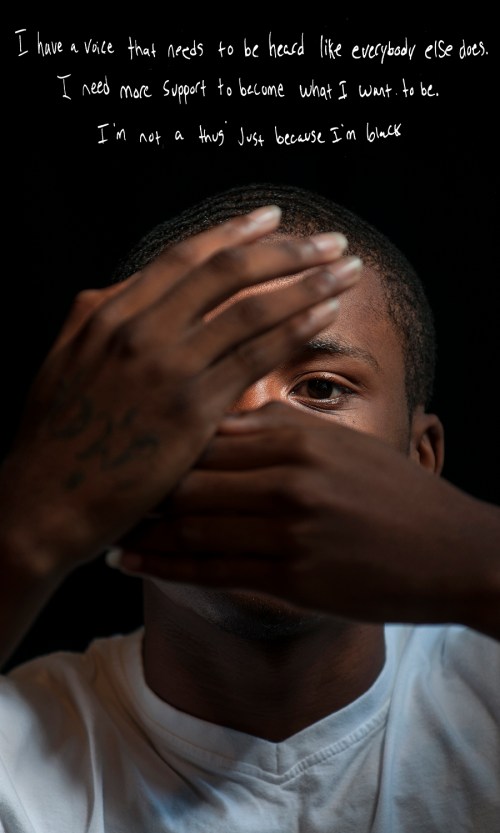
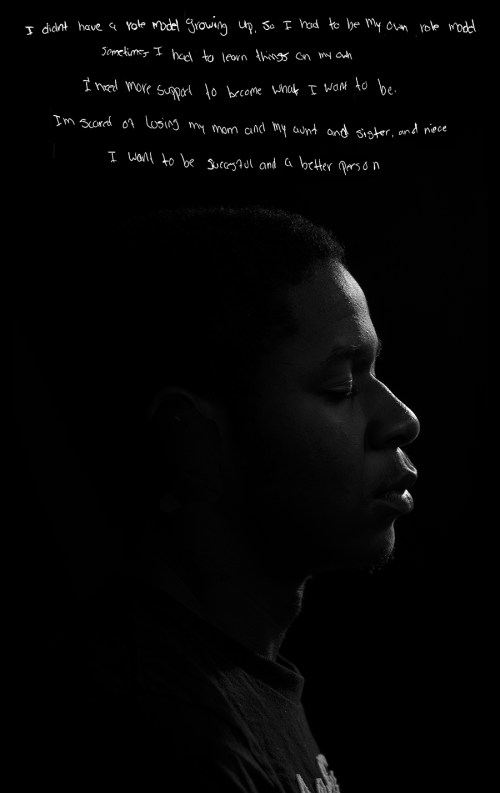
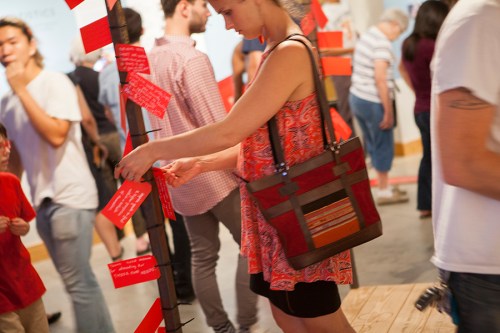
The Justice Parade for Incarcerated Youth will present, to the powers that be, the work produced by incarcerated youth this summer, as part of the Performing Statistics project. In the parade, a broad coalition of artists, legal and policy experts, community activists, faith leaders and returning citizens will champion the work. It’ll bring art onto the streets and ask the public to imagine a society without prisons for children.

Take drums, banners, trumpets, instruments, foghorns and your loudest songs and chants.

Carry art and banners made by incarcerated youth. Be their presence on the streets.

Take your own signs that answer the question, “How can we create a world where no youth are locked up?”

1

1557336_10204401412027826_8155613810036736714_o

WHEN

Friday, October 2 at 5 p.m. Speakers at 5:30 p.m. Walking begins at 5:45 p.m.

WHERE

General Assembly Building 915 E. Broad Street, Richmond, VA 23219.

Parade goes from the General Assembly Building to the ATLAS gallery at the ART 180 art center for teens and youth. ATLAS is currently showing the Performing Statistics exhibition featuring creative work by incarcerated youth that talks about their experiences being incarcerated and alternatives to the system.

Be Their Megaphone

20

3

21

CONTACT

Mark Strandquist
 — 703-798-6379

Trey Hartt — 
703-946-5217

performingstatistics@gmail.com

Performing Statistics is a Richmond-based art and advocacy project that connects incarcerated teens, artists, and Virginia’s top legal experts. The project is part of Legal Aid Justice Center’s RISE For Youth campaign.

Be Their Megaphone

parade_poster-2

13- distribution

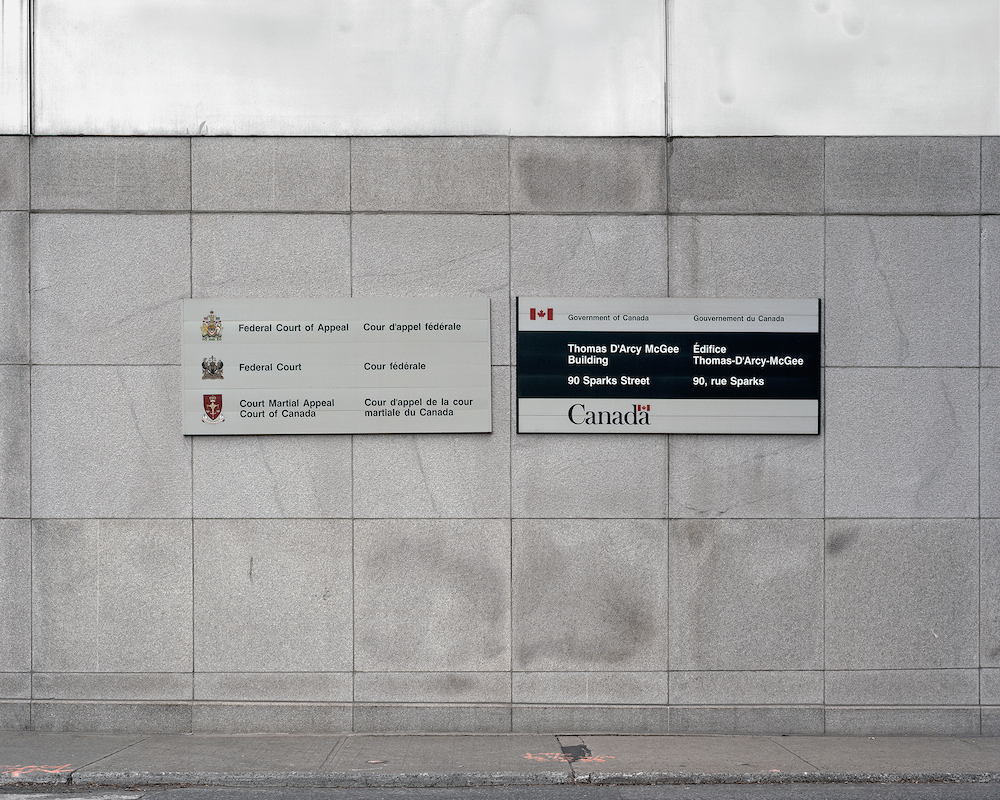
Photographer Tony Fouhse photographed his hometown of Ottawa. Then he made a newspaper of his images and gave all 2,000 of them away for free. The project is called Official Ottawa.

I dig Fouhse’s images of politics, power, pomp and circumstance in Canada’s capital. The concept was great, the execution fine and the distribution in cafes and at truck-stops brings a smile to my face.

FREE FOTOGRAFY WILL SET YOU FREE!

I interviewed Tony about the project for Vantage in a piece titled Control and Containment in the Canadian Capital.

About Ottawa, Fouhse says:

“There is a kind of pervasive fear that percolates through the city. Not a fear of getting mugged or anything, rather, a fear of saying or doing the wrong thing. Workers here seem to know which side of their bread is buttered and who is buttering it; they certainly wouldn’t want to put their pensions at risk. An atmosphere like that dampers a lot of healthy thinking and questioning and certainly precludes action.”

Read Control and Containment in the Canadian Capital.

01- limo

02-west block

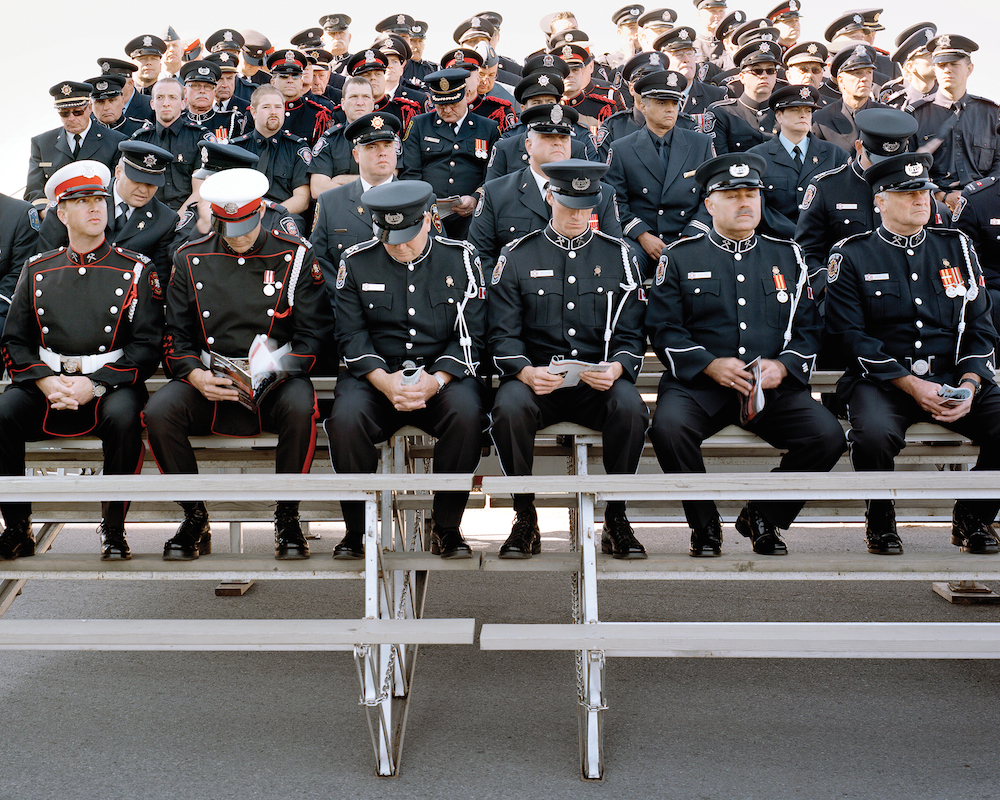
04-National Firefighters Memorial Service

05-memorial

06-special event

07-Govt signage

09-Parliament Hill with Leopard tank

10-Juno

11-P Hill security checkpoint

12-roadblock

Vikki Law
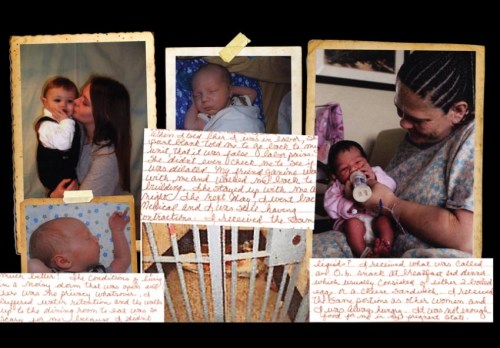
Clockwise from top L: Sierra Watts in her only visit with her son, Oak Lee, before he was adopted; Minna Long’s son Noah; Michelle Barton with her daughter, Semaj, in February 2014, hours after birth; the mattress in the Wichita County Jail cell where Nicole Guerrero gave birth, June 12, 2012; Noah’s twin brother, Joseph. Excerpts from a 2015 letter from a pregnant prisoner in Oklahoma.

Yesterday, I flagged a couple of photo projects about women in prison and women visiting prison. Women bear the brunt of the brutal punitive prison system. While the nation prison population has increased almost five fold over the past 40 years, the number of women locked up has increased nearly eightfold. 800%

Particularly vulnerable in prisons are the same groups in free society — the elderly, those in need of mental health care, those with medical conditions that need constant monitoring, juveniles, those living under the poverty line and, of course, pregnant women.

That prisons could routinely damage the prospects and endanger the lives of pregnant women and babies is beyond belief. But that is what Vikki Law, who spent six-months reporting on incarcerated pregnant women, found.

For U.S. Prisons and Jails Are Threatening the Lives of Pregnant Women and Babies, Law interviewed a dozen women who had been imprisoned while pregnant. She also drew on prison and jail records obtained via public information requests.

In These Times, which published the piece, calculates that approximately 9,430 pregnant women enter prisons and jails in the U.S. every year. They are still shackled  during labor, delivery and recovery. Pregnant women are withheld adequate food, they are denied medical care and, as we know in most states, their infants are taken away within 48-hours.

In one reported case, a prisoner was allegedly left to give birth in a holding cell without medical help. The baby was stillborn.

Law found that:

· many pregnant women received no medical care or experienced long waits
· most were constantly hungry
· others were restrained during labor, delivery or postpartum recovery, even in states that ban the practice
· the majority of those who gave birth in custody had their infants taken away within 48 hours

All of these shocking details indicate that the United States is in violation of the United Nation’s Bangkok Rules, which require the humane treatment of women prisoners.

Read U.S. Prisons and Jails Are Threatening the Lives of Pregnant Women and Babies

hanna-truscott

There’s a couple of interviews with a couple of photographers I greatly admire currently up on Vice.

WASHINGTON STATE

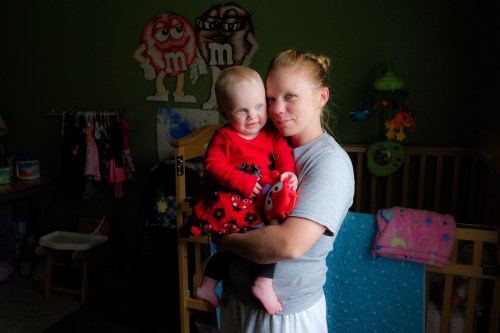
Photographing America’s Pregnant Prisoners is a conversation with Cheryl Hanna-Truscott, nurse, midwife and photographer who for 12 years has made double-portraits of incarcerated women and their babies at the Washington Corrections Center for Women (WCCW).

In the past, I have flagged Hanna-Truscott’s work, curated it into a pop-up show about Washington State prisons, and featured it in online exhibitions. Hanna-Truscott has recently released Purdy a documentary film about the WCCW mothers and babies unit. Hanna-Truscott volunteers at WCCW.

A note on the film’s title: Purdy is the local town in which WCCW sits. Purdy is also how the prison is known to locals. Additionally, “purdy” is a hokey variation of the word pretty. I think it’s a clever title for this project which simultaneously challenges stereotypes, pays homage to maternal cycles, finds care and within a punishing institution but neither ties the issue off with easy answers.

Hanna Truscott’s photographs are moments of solace amid what she describes as beyond difficult circumstances for the mothers.

“A lot of the women are traumatized. Sometimes they have learning disabilities or they’ve never had anyone who could vouch for them – so they have low education levels and no skills. Which means they also have employment issues when they get out. When they’re released, get $40, a change of clothes and a bus ticket. So they have to start a new life — and for the women I work with, that’s also with a baby.”

Visit Hanna-Truscott’s devoted site Protective Custody.

NEW YORK STATE

Photographing Trips to Visit Family Members in Prison is an interview with Jacobia Dahm. I’ve spoken with Dahm previously (cross posted to Vantage) and her work has proved very popular since its release earlier this year.

dahm

Families have suffered most from the politicised decisions on where to construct prisons. Granted many Upstate New York prisons predate mass incarceration (1980-) but many many more have been constructed in recent decades. Across the nation prisons have been built in remote locations.

Dahm says:

“Your crime has no bearing on the fact that you are still one of the most important people if not the most important person in a child’s life. In ways, it is costly not to support these family bonds, for the generation in prison and for their offspring. Children should have easy access to their parents, and vice versa, and it is something that other prison systems around the world manage to take into account and work with.”

If prisons had been used as jobs programs for depressed post-industrial American towns then we might have seen them built closer to the communities from which the prisoners have been extracted.

A NOTE ON VICE

Remember when VICE used to be nothing but public humiliation, photos of homeless, Dos & Don’ts and pre-hipster snark? Well, it is changing. By my reckoning. It’s going to take a lot to get out from under those punk-ass early years but they’re equipped to do it. VICE Media is worth $2.5 billion and I think I read somewhere that VICE has 1,500 staff and freelancers operating out of its New York HQ alone.

So, now what we have at VICE is genuine concern beyond the snark. This is something that Stacy Kranitz reflects on in a She Does Podcast published this week. It’s a great conversation all-round reflecting upon the many sides of things.

As for VICE and prison coverage, it looks like we’ll get more investigative reporting and less stereotypes and cheap gags. An overdue sea change. The VICE series America’s Incarcerated runs throughout October.

clip_image002

THE TIME IS NOW

On the 13th October, the Supreme Court of the United States will convene to rule on Montgomery v Louisiana. Essentially, the decision will be made as to whether the ban on Juvenile Life Without the Possibility of Parole (handed down by Miller v Alabama in 2012) should apply retroactively. That is, should men who were tried as adults and convicted to LWOP before 2012 have their cases and sentences re-adjudicated?

Of course, I hope that we’ll see some return to common sense and see the United Sates turn toward the practices of the rest of the industrialised world by not putting kids in boxes for the rest of their natural lives.

At this crucial political moment, a new, interactive  archive has launched online that brings the stories, images, characters and history of JLWOP to you.

The Natural Life Archive is a collection of extended interviews and portraits from the film Natural Life. Filmmaker Tirtza Even is harnessing the internet to bring us dozens of hours of testimony that she just wasn’t able to fit into her film. The archive is the third and final component of Natural Life — 1. the feature length single-channel video; 2. a gallery installation; and 3. this interactive online archive.

VISIT THE NATURAL LIFE ARCHIVE

BLURB

The project, produced and directed by Tirtza Even alongside the legal efforts of the Law Offices of Deborah LaBelle, challenges inequities in the U.S. juvenile justice system by depicting, through documentation and reenactment, the stories of five individuals who were sentenced to Life Without Parole (Natural Life) for crimes they committed as youth. The five will never be evaluated for change, difference or growth. They will remain in prison till they die.

clip_image004

There are over 2500 inmates in the U.S. who are serving a Life Without Parole sentence for a crime they committed as juveniles. The U.S. is the only country in the world that allows Life Without Parole sentencing for youth. The project’s goal is to portray the ripple-effect that the sentence has had not only on the incarcerated youth and their victims, but also on the community at large.

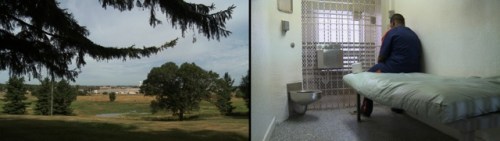
The video data accessible through the online archive is interfaced through a two-tiered navigable Quicktime movie. On the lower tier are phone interviews with the featured characters, coupled with staged scenes of life in prison reenacted by a group of high-school actors, and shot at an abandoned prison in Michigan. On the tier above is material drawn from over 50 hours of interviews with individuals who were involved with the crime, the arrest and the sentencing of the featured inmates. Among them judges, lawyers, police officers, reporters, wardens, teachers, child psychiatrists, legal experts and victims’ family members. The interviews are grouped in association with each of the featured inmates’ stories and are selected by moving the cursor to the right or left side of the image.

VISIT THE NATURAL LIFE ARCHIVE

BIOGRAPHIES

Tirtza Even is a practicing video artist and documentary maker, producing both linear and interactive documentary video work that represents the less overt manifestations of complex and sometimes extreme social/political dynamics in specific locations (e.g. Palestine, Turkey, Spain, the U.S. and Germany, among others). Even’s work has appeared at the Museum of Modern Art, NY, at the Whitney Biennial, the Johannesburg Biennial, as well as in many other festivals, galleries and museums in the United States, Israel and Europe, and has been purchased for the permanent collection of the Museum of Modern Art (NY), the Jewish Museum (NY), the Israel Museum (Jerusalem), among others.

Deborah LaBelle is an attorney, professor, writer and advocate who focuses on the application of human rights for marginalized communities. She has been lead counsel in over a dozen class actions that have successfully challenged policies affecting the treatment of incarcerated men, women and juveniles and their families. Ms. LaBelle is a Senior Soros Justice Fellow and, the first American recognized by Human Rights Watch as a Human Rights Monitor. In addition to her private practice, she is director of the American Civil Liberties Union’s Juvenile Life Without Parole Initiative. Ms. LaBelle is a recipient of Michigan’s State Bar Champion of Justice Award, recognized as one of Michigan’s top lawyers and received the National Trial Lawyer of the Year Award from the Public Interest Foundation (2008) and National Lawyer Guild’s Law for the People Award (2008). She received the Wade Hampton McCree Jr. Award for the advancement of social justice presented by the Federal Bar (2009) and the Susan B. Anthony Award from the University of Michigan (2010).

VISIT THE NATURAL LIFE ARCHIVE

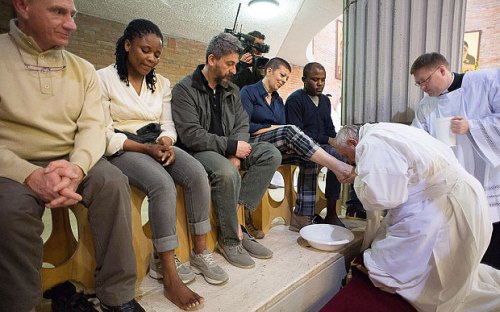
pope_feet_1_3255867b

Pope Francis kisses a prisoner’s foot during the traditional washing of the feet at the Rebibbia’s jail in Rome, Italy in April 2015.

It’d be easier for politicians if the Pope’s scheduled visit to a Philadelphia jail was more of a general questioning of U.S. prison practices, but thanks to keen campaigners and journalists, it’s a moment to focus on the particulars of that jail, Curran-Fromhold Correctional Facility. For it, like thousands of other facilities, does a raring trade with private companies and makes bank off of the prisoners and families of the incarcerated.

Think Progress and The Guardian are on the case. And below is a Press Release by In The Public Interest with all the shameful details.

Pope’s Visit to Jail Spotlights Problems with For-Profit Prison Industry

When Pope Francis speaks to prisoners this Sunday at a Philadelphia jail, he’ll be speaking at the intersection of two of his papacy’s most prominent themes, criminal justice and inequality. At Curran-Fromhold Correctional Facility, five companies with track records of either harming or overcharging prisoners have contracts to provide services.

Corizon, a prison health care company owned by a Chicago-based private equity firm, has attracted scrutiny in a number of states for habitual inadequate care, prisoner deaths, and understaffing. In 2013, Philadelphia renewed its contract with Corizon to provide health care to prisoners at city facilities, despite this past performance. Also at Curran-Fromhold is foodservice company Aramark, a public corporation that recently had its contract with the state of Michigan canceled after employees engaged in sexual acts with prisoners and maggots were found in food.

These examples underscore that when prisoners experience harm and neglect in our criminal justice system-described by the Pope as “illicit and concealed punishment”-it is often by the hands of private companies.

Joining Corizon and Aramark at Curran-Fromhold are three contractors with histories of overcharging prisoners. The Pope has been a loud voice for the poor, those most affected by these companies across a number of states:

  1. Financial services and technology company, JPay, often charges excessive fees on prisoner money transfers. The company also supplies cards to released prisoners in at least 11 states and adds fees that far exceed normal prepaid card fees.
  2. GTL, a corrections telecommunications company, is one of a number of companies that the Federal Communications Commission (FCC) has found charge ‘exorbitant’ rates for interstate long-distance calls.
  3. Keefe Group has charged high prices for canteen supplies, putting essential goods outside the budgets of many prisoners. For example, when the Florida Department of Corrections renewed its contract with Keefe Group in 2009, the company’s price increases provoked outcries from prisoners and their families.

These contractors, along with Corizon and Aramark, impact much of our criminal justice system. JPay provides money transfer services to 1.7 million incarcerated people in 32 states, nearly 70% of all U.S. prisoners. GTL controls 50% of the call service market for correctional facilities, with contracts that cover 1.1 million inmates in 2,100 local, state, and federal facilities.

Lawmakers often contract with the private sector believing that outsourcing will ease budget pressure. But private prison companies have an imperative to make profit, which often comes in conflict with providing quality services. This conflict not only hurts prisoners and prison staff, but communities and taxpayers as well. Research and the recent experiences of states show that the promised cost savings often fail to materialize for government agencies that contract with prison companies.

“To win government contracts, private corporations say they run prisons and provide services cheaper and more efficiently, but the evidence says otherwise,” said Donald Cohen, Executive Director of In the Public Interest. “Curbing privatization is one way to act on the Pope’s messages by reinvesting the money now going to private profit into programs for rehabilitation, education, and job training.”

The burden of prison companies to profit off of justice is not lost on the Pope, who has said that capitalism “has imposed the mentality of profit at any price, with no concern for social exclusion or the destruction of nature.”

After the Philadelphia visit, faith groups and advocates will launch a nationwide effort to act on the Pope’s messages, including asking their county officials and state legislators to end for-profit contracting in their local jails and prisons.

For more info, contact Jeremy Mohler at In The Public Interest

 jmohler@inthepublicinterest.org / 202-429-5091

In the Public Interest is a comprehensive resource center on outsourcing, responsible contracting, and best practices for good government.

PICO is a national network of faith-based community organizations working to create innovative solutions to problems facing urban, suburban and rural communities. Since 1972 PICO has successfully worked to increase access to health care, improve public schools, make neighborhoods safer, build affordable housing, redevelop communities and revitalize democracy.

photo-21 copy

Set photo, from the filming of Demos: Wapato Correctional Facility. © ERNEST

In the northern reaches of Portland Oregon, in the quieter quarters of the St. John’s neighbourhood, sleeps a beast. Wapato Jail was built for $58 million but never opened. It has sat vacant since 2004. It has been used as a film set. They tried to sell it. At one point, the City of Portland put out an open call for alternative uses proposals. Some suggested it could be used as a garden and rehabilitation center. Others suggested it could be used to house Bush, Cheney and other war criminals.

Wapato has costs the tax payer $300,000 per year (a conservative estimate) to just keep the thing offline. One long expensive joke. Systems normal but never operational.

WapatoSysNormal copy

WildlifeVideoStill copy

Demos: Wapato Correctional Facility, video still, 2015. © ERNEST
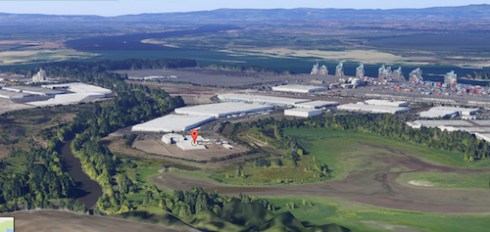
WapatoMapAngle copy

Screengrab of a Google Maps angled, aerial view of Wapato Jail, looking northwest.

ERNEST and DEMOS

When the arts organisation c3:initiative moved into St. John’s in 2014 it didn’t take them long to turn its focus to the empty jail. c3:initiative sponsored artist collective ERNEST as artists-in-residence. ERNEST have produced a multi-medium art installation, film, a book and public programs.

Demos: Wapato Correctional Facility probes the many concerns that the vacant jail suggests: breakdowns in democracy, prevailing power structures,” reads the exhibition statement.

During ERNEST’s early research they discovered that coyotes had dug under many fences. Video footage shows that they will scale fences too to cross and inhabit the lush ground within the jail perimeter. These wily mammals, that have roamed the area far longer than the jail has stood, have found a way to ignore the unwelcome interruption of a hard and fast boondoggle. Coyotes continue their evolved routine and instead of fighting the jail just orient themselves around it. Ultimately, they operate to ignore the jail’s presence and minimise it’s impact on their rhythms.

Is the coyote a good metaphor? Might we find new solutions to old problems if we approach prisons, jails and social ills with a similar low-key pragmatism. Prisons might be the problem but so to might our strategies of opposition?

“Acting as a conjuror of sorts, the character of Coyote leads the video component of Demos, transforming the specific architecture, history and politics of Wapato Jail into a platform for conversation and collaboration,” says the press release.

While ERNEST are allied to prison reform and abolition arguments, their work doesn’t necessary look like the typically political and didactic protest-imagery. Bringing the subtlety of fine art to a brutish topic such as the abusive prison industrial complex is intriguing. I don’t know what to expect truthfully, which is why I am in Portland right now for tomorrow’s opening.

OPENING RECEPTION

Friday, September 18, 6:30-9:30pm
At c3:initiative, 7326 N. Chicago Avenue, Portland 97203.

Visitors are invited to join c3:initiative and the artists from ERNEST in marking the opening of Demos: Wapato Correctional Facility. Complimentary drinks and light refreshments will be served.
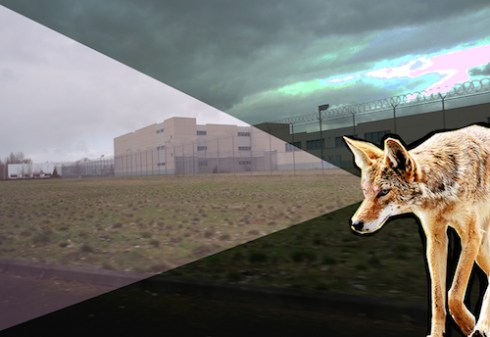
WapatoCoyoteEye copy

A graphic by ERNEST from an early conceptualisation stages of the project Demos.

KitchenVideoStill copy

Demos: Wapato Correctional Facility, video still, 2015. © ERNEST

CoyoteStampedeVideoStill copy

Demos: Wapato Correctional Facility, video still, 2015. © ERNEST

THAT TITLE?

The project’s title takes its meaning from various interpretations of the word “demos”. The Greek word “demos” (pronounced “day-moss”), refers to the “village” or “people.” In English, “demo”, is used as a shorthand for “demonstration”, as reference to the “demo mix-tape”, or as the vernacular for “demolition”. ERNEST thus uses “demos” to refer to its interest in keeping their methods experimental and provisional, while creating opportunities for local participatory engagement.

PUBLICATION

The book, published by Container Corps, includes a collection of essays, artworks, research and primary documents. I have an essay in there about sketches made in solitary by a man named Ernest Jerome DeFrance.

The book’s contents are both specific to Wapato Correctional Facility, and related to general issues of incarceration, participatory citizenship, and the role of art in social justice and storytelling.

BIG SATURDAY EVENT

I’ll also be in the room for an open roundtable conversation — a broadened investigation of themes relating to the empty jail facility, both locally and nationally.

Saturday, September 19, 2015, 11am-1pm. Followed by a 12-1pm community meal and conversation.

I look forward to hearing from panelists:

Emanuel Price is the Founder and current Executive Director of Second Chances Are For Everyone in Portland, OR. S.C.A.F.E. works to reduce the rate of recidivism by providing support services to promote employment, empowerment, and community engagement for men in transition because Second Chances are for Everyone. Price is currently leading the organization in developing key programs and resources that will help reduce criminals going back into destructive lifestyles after being released from jail or prison. More information about Price is available here.

Melissa Salazar is a May 2015 graduate of Pacific Northwest College of Art, where she studied Communication Design. Melissa has recently become involved in activist work focusing primarily on incarceration of black and brown individuals. She has been influenced by events in her own life and seeks to bring awareness to an invisible society behind bars.

Yaelle Amir is a curator, writer and researcher who currently holds the position of Curator at Newspace Center for Photography in Portland, OR. Her writing and curatorial projects focus primarily on artists whose practices supplement the initiatives of existing social movements, rendering themes within those struggles in ways that both interrogate and promote these issues to a wider audience. She has curated exhibitions at Artists Space, CUE Art Foundation, Center for Book Arts, ISE Cultural Foundation, The Elizabeth Foundation for the Arts, Marginal Utility, and the Wallach Art Gallery at Columbia University, among others. Her writing has appeared in numerous art publications includingArt in America, ArtLies, ArtSlant, ArtUS, Beautiful/Decay, and Sculpture Magazine. She has also worked at major art institutions, such as the International Center of Photography, the Museum of Modern Art, and NYU’s Institute of Fine Arts.
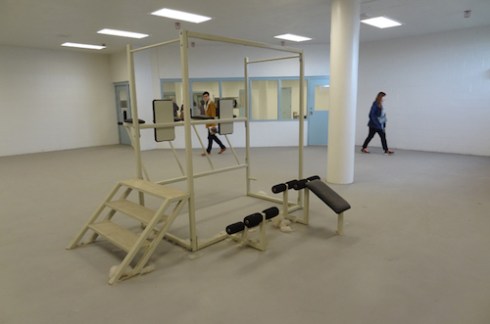
WapatoExercise copy

Members of ERNEST tour the gymnasium in the empty Wapato Jail, Portland, OR.

BedCountingDormStill copy

Demos: Wapato Correctional Facility, video still, 2015. © ERNEST
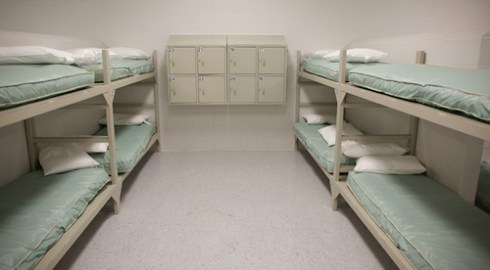
WapatoBeds copy

Photo taken in Wapato Jail, Portland, OR as part of ERNEST’s early research.
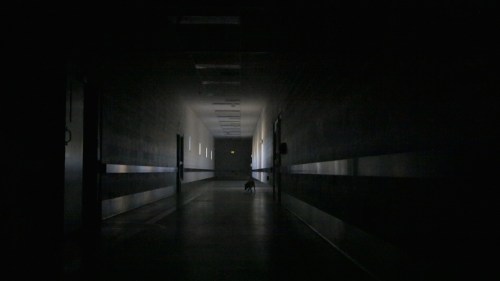
HallwayVideoStill copy

Demos: Wapato Correctional Facility, video still, 2015. © ERNEST

DETAILS

Demos: Wapato Correctional Facility
A project by ERNEST
September 18–November 22, 2015
Gallery Hours: Fri–Sun, noon–5pm at c3:initiative, 7326 N. Chicago Avenue, Portland 97203.

OTHER EVENTS

Reading Group: The New Jim Crow – Wednesdays, October 7, 14, 21, 7:00-8:30pm
Stories in Movement – Saturday, November 7, 5:00pm
No Thank You Democracy, The politics of non-participation, by Ariana Jacob – Sunday, November 22, 4:30pm.

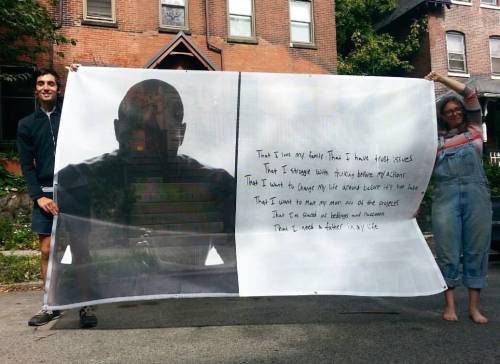
Artist_as_Activist_News_image

THIS ART MEGA-GRANT IS A SIGN OF THE TIMES

There’s a host of indicators that prison reform is firmly established near the top of the national agenda. In politics, journalism, art and culture the urgent voices and battles that constitute the discussion and solution-finding around mass incarceration are getting an airing they’ve not enjoyed during the past four decades of unfettered prison growth.

The battles brought by anti-prison activists and families (alongside the soul-searching among the rest of us) may define this moment. There’s a long, long way to go to reverse 40 years of failed policy, but it can only be done … incrementally, faithfully and with a long-view.

The Artist As Activist Fellowship program recently announced by the Robert Rauschenberg Foundation (RFF) could be part of a continued movement toward justice and toward national healing. Specifically, the RRF wants to support projects that “address racial justice through the lens of mass incarceration.”

There are more-and-more funding opportunities for artists looking at prisons, abolition and racial discrimination. I don’t have time to flag them all, but for this one I had to take pause. The size of this grant is quite remarkable. There’s been a couple of $15K and $25K offerings recently, but the RRF just upped the ante.

DEADLINE

You have until December 7th to argue your case for 100,000 USD in support.

RFF’S STATEMENT

Of the 2.2 million people currently in American prisons or jails, 1 million are African American. This rate of incarceration is a 500% increase over the past 30 years, and if current trends continue, one in three black males born today can expect to spend time in prison during his lifetime. Nationwide, African Americans represent 26% of juvenile arrests, 44% of youth who are detained, and 58% of the youth admitted to state prisons.

This constitutes an epidemic. Particularly so given mass incarceration’s intersection with wealth inequality and economic justice, voting rights, immigration rights, access to affordable housing, and inequitable educational policies. It is exhausting to unravel the complexity of this issue, let alone to design ways to dismantle the social and economic structures that produced mass incarceration as a phenomenon. Yet that is the task before all of us, one that requires an army of creative thinkers.

THE FELLOWSHIP

The 2016 Artist as Activist Fellowship provides the opportunity for creative professionals who are committed to making meaningful progress towards ending mass incarceration to seek a robust set of resources to advance their work. RRF believes that, at their best, art and artists are disruptive. The very nature of being a compelling artist is to generate new thinking and inspire new ways of being, whether through fostering empathy or by proposing radical alternatives to our current systems. If a new world is possible, it is the minds of artists, designers, culture bearers, and other creative professionals who will call it forth.

ABOUT RRF

The Robert Rauschenberg Foundation fosters the legacy of the artist’s life, work, and philosophy that art can change the world. The foundation supports initiatives at the intersection of arts and issues that embody the fearlessness, innovation, and multidisciplinary approach that Robert Rauschenberg exemplified in both his art and philanthropic endeavors.

MO’ INFO

Facebook
Twitter
Instagram
Tumblr

press@rauschenbergfoundation.org

212 228 5283

Robert Rauschenberg Foundation
381 Lafayette Street
New York
NY 10003-7022

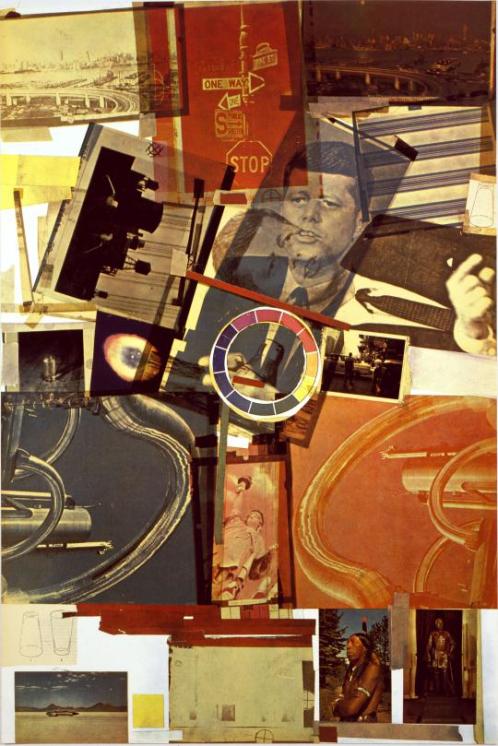
IMAGE

Robert Rauschenberg, Poster for CORE (Congress of Racial Equality), 1965 (detail). Silkscreen print with varnish overlay, 35 7/8 x 23 7/8 inches.

EMAIL

prisonphotography [at] gmail [dot] com

Prison Photography Archives

Post Categories