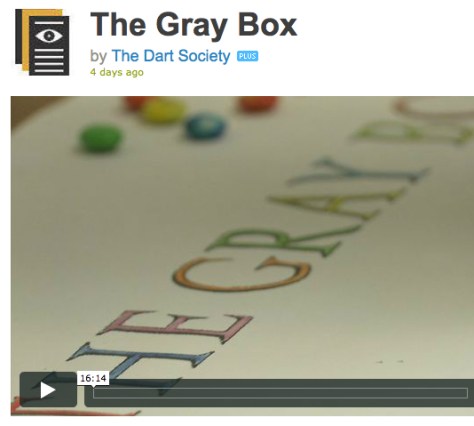
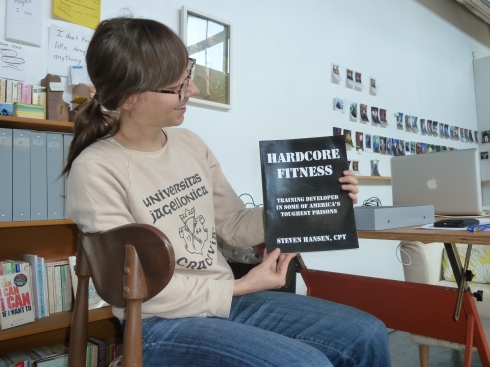
I feel I’ve tried and fallen short in elucidating the core of the matter as regards solitary confinement. When I watched The Gray Box, by freelance journalist Susan Greene and DAX Films, I knew it was something I had to share.

The Gray Box speaks as I never could; it has voices of experience. You’ll be awed by the psychological terror they describe and by the activities isolated prisoners employ to remain sane.

Of all the many battles at hand for prison reformers, it is felt that the campaign against the over-use of solitary confinement in American prisons is an issue that currently resonates enough with the public to effect some policy change.

The anti-Solitary bloc has simplified its message saying that solitary confinement does permanent damage to the mind of he or she imprisoned; a view backed up by medical science.

Publics are also more educated about isolation – and the manipulation/interrogation techniques associated with it – because Guantanamo prison has been regularly discussed in the media for over a decade.

Essentially, the knowledge that solitary destroys people is knowledge that anyone on the political spectrum can understand and oppose. From the hardcore secular ACLU to coalitions of churches, the voices in opposition to solitary confinement are wide and varied. Even so, we do still see some prisons such as Rikers Island which are bucking the trend and pushing for the to use of more solitary confinement.

Furthermore, the few actions of what we might refer to as prisoner resistance include calls to curtail the use of solitary confinement. (This is something Isaac Ontiveros covered when we discussed the California hunger strike).

Solitary confinement is not an issue I feel I’ve adequately discussed here on the blog. I’ve brought up it’s historical genesis; I’ve discussed isolation in and out of prisons; and I’ve referred you to stories about infamous U.S. prisoners such as Robert King and Leonard Peltier who served and are serving time in isolation.

Truly, if you want to know about the abusive use of solitary confinement in US prison’s follow James Ridgeway’s vital journalism at Solitary Watch.

Ridgeway, a voice you can rely on, says about the film and of Greene’s article The Gray Box: An Investigative Look at Solitary Confinement:

This is one of the most comprehensive articles ever written about solitary confinement in the United States, and is particularly noteworthy for including the voices of prisoners, obtained through correspondence with those buried in isolation. It is also passionate and personal.

JOURNALISTS

Susan Greene is a former-columnist at the Denver Post who often wrote about the widespread use of solitary in Colorado’s prisons and at the federal supermax, ADX Florence.

James Ridgeway was interviewed by the Dart Center and talked about the murky statistics and exchange of (mis)information about American prisoners in solitary.

Joseph Rodriguez alerted me to this film. Joseph’s own work Re-Entry in Los Angeles appears among the Spring 2012 Dart Society Reports.

The Dart Society Reports distributes journalism about trauma, violence and human rights.

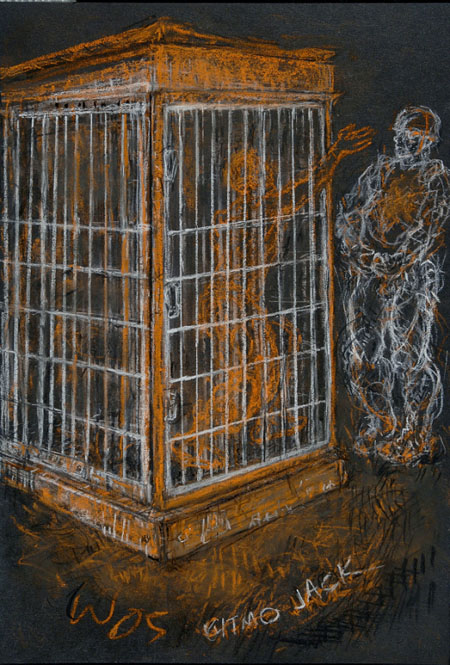
Black Book of Aggressors I 17 THE HEAVY CABLE WIRE. Selma Waldman. Black Book of Aggressors 2005 – 2007, charcoal, pastel, on black paper, 8 1/2 x 11″

“The perpetration of violence takes away an individual’s humanity, abuser and victim are locked in one energy field, that is like sex, they join together with energy, but in [Waldman’s] energy field, they are killing and being killed.”

– Susan Noyes Platt (Source)

Selma Waldman (1932-2008) is one of the great American artists of the 20th and 21st centuries. Unfortunately for the American public, her work has been more widely exhibited in other parts of the world, particularly in Germany.

Just as I insisted when I wrote about Daniel Heyman’s Portraits of Iraqis, it’s often worthwhile to look non-photographic work. As with Heyman’s work, I was introduced to Waldman’s work through Susan Noyes Platt’s vital book Art and Politics Now.

During Waldman’s lifetime, Noyes Platt was a vocal cheerleader for her work. Following Waldman’s death, Noyes Platt reconstructed her studio in a Seattle gallery space.

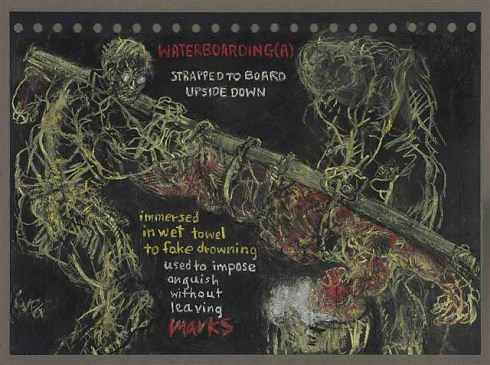
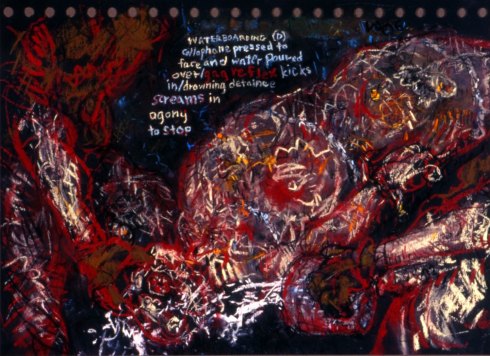
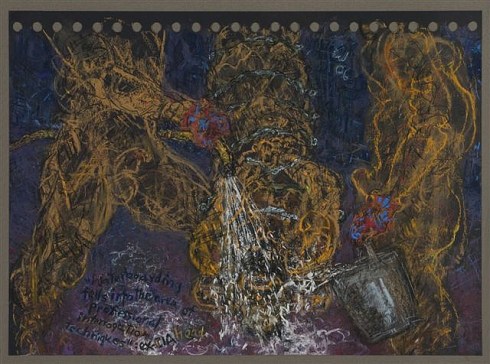
One of her final projects, Waldman’s Black Book of Aggressors explores her life long exploration of personal abuse between humans set in the milieu of widespread terror. The work is clearly to be understood within the context of the Abu Ghraib images but Waldman’s use of pastel extends the horror and successfully creates something significantly different and more nuanced. (I point people towards Antonin Kratochvil’s Homage to Abu Ghraib as an example of how photography can fail in it’s response to atrocity.)

Waldman conjures violent sexual depravity that represents any torture scenario, but because of global events, we know she is passing commentary on the U.S. military. It is difficult work … even for the art establishment.

Of Black Book of Aggressors Noyes Platt says:

“No museum will touch her potent work that exposes the intersection of sex, war, and torture. Her most recent series is on black paper with chalk lines in blue, red, yellow. It is a tangle of passionate fury that ensnarls interrogators and victims in a process that has no moral parameters. She declares in the brochure “War is the Crime, Naked/Aggression is the work”

In as much as the artistic process can mimic the mayhem of torture, I think Waldman succeeds and viewers are mired in what she described as “the pornography of power”.

I don’t repeat the phrase “the pornography of power” lightly. Particularly in photography circles there have been recent re-examinations of what it actually means to describe an image as pornographic. See David Campbell’s excellent essay The Problem with Regarding Photography of Suffering as ‘Pornographic’ as an introduction to the topic.

But with Waldman’s work we’re dealing with pastels and not photos.

One of the challenges to the lazy use of the term ‘pornography’ is that it is often applied specifically to photography, and as such infers something innately violating about photography. Susan Sontag is the often quoted name when people want to discuss photography and violation.

To determine what Waldman achieved with her work and also what we experience as viewers, it is worth considering Campbell’s summary of the term ‘pornographic’:

As a signifier of responses to bodily suffering, ‘pornography’ has come to mean the violation of dignity, cultural degradation, taking things out of context, exploitation, objectification, putting misery and horror on display, the encouragement of voyeurism, the construction of desire, unacceptable sexuality, moral and political perversion, and a fair number more.

Most of these are present in Waldman’s work and yet because she has created a scene and expressed it in pastel, the artworks are essentially invitations to join the artist in protest.

We know that Waldman was not present as the torture and perversions occurred. With photography, on the other hand, we cannot escape the fact that along with the camera there is (usually) the camera operator.

Photography “places us” in the violent space of the original act, whereas painting often puts us in the artist’s imagination. When we engage with a photograph and substitute the camera operator with ourselves, we are repulsed. Often we’ll look away and often we ask, how could they take such a photograph?

Painted art is rarely in the position to be so closely associated with the violence of the act it depicts. When we note Waldman’s violent brushstrokes we celebrate them as conceptually consistent. When we note that a button on a camera was pushed, we may think, “Why didn’t the photographer intervene.” The answers are many and the interventions not as easy as we might hope.

Under the Websters entry for ‘pornography’ the third of three definitions reads:

The depiction of acts in a sensational manner so as to arouse a quick intense emotional reaction, i.e. the pornography of violence.

So, the issue is not that depictions of violence shouldn’t be referred to as pornographic, the issue is that too often images – and particularly photographs – of violence are referred to wrongly as pornographic.

Perhaps the most licentious element of pornographic photos is that of voyeurism. As much as people who consider photography like to discuss the contradictions and layers of meaning within photography, it seems to me, in this comparative case at least, that Waldman’s simpler direct pastel-works are a more substantive experience for the audience. They cannot be dismissed as cheap voyeurism.

Think about it. If we are shown photographs of violence then we must automatically denounce the violence. Simultaneously, the presumption is we are also repulsed. Yes, we can be made to look away, but does that mean we never look back?

A photograph holds within it a never-ending capacity for voyeurism. It is a literal depiction and (I might get in trouble for saying this) it is closer to representational truth than any painting is.

Waldman’s pastels truly are the pornography of power; it is an appropriate phrase for her work. It’s a pornography we can look at and possibly learn from. Waldman depicts the perversions of imperial power without implicating our perversions. Her artwork severs the view of the aggressor from our own view.

In Black Book of Aggressors, you don’t find the voyeuristic tension that exists in photography. It’s powerful, relevant and persistent art.

Black Book of Aggressors, NAKED/AGGRESSION. Selma Waldman. Black Book of Aggressors 2005 – 2007, charcoal, pastel, on black paper, 8 1/2 x 11″

Black Book of Aggressors I. CHAINS OF COMMAND. Selma Waldman Black Book of Aggressors 2005 – 2007, charcoal, pastel, on black paper, 8 1/2 x 11″

Black Book of Aggressors IV 35 WATERBOARDING. Selma Waldman Black Book of Aggressors 2005 – 2007, charcoal, pastel, on black paper, 8 1/2 x 11″

Black Book of aggresors IV WATERBOARDING. Selma Waldman Black Book of Aggressors 2005 – 2007, charcoal, pastel, on black paper, 8 1/2 x 11″

Selma Waldman. Black Book of Aggressors 2005 – 2007, charcoal, pastel, on black paper, 8 1/2 x 11″

Black Book of Aggressors IV 39 WATERBOARDING PROFESSIONAL. Selma Waldman. Black Book of Aggressors 2005 – 2007, charcoal, pastel, on black paper, 8 1/2 x 11″

GITMO JACK, NAKED AGGRESSION. Selma Waldman. Black Book of Aggressors 2005 – 2007, charcoal, pastel, on black paper, 8 1/2 x 11″

Much of the work in the forthcoming Cruel and Unusual exhibition will be exhibited in Europe for the first time. Some of the photographers I have interviewed for Prison Photography before, but not Jane Lindsay.

I met Jane at Arizona State University, where she studies for an MFA and teaches the undergrads. With a warm heart, she’s talented, conscientious and new on the scene. I’m proud to showcase her work.

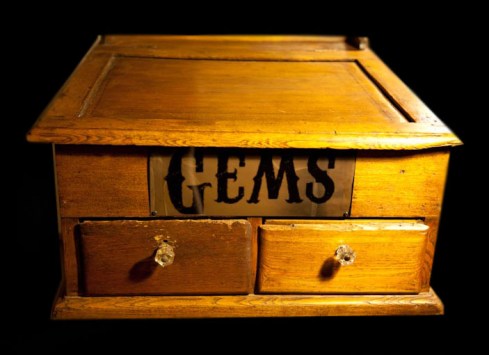
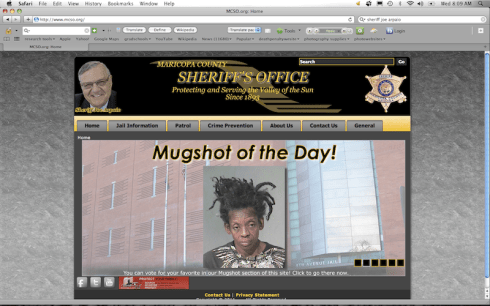
Jane’s series Gems gives back – to men and women arrested in Sheriff Joe Arpaio’s jurisdiction – the dignity he tries his best to strip from them. She is disgusted by Arpaio’s website Mugshot of the Day which publishes the booking photos of people taken into Maricopa County Jail, AZ. The site allows members of the public to gawp, laugh, and vote for their preferred “mugshot of the day.”

It’s public humiliation. It’s also an abuse of power. As Jane points out, many of the people booked into jail suffer with mental-illness, addiction, disability and may be victims of domestic violence or other abuse themselves. Sheriff Arpaio’s response? Insert them into his sideshow-freakshow.

Arpaio encourages us to be callous in our judgement of fellow humans. To be these ugly referees we must stop giving a damn about circumstance or story; we must suspend an interest in time and it’s ability to heal and change things; we must embrace the most lazy understanding of images.

Arpaio wants us to join him in his class-severed world of contempt and mockery. Jane Lindsay refuses.

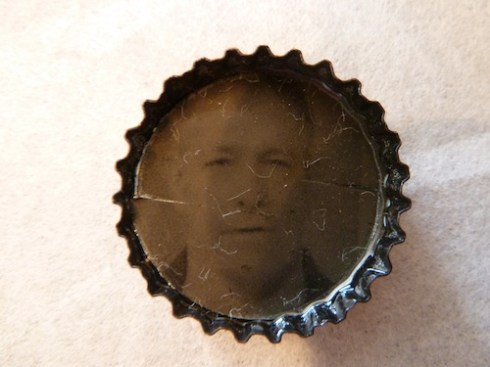
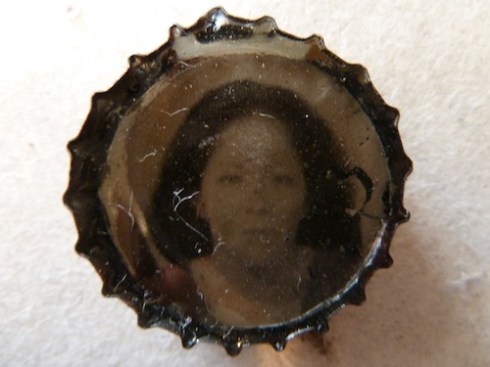
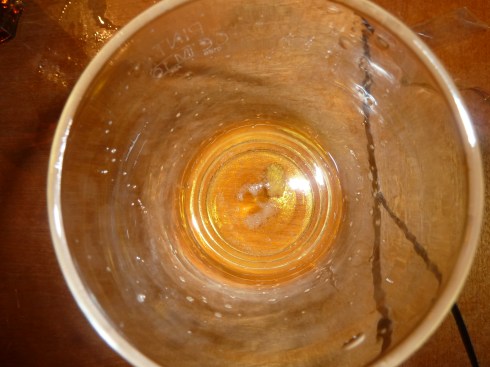
Screengrabs from the Mugshot of the Day website are transferred onto transparencies from which Jane makes a tiny tintype of each portrait. To date, she’s made over 6,000.

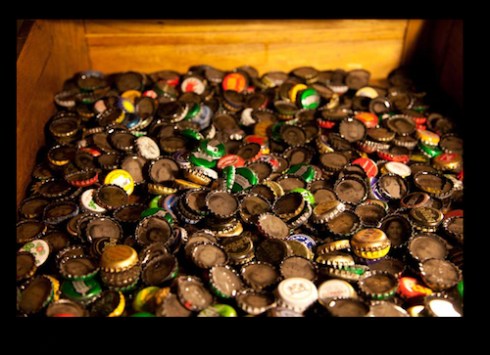
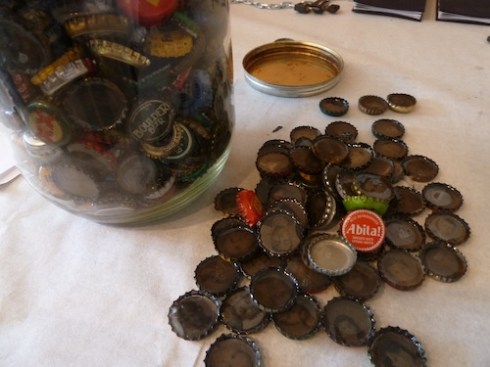
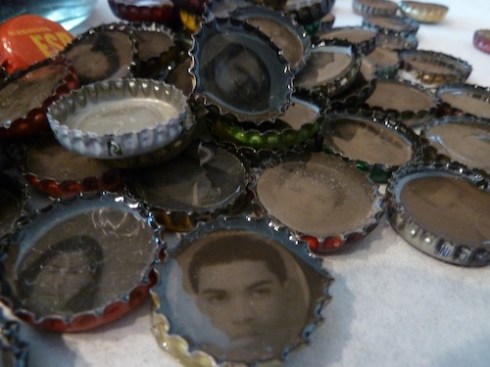
Within the hollow of a bottle cap she inserts a tintype and seals it with resin. These objects, to be held, mimic the eighteenth & nineteenth century devotion objects loved ones shared with each other. Like the contents of a locket without the chain.

Jane doesn’t even want to display them linearly as if to repeat the humiliation of Arpaio’s grid. So she gives them strength in numbers in a purpose-made box. When a viewer is ready they can dip in their hand, select one and spend some time with an individual.

Beautiful.

Jane Lindsay’s website is currently under construction.

“What’s done we partly may compute, But know not what’s resisted.”

Robert Burns, Address to Unco Guild

I recently benefitted to the tune of $11,215 (less the 8.5% taken by Kickstarter and Amazon) to do Prison Photography on the Road. It was one of the most exhilarating and productive experiences of both my life and work.

Since completing the road-trip, I have postponed the publication of the remaining PPOTR audio and the delivery of incentives to funders. This is due to the time required preparing for Cruel and Unusual, an exhibition that I consider an extension of the PPOTR mission.

I let funders know about this delay, but I am still a little uneasy.

This week, I spotted a couple of pieces published about crowdfunding.

Matt Haughey wrote Lessons for Kickstarter creators from the worst project I ever funded on Kickstarter.

The lesson here isn’t necessarily avoiding the mistakes Matt details because the mistakes were specific to the particular project. Rather, know that if you promise something on the internet to potential funders, you had best be able to deliver. Success AND FAILURES will be shared as widely as you originally cast the net for funding.

Matt’s piece was about process and about communication. Joerg Colberg’s article Crowdfunding is Not a Cash Cow is a bit about communication, but more precisely about relationships based upon transaction. Joerg:

“Artists need those relationships. In the past, these kinds of relationships were usually established with wealthy collectors only. Now, crowdfunding offers the chance to establish them with a much larger, much more diverse, much more democratic group of people.”

Joerg urges creators/artists to think of funders as patrons and not “cash cows”, that is that they might come back a second time if they feel you were straight, delivered on your promises and valued the relationship.

That’s pretty much been my position throughout PPOTR; not necessarily that people would come back a second time to give me more money, but that they’d come back a second time to have a conversation.

For people involved in such activities, making art or photographs or writing forms the basis of how people measure ones integrity. All of that is put to one side when you meet someone in person. Their measures of your integrity are now based on how you introduce yourself, how you engage them and how much you value the interaction. Appealing for crowdfunding is like introducing yourself to the world and winning funding is beginning a friendship.

I’ve been asked a lot about advice on how to mount a successful Kickstarter and up until now I’ve felt uncomfortable giving tips on the nuts and bolts of a campaign. That’s because crowdfunding is much more than that; crowdfunding is personal, it’s gut- instinct, it’s sometimes spontaneous and it’s about friendship and respect.

So, these are not the rules per se for crowdfunding. This is the etiquette of crowdfunding. Which, for me, are one and the same.

1. Make a blooming good video.

This is your elevator pitch. 30 seconds. Probably 2 or 3 minutes. Maybe 5.

Without a good pitch few other things can happen.

Anticipate the widest audience; explaining your project to people who’ve never heard of you and simultaneously to your longtime friends is tricky. Be clear and passionate. Let potential funders know why you’ve the skills to carry through the project better than anyone else. Not easy in just a couple of minutes.

2. Search out honest advice.

BEFORE

Seek advice from people in the know. For me, I contacted 20 other photobloggers and asked if they thought my plan was viable. They all said “yes” or “don’t know, but I’d be interested to see you try.” Without their support, I’d not have pitched PPOTR on Kickstarter.

DURING

Ask a trusted friend to tell you if your video pitch makes sense. You need to know if it represents your idea in the best possible way. I find it very difficult to establish distance from my work. Things I take as given are not familiar to everyone. People unfamiliar with your area of work need to be compelled enough by the pitch to buy in.

AFTER

Ask for feedback as your project comes to a close. Hopefully your funders will be happy with your efforts and relationship. If so, pat yourself on the back. If they’re not, you will still benefit from their feedback and from the honest-note you close on.

3. Incentives should be personal, imaginative, exclusive and offer potential funders a wide array of funding levels.

Be creative, even funny. Try to be non-virtual. Snail mail still exists. I underestimated the simple postcard but PPOTR funders loved them! The same goes for hand made art and prints.

People could back PPOTR with any amount between $1 and $1,750. This range is not unusual and often goes higher.

4. Have a really strong set of existing networks.

Cold calls don’t work at the best of times, and here they’ll just be a thankless time sap.

5. Be prepared to promote the crap out of it.

For a full month, I promoted PPOTR like it was a part-time job. Answering calls, sending emails; requesting info; co-ordinating photographers involved; doing interviews; keeping people updated on progress.

6. Involve the community.

If you’re asking for community funding then involve the community.

Firstly, it’s much more fun. Obviously, some projects are more suitable than others for community involvement. It was much easier for me to involve folk because I proposed interviewing scores of photographers, I slept on people’s couches, and I relied on prison photographers to provide the high-end Kickstarter incentives.

Another advantage to this is that all those people you involve will promote your project in their networks.

7. Be realistic about the amount of time and energy it will take to deliver the incentives.

I totally underestimated the time it’d take to write a postcard to every single funder. While on the road, with a little help from friends, I managed to send 100. But I still have 60+ to do and I consider myself fortunate that I’m currently in exotic climes such as the UK and Holland from which to send unique cards. Better late than never.

8. Treat your funders like royalty.

Folk have said they kept up partly with PPOTR via Facebook and Twitter. But folk are not funders.

From the start, I was adamant that ONLY funders would have access to behind-the-scenes information. I published the most complete updates through the Kickstarter website. It was important to me that funders saw my road diary as written for them and them only.

It would have probably benefitted me and my visibility online (on which I rely for maintaining a reputation) if had I made my diary public on Prison Photography blog. BUT, to do so would not have directly benefitted the trip.

By providing exclusivity to funders, I was investing in a select number of relationships.

9. Only ever do one Kickstarter.

I’ve made this “rule”, mainly for myself, since finishing PPOTR.

Partly, because planning a project, designing the pitch, launching and promoting it, completing the work, maintaining relationships with your funders and then delivering on the final product(s) is A LOT of work.

Partly, also it’s about image. You don’t want to appear greedy or entitled. For me, going back for more would look a bit tacky. That’s a personal opinion – more of a feeling – and I wouldn’t be able to debate it at length.

Any thoughts and any questions don’t hesitate to raise in the comments.

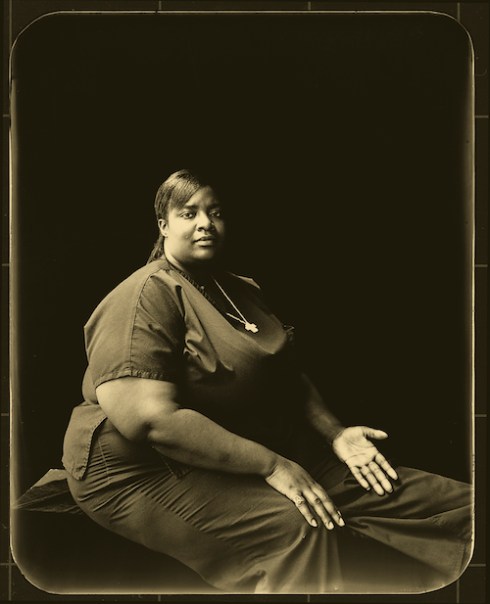
DOC#: 312197
DOB: 11.25.1964
POB: North Kingston, RI
Sentence: 5 years
Work: Floor Worker
Pamela Winfield, Easter Bunny, Children’s Visiting Day, Louisiana Correctional Institute for Women, St. Gabriel, Louisiana. © Deborah Luster. Courtesy Jack Shainman Gallery.

ANNOUNCEMENT: CRUEL AND UNUSUAL

With a big lump of pride in my belly and knowledge of known unknowns, I am pleased to announce Cruel and Unusual, an exhibition of prison photography Hester Keijser and I are curating at Noorderlicht Gallery, Groningen, Holland.

Hester contacted me just before I set out on Prison Photography on the Road (PPOTR) and asked if I’d co-curate a show; she wanted to tap the prison photo landscape and tell Europeans about the mass-incarceration looming on the horizon should their governments repeat the bottom-line economics and unforgiving approach of American policy-makers.

Hester writes why she invited a curatorial novice like me to collaborate, here.

CURATORIAL DECISION MAKING

Just as I got out from behind the desk for PPOTR, to make in-person connections and audio recordings, so an exhibition is another new way for me to present photography of our hidden carceral spaces, and, in so doing, stoke the fires of the reform debates.

As you can imagine, we had scores of photographers from which to choose. Hester distilled some thoughts, guided me by the hand when necessary, and we plumped for eleven stellar photographers: Araminta de Clermont, Amy Elkins, Alyse Emdur, Christiane Feser, Jane Lindsay, Deborah Luster, Nathalie Mohadjer, Yana Payusova, Lizzie Sadin and Lori Waselchuk.

Anwar, from the series ‘Life After’ © Araminta de Clermont

Inmate volunteers at the Angola Prison Hospice massage a dying patients limbs. © Lori Waselchuk

From the series ‘Dungeon’. © Nathalie Mohadjer

The eleven photographers employ a variety of strategies in order to challenge prevailing stereotypes about crime and incarceration. Vernacular photography, found materials, alternative processes, painted photos, digital manipulations and straight black and white documentary will all be in evidence.

A TOUCH OF PPOTR

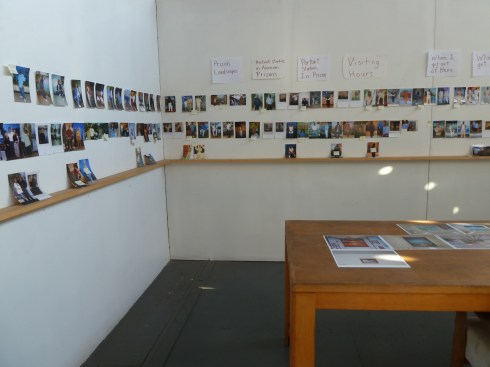
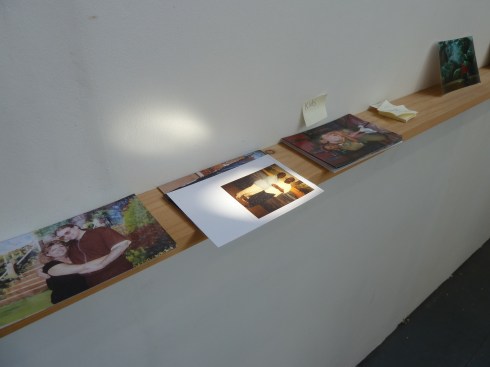
Alongside an orthodox(ish) presentation of the eleven main photographers, I wanted also to capture the chaos, interactions and visual excitement I saw in photographers’ studios, contact-sheets and home-towns while on the road.

Along one wall of the exhibition, we’re mounting a hectic presentation of work-prints, behind-the-scenes images and rough text culled from photographers archives. Photographers included are Scott Houston, Adam Shemper, Sye Williams, Jon Lowenstein, Joseph Rodriguez, Ara Oshagan, Jeff Barnet-Winsby, Lloyd Degrane, Harvey Finkle, Sean Kernan, Tim Gruber, Jenn Ackerman, and Steve Davis. Tim Matsui, Jack Jeffries and Frank McMains provide the b-roll.

This parlays nicely into the fact we’re producing a newspaper format catalogue … in a run of 3,000 copies!

The digital age has simultaneously brought about the decline of printed journalism and the rise of freelancers (bloggers) who publish their own content and worldview at will. Related, but not necessarily causal, we wanted to acknowledge these two trends and the disruption at hand.

Every which way I look at it, Cruel and Unusual is an experiment. It feels good to be trying something new and risking mistakes. Hopefully, our presentation does the subject matter justice.

DETAILS

‘Cruel and Unusual’
18 February – 1 April, 2012
Stichting Fotografie Noorderlicht
Akerkhof 12
9711 JB Groningen
Netherlands

Opening hours: Wed–Sun: 12–6pm
Admission: FREE
Telephone: +31 (0) 50 3182227
Email: info@noorderlicht.com

Opening reception: 17th February
Curators talk: 18th February

Installation shot, Gems, by Jane Lindsay. Bottle cap, resin.

DOC: #335957
DOB: 8.23.1963
POB: Mississippi
Sentence: 4 years
Children: 3
Work: Housekeeping
Louisiana Correctional Institute for Women, St. Gabriel, Louisiana © Deborah Luster. Courtesy Jack Shainman Gallery.

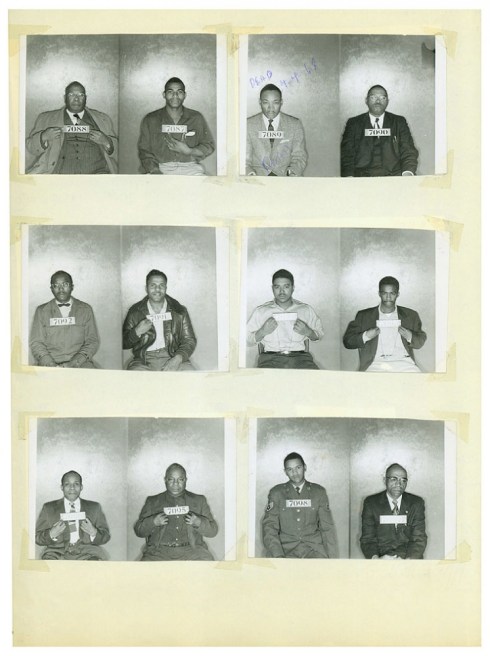
MLK Day

Last night, a rogue bunch of characters descended on the Cornerhouse, in fair Manchester, to confirm that they were really people and more than just the phenomenal pixels they’d previously transmitted to the world.

Before the third beer, discussion had included environmental destruction in China, the rise of the newsprint for photo self-pubs, Polish Liverpool fans, Google Earth, Roma and Romania, photobooks, the power of Duckrabbit, why U.S. prisons are so bad, Sikhism, M.A. distinctions, hierarchies of needs, hierarchies of power within the photoworld, and freeing yourself of all of it.

Here’s the line up.

GEMMA THORPE

SEBA KURTIS

SEAN GALLAGHER

CIARA LEEMING

PERCY DEAN

MISHKA HENNER

In 2005, Alyse Emdur unearthed a photograph (above) of her visiting her older brother in prison. She recalls, even as a 5 year old, her confusion and discomfit with the tropical beach scene to her back.

To Alyse, these garishly coloured corners of the prison visiting rooms are analogous with commercial photo portrait studios, “If you weren’t familiar with prisons, you might think these were prom photos or made in community centres. They’re very ambiguous,” says Alyse.

Fascinated by the obscure and closeted mural works in prisons across the U.S., Alyse meditated upon them in her MFA grad show (she even commissioned a prison artist to paint a mural on parachute canvas). She is now bringing hundreds of authentic American prison visiting room portraits from her Prison Landscapes project together in a book to be released later this year.

Alyse contacted over 300 prisoners via prison penpal and dating websites. Just over 150 agreed to be part of the project.

In the past, I’ve argued that visiting room portraits may constitute the largest type of American vernacular photography not seen by the majority public. I’ve also noted how companies will manipulate these portraits and, at the request of the owner, photoshop out the prison environment. Photoshop “services” such as these are the post-production equivalent of the denial existent in the original works.

If these idyllic landscapes are about escape it might not just be in an emotional sense, “They are a security feature,” says Alyse. “The backdrops are there to control the type of imagery that is being exported out of the institution. To be specific, the administration doesn’t want images of the inside of the prison to circulate outside of the prison because the thinking is that those images could help an inmate escape. That’s what makes these images slippery and interesting; they also create an escape for the poser and for the [family member] who receives the photo.”

How or why does this discussion matter? Well, essentially these are images about control. Cameras are considered a security hazard by prison authorities. Prisoners have no opportunity to self-represent (bar some very exceptional prison photo workshops). After their mugshot, these visiting room portraits are the only chance America’s 2.3 million prisoners have to achieve something that approximates self-representation. These are highly mediated images and they are often a performance that belies the hardship of prison life.

Alyse and I talk about the regionalism of the backdrop murals; the dearth of research on this quirky and hidden aspect of American visual culture; and Alyse notes how the artistry of mural painting is disappearing as acrylic and enamel paint is replaced by large photo-printed screens.

LISTEN TO OUR DISCUSSION ON THE PRISON PHOTOGRAPHY PODBEAN PAGE

Alyse Emdur (b. NJ, USA 1983) works with photography, video, research, social engagement, and drawing. Her work has been exhibited at Printed Matter and the Lambent Foundation in New York; the University of Texas Visual Arts Center in Austin; Bezalel University in Tel Aviv, Israel; the Lab in San Francisco; La Montagne Gallery in Boston; Laura Bartlett Gallery in London, England; Spacibar in Oslo, Norway; In Situ in Paris, France, and Kunststichting Artis in Hertogenbosch, Netherlands.

In Spring 2012, a book of her project Prison Landscapes will be published by Four Corners Books (London).

Download an interview with Niels Van Tomme published in the Fall 2011 Issue of Art Papers Magazine, here (PDF)

Download an excerpt of Prison Landscapes published in Issue 37 of Cabinet Magazine, here (PDF)

EMAIL

prisonphotography [at] gmail [dot] com

Prison Photography Archives

Post Categories