
You are currently browsing the monthly archive for December 2012.
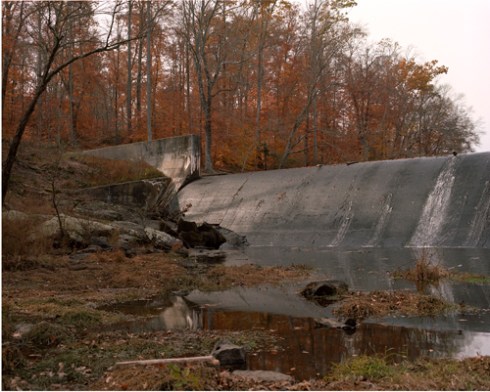
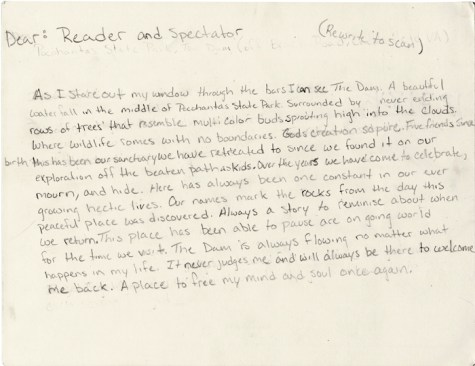
“I see a dam. […] For five friends since birth this has been our sanctuary we have retreated to since we found it on our explorations off the beaten path as kids. We have come to celebrate, mourn and hide.”
For his participatory project, Some Other Places We’ve Missed artist and photographer Mark Strandquist held workshops in various jails and prisons, and asked prisoners, “If you had a window in your cell, what place from your past would it look out to?”
Along with the written descriptions, individuals provided a detailed memory from the chosen location, and described how they wanted the photograph composed.
Strandquist then photographed and an image is handed or mailed back to the incarcerated participants. The size of photographs he made and later exhibited were/are consistent with the restrictions imposed on pictures sent into prisons.
It’s a strong project that involves many different groups. It attempts to build connections where none exist. If one artist can achieve this, think what a whole posse could accomplish?
NOTE
The scanned letters are difficult to read at this size; I recommend using you COMMAND + keys to enlarge the page and jpegs.
[Keep reading below]
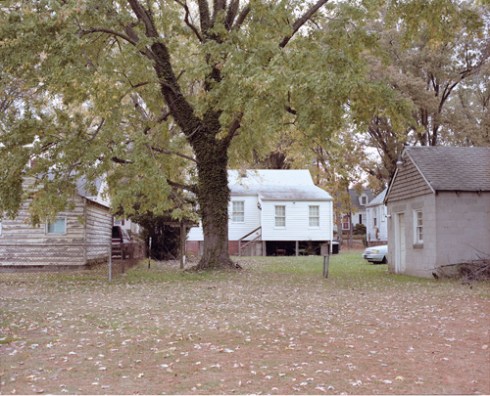
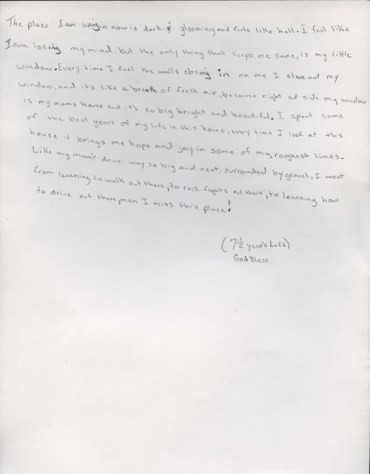
“Right outside my window is my mom’s house.”
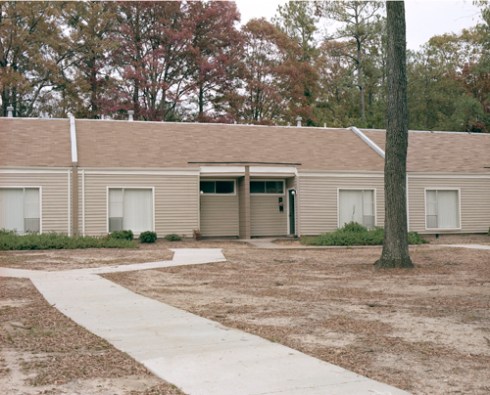
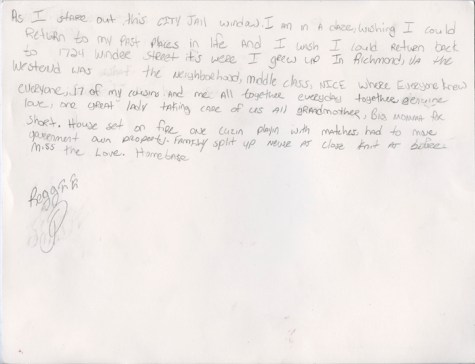
“The neighborhood was middle class, nice, where everyone knew everyone. One great lady taking care of us all – grandmother; Big Momma for short. The house set on fire when one cousin playing with matches. Had to move into government owned property. Family split up. Never as close as before. Miss the love. Home base.”

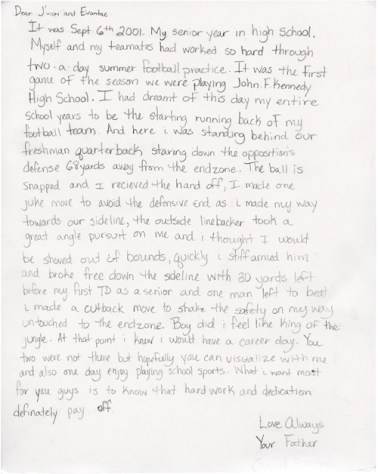
“Here I was standing behind our freshman quarterback staring down the opposition’s defense, 68 yards from the end zone. […] The outside linebacker took a great angle and I thought I’d be shoved out of bounds. Quickly I stiff-arms shim and broke free down the sideline … before my first touchdown as a senior. What I want most is for you guys to know is that hard work and dedication definitely pay off.”
In some ways the work is similar to the Tamms Year Ten Photography Project that asked Illinois prisoners in solitary confinement to describe one image they would like on their cell wall (and which I featured a couple of weeks ago).
Upon encountering the Tamms Year Ten Photography Project, Strandquist was “blown away”, yet he identifies differences between methodolgies.
“The Tamms Year Ten Photography Project is a really challenging project, but there’s so much to love – its diffusion of authorship; its performative aspects of individuals seeking out public spaces to make these images; and its deconstruction of fine art aesthetics,” says Strandquist.
“I believe the form and function of Some Other Places We’ve Missed moves in different, hopefully equally powerful ways. My project is as much about creating a window for the incarcerated participants as it is about creating a window for the public, a meeting ground where each participant’s challenging memories and realities mix with images shot intentionally to facilitate open associations. Part of me wants to hear the stories behind the Tamms requests … but maybe that’s the voyeur in me?” adds Strandquist.
In this case, a will toward voyeurism (to use Strandquist’s term) would indicate that the Tamms Year Ten Photography Project succeeded; it draws audience members in, to then go ahead under their own steam to learn more about the issue, the systems and the people within.
[Keep reading below]

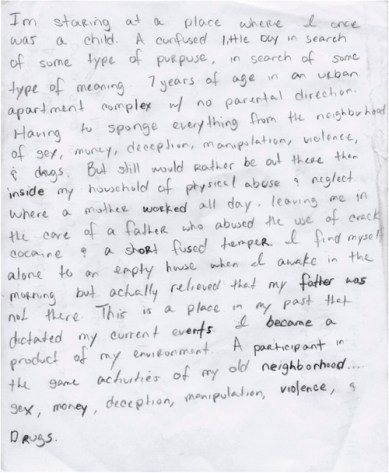
“I’m staring at a place where I once was a child. A confused little boy in search of some meaning. 7 years of age in an urban apartment complex with no parental direction.”
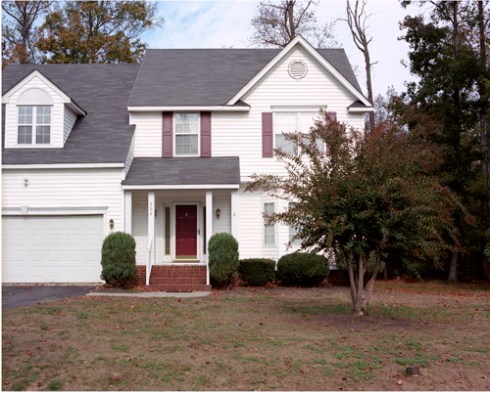
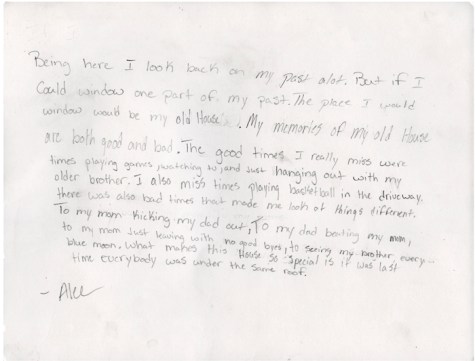
“My memories of my old house are both good and bad. Playing games, watching TV and just hanging out with my older brother. There were bad times that made me see things different – My mom kicking my dad out, my dad beating my mom, my mom leaving with no goodbyes, to seeing my brother every blue moon. What makes this house so special is it’s the last time everyone was under one roof.”
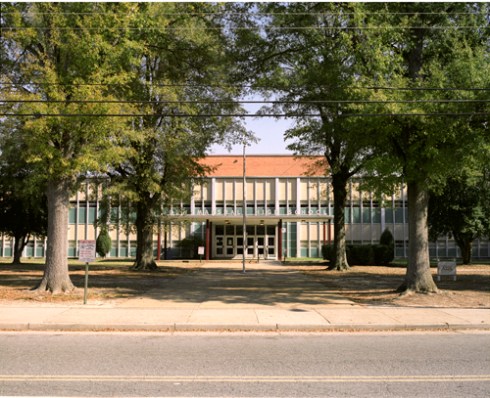
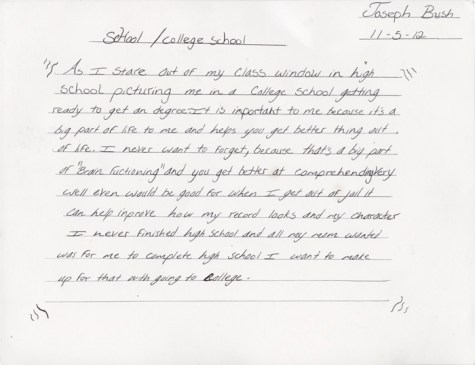
“… all my mom wanted was for my to finish high school. I want to make that up for that with going to college.”


“I miss the feeling of waking up early in the morning to the TV still being on and hearing my little sisters and brothers tearing the house down […] Sometimes it’s the little things that you never pay attention to that can effect you the most in the future.”
GET INVOLVED!
If you, or someone you know is incarcerated, and would be interested in participating in the project, you can email Mark at markaloysious@gmail.com
INSTALLATION
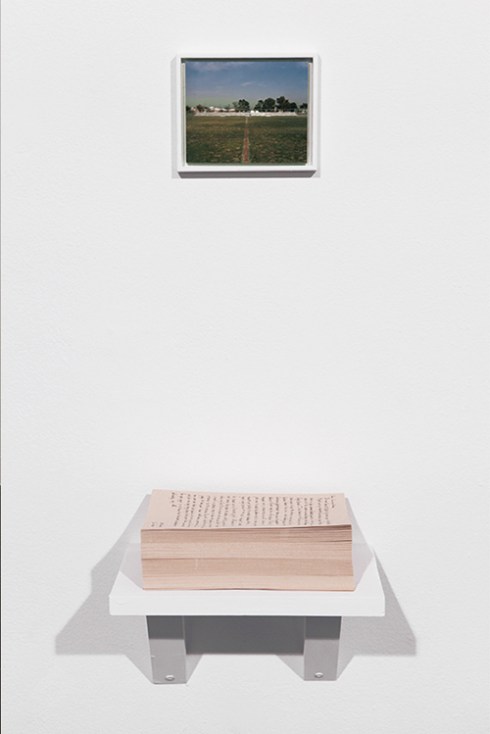
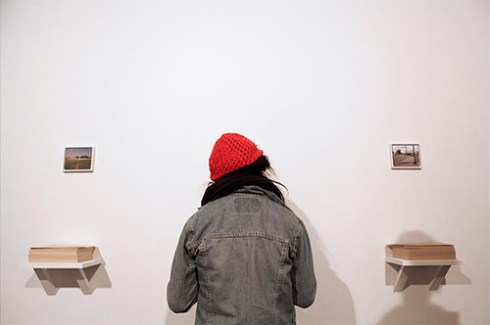
Strandquist recently exhibited Some Other Places We’ve Missed at Anderson Gallery in Richmond, VA. His interactive installation featured weekly prison letter writing workshops and a space to donate books to the local chapter of Books to Prisoners.
Visitors were given the opportunity to take with them copies of written statements by the incarcerated participant about the space to which they wish they had a window.

BIOGRAPHY
Mark Strandquist is a multi-media artist and curator based in Richmond, VA, who creates work that incorporates viewers as direct participants, features histories that are typically distorted or ignored, and blurs the boundary between artistic practice and social engagement. His work has been featured in various film festivals and independent galleries as well as a current exhibit at the Art Museum of Americas in Washington, DC. He is currently working on a BFA at Virginia Commonwealth University. He has a Tumblr.

Yesterday, Gwen Lafage emailed, “I came across Grégoire Korganow‘s photos in a French newspaper and I thought of you. They’re taken inside a prison in Marseilles, south of France. It’s quite incredible how bad it is.”
I agree. It is incredible … but not totally surprising.

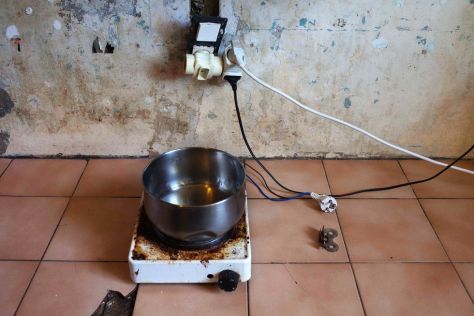

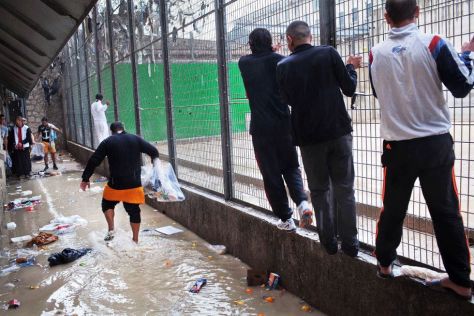

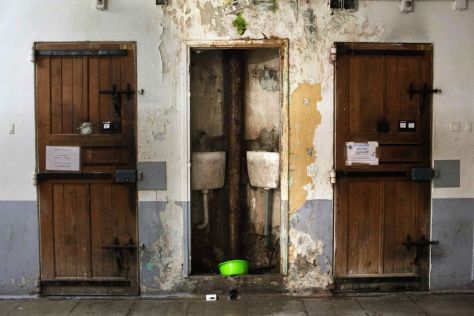

Photo of San Quentin State Prison, found in a thrift store. Photographer unknown.
2013 will bring with it many new things and revelations. Among them: proof that the Mayans were full of crap and also, the Prison Photography photobook.
Some of you with your ears to the ground have known this announcement was coming, but it is exhilarating for me every time I think about a PP book. I’m proud to make a formal announcement.
The book, with the working title American Prisons: Photography In The Era of Mass Incarceration, brings together in 120 pages the research I conducted during Prison Photography On The Road and will also draw on previous work here on Prison Photography.
This week, Kevin Messina, founder of non-profit publishing house Silas Finch, and I laid out the format, the target-audience and the goals for the book. Silas Finch has published the work of Daniel D’Ottavio and Simon Hoegsberg. Raymond Meeks collaborated with Silas Finch to produce the Orchard series – three books of the work of Deborah Luster, Wes Mills and Mark Steinmetz. It is expected that the prison photography book will be – in terms of edition size – Silas Finch’s largest project to date.
In addition to the standard version (priced reasonably to secure as wide a readership as possible and stay true to the spirit of PPOTR), we’re producing a limited edition run of 100 books. Furthermore, plans are afoot for an App/digital version, which will include more images, audio of photographer interviews and potentially content from beyond American shores.
Portland based book maker and friend Rory Sparks (head honcho at EmSpace) is consulting on printing and design.
The planned publish date is September 2013. It’s going to be a busy year bringing together the work of 40+ photographers and penning words to do their work justice. My task is to frame four decades of American prison photography within a thesis that remains powerfully committed to social justice and accessible for all readers.
Part activism and part journalism, we intend the book to be a beautiful object. The images will dictate the mood and the narrative. Images are the main focus; they are the hook. My words will follow in an essay giving the 80+ pages of photography a context. Although it’s a historical survey we want to avoid producing something akin to an exhibition catalogue. It’ll be a fine balance, but if we achieve make it then we might just create a photobook that’s compelling and unique. It may even chart new territories.
Now, to work.
Blake has posted the latest in our Eye On PDX series. He spoke (at length) with Jason Langer. The conversation swoops over the achievements of Langer’s career beginning with his apprenticeship with Michael Kenna. Much of the conversation is Langer passing on the wisdoms that Kenna passed on to him.
Langer says, “I wrote a postcard to Kenna every year with my photo on one side and when I was ready to graduate in 1989 he was ready to hire his first assistant. I jumped at the chance, moved down to the Bay Area and got paid $6/hr. to babysit, mop floors, wash dishes- anything he needed- and of course all the photo related things. Souping film, making contacts, drymounting and matting prints and getting them ready to ship.”
“Kenna told me was that it takes about 10 years to figure out what you want to photograph- what your subject is- and it takes that much time to get good at it- and in the meantime, don’t show your work, until it’s ready- keep the photos under your bed and keep working. There is no rush. That’s a lesson which shocking (to me) has gone out the window- people don’t take ANY time to let their images stew in the pot. It takes AT LEAST this to create a signature style and subject matter- or so I thought. Now – seemingly- it doesn’t matter.”
Read the full conversation: Q&A with Jason Langer
Jason Langer’s debut monograph Secret City was published by Nazraeli in 2006. His next book, Possession, will be published by Nazraeli in Spring 2013.
– – – – – – – – – – – – – – – – – – – – – – – – – – – – – – – – – – – – – – – – – –

I recently sent out the last of the goodies to the Prison Photography on the Road (PPOTR) funders. The packages included the PPOTR Mixtape (actually a CD) and I wanted to share its content with the wider world too.
On the road, I went through hundreds of CDs while driving those 12,500 miles, but I kept coming back to a compilation of soul put together – shortly before my departure – by my good friend Brendan Seibel. He used to work at Amoeba Records and in the realm of music, has forgotten more than I will ever know. Thank you Brendan.
Enjoy.
Track 1
Lette Mbulu – Kube
Track 2
Jean Wells – Have a Little Mercy
Track 3
Fabulous Denos – Bad Girl
Track 4
Betty James – I’m Not Mixed Up Anymore
No Youtube clip for this one, but some background here and MPS here.
Track 5
Johnny Watson – I Say, I Love You
Track 6
Lee Shot Williams – You’re Welcome to the Club
Track 7
Apagya Show Band – Kwaku Ananse
Track 8
The Psychedelic Aliens – We’re Laughing
Track 9
Horace Andy – Skylarking
Track 10
Jennifer Lara – Consider Me
Track 11
Angela Prince – No Bother With No Fuss
Track 12
Burning Spear – Fire Down Below
Track 13
John Holt – Strange Things
Track 14
Charlotte Dada – Don’t Let Me Down
Track 15
Rosemary – Not Much (Do You Baby)
Track 16
Albert King – Had You Told It Like It Was (I Wouldn’t Be Like It Is)
Track 17
Johnny Knight – Little Ann
No Youtube or MPS for Little Ann, so Knight’s Rock ‘n’ Roll Guitar acts as substitute.
Track 18
Freddy King – Now I’ve Got A Woman
Track 19
Sinner Strong – Don’t Knock It
Track 20
Little Willie John – I’m Shakin’
Track 21
Sam & Bill – I Feel Like Cryin’
Track 22
Marion Black – Who Knows
Track 23
Ken Boothe & Stranger Cole – Arte Bella
Track 24
Freddie McGregor – Bobby Bobylon
Track 25
Jerry Jones – There’s a Chance for Me
Track 26
Mahmoud Ahmed – Gizié Dègu Nègèr
Listen here.
Track 27
Oscar Sulley & The Uhuru Dance Band – Bukom Mashie

Oregon spotted frogs at the Cedar Creek prison, WA. © Matthew Ryan Williams for the New York Times
Seattle photographer and all round nice guy, Matt Williams had his work published by the New York Times recently in an article titled Raising Frogs for Freedom, Prison Project Opens Doors. Williams himself pitched the story about the Prison Sustainability Project and teamed up with writer Kirk Johnson. The story has all the right ingredients – charismatic fauna, positive environmental change, a challenge of stereotypes, and social justice thought that bucks the lock ’em trend and attitudes.
Johnson writes:
“The prisoners, who trained with a state biologist but also learned from one another, must compete to enter the program and maintain a record of perfect behavior to stay in it. They are paid 42 cents an hour, standard prison wages, for 10-hour workdays that involve sometimes tedious tasks like monitoring the frogs’ water temperature or harvesting the hundreds of crickets grown for frog food — something that even an oppressed graduate student might avoid at real wages.”
and:
“It is about procedural order, point A to point B, with every step measured and marked for others to check and follow. And when the focus of that work is a creature that undergoes a profound metamorphosis from egg to tadpole to adult, the lesson is also one about the possibilities of change.”
The program is exemplary, as are the other prison environmental/education programs mentioned in the article. Good stuff.
You can see more images over at Matt’s blog.
PREVIOUSLY ON PRISON PHOTOGRAPHY
I’ve held the Prison Sustainability Project in high esteem for some time:
Science in Prison, Change within Ourselves
Benjamin Drummond, Sara Joy Steele, Nature and Washington State Prisons
Prison Moss Project

 Prison Photography