
You are currently browsing the monthly archive for September 2015.
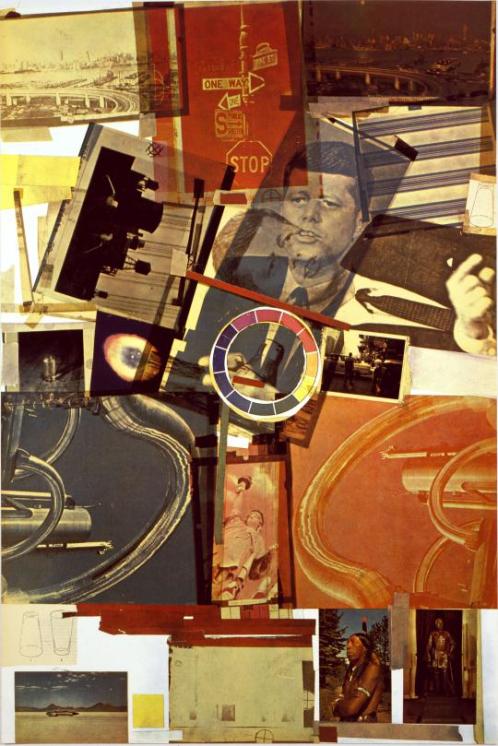
THIS ART MEGA-GRANT IS A SIGN OF THE TIMES
There’s a host of indicators that prison reform is firmly established near the top of the national agenda. In politics, journalism, art and culture the urgent voices and battles that constitute the discussion and solution-finding around mass incarceration are getting an airing they’ve not enjoyed during the past four decades of unfettered prison growth.
The battles brought by anti-prison activists and families (alongside the soul-searching among the rest of us) may define this moment. There’s a long, long way to go to reverse 40 years of failed policy, but it can only be done … incrementally, faithfully and with a long-view.
The Artist As Activist Fellowship program recently announced by the Robert Rauschenberg Foundation (RFF) could be part of a continued movement toward justice and toward national healing. Specifically, the RRF wants to support projects that “address racial justice through the lens of mass incarceration.”
There are more-and-more funding opportunities for artists looking at prisons, abolition and racial discrimination. I don’t have time to flag them all, but for this one I had to take pause. The size of this grant is quite remarkable. There’s been a couple of $15K and $25K offerings recently, but the RRF just upped the ante.
DEADLINE
You have until December 7th to argue your case for 100,000 USD in support.
RFF’S STATEMENT
Of the 2.2 million people currently in American prisons or jails, 1 million are African American. This rate of incarceration is a 500% increase over the past 30 years, and if current trends continue, one in three black males born today can expect to spend time in prison during his lifetime. Nationwide, African Americans represent 26% of juvenile arrests, 44% of youth who are detained, and 58% of the youth admitted to state prisons.
This constitutes an epidemic. Particularly so given mass incarceration’s intersection with wealth inequality and economic justice, voting rights, immigration rights, access to affordable housing, and inequitable educational policies. It is exhausting to unravel the complexity of this issue, let alone to design ways to dismantle the social and economic structures that produced mass incarceration as a phenomenon. Yet that is the task before all of us, one that requires an army of creative thinkers.
THE FELLOWSHIP
The 2016 Artist as Activist Fellowship provides the opportunity for creative professionals who are committed to making meaningful progress towards ending mass incarceration to seek a robust set of resources to advance their work. RRF believes that, at their best, art and artists are disruptive. The very nature of being a compelling artist is to generate new thinking and inspire new ways of being, whether through fostering empathy or by proposing radical alternatives to our current systems. If a new world is possible, it is the minds of artists, designers, culture bearers, and other creative professionals who will call it forth.
ABOUT RRF
The Robert Rauschenberg Foundation fosters the legacy of the artist’s life, work, and philosophy that art can change the world. The foundation supports initiatives at the intersection of arts and issues that embody the fearlessness, innovation, and multidisciplinary approach that Robert Rauschenberg exemplified in both his art and philanthropic endeavors.
MO’ INFO
Facebook
Twitter
Instagram
Tumblr
press@rauschenbergfoundation.org
212 228 5283
Robert Rauschenberg Foundation
381 Lafayette Street
New York
NY 10003-7022
IMAGE
Robert Rauschenberg, Poster for CORE (Congress of Racial Equality), 1965 (detail). Silkscreen print with varnish overlay, 35 7/8 x 23 7/8 inches.

For a short run, Prison Obscura is on show at the University of Michigan. We installed in a marathon effort this week and opened yesterday. You have until 24th September to catch it!
Most proud of my installation of Brown/Coleman v Plata evidence images (above). The gallery has huge front-facing windows, I had 400+ pages of court documents!
Official installation shots are to be made next week, but I wanted to get this announcement up.

I’m also talking today:
CURATOR TALK / SYMPOSIUM
Friday, September 11, 1:00 – 4:00pm
Curator Talk followed by symposium Carcereal Visions: The Prison as Image/Object/Limit. A round table discussion featuring UM faculty Amanda Alexander, Ashley Lucas, Carol Jacobsen, Reuben Miller, Ruby Tapia, Heather Thompson, Isaac Wingfield.
WHERE TO GO?
Duderstadt Center Gallery
North Campus
2281 Bonisteel Blvd
Ann Arbor
MI 48109
Hours: Noon – 6pm, Mon-Fri, Noon – 5pm, Sun.
BLURB
Alyse Emdur’s collected letters and prison visiting- room portraits from across the nation and Robert Gumpert’s recorded audio stories from within the San Francisco jail system provide an opportunity to see, read and listen to subjects in the contexts of their incarceration. Juvenile and adult prisoners in different workshops led by Steve Davis, Mark Strandquist and Kristen S. Wilkinsperform for the camera, reflect on their past, describe their memories, and represent themselves through photography.
Prison Obscura moves from these intimate portrayals of life within the prison system to more expansive views of legal and spatial surveillance in such works as Josh Begley’s manipulated Google Maps’ API code and Paul Rucker’s animated videos, which offer a “celestial” view of the growth of the prison system.
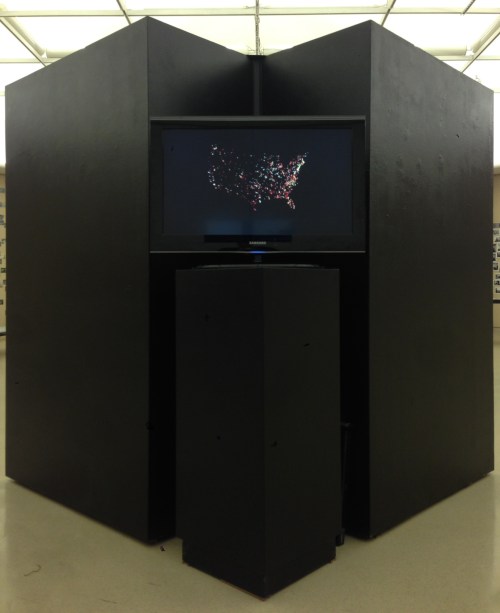
Installation shot of Paul Rucker’s Proliferation
BIG FIVE
U-Mich is the fifth venue for Prison Obscura, after outings at Haverford, Scripps, Rutgers and Parsons.
LIL’ HELP
Prison Obscura is a traveling exhibition made possible with the support of the edits John B. Hurford ’60 Center for the Arts and Humanities and Cantor Fitzgerald Gallery at Havorford College, Haverford, Pennslyvania.
It is sponsored by the University of Michigan’s Departments of Women’s Studies and English, Institute for Research on Women and Gender, Prison Creative Arts Project, Institute for the Humanities and the LSA Dean’s Office.
Also, the U-Mich campus is architecturally trippy. Here, the Lurie Tower which wouldn’t be out of place on a sci-fi movie set.

INFORMATION
Contact Ruby Tapia, Associate Professor of English and Women’s Studies, at rtapia@umich.edu, or Kathi Reister, Gallery Coordinator at kreister@umich.edu

Geekfest,a gathering of a motley bunch of photographers young and old begins tonight in Oakland.
Above is an early flier. Below is the full line-up. I’m speaking in the final spot on Sunday afternoon. I still have no idea what I’ll do or speak about. Really. I think the organisers think I’m joking but, nope, totally undecided.


Shadae Schmidt died in the Secure Housing Unit (SHU) of California Institute for Women (CIW) on 13th March, 2014.
–
“I went to borrow scissors from the cops last week, and I was told that they don’t lend out scissors anymore because they have special industrial scissors now for cutting down bodies. He showed them to me. That’s how normal this is. […] We have women dropping like flies and not one person has been questioned as to why we believe they are killing themselves. I have been down almost 20 years and I have never seen anything like this. Ever.”
– Letter from prisoner at California Institute for Women (CIW) 3/21/15
–
In April of this year, the California Coalition for Women Prisoners (CCWP) provided California Senator Mark Leno with a memo RE: “Female offenders” and medical and mental health care neglect. It opened with quotes that female prisoners had provided CCWP in hundreds of in-person interviews and letters.
“Medical care here is very poor. Inmates are treated like animal. Period. We’re looked at as if we’re not human beings.” and “I’ve gone back to medical for the same issue over a 100 times. So that they can get the $5 co-pay that I don’t have to give.” and “I feel they do not care…it’s my fault or I’m lying about being paralyzed…I had to ‘prove’ I was incontinent. They made me urinate in bed. They would not give me enough catheters.”
Medical care is dire. Mental-healthcare is desperate. Four women have killed themselves at CIW in San Bernardino County in the last 18 months. The suicide rate at the facility is more than eight times the national rate for female prisoners and more than five times the rate for the California prison system as a whole.
Before the recent surge, there were three suicides at CIW in 14 years.
Leno, a Democrat, has been one of the most progressive voices in the Golden State when it comes to prison reforms. It was hoped that he’d be able to open rigorous inquiries as why women are “dropping like flies”, as to why they were hanging themselves and cutting themselves in record numbers.
CCWP got a read on the mental healthcare provision inside CA prisons through interviews and a survey (conducted in summer 2014) from prisoners in California Correction Women’s Facility (CCWF) and CIW, and others recently released. CCWP found that medical and mental health care access and treatment in Californian women prisons fell well below constitutional standards. Suicide prevention is scarce if not lacking entirely.
The AP reported last month how this is “a shocking turnaround” CIW was cited last year as a rare example of good care of California prisoners.
“The prison’s psychiatric program was promoted as a positive example in May 2014 by Matthew Lopes, a federal court-appointed overseer who monitors mental health treatment for inmates. Of six inpatient programs for mentally ill inmates statewide, he found that only the one at the women’s institution was providing proper care.”
All four women who died at CIW were receiving mental health treatment in the days before their deaths.
OFFICIAL DATA
COMPSTAT data gathered by the California Department of CDCR backed up concerns of increased suicides and suicide attempts.
Figures from women’s prisons, over the 13 months 2/14-2/15.
CIW 16 attempted suicides 3
CCWF 7 attempted suicides 0
CMF 20 attempted suicides 1 suicide
FSP 2 attempted suicides 0 suicides
Figures from all men’s prisons not designated “high security” over the 13 months 2/14-2/15.
ASP 5 attempted suicides 0 suicides
CAL 5 attempted suicides 0 suicides
CEN 3 attempted suicides 0 suicides
CTF 6 attempted suicides 0 suicides
CVSP 1 attempted suicide 0 suicides
ISP 5 attempted suicides 0 suicides
MCSP 17 attempted suicides 2 suicides
PVSP 5 attempted suicides 0 suicides
SOL 8 attempted suicides 1 suicide
VSPW 7 attempted suicides 0 suicides
Source: CDCR COMPSTAT DAI Statistical Report.
CIW had more suicides reported by CDCR than any other CA prison in 2014; CIW also had an alarming number of attempted suicides in the same period. CIW had the third highest number of attempted suicides, but the highest rate of suicide attempts when adjusted for population.
THOSE THAT PASSED
Behind these tragic findings are even more tragic deaths. The deaths of Stephanie Felix, Gui Fei Zhang and Shadae Schmidt were reported by some local and solidarity press, but mostly went by unnoticed and, worse, unquestioned. For
Stephanie Felix committed suicide at CIW on 3/9/15, after previous suicide attempts and after asking for emergency mental health care several times, including that very same day. Ms. Felix had been housed in the SCU, but she was placed back in general population where her mental health declined. During a previous suicide attempt, two prisoners performed CPR on her to save her life, despite being told to stop and facing disciplinary consequences for their actions. (Reported to CCWP by letters 3/15)
Gui Fei Zhang, a 73-year-old Chinese woman, committed suicide on 2/17/15 at CIW. She was released from suicide watch back to general population the day before she killed herself. (Reported to CCWP in interviews 4/10/15)
Shadae Schmidt was a 32-year-old African-American woman who died in the CIW SHU on 3/13/14. Shadae had a stroke in February 2014 and was prematurely returned to the SHU. She was given medication that made her sick but her requests for a change in prescription were ignored. CCWP is still waiting to hear any reports of investigations into Shadae’s death. We have noticed that there is one preventable death listed in the CDCR data for the month she died. (Reported to CCWP by family and friends in 2014)
Uncovering the common causation factors between these deaths has been an ongoing concern for CCWP.
CONCLUSIONS
CCWP concluded generally that:
• Prisoners in the SHU at CIW report heightened medical and mental health care neglect
• CCWF and CIW have poor records of seeing patients in the period mandated once requests for mental health help are submitted.
• Processing time with mental health clinicians is too short – 15 minutes does not allow for adequate diagnosis, treatment, etc..
• Chronic care patients are required to be seen every 90 days, even though many patients require more medical attention; many chronic care patients are not seen every 90 days.
• Overcrowding at CCWF and CIW is still impacting mental health care access; the SCU at CIW is often overcrowded because of the increasing need for acute mental health care.
• The threat of being moved to the PIP prevents many SCU patients from seeking help.
• Patients in the SCU are increasingly cutting themselves to deal with emotional trauma and/or to get the mental health or medical attention they need.
• If people report suicidality after 2pm, mental health departments are closed and mental health workers retrieve patients from the cages (where suicidal patients are caged and cuffed) to treat patients in the emergency rooms of the medical departments — loud, chaotic environments with no chairs, and little privacy.
Specific to neglectful mental healthcare, CCWP noted that:
• Patients, including those who are very sick and/or disabled, routinely wait outside for scheduled doctor’s appointments for 2 to 5 hours in all weather (including rain and heat alerts). “Too many prisoners, too few doctors,” is the common experience.
• Patients do not feel respected, believed or listened to by their primary doctor. People are often told that they are “lying” when they report on health history, symptoms, or past treatments that have been helpful for them.
• Misdiagnoses are still too common.
• Serious lack of follow-up care after surgeries continues to be a significant problem.
• There are often significant delays in refilling prescribed medications. People are going without life-saving and chronic care medications while they wait.
• Treatment recommendations from specialists are rarely ordered and/or followed by doctors at the prisons.
• Gender non-conforming and transgender prisoners face increased medical and mental health neglect because of discrimination based on their gender non-conforming or transgender status.
• When prisoners file grievances (602s) for medical and mental health neglect, they often experience direct retaliation from healthcare providers and/or further denial of access to care.
Recommendations
Despite decades of lawsuits to remedy prison health care and court orders to reduce prison overcrowding, the inhumane conditions inside CA women’s prisons continue. The CCWP has called for an independent investigation into the circumstances surrounding all deaths at CIW in 2014 and 2015. The CDCR says it is monitoring CIW more closely than any other prison in the system.
CCWP calls, sensibly, for a reduction of overcrowding through the implementation of existing release programs. It also calls for immediate transfer of all prisoners with mental health issues from the SHU.
I was pretty skeptical about President Obama’s photo-op last month at El Reno Federal Correctional Institution in Oklahoma.
It wasn’t a prison visit per se as Obama didn’t stroll a functioning cellblock, but instead bizarrely peered into an empty cell before his 5-minute address to the press. Obama and his handlers secured the requisite visuals to help hammer home their commitment to national debate, and to leading that debate. Well-orchestrated business as usual for the White House, then.
The most interesting thing that happened that day was the forum Obama held with some hand-picked prisoners about their lot, our lot and (I presume) the need to fix so, so many things in our prisons.
The meet was filmed by HBO and VICE. The trailer is out.
There’s been a ban on film crews in federal facilities since 1995. I know of only one exception to the ban when a production company was granted access to a federal facility in Florida earlier this year. If anyone was going to buck the trend, the President of the United States was a likely candidate. I look forward to seeing the final product.
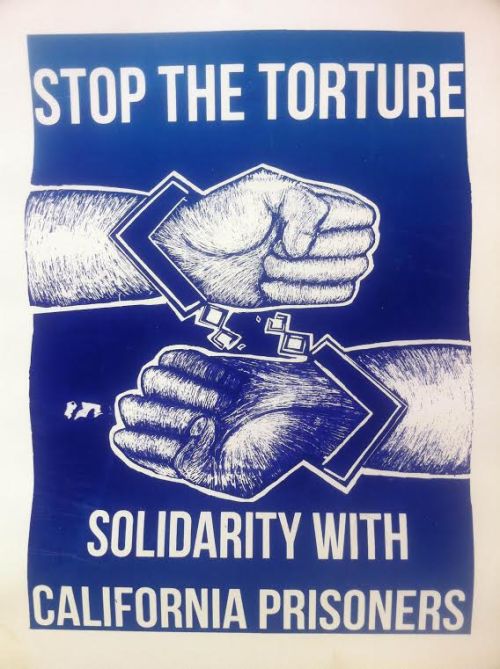
Prisoners in California will no longer be kept in windowless boxes indefinitely. That improves the lives of 3,000 people. It also brings California into line with the practices of virtually all other states. This is landmark.
Many groups were involved in the support of the plaintiffs in the class action suit. Legal Services for Prisoners with Children put out a press release. Below I copy the press release of the Prisoner Hunger Strike Solidarity group.
PRESS RELEASE
OAKLAND — Today, California prisoners locked in isolation achieved a groundbreaking legal victory in their ongoing struggle against the use of solitary confinement. A settlement was reached in the federal class action suit Ashker v. Brown, originally filed in 2012, effectively ending indefinite long-term solitary confinement, and greatly limiting the prison administration’s ability to use the practice, widely seen as a form of torture. The lawsuit was brought on behalf of prisoners held in Pelican Bay State Prison’s infamous Security Housing Units (SHU) for more than 10 years, where they spend 23 hours a day or more in their cells with little to no access to family visits, outdoor time, or any kind of programming.
“From the historic prisoner-led hunger strikes of 2011 and 2013, to the work of families, loved ones, and advocate, this settlement is a direct result of our grassroots organizing, both inside and outside prison walls,” said Dolores Canales of California Families Against Solitary Confinement (CFASC), and mother of a prisoner in Pelican Bay. “This legal victory is huge, but is not the end of our fight – it will only make the struggle against solitary and imprisonment everywhere stronger.” The 2011 and 2013 hunger strikes gained widespread international attention that for the first time in recent years put solitary confinement under mainstream scrutiny.

Prisoner Hunger Strike Solidarity (PHSS) coalition members commemorating the first anniversary of the 2013 hunger strike suspension.
Currently, many prisoners are in solitary because of their “status” – having been associated with political ideologies or gang affiliation. However, this settlement does away with the status-based system, leaving solitary as an option only in cases of serious behavioral rule violations. Furthermore, the settlement limits the amount of time a prisoner may be held in solitary, and sets a two year Step-Down Program for the release of current solitary prisoners into the prison general population.
It is estimated that between 1,500 and 2,000 prisoners will be released from SHU within one year of this settlement. A higher security general population unit will be created for a small number of cases where people have been in SHU for more than 10 years and have a recent serious rule violation.
“Despite the repeated attempts by the prison regime to break the prisoners’ strength, they have remained unified in this fight,” said Marie Levin of CFASC and sister of a prisoner representative named in the lawsuit. “The Agreement to End Hostilities and the unity of the prisoners are crucial to this victory, and will continue to play a significant role in their ongoing struggle.” The Agreement to End Hostilities is an historic document put out by prisoner representatives in Pelican Bay in 2012 calling on all prisoners to build unity and cease hostilities between racial groups.

Drawn by Michael D. Russell, Pelican Bay SHU
Prisoner representatives and their legal counsel will regularly meet with California Department of Corrections and Rehabilitation officials as well as with Federal Magistrate Judge Nandor Vadas, who is tasked with overseeing the reforms, to insure that the settlement terms are being implemented.
“Without the hunger strikes and without the Agreement to End Hostilities to bring California’s prisoners together and commit to risking their lives— by being willing to die for their cause by starving for 60 days, we would not have this settlement today,” said Anne Weills of Siegel and Yee, co-counsel in the case. “It will improve the living conditions for thousands of men and women and no longer have them languishing for decades in the hole at Pelican Bay.”
“This victory was achieved by the efforts of people in prison, their families and loved ones, lawyers, and outside supporters,” said the prisoners represented in the settlement in a joint statement. “We celebrate this victory while at the same time, we recognize that achieving our goal of fundamentally transforming the criminal justice system and stopping the practice of warehousing people in prison will be a protracted struggle.”

Drawn by Carlos Ramirez while in Pelican Bay SHU
Legal co-counsel in the case includes California Prison Focus, Siegel & Yee, Legal Services for Prisoners with Children, Weil Gotshal & Manges LLP, Chistensen O’Connor Johnson Kindness PLLC, and the Law Offices of Charles Carbone. The lead counsel is the Center for Constitutional Rights. The judge in the case is Judge Claudia Wilken in the United States District Court for the Northern District of California.
A rally and press conference are set for 12pm in front of the Elihu M Harris State Building in Oakland, which will be livestreamed at http://livestre.am/5bsWO.
The settlement can be read on CCR’s website, along with a summary. CCR has also put up downloadable clips of the plaintiffs’ depositions here.


 Prison Photography