
You are currently browsing petebrook’s articles.
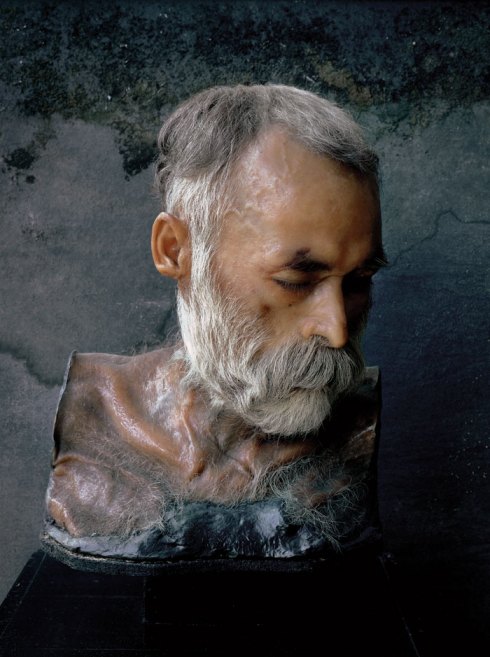
© Jack Burman Argentina No. 11, 2001
Jack Burman was interviewed by Nozlee Samadzadeh for the Morning News this week:
NS: The men and women in your portraits likely did not have say in how their bodies would be treated after death. Is it fair of you to further exploit them by displaying their photographs?
JB: Let’s try on “exploit.” My dictionary says “utilize (person etc.) for one’s own ends, esp. derog[atory].” I utilize them for my own ends—after anatomists have extensively utilized them for theirs, which include vital learning and instruction, yes—as well as, in some cases, which I think are understandable and unavoidable, academic career advancement. And my ends? They are as I said to breathe through the work I do and place before others, some of whom find clarity and worth in the prints. I make no profit—ever, in any material form—from this work. Strictly then? I “utilize…” in the way the dictionary said.
Burman’s book, The Dead (2010) was published by Magenta Foundation.
More info here.
The Center for Documentary Studies (CDS) at Duke University has awarded the twentieth Dorothea Lange-Paul Taylor Prize to photographer Tiana Markova-Gold and writer Sarah Dohrmann.
With the money ‘Markova-Gold and Dohrmann plan to spend three months in Morocco, “living with and documenting the lives of sex workers whose clients are not sex tourists, but are instead fellow Moroccan men.” They will focus on women in prostitution from different economic levels and backgrounds as they engage with them in their homes and in the hotels, clubs, cafes, and streets where they work. While intimate in their approach, it is their hope that the work will portray Morocco—with its unique position as a bridge between Europe and Africa, its role within the MENA region and Islamic society, and as a developing nation grappling with the economic impacts of globalization—within a larger context of the particular vulnerability of women and girls worldwide.’
No small task. Good luck to them.
OTHER PEOPLE’S DIRTY LAUNDRY

"I think the ten minute foot rub I give is a major key to my success . . . If I were to teach Sex Work 101, this would be Lesson One and I wish I had learned it years earlier in my career." Miami Beach 2007. Photograph by Tiana Markova-Gold from the project Other People's Dirty Laundry (Sex Workers Project / Jenna).
Because the work is yet to be embarked upon, CDS presents images from Markova-Gold’s 2007/08 project Other People’s Dirty Laundry and You Must Not Know ‘Bout Me…
The two projects contrast the addictions & abuses, hygiene & preparations of sex workers servicing clients of vastly different economic means and in very different environments; Miami Beach and Washington D.C. contrast frighteningly with the South Bronx and East Harlem.
HOW CLOSE?
The intimacy the photographer has forged here with the sex workers is remarkable but not unique – Scot Sothern, Mimi Chakarova and Dana Popa have all produced projects recently that suggest a trust with their subjects and provide windows into very troubled worlds, especially in the case of Chakarova and Popa who deal with sex-trafficking in Eastern Europe.
This discussion that must necessarily follow the viewing of these projects is complex and difficult and I don’t pretend to have any answers. I only expect an honest discussion.
Rapid City, South Dakota, 6.16.10.
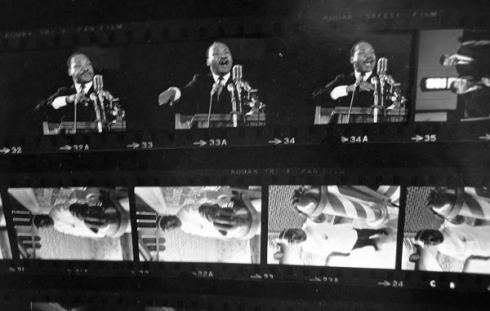
‘Digging into the strata of junk, he found more black-and-white mounted photos, some of them under a broken-down convertible that was one of several cars abandoned in the warehouse. He found the young Jesse Jackson preaching, Dizzy Gillespie playing his trumpet, and four black men—photographers apparently, from the cameras on display—sitting on the concrete front steps of the South Side Community Art Center. […] There was a box filled with negatives in labeled envelopes. There were negatives of Dr. Martin Luther King Jr., negatives of Abbie Hoffman, negatives of Lyndon Johnson. Next to this box was another one that was full of invoices; their letterhead said HOWARD SIMMONS.’ (Story)
(via)
“The whole trouble lies in the fact that people think that there are conditions excluding the necessity of love in their intercourse with man, but such conditions do not exist. Things may be treated without love; one may chop wood, make bricks, forge iron without love; but one can no more deal with people without love than one can handle bees without care.”
Tolstoy, Resurrection (pt. ii, ch. xxv)
Tolstoy called for the presence of love within the Russian criminal justice system. Resurrection (1899) was Tolstoy’s last novel, and intended as an exposition of injustice of man-made laws.
From Harpers: “Resurrection is at its heart an engagement with justice, both with the criminal-justice system and with justice as a concept with essential social, political, and religious aspects. Its author has grown weary of a political debate that pits conservative upholders of autocratic rule against liberal reformers convinced they can shape a just system by issuing laws and regulations. He looks with somewhat more bemusement, even admiration, at those who take a revolutionary perspective—who are convinced of the fundamental injustice of the Russian system and who are committed not to reforming it but to sweeping it away.”
TOLSTOY TODAY?
It is impossible to argue for mass decarceration, let alone abolition, in the US today without being quickly boxed as a lunatic. And yet, one must be clearly delusional if they’re willing to flee logic, waste tax dollars and ignore discrimination to maintain the prison industrial complex. If the two ends of the spectrum are madness what does that tell us?
Single figure percentage decreases won’t make a amends for the damage mass incarceration has wrought upon the soul of America.
Let’s be radical and put more love in the system. Let’s put more love in society. Let’s build schools not prisons. It’s easier to make good men than to repair broken ones.
‘700 psychiatric patients live chained together in pairs, and are forced to tend more than one million chickens at the largest chicken farm in Taiwan. Portraits of the players in this real yet surreal drama were photographed with kindness, respect and compassion by Magnum photographer Chien-Chi Chang.’
Lens Culture

From DLK: ‘Chien-Chi Chang makes portraits of pairs of mental patients at the Long Fa Tang Temple, where a stable patient is chained together with one with more severe problems in an unorthodox kind of bonding therapy.’
‘Chang appears to have neither permanent gallery representation in the US nor any meaningful secondary market history. My guess is the only option for interested collectors is to follow up directly via Magnum to inquire about potential prints for sale. That said, I think that either a mini-retrospective/survey show or a focused exhibit of portraits from The Chain should to be undertaken by some gallery in New York, as this work clearly merits being shown more broadly in the world of contemporary photography.’
Yes, it does.
Further reading: C-Arts here, and a book review of The Chain here.

Large hangars and fuel storage, Tonopah Test Range, Nevada, distance 18 miles, 10:44 am. © Trevor Paglen
I’ve tried talking about Trevor Paglen’s expansive oeuvre before, with particular reference to his documenting of Black Sites (US extrajudicial prisons). I don’t think I did a great job, which is why I am happy to see Joerg and Asim both grapple with Paglen’s contributions.
Conscientious interviews Paglen
‘What I want out of art is “things that help us see who we are now” – and I mean this quite literally. I think of my visual work an exploration of political epistemology (i.e. the politics of how we know what we think we know?) filled with all the contradictions, dead ends, moments of revelation, and confusion that characterize our collective ability to comprehend the world around us in general.’
Asim Rafiqui delves deep: ‘Photographing The Unseen Or What Conventional Photojournalism Is Not Telling Us About Ourselves.‘
‘[Paglen’s photographs] remind us how most photojournalists prefer to pander in the simple, the obvious and the conventional, while never engaging in the complex and crucual. Our newspapers and photographers have, either out of convenience, laziness or sheer careerism, chosen to veil the GWAT behind beautifully rendered and largely distracting projects produced from the confines of embedded positions on the front line.’
Of course, war photography is only one aspect area of photojournalism, but the argument can be made that criticism of war photography has stopped short, cowered or just missed the point. If one accepts that as the case, then Jim Johnson‘s three posts about the changing conventions in war photography (here, here and here) are a good lesson in how to think and see war photography, which let’s admit it, is a genre America still dresses in wonder and heroic myth.

© Darius Kuzmickas
Darius Kuzmickas‘ work, found on Hey Hot Shot recalled Abelardo Morell‘s Camera Obscura works.

© Abelardo Morell
To paraphrase Morell, the best way to describe the camera to somebody is to put them in it.

 Prison Photography