
You are currently browsing petebrook’s articles.
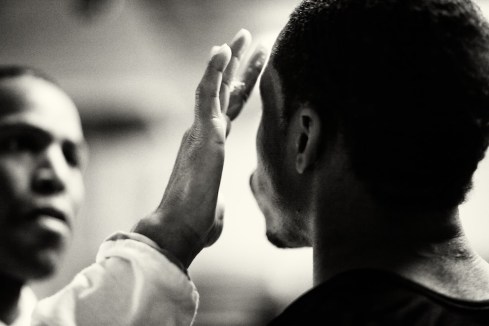
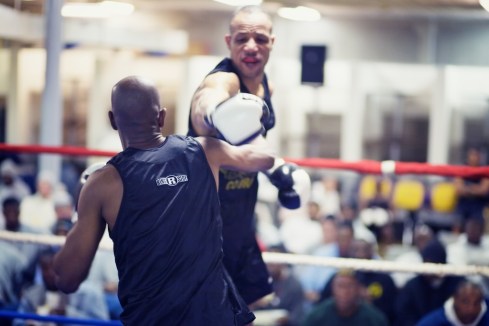
In the management of prisons, fighting is an activity prohibited by the authorities (bar some exceptional instances) and a sign that the regime and control measures are failing. However, at Louisiana State Penitentiary (commonly known as Angola), the Angola Amateur Boxing Association provides equipment and space for prisoners to spar and bout. From the Louisianan Dept. of Corrections website:
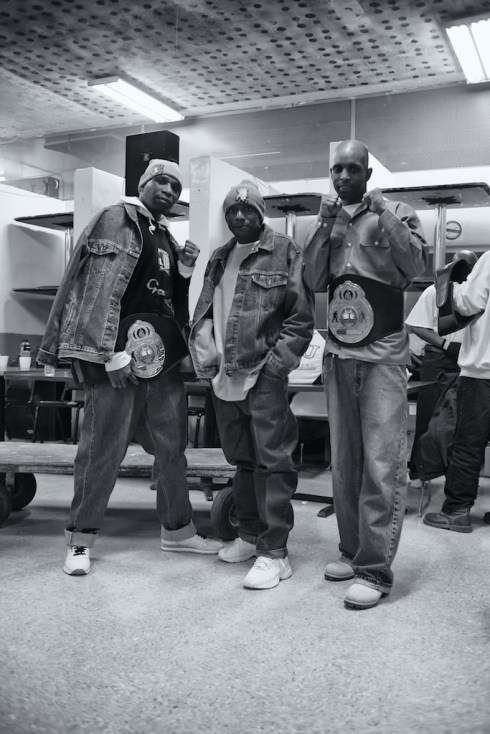
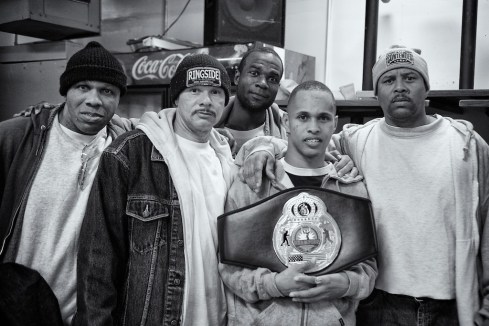
“The prison’s boxing program sponsors “fight night,” held every few months with boxing teams from other state prisons competing for corrections department championship belts. The Angola Amateur Boxing Association has held more belts in all weight classes through its 25-year history than any other prison boxing club in the state. The organization is a member of the Louisiana Institutional Boxing Association.”
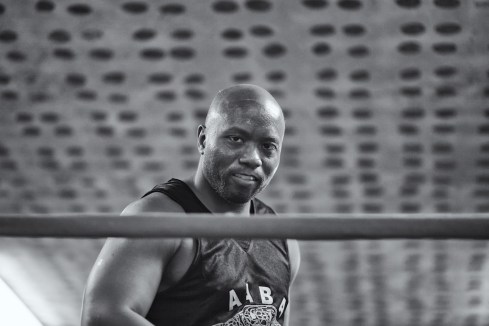
In February of 2010, Baton-Rouge based photographer Frank McMains went to Louisiana State Penitentiary to document the club, the fighters and a bout. I asked him a few questions about the experience. [Underlining added by me]
How did you hear about the boxing club?
I had heard about prison boxing through another photographer who had attended a bout at a different prison in Louisiana. Oddly enough, he went without his camera. There is also a documentary about a volunteer boxing coach at Angola and I happen to know the guy who put that together. In short, among those who are interested in such things, boxing at Angola and intra-prison boxing between different prisons in Louisiana is somewhat widely known.
Did you do the story on assignment or of your own volition?
These shots were taken because of my interest in Angola and my interest in the boxing specifically. I pitched it to a few national magazines and one picked it up, but the folks at Angola were uncomfortable with the magazine that was interested in running the photos and article. They felt it was not a serious enough venue for the subject, so the photos remained un-published.

How did you gain access?
Angola is surprisingly accessible for a maximum security prison. I can’t say I have tried to get access to any others, but my sense is that they welcome outsiders who want to report on what is going on there. Over the course of several articles about different activities at Angola I have built a relationship with some of the wardens and staff. As a result, I didn’t really have to negotiate for access so much as plan around their schedule. Recent funding cutbacks meant that Angola’s boxing team did not fight teams from other prisons as they had in the past. There just wasn’t the money to transport the prisoners. So, the whole program was kind of in flux for a while, but once they confirmed a date, I wasn’t going to miss it. The staff at Angola are very professional and they are clear about what sort of interactions you can have with inmates as well as what sort of things you can bring into the prison. I have had my gear searched before but the prisoners who are allowed to participate in events like the rodeo or boxing matches are ones the prison administration feels are less of a threat. They basically would not let you into an area with prisoners who they didn’t trust and they also wouldn’t let someone into the prison with a bag full of gear with whom they didn’t feel comfortable.
How many individuals were involved?
There were about eight bouts so that means 16 boxers. However, there were about 150 prisoners who were there to watch the event and cheer on their friends. In the room with us there were probably four guards who sort of came and went as well as a few staff members and the warden with whom I was acquainted.


How did the prisoners talk about the AABA? Had it changed their behaviour or outlook?
One of my real regrets about this project is that I didn’t get a chance to talk to the boxers in more depth. As they were warming up for the fights they were focused on the what was ahead of them and I didn’t want to interfere with that. After the fights were over I spoke with several of the fighters and coaches but it was very informal.
It has been my experience that prisoners are much more interested in talking about where their family might see the photos and things that don’t pertain to their life in prison. Most of the conversations I had after shooting these photos were about people’s families, not about their lives behind bars.
I would like to follow up with the guys involved, but it was sort of outside of the scope of this shoot.
Some people might think boxing is not the right activity for prisoners; that it is violent. What would you say to people with these reservations?
Some people will always object to boxing as a brutal activity whether that is in prison or in Las Vegas. I get that objection, although I see it as graceful and pure in a way that many sports are not, but you can’t deny that it is violent. Last I checked that was a component of the human condition.
When it takes places in a prison I think it is understandable that some people would balk at what could be construed as violence piled on top of violence. It has been my experience that anything that the prisoners get to do is a step towards socializing them and giving them some hope in the face of a pretty bleak future. Angola has an unusual approach to punishment; they try to engage the prisoners in as many activities as possible. The prisoners work the land there to feed the prison population, they maintain the facilities and even staff the prison museum and gift shop. There is also a prisoner run newspaper and radio station. So, if you remove the fact that it is boxing from the equation then I think that an approach to incarceration that does something other than let people rot away in a cell is a good thing; boxing is a commitment to rehabilitation.
The other aspect of life at Angola is that most of the prisoners will die there, simply put. Most are serving life sentences without the possibility of parole. I understand the punishment-as-vengence argument that some might have. It is understandable to look at a murderer and say, “Who cares if they have any dignity.” I think the staff at Angola see a path for redemption for the prisoners that runs through many different courses. It might be boxing, it might be prison ministry. They seem to think that engaging the prisoners is preferable for all concerned to treating them as de-humanized creatures who simply have to be warehoused until the end of their days. From that perspective, Angola seems to run pretty well. Less than a quarter of the inmates are housed in cells and they spend their days working to make the prison run. That, to me, speaks for itself.
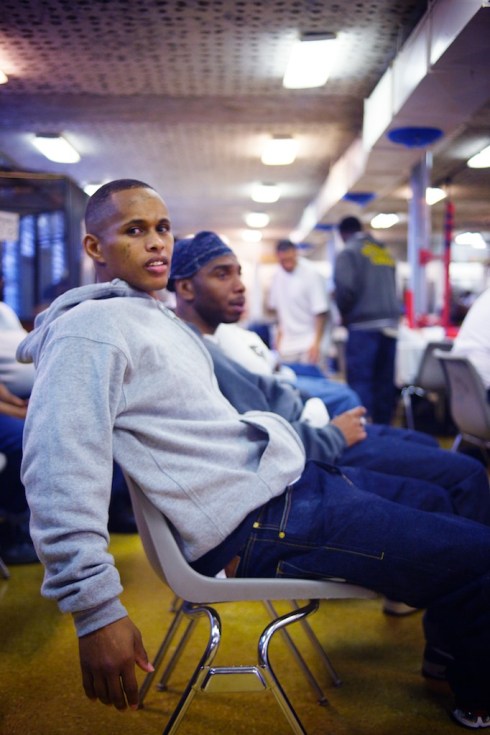
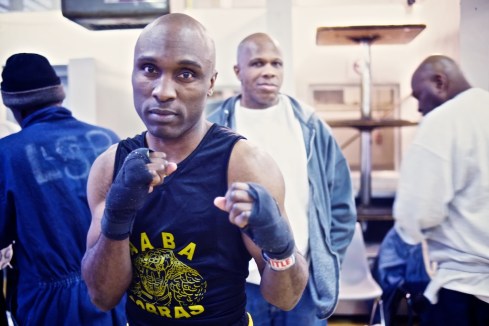


Did you get any sense of what the boxers wanted from you as a photographer? Did they want to convey any message to the eventual viewers?
Yes, every time I have photographed at Angola it is pretty clear that the prisoners want to be portrayed as retaining some of their human dignity. Beyond that, they long for connections with the outside world, their family in particular. You can’t forget that the prisoners at Angola have committed horrible crimes, but it is hard to not feel some sympathy for the incredible loneliness and isolation they all seem to share. Maybe they deserve that, it isn’t really for me to say what justice should look like.
How was, and how is Angola? What’s the culture like? How is it perceived?
All of my experiences at Angola have been unsettlingly mundane. In my mind, I expected to see prisoners rattling tin cups on metal bars and walking around in leg-irons or something. But, they are mowing the grass, cooking food, painting buildings, essentially participating in their own, highly-unusual little community. When people think about Angola, if they think about it outside of the rodeo, it seems that they imagine a dreary place of routine horror. I am sure that it is rough out there, very rough in many respects. But, it does not have the feeling of an armed camp where gangs are pitted against each other, where races are seething to tear into one another or where the guards are everywhere searching for escape tunnels. It’s culture will confound your expectations. Or, it did mine anyway. I didn’t grow up with any sense of prison life outside of film and television. If Angola is anything, it is unlike those scenes from popular entertainment. That is not to say it is bucolic or some penal Club Med. It is a sad but necessary place where the passage of time and the intrinsic nature of humanity do not conform to the normal rules.
It seems there have been many photographers who’ve shot at Angola (I might go so far to say it is the most media-present prison in America). Would you agree? What would one attribute that to?
In a word, yes. It is a thoroughly media documented prison. I think that is for two reasons. First, it is highly unusual in its approach to incarceration as I have spelled about above. They just do things differently there in terms of engaging prisoners rather than just warehousing them.
Secondly, it seems that the administration at Angola, starting with warden Burl Cain and running all the way down, are genuinely empathetic to the prisoners. They know that some of them have been changed, and perhaps redeemed, by the way Angola does things and they want people to know about it. I think they are also keenly aware of how the lack of hope not only destroys the human spirit but also makes prisoners much more difficult to handle. If the prisoners have a reason to get up in the morning then they see a value in toeing the redemptive line that Angola is pushing.
The staff know it is expensive and pointless to incarcerate grey-haired old men who are no longer a threat to society. It seems that Angola is trying to re-humanize prisoners in the eyes of the general public in an effort to change the way our legal system approaches punishment and justice.
Thanks Frank.
Thanks Pete.
_________________________________________________________
Frank McMains is a jack of many trades. He’s got a lot of Flickr. I thank Frank for his time to share his work and thoughts. You can read more about Frank’s time photographing at Angola at his own website Lemons and Beans.

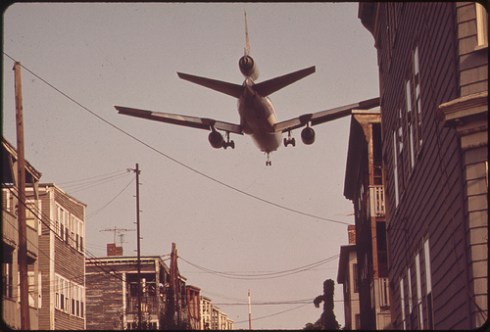
If you don’t know about Documerica on Flickr yet, you should.
“For the Documerica Project (1971-1977), the Environmental Protection Agency (EPA) hired freelance photographers to capture images relating to environmental problems, EPA activities, and everyday life in the 1970s.”
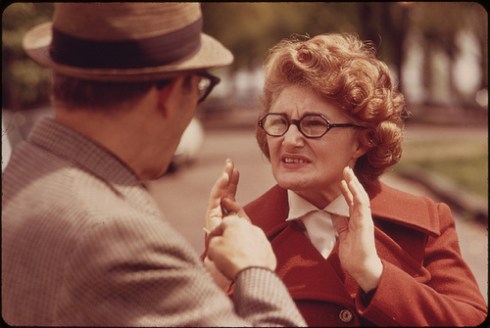
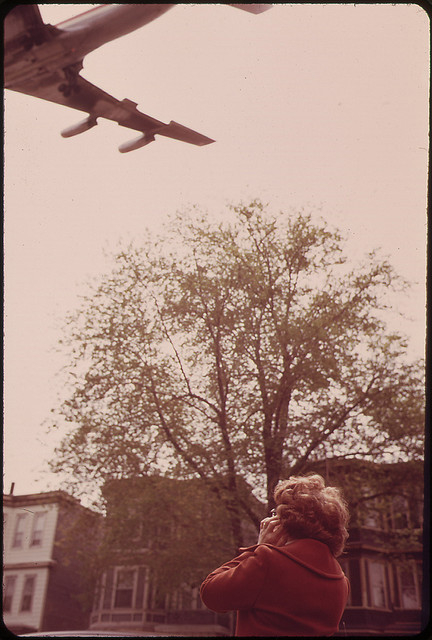
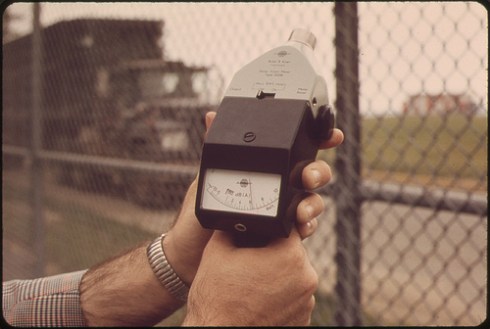
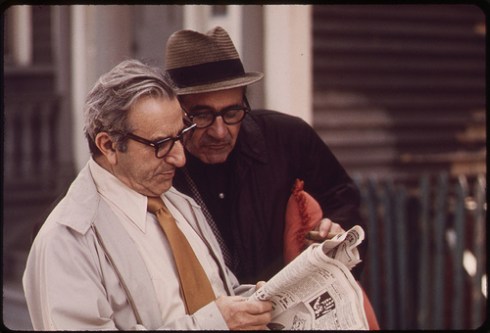
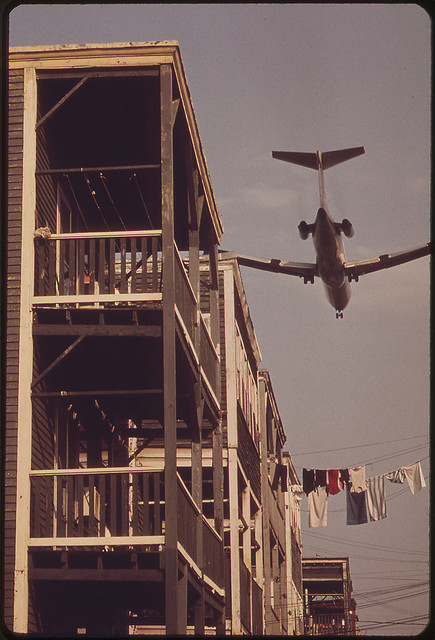
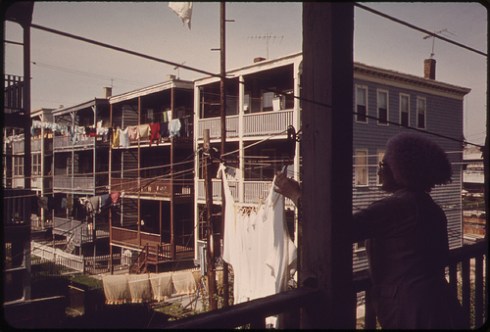
I particularly appreciated the 100 photos by Michael Philip Mannheim which document noise pollution and structural damage within the community around Neptune Road in Boston.
We live in a time in which imagery of aeroplanes in close proximity to buildings wheedle at our unconscious; the pregnant threat of collision is always with us. Mannheim’s subjects on Neptune Road share a different type of agitation. They’ve seen an extra runway inserted, their neighbourhood split in two and a rail link nestled against their properties. The noise, vibrations and ever-presence of aircraft for these folk is menacing but for very different reasons.
Just wanted to share.





Shack on the outskirts of town @ Jehad Nga
Last year, in response to Jehad Nga‘s Turkana portfolio, I said, “consumers of media haven’t changed enough, and Nga has hardly changed at all.” My criticism was that Nga had adopted the same chiaroscuro technique for the Northern Kenyan tribesmen as he had U.S. Marines, Somali pirates and Kenyan boxers.
It was my first real foray into negative criticism* and to my surprise Nga emailed and said he could agree with a lot that I said. That opened up a year long dialogue that resulted in an interview recently published for Wired.com.
In the Wired interview, Nga explained he had recently been on special assignment with a second unit crew on the shoot of a feature length drama. Nga who lives mainly in Nairobi, with an apartment in NYC, has spent most of his professional life in the heat and bustle of North Africa, sub-Saharan Africa and the Middle East.
“It’s very different to Africa,” Nga told me, “Barrow, Alaska was important to me; it’s inhospitable, it’s a challenge to survive. Aesthetically, it is lush for picture taking. It is stark and apocalyptic, but I responded to the bleakness. The harshness isn’t because of violence or outside incursion. It’s seasonal, it just is.”
I was pleased to see then that John Bailey‘s well-written and meaty blog for the American Society of Cinematographers (ASC) had featured a selection of Jehad’s work.
See for yourselves how this work differs wildly, and read in my interview why Nga really needed a change.
______________________________________________________
* If you recall, Marc Feustel took umbrage at the prevalence of overly positive reviews)
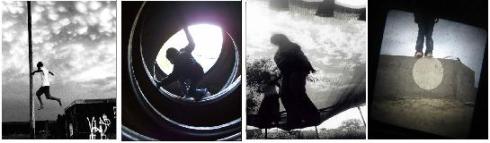
Founded in 2005 by by Emily Schiffer, a Magnum Foundation Emergency Fund grantee, My Viewpoint on South Dakota’s Cheyenne River Reservation, is a youth photography initiative “invested in young people’s inherent visual curiosity.” The images from Seeing is Fun are captivating.
The program has students (ages 6-20) apprentice with professional photographers, working in both analog and digital photography and printing their images in an onsite darkroom
My Viewpoint is run through the Sioux YMCA in Dupree, SD, and in partnership with Daylight Community Arts Foundation.
From the Daylight Magazine blog:
Shipping and Receiving: Photographs and Letters Between Venice, CA and Dupree, SD
August 6–September 30, 2011
Venice Arts Gallery in Venice, California
Opening Reception: Saturday, August 6, 5-8 p.m.
This exhibit features the photographs taken by students in the My Viewpoint photography program, and highlights a collaborative photographic exchange between the youth in the My Viewpoint program and youth at Venice Arts, conducted over 2010 and 2011.
Children of the Cheyenne River
July 23–September 4, 2011
Fovea Exhibitions in Beacon, New York
Opening Reception: Saturday, July 23, 5–7 p.m.
Artist Reception & Talk with Emily Schiffer: Second Saturday August 13, 5–9 p.m.
This exhibit is comprised of medium format black & white photographs of the students in the My Viewpoint photography program by the program’s founder Emily Schiffer, accompanied by a narrative text that explores Schiffer’s perspective on her evolving relationship with them, as well as photographs and text from the students.



Diagram showing the typical parts of a PLC used for door-control systems. Image courtesy of Teague Newman
“Vulnerabilities in electronic systems that control prison doors could allow hackers or others to spring prisoners from their jail cells, according to researchers,” writes Kim Zetter for Wired.com
According to security consultant and engineer John Strauchs, the same weaknesses that the Stuxnet superworm used to sabotage centrifuges at a nuclear plant in Iran exist in America’s prisons.
Strauchs plans demonstrate an exploit against the systems at the DefCon hacker conference which began in Las Vegas yesterday.
Zetter:
“Strauchs, who says he engineered or consulted on electronic security systems in more than 100 prisons, courthouses and police stations throughout the U.S. — including eight maximum-security prisons — says the prisons use programmable logic controllers to control locks on cells and other facility doors and gates. PLCs are the same devices that Stuxnet exploited to attack centrifuges in Iran.”
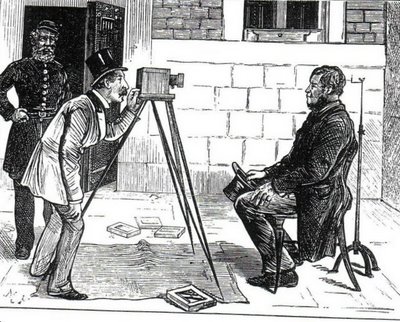
Cartoon of prison photographers from the Illustrated London News, 1873 in The Mechanical Eye in Australia (OUP, Davies & Stanbury, 1985).
Over on the high-class Threat Level blog, David Kravets has penned Mug-Shot Industry Will Dig Up Your Past, Charge You to Bury It Again a scary piece about America’s “mug shot industry racket”:
Exploiting Florida’s liberal public-records laws and Google’s search algorithms, a handful of entrepreneurs are making real money by publicly shaming people who’ve run afoul of Florida law.
Florida.arrests.org, the biggest player, now hosts more than 4 million mugs. On the other side of the equation are firms like RemoveSlander.com, RemoveArrest.com and others that sometimes charge hundreds of dollars to get a mugshot removed. On the surface, the mug-shot sites and the reputation firms are mortal enemies. But behind the scenes, they have a symbiotic relationship that wrings cash out of the people exposed.
I’ve written before about rolling galleries of the recently arrested in place of stories on online “news” sites. It is a practice particularly prevalent across southern states. These galleries are the digital version of mugshot papers like Just Busted.
Unlike these galleries that feature the latest bookings, FloridaArrests has raked the archives. But I would still criticise both for an amount of coercion; they induct, at some level, users into the visual language of law enforcement. By the act of looking we are perversely interacting with portraits threaded with menace; they are, after all, the outcome of some type of confrontation. But the visibility of these images (and thus confrontations) far outweighs the impact these contained confrontations have on the everyday life of the majority.
Kravets’ article demonstrates that beyond the dubious exchange of digital imagery for news informational purposes fear, a business model has been found to monetise the shame that goes along with being booked and photoed.
“The business model seems to be to generate embarrassment and then remove the source of the embarrassment for a fee,” said Steven Aftergood, director of the Project on Government Secrecy for the Federation of American Scientists, and one of the nation’s leading open-records advocates.
Now you are manipulated as much as prey of the mugshot industry as much as you were as a consumer!
Have you made one mistake in the Sunshine State? If so, you’re probably up there among the other 4 million mugshots. That is until you fork out $400 to a specialist firm to process a $20 take-down request. The take-down is a “URL for an automated takedown script on [a] site” that is activated by PayPal payment. FloridaArrests.org have provided the URL in advance for multiple companies.
Reads like a racket.

Prison Workers © Ricky Maynard
Ricky Maynard‘s No More Than What You See is an old project, but tackles a subject I’ve not featured before.
Following the report Royal Commission into Aboriginal Deaths in Custody (1991), self-taught photographer Maynard was compelled to look at the prisons of South Australia, including Cadell Training Centre, the Yatala Labour Prison, and the Northfield Prison Complex.
Maynard (born 1953 Launceston, Tasmania, Australia) explains in his 1993 grant winning Fifty Crows portfolio:
If you are Aboriginal in Australia you are 15 times more likely than a non-Aboriginal to spend time in jail. I felt that it was important for a Koorie (Aboriginal) photographer to record some aspects of what was happening to our people at this time. After all, the Australian Government spent millions of dollars and produced hundreds of pages of reports, but little that Aboriginal people could relate to. It seemed to me that a few strong images had the potential to convey more than all those words. We needed something that people could relate to, visual proof of the times and the experiences, for both Aboriginal people and non-Aboriginal people.
All captions are direct quotes from the National Gallery of Australia’s own captions. See 42 images from Maynard’s archive. See Maynard’s more recent work at Stills Gallery.

There are things in this picture you cannot see. “I enter here only with a pair of jocks. The walls are made of rubber and the blankets are made of canvas.” © Ricky Maynard
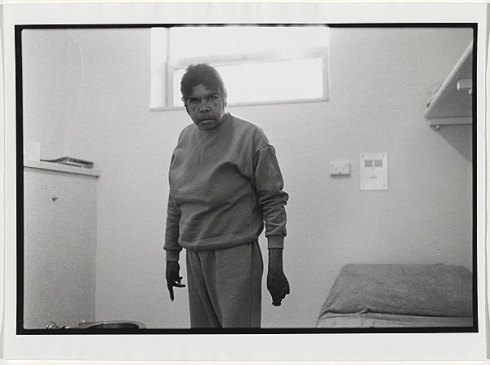
“When I fainted in the streets the cops just threw me into the back of the van head first. Now they bring me here and it’s so cold.” © Ricky Maynard

“There are no mirrors, all the ones we have here are steel so that you never can see yourself, you’re always distorted.” © Ricky Maynard

“I’ve let my frustrations go, and I wonder about the others, will they let their frustrations out here or release them on the community? I often wonder, with the experience I have of frequently visiting this place, how different I will be when I get released from prison.” © Ricky Maynard

Angola prison rodeo © Sarah Stolfa
Philadelphia based photographer Sarah Stolfa, best known for The Regulars, a portrait series of punters at the bar she tended, has posted some new work on her website.
Pallbearers struggling with a casket, an elegantly dressed African-American lady with a gun holster, a man with a singed blanket stood in a charred field, a long-limbed man with leather bible, public urination, public housing; this is a visually uneasy but coherent edit and presumably the result of a road trip.
Also included are two photographs from the prison rodeo at Louisiana State Penitentiary (one and two). I am uncovering more and more photo projects from this particular event and I’m still working out what, if anything, this relatively high level of exposure means within the specialist sub-sub-genre of prison photography.

 Prison Photography