
You are currently browsing the category archive for the ‘Activist Art’ category.

Carnell Hunnicutt, Sr. Northern Correctional Institution, Somers, CT. Courtesy Architects/Designers/Planners for Social Responsibility. Via Solitary Watch.
Today, December 10th, is Human Rights Day. Organised by the United Nations, the day of action is based around the central tenet that “Each one of us, everywhere, at all times is entitled to the full range of human rights. Human rights belong equally to each of us and bind us together as a global community with the same ideals and values.”
As Prison Legal News and the Human Rights Defense Center recently pointed out:
The UN’s Universal Declaration of Human Rights contains several articles which would apply broadly to prisoners and former prisoners in the U.S., but unfortunately remain unrecognized by the U.S. government.”
Specifically, we should be looking at the enforcement of policy and law as they would uphold Articles 4, 8, 9 and 21.
The problems are endless. Executions need to stop — the state shouldn’t be murdering citizens. Mass incarceration, generally, brings with it almost insurmountable problems (overcrowding, inadequate healthcare, predation, sexual and psychological abuse). The prison industrial complex magnifies these problems in poor communities. I’ve noticed a cycle of issues-du-jour that append to critique of American prisons. Most recently, no doubt, the issue of solitary confinement has been widely discussed. Why? Because it is abusive and counter-productive. Moves in the right direction are starting to reign in the rampant use of solitary as a disciplining technique. I wrote about what’s at stake for Daylight Digital last year:
Juan E. Méndez, United Nations special rapporteur on torture, is clear that solitary confinement is torture and permanently damages the mental health of prisoners.
“Segregation, isolation, separation, cellular, lockdown, Supermax, the hole, Secure Housing Unit…whatever the name, solitary confinement should be banned by States as a punishment or extortion technique,” said Mendez in front of the UN General Assembly in June 2011. “It is a harsh measure which is contrary to rehabilitation, the aim of the penitentiary system.”
Prisoners lose their minds quickly when deprived of human contact. Identity is socially created, and it is through relationships that individuals understand themselves.
Solitary confinement “undermines your ability to register and regulate emotion,” explained Craig Haney, psychology professor at the University of California, Santa Cruz, in an interview with WIRED. “The appropriateness of what you’re thinking and feeling is difficult to index, because we’re so dependent on contact with others for that feedback. And for some people, it becomes a struggle to maintain sanity.”
Common symptoms resulting from long-term isolation include chronic apathy, lethargy, depression, and despair. In extreme cases, prisoners may literally stop behaving and become essentially catatonic.
If a prisoner doesn’t withdraw within him or herself, he or she may resort to aggression. In his study of Pelican Bay SHU prisoners, Haney found that nearly 90 percent had difficulties with irrational anger, compared with just 3 percent of the general US population.
Physician Atul Gawande has compared the permanent psychological impairment described in Haney’s research to that incurred by traumatic brain injury.
For many, calendar days such as these serve to raise brief awareness. Often not much more. In our busy lives it can be hard to stay on top of the ebb and flow of politics, policy and information; it’s tough to hold those in power accountable, especially if day-to-day we’re just trying to get the bare minimum done.
I don’t know what I think of e-petitions as I don’t know how to gauge their efficacy, but I do know it takes seconds to sign one and you can do it after the kids are in bed and the washing up’s drying.
Thanks to Prisoner Activist for this comprehensive list of 22 active petitions against solitary confinement.
ACLU: Stop the Abuse of Solitary!
ACLU Action: Allow UN Special Rapporteur on Torture Access to Solitary Confinement in U.S. Prisons
ACLU Action: A Mother’s Plea: Stop Solitary Confinement of Children
ACLU of Arizona: Arizona is Maxed Out! No New Supermax Prison Beds
American Friends Service Committee (AFSC): Stop Abuse of
Solitary Confinement
Amnesty International: US super-maximum security prisons must be opened up for UN scrutiny!
Amnesty International USA: Free Albert Woodfox – End the Injustice. Remove Woodfox from Isolation
Amnesty International USA: Solitary Confinement: US Government Must End This Cruel and Inhumane Practice
Californians United for a Responsible Budget (CURB): Demand the State of California Stop the Torture
Center for Constitutional Rights (CCR): Honor the Pelican Bay SHU Prisoners’ Demands
Free Zulu Movement: Please examine the case of Kenny Zulu Whitmore, held in solitary confinement for 35 years in Louisiana State Prison
Friends Committee on Legislation of California: Stop the abuse of solitary confinement
National Religious Campaign Against Torture (NRCAT): End Prolonged Solitary Confinement Now
National Religious Campaign Against Torture (NRCAT): Take Action to End Solitary Confinement of Youth in California
National Religious Campaign Against Torture (NRCAT): People of Faith Support Solitary Confinement Study and Reform Act of 2014
New York City Jails Action Coalition (JAC) Says: End Solitary Confinement; No Supermax at Rikers
Prisoner Hunger Strike Solidarity Coalition: Support Pelican Bay SHU Prisoners’ Five Core Demands (hunger strike)
Prisoner Hunger Strike Solidarity Coalition: Corcoran SHU Prisoners Start Hunger Strike for Decent Healthcare
Roots Action: End prolonged solitary confinement
Shut Down Logan River: Logan River Academy – Stop using solitary confinement a.k.a. “Precaution,” and “Development,” on kids
Sylvia Rivera Law Project: DOCCS, Make Housing Safer for Trans People in New York State Prisons!
The Petition Site: End Child Torture: Stop Holding Our Kids in Solitary Confinement!

Image: White Construction.
SMALL STEPS TO A BIG PROBLEM
If we’re ever wondering how and when we transformed into a society supporting a Prison Industrial Complex, then we can and should look to events in Karnes County, Texas this week.
Playing out in Karnes Co. this week is a scene that we’ve seen thousands of times before. And ultimately, we’ll see a decision to build or not to build.
For every one of the 6,000+ prisons in America (Federal penitentiaries, State prisons, County Jails, private prisons and ICE detention facilities) there has been a process of planning, discussion, budgeting and approval. The degree to which these political mechanics are visible and accessible to the public and the degrees to which public are aware or activated for and against prison in their earliest proposal stages, of course, differs wildly. But, I want to make the point here that prisons don’t simply emerge as a natural consequence of crime. Prisons are buildings with construction and operating costs. Prisons are places of labor and sites of capital. Prisons are designed and they are manufactured by men who want to assume some type of responsibility for them.
PRISONS FOR IMMIGRANTS IS A BOOMING BUSINESS
I argue that GEO’s motive, in Karnes Co., for assuming the responsibility of an expand family detention facility is profit. This autumn, GEO Group stock hit a 52-week high.
The GEO Group, a corporation with a long history of poorly-run facilities and abuse of prisoners on its watch stands to benefit most from the proposed expansion of the facility from 532 women and children to more than 1,300.
Watch Karnes Co. this week, because it is in its Commissioners’ offices that the absolute decision by some humans to put more humans behind chain-link and razor-wire will be made.
Watch Karnes Co. this week because this is one of thousands of current battle sites in the nation, right now, in which activists are intervening and slowing or stopping our insane march toward incarceration.
Watch Karnes Co. this week because those opposing the expansion are true American heroes.
Watch Karnes Co. this week because not since WWII internment has the United States put so many non-criminal women and children behind bars.
According to local channel KSAT, opinions are split, but in the VT those in favour were making simple arguments based upon the jobs the GEO prison would bring. Opposing views are nuanced and based in a broader and ethical perspectives.
When the family prison opened in 2012, NPR did its best to distinguish it from other places by describing it as “less like prison.” Well, such a *new dawn* and such an enlightened approach to the sick practice of looking up women and children has not yielded results. This new type of prison, apparently, leads to a bigger prison and not *a solution* to the perceived problem!
WHAT TO DO
If you’re concerned sign the petition. Your letter will go directly to the Karnes County Commissioners.
Watch a 30-minute documentary about the Karnes facility. Here’s the trailer.
If you would like to show the film in your commnunity, email tuff@grassrootsleadership.org
PETITION
Again, please, sign the petition.
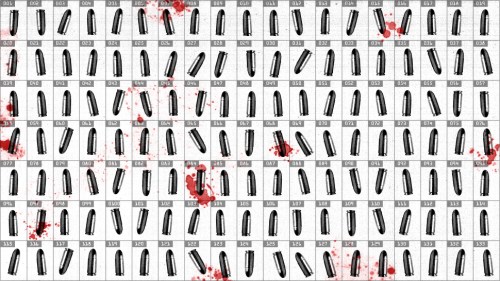
Journalist D. Brian Burghart of the Reno News & Review was aghast to discover that there is no national database about the killing of citizens by law enforcement.
As a result, he decided to make one. With our help. Burghart explains his reason to Gawker:
The biggest thing I’ve taken away from this project is something I’ll never be able to prove, but I’m convinced to my core: The lack of such a database is intentional. No government—not the federal government, and not the thousands of municipalities that give their police forces license to use deadly force—wants you to know how many people it kills and why.
It’s the only conclusion that can be drawn from the evidence. What evidence? In attempting to collect this information, I was lied to and delayed by the FBI, even when I was only trying to find out the addresses of police departments to make public records requests. The government collects millions of bits of data annually about law enforcement in its Uniform Crime Report, but it doesn’t collect information about the most consequential act a law enforcer can do.
How do you help?
Go to www.fatalencounters.org.
Research one of the listed shootings, fill out the row, and change its background color. It’ll take you about 25 minutes. There are thousands to choose from, and another 2,000 or so on Burghart’s cloud drive that he haven’t even added yet.
After your additions, Burghart will fact-check and fill in the cracks. Your contribution will be added to largest database about police violence in the country. Check out what has been collected about your locale’s information here.
Fatal Encounters can be found here, and is on Twitter at @FatalEncounters.

© Ronnie Goodman
ARTS AND RECIDIVISM
“Evidence suggests that arts-in-prisons programs lower recidivism (returning to prisons) by 27% and reduce disciplinary actions by 75%,” reads the press release for the prison art exhibition The Cell and the Sanctuary: Art and Incarceration currently on show at the Santa Cruz Museum of Art & History (SCMAH).
That’s a bold claim.
One of the great difficulties with justifying arts and/or liberal arts education is the difficulty in measuring its direct (positive) effects. Evaluation in budget-constrained prison systems is especially demanding and cynical. First and foremost, people want to know if any type of program steers a prisoner away from anti-social behaviour. If the answer is complex, partly elusive or complicated by other criteria then doubt descends, the enterprise is labeled as airy-fairy, and premise is dismissed.
In brief, prison arts programs wanting to prove themselves have a tough audience.
The effects of arts and education is difficult to track because many benefits such as relative thinking, critical engagement outside of institutional narratives, cumulative learning, etc. take years. Education is a slow build. Benefits are for years down the line; for a lifetime. Also, many prisoners are on long sentences and the primary criteria corrections departments and researchers look to – recidivism – can only be measured once a prisoner is released. The intangibles of a liberal arts education aren’t necessarily contributing to a measurable impact the next hour.
A general aura of skepticism surrounding arts and liberal arts education is compounded by the fact that research money often goes toward other prison programming (vocational, prison industries) and other evaluation first. We saw this was the case when the State of California stripped the DOC of its Arts-In-Corrections funding 7-years ago. In times of crisis, arts funding is first on the chopping block.
Despite no state funding, groups such as the William James Association continued, driven by volunteer efforts. The recent California budget has put millions back into the coffers earmarked for Arts-In-Corrections. The William James Association has returned to work in 11 state prisons.
The return was helped by the convincing results of a study, California Prison Arts Evaluation 2014, that was commissioned jointly by the William James Association and the California Lawyers for the Arts. You can download it here.
Here’s the results of the study and reason for bold claims.
The California Prison Arts Evaluation 2014 was a one-year study in four prisons revealing that arts programs improve prisoners’ behavior and their attitudes about themselves.
“A significant majority of inmates attribute their greater confidence and self-discipline to pursue other academic and vocational opportunities to their participation in arts programs, signaling a pathway for overall personal growth,” says the William James Association.
A BRIEF HISTORY OF RESEARCH
The author was Dr. Lawrence Brewster of the University of San Francisco who had, in 2012, completed a Qualitative Study of the California Arts In Corrections Program.
Prior to these two studies, there had been little research since a cost-benefit study in 1983, An Evaluation of the Arts-in-Corrections Program of the California Department of Corrections (also conducted by Brewster), which posited that society and the institutions benefited by reduced disciplinary actions, community service and beautification of the prisons.
It was high time someone brought the research up to date and dampened down naysayers and skeptics. Hopefully, the California Prison Arts Evaluation 2014 might spur other states to make a return to arts programming.
“Arts-in-prisons programs improve relationships between people within the prison as well as with guards and supervisory staff,” says the William James Association.” Prisoners exposed to arts programs are more likely to adjust to life outside prison and are less likely to become repeat offenders.”

‘Blind Curve’ (2010) © Felix Lucero

‘Lower Yard, San Quentin’ @ Ronnie Goodman

‘Baseball at Old Folsom Prison’ @ Ronnie Goodman

© Justus Evans
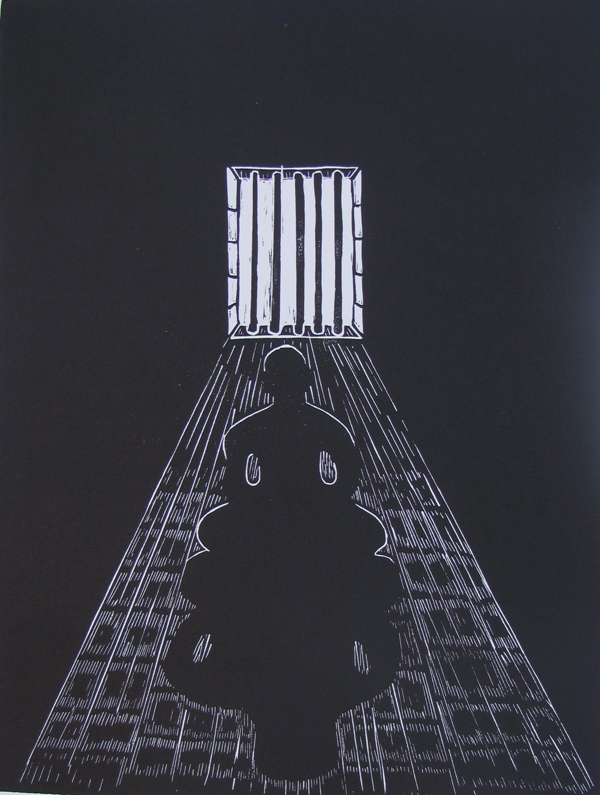
‘Obscuring Self’ © Rolf Kissman

‘Jazz In San Quentin’ @ Ronnie Goodman

‘Uphill Struggle’ @ Ronnie Goodman
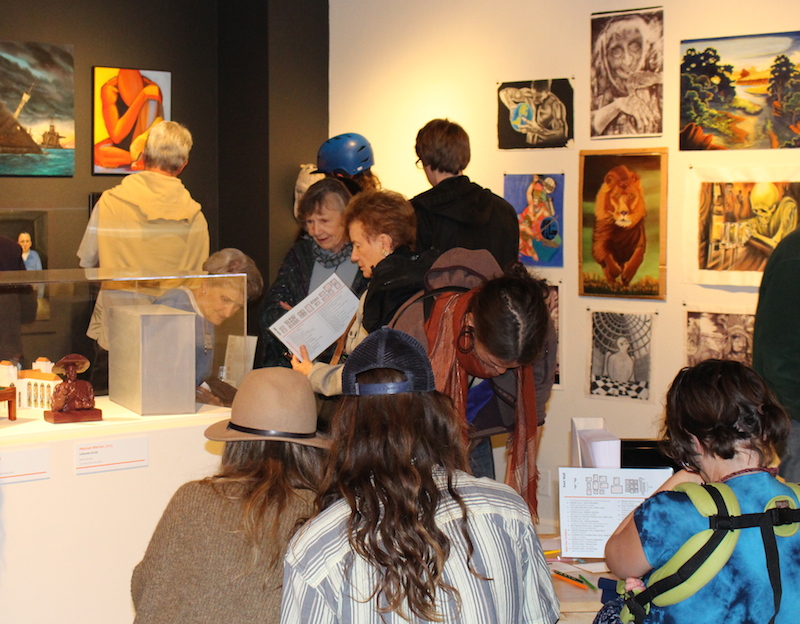
The Cell & The Sanctuary opening, Santa Cruz Museum of Art & History, November 7th, 2014. Photo: Laurie Brooks / William James Association

‘Prison Boots’ @ Ronnie Goodman

Installation view of The Cell & The Sanctuary, Santa Cruz Museum of Art & History. Photo: Laurie Brooks / William James Association

THE CELL AND THE SANCTUARY
The Cell and The Sanctuary features paintings, drawings, sculptures and writings by teachers, artists and organizations who are “working together within the prison system to provide a direct link between incarcerated individuals and something larger than their dehumanizing cells,” says SCMAH.
Artists including Ronnie Goodman, Justus Evans, Felix Lucero and Rolf Kissman (whose works are included in this post) are in the exhibition, as well as Ned Axthelm, Peter Bergne, Guillermo Willie, Stan Bey, Khalifah Christensen, Dennis Crookes, Isiah Daniels, Bruce Fowler, Henry Frank, Roy Gilstrap, Thomas Grider, Gary Harrell, Amy M. Ho, John Hoskings, David Johnson, Ben Jones, Richard Kamler, Chung Kao, Darryl Kennedy, Katya McCollah, Pat Messy, Omid Mokri, Gerald Morgan, Carol Newborg, Stan Newborg, James Norton, Eric “Phil” Phillips, Anthony Marco Ramirez, Adrienne Skye Roberts, Mark Stanley, Fred Tinsley, Tan Tran, Kurt Von Staden, Geno Washington, Michael Williams, Thomas Winfrey, and Noah Wright
The Cell and the Sanctuary: Art and Incarceration is produced in collaboration with Barrios Unidos and the William James Association (also on Facebook)
It is on show November 7, 2014 – February 22, 2015

Senseless © Felix Lucero

“Life in Prison: Artists Bear Witness”
Thursday, November 13, 2014 – 6:00pm – 8:00pm
MIST Harlem – 46 W 116th St, New York, NY 10026
The Institute for Research in African-American Studies (IRAAS) at Columbia University and OF NOTE, the award-winning arts & activism magazine, hosts a conversation with three dynamic artists who use their creative voice to examine the complex experiences, both personal and political, faced by the two million men, women, and youth currently imprisoned in the United States. Via theatre, photography, and video, these artists, Samara Gaev, Russell Frederick, and Lori Waselchuk illuminate the ways in which our society treats those within our prison systems with compelling work that engages and troubles our notions of ‘justice.’
Panelists:
Grace Aneiza Ali is founder and editorial director of OF NOTE Magazine , one of the first online magazines focused on global artists using the arts as catalysts for activism and social change. In 2014, she received the Andy Warhol Foundation for the Visual Arts Curatorial Fellowship in partnership with Aljira, A Center for Contemporary Art for the upcoming exhibition, “Guyana Modern,” which will feature a new generation of photographers from Guyana and its major diasporic communities in New York, London and Toronto. She’s an adjunct faculty member in the Department of Interdisciplinary Arts and Sciences at The City College of New York, CUNY and the recipient of the “Outstanding Faculty of the Year” award for 2013-2014. Grace is also World Economic Forum Global Shaper and a Fulbright Scholar.
Russell Frederick is a self-taught Brooklyn-born photographer of Panamanian heritage. He is the recipient of grants from the Open Society Foundation, New York Foundation of the Arts, Brooklyn Arts Council and the Urban Artist Initiative Foundation. Frederick is a member of the African-American photo collective Kamoinge and is represented by KEYSTONE photo agency in Switzerland. As an educator, he dedicates time to mentoring at-risk young men with the Kings Against Violence Initiative as the Men’s Program Director.
Samara Gaev is the founder and artistic director of Truthworker Theatre Company, a social justice based hip-hop theatre company for high school and college-aged youth in NYC. Its recent original productions include “BAR CODE,” a performative analysis of the school to prison pipeline, and “IN|PRISM: Boxed In & Blacked Out in America,” which examines the practice of solitary confinement in U.S. prisons.
Lori Waselchuk, is a Philadelphia-based visual storyteller. Her award-winning photographic documentary “Grace Before Dying,” which chronicles the prisoner-run hospice program at the Louisiana State Penitentiary, in Angola, LA, aims to challenge stereotypes about people that are imprisoned and offers a compassionate perspective into an environment designed to isolate and punish.
Moderator:
Samuel K. Roberts , Columbia University. Director, Institute for Research in African American Studies, and Associate Professor of History & Sociomedical Sciences.
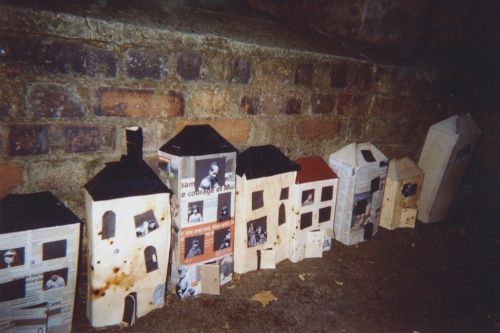
Photo: Spike Aston
Photography is often best kept simple. Likewise, the description of photography is, also, best kept simple. So let’s do that.
Disposable is a photography project that puts cameras in the hands of a dozen or so homeless men and women in London, England. Very straightforward. Disposable garners images that have given – in their production – moments to create and reflect, and – in their viewing – moments for reflection upon creative practices toward a more equal society. Right? What use is this post, and what use the participants’ efforts, and what use the program coordination efforts of Adele Watts if we’re not to reflect on the issues of poverty and homelessness in our society?
Disposable began in 2012. Disposable is grassroots. The men and women involved consider themselves a collective.
Watts worked closely with homeless artists over the period of a year and developed a body of original photographs.
“Without a brief, each participant took single-use cameras away, returning them a couple of weeks later to be developed and to look though the work and discuss it together,” explains Watts.
“Photography is a science of seeing. I like to see ordinary things too because they can tell you a lot about where you are if you don’t know. You can discover many beautiful and interesting worlds that don’t seem like worlds without photography,” says participant Spike Aston.
In the past 18 months, Disposable has mounted three exhibitions — at a Central London outreach venue in April 2013, and later at Four Corners Gallery, Bethnal Green in October 2013 and Ziferblat, Shoreditch in August 2014.
“Disposable allows us to view homelessness from the rich and insightful perspective of those experiencing it, but does so with refreshing subtlety. This is achieved through a belief in cultivating authorial voice and expression without exception, which is truly at the heart of the project and all those who have brought it to life,” says Claire Hewitt who provides texts for the Disposable newsprint publication. “I was overwhelmed by the ways in which they had each nurtured their own visual languages.”
A collection of photographic works by Bill Wood, R.O.L and Spike Aston, Disposable’s most devoted members — has now been brought together in a 16-page newspaper publication.
The Disposable newsprint publication is available as an insert to the latest issue of Uncertain States a lens-based broadsheet. It is distributed through and available at: Brighton Photo Biennial 2014, V&A London, Tate Britain, Four Corners Gallery, Ikon Gallery & Library of Birmingham, Flowers East, Turner Contemporary, Margate.
Keep in touch with the project via Adele Watts’ website and Twitter, and the Disposable Tumblr.
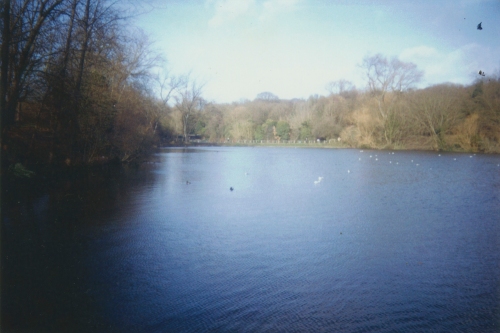
Photo: Bill Wood
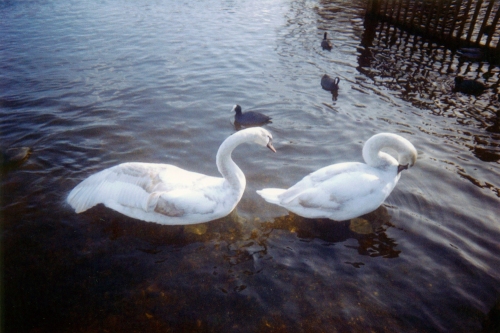
Photo: Bill Wood
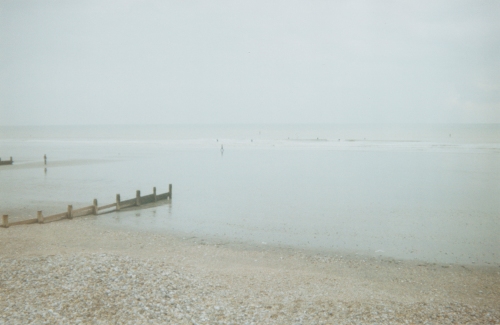
Photo: R.O.L.
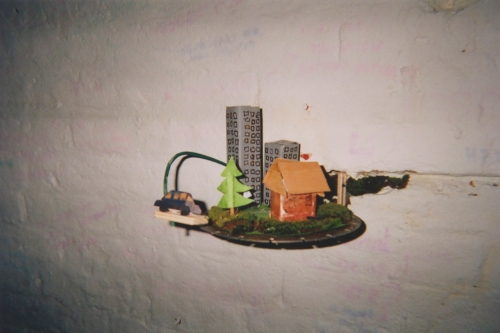
Photo: R.O.L.
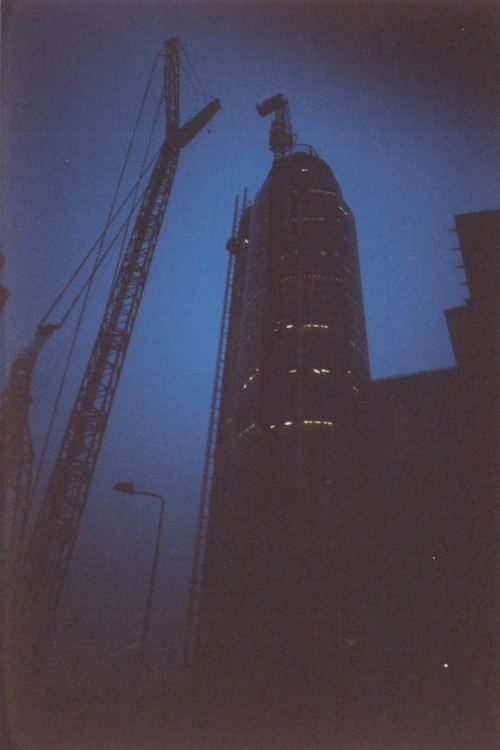
Photo: R.O.L.

Photo: Spike Aston
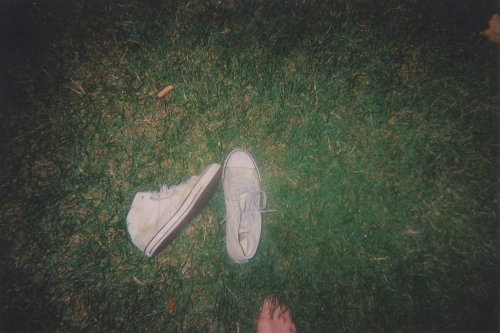
Photo: Spike Aston
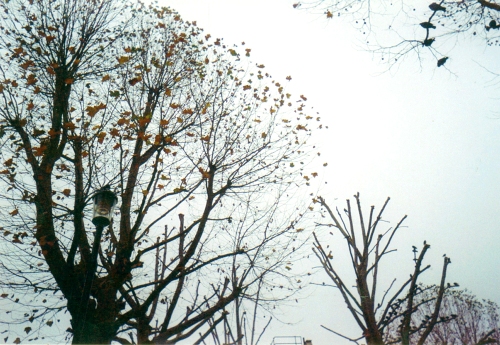
Photo: Spike Aston
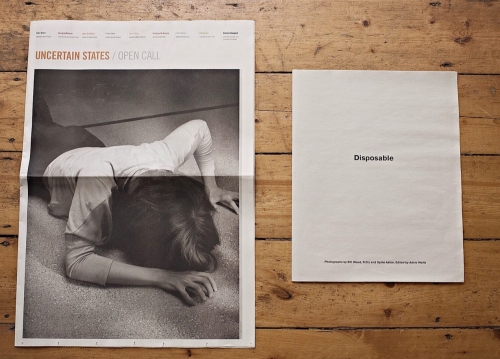
Disposable Insert. Uncertain States. Open Call. Issue 20
Disposable
Edition of 5000 copies
290mm x 370mm
16 pages printed full colour on 52gsm recycled newsprint. Inserted into Uncertain States Issue 20, a lens-based broadsheet.
Photographic works by Bill Wood, R.O.L & Spike Aston.
Texts by Clare Hewitt & Jenna Roberts.
Edited by Adele Watts.

The Magnum Foundation Photography & Human Rights Fellowship is an all expenses-paid scholarship for non-western, regional photographers and activists to attend the Photography & Human Rights summer program at New York University.
Over the past 5 years, 21 fellows from 15 different countries have participated in the program.
Applicants must be:
– Emerging and professional students, photographers, activists, and journalists.
– Born and live outside of North America and Western Europe.
– Proficient in speaking, reading, and writing in English.
– Demonstrated a commitment to addressing/documenting human rights issues within their home country.
APPLY HERE
For more into contact Alexis Lambrou at alexis@magnumfoundation.org or 212-219-1248
This is the embarrassing shit — the unconstitutional and serious shit — that politicians get up to when they are driven by fear, assume constituents are docile, and think no-one will call them out.
Well, I and many other good people in the Quaker State are calling them out.
This brouhaha began last month when people were up in arms at political prisoner Mumia Abu-Jamal delivering the commencement speech for students at Goddard College. Abu-Jamal attended Goddard via correspondence course while imprisoned. Many of the Pennsylvania legislators have admitted they had not heard or read Abu-Jamal’s speech and yet voted unanimously to introduce into law procedures that prevented Americans from exercising their 1st amendment right. This debacle is politically motivated; by signing the so-called “Revictimization Relief Act” into law Governor Corbett and the lazy lawmakers around him are attempting to not look soft in the face of Abu-Jamal’s continued and bare logic. They want him silent and they want all like him silent.
The Abolitionist Law Center say this:
Pennsylvania Governor Tom Corbett’s scheduled signing of what the Harrisburg Patriot referred to as the “Muzzle Mumia Law” today allows those who have been victims of a personal-injury crime to sue an offender for conduct that causes the victim “mental anguish.” The statute is so devoid of definition or standards that the Harrisburg Patriot wrote: “Some victims of terrible crimes will be in a ‘state of mental anguish’ as long as the person who did it to them is alive and breathing. Does ‘breathing’ qualify as ‘conduct’ that’s now subject to court action?”
Things in the prisons of Pennsylvania are desperate; the activist group DecarceratePA are at the forefront of exposing the repeated arrogance of politicians and the Fraternal Order of Police, who some believe are the driving force behind this law to silence prisoners.
Many prisoners in Pennsylvania are smart and many know what is going on. They know that their state disallows journalists’ visits with cameras and now the State of Pennsylvania is prohibiting prisoners to read their own writings. It’s a scandal. In the final two minutes of the Democracy Now! clip (above) journalist Noelle Hanrahan puts into great context the continued silencing and attacks on prisoners’ agency over the past few decades in Pennsylvania.
Fortunately, immediate legal response is in swing. More from the Abolitionist Law Center:
Prison Radio and imprisoned intellectual and journalist Mumia Abu-Jamal have retained the Abolitionist Law Center (ALC) to provide legal representation for them in response to Pennsylvania General Assembly’s passage of a bill intended to subvert the First Amendment of the U.S. Constitution and repress their free speech rights. The Abolitionist Law Center is working with the attorneys Kris Henderson and Nikki Grant of the Philadelphia-based Amistad Law Project on this matter as well. Amistad Law Project is a public interest law center that advocates for the human rights of all people and currently focuses its work on those inside Pennsylvania’s prisons. ALC, along with the Amistad Law Project, are representing Robert Saleem Holbrook, an imprisoned activist, writer, and member of the Human Rights Coalition.
The law was passed in response to Mumia Abu-Jamal’s selection as a commencement speaker to Goddard College students at his alma mater in Vermont. Leading up to and in the wake of this speech, the Fraternal Order of Police, Governor Corbett, Department of Corrections Secretary John Wetzel, Philadelphia District Attorney Seth Williams, and a number of legislators staged a media campaign designed to whip up a frenzy of support for depriving Abu-Jamal, and any other person convicted of a crime, of their constitutional right to free speech. The law also permits the District Attorney where the criminal conviction was obtained, or the state’s Attorney General, to use their public offices and taxpayer funds to file the lawsuit, raising the possibility that Mumia will be sued for his speech by politicians and government officials who have made a habit of attacking him in order to win the support of the FOP for their election campaigns.
On October 17, Mumia Abu-Jamal issued a statement (broadcast at Prison Radio) from the State Correctional Institution (SCI) Mahanoy where he is serving a sentence of life-without-parole after being framed for the killing of a Philadelphia police officer:
I welcome Governor Corbett’s signature on an unconstitutional bill that proves that the government of Pennsylvania, the executive and the legislature, don’t give one wit about their own constitution of the Commonwealth of Pennsylvania, nor the United States Constitution. I welcome that because it proves that they are the outlaws.
Abu-Jamal has spent 33 years in prison, 30 of which were in solitary confinement on death row, after being convicted at a 1982 trial that, according to Amnesty International, “failed to meet minimum international standards safeguarding the fairness of legal proceedings.” (see Manufacturing Guilt to learn more about the case) By continuing his journalism as well as maintaining his innocence and attracting a massive international movement of supporters, Mumia has long been targeted by the Fraternal Order of Police and their political counterparts. “Having failed to kill Mumia on the street in 1981, and having failed to execute him during his over 30 years on death row, the FOP and the government of Pennsylvania continues to try to silence him, this time by extinguishing his speech,” said Noelle Hanrahan of Prison Radio.
Abu-Jamal has given three other commencement addresses in the past: Goddard in 2008, Antioch College in 2000, and Evergreen College in 1999. He has recorded more than 3,000 essays, published seven books in nine languages, with two more books set for publication in 2015, and has been the subject of three major broadcast and theatrical movies. The latest film, Mumia: Long Distance Revolutionary, is currently airing on the Starz network, sold out theatres coast to coast, and has sold more than 20,000 DVDs.
“The ‘Silence Mumia Law’ should be understood as part of a reaction against recent criticisms of the prison and criminal legal systems. In the wake of the Ferguson rebellion, race and class-based mass incarceration, and the role of police in enforcing it with arbitrary arrests, frame-ups, and extrajudicial killings, is being questioned more than ever. The Fraternal Order of Police and the government are scrambling to silence those questions, disingenuously using the language of ‘victims rights’ to re-establish the lie that police forces and other institutions of state violence are righteous protectors of public safety that are beyond question. This illegal attack on our clients’ constitutional and human rights will be fiercely challenged in the streets and the courts,” said ALC Legal Director Bret Grote.
For more information contact Noelle Hanrahan on globalaudiopi@gmail.com or 415-706-5222. Alternatively, contact Bret Grote on bretgrote@abolitionistlawcenter.org or 412-654-9070

 Prison Photography