
You are currently browsing the category archive for the ‘Documentary’ category.
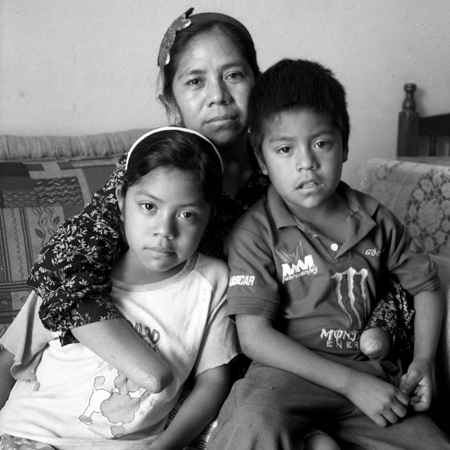
Alan Pogue is one of the best documentary photographers you’ve never heard of. Not one to get mixed up in the social media conga line, Pogue instead spends his time hunting down important stories. Very important stories.
Rosa Moreno lost her hands last year in an industrial accident in Reynosa, Mexico. Pogue writes:
“They needed to step up production and Rosa was asked to operate a machine that stamps out the back plate for a particular model of flat screen monitor because it was a little complicated and she was good and she was faster than most. She was also a little more brave. It scared some of the others who declined to work at this machine on the line. She stepped up.
It happened just after 2 in the morning February 20, 2011. As she was positioning a piece of steel plate, the machine suddenly jumped into action and clamped down on her hands with tons of force. She knew she had to maintain her presence of mind, since it would be necessary for her to argue for being taken to the right hospital. […] but the company would not allow an ambulance to be called. They did not want her taken to the hospital Rosa wanted because it might be more expensive, and because the accident would be on the record. With her hands now flat as tortillas and meshed into the monitor back plate, she walked to a co-worker’s car and was taken to the hospital, where they amputated her hands, still enmeshed in the steel plate.
She gets by on the Mexican government’s equivalent of Social Security disability, about $230 dollars a month. There is no workman’s comp. She had no insurance. There was no union. Some church groups help her out a bit with food and some money. The company offered to give her a one time payment of $4500. But she refused. Even though it is not clear that there is a way to obtain a better settlement through the court system under NAFTA, she holds out.”
Alan Pogue has photographed extensively across North and Central America focusing on social issues, labour issues, civil rights, criminal justice and the Texas prison system. I had the pleasure of meeting him last year and when we talked about his stories, water gathered in his eyes and his voice wobbled. This is work that he really feels and Rosa’s is a cause he deeply, deeply believes in. Please think about helping this holiday season.
via Susan Noyes Platt.

As you know, I’m a great admirer of photography programs and mentorships for youth. Expression in the arts gives children their voice. I’ve even wondered if the empowerment provided through self-representation could benefit prisoners.
There exist dozens of important non-profits and volunteer programs helping youth of all backgrounds, including at-risk youth, to tell their stories through photography.
Organisations such as Youth in Focus, Seattle; AS220 Youth Photography Program, Providence, RI; New Urban Arts, Providence; First Exposures by SF Camerawork in San Francisco; The In-Sight Photography Project, Vermont; Leave Out ViolencE (LOVE), Nova Scotia; Inner City Light, Chicago; Focus on Youth and My Story in Portland, OR; Picture Me at the MoCP, Chicago; Eye on the Third Ward, Houston; The Bridge, Charlottesville, VA; the Red Hook Photography Project, New York; and Emily Schiffer’s My Viewpoint Photo Initiative are exemplars of youth empowerment through photography.
One of the leading participatory photography bodies is Photovoice in the UK. It has 50 programs in 23 countries.
This holiday season, Critical Exposure in Washington DC, a youth photo workshop organisation is raising money.
Simply and brilliantly, Critical Exposure – which was founded in 2004 – gives centre stage to Samera, one of the students. Watch it and celebrate the resilience and thoughtfulness of youth. It’s uncomplicated and effective storytelling, and you will be convinced of the undoubted value of these photography programs.
Samera is a compelling voice. After describing her own situation, she makes quite a simple request. She asks that schools within the same metropolitan area have better communication. She identified a fault in the system and she asked that it be fixed so others wouldn’t have to go through the same clumsy and disappointing mal-communications between Washington school district and a charter school. It’s a fair request.
Communities we shape for better, engender growth. Youths’ enthusiasm to be raised in an encouraging environment should not be neglected.
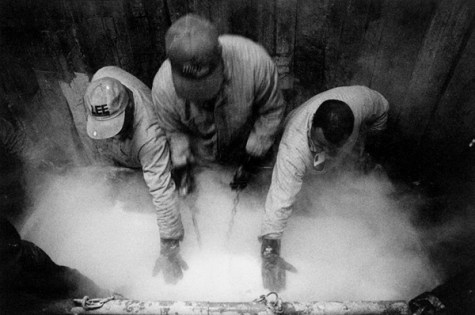
It always a delight when you find gorgeous photographs. It’s a double delight when the photographer can write with genuine and compelling words. Sarah Hoskins – whose Girl’s School work I featured on Prison Photography in September – was recently featured on Roger May’s excellent Walk Your Camera website.
In presenting her series. The Homeplace, Hoskins recounts a car crash she and her daughter suffered this summer and the response of her subjects and new friends.
In the fall of 2000 I stood in the middle of Frogtown Lane map in hand, I didn’t know a soul. On June 11, 2012 I lay strapped down in an emergency room in Somerset, Kentucky a hundred miles away from that lane.
I had left the African American hamlets of the Inner Bluegrass Region that morning, where I had been photographing for the past week as well as the past twelve years. […] The residents of the hamlets arrived like the cavalry in Somerset within hours of the car accident, dropping everything to rescue my daughter and myself as well as all of our belongings including my cameras and film from the wreckage that was our car.
[…] I am being wheeled through the in the emergency room of UK hospital in Lexington, Kentucky. I am brought into yet another emergency room. I can still only look up. I see the eyes that are Derek’s, the same eyes his daddy had. He strokes my hair that is matted and covered in dried blood. His warm coal colored hand holds my cold pasty white one. The nurse says, “Only relatives are allowed in here. How are you two related?” I hear the smile in Derek’s voice, “It’s a long story.”
Heartfelt stuff. Read more.
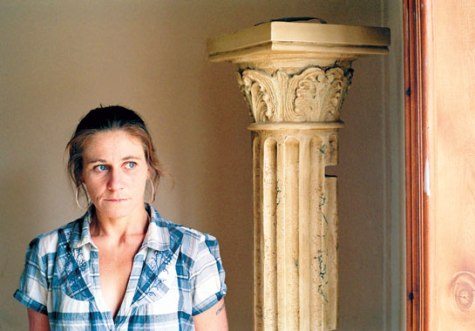
Adrian Clarke‘s portraits of female former prisoners in the UK are up front and honest. The ladies insisted they go on the record and speak openly about their experiences in HMP Low Newton, an unremarkable small prison for women and young offenders in the north of England. Each woman reported only good treatment during their incarceration.
Clarke’s work is not sugar-coated. He doesn’t have the answers and his subjects, some of whom have ongoing drug addiction struggles, are searching for them.
The women – although aware of their tough lives – do not paint themselves as victims. They want to step up and take responsibility but when you’re that far down it takes a Herculean effort to wright the ship.
Low Newton, like all good portrait series, offers insight. But it does not tie the loose ends. I am left to wonder about the different definitions of normalcy we carry in our day today lives and if these women will find their own versions of normalcy and stability.
Mostly, Low Newton deserves attention because it appears to reflect a complete respect between photographer and subject.
Adrian Clarke’s portraits of female former prisoners are in the latest issue of The Paris Review.

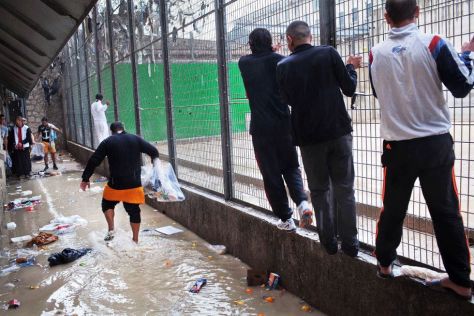
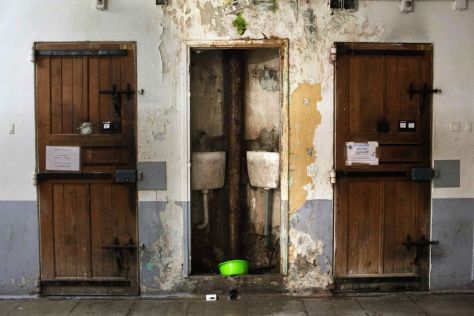
Yesterday, Gwen Lafage emailed, “I came across Grégoire Korganow‘s photos in a French newspaper and I thought of you. They’re taken inside a prison in Marseilles, south of France. It’s quite incredible how bad it is.”
I agree. It is incredible … but not totally surprising.




Prison guards and child, Juba Prison, South Sudan © Zed Nelson
Zed Nelson goes down as one of my fave photographers of 2012. It’s not like he’s suddenly emerged though – he’s consistently produced thoughtful and cohesive series in recent years. It’s just that many of his bodies of work have fallen on my eyeballs and congealed nicely, for me, this year. Big fan.
I especially like his photographs from the Rio Grande (U.S./Mexico border). I recommend also Nelson’s work from Israel, the London Olympics and of trades in Britain that are slowly disappearing.
The image above is from his series South Sudan which features some solid portraits. For 50+ years Sudan was in civil war. In July 2011, a peace agreement secured independence for South Sudan – the world’s 201st and newest nation state. Nelson photographs the still-learning “nation makers.” The work is cautiously optimistic about the capacity of people to create positive change. The variety of subjects reminds us that peace is collaborative and man-made … and woman-made.
PHOTOGRAPHY OF SOUTH SUDAN
Problems still exist for South Sudan. It must wean of its economic reliance on oil, which accounts for 95% of tax income for the region. Oil will run out in 25 years. The South must maintain healthy diplomacy with Khartoum in the north, too. Worrying reports of violence in displacements camps – particularly against women and children – have surfaced recently. South Sudan has some way to go, but it has come a long way. And photographers have covered the journey. Refugee camps and food crises were covered by John Stanmeyer and Jenn Warren. Tim Freccia made portrats that I can’t make my mind up about, but the most recent and thorough coverage is that by Pete Muller who has been living in South Sudan and documenting the elections and transition to independence since 2009.

A prisoner at the Estrella Jail, Phoenix, Arizona makes a face before he is photographed. © Scott Houston
Friend of the blog, Scott Houston, has a spangly new website featuring not one but four portfolios of his work from Maricopa County, “Tent City” and the show that is Sheriff Arpaio’s chain gangs.
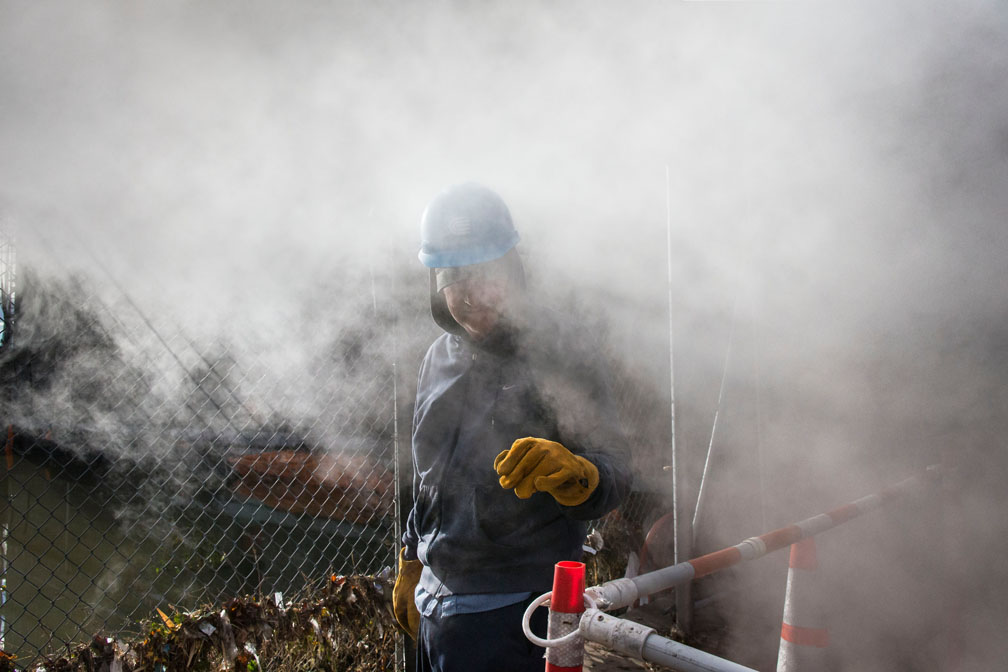
Scott is a New York resident and like most with a camera got out to photograph the aftermath of Hurricane Sandy. He sent me some images. I’ve had my own thoughts on the photo coverage of Sandy, so I’ve tried to select an edit here that shows some things other photographs have not – namely Con Ed workers, different-enough compositions and laughter (click any image to see it larger.)
CON ED, MANHATTAN

NEW DORP BEACH, STATEN ISLAND

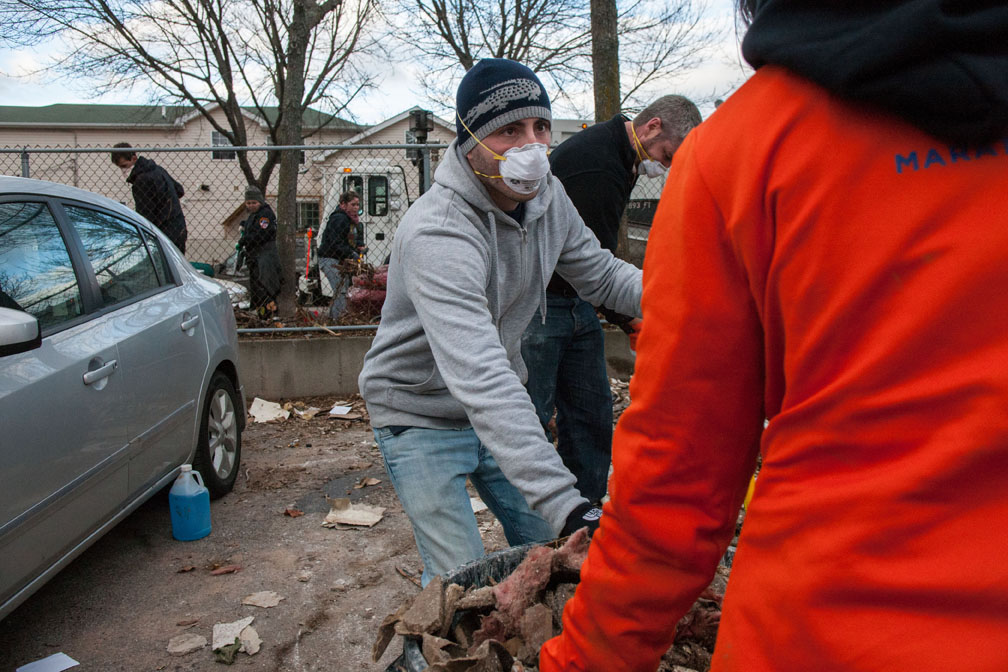


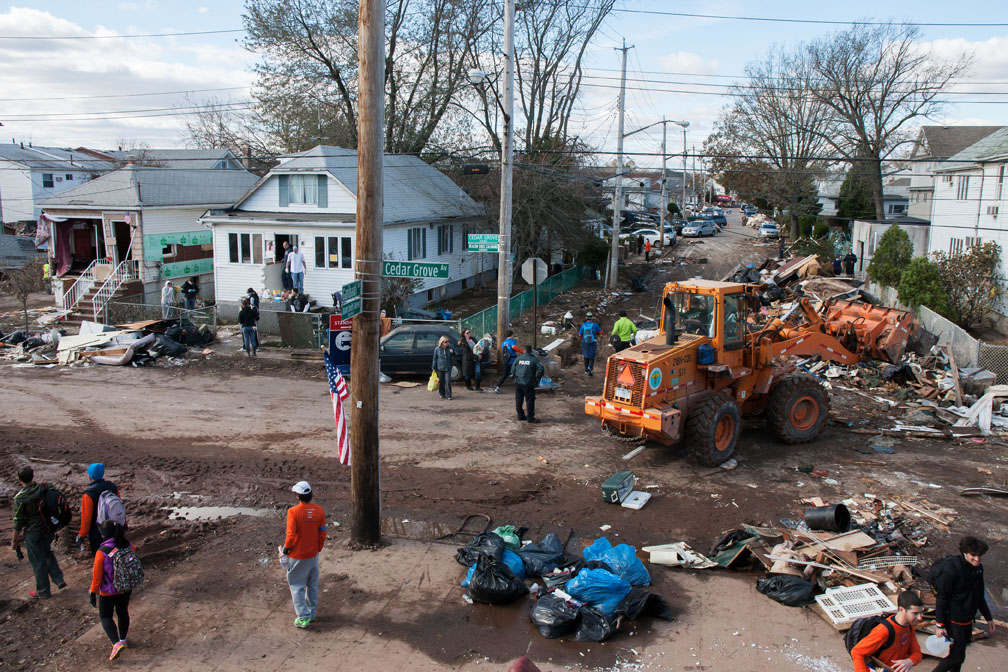
BREEZY POINT, QUEENS


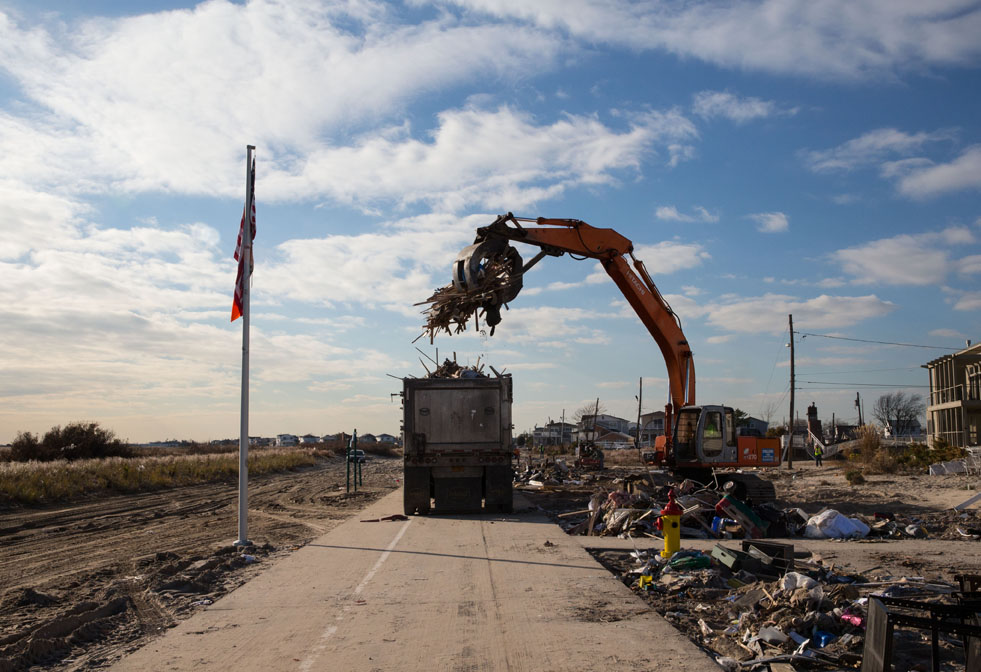

Photo: Timothy Briner, from It’s A Helluva Town, in Businessweek.
THE BEST SHOT
Timothy Briner is doing the most different stuff. Whether being different will distinguish it from the crowd, we’ll see.
I was disappointed with early coverage of the Hurricane. Given the superstorm conditions photographers were getting many more misses than hits.
The biggest miss was TIME’s first dispatch of Instagram images the day after Sandy hit. Only Michael Christopher Brown of the five photographers – Kashi, Quilty, Lowy, Wilkes and Brown – had some successful frames. TIME has continued adding to its gallery of Sandy images so the older photos (31 – 57) are toward the end.

Photo: Michael Christopher Brown/TIME. Con Edison workers clean a manhole on 7th Avenue and 22nd Street in Manhattan. Source
BUT, photographers were not at fault. It was editors’ mistakes to publish below par images. Half of the photographers images I saw in the first 36 hours were from assigned photographers carrying smartphones. In low light, blustery weather the smartphones fell way short of the test.
THE MONEY SHOT
Kenneth Jarecke lays into TIME for their use of Instagram photos. Okay he references Gene Smith where there is perhaps little relevance and lists all sorts of other reasons such as Instagram getting rich of millions off other peoples’ content, but those are not the core of his burning anger. Jarecke is angry because the pictures are poor, and I can’t disagree with him. Of TIME, Jarecke says:
It’s shameful and you should be embarrassed. Not to say these shots weren’t well seen (which is the hardest part), just that they were poorly executed. Which is to say they fail as photographs.
What was weird was that in a Forbes article largely defending TIME mag’s use of Instagram images there was little discussion of the images qualities, more an emphasis on stats and page views.
Time’s photography blog, was “one of the most popular galleries we’ve ever done,” says [Photo Editor, Kira] Pollack, and it was responsible for 13% of all the site’s traffic during a week when Time.com had its fourth-biggest day ever. Time’s Instagram account attracted 12,000 new followers during a 48-hour period.
Pollack’s description of Lowy’s bland, color-field image of a wave chosen for the print magazine’s front cover as “painterly” due to its low res sums it all up; the TIME cover is known to favor photo-illustrations over straight photographs.
THE CHEAP SHOT
Sometimes articles are written as if it is still some surprise that amateur photographs shape our media and consciousness. American Photo describes the lifecycle of a viral photo.
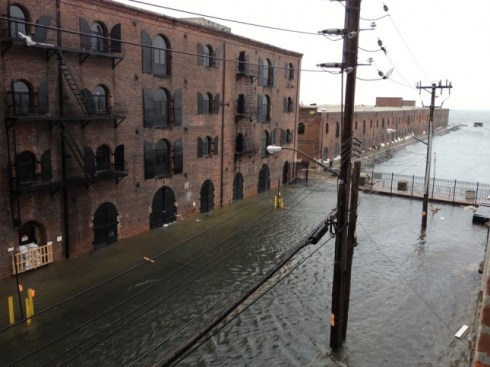
Photo: Nick Cope. Rising flood waters as seen from the window of his Red Hook, Brooklyn apartment.
When we’re all hungry for information and we’re all sharing everything we can get a peek at then an amateur snap, if it is informative enough, will find it’s way to us very quickly.
I admire that American Photo quoted fully from this dude who got that photo.
“It was hard to track [the photo’s path to “viral”] — I was also preparing for a hurricane at the time! And for a good part of the morning I was at a cafe in the neighborhood, chatting with the owner who was mixing up Bloody Marys, and so it was a combination of hanging out with folks in the neighborhood and getting prepared for the storm. And then I start getting all these calls.”
THE TRUSTED SHOT
As ever, Damon Winter makes a bloody good fist of it for the New York Times.
The BIG Atlantic In Focus delivers with a typically epic selection off the wires. Crushed cars, boats on boats, burnt embers, friends hugging/crying, aerial shots of devastation, gas lines, strewn debris (homes), rescued old english sheepdog, destroyed pier and amusement rides, phones charging, pitch black streets, canoe in a living room, downed bridge and then this incredible picture by Seth Wenig of food being dumped.
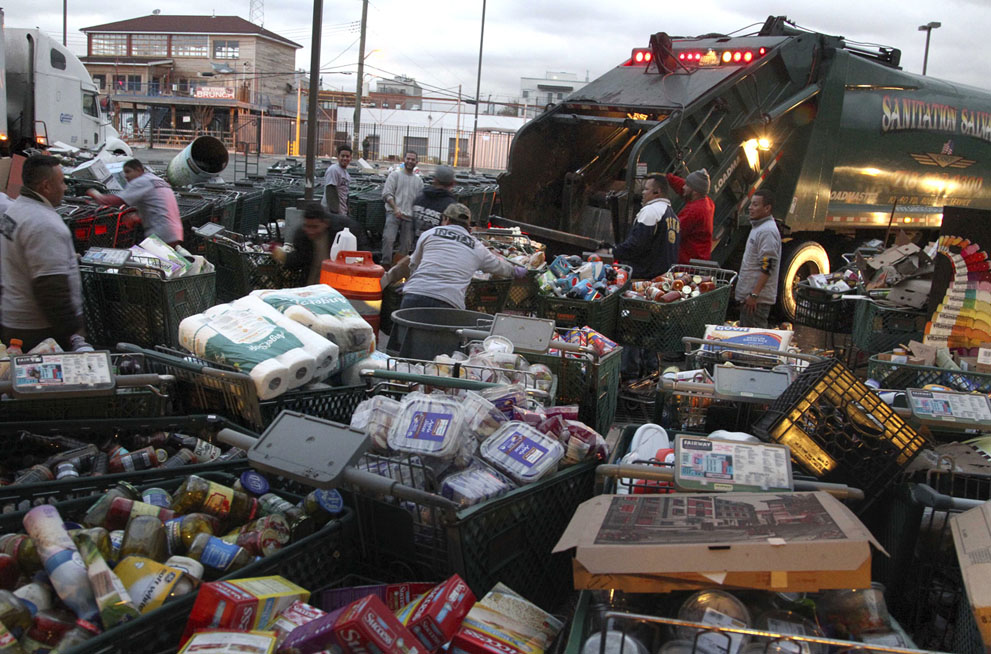
Men dispose of shopping carts full of food damaged by Hurricane Sandy at the Fairway supermarket in the Red Hook section of Brooklyn in New York, on October 31, 2012. The food was contaminated by flood waters that rose to approximately four feet in the store during the storm. (AP Photo/Seth Wenig)
THE HORROR SHOT
Gilles Peress‘ very personal letter in which he appears to be having a breakdown is shared with the world.
“I have to say that in twelve years, to have shot pictures at 9/11 downtown, and again downtown in 2008 when the financial system collapsed, and now, is intense: big city, big tragedies, and a sense of having entered into a different period of history.”
I really want to know who CK and GH, the letters recipients, are.
Peress talks about homelessness and the poor being forgotten in the delivery of aid and services. Michael Shaw at BagNewsNotes wrote about the homeless being forgotten in the coverage.
Back to In Focus. Today, another good edit by Alan Taylor’s team. These two images stood out.
John De Guzman photographs a massive pile of mucky, busted furniture and appliances.

Photo: John De Guzman. A street lined with water-damaged debris in Staten Island.
John Minchillo photographed a lady who is better camouflaged than the national guardsmen beside her. I wonder what she bought at Whole Foods?
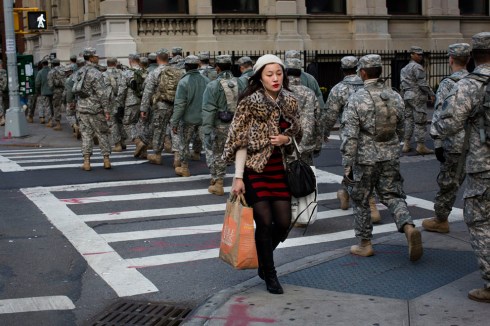
Photo: AP Photo/John Minchillo. A woman passes a group of National Guardsmen as they march up 1st Avenue towards the 69th Regiment Armory, on November 3, 2012, in New York. National Guardsmen remain in Manhattan as the city begins to move towards normalcy following Superstorm Sandy earlier in the week.
THE EVERYTHING SHOT
Everybody’s been very excited about the New York Magazine’s cover aerial photograph of a lightless Lower Manhattan.
It’s only fitting to finish these thoughts with a nod to two perhaps lesser feted Instagram photographers – after all, Instagram had record number of hashtaggles for #Sandy #HurricaneSandy and #Frankenstorm.
Wyatt Gallery has been following clean-up closely.
Clayton Cubitt is a bit more wry in his approach including this GSV comparison which is typical of Cubitt’s sideways thinking on most things visual. Good stuff.


 Prison Photography