
You are currently browsing the category archive for the ‘Fine Art’ category.
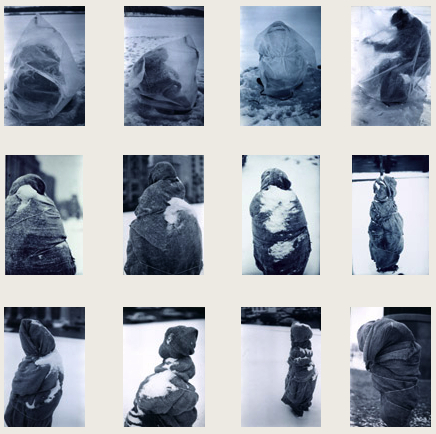
Olga Chernysheva‘s series Anabiosis looks at the “nearly indistinguishable shapes of a solitary Muscovite fisherman and plants wrapped up and protected from the freezing cold near Red Square.”
The word Anabiosis means ‘a state of suspended animation.’
Really like them.
Kirk Crippens contacted me a few months back to tell me about his work at San Quentin. He’s working on a documentary on the SQ Insight Garden Project.
He’s also working on Hidden Population, a personal project of unorthodox portraiture.

I suspect for Crippens, the ‘back of the head approach’ is a novel workaround of DoC legal restrictions on identifiable depictions of men in its custody. As applied to a US prison population, Crippens’ work is original and rather beguiling; how many of his subjects are aware of the camera’s glare? Does the notion of victimhood surface here? How often does the bowed head recur? It is very difficult to imply penitence in prison portraiture without relying on cliche. The doo-rags, beanie-hats, neck hair, peeping tattoos and ubiquitous blue cotton mean these images fluctuate between personal and abstract.
For such a simple idea, Crippens could go a long way with it. It is still a work in progress so I just want to bring your attention to it right now. Hopefully, I’ll get Kirk on PP soon to discuss it at length.
BACKS OF HEADS
To compose images of the back of the subjects’ heads is the same approach adopted by Eric de Vries for ‘Invisible Scars’ – portraits of the Khmer Rouge labour camps, Cambodia. In terms of political context, the two sets of subjects are constellations apart , but I thought the shared technique was worth noting.
CRIPPENS
In 2010, Kirk Crippens achieved significant success with Foreclosure, USA. He had three solo exhibitions of his and nine group shows throughout 2010. Crippens was named in Photolucida’s Critical Mass Top 50 for 2010. Foreclosure, USA also won the Blue Earth Prize For Best Project Photography at the PhotoAlliance 2010 Our World Portfolio Review. Crippens was recently nominated for the 2011 – 2013 Eureka Fellowship Program, a project of the Fleishhacker Foundation.

Unexpectedly, my posts on prison tattoo photography have been very popular – [1], [2], [3], and [4]. Continuing the theme, I’d like to feature the work of Herbert Hoffman.
From an early age, Herbert Hoffmann (1919-2010, b. Pommern, Germany) was drawn to people with tattoos. He was educated in Berlin. During the Third Reich, tattooed people were seen as criminals and consequently, the tattoo culture diminished. In 1940, Hoffman signed up for basic military service with the German army. From 1945-49, Hoffmann was held prisoner of war by the Russians. When he returned to Germany he worked as a travelling salesman, and encountered many persons who were tattooed despite the old Nazi ban. While working Hoffmann always took along his camera and photographed the people he met. In 1961, Hoffmann opened his own tattoo studio in Hamburg, Germany.


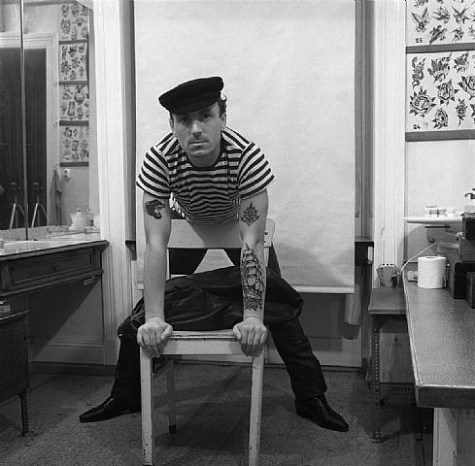
FIRST TATTOOS, THEN PHOTOGRAPHS
Hoffman distinguishes himself from photographers who look in at the tattoo culture from the outside. He defined the culture and then adopted the lion’s share of documenting it. Hoffman’s DIY method is like that of graffiti artists who return with a camera to make images of the surfaces which they have earlier decorated. (Notably, Hoffman’s tattooing preceded the rise of graffiti and its recognition as art/culture in the 1970s/80s.)
Aged 91, Hoffman passed away on June 30th of this year. Despite the indisputable novelty of his photographs, and his central position to German tattoo culture, Hoffman only received mainstream recognition very late in life. No surprise really; Hoffman was working with the maligned, ‘lowly vernacular’ medium of photography, to record the re-emerging tattoo subculture.


TEN HAAF EXHIBIT
Hoffman’s images are on show at Ten Haaf Projects in Amsterdam until December 18th. Ten Haaf Projects, Laurierstraat 248, 1016 PT Amsterdam, The Netherlands. Tel: 020-4285885 www.tenhaafprojects.com. And how good is this? At the Ten Haaf opening in October artist Henk Schiffmacher tattooed Hoffman’s designs on exhibition goers.
EXHIBITS / BOOKS
Hoffman’s books are here and a picture gallery of Hoffman’s life here.
Selected Solo Exhibitions: 2010 ‘Living Pictures’ Ten Haaf Projects Amsterdam; 2010 ‘St Pauli’s Souvenirs’ Galerie Lehmann Berlin. Publications: 2008 ‘Skinscapes, Die Kunst der Körperoberfläche’, text Herald Kimpel, Hrsg: H . Kimpel, Marburger Kunstverein Marburg; 2006 ‘Signs and Surfaces’ by Andreas Fux, Herbert Hoffmann, Ali Kepenek Hrsg Künstlerhaus Bethanien Berlin; ‘Mensch! Photographien aus Dresdner Sammlungen’, Hrsg: Wolfgang Hesse und Katja Schumann; ‘Kupferstichkabinett’, Staatliche Kunstsammlungen Dresden.
ALL IMAGES © HERBERT HOFFMAN

As part of the ongoing OPEN-i project, Edmund Clark and I discussed Ed’s latest project Guantanamo: If the Light Goes Out.
Ed’s nuanced work from on Guantanamo began with his documenting the domestic interiors of released British detainees. As Ed progressed he realised he needed to go to the US base on Cuba. The project deliberately jumps between these environments of “residence”, forcing the viewer to consider the personal as opposed media representations we otherwise rely on.
Ed’s work deliberately excludes portraits of detainees, partly because he feels those images are widespread but also due to a belief that audiences react to “images of bearded men” with unavoidable prejudice.
Ed also looks at the leisure spaces on Guantanamo that US military personnel inhabit during down time. The juxtapositions are poignant.

The photographs in the book Guantanamo: If the Light Goes Out wrap around letters received by detainee Omar Deghayes during his time in Gitmo. Except they are not letters, they are copies, processed, redacted, re-processed, copied again. If he received a colour copy it was a rare treat. Some of the correspondence is so bizarre, Deghayes wondered if the were genuine or if they were props to the mind games played by his captors.
My family has been urging me for years to talk more quickly, and having heard myself here I get their point. The only excuse I have is that it was early in the morning here on the Pacific Coast when we sat down for the webinar.
Ed, on the other hand, talks wonderfully about the images and their situation in our shared GWOT visual landscape.
PHOTOGRAPHS AS IMPLEMENTS OF TORTURE
The book, Guantanamo: If the Light Goes Out concludes with an essay by Dr. Julian Stallabrass. He describes a rather pernicious and Luddite use of photographs in psychological torture at Guantanamo:
Al-Qahtani was repeatedly shown photographs of scantily dressed women, along with images of 9/11, particularly pictures of children who had died that day, had the pictures taped to his body, and to ensure that he had paid them close attention, he was induced to answer questions about them.
This is a practice of interrogation of which I was not aware and is obviously troubling; a deliberate use of imagery to vex and agitate and an example of the power of photography as applied in an abusive context.
OPEN-i
Thanks to OPEN-i coordinator Paul Lowe for inviting me back once again. It’s an honour to speak with a photographer at the top of his game. OPEN-i is a global network hosting monthly live discussions on critical issues relevant to documentary photography and visual storytelling.
EDMUND CLARK
Edmund Clark is winner of the 2010 International Photography Awards (The Lucies), 2009 British Journal of Photography International Photography Award, and the 2008 Terry O’Neill/IPG Award for Contemporary British Photography for his book ‘Still Life Killing Time’. His work is in several collections including The National Portrait Gallery, London, and the Museum of Fine Arts, Houston.

GITMO – OTHER READINGS
Prison Photography archive of posts referring to Guantanamo.
The Prison Photography Guantanamo: Directory of Photographic and Visual Resources (May 2009)
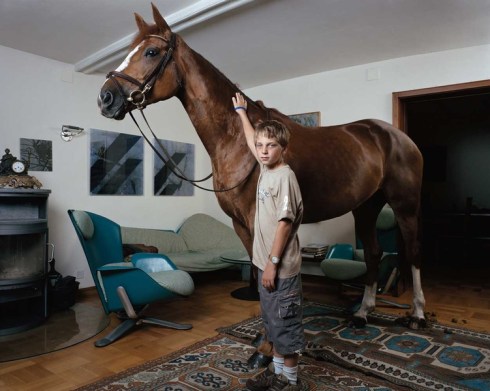
Jon Naiman. Familiar Territory, #21. Chromogenic Print. 32×40″ Image. Unmatted. 3/6. $3600
What is there not to love about Jon Naiman‘s series Familiar Territory? (More here)

The Hell of Copper (L'Enfer du Cuivre). Series: The Hell of Copper. 1800x1200. January-November 2008. Accra, Ghana. © Nyaba Leon Ouedraogo
 Burkina Faso-born Nyaba Leon Ouedraogo is one of the twelve shortlisted photographers for the Prix Pictet.
Ouedraogo’s ‘The Hell of Copper’ (L’Enfer du Cuivre) depicts the Aglobloshie Dump in Accra, Ghana. “From dawn to dusk, dozens of young Ghanians, from 10 to 25 years of age, exhaust themselves […] seven days a week. Their mission is to disassemble the old computers and burn certain plastic or rubber components to cull the precious copper, which will then be resold. Everything is done by hand or with iron bars, makeshift tools found among the refuse. They have neither masks nor gloves. There are not even any functioning toilets,” says Ouedraogo.
Ouedraogo quotes a 2008 Greenpeace report on toxic substances at the site:
– lead: in cathode tubes and monitors, harms the nervous, reproductive, and circulatory systems.
– mercury: in flat screens, harms the nervous system and the brain, especially in young children.
– cadmium: in computer batteries, dangerous for the kidneys and the bones.
– PVC: this plastic used to insulate electrical wires, when burned, gives off carcinogenic chemical substances that can cause respiratory, cardiovascular and dermatological problems.
Ouedraogo’s pictures are good, but I don’t think they are good enough. The story is vital but the images don’t live up to its importance (presuming the 10 images edit for the Prix Pictet are his best works.)
In truth, I don’t want to criticise the work of a photographer from Burkina Faso. When was the last time a photographer from Western, Eastern or Central Africa was shortlisted for a major photography prize? We should be celebrating the recognition. But Ouedraogo shouldn’t win; the project is not polished enough.
For the record, I don’t think big-guns like Taryn Simon or Ed Burtynsky should win either: they don’t need the exposure and their work is familiar, a bit dated and easy to digest.
I hope either Stéphane Couturier or Vera Lutter win.
INTRODUCING PIETER HUGO
Back to Aglobloshie. It’s a familiar subject to us photo-nerds, not least because Pieter Hugo’s Permanent Error about Aglobloshie did the rounds a few months back.
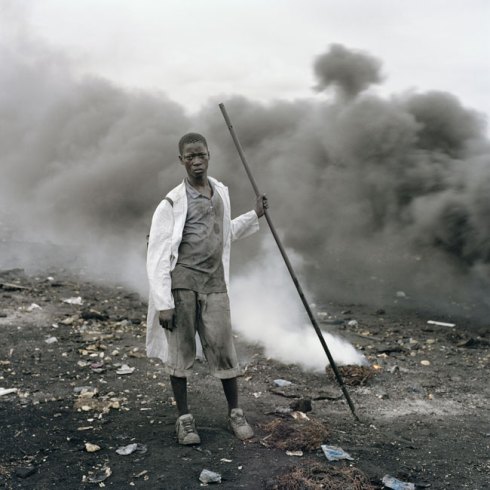
Abdulai Yahaya, Agbogbloshie Market, Accra, Ghana. 2010. @ Pieter Hugo
Hugo was very quick at turning his images round. They were distributed within months of his 2010 visit to Aglobloshie. Yet, it was Ouedraogo who went to the toxic site first; in 2008, a full two years before Hugo set up his camera.
Hugo has been the centre of debates on race and representation before, so it is with even more reluctance I draw the comparison to Ouedraogo. Hugo’s portfolio contains dozens of images and so it can boast a wider view of the poisoned micro-environment. This works in Hugo’s favour.
Both photographers emphasise the prevalence of child labour, the presence of grazing livestock and the use of found tools and noxious open fires to extract copper from the scraps. If you look at the statements by Ouedraogo and Hugo they contain virtually the same info.
Again, it is the story that is of primary importance, here.
The ultimate question then, is which portfolio is best likely to capture the attention and imagination of viewers enough for them to shift their worldview of politics, consumption and globally connected “growth”? (“Growth” is the theme of the Prix Pictet this year.)
Hugo’s work sells in galleries and it made for those gallery sales. It’s also a bleak look at the conspicuous consumerism. Ouedraogo’s work is uses photojournalist angles, some portraits and shots of the expanses of computer carcasses. Ouedraogo’s work is less cohesive. And for some reason I want to say it peels away.
I’m not really convinced by either, but I’d still err reluctantly to the foggy Hugo square.
The one thing Hugo’s work lacks is the sentiment (and hope?) of the picture below, with which Ouedraogo closes his portfolio.

The Hell of Copper (L'Enfer du Cuivre). Series: The Hell of Copper. 1800x1200. January-November 2008. Accra, Ghana. © Nyaba Leon Ouedraogo
The other eleven finalists for the Prix Pictet are Christian Als (Denmark); Edward Burtynsky (Canada); Stéphane Couturier (France); Mitch Epstein (US); Chris Jordan (US); Yeondoo Jung (Korea); Vera Lutter (Germany); Taryn Simon (US); Thomas Struth (Germany); Guy Tillim (South Africa); Michael Wolf (Germany). Biographies here.
UPDATE 11.12.2010, 12.30pm PST: Forsell didn’t win. Announced 11.12.2010 in Bristol, UK Yvonne Venegas won for her portrayal of Maria Elvia de Hank, millionaire wife of an eccentric former mayor of Tijuana. Julian Roeder and Rob Hornstra also made the final three.
This will not put me off making predictions in the future. I’ll just have to adopt unpredictable criteria and decision making to mirror the many diverse jury panels. And I stand by everything I said about Forsell’s ‘Life’s a Blast’.
– – – – –
© Linda Forsell
I’ll admit to being rather deflated after looking over the shortlisted photographers for this years Magnum Expressions Award. Many of the portfolios of 15 images had only one or two photographs that held my attention.
The Magnum Expressions Award is in reaction to the brave new world photographers face; new communities, new audiences, new distribution channels and bold ways of working. It is an award designed – so it says – to reward young photographers surfing the shifting sands beneath the industries footings.
It should be said that most of the 19 shortlisted artists have hunted down engaging subjects. Bepi Ghiotti‘s Sources is an enigmatic thesis on man and nature. Yvonne Venegas’ fly-off-the-wall study of Maria Elvia De Hank wife of an eccentric millionaire and former Tijuana mayor bristles with ambivalence toward the subject.
I was pleasantly surprised to see the presence of two photographers who’ve briefly pricked my attentions. Anastasia Taylor-Lind and Irina Rosovsky both deliver strong entries. (On PP, Taylor-Lind, here and Rosovsky here).
These would be my 3rd through 6th placed finalists, but who’s listening to me, eh?
In at second is Jenn Ackerman. This high finish has little to do with my interest in photography that exposes the shortcomings of the US prison system and everything to do with the excellent way Jenn portrays the daily battles and extreme stress of a prison operating as a makeshift and unsuitable lock-up for men with severe mental health disorders – Trapped: Mental Illness in America’s Prisons. (I’ve featured Jenn’s work here on PP before.)

© Linda Forsell
‘LIFE’S A BLAST‘ BLOWS THE COMPETITION AWAY
And, winning by a country mile is Linda Forsell. Gold star.
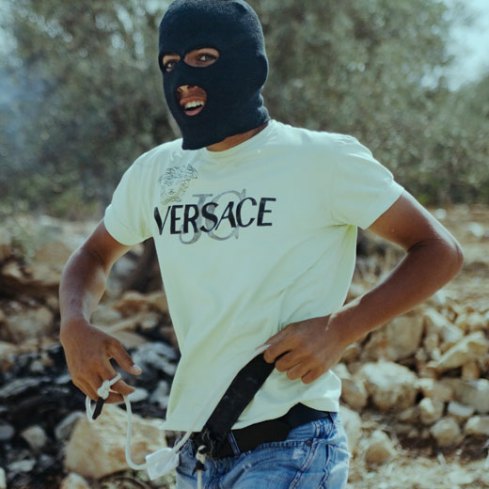
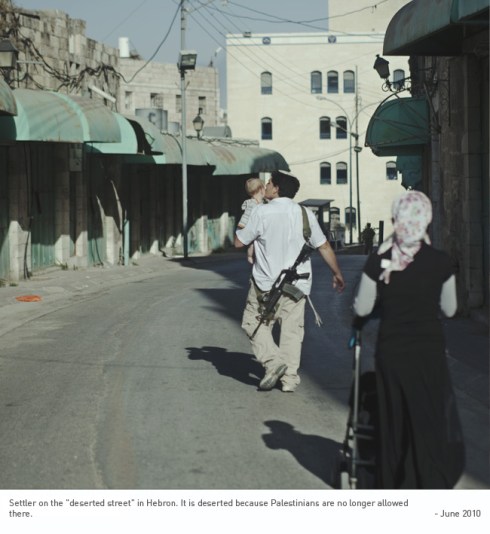
Forsell’s Life’s a Blast is the sweetest, never-escaping-bitter view of Palestine, Gaza & Israel I’ve ever clapped my eyes on. It’s about family more than ideology, but it is never glib. It is work as conscious of history as it is the mores of fashion photography. It’s a slow-ride through the lives of people associated by a larger conflict but not solely defined by it; a stunning presentation of gazes drenched in humanity.
Against all odds, Forsell forces the viewer to think on the stories of her subjects; on the seconds before the shutter snapped and the years yet to come. I have not seen a single project that so swiftly dismantles many of the entrenched tropes of conflict photography. Life’s a Blast shifts perceptions like only the very best of photography can.
© Linda Forsell

Huntress with Buck, 2010 from the series ‘Hunters’, © David Chancellor
David Chancellor has won the Taylor Wessing Portrait Prize for his image of a young American huntress astride a horse in South Africa. It’s a worthy winner.
Unfortunately, for web audiences only the five shortlisted portraits are presented on the Taylor Wessing Portrait Prize website. There are 55 more in the accompanying exhibition.
Tom Martin‘s group portrait of children inside Ruyigi prison, Burundi (below, part of flyer) is one of the sixty portraits included in the Wessing show at the National Portrait Gallery, London.

I’ll be following up with Tom shortly for the background on the circumstances of the photograph, which are difficult to say the least; photographer Nathalie Mohadjer has talked at length here at Prison Photography about life in Burundi’s prisons. At 230% capacity, Burundi’s prisons are the most overcrowded in Africa.
THE WINNERS AND THE WINNERS
I don’t want to sound too simplistic here, but any additional exposure to the stories of the dispossessed – even in the context of a £12,000 award – is a good thing. Nathalie Mohadjer commented, “Let’s face it, Burundi just isn’t important to the world”. She has struggled to find interest in her work and I expect Tom Martin has experienced the similar dead-ends.
I am not idealistic and I know that distribution of images only changes little, but in light of the subjects recognised by the Taylor Wessing Prize (TWP) I want to be positive, constructive. The shortlisted entries over the years seem to be those that weigh skilled technique with a careful presentation of unexpected (often disenfranchised) social groups:
Photographic Portrait Prize 2010
Photographic Portrait Prize 2009
Photographic Portrait Prize 2008
Photographic Portrait Prize 2007
Photographic Portrait Prize 2006
Photographic Portrait Prize 2005
The TWP has a social conscience and it plays that to full advantage by picking striking portraits with direct routes to empathy. This is the mark of good photography, no? Everyone’s a winner.
The Taylor Wessing Portrait Prize Exhibition runs at the National Portrait Gallery from November 11th until 20 February and then at the Sunderland Museum and Winter Gardens from 16 April until 26 June.

 Prison Photography