
You are currently browsing the category archive for the ‘Institutional’ category.

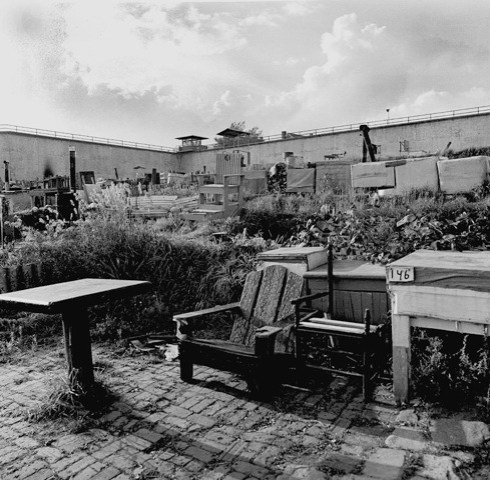
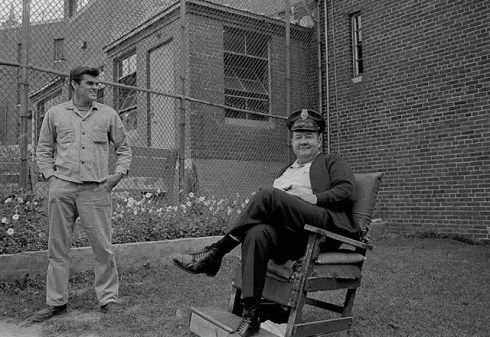
In 1972, Joshua Freiwald was commissioned by San Francisco architecture firm Kaplan & McLaughlin to photograph the spaces within Clinton Correctional Facility in the town of Dannemora, NY.
In the wake of the Attica uprising in September of 1971, the New York Department of Corrections commissioned Kaplan & McLaughlin to asses the prison’s design as it related to the safety of the prison, staff and inmates. The NYDoC wanted to avoid another rebellion.
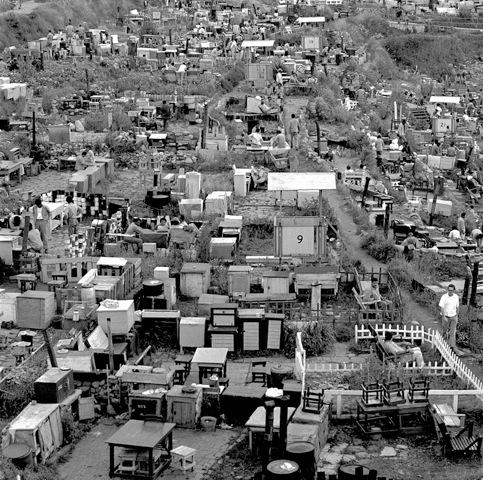
The most astounding sight within Dannemora was the terrace of “courts” sandwiched between the exterior wall and the prison yard. It is thought the courts began as garden plots in the late twenties or early thirties, although there is no official mention of their existence until the 1950s.
Simply, the most remarkable example of a prisoner-made environment I have ever come across.
The courts were the focus of Ron Roizen’s 55 page report to the NYDoC on the situation at Clinton Correctional Facility. Sociologist Roizen, also hired by Kaplan & McLaughlin, conducted interviews with inmates over a period of five days:
“Inmates waited months, sometimes even years, to gain this privilege. The groups would gather during yard time to shoot the breeze, cook, eat, smoke, and generally ‘get away from’ the rigors and boredom of prison life.”
In the same five days, Freiwald took hundreds of photographs at Dannemora. Eight of those negatives were scanned earlier this month and are published online here for the first time.
“Since I’d taken these photographs, I’ve come to realize that these are something quite extraordinary in my own medium, and represent for me a moment in time when I did something important. I can’t say for sure why they’re important, or how they’re important, but I know they’re important,” says Freiwald.
Freiwald and I discuss the social self-organisation of the inmates around the courts, his experiences photographing, the air “thick” with tension and surveillance, the spectre of evil, and how structures like the courts simply do not exist in modern prisons.
LISTEN TO OUR DISCUSSION ON THE PRISON PHOTOGRAPHY PODBEAN PAGE
All images © Joshua Freiwald



All images © Joshua Freiwald

A Meeting of the Harvard Corporation, which invests Harvard’s endowment, guarded by police. © Gregory Halpern
As a resident alien, much of the American revelry is lost on me. But Labour Day? That’s a national holiday dedicated to the social and economic achievements of American workers. That’s something I can celebrate.
Today then, I point you in the direction of Gregory Halpern‘s neatly edged project Harvard Works Because We Do (it has a beginning, a middle and an end) about the service workers employed by Harvard University. From portraits to playful presentation (above) to messy colour film shots of a student sit-in to a successful outcome securing over $10 million in pay and benefits for the more than 1,000 service workers on campus.
Harvard Works Because We Do is a project full of character and a clear voice. Halpern was one of the sitting students. From his portfolio:
“Between 1994 and 2001, the endowment of Harvard University tripled, making the school the wealthiest non-profit in the world, second only to the Vatican. In the same years, Harvard heavily outsourced many service jobs to lower-paying companies, thus resulting in average wage cuts of 30% for the schools’ custodians, food-workers and security guards. In response, I got involved with a student group called the Harvard Living Wage Campaign and I began this project. My goal was to publicize the situation, to share the stories of a number of service-workers I had come to know, and to raise questions about the prevailing class-structure at Harvard and on college campuses in general.”
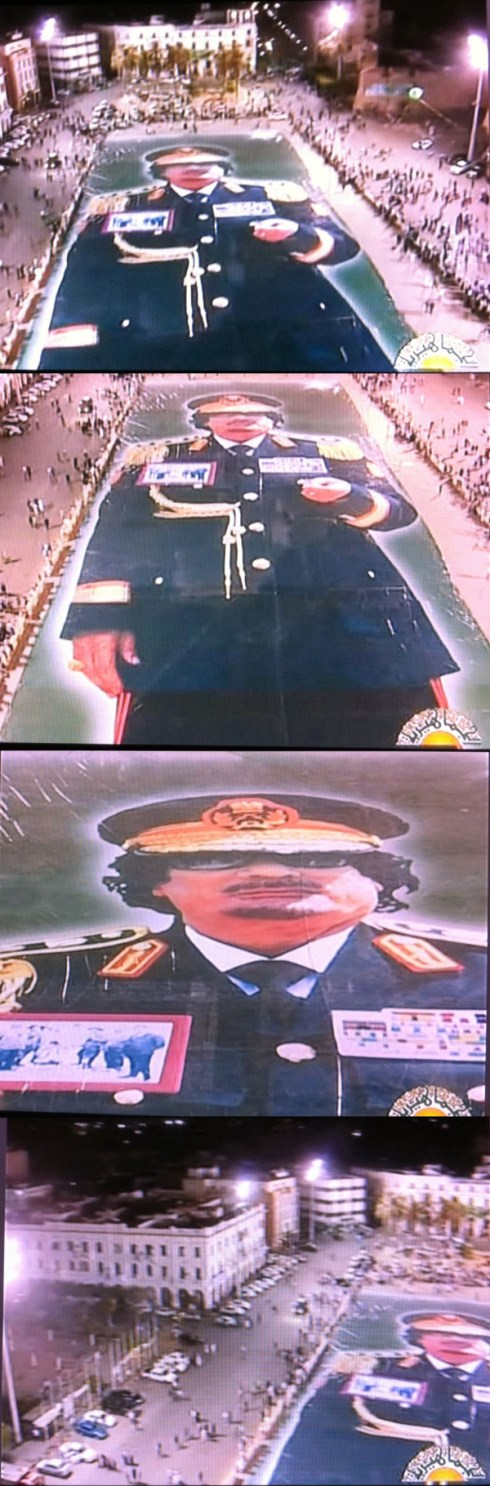
Late last night, I heard a report by a BBC World Service journalist from Tripoli. Escorted by a government liaison officer, the journo only met members of the public who were fervent Gaddafi supporters (one of Gaddafi’s information officers was captured by rebels last week and estimated 70% of people in Tripoli supported Gaddafi.)
During the report, he spoke with men piecing together a huge “photo” of Gaddafi in Green Square. I had heard nothing of this so this morning jumped on my computer to see for myself.
If it weren’t for the BBC report, I may have considered the above images an elaborate hoax – a) because I’d not heard of this month-old photo-stunt, and b) because it just seems so bonkers.
The images are screengrabs from Libyan TV made Sate Hamza ساطع, whose Twitter profile reads, “Syrian-Canadian dermatopathologist practicing in Winnipeg. Lived in the US. Enjoy comedy, world music & multimedia. Follow global news & current affairs. Vegan.” He blogs here.
Sate, whose Twitter handle is sate3 posted the screengrabs to TwitPic on 24th July with the message, “Giant photo of Gaddafi in Green Square in Tripoli unveiled yesterday (July 22, 2011), on Libyan TV. #Libya”
So, I ask for a bit of feedback. Had anyone else heard of this massive photograph? If so, can you help me with some more resources. If not, why not? How does this compare to other examples from history of nationalistic/cult of the personality shows of strength?
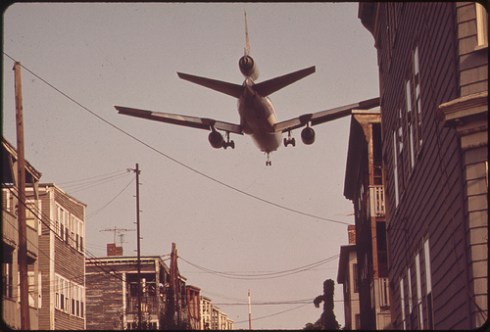
If you don’t know about Documerica on Flickr yet, you should.
“For the Documerica Project (1971-1977), the Environmental Protection Agency (EPA) hired freelance photographers to capture images relating to environmental problems, EPA activities, and everyday life in the 1970s.”
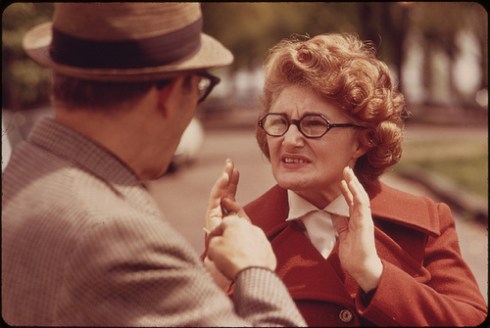
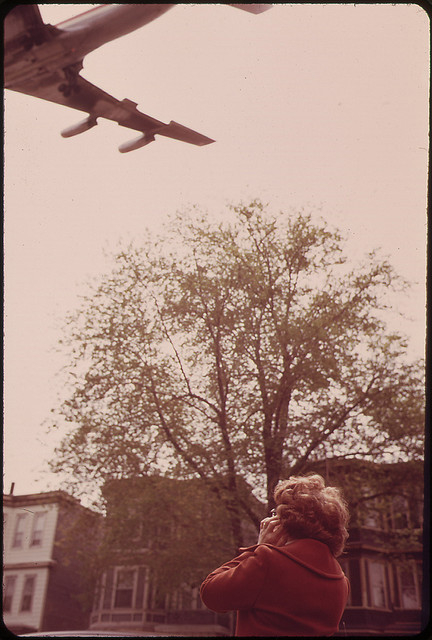
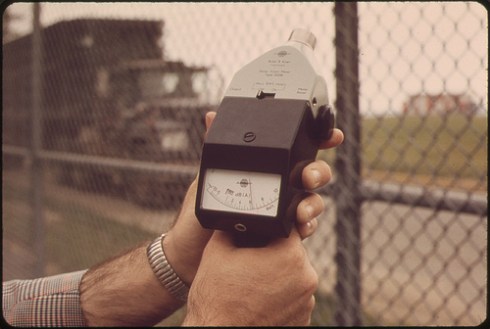
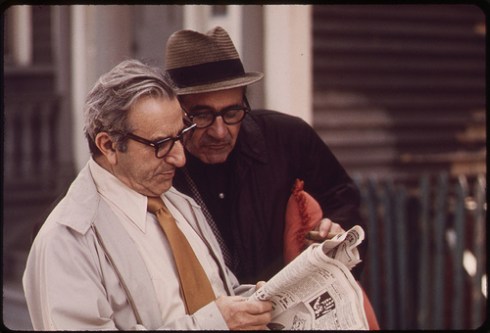
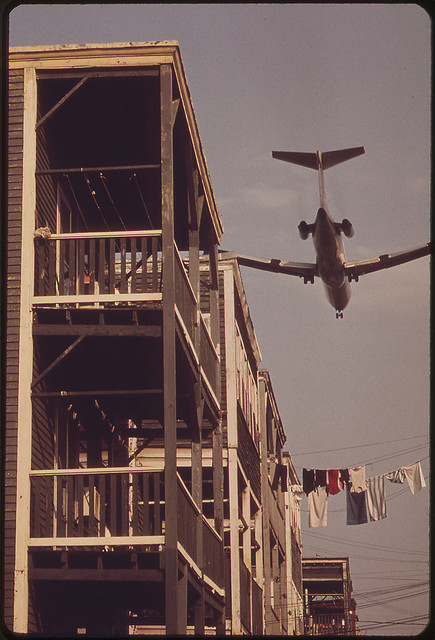
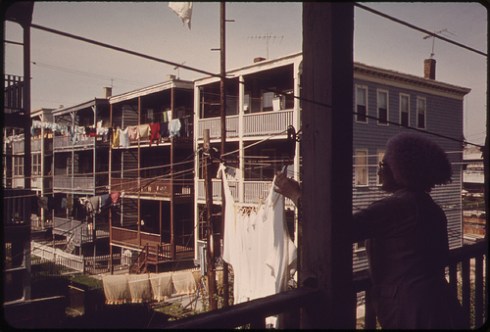
I particularly appreciated the 100 photos by Michael Philip Mannheim which document noise pollution and structural damage within the community around Neptune Road in Boston.
We live in a time in which imagery of aeroplanes in close proximity to buildings wheedle at our unconscious; the pregnant threat of collision is always with us. Mannheim’s subjects on Neptune Road share a different type of agitation. They’ve seen an extra runway inserted, their neighbourhood split in two and a rail link nestled against their properties. The noise, vibrations and ever-presence of aircraft for these folk is menacing but for very different reasons.
Just wanted to share.





CARL BRADEN
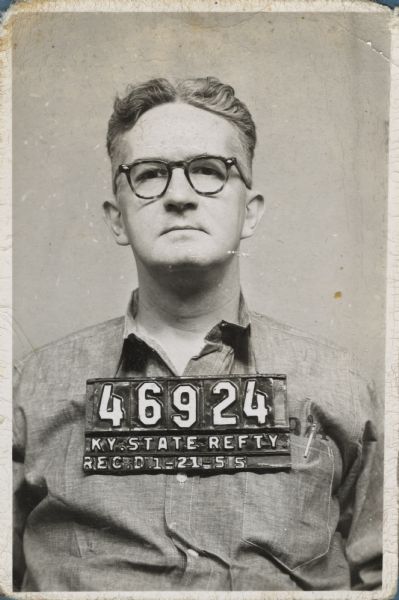
I was surfing through the Wisconsin Historical Archives, like you do, and came across the above image of Carl Braden.
Braden and his wife Anne Braden were journalists-turned-activists who were part of the union movements and later the radical interracial left of the 40s and 50s. The Braden’s bought a house on behalf of the Wade family, their African American friends in suburban Louisville, Kentucky. When neighbours found out a Black family had moved in they burnt a cross outside the house and went after the Braden’s. Carl was charged with sedition in what is known as the Wade Case. Carl was sentenced to 15 years and served 8 months, eventually paying $40,000 to get out.
The Anne Braden Institute (ABI) now operates out of the University of Louisville. The ABI has a Flickr stream of scenes from her full life.
KARL BADEN
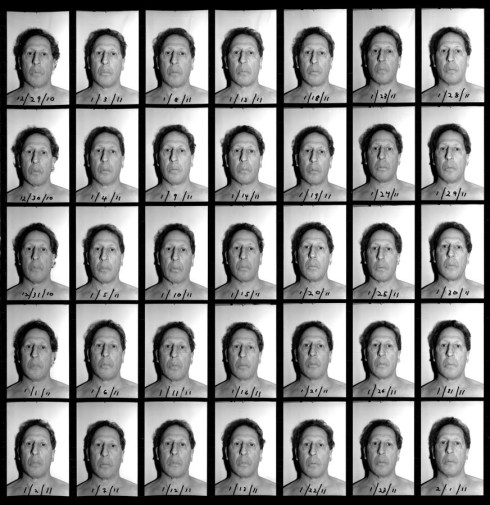
Karl Baden has chosen to put himself in the picture everyday for 24 years. Somewhere he has set up a self-imposed mugshot identification room. All these can be seen at his website Every Day.
It’s worth noting that Baden and Noah Kalina are the original and best for these vaguely masturbatory, mirrored versions of themselves in time-lapse. Others include a girl with a nice set of scarves, two dudes (one and two) with beard-growing missions, a guy with an 800 day commitment and Homer Simpson.
There is also Diego Goldberg who self-documents he and his family once a year, every year on the 17th June.
Baden has established a unique set of data for a limited case study in visual anthropology. The date runs like an I.D. number at the bottom of his shots.
As Baden describes the project, he removes emotion and variables from the photography, just as police or criminal justice photographers do for mugshots:
Every Day is performed within a set of guidelines. […] Reserved exclusively for this procedure are a single camera, tripod, strobe and white backdrop. […] I use the same type of high-resolution film (Kodak Technical Pan until it was discontinued in 2007, Ilford Pan F since then) and the same strobe lighting. The camera is always set and focused at the same distance. When taking the picture, I try to center myself in the frame, maintain a neutral expression and look straight into the lens.
Baden lists the key tenets of Every Day to be mortality; incremental change; obsession (its relation to both the psyche and art-making); and the difference between attempting to be perfect, and being human. I’ll grant him those things, but I also wonder is does the project not feel like a sentence?
And my question to you, readers, is what should we make of this type of project? It could be just inventive fun or it might be one of the most present-minded approaches to photography there is? I can’t decide.
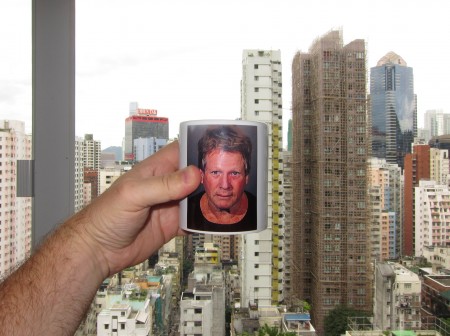
Michael Wolf’s mug. Photo by Michael Wolf for Hermann Zschiegner’s Mugshot Mugs project.
Hermann Zschiegner‘s cheeky Mugshot Mugs had me smiling. He wanted to make a comment on privacy and create and excuse to make contact with his heroes.
Zschiegner Googled and downloaded images of celebrities’ booking photos, printed them on mugs at Walmart and sent the mugs out to, as he puts it, “twenty people that have been of great influence to me in one way or another or whose work I have admired over the years. Some of the people who received a mug are friends, but most don’t know me very well – or at all. […] All I asked from the participants was to place the mug anywhere in their home and take a picture of it. The way the mug was framed in the picture dictates just how much privacy they were willing to give up.”
Zschiegner’s comparison of mugshots with paparazzi and within a framework of privacy-rights is thought-provoking:
“Federal booking photographs are automatically entered into the public domain in the United States, and can be obtained by anyone through the Freedom of Information Act. While designed as a tool to index and collect the images of potential criminals in a database, the publication and distribution of these pictures is an astonishing act of invasion of privacy. Institutionalized, but in effect not much different of paparazzi pictures shot from afar.”
Zschiegner is an active member of the Artists’ Books Cooperative (ABC) an international network created by and for artists who make print-on-demand books. Many of the recent book-projects within ABC have made overt use of public, internet and appropriated digital imagery. In a recent email, Zschiegner described ABC as “slow and spontaneous, small and excessive, serious and funny.” Okay, I’m amused so I’ll let you have it both ways.
UPDATE: It just occurred to me that Ernesto Miranda looks like a young Al Franken.
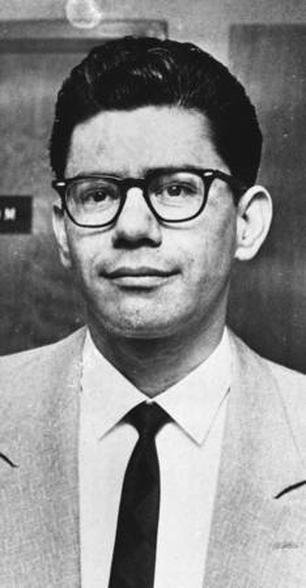
Ernesto Miranda
Huh. I never realised Miranda Rights were named after someone named Miranda. And, if I had been shown a photograph, I’d have expected a female. Same applies for other renowned names. Say what do Roe or Wade look like? Or the Lovings? Or Brown, from Brown vs. Board of Education?
LIFE.com has a gallery of Faces Behind Famous Court Cases. From slide two:
Miranda v. Arizona, 1966. In 1963, police in Phoenix, Arizona, arrested career criminal and predator Ernesto Miranda (above) on charges of kidnapping and raping a young woman. Miranda was interrogated at the police station; without being advised of his right to representation and without being warned of his right against self-incrimination, Miranda signed written confessions and, at jury trial, was found guilty and sentenced to 20 years on each charge.
The issue before the Court: Were Miranda’s constitutional rights to representation and against self-incrimination violated by officers’ failure to apprise him of those rights? The decision: In a 5-4 ruling, the Court decided in Miranda’s favor. Chief Justice Earl Warren, writing for the majority, declared: “The warning of the right to remain silent must be accompanied by the explanation that anything said can and will be used against the individual in a court of law…”

One June 16th, 1944, the United States executed a 14 year old boy. His name was George Junius Stinney Jr.
There is good reason to believe Stinney’s confession was coerced, and that his execution was just another injustice blacks suffered in Southern courtrooms in the first half of the 1900s.
More from SC crusaders look to right Jim Crow justice wrongs, by Jeffrey Collins for The Associated Press (Jan. 18, 2010)
The sheriff at the time said Stinney admitted to the killings, but there is only his word — no written record of the confession has been found. A lawyer with the case figures threats of mob violence and not being able to see his parents rattled the seventh-grader.
Attorney Steve McKenzie said he has even heard one account that says detectives offered the boy ice cream once they were done.
“You’ve got to know he was going to say whatever they wanted him to say,” McKenzie said.
The court appointed Stinney an attorney — a tax commissioner preparing for a Statehouse run. In all, the trial — from jury selection to a sentence of death — lasted one day. Records indicate 1,000 people crammed the courthouse. Blacks weren’t allowed inside.
The defense called no witnesses and never filed an appeal. No one challenged the sheriff’s recollection of the confession.
“As an attorney, it just kind of haunted me, just the way the judicial system worked to this boy’s disadvantage or disfavor. It did not protect him,” said McKenzie, who is preparing court papers to ask a judge to reopen the case.
Stinney’s official court record contains less than two dozen pages, several of them arrest warrants. There is no transcript of the trial.
RESOURCES
Sound Portrait: George Stinney, Youngest Executed (2004)
When Killing a Juvenile was Routine
Too Young To Die: The Execution of George Stinney Jr. (1944) in Ch. 5, ‘South Carolina Killers: Crimes of Passion’, by Mark R. Jones.

 Prison Photography