
You are currently browsing the category archive for the ‘Opinion’ category.

I’ve talked about biologist Nalini Nadkarni and the Sustainable Prisons Project in Washington State before here and here.
Well, Nadkarni is back at TED again, this time delivering a quick 6 minute piece on how the things we consider static – trees, perceptions, prejudices and the lives of prisoners – are all open to change … if we see the possibilities, if we allow the possibilities.
At times, Nadkarni’s implored arguments (about tree art) are a bit of a stretch, but ultimately I am focused only on the practical & repeatable efforts her team is making to engage the prison population – a population of whom most others have given up.
Since getting to know photographer Robert Gumpert his discomfort with the current world of journalism has been a constant. He doesn’t gripe about technologies like some photojournalist elders (which I don’t have a problem with, by the way), but Bob can’t see a way back from slipping standards as we veer toward the bottom-line priorities of “Newsonomics.”
Bob says:
From the beginning there has been a fight in journalism over where the “firewall” between advertising and the newsroom should be and, as a related question, “what is news?” Is news what readers need to know, or what they want to know?
And so these two articles caught my attention.
The first is At Yahoo, Using Searches to Steer News Coverage. It’s a good headline and pretty much says it all. Yahoo will be using what the reader wants to know to determine content. This is now called democratizing content. In the past it was called tabloid news. […]
[Secondly,] “Gaps in Watchdog Journalism Reflected in News From a Trial.” You could not ask for a better example of why good aggressive journalism is needed and what happens when it isn’t around. The article concerns the coverage of a police torture case in Chicago by John Conroy. Everyone should read this article. I say read this article instead of his regular pieces because no one is employing Mr. Conroy anymore, and few news outlets are doing his kind of investigative reporting.
We are all, individually and as a country, more vulnerable for it.
Here, here! It’s a pleasure to know you Bob.

“The surveillance system, dubbed Sigard, has been installed in Dutch city centers, government offices and prisons, and a recent test-run of the technology in Coventry, England, has British civil rights experts worried that the right to privacy will disappear in efforts to fight street crime. The system’s manufacturer, Sound Intelligence, says it works by detecting aggression in speech patterns.” – Story
via Boogie
Image: Privacy And Control, by Michael Pickard, Creative Commons: Attribution 2.0.
Clearly, Alec Soth does know what he is talking about … and he talks a lot of sense … and he talks often.
Last week, however, Magnum Photos attributed this quote to Soth and twatted it into the webiverse:
“It’s not about making good pictures anymore. Anybody can do that today – it’s about good edits…”
Thus a medium-sized discussion ensued on the Fraction Mag Facebook page covering the need for outside perspective, audience expectations, technologies beyond those of cameras but of distribution also, etc, etc …
I wanted to know why and when Soth said this and in what context he made the statement. I emailed him. Here’s his response:
Dear Pete,
I don’t when or in what context this comment was made or if it was made at all. Nor do I know who posted it. But this itself is quite telling, isn’t it? Are people interested having serious discussions about miscellaneous, fragmentary tweets? I would much rather talk about a fully realized interview or essay. In a similar way, I’m much more interested in edited projects than I am in isolated images.
Best,
Alec
I don’t know if we should now discuss this fragmentary correspondence or just leave it alone?
From the latest Photographers Speak interview:
Dean Brierly: Do you find any points of intersection between your commercial and fine art work?
Bob Witkowski : When I arrived in DC after a year’s graduate work in photojournalism at the University of Missouri, I found myself in the position of having to survive while trying to stay committed to my “art” at the time. My first break was to get access to the Gulf Oil Refinery in Philadelphia through the aegis of the American Petroleum Institute and its Director of PR, Robert Goralski, one-time correspondent for NBC News. I was paid nothing! I had little money at the time as well. I spent everything I had on several bricks of Kodachrome 25 and drove up to Philly and spent six days in paradise shooting 20 hours a day. It was at the refinery that I discovered I could be true to making images I loved while making industrial images that were sensuous, beautiful and a complete sellout. So I finally had something to drag around in a slide projector to show to industry trade groups and corporations around the DC, Baltimore and Richmond areas. It wasn’t an easy sell at first, and I paid my dues like anyone else for several years, but eventually it paid off for me professionally. I was fortunate to shoot in the golden days of corporate annual reports before Reaganomics altered everything.
How differently an industry can be perceived.
ELSEWHERES

© Jorge Duenes/Reuters
Everyone is blurting loud sounds:
David Burnett asks, “Where are the kids who should be on the street protesting?”
Mark Powers talks about a dead Pope in the age of Popes and TV.
Peter Marshall, who is a UK-political-photography-blog-treasure, has a naff day with some far-right marchers and a bunch of banged up camera lenses.
Mrs. Deane is back on Mars with Vincent Fournier.
Grant Willing, the darkest man in photography blogging (humble arts), delivers an interview to Jerenie Egry for too much chocolate.
Horses Think reminds of the MoCA exhibition in which the American road-trip was also the data for one of the most influential pieces of contemporary architectural theory. (Well, not totally, they did some walking as well.)
Ben‘s is flipping out, while Stan says we should all make hay, and he loves the UN’s photo comp policy u-turn.
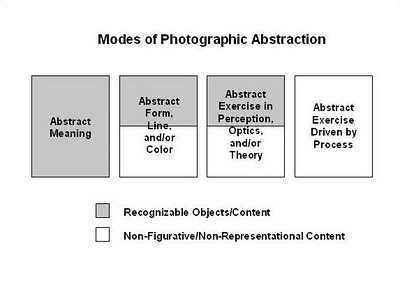
DLK Collection is dealing with the return of photographic abstraction. While, only two days prior DLK had asked who was steering the big wobbly ship of conversation on photography?
Just when we were all getting hopeful about the exchange economy of the internet, Joerg delivers an absolute bummer of a summary of his view on book reviewing. But, I think – as Joerg wonders – that he might be reading the wrong blogs.
In the same stroke of an ink quill, Joerg has busted out a great post about the intervals between being photographed as a child, the digital storage problem of the future and research about the way the memory deals with a vast quantity of photographs.
Then, Ben‘s back running a poll on if The Photographers Gallery is “shite”.
The New Yorker Passport Photo Booth is bigging up Mari Bastaskhevski, Bastashevski, Bastashevsi … although I don’t know exactly how to spell Mari’s surname , because Photo Booth spell it three different ways!
It’s a shame because Mari is one of the most courageous photographers working in modern times. I want to say more about her work, but I am still digesting it. Good stuff.
AND MORE OTHERWHERES
Monoscope throws David Gentleman’s 1970 England World Cup stamp (recently discovered) on to your computer screen. Talking of stamps, Steve McQueen …
Heading East talks sense again.
The photographer who made flags out of people!
Foto8 goes all World Cup. The Telegraph profiles a photographer of Zapatista veterans. Blog61 gets all reminiscent. (Early signs from these guys are good).
Robert Hariman refers to abstracted images of border patrol lights and oil slick swirls as the “hieroglyphs of human limitation”.
Given that Marina Abramović entered into “some sort of trance-like state” during the performance-art piece The Artist is Present, Jim Johnson asks, “Would she even have noticed had the chair across from her were vacant?”
From Boing Boing:
“Physicians for Human Rights (PHR) today released evidence it says indicates that the Bush administration conducted “illegal and unethical human experimentation and research” on detainees’ response to torture while in CIA custody after 9/11. The group says such illegal activity would violate the Nuremburg Code, and could open the door to prosecutions. Their report is based on publicly available documents, and explores the participation of medical professionals in the CIA’s “enhanced interrogation program.” Download the full report at phrtorturepapers.org.”
Boing Boing goes on to interview the Dr. Scott Allen, co-director of the Center For Prisoner Health and Human Rights at Brown University, and Medical Advisor to PHR.
Allen contends that the ongoing monitoring of torture techniques (waterboarding, stress positions) crossed over into note taking and experimentation on human subjects. Protocols would then demand the involvement of ethics board, consent forms, etc – the safeguards of legitimate research – but obviously, the US military and CIA never saw torture as “experimentation” in its most formal definition.
Allen: “I think it’s certainly possible that while they weren’t eagerly looking forward to setting up research they might have been backed into this by saying, let’s take notes. That citation we note of Appendix F in the CIA 2004 Inspector General’s report, the one that describes the directives to doctors, says, ‘Take these notes in a very meticulous way about how detainees respond to waterboarding so we can better inform our procedures in future.’ That’s describing the framework of a research protocol.”
The note-taking on interrogation techniques probably doesn’t surprise many, but the results of new legal avenues opened up by defining torture tactics as “experiment” and “research” may?
During the earthquake, it was well reported that the National Penitentiary in Port-au-Prince crumbled and all inmates escaped. I posted on it here, here and here.
But this was not the only prison in Haiti. Les Cayes Prison, 100 miles west of Port-au-Prince, was the scene of prisoner protest, guard desertion and mass killings.
Today, the New York Times released the findings of an investigation at Les Cayes.
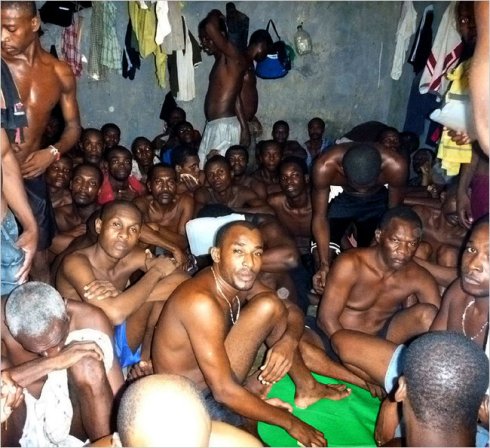
The day after the violence, the Rev. Marc Boisvert, who has run a training program at the prison for many years, was allowed in. Before the riot, conditions there were “inhumane,” he said. Afterward, with more than 400 prisoners in five or six small rectangular cells, they became “seriously inhumane.” Photo by Rev. Marc Boisvert
The New York Times reports, “After the earthquake, the warden, Inspector Sylvestre Larack, put out a “maximum alert” calling his 29 guards back to duty. But on Jan. 19, with much of Les Cayes still in a post-quake state of emergency, only five guards showed up to work inside the prison.”
Squalid conditions, described by Rev. Marc Boisvert as “subhuman”, led prisoners to hatch an escape plan. They beat an officer into surrendering his keys. All the guards fled leaving the prisoners unsupervision and doors unlocked.
Inmates could not leave the prison because UN forces had surrounded the complex.
SUPPRESSION AND VIOLENCE
In the New York Times’ investigation several inconsistencies were found. Among the allegations:
Haitian police gunned down prisoners, beat prisoners and then covered up evidence by burning blood soaked clothing, shoes etc.
Between 10 and 19 unarmed prisoners were killed when Haitian government forces entered the prison and instructed them to move away, lie down and then open fire.
Before the Haitian forces entered, prison authorities asked Senegalese and UN forces to enter the prison using munitions. The UN refused.
The warden, Inspector Sylvestre Larack (who has know been transferred to the post of warden at Port-au-Prince’s National Penitentiary) lied in the first and only internal investigation. He fabricated details of gun use by prisoners upon riot police.
RAMIFICATIONS
At the forefront of your consideration when reading this story should be the fact that, of the 800 inmates, over 300 of the inmates were pretrial detainees. They have not been found guilty of a crime. Some of them were incarcerated for something as little as loitering.
The US has requested $141 million to rebuild Haiti’s justice system. If Haiti cannot carry through its own inquiry to uncover the truth and make accountable those responsible for murder and human rights abuses then it sets a very poor precedent for trust and the culture of governance in the next few years of recovery.
– – –
I HAVE PROVIDED A MERE SUMMARY OF THE NYT INVESTIGATION. GO HERE FOR THE LENGTHY ARTICLE BY. GO HERE FOR A 12 MINUTE VIDEO OF THE INTERVIEWS AND CONCLUSIONS OF THE INVESTIGATION. GO HERE TO SEE ANGEL FRANCO’S PHOTOGRAPHY FOR THE STORY.

Michael Shaw has been conscientiously restructuring BagNewsNotes over the past six months or so. Here’s how he describes the rebranded Bag:
• An almost hypnotizing archive featuring hundreds of ways to sort through our over 3000 image posts.
• A dedicated photojournalism section, BagNewsOriginals, steered by long-time BNN contributor, Alan Chin with a powerful lineup showcasing BAG’s distinguished contributor, Nina Berman, fresh off her Whitney Biennial success; World Press and Pulitzer Prize winner Tony Suau on the economy; and much, much more.
• A Salon section managed by the talented photographer and multimedia producer, Sandra Roa, formerly of the NYT Lens Blog, mixing audio slideshows and live chats, all focusing on key images of the day. We kick off on Wednesday with an audio slide show featuring Ashley Gilbertson’s look at the bedroom shrines of fallen US soldiers.
• Our mainstay news image analysis by BAG publisher Michael Shaw, with new contributors, including: acclaimed photojournalist Chris Hondros conducting exclusive interviews; leading visual academics Bob Hariman and John Lucaites deconstructing visual culture; and former White House photographer, Stephen Ferry, on media’s pictorial stereotyping of the third world.
_______________________________
The Bag is all about demystifying (political) imagery and helping people along with visual literacy. Yes, audiences are more savvy, more sophisticated, but there is still a distance to go.
The Bag is the most persistent contributor to this ongoing analysis. The importance of the Bag’s ever critical eye cannot be underestimated in a world that sinks deeper into the swell of images every day.
The new look by designer Naz Hamid of Weightshift is super navigable and I think it is funny (humorous) that the Bag has made use of the same font used by the New York Times’ arts and media blogs.


The font choice is a cheeky nod to the subtle echoes of form and type that run through our daily visual experiences! It’s as if the Bag is testing its own hypothesis from within the permanent elements of its own visual architecture. That, and it doesn’t hurt to have subliminal associations with the Grey Lady!
_______________________________
MY CONTRIBUTION?
Last year, Shaw contacted me and at the same time as describing Bag’s sweeping changes asked me if I’d come on-board as a contributor.
Writings on US prisons here on Prison Photography will be cross-posted to the Bag in order to bring images and issues of America’s prison industrial complex to a wider audience.
I’ve a got a couple of posts coming up this week so stay alert for those and for all that the Bag offers consequently.

 Prison Photography