
You are currently browsing the category archive for the ‘Portraiture’ category.

“Tex Johnson, 60” by Ron Levine, courtesy of the artist.
Later this week, I’ll be attending the inaugural prison arts and activism conference, Marking Time.
Hosted by the Institute for Research on Women at Rutgers, and across multiple venues, the event brings together an incredibly committed and skilled cohort of practitioners throughout many disciplines — from dance to yoga, from occupational health to sculpture, and from film making to social work.
I’ll be moderating a panel discussion Imagery and Prisons: Engaging and Persuading Audiences, with Gregory Sale, Lorenzo Steele, Jr., and Mark Strandquist on Wednesday afternoon. In addition, a version of Prison Obscura will be on show at the Alfa Art Gallery in downtown New Brunswick.
To emphasise the breadth and depth of expertise I’ve copied out the schedule below. I have made bold and linked the names of artists, activists and academics’ names with whose work I am already familiar … and admire.
I pepper the post with artworks made by photographic artists attending Marking Time.
Marking Time runs 8th-10th Oct. Registration for the conferecne is free.
See you in New Brunswick this Wednesday?!?!

“Allen and Tanasha, 1998.” Family album. Courtesy of the Fleetwood family.
WEDNESDAY 8TH OCT.
Session 1: 9: 30 – 10:45 am
PANEL: Creative Arts and Occupational Health (ZLD)
Susan Connor and Susanne Pitak Davis (Rutgers University Correctional Healthcare) “Finding Meaning Thru Art”
Karen Anne Melendez (Rutgers University Correctional Healthcare) “The Concert Performance with Adult Females in Correctional Health Care”
Moderator: Michael Rockland (Rutgers-New Brunswick)
WORKSHOP: Steps Taken: Footprints in the Cell (NBL)
Rachel Hoppenstein (Temple University)
Ann Marie Mantey (Temple University)
Session 2: 11:00 – 12:15 pm
PANEL: Law, News, and Art (ZLD)
Regina Austin (Penn Law School)
Ann Schwartzman (Pennsylvania Prison Society)
Tom Isler (Journalist/Filmaker)
Moderator: Tehama Lopez
WORKSHOP: Utilizing Dance as a Social Tool: Dance Making with Women in Prison (NBL)
Meredith-Lyn Avey (Avodah Dance)
Julie Gayer Kris (Avodah Dance)
LUNCH: 12:15 – 1:15 pm
Session 3: 1:15 – 2:30 pm
PANEL: Imagery and Prisons: Engaging and Persuading Audiences (ZLD)
Gregory Sale (Artist)
Lorenzo Steele, Jr. (Founder, Behind these Prison Walls)
Mark Strandquist (Artist)
Moderator: Pete Brook (Freelance Writer/Curator)
PRESENTATION: The Political and Educational Possibilities of Exhibitions (NBL)
David Adler (Independent Curator)
Sean Kelley (Eastern State Penitentiary)
Rickie Solinger (Independent Curator)
Session 4 2:45 – 4:00 pm
PANEL: About Time (ZLD)
Damon Locks (Prison and Neighborhood Arts Project)
Erica R. Meiners (Northeastern Illinois University/Prison and Neighborhood Arts Project)
Sarah Ross (School of the Art Institute of Chicago/ Prison + Neighborhood Arts Project)
Fereshteh Toosi (Columbia College Chicago)
Moderator: Donna Gustafson (Rutgers-New Brunswick)
PANEL: Best Practices: Arts, Prisons and Community Engagement (NBL)
Robyn Buseman (City of Philadelphia Mural Arts Program)
Shani Jamila (Artist, Cultural Worker, Human Rights Advocate)
Kyes Stevens (Alabama Prison Arts and Education Project)
EVENING EVENTS
4:00 – 5:00 pm Artist Talk: Jesse Krimes (ZLD)
5:00– 5:45 pm Welcome Reception (ZL)
7:30 – 9:00 pm Opening Keynote: Reginald Dwayne Betts (KC)
Welcome Remarks: IRW Director Nicole Fleetwood
Introduction of Keynote: Dean Shadd Maruna, School of Criminal Justice – Rutgers, Newark

“Exercise Cages, New Mexico” by Dana Greene, courtesy of the artist.

“That Renown New Mexico Light” by Dana Greene, courtesy of the artist.
THURSDAY OCTOBER 9TH
Session 1: 9: 30 – 10:45 am
PANEL: Theater in Prisons (ZLD)
Wende Ballew (Reforming Arts Incorporated, Georgia) “Theatre of the Oppressed in Women’s Prisons: Highly Beneficial, Yet Hated”
Lisa Biggs (Michigan State University) “Demeter’s Daughters: Reconsidering the Role of the Performing Arts in Incarcerated Women’s Rehabilitation”
Karen Davis (Texas A&M) “Rituals that Rehabilitate: Learning Community from Shakespeare Behind Bars”
Bruce Levitt and Nicholas Fesette (Cornell University) “Where the Walls Contain Everything: The Birth and Growth of a Prison Theatre Group”
Moderator: Elin Diamond (Rutgers-New Brunswick)
PANEL: Prison Architecture, Space and Place (NBL)
Svetlana Djuric (Activist) and Nevena Dutina (Independent Scholar) “Living Prison”
Maria Gaspar (Artist) “The 96 Acres Project”
Vanessa Massaro, (Bucknell) “It’s a revolving door”: Rethinking the Borders of Carceral Spaces”
Moderator: Matthew B. Ferguson (Rutgers-New Brunswick)
Session 2 11:00 – 12:15 pm
PRESENTATION: Sustaining Engagement through Art: The US and Mexico (ZLD)
Phyllis Kornfeld (Independent Art Teacher, Author, Activist, Curator) “Thirty Years Teaching Art in Prison: Into the Unknown and Why We Need to Go There”
Marisa Belausteguigoitia (UNAM) “Mural Painting in Mexican Carceral Institutions”
WORKSHOP: The Arts: Essential Tools for Working with Women and Families impacted by Incarceration (NBL)
Kathy Borteck-Gersten (The Judy Dworin Performance Project)
Judy Dworin (The Judy Dworin Performance Project)
Joseph Lea (The Judy Dworin Performance Project)
Kathy Wyatt (The Judy Dworin Performance Project)
LUNCH: 12:15 pm – 1:15 pm
Session 3 1:15 – 2:30 pm
PRESENTATION: Visualizing Bodies/Space: A Performative Picture of Justice System-Involved Girls & Women in Miami, FL (ZLD)
Nereida Garcia Ferraz (Artist/Women on the Rise!)
Jillian Hernandez (University of California-San Diego/Women on the Rise!)
Anya Wallace (Penn State University/Women on the Rise!)
Moderator: Ferris Olin (Rutgers-New Brunswick)
PANEL: 25 Years of the Creative Prison Arts Project: Connecting Incarcerated Artists with the University of Michigan Community (NBL)
Reuben Kenyatta (Independent Artist)
Ashley Lucas (University of Michigan)
Janie Paul (University of Michigan)
PRESENTATION: The Art of Surviving in Solitary Confinement (RAL)
Bonnie Kerness (American Friends Service Committee Prison Watch Program)
Ojore Lutalo (American Friends Service Committee Prison Watch Program)

“Theda Rice, 77” by Ron Levine, courtesy of the artist.
Session 4 2:45 – 4:00 pm
PANEL: Restorative Arts and Aging in Prison (ZLD)
Aileen Hongo (Educator/Activist)
Anne Katz (University of Southern California)
Ron Levine (Artist)
WORKSHOP: The SwallowTale Project: Creative Writing for Incarcerated Women (NBL)
Angel Clark (Photographer/Filmmaker)
Bianca Spriggs (Artist/Poet)
Session 5 4:15 – 5:30 pm
PANEL: Resisting Guantanamo through Art and Law (ZLD)
Aliya Hana Hussain (Center for Constitutional Rights)
Matthew Daloisio (Witness against Torture)
Aaron Hughes (Independent Artist)
Moderator: Joshua Colangelo-Bryan (Dorsey & Whitney LLP)
WORKSHOP: Bar None: The Possibilities and Limitations of Theater Arts in Prison (NBL)
Max Forman-Mullin (Bar None Theater Company)
Julia Taylor (Bar None Theater Company)
EVENING EVENTS
5:45 – 6:45 pm Reception (NBL)
7:00 – 9:00 pm: Artist Talks: Russell Craig, Deborah Luster, Dean Gillispie, Jared Owen (AAG)

“Self Portrait” by Russell Craig, acrylic on cloth, 2014, courtesy of the artist.

“LCIW, St. Gabriel, Louisiana, Zelphea Adams” from One Big Self: Prisoners of Louisiana, by Deborah Luster, courtesy of the artist.
FRIDAY OCTOBER 10TH
Session 1: 9: 30 – 10:45 am
PANEL: Prison Lit (ZLD)
Helen Lee (University of North Carolina at Chapel Hill) “Eldridge Cleaver’s SOUL ON ICE: A Rhetoric of Confrontation in Prison Writing”
Suzanne Uzzilia (CUNY Graduate Center) “Lolita’s Legacy: The Mutual Imprisonment of Lolita Lebrón and Irene Vilar”
Carolina Villalba (University of Miami) “Radical Motherhood: Redressing the Imprisoned Body in Assata Shakur’s Assata: An Autobiography”
Moderator: Monica Ríos (Rutgers-New Brunswick)
PANEL: Photographic Education Program at Penitentiary Centers in Venezuela: From the Lleca to the Cohue (ZMM)
Helena Acosta (Independent Curator)
Violette Bule (Photographer)
Moderator: Katie Mccollough (Rutgers-New Brunswick)
PANEL: Narrating Injustice: Youth and Mass Incarceration (BSF)
Sean Saifa M. Wall (Independent Artist) “Letters to an Unborn Son”
Richard Mora and Mary Christianakis (Occidental College) “(Re)writing Identities: Past, Present, and Future Narratives of Young People in Juvenile Detention Facilities”
Beth Ohlsson (Independent Educator) “Reaching through the Cracks: Connecting Incarcerated Parents with their Children through Story”
Moderator: Annie Fukushima (Rutgers-New Brunswick)
Session 2 11:00 – 12:15 pm
PANEL: Gender, Sexuality, and Systemic Injustices (ZLD)
Michelle Handelman (Filmmaker, Fashion Institute of Technology) “Beware the Lily Law: Tales of Transgender Inmates”
Tracy Huling (Prison Public Memory Project) “‘She was incorrigible…’ Building Public Memory About A Girl’s Prison”
Carol Jacobsen (University of Michigan) “For Dear Life: Visual and Political Strategies for Freedom and Human Rights of Incarcerated Women”
Moderator: Simone A. James Alexander (Seton Hall University)

“Beware the Lily Law” by Michelle Handelman, high-definition video, sound, Installation at Eastern State Penitentiary, Philadelphia. Photo credit: Laure Leber, 2014.
PANEL: Life Sentences: Memoir-Writing as Arts and Activism in a Maximum Security Women’s Prison (ZMM)
Courtney Polidori (Rowan University)
Michele Lise Tarter (The College of New Jersey)
Samantha Zimbler (Oxford University Press)
Moderator: Fakhri Haghani (Rutgers-New Brunswick)
PANEL: The Politics of Imprisonment (BSF)
Dana Greene (New Mexico State University) “Carceral Frontier: The Borderlands of New Mexico’s Prisons”
Marge Parsons (Prisoners Revolutionary Literature Fund) “Free the Spirit from Its Cell”
Jackie Sumell (Independent Artist) “The House That Herman Built”
Treacy Ziegler (Independent Artist) “Light and Shadow in a Prison Cell”
Moderator: Angus Gillespie (Rutgers-New Brunswick)
LUNCH: 12:15 pm – 1:15 pm
Session 3 1:15 – 2:30 pm
PRESENTATION: Shakespeare in Prison (ZLD)
Tom Magill (Educational Shakespeare Company Ltd)
Curt Tofteland (Shakespeare Behind Bars)
PANEL: Building Effective Prison Arts Programs (ZMM)
Laurie Brooks (William James Association) “California Prison Arts: A Quantitative Evaluation”
Jeff Greene (Prison Arts Program at Community Partners in Action) “Beyond Stereotype: Building & Supporting Extraordinary Arts Programs in Prison”
Becky Mer (California Appellate Project/Prison Arts Coalition) “National Prison Arts Networking in the US: Lessons from the Prison Arts Coalition”
Moderator: Lee Bernstein
PANEL: Genre and Aesthetics in Prisons (BSF)
T.J. Desch Obi (Baruch College, CUNY) “Honor and the Aesthetics of Agon in Jailhouse Rock”
Anoop Mirpuri (Portland State University) “Genre and the Aesthetics of Prison Abolition”
Jon-Christian Suggs (John Jay College, CUNY) “Behind the Red Door: Real and Fictional Communism in Prison”
Ronak K. Kapadia (University of Illinois at Chicago) “US Military Imprisonment and the Sensorial Life of Empire”
Moderator: Jed Murr
Session 4 2:45 – 4:00 pm
PANEL: Twenty Years of Teaching Visual and Literary Arts in a Maximum-Security Prison (ZLD)
Rachel M. Simon (Marymount Manhattan College in Bedford Hills Correctional Facility)
Duston Spear (Marymount Manhattan College in Bedford Hills Correctional Facility)
WORKSHOP: Alternatives to Violence Workshops in Prison: Liminal Performances of Community and/as Activism (ZMM)
Chad Dell (Monmouth University)
Johanna Foster (Monmouth University)
Eleanor Novek (Monmouth University)
Deanna Shoemaker (Monmouth University)
WORKSHOP: More Than a Rap Sheet: The Real Stories of Incarcerated Women (BSF)
Amanda Edgar (Family Crisis Services)
Jen LaChance Sibley (Family Crisis Services)
Jenny Stasio (Family Crisis Services)
CLOSING REMARKS (ZLD): 4:00 – 4:30 pm
OPENING RECEPTION FOR PRISON OBSCURA (AAG):4:30 – 6:30 pm
EVENING EVENTS: 7:00 – 9:30 pm (SH)
Tales from the Cell, Mountainview Program
The Peculiar Patriot, Liza Jessie Peterson
Women on Our Own, acapella group of formerly incarcerated musicians
Films to be shown all day on October 9 & 10 at the Ruth Dill Johnson Crockett Building, 162 Ryders Lane (Douglass Campus), schedule to be determined.
—————————————————-
Key for venue codes:
AAG: ALFA ART GALLERY
BSF: BLOUSTEIN SCHOOL FORUM
KC: KIRKPATRICK CHAPEL
NBL: NEW BRUNSWICK PUBLIC LIBRARY COMMUNITY ROOM
RAL: RUTGERS ART LIBRARY
SH: SCOTT HALL
ZL: ZIMMERLI MUSEUM LOBBY
ZLD: ZIMMERLI MUSEUM LOWER DODGE GALLERY
ZMM: ZIMMERLI MUSEUM MULTIMAX ROOM
——————————————————-
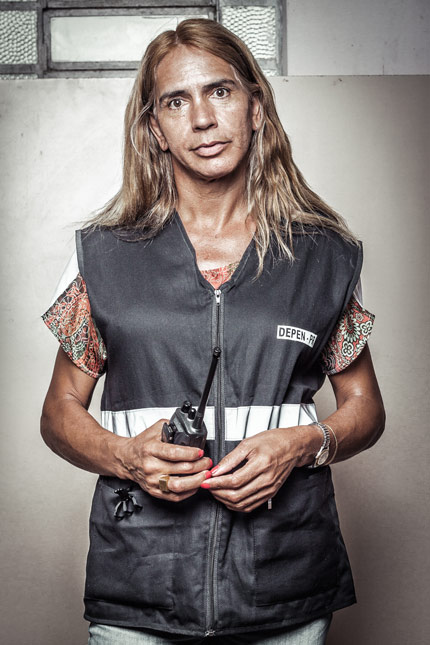
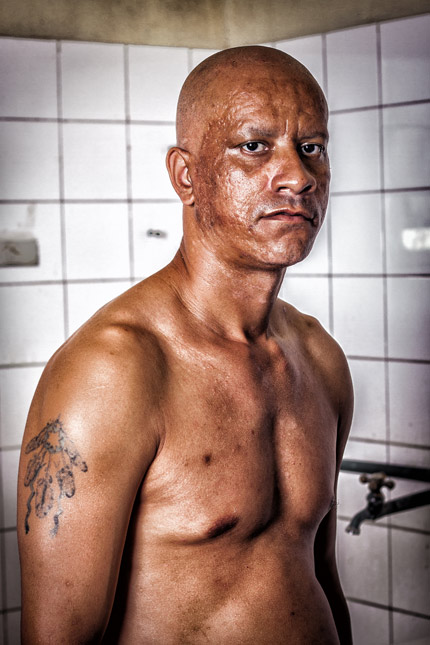
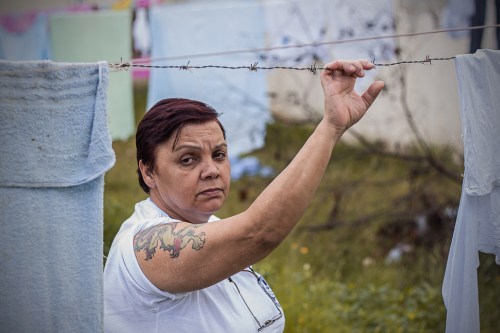
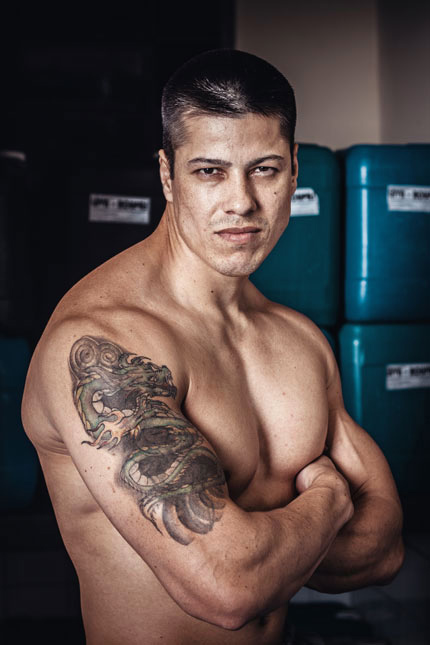
Photographer Milcho Pipin went into the Central Penitentiary of the State of Paraná, in Curitiba, Brazil. It’s a fairly sizable prison with nearly 1,500 prisoners.”Despite frequent overcrowding problems and precarious infrastructural condition, this penitentiary is by no means the worst in Brazil,” says Pipin.
From within this tough institution, Pipin wanted primarily to “capture expressions of male and female prisoners and to understand and share their feelings,” he says.
In collaboration with Dr. Maurício Stegemann Dieter, a criminology specialist, Pipin produced the series Locked Up. Both answered a few short questions I had.
Scroll down for Q&A.
Q & A
Prison Photography (PP): Why did you want to photograph in Central Penitentiary of the State of Paraná?
Milcho Pipin (MP): It all started because of my father. He was a police inspector of foreign crime / border control in Macedonia for 30 years. He went through a lot of cases. His sense of comprehensibility to all social classes inspired me to photograph in prison.
PP: What are attitudes toward prisons and prisoners in Brazil?
Dr. Maurício Stegemann Dieter (MSD): Hostile and cynical.
PP: What do Brazilians think of incarceration in the U.S.?
MSD: Except for some researchers (criminology and criminal law professors, mostly), they don’t have a clue.
PP: What did the staff think of you and your camera?
MP: As the director of the prison informed us, it had been over 40 years since media had access inside, it was pretty shocking to me. That’s why when we entered, the staff was not really sure who we were, how we got there and what was our purpose being inside with a photo equipment.
I explained that there was nothing to do with any political purpose and that it was an artistic project only — to photograph the lives behind those concertina wires. Later, the staff mood changed and they were really helpful showing around the prison and introducing us to the prisoners.
PP: How long can babies stay with their mothers? Until what age?
MSD: From birth up to 6-months. After that, they meet daily for up to 4 hours.


PP: Of the 1480 prisoners, how many are men and how many are women?
Maurício Dieter (MD): 1116 men and 364 women, each in a separate penitentiary.
PP: What did the prisoners think about your photography?
MP: The first day was the hardest. We had a short briefing with the prisoners about the project and I felt their lack of interest as they were not yet sure that we were not there for political purpose.
I explained [to a large group] that the only thing I wanted to do was to take their portraits as they expressed their feelings, and then to show the outside world. Most of them left the briefing, just 7 or so stayed.
I showed my print portfolio to those who stayed and I heard one prisoner saying: “Oh good, ok, let’s do this!” As I started photographing one by one, they spread the news and the interest to have their photo taken became viral in the next days. Almost all of them were friendly with us, with a few exceptions.
PP: Did the prisoners see your photos and/or receive prints?
MP: They saw the photos on the camera display a few moments afterwards. I gave them my website link, so the family could see them online. I did promise prints though, and for sure they will soon receive them. There are still a lot of photos in a finalizing phase so I can start printing and delivering them with pleasure to all the prisoners that collaborated in this project.
PP: Milcho, how do you hope your photographs might alter attitudes?
MP: Hmm, through my photographs I hope people will be able to visualize, feel and understand that we are all at the risk of committing a crime, purposely or not, at any moment of our lives, and of being convicted and facing a sentence. That’s why we should appreciate our freedom, because it’s just one of those big things we usually don’t appreciate until we lose it.
We never know, our future is a dice.
FIN

BIOGRAPHY
Milcho Pipin was born in Bitola, Macedonia. Based in Curitiba, Brazil, Pipin started photography in 2001 as he journeyed across five continents. He focuses on editorial, commercial, documentary and fine art photography. Pipin is founder and creative director of VRV, international creative agency.
All images: Milcho Pipin, and used with permission. Use, manipulate or alteration of any photo without written permission of Milcho Pipin is prohibited.

FERGUSON
The unrest has abated in Ferguson. The quest for justice has not.
As I watched events unfold last month, I did not at any point feel I had something to add to the news coverage or commentary. I am still not convinced I do. That said, when the very soul of America is at stake, when the life of a young man has been taken, when the police turn up in military get-up, and when all this is being played out in front of the world’s media, I was aware questions needed to be asked of media-makers.
I take this opportunity not to make statements but to ask questions.
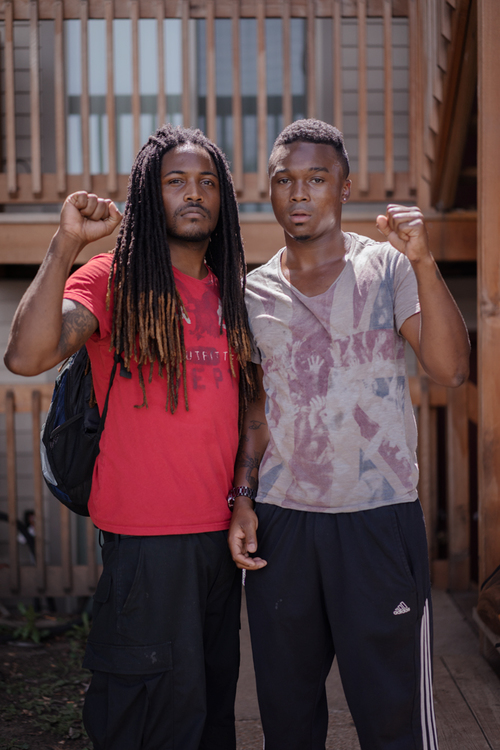
Barrett Emke, a young photographer from Kansas, was kind enough to share his photographs from Ferguson with me. He allowed me to make an edit. I publish them here alongside a short Q&A.
These are questions I’m just putting down in digital ink now, but probably come from weeks of thinking in circles. I was not brave or knowledgeable enough to write anything about Ferguson or its people when events were most immediate and raw; when people protested peacefully and faced off with law enforcement.
I want to start finding out about what photography did for the people of Ferguson and what it might do for them in the future. What might it do, or not do, for other communities wracked by racial inequities?
Barrett was in Ferguson August 19-21, I am penning this mid-September, but we know that from the tragedy of Michael Brown’s murder and from the town’s outrage must come long-term positive leaps forward; must come an accelerated and enlightened path to justice for us all as one.
Scroll down for the Q&A.
Q&A
Prison Photography (PP): Why did you go to Ferguson?
Barrett Emke (BE): I live in Kansas City, so the events in Ferguson definitely felt close to home. As a photographer and a person, I felt I had somewhat of a duty to go there and experience what was happening firsthand – this piece of history and injustice, and the community’s response.
I had to do something other than just watch what was happening on the news or read about it on the internet; maybe my photographs wouldn’t be seen by anyone or make any difference, but at least I would be there to document a piece of it.
PP: Did you know what you wanted to do beforehand?
BE: Not really. I just dove into the situation and worked intuitively, gauging the events as they came. From the first day I got there I had a rough idea that I wanted to make pictures of as many people as I could.
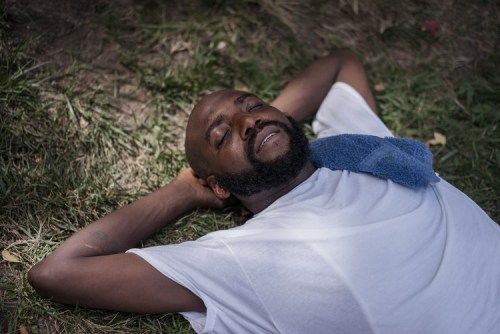

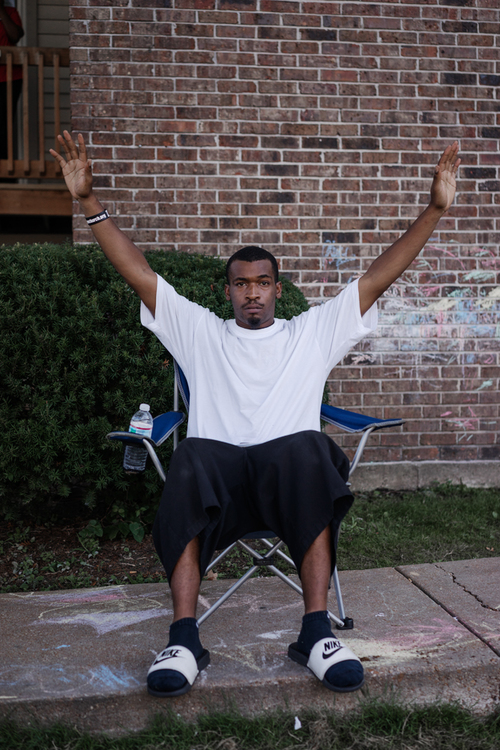
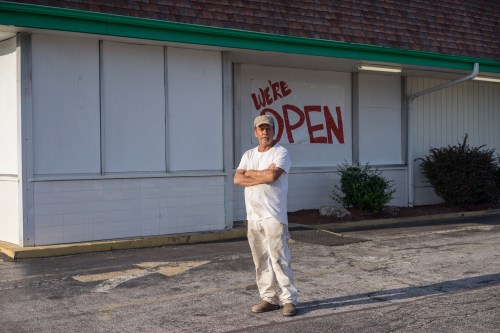
PP: What does it feel like to have tank in the street?
BE: It was a little overwhelming at first, but you acclimate quickly.
PP: On your website you’ve presented a wider edit with B&W images, pictures of law enforcement who are in action or stationary.
I’m not that interested in your distant (usually nighttime) images of cops. They seem to break up the warmth that maintains throughout the portraits of Ferguson residents. Does that make sense?
BE: I can see that. Obviously, the images of the militarized police, and the tear gassing, and all of that are everywhere now, and I knew that I wasn’t going to do that. But the images I did include I feel have their place in the sequence – I think of them more as portraits of the officers who were part of the situation as well.
PP: How did you feel when your were in Ferguson?
BE: Honestly, I felt human.
The people I interacted with and photographed were open, genuine, and earnest. Beyond the conflicts and the clashes between protestors and police, I definitely felt a strong sense of community and humanity present there, among those who lived in Ferguson and others who had traveled from elsewhere to be there.
PP: How do you think your feelings compare with residents?
BE: It’s hard to say. Many people who I spoke with and photographed were totally willing to engage with me – in times of crisis, that sort of social barrier kind of breaks down. At the same time, I definitely heard residents express their anger and a certain distrust toward the media, this sentiment that after the spectacle has ended, their lives in Ferguson go on.


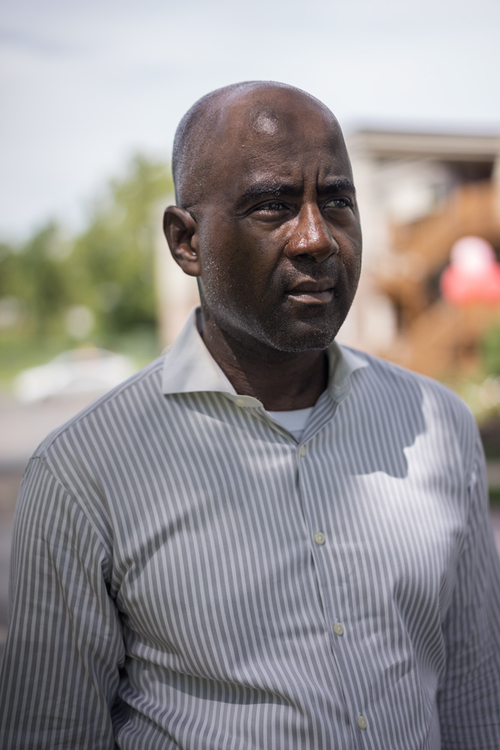
PP: What was the behavior of the media like in Ferguson?
BE: I think the presence of the media was essential, to record and broadcast what was happening. At the same time, it became a little gross to the see the camera crews flocking to and descending upon every little scrap of conflict each night, trying to get the scoop. It definitely seemed vulture-like at certain moments, and there were instances in which I felt like the media’s presence was exacerbating the situation.
There were times when interactions between protestors, police, and the media became problematic, with the media fanning the flames a bit. I’m not sure what the alternative would have been; if the media hadn’t been there reporting, would the militarized aggression of the police have only escalated? Would Michael Brown’s story and its larger implications have been told?
PP: How did people react to you photographing?
BE: Generally, people were receptive to me photographing. I tried to be as respectful and sensitive to the situation and individuals as possible.
PP: What did Ferguson residents think generally about the media and/or photographers?
BE: There was a certain ambivalence about the media that I picked up on. As I mentioned previously, I heard the sentiment echoed that once the media circus had skipped town, the residents still had to go on about their lives and their realities. But at the same time, I heard many people express that the situation would be worse between protestors and the police if the media wasn’t there to report on what was happening, and to check that militarized aggression.


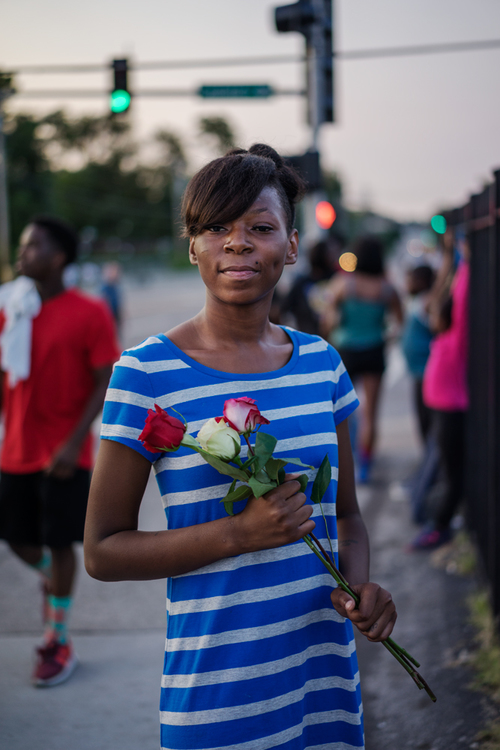
PP: What was the overall sentiment of the people you photographed?
BE: People were there on West Florissant in solidarity and were fed up with everything that had led to this point. Those I photographed were resolute in their anger and sought justice for Michael Brown, meaning the indictment of Darren Wilson and a major shift in policy, representation, and attitudes going forward. What I heard echoed again and again from people was that this situation wasn’t just about race, it was also a human thing. Beyond that, I perceived an overwhelming amount of positivity and hope from the individuals I met.
PP: Did this sentiment match that of the media generally?
BE: As in, did the media share the same drive for justice as the residents and protestors? I’m not sure, but I would say that they seemed to be there to do their job, which was reporting.
PP: Is America a racist country? I’m not being incendiary here; it actually seems like a fair question if we consider this excerpt from this New Yorker piece The Color of Justice:
Whites support tougher criminal laws at least partly because they overestimate black and Hispanic crime rates. Blacks and Hispanics do commit certain crimes more frequently, per capita, than whites, but not all. But whites consistently overestimate the difference, according to one study, by as much as twenty to thirty per cent. That perception affects attitudes toward offenders and sentencing. Studies show that the more whites attribute higher crime rates to blacks and Hispanics, the more likely they are to support harsh criminal laws. It is less that they are consciously seeking to subordinate racial minorities than that they fail to treat the negative consequences of high incarceration rates as their problem. As the report explains, “attributing crime to racial minorities limits empathy toward offenders and encourages retribution.”
This is a damning indictment. If anyone were to admit that they preferred the death penalty, life without parole, or harsh sentences because they believe the perpetrators of violent crimes are more likely to be black or Hispanic, we would immediately condemn them as the worst sort of racist. If a prosecutor, judge, or juror expressed such a sentiment, any resulting conviction or sentence would be swiftly overturned. No one admits that they feel this way, but the studies recounted by the Sentencing Project suggest that this is precisely what many white Americans feel.
BE: America is a racist country, with its long and complicated history of prejudice that it still cannot shake.
Racism in the United States is deeply entrenched and systemic, even today, as we’ve seen. As a white person, I have tried to be consistently aware of my privilege and the way racism can be internalized by someone who would never consider herself or himself “racist.” It is a process of learning and unlearning that I still grapple with. One can always do better, listen more. It is not enough to simply not be racist; one must be anti-racist.
When a person of color in America can’t be certain that she or he won’t be shot and killed during a routine encounter with police, or a total stranger, something is utterly, intrinsically wrong. I believe it is the duty of those who benefit from white privilege, male privilege, heteronormative privilege, to fight alongside those who are disenfranchised under the law and throughout society.

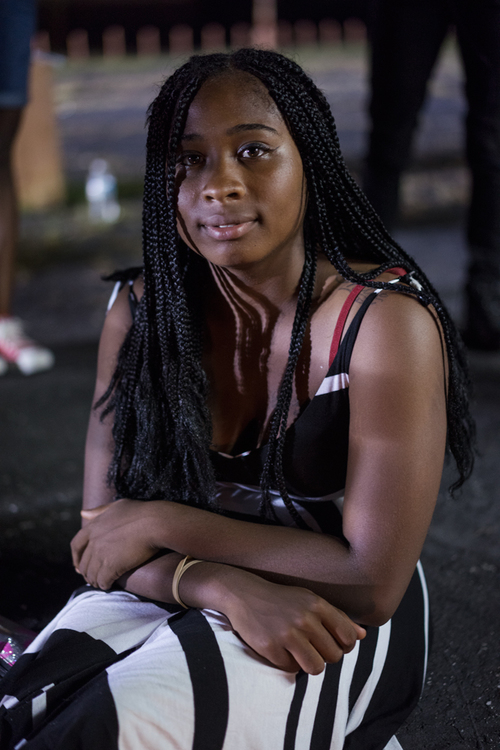

PP: What did photography achieve during August for the messages coming out of Ferguson?
BE: I’ve seen an abundance of profound, earth shattering photographs come out of the events of Ferguson. I believe these photographs have been successful in demonstrating to the world what was unfolding and to preserve these moments as historical documents.
PP: Do photographers need to stay in, or return to, Ferguson soon? And/or often?
BE: Speaking for myself, I don’t feel like my work was simply done when I returned home. A situation like this is ongoing. Nothing is solved. There is still more work to be done, and I would like to return to make more photographs.
PP: Do you think that’s going to happen?
BE: I believe that to be committed and thorough in a situation like this, it has to be longterm.
PP: Thanks Barrett.
BE: Thank you, Pete.


PREAMBLE
Prisons are but one step in the criminal justice machine. After the division and disciplining brought by a society of economic inequality, the next most abrupt interaction for U.S. citizens with state structures is likely to be that with police and other law enforcement officials. In 2012, just shy of 12,200,000 arrests were made nationwide.
That’s one arrest every 2 seconds. Arrests for marijuana-related offenses alone occurred at a rate of one every 42 seconds.
These figures does not include traffic citations.
At any given time, there are nearly 7 million American’s under correctional supervision — roughly about 2.3 million in prisons or jails and 4.6 million on probation or parole. In any given year 13 million individuals will be locked up for a given period.
Given that police are the sharp end of many of these fractious interactions, it makes sense for us to look at a body of work that focuses deeply on a single city’s police force.
Between 2003 and 2011, Matt Gunther was — on and off — effectively embedded with the Newark Police Department in New Jersey. Gunther’s resulting book Probable Cause (Schilt Publishing, 2014) is one of the most rounded, smartly edited bodies of work on police work I’ve encountered. It is, remarkably, sympathetic to all involved. The police and citizens (particularly those photographed in the precinct) are dealt an equal hand. Within its pages, the drudgery of employment meets the complex issues of social order.
You can see a 15 page preview of Probable Cause here.
Matthew Gunther and I chat about fear, persistence, allegiances, the inside-view, where a book comes from, and boozing with cops before a vice squad bust. Scroll down for our conversation.

The following Q&A has been edited from a longer conversation.
Q & A
Prison Photography (PP): You worked in Newark a long time. Did you always intend it to be a book or did that emerge as you worked?
Matthew Gunther (MG): My issue as a person or as a photographer is that I would not go the whole-nine-yards on a project. I’d get very deep into any project and then it would peter out. This project on Newark was on the verge of petering out many times — it was such an endless pit of imagery and I just couldn’t let go. Until this day, I could still be shooting. Joshua Lutz told me to stop shooting, to edit my images and that I had a book.
So, I did not know it was to be a book. I just started this project. It was cathartic. My projects tackle my fears, or dive into my loves.
PP: Newark is known for it’s toughness and it’s poverty. How did you come to be working so intimately with the police force?
MG: I was taking an ex-girlfriend to Newark airport and we got lost. I’m a native New Yorker, and instantly fell in love with this city so close to my hometown.
I would take my 35mm camera and spend days walking through Newark and still it took me probably about six months to figure out. It’s a pretty tough city. New York is not that tough anymore. Newark feels like New York may have done in the eighties, perhaps. I wanted to do something that is constant in this metropolitan area: cops and liquor stores.
Each project that I’ve done before or since Newark was always to tackle my fears. I grew up in New York as sort of an art-jock with other jocks and street kids, skateboarders and graffiti artists. I had the artistic gift but I didn’t have the strength to show my artistic skills against these tough kids and I guess as soon as I became an adult I was always trying to go back to that place.
Access? I almost hate to say it. My mother was the Head of the Democratic Club of the West Side of New York and I called her up and asked how I’d get into access to the cops. She gave me the number of a retired police captain in Florida. My mom is a waddling, older Jewish woman who knows everyone on the street. My father as well. Born and raised here. The captain in Florida gave me the name of the captain over at the Newark Police Department. It was 8 months of getting denied and constantly sending repeated proposals.
Then, one day out of the blue, I got a phone call, “Matt, you are accepted. What do you want to do?”

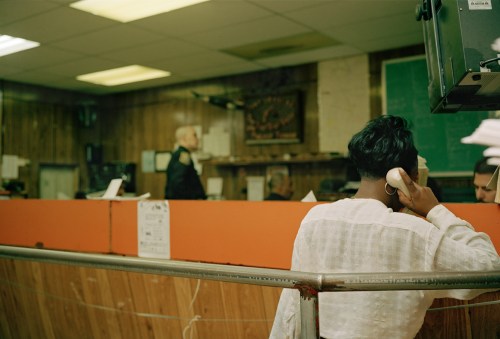
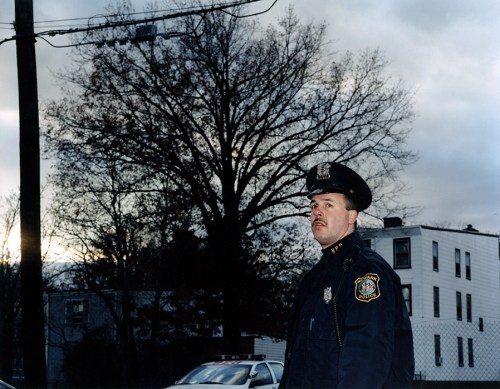
PP: It seems like you almost become an artist in residence? The door had been open by this higher official.
MG: You could say that. In the beginning, I had to tell the NPD that I wasn’t going to sell pictures to a magazine. It was strictly an art project and if it became something else I had to tell them. I was happy to promise that as I had no idea where the project might go.
I just wanted to shoot. I didn’t go looking for funding money. I’m dyslexic and so it’s hard for me to write proposals. Even to write a simple proposal takes me a while, but put a camera in my hand and I’m okay. But I wrote a proposal for the project. They didn’t really care if it was an art or not. They just didn’t want me to sue them if I got killed. I was happy to sign away.

MG: Newark is a special place. It was truly like the wild west. Back then, it didn’t look like 2003; it looks like ’91 or ’89. It feels like there’s a gap of about 15 years between big brother New York and this, the biggest city [in the region] outside of New York which is only half-an-hour away. I was always a big Sidney Lumet fan. And films like Siegel’s The French Connection and Friedkin’s Dirty Harry. Newark brought back that sort of aesthetic sensibility.
By deciding to shoot with a large format 8×10 camera I decided I was okay to miss images. It was my way of slowing down and trying to control some of my reality. I constantly moved and I did shoot some images on a Fuji 6×9.
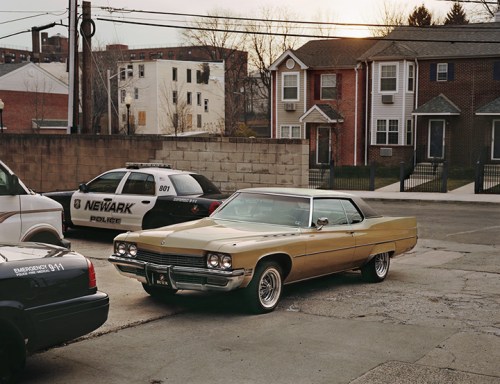

PP: What reactions did you get from the police officers?
MG: The older cops loved it. Once they knew I wasn’t a reporter and that I wasn’t out to exploit them, I became a fly on the wall. Even with the 8×10 camera! The older guys loved the big camera. They loved history and they ate it up. The younger cops couldn’t care less. They just wanted me to stay out of their way. I had freedom and rarely did I get bothered. Even the non-cops seemed not to worry.
PP: I suppose they had other things to worry about?
MG: Often. There were girls doing tricks in the back of a Portuguese restaurant. I spent time with them. Then when I came out with my camera, I turned it on a girl who was in a towncar for a good 45 minutes. Just waiting on her friend. She was scared to come out because she was scared that the cops would arrest her.
PP: When you were out on the street, were you traveling with police officers and then exiting the vehicle with your camera equipment to begin shooting? Did people on the street see you arrive with the officers?
MG: I was doing drive alongs. With my 8 x 10 I wanted to set up like old imaging and see what I could get. A lot of my enjoyment was in not taking the photograph. I’ve always enjoyed these types of projects as much as I do taking the photograph. But, I just would tell them what I want to do and if they said move along I’m moving along. Maybe with my 35mm I’d be a little more aggressive.
PP: But was there a reaction from people on the streets shaped by the fact you were with police officers?
MG: There were moments where I was definitely one of the cops … even though I didn’t look like it. I looked like a photographer.
There were times that I would take my camera into Newark gentlemen’s clubs and there were all these gang-members. The cops were vicious at some moments; it felt like Hollywood to them sometimes. And, there were moments on the street when kids wanted their pictures taken.
There were tense moments on the streets when civilians felt vulnerable but I felt I needed to get that image. I often felt really bad and grappled with those moments for many days. I was justified as an artist; I had to get these images.

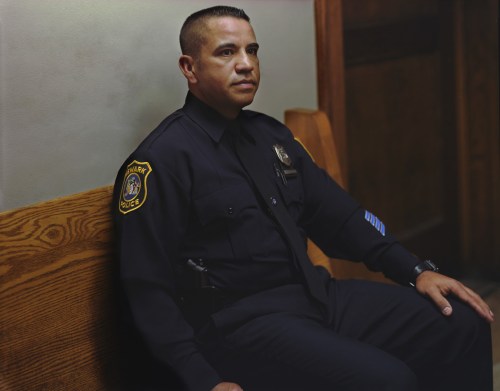
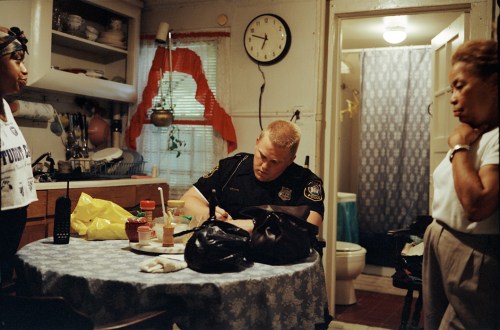
MG: You know, I was a street kid and I got into many fights, but I also grew up white in Manhattan. The privileges I had. No matter how bad it was, if you come from a white educated family…
But, it’s not an even-playing field. I always had to deal with that. In Newark, cops are on one side and they took full advantage of it. Once the vice squad came out and busted these women doing tricks. Beforehand, the cops were drinking while we ate at a Portuguese restaurant right by the headquarters. We were drinking beers and doing shots and I remember saying, “Is this okay? That we’re going out there?”
“We’re doing whatever we want. I’m the captain of the vice squad,” was the attitude.
That wouldn’t have happened in the New York Police Department, there’s way too much bureaucracy there.

PP: Some of your night time group shots (below) look like Rembrandt paintings. Two or three sets of eyeballs looking at you as the photographer. The composition of the group. The lighting.
MG: When the cops do these weekend sweeps, you have this vice squad and you have a truckload of cops — about 6 cars full of cops. Every weekend. This is where the cat-and-mouse comes in between cops and perps. This caravan would come through all the neighborhoods that they knew had some issues or drugs problems; the same exact neighborhoods. This, basically, went on every Friday at 12 o’clock.
The kids at the school yard knew exactly what was coming, and you can just see they’re exhausted from it. If it happened to me as a kid, we’d have a politician at them, or someone would be getting into a fight with the cop with, ‘How dare you stop our night.’
The looks on especially the two kids sitting in their white T-shirts, that’s how I sort of felt shooting. Those are the moments when I truly grappled with what I was doing there, and where I almost had the same sense they had to the cops — that it’s just too much.


PP: Tell us mores about Joshua Lutz’s encouragement?
MG: When I first met Josh the project needed polishing. I’d have let it peter out. Even so, I would still constantly show friends and mentors the work. They all said I had something great and those comments just kept on pushing me back to work. Lutz said all I needed to do was fill in some holes.
I liked Josh’s sensibility. He was getting into publishing and we understood New Jersey. We knew the printer had to be right. Through Dutch publisher Schilt in Amsterdam, we found a printer in Germany and we let the German’s do what they do so well.
PP: When I saw the post-industrial landscapes in Probable Cause I immediately thought of Lutz’s Meadowlands.
MG: Originally, I wanted to document the sense of place in Newark. Later, I fell in love with the cops and how they looked. I started asking them to join me outside and then I developed toward shooting landscapes so it had so many different branches.
Maybe, the 4×5 and the 6×9 sort of helped me live on in this project longer. Does that make sense? How do all these wires connect? How does this urban existence work? Can you feel the hum of it all? Might it explode at any point?

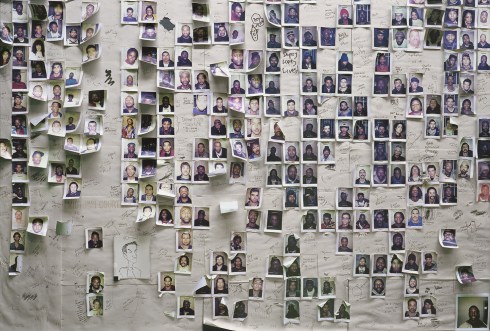
PP: There’s a constant precariousness to the work. There’s homage to labor, but it’s not “pure.” The work is very deliberate but it’s also uncomfortable because of your obvious privilege to be in that space. This fact is underlined when we see a photograph of a cop with a camera taking a picture of an arrested individual.
On the inside covers, front and back, there are walls of Polaroids of suspects.
MG: Matthew Sharpe talks about them very well in his introductory essay. He asks, ‘Can you tell the difference between the cops and the suspects?’
PP: There’s a very honest presence of photography and it’s many uses — it’s both art and it’s also an apparatus of power and control and policing. I think this is one of the successes of the book.
MG: I had probably over 300 negatives of large format images. Josh and I edited to a hundred pages. It was difficult.
PP: I also wanted to ask about the cover picture. It is a very different picture to all of the photographs within.
MG: I kept coming back to the image on the front of one of the editions of Truman Capote’s book, In Cold Blood. I could not get it out of my head that I needed a sky image. I needed clouds.
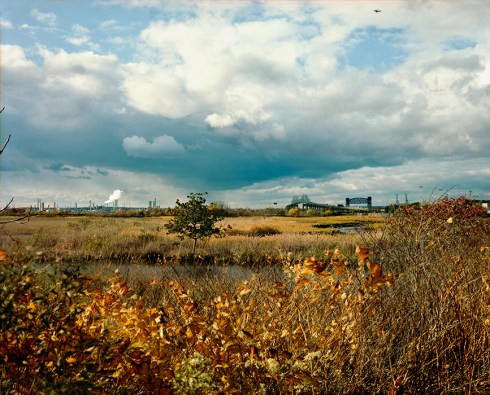
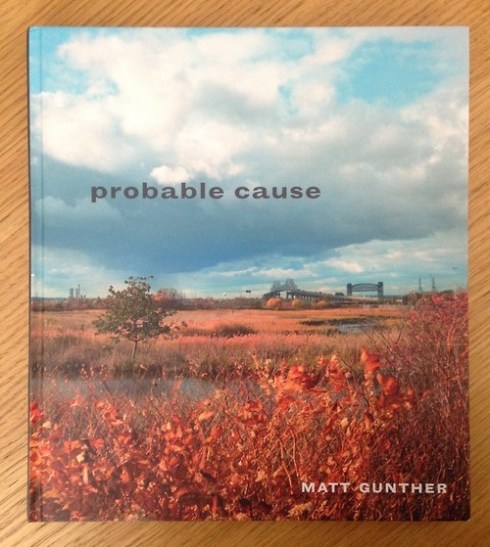
MG: I needed something that had some significance about the formation of society, or this world, or the wasteland that Newark is, or New Jersey. The cover is a shot of a beautiful sky above beautiful wetlands but it is also a site where the cops found a body.
Joel Sternfeld did Haunting Grounds, a book on hate and environmental crimes.
PP: A very powerful juxtaposition of seemingly innocuous scenes and horrifying back-stories.
MG: And that’s how I felt the book should be. At one point, it was just going to be Newark but then it became something more. The landscapes made it something more.


PP: Can you talk about the attitudes in Newark and New Jersey toward crime. What were the relationships between the police force and citizens like? What’s the background — learned from your photographing for almost a decade — that we should know?
MG: Newark is predominantly African American and there is a large portion of Portuguese. Then there’s Ironbound which can be a little more blue collar but it’s predominantly poor African Americans.
The Newark PD is one of the largest police forces, and in 2001, I think, it was 50% African American police. Now I think that it is 70% African-American. It’s a huge difference to go out with an all-white force compared to an all-black force — from the way people on the streets react which is, you know, it’s hard when you’re coming there with guns, badges and uniforms but it helps to be part of the same group. Things just get calmer. When you have a mix it tends to break down racial tensions. That’s where it has changed in a good way.
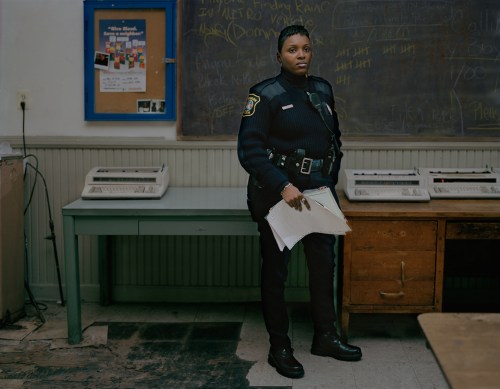


PP: Your work, as foolish as it sounds, runs counter to easy conclusions. There’s cops and suspects; there’s all races; there’s Muslim cops and female cops; there’s chiefs and beat cops too. Policing is made of all stripes.
MG: I didn’t want to lose that fairness to both cop and non-cop. I truly feel romance about the images. I wanted to show a fair balance. This is how cities work and the people among them. I’m not trying to sway public opinion.
In a narcissistic way, it has been a cathartic trip.
PP: Because it was about you entering an “alien” world?
MG: Everyone’s just trying to get their job done in this capitalist system in which it’s hard to get ahead. The cop and the perp are on the same track, but there’s a moment some go one way and others the other way. I felt for both parties. They’re stuck. At 17-years-old, the options are pretty much there for cop and for criminal. It’s about fear, overtime and getting in your years. The cop has his cycle, the robber theirs. They both have their routines. It’s the balance of urban play. Social infrastructure plays its part in shaping these groups’ lives.
In Newark, as a cop, it’s 25 years in a tough environment. It’s not easy. They’re working on a word processor in 2003!?
PP: Did you get over your fear?
MG: No. But I came a long way. I’m excited to do another project like it. In some ways, I hate that it is a book, because it suggests, it feels, like it’s over.
PP: If it is, it’s a significant and successful end. Truly, it is one of my favourite photobooks of recent years. Thanks, Matthew.
MG: Thank you, Pete.

BIOGRAPHY
Matt Gunther, a native new Yorker, is a film-maker and photographer who has been documenting a sense of place and moments of time throughout his career. His portraits endeavor to uncover and expose the vulnerability and compassion- the core of his subjects. Matt received his Bachelor’s in Fine Arts from SUNY Purchase. Matt’s work has been featured in numerous international and national publications, Including The New York Times Magazine, Newsweek, London Sunday Times and Gentlemen’s Quarterly. His work has been awarded and written about in American Photography, PDN, and Communication Arts among others. Matt’s work is in the permanent collection of the Brooklyn Museum and The Palais De Toyko in Paris. He is currently working on his first Monograph, Probable Cause, documenting daily life in Newark New Jersey, which will be published in the fall of 2012.
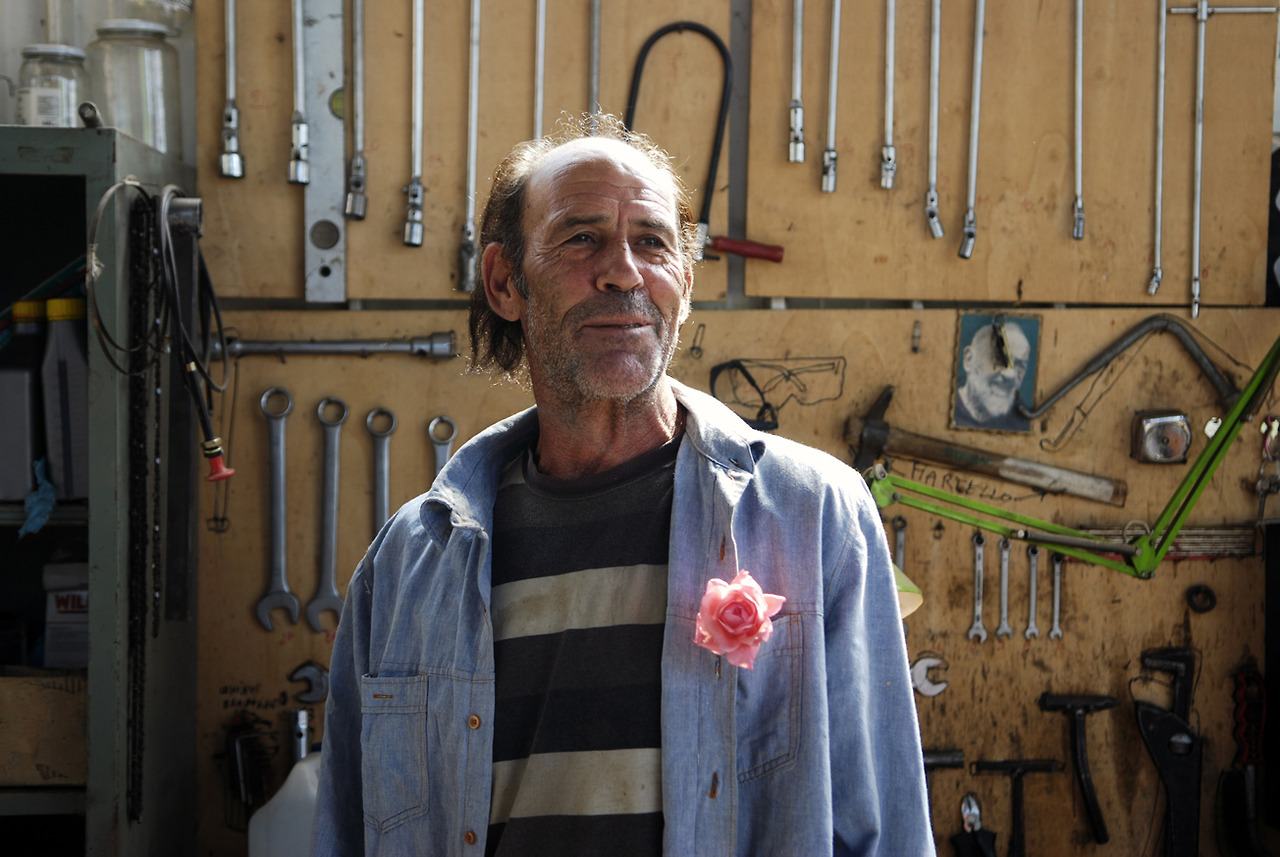
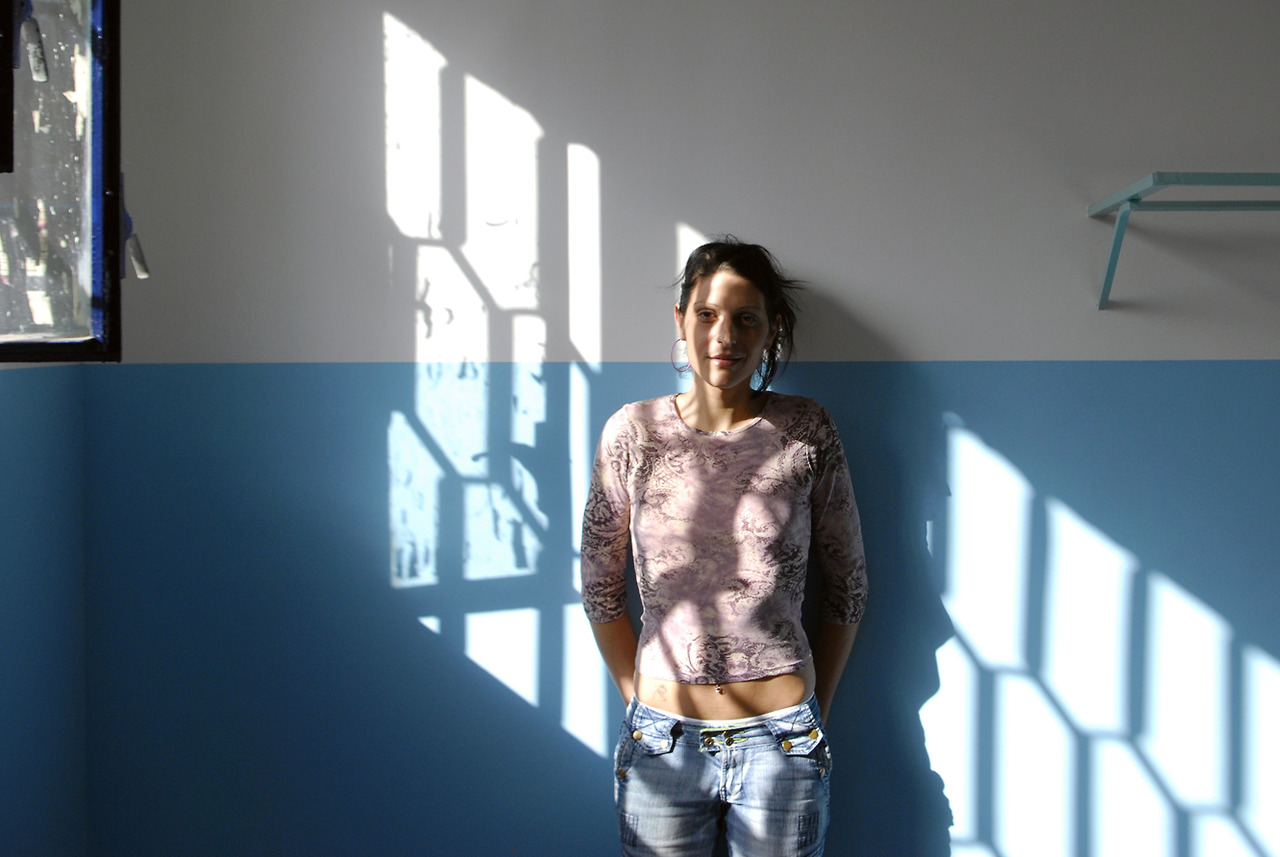
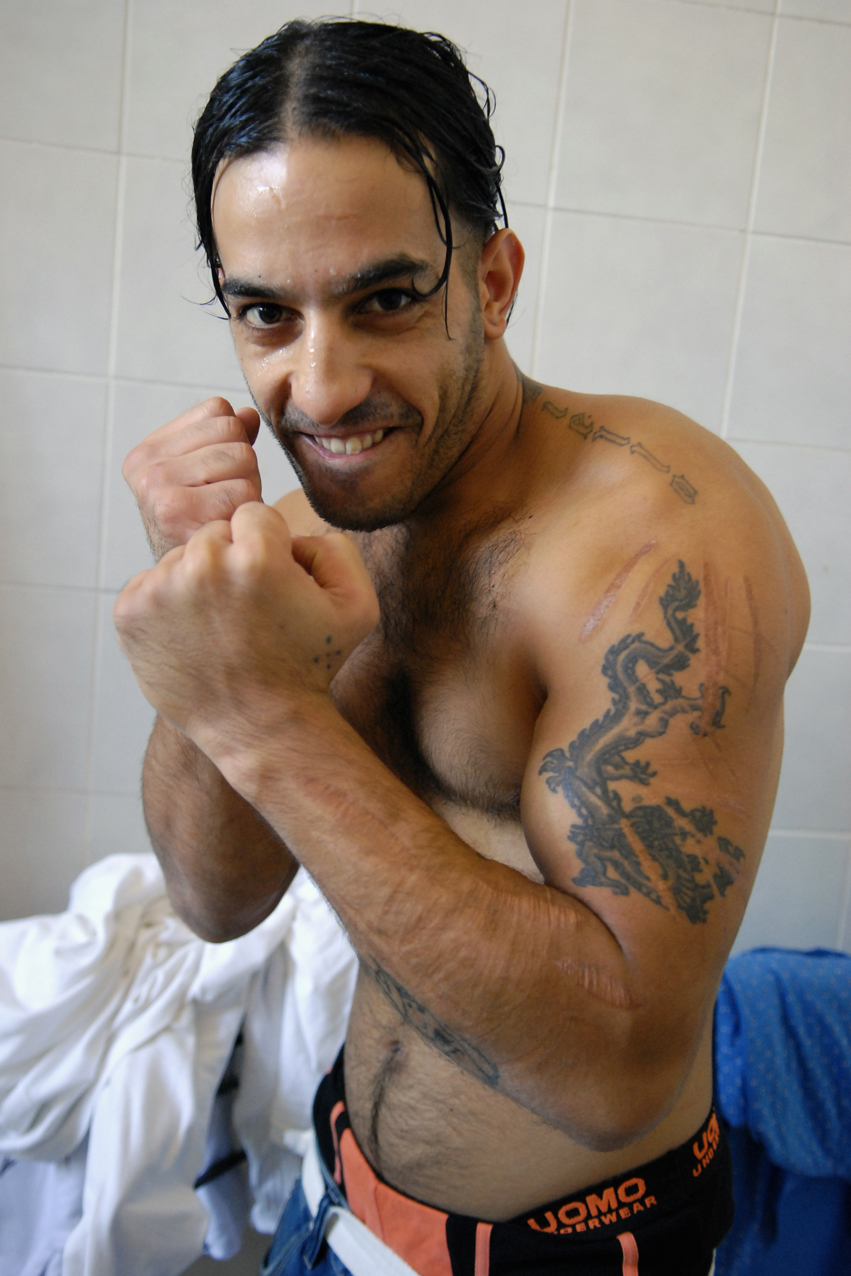
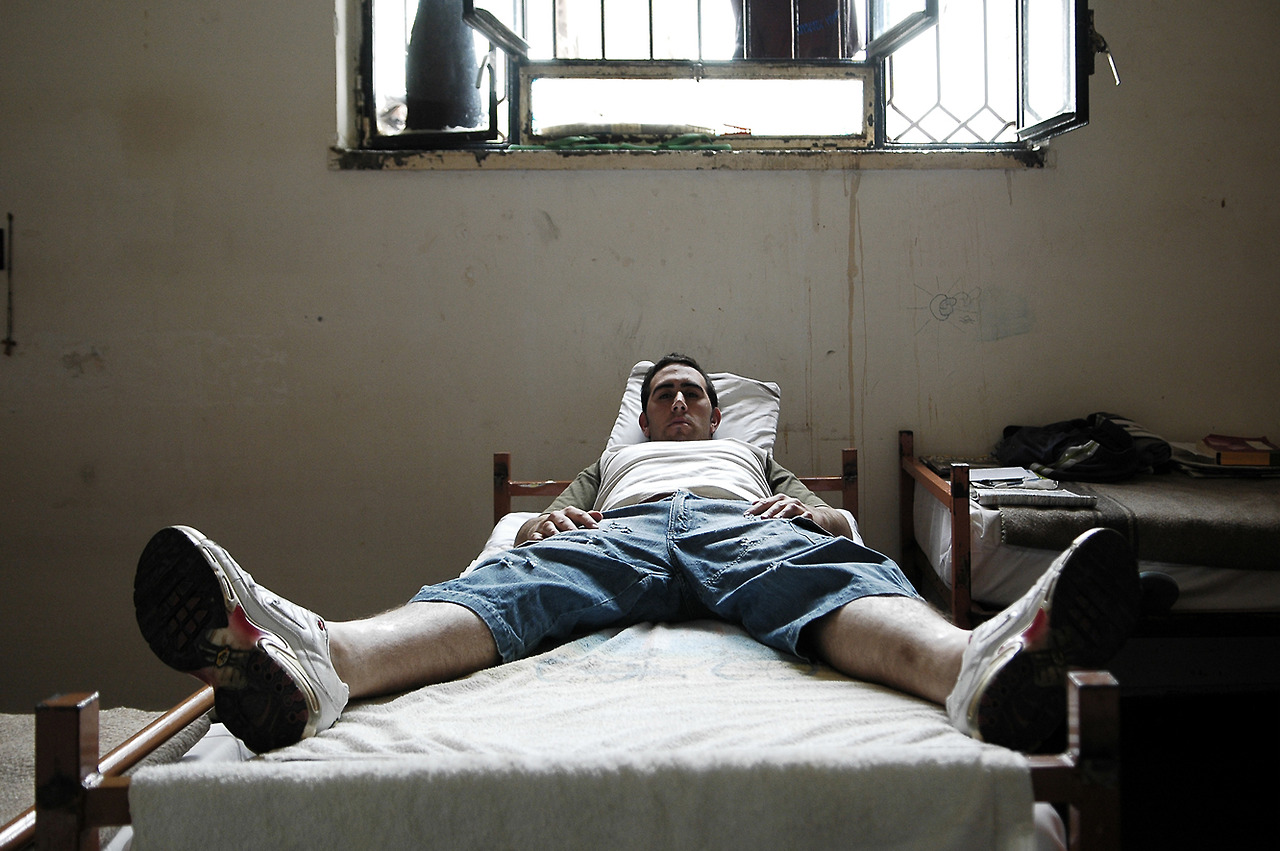
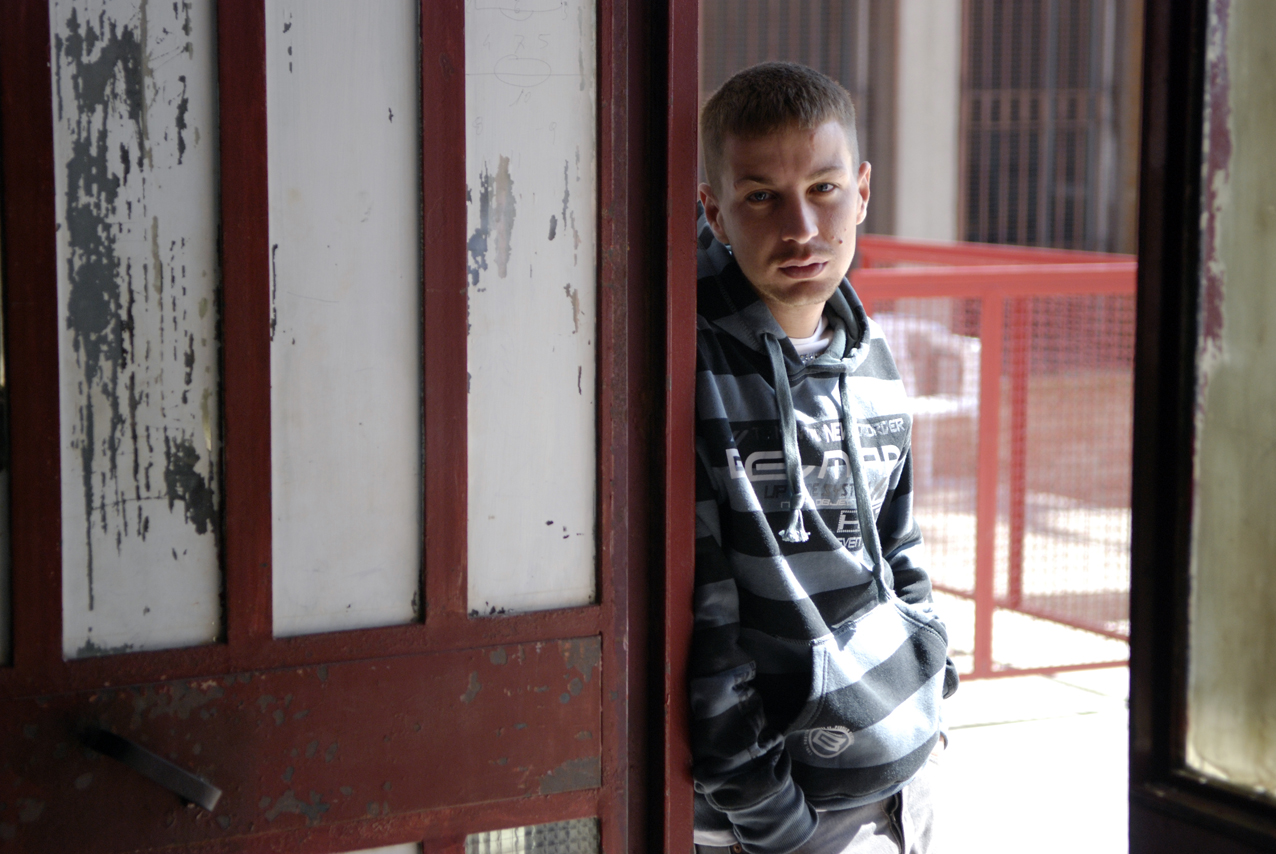
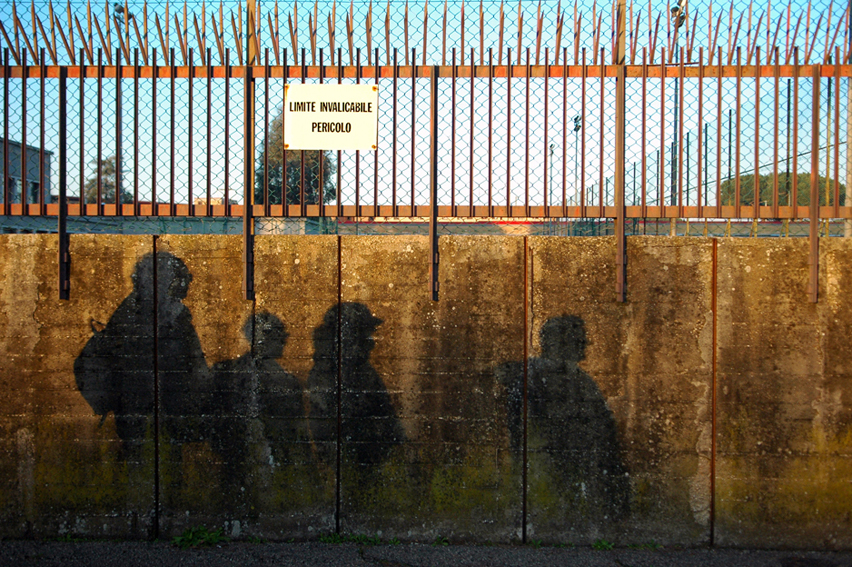
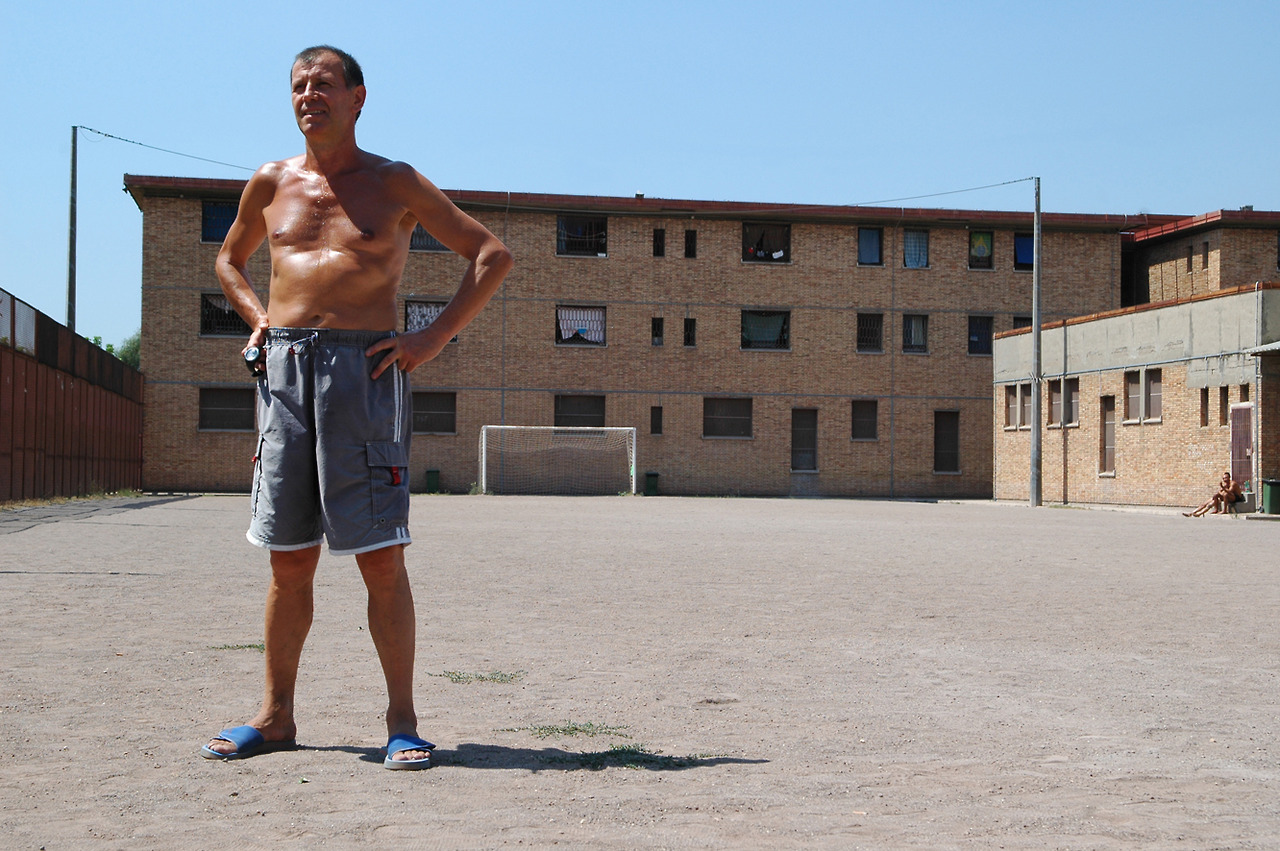
Over a period of three months, Italian photographer Gaetano Pezzella (Flickr) went inside of Rome’s infamous Rebibbia Prison and made portraits unlike portraiture those we are accustomed to seeing. With bright colors, strong graphic considerations, stark light, diverse posture and proximity it ends up a mixed bag. Some images look lije magazine head shots, others fashion shoots. Some are soft of the moment and momentous, but others are less precious. All-in-all its intriguing.
Recently, Pezzella put out a 144-page book of the work which includes 150 color images accompanied by ten stories by five writers, Pezzella penned two of the stories. The series and the book are titled Hotel Rebibbia. I wanted to know more about Pezzella’s approach so we had a conversation. Before we get into the Q&A though, a little background on Rebibbia Prison.
CONTEXT
Rebibbia prison is actually four facilities (3 mens, 1 womens) and it is one of Italy’s biggest prison complexes. Rebibbia has been in the news recently as a site of colourful protest, designer-clock and haute couture manufacture. Compared to other prisons, Rebibbia has a fair number of programs for prisoner education, rehabilitation and jobs training. It also boasts a thriving drama program lead by theater director Fabio Cavalli which spurred the part drama/part documentary hit movie Caesar Must Die (2012). As far as photography goes, Luca Ferrari has shot in the mens prisons and Melania Comoretto has shot in the women’s prison.
Scroll down for the Q&A.
Q&A
Prison Photography (PP): Tell us about Hotel Rebibbia.
Gaetano Pezzella (GP): Initially, I wanted to dedicate myself exclusively to the places, objects and symbols of the everyday life in a cell. I absolutely did not want to photograph people, especially their hands and arms through the bars and cliches like that. But from the beginning, being emotionally and physically involved with the prisoners, the work took different paths.
PP: Who are the prisoners in ‘Hotel Rebibbia’?
GP: The detainees are mainly common prisoners, who are serving sentences for crimes administrative and criminal. From possession and dealing of drugs, robbery and murder, conspiracy offenses, mafia and terrorism, up to crimes of a sexual nature, pedophilia, rape.
PP: Who is the audience for the work?
GP: The target audience is primarily institutional. From the judiciary to the Ministry of Justice. But it is also relevant to the world of voluntary associations, and I hope, political groups also. At the moment, there is a political current that is very sensitive to prison issues. Of course, we hope that the book is read by civil society to it may bring prisons issue to the a wider audience.
PP: What are you trying to say with the work?
GP: It was my intention to be delicate and light, and allow images to leave the humanity of those detained in place. [To show] their joy, their desire to live, their need to play, whatever their existential condition. To show them as human beings and not prisoners.
PP: Why is that necessary?
GP: Literature and photography on prisons are full of crude and violent images, which too often lead the observer to judge. People conclude that barbarous institutions are acceptable. Some people believes the prison to be today a kind of holiday and wish for tougher penalties. Hence the ironic title “Hotel Rebibbia.”
PP: How did you get access to into Rebibbia?
GP: The bureaucratic process was quite simple. I presented the project to the prison director who accepted it and then the prison’s secretariat forwarded my application to the Ministry of Justice for approval. Unfortunately, a few months ago, a new law passed which which greatly limits the possibility to make reportage inside Italy’s prisons.
PP: What is the reputation of Rebibbia among people in Italy, and people in Rome?
GP: There’s a large part of the population, in Italy as in Rome, that would like prisons and penalties tougher. Rebibbia prison is, along with a few others in Italy, relatively modern in the sense that prisoners participate in treatment programs. There are theater, music, handicrafts and workplace specialization programs.
The crisis of the Italian prison system is its overcrowding. The prison population is over 65,000, but it is only designed to hold 35,000. From this statistic, we can appreciate the state of abandonment and deterioration of prisons in Italy. Being one of the largest prisons in Italy, Rebibbia suffers all problems associated with overcrowding.
When the problem is pointed out to Italians, the prison problem is often met with annoyance and suspicion — as something to be kept as far as possible. Marginalize it, denying the reality of the problem. The prison is seen as a foreign body to society. Even those who work in these facilities, educators, doctors, psychologists, employees, are viewed with skepticism and detachment, if not perceived, as second-class workers.
Added to this, there is also a large part of political activity which focuses on the security of the citizens. This electoral program has instilling uncertainty and fear in peoples’ minds, and that has translated as a tightening of the penalties which have filled the places of detention.




PP: What did the prisoners think of you photographing inside?
I started photographing inside the sex offender ward which is isolated from other prisoners. They have little chance to make treatment programs [in other areas of the prison] so they were very excited to have the opportunity for any type of exchange with the outside world.
The sex offender ward was also my testing ground. Overcoming the difficulties of making a professional but friendly relationship there helped me, later, do my job inside other parts of the prison.
My plan to make pictures of the interior of the cells, soon proved impossible due to the positive involvement of prisoners. Every time I entered in cells or common areas, it became a kind of collective game. I did not have to work hard to be able to make photos. To the contrary.
PP: Did you give the prisoners prints?
GP: Yes, of course. The same prisoners asked me to make pictures to give to their loved ones. It was part of our collective game.
PP: What did the staff think of your work?
GP: I have to say that the entire staff, including the prison guards, were discrete and collaborative making it easier for me to do my work.
PP: You’ve worked in other prisons. Do you like working in prisons?
GP: After working in Rebibbia, I made reportage in Sardinia’s penal colony ‘Mamone.’ I am currently working, along with another photographer, on a project in the women’s prison in Rome.
Work in prisons has always been something special. The first time I entered a prison with a camera, I realized that I had much to learn. Initially, I believed that human relations could be, in some way, influenced by environment. Here I was, a free man, dealing with persons deprived of liberty. This could create, so I thought, a detachment. But I was wrong. We were equal. I do not care about knowing what sins they’ve committed; I’m not a judge, and I was not there for that. I just want to show to those outside that inside the prison there are people who live their lives despite it all.

PP: Some of the portraits look like fashion shoots. Did you direct the subjects in their poses?
GP: I started with taking souvenir photos for prisoners to give to their loved ones Then, I asked them to take pictures for me. So I directed them, a little, but never forced the situation. They were free to present themselves in a very natural way. I only chose the location, where it was possible, and the best light. Only in rare cases I used a flash.
PP: How does this prison work fit in with the other photography you make?
GP: I do not think there is differentiation. Of course, life in prison is very hard, especially on a psychological level, and therefore, the approach to this reality is different to photographing portraits of musicians. In prison, you are pressed for time and you have a responsibility to show a difficult reality. Prison photography requires greater discretion so as not to offend those who are forced to live in a place with no freedom.
PP: Do Italian tax-payers get there money’s worth from prisons? Do Italy’s prisons punish or rehabilitate?
GP: It is written in our constitution that the prison should not be a place of punishment but of rehabilitation. Unfortunately, it is not always true. Sure, compared to many years ago, things have improved.
Today, prisoners have access to a range of measures that lighten the weight of detention — such as improved access (depending on the conduct and length of sentence), discounts and alternative measures, day release, and the ability to conduct conversations with family members in picnic areas instead of in anonymous and gray visiting rooms.
Furthermore, social, educational and recreational activities are available. Unfortunately, due to overcrowding it is difficult to ensure to all have access to such activities. Still, in the consciousness of many, a prison is thought of merely as a place of social revenge.
PP: Thanks, Gaetano.
GP: Thank you, Pete.

 Prison Photography