
You are currently browsing the category archive for the ‘Prison Non-Photography’ category.
Last month, I mentioned Jane Evelyn Atwood’s TV interview and to Jane’s appeal in support of Gaile Owens‘. A campaign operated to have Gaile’s death sentence commuted to life imprisonment. Gaile will be eligible for parole in late 2011.
Jane contacted me this morning with this piece of good news. “Please be informed that Gaile Owen’s sentence has been commuted by the Governor of the State of Tennessee to a life sentence. She will no longer be executed on September 28. Thank you for your support, thank you for helping save Gaile Owen’s life.”
Why stop here? Please inform yourself and others about domestic violence and the violence it can engender.
Family Violence Prevention Fund www.endabuse.org
National Domestic Violence Hotline http://www.ndvh.org/
An Omar Broadway Film aired on HBO last month. Omar smuggled a video camera into Northern State Prison, New Jersey and documented for six months. The film was debuted at the 2008 Tribeca Film Festival.
There are many reasons I believe in prison reform, the wasted potential is one, the wasted dollars is an other, the systematic violence is the reason to which this film speaks. Shadow and Act review it here.
Below is a video interview with Douglas Tirola, one of the directors, about how the film got made.
Even prisons that incarcerate children are violent.
In the UK, following a five year legal battle families have successfully (under Freedom of Information Act) had released a document titled ‘Physical Control in Care’. It is a manual for private prisons, authorising staff to:
– “Use an inverted knuckle into the trainee’s sternum and drive inward and upward.”
– “Continue to carry alternate elbow strikes to the young person’s ribs until a release is achieved.”
– “Drive straight fingers into the young person’s face, and then quickly drive the straightened fingers of the same hand downwards into the young person’s groin area.”
Or in other words, authorised child abuse. (Story)
Last week, I sent this clip over to Brendan Seibel who knows a thing or two about punk, rock and Bay Area discontent.
In return, Brendan sent this clip describing it as “one of those what-the-f#@k moments when San Francisco was cool.”
Just thought you should know.

I’ve talked about biologist Nalini Nadkarni and the Sustainable Prisons Project in Washington State before here and here.
Well, Nadkarni is back at TED again, this time delivering a quick 6 minute piece on how the things we consider static – trees, perceptions, prejudices and the lives of prisoners – are all open to change … if we see the possibilities, if we allow the possibilities.
At times, Nadkarni’s implored arguments (about tree art) are a bit of a stretch, but ultimately I am focused only on the practical & repeatable efforts her team is making to engage the prison population – a population of whom most others have given up.

This is macabre. I doubt many conservators have dealt with the technical issues of this “print” medium.
Foto8: “The tattoo collection at the Department of Forensic Medicine at Jagiellonian University in Krakow, Poland consists of 60 objects preserved in formaldehyde […] The tattoos were collected from the prisoners of the nearby state penitentiary on Montelupich Street as well as from the deceased on whom autopsies were performed.”
The tattooed skin was preserved in order to decipher the codes within the images:
In the 1970s, the CSI Department of Militia Headquarters in Warsaw published a special document only for prosecution agencies in which they analysed 2300 tattoos, including those from the collection at Jagiellonian University. For over four years, the researchers looked at prisoners, soldiers and criminals who served sentences in Czechoslovakia, Yugoslavia, Germany and the USSR. A catalogue that precisely described the meanings behind certain tattoos was created.
It should be said, figuring out what messages are involved in prison tattoos is common across all nations, systems and eras. Although, this is the first collection I know of that separated the tattoos from corpses.

Kenneth Clarke, the combative old school Tory, who is Justice Minister in Cameron/Clegg’s new UK coalition government has outlined his plans for major prison reform in his first major speech since taking office.
(Before preceding any further, I should say that beyond all the UK news outlets you should always consult John Hirst‘s opinion at Jail House Lawyer blog as regards the politics of prisons and the perceptions of prisoners & crime in the UK. He’s a bit irreverent but he’ll deliver the silenced opinion.)
RADICAL, EH?
From the BBC: Justice Secretary plans ‘radical’ prison policy change
Of course, anything is radical compared to then justice minister, Michael Howard taking a head-up-his-own-ass approach and declaring in 1993 that “Prison’s work”. Let’s see if Clarke and the Tories can undo 17 years of disastrous policy, which it is fair to say Labour made their own during their time in government (1997-2010)
PHOTOGRAPHY
I’ve looked at photographic projects in the UK before, particularly at the work of Edmund Clark, Casey Orr, the iconic photography of Ged Murray and Don McPhee at Strangeways and even young offenders using Facebook from behind bars.
WRITING
For the best account of prisons during the past disastrous 20 years, read Sir David Ramsbotham’s Prisongate. Ramsbotham was the independently-appointed Chief Inspectorate of UK prisons (1995-2000). His findings were shocking and surprised many who were deep in the British culture of corrections. (Ramsbotham offers his opinion in the BBC piece linked to here.)

I just received an exquisite collection of prints by the Just Seeds Collective in celebration of Critical Resistance’s 10th anniversary (which was in 2008).
So stoked.


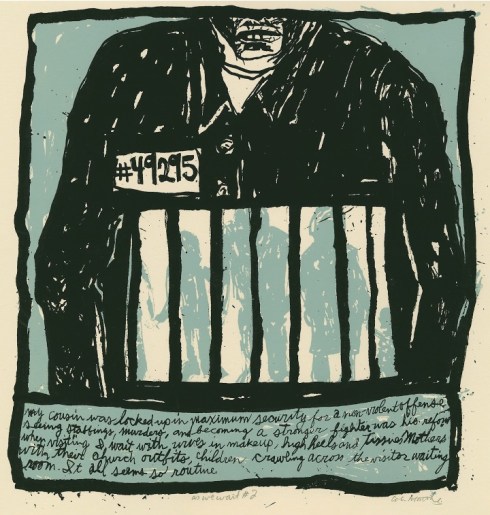
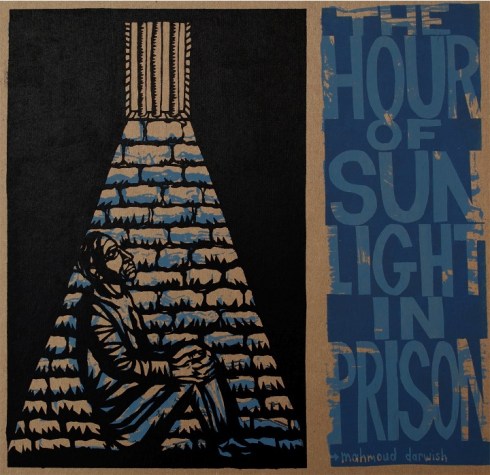
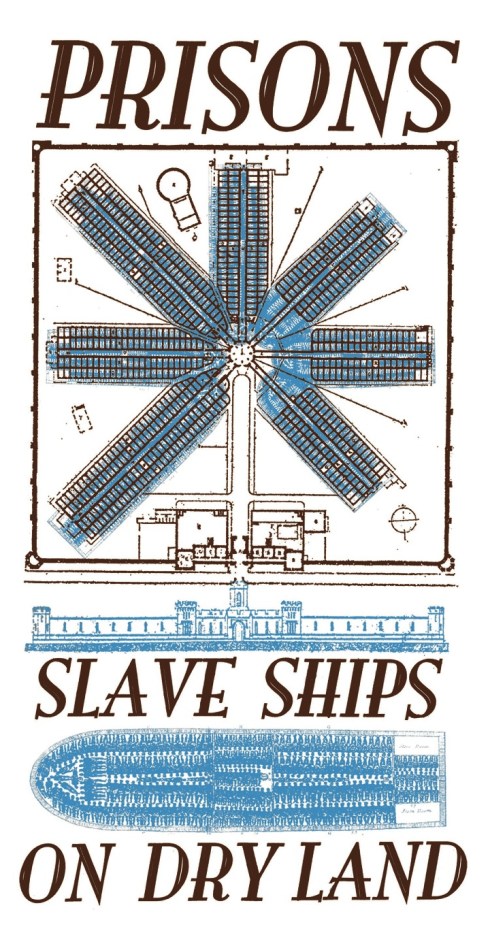
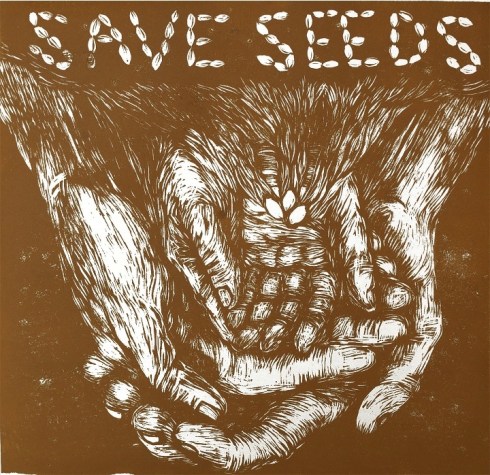
Artists (from top to bottom): Alec Icky Dunn; Lydia Crumbley; Jesse Purcell; Colin Matthes; Erik Ruin; Andalusia Knoll; and Meredith Stern.

 Prison Photography