
You are currently browsing the category archive for the ‘Visual Feeds’ category.
Lots of lists of photobooks cropping up for different reasons.
PHONAR
To close out the remarkable efforts of Jonathan Worth’s experimental open-sourced, web-based, free Photography and Narrative (#PHONAR) course offered through Coventry University, the #PHONAR course closed with a bevvy of recommended readings.
The following photographers, writers, teachers and journalists made picks:
Alec Soth; Andy Adams; Cory Doctorow; Daniel Meadows; David Campbell; Edmund Clark; Fred Ritchin; Geoff Dyer; Gilles Peress; Grant Scott; Harry Hardie; Jeff Brouws; Joel Meyerowitz; John Edwin Mason; Jonathan Shaw; Jonathan Worth; Ken Schles; Larissa Leclair; Ludwig Haskins; Matt Johnston; Michael Hallett; Miki Johnson; Mikko Takkunen; Nathalie Belayche; Peter Dench; Pete Brook; Sean O’Hagan; Simon Roberts; Stephen Mayes; Steve Pyke; Todd Hido
As a contributor, I picked out three titles. Predictably, each dealt with photography in sites of incarceration:

Too Much Time – Jane Evelyn Atwood


Chris Verene‘s Family was a later addition.

It was a privilege to be asked to guest lecture on this pioneering educational model. Thanks to Jonathan, Matt Johnston @mjohnstonmedia (Chief Engineer) and students for their encouragement and engagement.
WAYNE FORD
The #PHONAR list was spurred by Wayne Ford’s Photobooks and Narrative list.
JOHN EDWIN MASON
Following the #PHONAR list, contributor John Edwin Mason extended his selections. Mason’s Photobooks and Narrative: My (Slightly Flawed) Phonar List has an African and African American emphasis.
ALEC SOTH
Tonight, Soth put forward his Top 10+ Photobooks of 2010. As ever, Soth is thorough, thoughtful and generous in response.
JEFF LADD
Jeff at 5B4 has picked out his 15 choices for Best Books of 2010. The comments section is lively and I don’t think being to conceptual (as Jeff is accused of) is a problem, even if it were a fair allegation.
SEAN O’HAGAN
Sean at the Guardian has selected 2010’s best photography books that you should put in someones stocking.
NIALL MCDIARMID
Niall has put together his Photobooks and Magazines of the Year.

An inmate waves a Chilean flag from his cell at the San Miguel prison following a fire on Wednesday. Claudio Santana / AFP – Getty Images
Earlier today, the MSNBC photoblog ran a four image gallery on the fire at San Miguel Prison, Santiago.
Reporter, Jonathan Woods wrote: “Fire engulfed a prison in the Chilean capital early on Wednesday, killing 81 inmates and critically injuring 14 others, prison officials said, in the worst-ever accident in the country’s jail system. Officials said the fire was triggered during an early-morning fight between inmates.”
The arm of a flag-waving inmate from within the bowels of a charred prison is somewhat confusing for me – is he celebrating life in the face of tragedy? Is it an act of solidarity? If so, with whom – families on the outside, the people, the government (who presumably locked him away)?
The image of the flag amidst wreckage also recalls the visual cues as delivered during the 69 day rescue of the 33 Chilean miners, following the Copiao mining disaster.
The Chileans taught the U.S. a thing or to in flag-waving patriotism during the remarkable story.* The Chilean flag was in the hands of prayerful onlookers, on balloons released by children and on the t-shirts of miners as they emerged from underground in a Chilean themed extraction pod.
The uniting force of symbols – often flags – is powerful and should only be criticised when the means and ends are pernicious.
In the case of the Chilean miners rescue, a near tragedy that ended not only in no deaths but in celebration of life no criticism applies. Just joy. The montage ‘Chile, the Miners, and Respect for Life‘ packages red, blue and white footage against an uplifting music score, which is something I gather Brad Pitt is to perfect. Seriously.
This still gets me no closer to knowing the intent of the flag-waving Chilean prisoner.

Apparently, many nations involved in the rescue effort, counseling and diplomatic duty sent their flags along with their engineering experts. An isolated news report ‘Chilean miners solidarity flag resurfaces‘ explains that the Polish national flag signed by all 33 miners was retrieved from the mine today (belongings are still being extracted).
The flag had been passed to the miners when they were trapped underground in October by Polish missionary, Father Adam Bartyzoł.

* Stephen Colbert, America’s keenest flag-waver, loves the Chilean flag, “It’s just like the American flag, but chunkier!”

In my spare time I enjoy sorting my socks in color sequence, imagining the sound of volcanoes and simulating flight with the aid of Google Earth.
On a recent “flight” out of Boeing Field, here in Seattle, I noticed a plucky peace protest right under the nose of one of Americas largest military contractors.
Behind Lockheed Martin, Boeing is the second biggest defence contractor in the nation.
Keep you eye on the top left as I zoom in …

… closer …
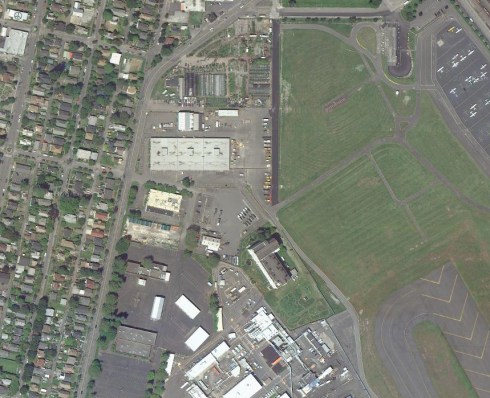
… closer ….

… hooray! Whoever you are, you peace-luvvin’, rooftop decoratin’ hippiester, I salute you.

MAKE ART, NOT BOMBS

I’m not the first to ask the question which is why it is so easy for me to answer.
Known commonly as “the Parked Domain Girl” or “the Expired Domain Girl“, her’s is the beaming face that pops up when the URL punched into your browser includes a typo. Two years ago, You Suck at Websites explained:
“Demand Media is the company responsible for pimping out this girl on empty websites set up to generate money from accidental visits. The Demand Media business model is this — scoop up generic or keyword-rich domain names and sell advertising space despite the lack of any iota of useful content. It’s not exactly spamming, but it’s just one notch above mass emailing Viagra ads.
In the comment threads, readers quickly found the original iStock image ‘Attractive Student‘, the photographer, a whole portfolio of images of her and one in which she’s really happy.
Also in the comments, the original photographer, Dustin Steller chimed in:
I am the photographer who took the photo you all are talking about. I shot the series in the Kansas City area, so it is definitely not a real college campus. Here is the link to see some more from the series – http://www.istockphoto.com/dsteller/ As a side note, it is my little sister.
Steller took the photo at Unity Village in Kansas (Flickr image of tower, Google street view)
WHOSE IS THAT FACE
Is it even her own at this point? Is it recognisable by a significant number of folk? Maybe only in America? Is this image ubiquitous (enough)? You Suck at Websites reckon she’s been viewed “more times than a Paris Hilton sex tape.” Of course, Ms Hilton is not the measure by which we gauge web-notoriety.
I’d argue the face/image is ours more than hers at this point. An unintended visual pseudonym for glitches in web-browsing.
AN ARTIST RESPONDS TO THE FACE
The website Urlesque points us in the direction of Parker Ito; an artist who grappled with the empty infamy of this image. For his project The Most Infamous Girl in the History of the Internet, Ito asked orderartwork.com, a Chinese company which makes oil paintings on-demand, to create a series of paintings based on the Steller/iStock/Demand Media image.
The results are spectacularly banal:
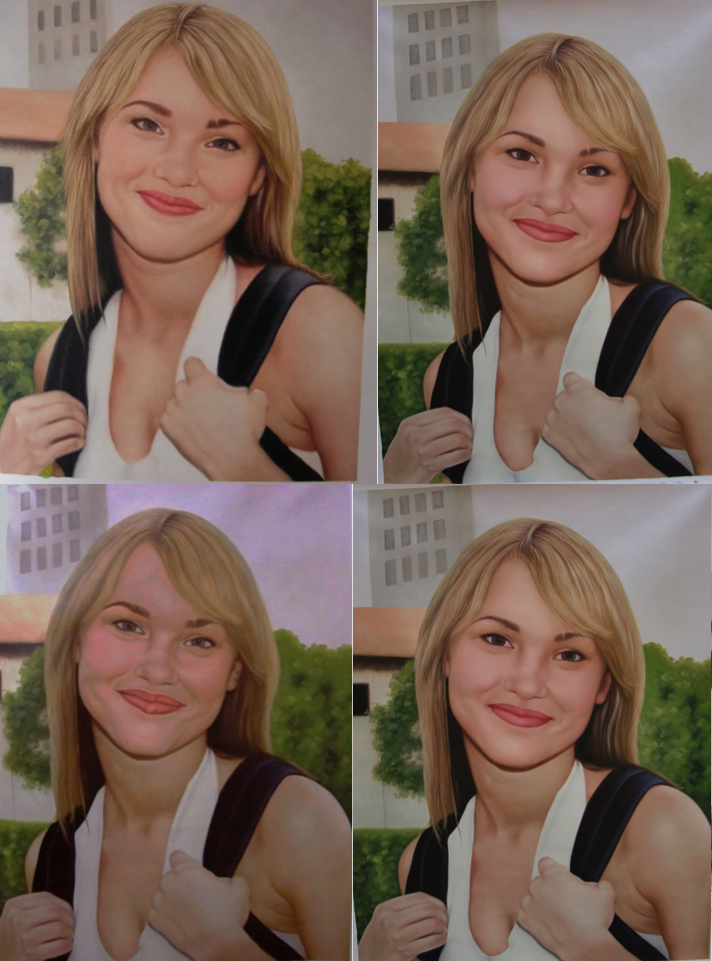
Gene McHugh at Post Internet has written about Ito’s project:
“[The Most Infamous Girl in the History of the Internet] might be considered in relation to Warhol’s Marilyn series of silkscreened paintings. Both Marilyn Monroe and “the parked domain girl” are icons of emptiness–Monroe was (in her media representation) a blank slate for sexual desire, the parked domain girl is (in her media representation) a symbol of sites without content.”
McHugh goes on to point out that Warhol was interested in “the way that ‘real life’ stars like Monroe developed a life of their own in the sphere of reproducible images. Whereas “the parked domain girl” takes on – indeed establishes – a meaning and a “reality” that didn’t exist prior to Ito’s art.
McHugh concludes that the image of “the Parked Domain Girl” is culturally-distributed enough to be defined as icon.
“Ito’s work is thus meaningful not for depicting the automated painting of a “real” icon, but for depicting the outsourced hand-painting of a “fake” icon and, in so doing, bringing Warhol’s joke full circle.”
Ito also adopted the format of Demand Media’s web-pages for his own website homepage:

Also worth checking out
The Everywhere Girl – http://www.theeverywheregirl.com/ – … the face that launched a thousand ads!

© Kenneth Libbrecht. SnowCrystals.com
As heavy as the snow is falling here in Seattle, I dump these stories that I’ve noticed recently. All worth reading/seeing.
1) – The 2010 Lennart Nilsson Award (Recognizing Extraordinary Image Makers in Science) has gone to CalTach Physicist Kenneth Libbrecht. (Found via Jim)
2) – Rob Hornstra visited Abkhazia’s only prison.
3) – Moscow’s Butyrka remand prison is to install sunbeds for inmates.
4) – MIT has developed a camera that uses echos of light to see around corners. No doubt an attractive tool for SWAT teams, riot police and extraction teams in hostage situations and maybe prisons. I say this having written about ‘Through the Wall Surveillance’ before.
5) – French photographer, Olivier Laban-Mattei won the 2010 Grand Prix Paris Match for his coverage of Haiti. He was one of the many photographers who documented the death of Fabienne Cherisma. (Found via The Travel Photographer)
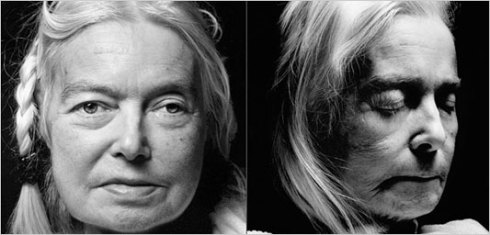
Edelgard Clavey, 67. First portrait: December 5 2003 / Second portrait: January 4 2004. © Walter Schels
6) – Walter Schels‘ photo project “Life Before Death”, includes 24 sets of before-and-after portraits ranging from a 17-month-old baby to a man of 83. Now on show at the Wellcome Collection, London. (More in this interview at LensCulture)
7) – More excellent opinion from John Edwin Mason, this time about the differences between the photo-op at Kenny Kunene’s lavish 40th birthday party and the responsible photography of Oupa Nkosi documenting the wealth and work of Black South Africans.
“No surprise, then, that Kunene has become the poster boy for shamelessly conspicuous consumption in county where, as the Guardian points out, 1.6% of the… population earns a quarter of all personal income. Only 41% have a job and just 58% have attended secondary school; 9% don’t have access to water, 23% don’t have toilets and 24% don’t have electricity. Average life expectancy is 52, the lowest since 1970. Zwelinzima Vavi, the South Africa’s most important labor leader, pointed to Kunene’s party when warning of elites who “scavenge on the carcass of our people” like hyenas.”
8 ) – Simon Sticker‘s 100 + 1 tips for the iconic Africa picture is the latest rant about stereotypes in conversation/photography on Africa.
National Photographers Association of Canada (NPAC) blog
9) – During the summer, I recommended the NPAC blog. Often working photographers will take over the posts for five posts in a week. Between the 8th and 12th November, Jen Osborne took the helm.

© Jen Osborne. Bounce is a very popular music movement originating in New Orleans, USA. It came from the streets and is a mix between Rap, Jazz, and Electronic music. It is popular amongst young adults due to its hard, fast and sexual nature, which inspires eccentric fashion trends. It also appeals to the gay community because Bounce music now contains various gay entertainers.
Jen’s five days of blogging:
Day 1 – The Importance of Learning – Working on the fly with ‘Bounce’ dancers in New Orleans.
Day 2 – Bad associations can sabotage good work! – On access to Talavera Bruce prison, Rio de Janiero. Sketchy fixers, smuggled prison cellphones and released female prisoners.
Day 3 – Thinking Locally – Drug addiction, mental illness and homelessness in her home city Vancouver.
Day 4 – Vicarious Trauma – Vicarious trauma, a newly defined term applies to “wide range of people working with clients or subjects suffering from traumatic experiences; doctors, journalists, social workers, lawyers …”
Day 5 – Doing It Because You Want To – “It is important to have your own projects to work on – projects that make you as the photographer gratified. I think it is important to do meaningful work because it will always be there for you, even when the jobs aren’t.”
Great stuff.
10) – Ed Ou, reflecting on the Joop Swart Masterclass makes all young photojournalists smile with his stirring optimism:
“It is exciting to spend time with photographers from around the world and never mention the “death” of our industry. While there may be smaller budgets and fewer outlets, there will always be room for good photography. The only way to brave the bad times is to just keep shooting.”

© Ed Ou. Nurse Larissa Soboleva holds two-year-old Adil Zhilyaer in an orphanage in Serney, Kazakhstan. Adil was born blind and afflicted Infantile Cerebral Paralysis (ICP) and hydrocephalia as a result of his mother’s exposure to radiation during years of Soviet weapons testing during the Cold War. He was abandoned by his parents and is now cared for in an orphanage.

© Sebastian Meyer. Source: http://sebmeyer.wordpress.com/2010/10/01/an-old-photo-i-found/
When reading the New York Times’ New York City Police Photograph Irises of Suspects a couple of days ago I was reminded of Sebastian Meyer‘s Guardian video dispatch from Afghanistan.
AFGHANISTAN
In the accompanying article, Jon Boone explains that in Afghanistan,
The US army now has [biometrics] information on 800,000 people, while another database developed by the country’s interior ministry has records on 250,000 people.
It is the sort of operation that would horrify civil liberties campaigners in the west, but there has been little public debate in Afghanistan. […] US soldiers have been collecting huge amounts of biometric data, with little oversight from the Afghan government.
It allows us to understand population shifts and movements, who wasn’t there before and who might be a potential threat just because they are new to that area,” said Craig Osborne, the colonel in charge of Task Force Biometrics.
The Afghanistan government has plans to introduce a biometric ID card by 2013; an attempt to thwart insurgency but it is also thought ID cards will reduce Afghanistan’s rampant voter fraud.
BIG APPLE
Back in New York, the NYPD is keeping track of prisoners and suspects for when they are transported or appear in court:
Authorities are using a hand-held scanning device that can check a prisoner’s identity in seconds when the suspect is presented in court, said Paul J. Browne, the department’s chief spokesman.
Officials began photographing the irises of suspects arrested for any reason on Monday [Nov. 15th] at Manhattan Central Booking and expect to expand the program to all five boroughs by early December, Mr. Browne said.
Mr. Browne said a legal review by the department had concluded that legislative authorization was not necessary. “Our legal review determined that these are photographs and should be treated the same as mug shots, which are destroyed when arrests are sealed,” he said.
[My bolding. Source]
WHERE IS THIS GOING?
It is clear that the US is gathering vast quantities of biometric data at transport hubs, immigration offices, police stations, conflict zones. Am I foolish to think that all this information might not one day be consolidated?
Not even considering Chomskyite accusations of US Imperialism based on military violence, could we not consider silos of biometric data (with global reach) as the foundation par excellence to empire in the networked 21st and 22nd centuries? As an invisible but intractable abundance of strategic knowledge and power?
I accept these questions probably mirror the fears of every era in which people first learn and then come to terms with new technologies that impinge upon the assumptions of the age regarding privacy and civil liberty. But still.
MORE
More from Federal Jack here.
Freelance photographer, Sebastian Meyer has a blog. The image above was sourced from this blog post. On his website, I recommend ‘How to buy a gun in London’

After looking at the TSA’s list of airports with Full Body Scanners, I’ve decided to drive to California for the Christmas Holidays. I’d already made the decision to stay in Seattle for Thanksgiving, so no immediate problems.
This post obviously spurred by the story of unlikely hero, John Tyner.
Some of you might be thinking that it’s not a big deal because those images are not saved, stored or transmitted, right. Wrong.
From the list below, if you’re flying anywhere meaningful in the US, some TSA agent is going to ogle your fancies.
Happy Holidays!
Airports who currently have imaging technology:
- Albuquerque International Sunport Airport
- Hartsfield-Jackson Atlanta International Airport
- Baltimore/Washington International Thurgood Marshall Airport
- Boston Logan International
- Bush Houston Interncontinental Airport
- Boise Airport
- Bradley International Airport
- Brownsville
- Buffalo Niagara International Airport
- Charlotte Douglas International
- Chicago O’Hare International
- Cincinnati/Northern Kentucky International
- Cleveland International Airport
- Corpus Christie Airport
- Dallas/Fort Worth International Airport
- Denver International Airport
- Detroit Metro Airport
- Dulles International Airport
- El Paso International Airport
- Fort Lauderdale-Hollywood International
- Fort Wayne International Airport
- Fresno Airport
- Gulfport International Airport
- Grand Rapids Airport
- Harrisburg International Airport
- Harlingen/Valley International Airport
- Honolulu International Airport
- Indianapolis International Airport
- Jacksonville International Airport
- John F. Kennedy International Airport
- Kansas City International
- LaGuardia International Airport
- Lambert/St. Louis International Airport
- Laredo International Airport
- Lihue Airport
- Los Angeles International
- Luis Munoz Marin International Airport
- McAllen Miller Airport
- McCarran International Airport
- Memphis International Airport
- Miami International Airport
- General Mitchell Milwaukee International Airport
- Mineta San José International
- Minneapolis/St.Paul International Airport
- Nashville International Airport
- Newark Liberty International Airport
- Louis Armstrong New Orleans International Airport
- Oakland International Airport
- Omaha Eppley Field Airport
- Orlando International Airport
- Palm Beach International Airport
- Philadelphia International Airport
- Phoenix International Airport
- Pittsburgh International Airport
- Port Columbus International
- Raleigh-Durham International Airport
- Richmond International Airport
- Rochester International Airport
- Ronald Reagan Washington National Airport
- Salt Lake City International Airport
- San Antonio International Airport
- San Diego International Airport
- San Francisco International Airport
- Seattle-Tacoma International Airport
- Spokane International Airport
- T.F. Green Airport
- Tampa International Airport
- Tulsa International Airport
Airports receiving imaging technology soon:
- Chicago Midway International Airport
- Houston William P. Hobby Airport
- Saipan International Airport
UPDATE 11.12.2010, 12.30pm PST: Forsell didn’t win. Announced 11.12.2010 in Bristol, UK Yvonne Venegas won for her portrayal of Maria Elvia de Hank, millionaire wife of an eccentric former mayor of Tijuana. Julian Roeder and Rob Hornstra also made the final three.
This will not put me off making predictions in the future. I’ll just have to adopt unpredictable criteria and decision making to mirror the many diverse jury panels. And I stand by everything I said about Forsell’s ‘Life’s a Blast’.
– – – – –
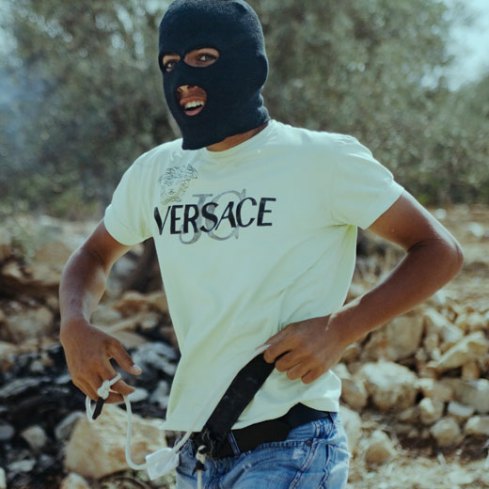
© Linda Forsell
I’ll admit to being rather deflated after looking over the shortlisted photographers for this years Magnum Expressions Award. Many of the portfolios of 15 images had only one or two photographs that held my attention.
The Magnum Expressions Award is in reaction to the brave new world photographers face; new communities, new audiences, new distribution channels and bold ways of working. It is an award designed – so it says – to reward young photographers surfing the shifting sands beneath the industries footings.
It should be said that most of the 19 shortlisted artists have hunted down engaging subjects. Bepi Ghiotti‘s Sources is an enigmatic thesis on man and nature. Yvonne Venegas’ fly-off-the-wall study of Maria Elvia De Hank wife of an eccentric millionaire and former Tijuana mayor bristles with ambivalence toward the subject.
I was pleasantly surprised to see the presence of two photographers who’ve briefly pricked my attentions. Anastasia Taylor-Lind and Irina Rosovsky both deliver strong entries. (On PP, Taylor-Lind, here and Rosovsky here).
These would be my 3rd through 6th placed finalists, but who’s listening to me, eh?
In at second is Jenn Ackerman. This high finish has little to do with my interest in photography that exposes the shortcomings of the US prison system and everything to do with the excellent way Jenn portrays the daily battles and extreme stress of a prison operating as a makeshift and unsuitable lock-up for men with severe mental health disorders – Trapped: Mental Illness in America’s Prisons. (I’ve featured Jenn’s work here on PP before.)

© Linda Forsell
‘LIFE’S A BLAST‘ BLOWS THE COMPETITION AWAY
And, winning by a country mile is Linda Forsell. Gold star.
Forsell’s Life’s a Blast is the sweetest, never-escaping-bitter view of Palestine, Gaza & Israel I’ve ever clapped my eyes on. It’s about family more than ideology, but it is never glib. It is work as conscious of history as it is the mores of fashion photography. It’s a slow-ride through the lives of people associated by a larger conflict but not solely defined by it; a stunning presentation of gazes drenched in humanity.
Against all odds, Forsell forces the viewer to think on the stories of her subjects; on the seconds before the shutter snapped and the years yet to come. I have not seen a single project that so swiftly dismantles many of the entrenched tropes of conflict photography. Life’s a Blast shifts perceptions like only the very best of photography can.

 Prison Photography