The Shpilman Institute for Photography (The SIP) invites scholars and independent researchers from all over the world to submit their applications for research on photography and on philosophy and photography.

All details on guidelines, themes, the application process can be found on The SIP website.

Grants are based on proposals for research leading to the completion within the grant period of a written document, whether an essay or extended research paper. All submissions and papers for both the calls must be in English. Grants for individuals and group research will range from US $5,000 up to $15,000. Deadline for submissions is March 1, 2011.

www.thesip.org/open_calls/general_call_poster.pdf
www.thesip.org/open_calls/philosophy_call_poster.pdf

Fancy a dabble?

Okay, I know it’s premature, but it is also easy to laud writing and exposé such as this in the Guardian:

How the US let al-Qaida get its hands on an Iraqi weapons factory. Dominic Streatfeild explains how despite expert warnings, the US let al-Qaida buy an arsenal of deadly weapons – then tried to cover it up

In short, US forces failed to secure Qa’qaa, Iraq’s largest and deadliest munitions complex. The IAEA warned them of its extreme hazard prior to the March 2003 invasion of Iraq. Looted explosives were used for attacks against US and coalition troops. The Bush administration covered all this up in the two weeks before the 2004 election, Al-Qaida took control of the site and promptly murdered hundreds if not thousands of local Iraqis.

Excerpts:

In 1991, following the Iraqi rout in Kuwait, inspectors from the International Atomic Energy Agency (IAEA) gained access to Qa’qaa, where they found 145 tonnes of pure RDX and PETN … [and] hundreds of drums of an off-white, crystalline powder. About as highly explosive as high explosive gets, High Melt Explosive (HMX) is used to detonate nuclear warheads. Qa’qaa had nearly 200 tonnes of it. The IAEA moved all the explosives to secure bunkers on the south-west corner of the facility, then closed the doors with tamper-proof seals. And there the 341 tonnes sat for more than a decade.

Two weeks after the start of the war, Jacques Baute, the head of the Iraq nuclear inspection teams, visited the US mission to advise, again, that the weapons sites needed protection. He specifically mentioned Qa’qaa. Just days before the invasion, he told officials, inspectors had inventoried the facility’s HMX, RDX and PETN stores and ensured that the seals were still intact. This kind of materiel, the Frenchman suggested, should be kept out of the hands of looters. There was no reaction.

By 8 May 2003, when the Pentagon’s Exploratory Task Force arrived at Qa’qaa to search for WMDs, all of the PETN, RDX and HMX was gone.

In 2004, al-Qaida established a camp inside the Qa’qaa complex itself. “We had a firing range, like a tunnel. It was used to shoot small-calibre bullets,” says Ali. “It became a training camp for terrorists.”

Anyone entering the facility without permission was killed. Al-Qaida spread horror stories about its activities, intimidating locals into collaborating. An execution room was set up with a makeshift gallows. Yusuf was part of the operation. “We used to kill people in terrible ways, torturing them to give al-Qaida more influence.” Mutilations, murders and decapitations were filmed and copies were distributed around [the local area] Yusifiyah to discourage dissent.

Read the full piece here.

____________________________________________

This catastrophic turn of events began in the first hours of the invasion of Iraq and conituned as the West gawked and applauded the staged toppling of Saddam’s statue.


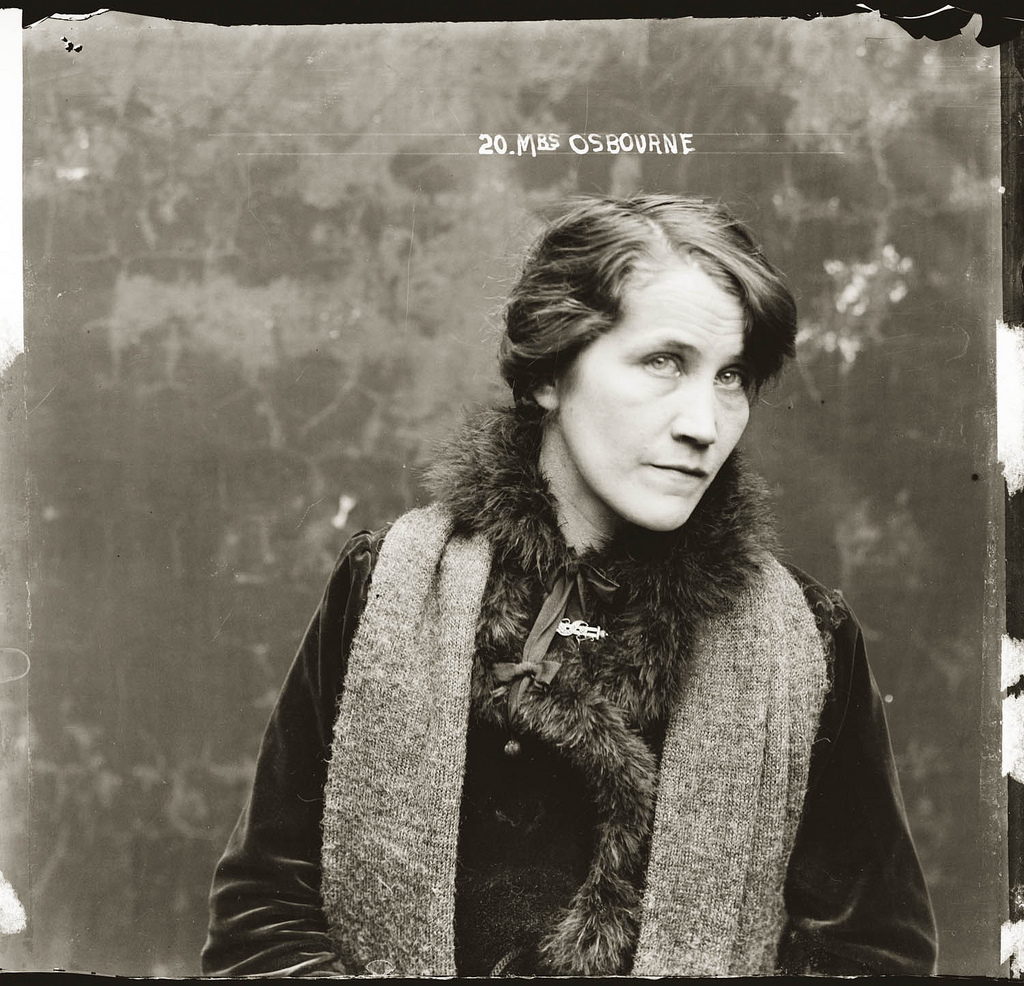
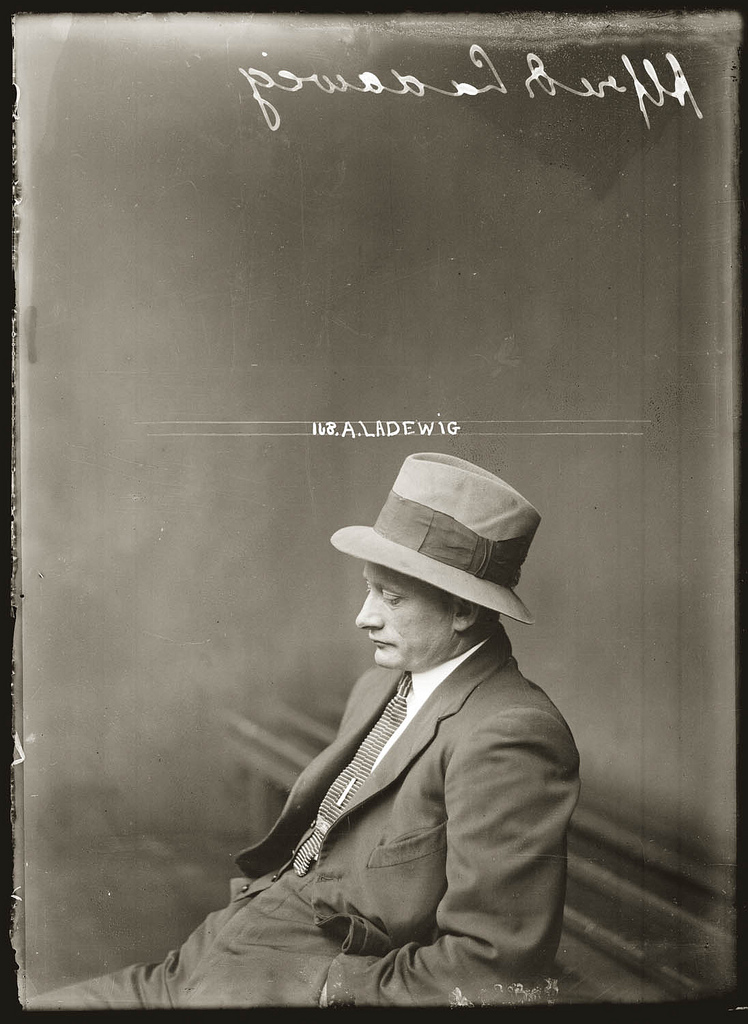
Rina and Ali, the boombastic team at KALW Informant, alerted me to a set of portraits from 1920’s Australia of individuals categorised as criminals.

These are portraits, not mugshots. Luminous, cathartic, full of weight. They’re the pre-August Sander, pre-Richard Avedon, pre-Irving Penn masterpieces of an anonymous police photographer.

PREVIOUSLY ON PRISON PHOTOGRAPHY

The collection is very similar to a set of mugshots from the archives of the Louisiana Division/City Archives in New Orleans.

______________________________________________

All images from the Historic Houses Trust website and the New South Wales Police Archives, Sydney.

This time last year Laura Sullivan for NPR reported on the US broken Bail Bond System. I celebrated her work and later, upon it’s resurfacing called Sullivan “An American Hero

NPR contacted me recently to let me know Sullivan’s series won an Excellence in Broadcast Journalism Award.

Bravo!

From NPR:

NPR News is being honored with a 2010 Alfred I. duPont-Columbia University Silver Baton Award for excellence in broadcast journalism for a three-part investigative series revealing deep and costly flaws in the U.S. justice system’s bail bond process, it was announced today. Reported by NPR Correspondent Laura Sullivan and edited by Senior National Editor Steven Drummond, “Bonding for Profit” exposed deep inequities in the treatment of rich and poor defendants, how the bail industry is vested in maintaining those inequities and the surprising cost to taxpayers. The series aired on the NPR newsmagazines All Things Considered and Morning Edition, and is available online at npr.org: www.npr.org/series/122954677/behind-the-bail-bond-system

After months-long research into the perpetual and expensive overcrowding problem in U.S. prisons, Sullivan discovered that the bond system may be a major factor in keeping jails stuffed. “Bonding for Profit” focused on the dilemma of more than a half million petty, nonviolent offenders stuck in jail for months due to the simple reason of not being able to make bail – which is sometimes as little as $50 – at a $9 billion a year cost to taxpayers. In three reports, Sullivan revealed how stark options often force inmates to take prosecutor deals in exchange for early release, and how the bondsman lobby fights pretrial release programs proven to save millions of dollars.

The “Bonding For Profit” series produced emotional feedback from listeners, and has been cited by The Justice Department, the American Bar Association and lawmakers in Virginia, North Carolina and Florida in initiatives to examine current bail practices. The Awards Jury also praised Sullivan’s writing, saying it “crackles with insight and storytelling based on hard facts.”

The duPont-Columbia Awards will be presented at a ceremony on January 20 at Columbia University in New York. Accepting the awards on behalf of the organization are Laura Sullivan and Steve Drummond. Information about all of the winners announced this year is available at: www.dupont.org

The Alfred I. duPont-Columbia University Awards honoring overall excellence in broadcast journalism were established in 1942 by Jessie Ball duPont in memory of her late husband. Administered since 1968 by Columbia University’s Graduate School of Journalism, the awards are considered the broadcast equivalent of the Pulitzer Prize, which the Journalism School also administers.

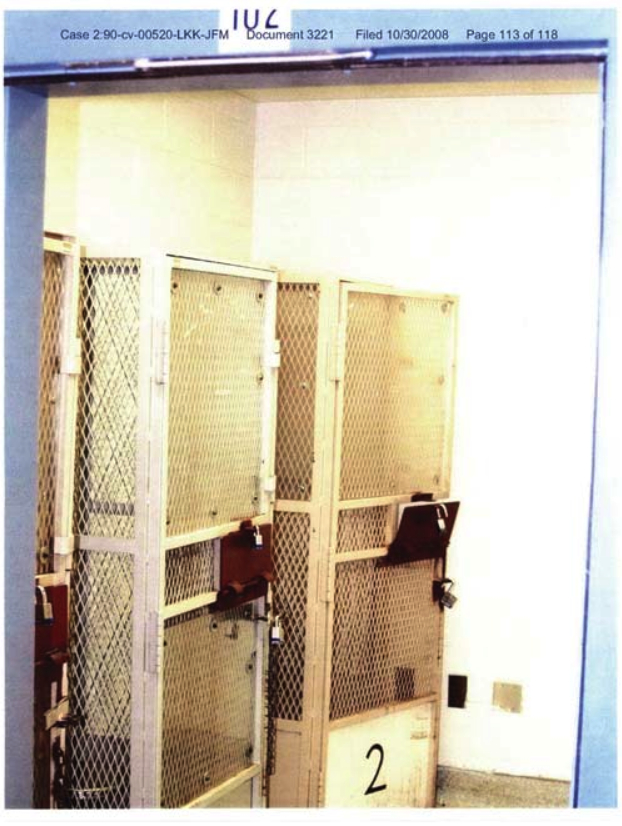
Governing Through Crime recently noted that photographs more than legalese may have swayed the opinion of Justice Breyer during December’s SCOTUS discussion of Schwarzenegger vs. Plata.

VIEW ALL PHOTOGRAPHS SUBMITTED HERE.

Breyer saw the photos in an amicus brief submitted by a coalition of religious group (PDF) in support of the plaintiff:

“It’s a big record. What I did was I – it refers to on-line evidence – I went and looked at the pictures, and the pictures are pretty horrendous to me. And I would say Page 10 of the religious group’s brief (PDF), for example, shows you one of them. And what [the religious groups] are saying is obvious. Just look at it. In conditions such as these, you cannot have mental health facilities that will stop people from killing themselves, and you cannot have medical facilities that will stop staph and tubercular infection.”

Schwarzenegger v. Plata is a federal class-action suit challenging health care conditions in the California prisons. In 2009, a California-based three-judge federal court found that massive overcrowding in the state’s prisons contributed to untreated mental illness, suicides and other preventable deaths of inmates. The overcrowding, the judges ruled, violated the Eighth Amendment rights of prisoners to be free from cruel and unusual punishment.

The three judge panel ordered the release of 35,000 – 45,000 prisoners to ease overcrowding and restore constitutional rights. Schwarzenegger and the CDCr authroities immediately appealed. SCOTUS are currently deciding if the three judge panel was within jurisdiction to order the mass release of prisoners; AND if overcrowding does directly cause poor medical and mental health-care.

Commentators have noted the apparent empathy of many Justices. It is common knowledge that California’s prison policy has been tumorous and it is no surprise it has come to the most drastic court ordered release of prisoners in US history to solve the problem. The Atlanta Post reports California Sheds Light On The Need for Criminal Justice Reform.

Thanks to John Malsbary for the tip.

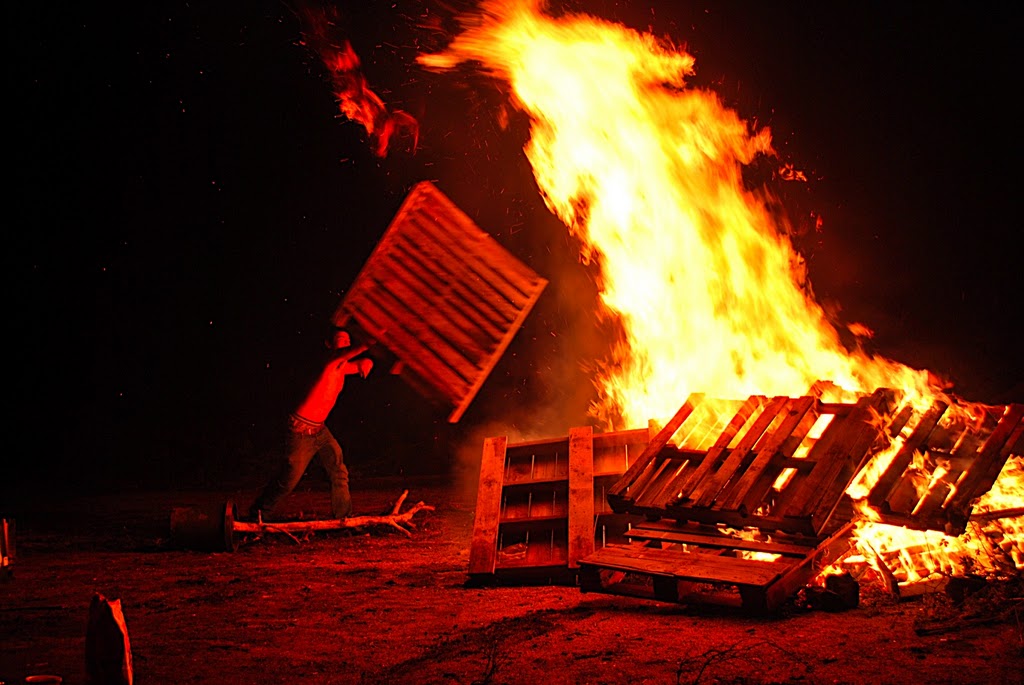
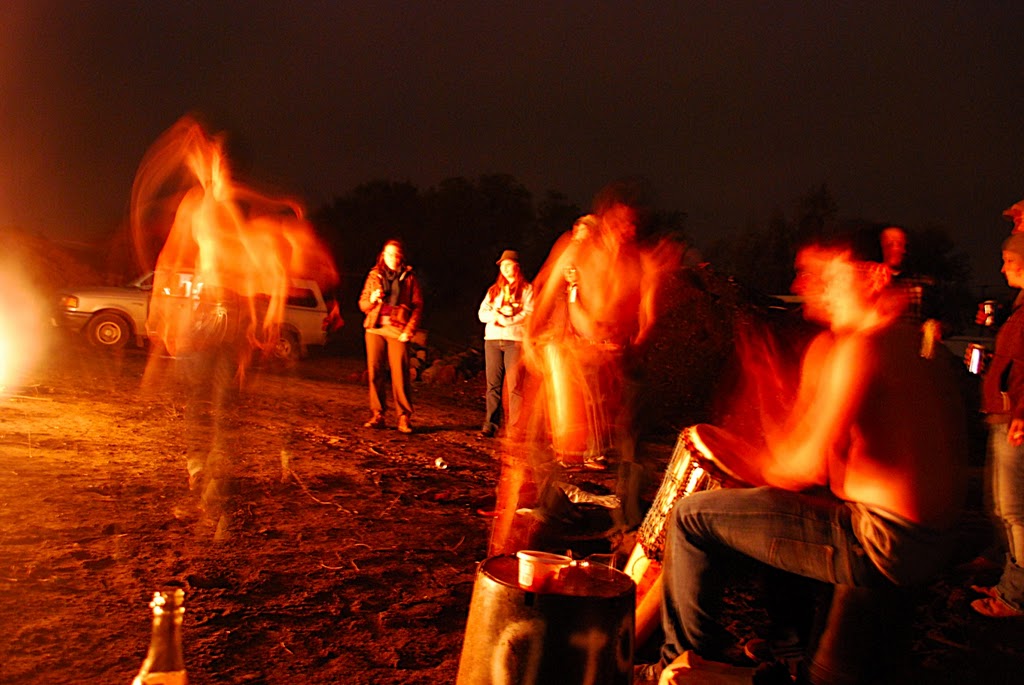
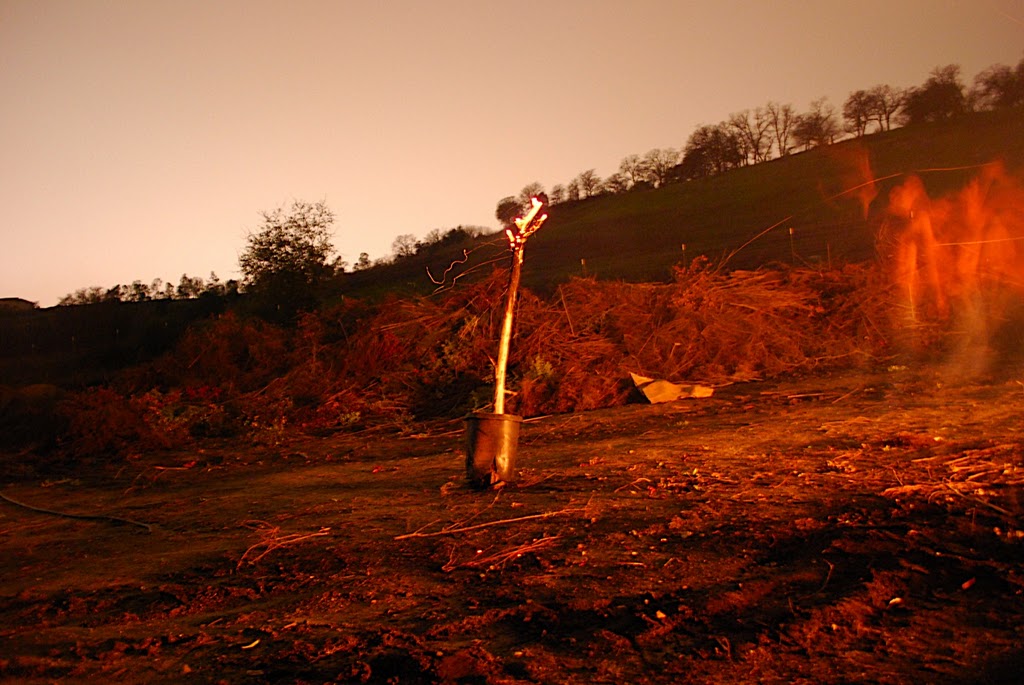
2011 is the new 2010. Should be an interesting one. I brought in the new year with the King of Beers, bongo drums, Extra Dry Korbel and 80 burning palettes. Now back in Seattle and back to work.

Thanks to Joel for the images.

Mrs. Reagan sitting on Santa Claus (Mr. T) lap after reviewing White House Chrismas Decorations with the press. 12/12/83.

Source: White House photo via Reagan Library, # C18929-22.

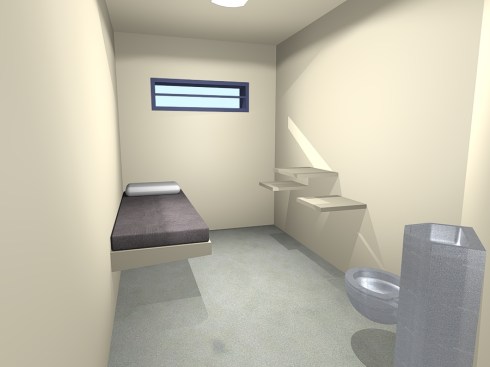
Pre-cast Concrete Prison Cell. Computer Rendering by Matt Scott

I was interested to read A Typical Day for PFC Bradley Manning, a blog post by David E. Coombs, the lawyer for Wikileaks’ leaker suspect Bradley Manning.

Manning has been in Quantico Confinement Facility, a maximum security military prison since July of this year. Manning is under Prevention of Injury (POI) watch. Whether Manning is a danger to himself or not we cannot know, but we can consider the strict regime such status brings in terms of scrutiny and the control the prison authority has over his waking (and sleeping) body.

Excerpts:

At 5:00 a.m. he is woken up (on weekends, he is allowed to sleep until 7:00 a.m.). Under the rules for the confinement facility, he is not allowed to sleep at anytime between 5:00 a.m. and 8:00 p.m. If he attempts to sleep during those hours, he will be made to sit up or stand by the guards.

The guards are required to check on PFC Manning every five minutes by asking him if he is okay. PFC Manning is required to respond in some affirmative manner. At night, if the guards cannot see PFC Manning clearly, because he has a blanket over his head or is curled up towards the wall, they will wake him in order to ensure he is okay.

He is prevented from exercising in his cell. If he attempts to do push-ups, sit-ups, or any other form of exercise he will be forced to stop.

He does receive one hour of “exercise” outside of his cell daily. He is taken to an empty room and only allowed to walk. PFC Manning normally just walks figure eights in the room for the entire hour. If he indicates that he no long feels like walking, he is immediately returned to his cell.

When PFC Manning goes to sleep, he is required to strip down to his boxer shorts and surrender his clothing to the guards. His clothing is returned to him the next morning.

The body disciplined, no?

EMAIL

prisonphotography [at] gmail [dot] com

Prison Photography Archives

Post Categories