I followed Jehad Nga‘s work before on Somali Pirates and US Marines. It is in consideration of those two inquiries, and of Nga’s similar depiction of Kenyan boxers, I wonder about Nga’s choice to use the same shaft-of-light-in-the-dark technique to photograph the Turkana people of Northern Kenya. WSJ Online didn’t mention Nga’s repetition of form.

Nga photographed Turkana while covering the drought in Northern Kenya for The New York Times.

Turkana at Bonni Benrubi Gallery is 10 chromogenic large scale color works, framed in black with no mat and mounted to Plexi. DLK Collection has just reviewed Nga’s exhibition at Bonni Benrubi:

“I think these portraits walk a tricky line between powerful and moving imagery and a less savory anthropological examination. While the photographic approach may be modern, there is a whiff of old stereotypes risen again: poor Africans, inspiringly proud and beautiful in their destitution. Nga’s pictures undeniably draw the viewer into the individual narrative of a specific person or family. Having been successfully sucked in, we then ask what these images have to tell us that is new; this is where I was left a bit puzzled. Maybe the answer is that unfortunately things haven’t changed much, and we are still faced with the same societal challenges that have thwarted us for decades. As a result, I left the gallery with mixed feelings: impressed by the strength of the emotion that these images could elicit, but depressed by the conclusion that we are still telling the same African stories.”

(Source: http://dlkcollection.blogspot.com/2010/06/jehad-nga-turkana-benrubi.html)

If DLK had accounted for Nga’s earlier projects it may have retreated away from attributing Nga’s technique to echoes of colonial ethnographic photography.

The real problem with Nga’s photography is that it’s production is a performance in which he as the photographer is implicated. Nga’s work is art, there can be no doubt. Nga’s portraiture will always bestow dignity upon sitters, but never inherently any understanding of the sitter. He is a director of his world.

STALKING THE ENVIRONMENT

Nga speaks well about My Shadow, My Opponent – photographs of Kenyan boxers. I especially like Nga’s comparison between the boxers in Kibera, Nairobi and US marines in Iraq in how they behave the longer they exist as a group.

Nga also offers this, “what attracted me initially was less the story component of a boxing gym, more-so the environment.”

Nga tempts us in with silky colour-saturated and pitch black prints. We are then duty-bound to position ourselves politically or emotionally with the subject; this is a lose-lose strategy.

Instead, we should be using Nga’s work as a springboard of natural interest into the very specific problems pertaining to this region of the world. Is a gallery wall the best way to reach the largest possibly number of potential supporters? Personally, I don’t think so, but this is a problem of distribution not solely one for the artists.

I support DLK’s expression of unease but I must disagree that, “Nga’s pictures undeniably draw the viewer into the individual narrative of a specific person or family.” Really? I see a lot of similar looking photographs.

I don’t think the issue is that things “haven’t changed much”, it’s that photographers and consumers of media haven’t changed enough, and Nga has hardly changed at all.

– – – – –

The British Journal of Photography interviewed Jehad recently, and Tewfic El-Sawy has been following Nga’s career closely for years (which for me brings up another debate we should be having about photographers now developing under the gaze of the photography blogosphere … but for another time!)

These two bicycle culture anthropologists stop, chat with and photograph cyclists.

“The Bicycle Portraits project was initiated by Stan Engelbrecht (Cape Town, South Africa) and Nic Grobler (Johannesburg, South Africa) early in 2010. Whenever they can, together or separately, they’re on the lookout for fellow commuters, and people who use bicycles as part of their everyday work, to meet and photograph.”


EL LAMENTO DE LOS MUROS

On March 31st 1977, Paula Luttringer, a 21 year-old pregnant botany student was kidnapped by police of the Argentine military junta and detained in an extrajudicial prison. During her five month detention, she gave birth to her eldest daughter.

Released abruptly during what she thought was transfer to a regular prison, she was forced to leave the country immediately to avoid another “disappearance.” She went first to Uruguay, finally settling in France. (Source)

During the Dirty War (1976-1983) hundreds of secret detention centres were established across Argentina for the purposes of interrogation and torture.

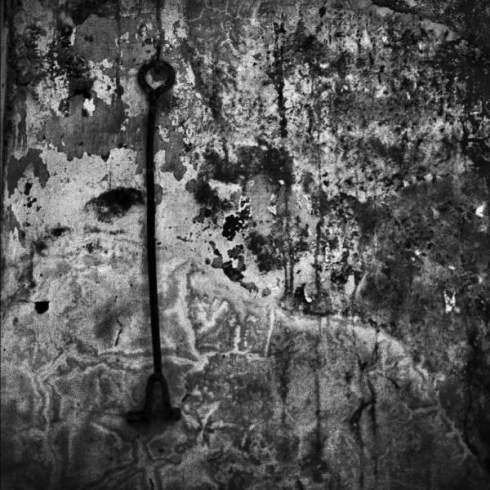
In 1995, Paula returned to Argentina and took up photography as a means to explore the memories, mental scars and the crimes against her and other women. El Lamento de los Muros (The Wailing of the Walls) is the result.
Three years ago, I met Paula. She had just enjoyed acclaim at the 2006 Houston Fotofest, and was searching for further funding to travel the exhibition and expand on the educational lessons attached to the project.

The Wailing of the Walls is about the violence brought against women and the continuing means by which those women cope and live in the aftermath. Paula was adamant; she only wanted funding from women. 100 donors to fund the gathered testimony of 100 survivors. This was a project by a woman, for women supported by women. The funding initiative was named 100×100.

PAULA’S WORDS

I have twice heard people urge Paula happiness in that she survived. Paula is unequivocal; having survived does not make her happy, living in a world in which people didn’t have to be survivors would make her happy. The violence once it is done, cannot be undone.

For more on Paula’s motivations for the project read this interview, this articleand listen to this audio interview.

RECOGNITION

Wendy Watriss and Fred Baldwin, of Houston Fotofest must be singled for special praise in bringing Paula’s work to a larger audience and consciousness.

The statements that accompany each of these images have been co-opted from Fotofest’s feature and from the George Eastman House page on Paula’s work.

‘THE WAILING OF THE WALLS’ IMAGES AND TEXT

“Walls that served to stifle the desperate screams, the cries of those tortured and raped, and the indescribable, agonized moans of those who, although they were freed, remain aware of their open wounds—who feel that they will never get out of that hole.”

Juan Travnik, Buenos Aires in the FOTOFEST2006 catalogue.
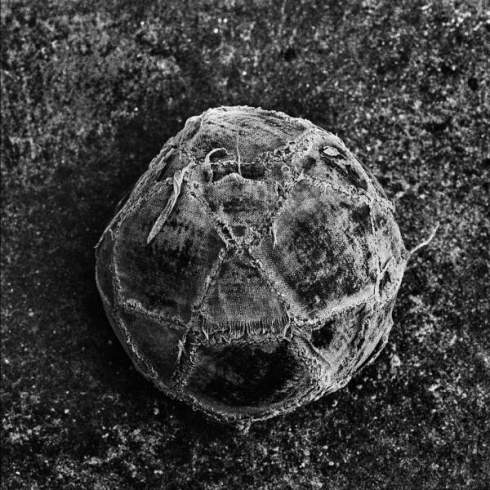
“It is very hard to describe the terror of the minutes, hours, days, months, spent there. At first when you’ve been kidnapped you have no idea about the place around you. Some of us imagined it to be round, others like a football stadium with the guards walking above us. We didn’t know which direction our bodies were facing, where our head was, where our feet were pointing. I remember clinging to the mat with all my strength so as not to fall even though I knew I was on the floor.”
Liliana Calizo was abducted on September 1st, 1976 in Cordoba. She was then taken to the Secret Detention Center “La Perla”

– – – –

“I went down about twenty or thirty steps and I heard big iron doors being shut. I imagined that the place was underground, that it was big, because you could hear people’s voices echoing and the airplanes taxiing overhead or nearby. The noise drove you mad. One of the men said to me: so you’re a psychologist? Well bitch, like all the psychologists, here you’re really going to find out what’s good. And he began to punch me in the stomach.”
Marta Candeloro was abducted on June 7, 1977 in Neuquen. She was then taken to the Secret Detention Centre “La Cueva.”

– – – –
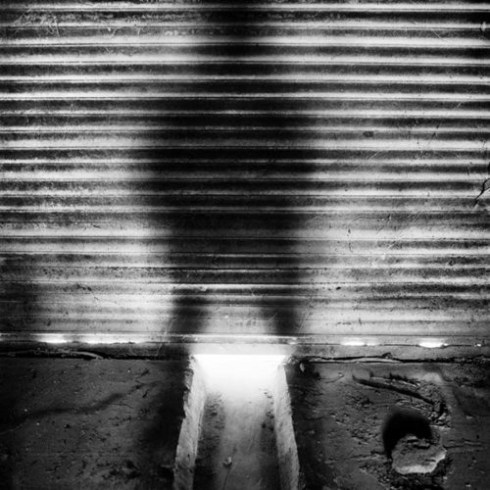
“And this marks you, it’s a wonderful feeling that stays with you the rest of your life. You’re left with this dual task: you have to be constantly working out what comes from the trauma and what from normal life. I have this dual task in life. I have to decide which feelings are the result of the trauma and what there is beneath of less intensity, more diluted, which is that what comes from normal life. So I talk to someone who has never been in a clandestine prison and then I play the role of a normal person and I realise what that involves, I step into normality. These things that happen to all of us who were victims of repression …”
Liliana Gardella was abducted on November 25, 1977 in Mar del Plata. She was then taken to the Secret Detention Center “ESMA”

– – – –
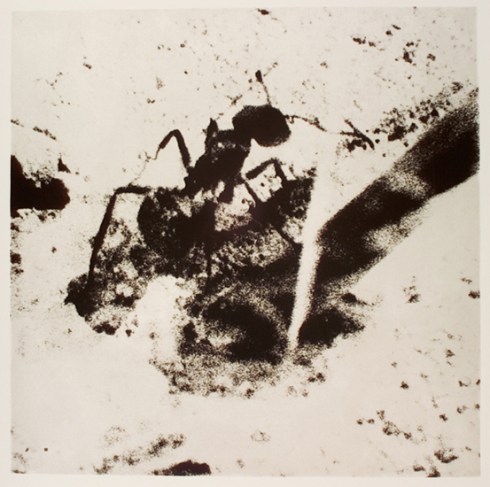
Ants used to come in and out, and I would watch these ants because they were coming in and then going out into the world. They were walking across the earth, the outside world, and then coming back in again, and watching them I didn’t feel so alone.
Ledda Barreiro,” La Cueva” Illegal Detention Centre

– – – –
Source

Source
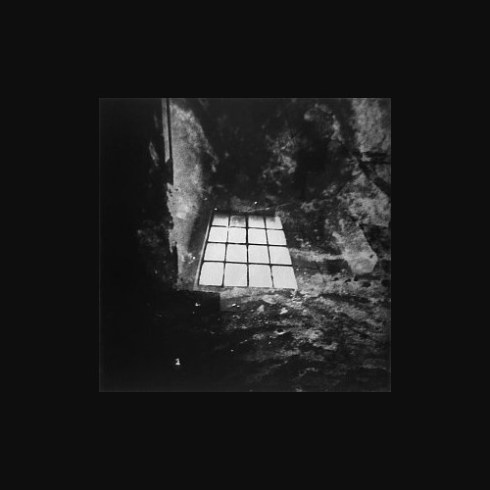
“Something strange used to happen at night, the screams of torture were different than those during the day. Even if the screams of torture are always the same they sound different at night. And it’s also different when they come to get you at night. The noises and the screams are not with me always, but when I do remember them, it makes me very sad. I am paralyzed by those screams, I’m back in that time and place. As somebody once said — and I’ve given this some thought and I think it’s right — although life goes on, although some of us were freed, you never get out of the pit.”

Isabel Cerruti was abducted on July 12, 1978 in Buenos Aires. She was then taken to the Secret Detention Center “El Olimpo.”

– – – –

Source

‘EL MATADERO’

It is worth noting an earlier project too.

The images below are from Luttringer’s earlier series El Matadero (The Slaughterhouse) for which she won the best Portfolio Prize at PhotoEspana (1999). The manhandling of carcasses through rooms designed for dismemberment is a shocking precursor to The Wailing of the Walls. Luttringer’s work echoes themes of mortality and the manipulation (herding, processing) of flesh.

Many people are gripped by the psychological charge of Roger Ballen‘s work, but the photography of Outland, Shadow Chamber and Boarding House obscures reality and fuses it with imagination. Luttringer’s work, on the other hand, is an attempt to mobilise our understanding of the historical moment. Photography is a tool for Paula, but the real import of this exercise is the oral testimonies recorded and written and the associated benefits that may have arisen for the women having shared their memories.

For me at least, the visceral images of El Matadero, are a solemn counterpoint to Luttringer’s work on kidnap and detention from Argentina’s Dirty War.

Source

Source

BIO

In 1999, Luttringer was chosen by the National Museum of Fine Arts in Buenos Aires as one of the twenty photographers of the ‘New Generation’. In 1999, she won the best Portfolio Prize at PhotoEspana, for her project “El Matadero”. In 2000, she was awarded an artist`s grant by the National Arts Fund of Argentina for her project “El Lamento de los Muros”. In 2001, she was made a Guggenheim Fellow for her project “El Lamento de los Muros”. Luttringer’s photography is part of the permanent collections of both The National Museum of Fine Arts (MNBA) and the Museum of Modern Art (MAMBA) in Buenos Aires; the Museum of Fine Arts in Houston (MFAH); the George Eastman House in Rochester, NY; Portland Art Museum in Oregon; La Bibliothèque nationale de France in Paris; and the Portuguese Photography Centre in Portugal. She currently lives and works in Buenos Aires and Paris.

Carlan Tapp‘s project on the TVA Coal Ash Spill, December 2008, featured on BURN April, 2009. Click below.

THE COAL WAR

The Coal War, a “documentary about hope, change, and one unstoppable grandmother”, is looking for funding.

Chad Stevens heads a team of familiar names.

QUESTION OF POWER

Carlan Tapp’s Question of Power project began in 2005. It delivers photographic essays and “the voices of individuals, families, and communities affected by the mining, processing, burning, and storage of waste materials created by coal for the generation of electricity in America”.

MINING ON NATIVE AMERICAN LANDS

“Carlan is a descendant of the Wicocomico Tribe, Taptico family. His strong belief and respect for the earth and all creatures is the continual theme in his work.”

Carlan’s documentation of the mining activities and environmental destruction on Navajo land is startling. I particularly advise viewing the 42 images and captions of Coal Production. Mining kicks up toxic dust, pollutes the earth and water, causes respiratory problems in the local population and causes structural weakness in homes.

As a point of comparison, watch Aaron Huey’s TEDxDU presentation. Huey’s talk about the broken treaties, chronic poverty and human rights abuses wrought upon the Lakota people of Pine Ridge in the Black Hills area of South Dakota (a place he describes as “ground zero for Native issues in the US”) was well received – largely due to the fact he passionately presented a history we  rarely hear. It is likely the legal and environmental rights of the Native Americans in Tapp’s coverage are under attack by similar forces.

Especially in light of the Gulf of Mexico disaster, we must ask the same questions of coal, oil and all non-renewables with regard our own consumption habits.

Carlan blogs here. He has been on the Gulf Coast since last month. Good write up by Elizabeth Avedon.

Photo-editor-at-large, Mike Davis has been fielding questions recently.

Q. Do you believe that a photo has the potential to make an article better or, on the contrary, can it distract the reader?

Davis: Neither, actually. A photograph can do something that words cannot. So the best images don’t make an article better, they engage viewers in a way that the article can’t.

I was gobsmacked to learn that Utah still carries out firing squad executions, if the condemned man requests it. Ronnie Lee Gardner requested it.

“I guess it’s my Mormon heritage,” Gardner said at the time. “I like the firing squad. It’s so much easier … and there’s no mistakes.”

And another thought – If Gardner’s being killed because he killed someone else, who’s going to kill the people that kill Gardner?

From the latest Photographers Speak interview:

Dean Brierly: Do you find any points of intersection between your commercial and fine art work?
Bob Witkowski
: When I arrived in DC after a year’s graduate work in photojournalism at the University of Missouri, I found myself in the position of having to survive while trying to stay committed to my “art” at the time. My first break was to get access to the Gulf Oil Refinery in Philadelphia through the aegis of the American Petroleum Institute and its Director of PR, Robert Goralski, one-time correspondent for NBC News. I was paid nothing! I had little money at the time as well. I spent everything I had on several bricks of Kodachrome 25 and drove up to Philly and spent six days in paradise shooting 20 hours a day. It was at the refinery that I discovered I could be true to making images I loved while making industrial images that were sensuous, beautiful and a complete sellout. So I finally had something to drag around in a slide projector to show to industry trade groups and corporations around the DC, Baltimore and Richmond areas. It wasn’t an easy sell at first, and I paid my dues like anyone else for several years, but eventually it paid off for me professionally. I was fortunate to shoot in the golden days of corporate annual reports before Reaganomics altered everything.

How differently an industry can be perceived.

ELSEWHERES

© Jorge Duenes/Reuters

Everyone is blurting loud sounds:

David Burnett asks, “Where are the kids who should be on the street protesting?”

Mark Powers talks about a dead Pope in the age of Popes and TV.

Peter Marshall, who is a UK-political-photography-blog-treasure, has a naff day with some far-right marchers and a bunch of banged up camera lenses.

Mrs. Deane is back on Mars with Vin­cent Fournier.

Grant Willing, the darkest man in photography blogging (humble arts), delivers an interview to Jerenie Egry for too much chocolate.

Horses Think reminds of the MoCA exhibition in which the American road-trip was also the data for one of the most influential pieces of contemporary architectural theory. (Well, not totally, they did some walking as well.)

Ben‘s is flipping out, while Stan says we should all make hay, and he loves the UN’s photo comp policy u-turn.

DLK Collection is dealing with the return of photographic abstraction. While, only two days prior DLK had asked who was steering the big wobbly ship of conversation on photography?

Just when we were all getting hopeful about the exchange economy of the internet, Joerg delivers an absolute bummer of a summary of his view on book reviewing. But, I think – as Joerg wonders – that he might be reading the wrong blogs.

In the same stroke of an ink quill, Joerg has busted out a great post about the intervals between being photographed as a child, the digital storage problem of the future and research about the way the memory deals with a vast quantity of photographs.

Then, Ben‘s back running a poll on if The Photographers Gallery is “shite”.

The New Yorker Passport Photo Booth is bigging up Mari Bastaskhevski, Bastashevski, Bastashevsi … although I don’t know exactly how to spell Mari’s surname , because Photo Booth spell it three different ways!

It’s a shame because Mari is one of the most courageous photographers working in modern times. I want to say more about her work, but I am still digesting it. Good stuff.

AND MORE OTHERWHERES

Monoscope throws David Gentleman’s 1970 England World Cup stamp (recently discovered) on to your computer screen. Talking of stamps, Steve McQueen

Heading East talks sense again.

The photographer who made flags out of people!

Foto8 goes all World Cup. The Telegraph profiles a photographer of Zapatista veterans. Blog61 gets all reminiscent. (Early signs from these guys are good).

Robert Hariman refers to abstracted images of border patrol lights and oil slick swirls as the “hieroglyphs of human limitation”.

Given that Marina Abramović entered into “some sort of trance-like state” during the performance-art piece The Artist is Present, Jim Johnson asks, “Would she even have noticed had the chair across from her were vacant?”

EMAIL

prisonphotography [at] gmail [dot] com

Prison Photography Archives

Post Categories