[This is part two of a three part series on prisons in Africa. Part one featured Julie Remy’s photography in Guinea.]

Muyinga prison
Nathalie Mohadjer and I sat down and talked about her vital photographic series The Dungeon.
Click on any image for its larger version. Please note, the four images of Gitega prison are not part of The Dungeon series, but were included because they related to our conversation.
– – –
PB: Can you explain how you came to work in Burundi and how you gained access to the detention jails?
NM: I was looking for organizations I could work with during the summer. International Bridges to Justice (IBJ) were searching for photographers and journalists. There was work being done in Burundi so I contacted the office. I was there for two months. I worked with the writer, Laura Gabriella Dix.
Through IBJ, Laura and I got to go out with local NGOs, particularly the Association for the Protection of Human Rights (APRODH) – the biggest local NGO. APRODH is very powerful and is one of the few Burundi NGOs with the ability to get people out of the detention cells straight away. With them we could get into the detention cells. We made appointments through them.
We worked together with them and later with another NGO, the Association of Burundi for the Defence of Prisoners Rights (ABDP) whose staff are all Burundians. Both groups were great, they knew who to talk to, and they knew all the detention jails that were hidden.
International NGO’s usually have no idea that the jails exist. There are detention jails all over Burundi – almost one in every small village. Also there exist detention jails that are illegal. People just get thrown in there when the police don’t know what to do with them. Prisoners have not been legally recognized, which is madness.
But local NGO’s know where the jails are because they have contact people.
[My visit] was not very planned; the NGOs don’t tell the police before they arrive. They arrive in the town and tell the administrator they expect to see the jail cells within half an hour, “We want to know who is there; how long they’ve been held; why they’re being held.”
If there is anything improper then prisoners can be set free straight away – at least in the case of APRODH – which was effective in releasing people immediately. That was amazing.
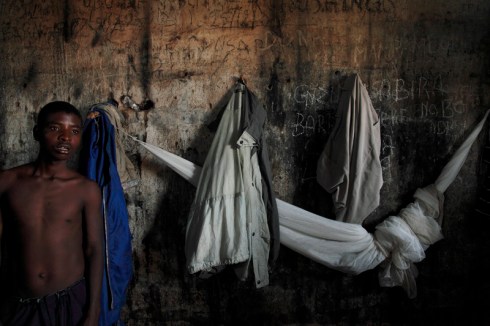
Muyinga prison

Muyinga prison
PB: ‘The Dungeon’? Tell us about the title of your series.
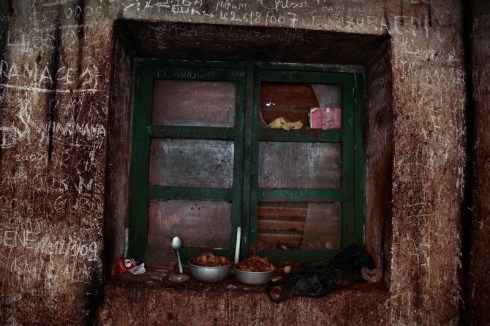
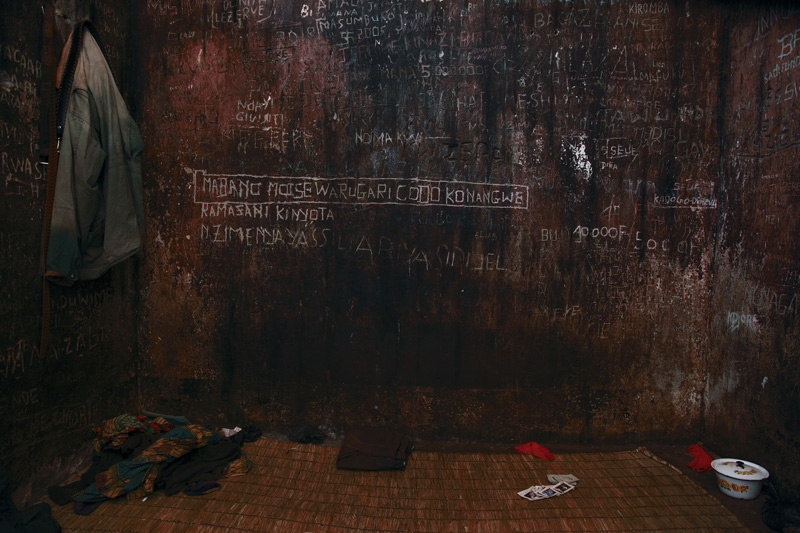
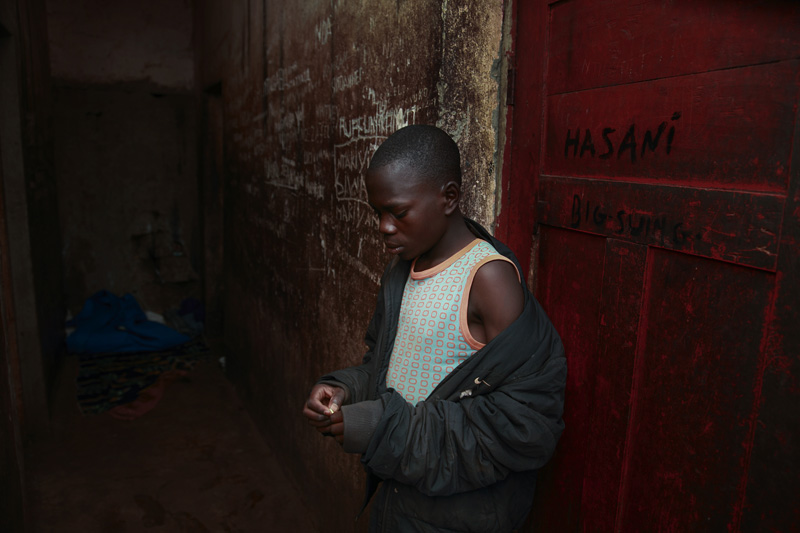
NM: I tried to find the most appropriate word. If you think of the word dungeon, you think of history, dark walls and holes. Dungeons are hidden and there is no light. It felt exactly like that. You can be in the centre of a village and people shall walk you around the back of houses and [show you] behind locked doors. The rooms are full of people just looking back at you. The walls are red and black, scratched with names of people who have been there. You almost feel like you’re witnessing a place of hell.
PB: Do the local communities sanction this mode of justice?
NM: For most, it is just the common practice. One of the problems is that Burundi is over-populated. There is no real law system; it has so many faults, they don’t know where to put these people.
In Giterany, there was a man in the jail who was a practitioner of witchcraft. The local people wanted to kill him. The police did not know what to do with him, so they put him in the jail [for his own protection]. It’s out of control. It’s not that people are aware or unaware, it is that they don’t know what else to do.
Of course, you’ve lots of people in the bigger towns and cities who protest [the situation] and make calls for a proper legal system. So people in Burundi realize [a need for reform], but they also realise it takes ages to establish this.
In December, there was a riot in Mpimba, the biggest prison in Burundi because it is so overpopulated.

Insight the detention cell of Cibitoke, where 38 man and children are captured. Most prisoners are held there up to 2 Years. By law the prisoners have to be judged after being captured for max. 14 days.
PB: According to Human Rights in African Prisons (ed. Jeremy Sarkin), Burundi’s prison system is operating at 230% of its designed capacity. This is among the worst prison overcrowding on the African continent. Burundi also has an incredible amount of pretrial detainees.
NM: Exactly, it was pretrial detainees in the jails who have not stood trial that I photographed. Sometimes it will be a year, or perhaps two before they see a judge.
In one image (above) the prisoners look directly into the camera. This is in Cibitoke, two hours away from the capitol Bujumbura. Prisoners there said they’d been incarcerated for two years.
Officially, it is illegal [to hold someone] after 14 days. Staying two years in a single room with 30 or 40 other persons is crazy. There are kids in there too. And kids have died in there.
The prisoners were so keen to tell us about the jail. They were well aware of why we wanted to show this [to the outside world]. My colleague Laura was writing everything down. The armed policeman told me I had one shot, but I took more discretely.
The prisoners who were held would go between me and the policeman to talk to him, so that I could take more pictures. They were helping me. I was more afraid of police than the guys inside.
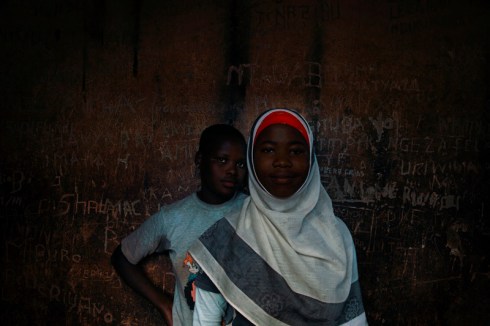
14 year old Jamila (front) has been in Muyinga prison for four days. She helped her friend steal money from her landlord. Women sleep in the corridor. The Policeman say that there is no contact between the men and the women.
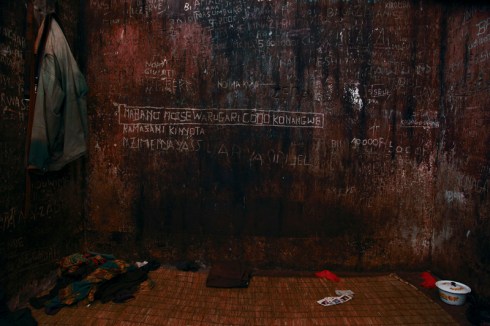
Muyinga prison
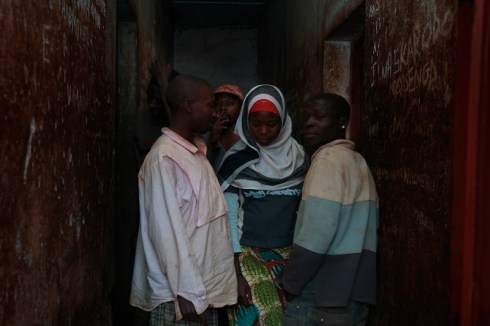
Jamila in Muyinga prison
PB: Lets talk about shared cell spaces.
NM: Males and females were separated in Cibitoke.
Buhinjuza, near Muyinga, was a site where you have girls mixed in the prison population. Muyinga is close to the Tanzania border. I show images of Jamila and her friend behind.
PB: This seems extremely problematic.
NM: Very. I was so shocked. They were 14 years old and the boys were grabbing them everywhere. But, when we were there it was an exciting moment for them, you know, 14-year-old girls …
In the image (below) of 11-year-old Marie scratching something on the wall, do you see the blue blanket behind? And the second picture? This is where the girls sleep. On the right hand side is a red door and that is the toilet. Behind the blue door to the left, is where the guys are held.
We asked the police if there was any contact. And he said “No contact, no contact”, grabbing the girl as he said that. Disgusting.
Every time the guys needed to use the toilet they’d cross this space. So we asked the prisoners for clarification, “Every time you use the toilet you have to ask the guard to unlock it?” and they responded, “No sometimes the door is open.” Which of course mean that there is contact.
In the detention cells that was the only site where boys and girls were mixed in.
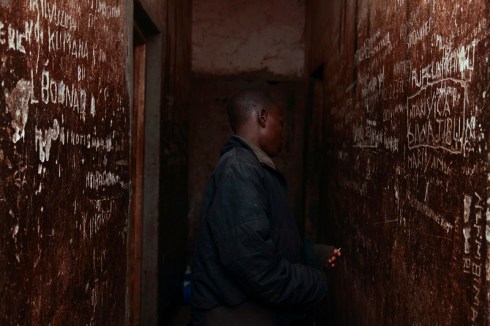
11 Year old Marie who is captured since 3 weeks after stealing the cell phone of Muyinga Administrator.

Muyinga prison
NM: In Burundi’s main Mpimba prison, in the capital Bujumbura, men and women are separated by a wall with holes in it. They have sexual contact through these holes. While I was in Mpimba I even saw women walking around in the men’s area. In Mpimba, there are babies born there. Relationships aren’t only among prisoners but of course between the guards and the women.
PB: But you took no photographs in Mpimba prison?
NM: No, it was not permitted.

Gitega prison
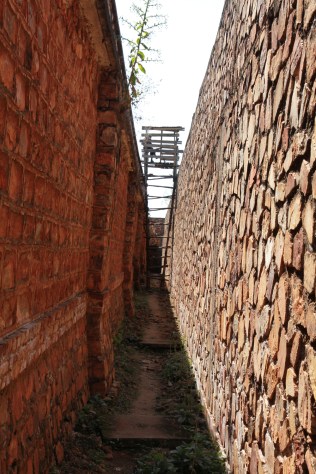
Gitega prison
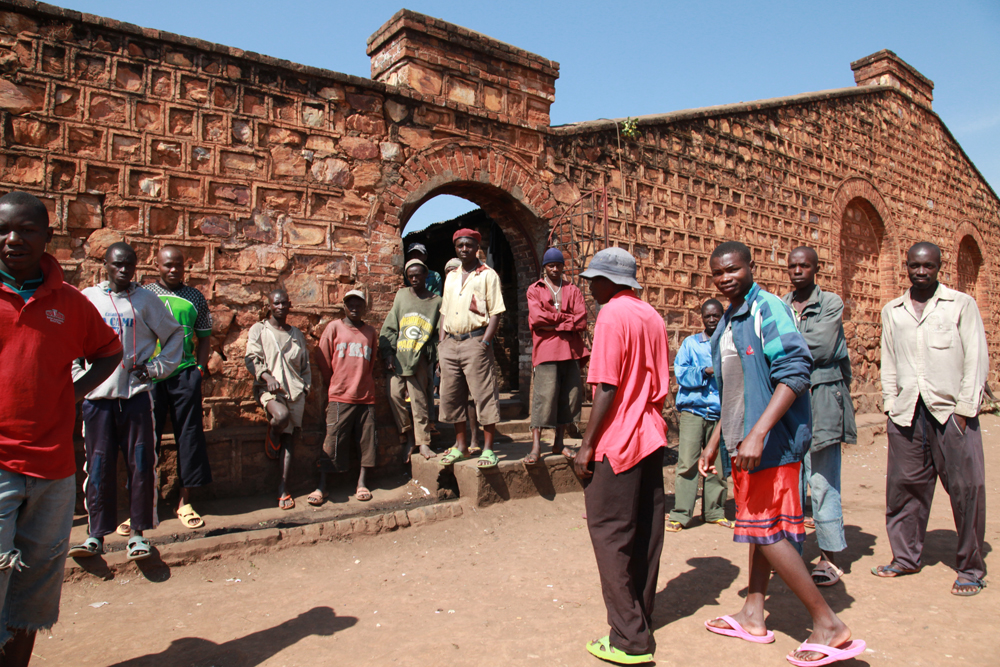
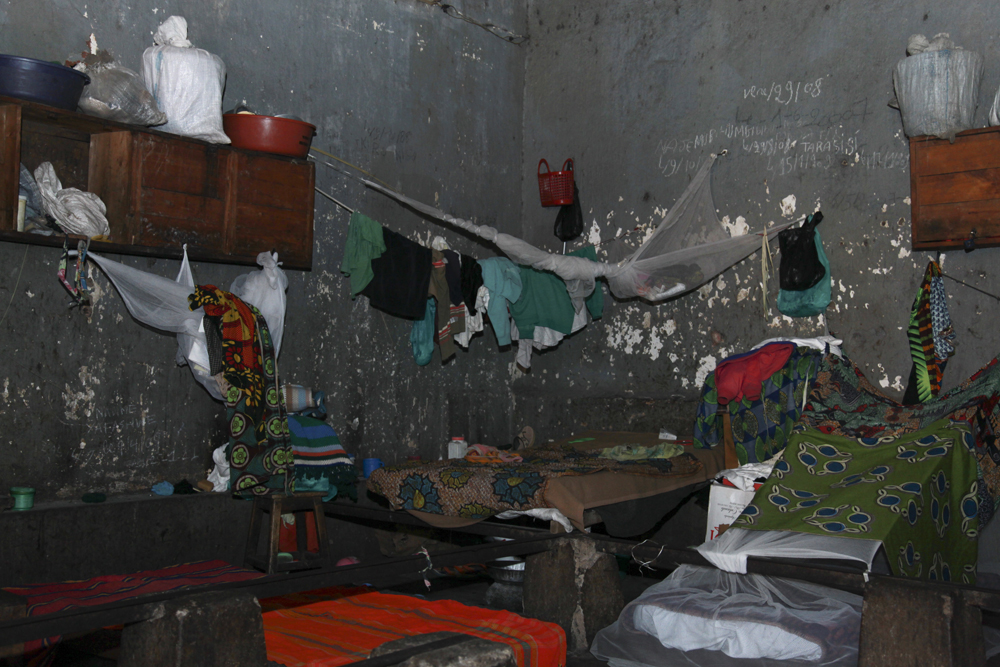
PB: Tell us about these images (two above, two below) of Gitega prison and its women’s quarters.
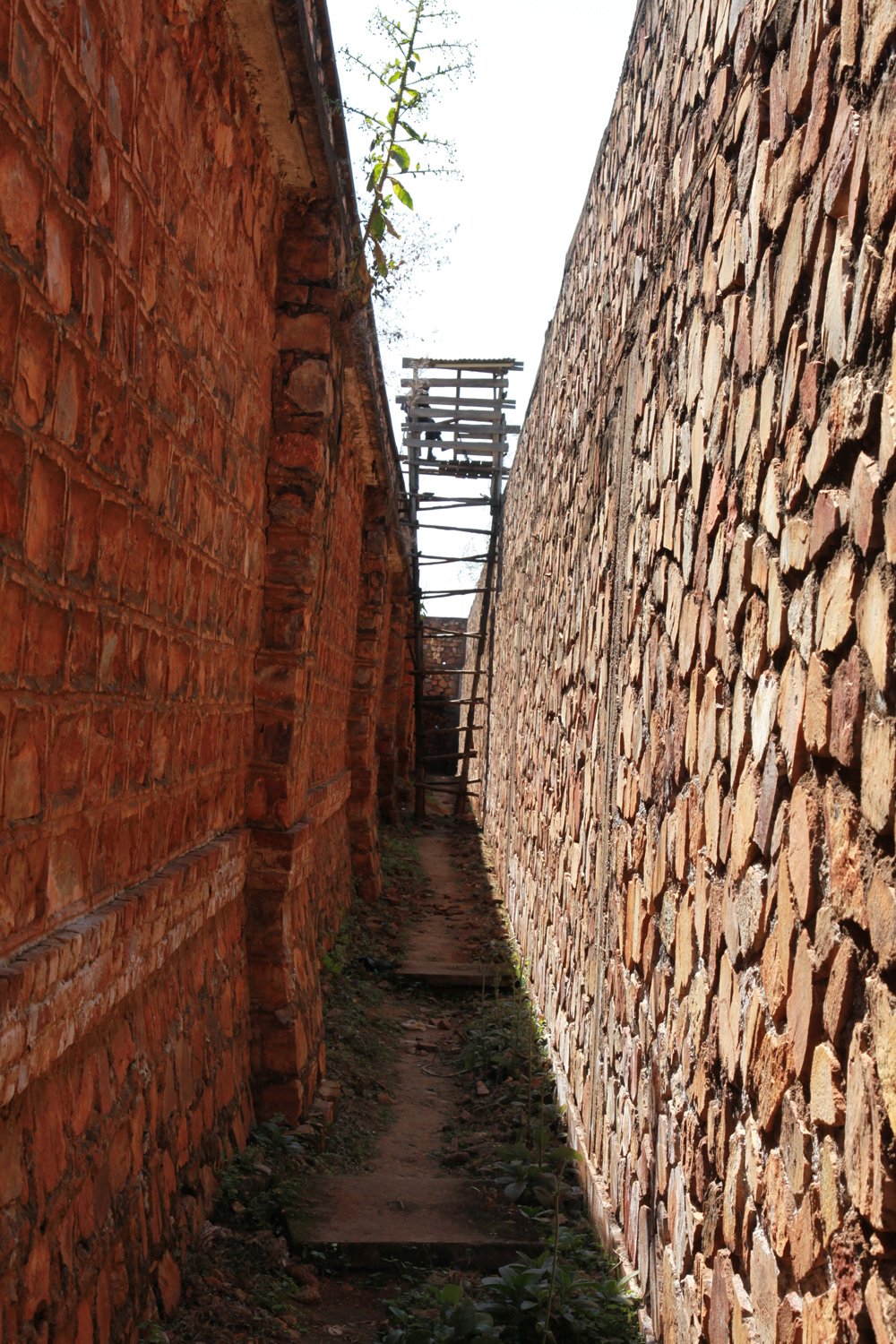
NM: Gitega is a mixed prison. It is interesting because it is an old structure.
PB: It looks like a fortress.
NM: There is an outside wall and then just inside is the exterior wall of the building so you have an open-air corridor which circles the prison.
The director was naïve. I told him I was taking pictures only of the walls and not of the people. I must say that otherwise I would not be allowed to take pictures.
In this outside corridor there were condoms on the floor. There are male guards who go into the women’s area and have sexual contact. It’s horrifying.
PB: Are there any women’s only prisons or jails in Burundi?
NM: Ngozi is the only female prison that exists in Burundi.
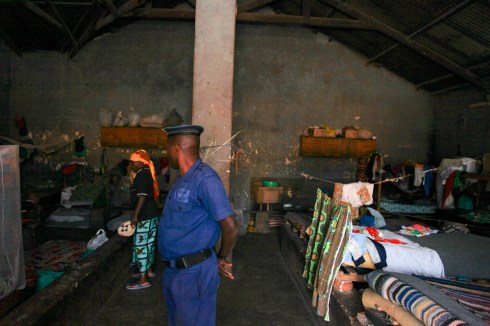
Women’s quarters, Gitega prison
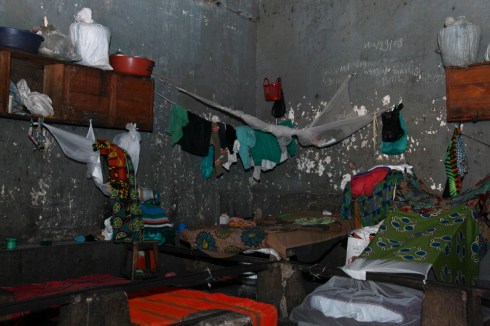
Women’s quarters, Gitega prison
PB: I read there are ethnic inequalities among the populations held in Burundi’s jails; that there are disproportionate number of Hutus in Burundi jails. Most people think only about Rwanda when they think of Hutu’s and Tutsis.
NM: Rwanda and Burundi used to be the same country,Ruanda-Urundi, so of course they have similar issues [and common conflicts].
After the revolution in the sixties Burundi established its own state and separated from the Belgian colonies. The difference [with Rwanda] is that in Burundi they stopped marking down who was Hutu and who was Tutsi in the Burundi passport. In Rwanda they still made the distinction.
As in Rwanda, the Tutsis were the more “sophisticated” because the Belgians had assigned them the higher race. Of course, there is no difference. Historically, ‘Tutsi’ means ‘owner of cattle’. That is all it means.
The Belgian authorities saw the Tutsis as taller, skinnier and looking “more European” … which is total bullshit. Consequently, Tutsis had higher standards [of living], more opportunities and more education and all services. [Tutsis] were more privileged. Even now if you talk to a lawyer he is probably Tutsi. They hold higher qualifications.

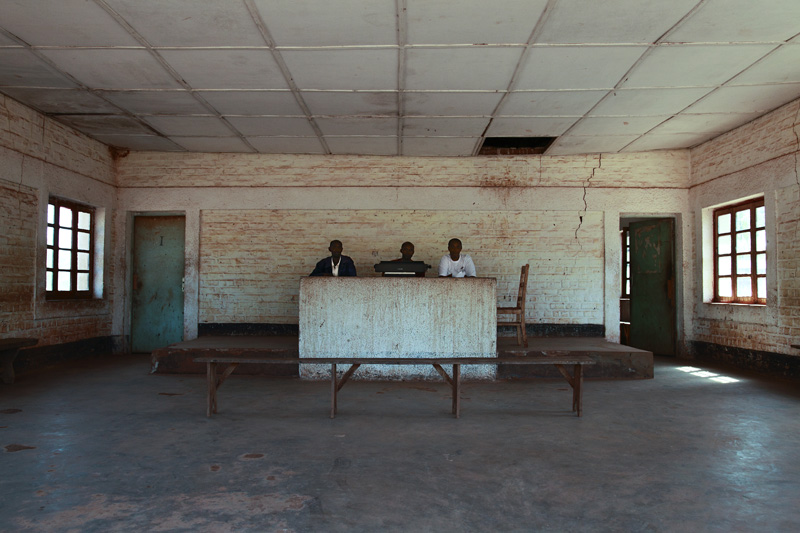
Judges waiting in Buhinjuza, near the city Muyinga.
NM: In 1972, there was a huge war in Burundi. It is not recognized as genocide but the Tutsi military went out and killed many Hutus. Hundreds of thousands of Hutus fled to Rwanda, to Congo and to Tanzania.
In 1993 the war actually began in Burundi when the Hutus started killing the Tutsi population.
PB: This aggression spilled over into Rwanda, I presume,
Laura and I met Hutu child soldiers who were recruited into the Hutu-led Palipehutu-National Liberation Forces (NLF) and started fighting because they had no food and they were angry about the situation. The Hutus are definitely the less privileged, the poorer people in Burundi.
NLF military forces still existed when we were there [Summer 2009]. They were out in the woods, not really active anymore. We went to some dissident camps; now demobilization camps.

Insight the detention cell of Cibitoke, where 38 man and children are captured. Most prisoners are held there up to 2 Years. By law the prisoners have to be judged after being captured for max. 14 days.

Cibitoke prison
PB: Would you say the Hutus are disproportionately represented in Burundi’s jails because of a typical class structure? Simply because, in current circumstances, they are a disempowered lower class?
NM: I would say so, I don’t really know the full reasons why there are more Hutus [in the jails]. I know Hutu fighters are now outlaws.
Generally, I think there are more Hutus living in Burundi than Tutsis, but I don’t know the percentages.
The National Council for the Defense of Democracy-Forces for the Defense of Democracy (CNDD-FDD) is the political party of the president Pierre Nkurunziza, and he is half Tutsi/half Hutu. The military used to be predominantly Tutsi. Now it’s a mix. The president had progressed the mix. Very few NLF dissidents still operate in remote areas.
PB: Explain more about over-population and the returning refugees.
NM: Burundi is very over-populated. Recently, Tanzania has been closing all its [refugee] camps. The Tanzanian government would say refugees could stay two more months, for example, and then they’d need to leave. You’d have 200,000 refugees coming back into the country. There have been 800,000 refugees since 1972.
These are Hutu refugees and now they must come back. There are so many Hutus who have never lived in Burundi, who were born outside of its borders. And now they must go back. They try to find the places they come from to get their old land back and of course others are now living on the land. Land conflict is the biggest issue in Burundi.
PB: Has Burundi had an influx of refugees from Congo these past few years? Is it a significant pressure?
NM: It is not significant. Congo has its own internally displaced people. The rural parts of Congo next to Burundi are where the war is and then other parts of Congo far away from Burundi are peaceful.
Rwanda, Burundi and Congo got all mixed up in the same war; it started in Burundi, went to Rwanda and now continues in Congo. Hutus killing Tutsis, Tutsis killing Hutus.
Prisoners in Citiboke receive no food by the government. Family members outside have to bring it to them. Some prisoners have no food for weeks and they beg the others for the left-overs.
PB: Moving back to the detention cells, what tensions existed in these small jails?
Laura wrote a good piece about how the system works when one is imprisoned in a detention cell. They ask you to buy a candle. The candle costs 20,000 Burundi franc – which is 20 Euros approximately – which is the equivalent of three months wage. If you can’t afford the candle, then you don’t get any food and you don’t get a place to sleep and you stand in the shit corner, where people shit.
PB: Have you photographs had much circulation? Can you measure the effect in the six months since you did the work?
NM: I have hope that people will want to know more about the jails. The images are important to for the NGOs because they are evidence of conditions and of kids being held.
Let’s face it, Burundi is just not important for the world.
I was talking to so many newspapers and they’re not interested. Maybe they’ll be interested when the presidential elections are held in Spring this year … but maybe they’ll only be interested if something bad happens?
Most magazines said The Dungeon is too specific, too dark, and it is not part of a war.
I am not getting any money from it, I don’t expect to, but the issue is getting out there. People can actually see it and ask questions. The most important thing is that the organizations can use the images.
The Dungeon will show at Visa pour l’Image, Perpignan 2010.
I’ve never worked on the topic of prisons or jails before, but I have worked – most of the time with NGOs – in refugee camps before (Buhomba, Burundi, Tuzla, Bosnia-Herzegovina 2005, Tuzla, Bosnia-Herzegovina, 2007). It was important speaking to the people in the jails. I’d tell them I’d try to get the story out and create some awareness.
PB: Thank you Nathalie
NM: Thanks Pete

Muyinga prison








 Prison Photography