Arrest 1 (1965) by Bridget Riley

I’d like to propose an alternative method to discuss issues of race in visual culture and the photographic industry, but first some preliminaries.

HUGO AND THE CURRENT DEBATE

Necessary discussions about photography and its intersection with race are occurring once-more. Earlier this year, the criticisms were unambiguous – that the PDN failed to reflect the diversity of society on it’s jury panel. Now however, the discussions stem not from critique of the photographic industry, but off the back of Pieter Hugo’s work and all the readings viewers have heaped upon Nollywood and latterly The Hyena and Other Men.

The confusion between the two series doesn’t help as they have very different purposes; you won’t see Nigerian movie actors in zombie costumes on the street, but there is an outside chance you’ll see animal-handlers in Nigeria because they actually travel, actually perform and actually have large, wild animals as pets.

To borrow a term from M. Scott Brauer, the ‘blog echo-chamber’ has been rumbling – Jim Johnson (interestingly all the way back in July); Amy Stein; duckrabbit; Daniel Cuthbert; and Joshua Spees

I will be clear here. I like Hugo’s work. I don’t think he exploits his subjects. I disagree with Jim Johnson when he says that Hugo’s work is ‘unexceptional’. I didn’t know that Nigeria had a thriving movie industry nor that Hyenas could be ‘tamed’ and kept on chains. To deliver new information is the least we should expect of photography, and yet often not achieved.

Sebastian Boncy and Stan Banos are absolutely right in that Hugo’s work can be used by viewers to confirm their existing racism, but Daniel Cutbert is also right in that Hugo is making interesting photos of interesting people in Africa.

Any work can be misinterpreted and to criticise Hugo for the potential small-mindedness of his viewers is to cut of debate prematurely. If we took this logic to the extreme then we’d all stop making pictures. I am glad to see names as famous as Walker Evans mentioned in the cultural relativist argument – that being that we don’t all get up in arms when photographers aesthetisise the rural (white) poor of Appalachia or beyond.

John Edwin Mason emailed me. He focused on the photographic product as it is consumed, and drew parallels between Hugos’ fine art work and that of the idiots at French Vogue:

“If Hugo’s viewers are the sort of folks who hang out in downtown galleries and read Aperture, wouldn’t there be considerable overlap between them and Vogue readers? Aren’t Hugo’s photos high-end consumer goods – in the same league as a designer dress, a Rolex, or a Merc? And like them signs of wealth, taste, sophistication?  Even if we only aspire to own these kinds of [luxury] items and consume them via the magazines we read, the aspiration alone moves us away from ordinary people.”

The territory of art as commodity is perhaps where the richest investigations of inequalities can occur.
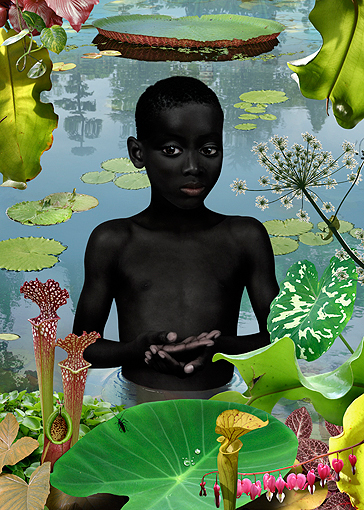
World #13 2006, BY Ruud Van Empel, Cibachrome, 33 x 36.5 inches

World #13 (2006) by Ruud Van Empel, Cibachrome, 33 x 36.5 inches

PHOTOGRAPHY AND RACE CONFERENCE

I wonder if this hotly debated topic were fleshed out elsewhere our results would be different? Instead of PDN answering to the inequalities of an industry, instead of comments being lost in wordpress/tyepad archives, instead of calls to extend the discussion being missed/ignored and instead of suspicion and frantic typing prevailing … could we try something different?

I am sure most photographers have a lot of common ground to stake. But unfortunately, the web (or at least typing on the web) is no substitute for discussion. It takes too long, the moments pass, emotions deflate and you’re not even sure if you’re being heard/read.

So could we not back up our convictions with a commitment to meet in person. I am not talking about a coffee and a quick chat. Could we the photoblogosphere-peeps not arrange among ourselves a “conference”? It doesn’t need to be a massive production but the invite could be open. If photo-collectives, companies, magazines want to join then all the better. The agenda is ours to set.

Don’t panic. It’s just a proposal. We could hold it anywhere; New York,  San Francisco, Santa Fe, New Orleans, Toronto, Chicago. We could do it next spring or summer … and plan.
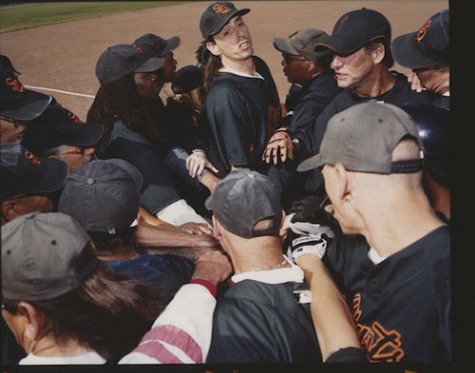
San Quentin Giants, by Emiliano Granado

San Quentin Giants, by Emiliano Granado

Obviously, discussion of race is impossible to ignore within the Prison Photography project.

The American prison system cages a disproportionate number of Black men. Other minorities are subjugated. Accusations of misogyny and gender prejudice can only gather traction given recent sentencing pollicy.

Issues change as one moves between domestic and foriegn sites of incarceration, but are no less important.

I’ve got much to say. Will you join me?

Found at the amazing Center for the Study of Political Graphics

Why bother wasting words when an effective graphic says it all?

Women in prison

Women in Prison Scott Boylston, Silkscreen, 2005

The production of this poster was donated to promote the work of Action Committee for Women in Prison.

NYC31738

NYC31758

NYC31751

NYC31737

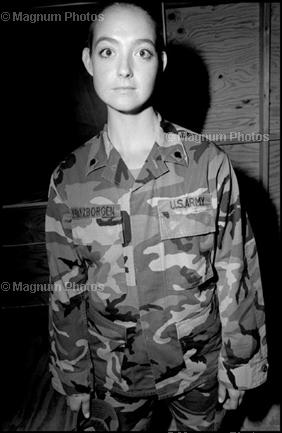
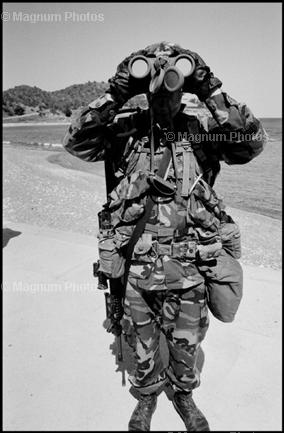
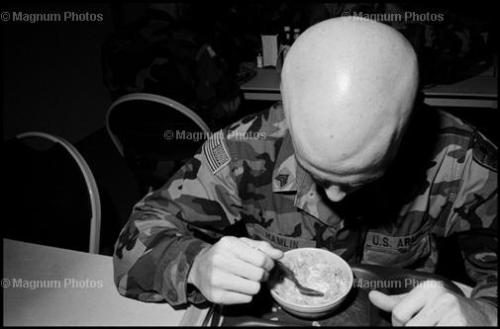
Go to Magnum and search “Gilden Guantanamo”. I’m not sure Gilden’s technique could really flourish at the illegal prison but he had a good go.

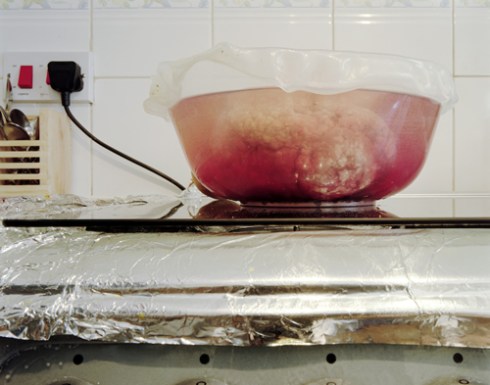
(From top left, clockwise) 1. Major-General Geoffrey Miller, Commander of Joint Task Force at Guantanamo Bay, is in charge of the 680 suspected enemy combatants in the camp. 2. Specialist Lily Allison Fitzborgen, a reservist who wants to become a police officer, is one of the guards who watches over the detainees. 3. Surveillance at Camp America. 4. Sergeant guard at a hospital for “enemy combatant” detainees. His name is blacked out so the detainees can’t see it. (Below) Before a prayer breakfast at Camp America.

NYC31746

All photos © Bruce Gilden/Magnum

If I’ve ever heard an interview which encapsulates the pride-cum-naivety of the military rank and file, the necessarily difficult (but largely unprofitable) questions of the media and the legal blackhole the Cheney administration established with Guantanamo … it is this.

I was surprised to hear that detainees threw excrement and threatened to kill the guards. Perhaps this brash antagonism is a relatively recent development at Guantanamo, now it’s population is reduced to the most fanatical 200 or so prisoners.

clark1

I just keep coming back to Edmund Clark‘s work. And his book isn’t even out yet. It doesn’t help when venerable folk like Jim Casper and Colin Pantall are spending time and energy on his efforts – most recently from Guantanamo.

(BTW, Pantall has been posing some really good questions and posting some really good photography these past few weeks.)

Anyway, upon returning to Pantall’s site I picked up this quote by Clark:

“There is a lot of long lens imagery of Guantanamo showing the prisoners in their orange boiler suits, but I don’t know what that’s telling me.”

It seems to touch upon many of my frustrations with photography from Guantanamo. Many inventive photographers will find manouveurs to draw out a novel image at Camps Delta, X-Ray, Iguana and others. Of course it is worth remembering that the majority of photos coming out of Gitmo will be consumed by the masses through media served by newswire coverage relying on long lens images of faceless orange boiler suits.

Clark has widened the scope of Guantanamo imagery by following the detainees to their homes and picking up on the underwhelming details of their “free” lives. The sterility and parallels between incarceration and home are sometimes frightening.

clark3

With Pantall’s permission I reissue Clark’s words here. Pantall interviewed Clark for the British Journal of Photography. (Underlining for emphasis is mine)

My last book was called Still Life/Killing Time and was about a prison in Britain. I’m interested in the themes of confinement and entrapment. Guantanamo Bay stands out as a symbol of confinement and my imagery is about the symbolism of that confinement. The starting point was going out with detainees who had been released and seeing how they were surviving. These people had been in prison for years, had never been charged but still had this massive label of being the worst of the worst stuck on them. I was interested in what their personal spaces said about them and if they were any traces of what they had experienced in Guantanamo.

Access was very difficult but started with their lawyers and slowly progressed to the point where I could photograph their homes. Once this was done, the second part was getting into Guantanamo itself. I applied to the Pentagon and made it clear I wanted to photograph both the American Naval Base side and the prison side. It took me 6 months to get clearance and then it was another 2 months before I went. Once I was there I was fortunate enough to get paired up with Carol Rosenberg, a journalist from the Miami Herald who had been reporting on Guantanamo since it opened as a prison. She knew how to deal with the Guantanamo media team (who were new in their jobs) and how to get past their obstruction.

I spent 8 days there in total, including 4 days on the naval base. It was like so many expatriate places, more American than America itself. It was interesting to look at the schools, the shops, the restaurants. It was like a little bit of America in Cuba, with reflections both of America and of entrapment; models of old refugee camps, a shrine to the Virgin Mary where she almost seems to be imprisoned, A Ronald MacDonald statue surrounded by fencing and wire. It looks like he’s banged up.

I don’t have any images of the detainees except for one – which shows a guard reflected in the cell window. But that’s not what my work is about. There is a lot of long lens imagery of Guantanamo showing the prisoners in their orange boiler suits, but I don’t know what that’s telling me. My work is about the spaces and what they evoke and how they relate to the spaces people live in once they have been released.

The work is about memory and control and dragging the work out of Guantanamo into where people are living now. I’m doing that through the edit of the 3 different spaces I photographed: the homes, the American Naval Base and the prison. When I got back, I started to edit the pictures in sequence as a narrative, but then I began to mix them up so you’re never quite sure where you are. I juxtaposed images, put one things together so one image sets off ideas that enriches the idea of what it is both to have been in Guantanamo, but also to have that experience inside you.

There are also strange details that I’m not sure off, such as the picture of the Duress button. We were told this was in an exercise room but we think it was one of the interrogation rooms and this was a panic button for the guards. Another picture shows a row of Ensure jars with a plastic tube next to it. Ensure is an energy drink they used to force feed hunger striking prisoners and the Americans had it on display to show their ‘duty of care’.

The detainees brought home and kept the strangest of things, a red cross calendar with the days ticked off. Only the best behaved prisoners would get this because there was a strategy of total disorientation. When prisoners first arrived they had no idea of where they were, what day it was or what time it was.

Then I looked at other bits of people’s homes, especially windows because in Guantanamo they have no windows with a view. There are no views. Being released and being able to choose what to look at, to have a view, is quite a thing. Sometimes people chose not to have a view.

I’m working with Omar Deghayes on an edit of all the letters he received at Guantanamo. When people received letters, they didn’t get the original, they got photocopies or scans of every page, even blank pages, including the front and back of the envelope, each page bearing a document number and a Guantanamo stamp.

clark2

All Images © Edmund Clark

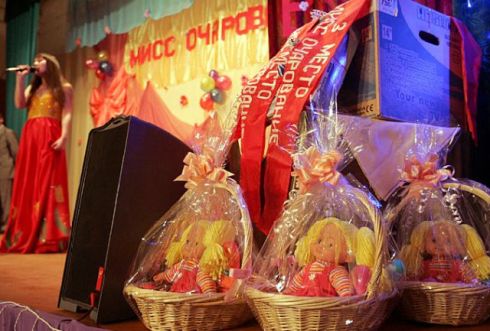
prison_girls_14

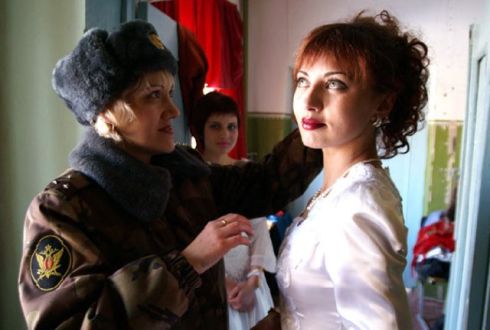
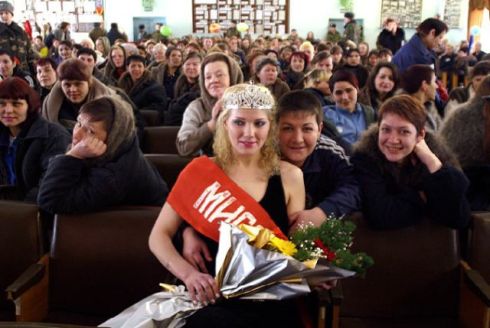
I realise things have been drab and monochromatic (and quite frankly depressing) on Prison Photography recently. My solution was to put up some prison beauty pageant images from Russia I found on a Russian website via BoingBoing.

I reckoned they’d stand in nice contrast to Jane Evelyn Atwood’s bleak images of the womens penal colony, Perm, Russia by directly testing Atwood’s view and undermining our preconceptions oncemore.

The photographs could also provide some much needed colour without much need for commentary, right? Wrong. The comments on BoingBoing suggest that not all, if any, are from Russian womens’ prisons.

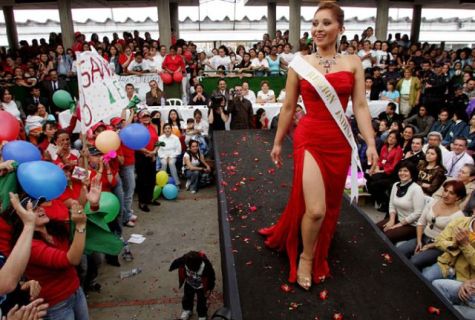
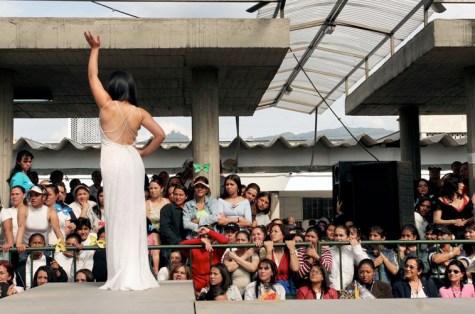
Comparison with Fabio Cuttica’s work here and here holds up this assertion. Compare the two images below:

PHOTOGRAPH CLAIMING TO BE FROM RUSSIAN PRISON. Source: http://www.webpark.ru/comment/52940

PHOTOGRAPH CLAIMING TO BE FROM RUSSIAN PRISON. Source: http://www.webpark.ru/comment/52940

PHOTOGRAPH KNOWN TO BE FROM BOLIVIA. Credit: Fabio Cuttica. Source: http://www.nerve.com/dispatches/prisonpageant/

PHOTOGRAPH KNOWN TO BE FROM COLOMBIA. Credit: Fabio Cuttica. Source: http://www.nerve.com/dispatches/prisonpageant/

I’d proffer that seven of the fifteen images in the original (Russian) web posting are from the same pageant Cuttica photographed in Columbia.

The image at the top and the three below I would guess are from Russia, but who can be sure if they are even from inside a prison?

I am left wondering how often I’ve read a caption or commentary ON ANY PHOTOGRAPH – and taken it as truth. Very often, I bet. Which leads me to wonder how often we’re dangerously misled by images. Who knows?

prison_girls_02

prison_girls_12

prison_girls_13

I suppose this only matters if you care if the images came from within a prison. Amputated from a true story, these images aren’t a malicious misrepresentation but probably a product of absent research. Although one wonders under what circumstances images from separate continents were sourced and paired.

So, beware the caption! Adam Broomberg and Oliver Chanarin have said “A photograph that relies on its caption to create meaning is impotent.” The reverse position holds sway too. Mustn’t captions be absolutely necessary at times to stave of the wild presumptions viewers bring to imagery?

“The statistics are embarrassing to the state [of Texas]”

Mona Reeder, Poynter Online, May. 20, 2008

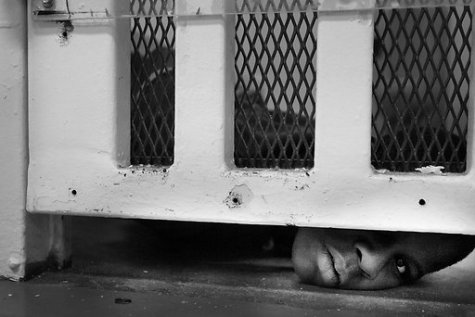
60% of children under the Texas juvenile prison system come from low-income homes. Texas spends more than twice as much per prisoner as per pupil. Laying on the floor, thirteen-year-old Drake Swist peers out from underneath the bars on his cell door in the security unit of the Marlin facility. Kids get their first glimpse of life in the Texas Youth Commission through the Orientation and Assessment facility in Marlin, Texas.

41% of children in the juvenile justice system have serious mental health problems. Joseph, 17, got a little bit of sunshine in the yard outside the security unit at Marlin. The facility, which once housed adult prisoners in the Texas Department of Criminal Justice.

Damon Winter recommended the work of Mona Reeder, a former colleague of his at The Dallas Morning News.

Reeder won the ‘Investigative Issue Picture Story’ at the 2008 Best of Photojournalism Awards for The Bottom Line. Through pictures, Reeder explored Texas’ poor rankings in a number of categories including health care, executions, mental health statistics, juvenile incarceration, voter apathy, poverty and environmental protection.

This is not solely a photography project about prisons, and thereby lies its strength. Reeder successfully links the stories of numerous state institutions that are left wanting when put under close examination. It is truly a Texan story for Texan constituents. Reeder explains, “As I was wrapping up a project about homelessness in Dallas, a social worker who had helped me with contacts on the streets handed me a set of statistics issued by the state comptroller’s office ranking Texas with the other states in the U.S.”

Photojournalism was an effective medium for this breadth of information, “This project represented a well-researched, in-depth piece about serious issues affecting the entire state of Texas, and it was presented in an innovative manner that even the busiest person could get through and absorb in a relatively short amount of time” states Reeder.

60% of children under the Texas juvenile prison system come from low-income homes. Texas spends more than twice as much per prisoner as per pupil. Laying on the floor, thirteen-year-old Drake Swist peers out from underneath the bars on his cell door in the security unit of the Marlin facility. Kids get their first glimpse of life in the Texas Youth Commission through the Orientation and Assessment facility in Marlin, Texas.

60% of children under the Texas juvenile prison system come from low-income homes. Texas spends more than twice as much per prisoner as per pupil. Laying on the floor, thirteen-year-old Drake Swist peers out from underneath the bars on his cell door in the security unit of the Marlin facility. Kids get their first glimpse of life in the Texas Youth Commission through the Orientation and Assessment facility in Marlin, Texas.

Mona Reeder has worked on numerous criminal justice issues in Texas, including death row stories and sex-offender rehabilitation.

As well as the BOP (2008), Reeder won a Robert F. Kennedy Award for The Bottom Line. She was interviewed by the Poynter Institute about the project and her approaches to photojournalism.

The Dallas Morning News gave The Bottom Line the full multimedia treatment with an impressive online package featuring eight slideshows of the stories of individuals wrapped up in the statistics. IT’S A MUST SEE.

Texas: First in capital punishment, second in the size of the income gap between rich and poor, and second for the number of people incarcerated. Behind every set of numbers is the possibility that yet another child will live a lesser existence. Does Texas not know what to do, or does it just not care? Texas has the most teen births and the most repeat teen births in the nation, earning a ranking of 50th in the U.S. Barely one day old, Jasmine Williams sleeps on her mother’s lap as they wait for the baby’s paternal grandmother to come and take custody of her. Her mother, Kimberly Williams, 15, is in TYC custody and correctional officers shackled her feet shortly after giving birth to her baby. Both of Jasmine’s parents were 15 when she was born.

Texas: First in capital punishment, second in the size of the income gap between rich and poor, and second for the number of people incarcerated. Behind every set of numbers is the possibility that yet another child will live a lesser existence. Does Texas not know what to do, or does it just not care? Texas has the most teen births and the most repeat teen births in the nation, earning a ranking of 50th in the U.S. Barely one day old, Jasmine Williams sleeps on her mother’s lap as they wait for the baby’s paternal grandmother to come and take custody of her. Her mother, Kimberly Williams, 15, is in TYC custody and correctional officers shackled her feet shortly after giving birth to her baby. Both of Jasmine’s parents were 15 when she was born.

“Curiosity was the initial spur. Surprise, shock and bewilderment soon took over. Rage propelled me along to the end.”

Jane Evelyn Atwood on photographing in women’s prisons.

This is the third and final installment in my series Women Behind Bars. The second part looked ta the writing of Vikki Law and the first looked at the journalism of Silja Talvi. It was Silja who recommended Jane Evelyn Atwood’s work.

atwoodcages

When discussing the work of a prison photographer, it is preferable to do so within the specifics of the region or nation they document. Prison Photography‘s key inquiry is how the photographer came to be in the restricted environment of a prison and these details differs from place to place. Such inquiry is complicated by Jane Evelyn Atwood‘s work because she visited over 40 prisons in twelve countries over a period of one decade. In some cases I know the location of a particular image and in others I don’t. I suggest you compensate for this by buying the book Too Much Time for yourself.

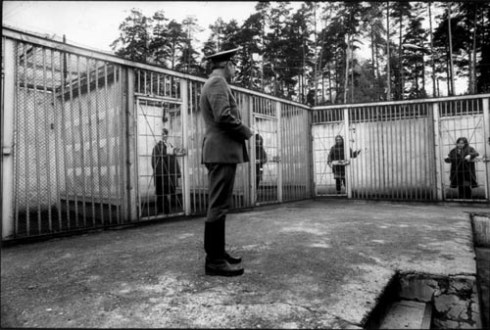
Above is a women’s penal colony in Perm, Russia. It holds over 1,000 women – the majority of who work forced hard labour. Here we see women who are in solitary confinement experiencing their yard privileges – half an hour in outside cages. Most women in the prison are there for assault, theft or lack of papers.

Below is a scene from a Czechoslovakian prison. The scars are not the result of genuine suicide attempts but of regular self-mutilation – a problem more common among female prison populations than male populations.

selfmutilation

Another reason to pick up Atwood’s book would be that there isn’t much stuff out there on the web – and that which is is low resolution or small-size. You can see a small selection from Atwood’s Prison series at her website; small images at PoYI; and a really good selection of tear-sheets at Contact Press Images.

By far the best stuff on the web concerning Too Much Time is an Amnesty International site devoted to the project. It includes a powerful preface in which Atwood lays out her raison d’etre. Next Atwood provides a “world view” comparing the prison systems of France, Russia and the US (each a five minute audio). Then comes three specific photo-essays with audio (Motherhood, Vanessa’s Baby, The Shock Unit). Finally, Atwood provides six stories behind six photographs. The stories are many and the facts more astounding than the emotions.

While Atwood’s pictures present the many individual circumstances of the prisoners, Atwood has identified a common denominator; “Of the eighteen women I met in [my] first prison, all but one seemed to be incarcerated because of a man. They were doing time for something he had done, or for something they would never have done on their own.”

Atwood qualifies this, “One woman told me her husband forced to set the alarm to have sex with him three times a night. She endured it for years and finally killed the man that kept her hostage. Another woman’s husband was shot by her daughter after he had stabbed her in the arm as a “souvenir”, poured hot coffee on his wife’s head for not mixing his sugar, and urinated all over the living room after one of the children refused to come out the bathroom. The woman was serving time for “refusing to come to her husband’s aid.”

atwoodshackles

What is most impressive about Atwood’s work is that it predates photojournalism’s wider interest in prisons by a couple of decades. She had at first tried to gain entry into a French prison in the early eighties. Her failure is unsurprising given Jean Gaumy of Magnum was the very first photojournalist inside a French prison in 1976.

It is a scandal that the discussion over shackling women during labor and gynecological examination continues today. Atwood captured the brutality of it decades ago.

atwoodbasket

Atwood’s work veers consciously between two reality of the women’s situation – the environment and the body.

Many of her photos share a compositional austerity. The hard angles of institutions run according to ‘masculine mathematics’ (dictating sentencing and experience) are repeated. Atwood punctuates this stern reality with flourishes of femininity … and touch.

atwoodshower

Some may think Atwood has over-reached herself with a global inquiry and I’d be sympathetic to the point if anyone else had come close to her commitment. Even considering each prison system in isolation, Atwood’s work can hold its own. Her work in Perm, Russia is particularly powerful as it orbits closely around the issue of uniform, identity and the complications it brought to bear directly on her documentary.

At the Amnesty site, Atwood brings up many interesting points of comparison. She identifies the US system as the most sterile with a legal mandate to treat female prisoners in the same manner as male prisoners. But she also says that if there is grievance or complaint to be settled, US prisoners have recourse to do so. Such allowances are not made in France.

On the other hand, children are excluded from all but a couple of US prisons. The security threat is cited as the reason: a child inside a prison is a constant vulnerable life and constant hostage target. The claim seems a little bogus when penal systems of other countries are brought into consideration.

atwoodkiss

Atwood was interviewed by Salon about the project. She has also worked on landmine victims and talked to Paris Voice about that. Here, she talks about Canon about her work in Haiti.

Jane Evelyne Atwood

Jane Evelyn Atwood

Biography: Jane Evelyn Atwood was born in New York. She has lived in Paris since 1971. In 1976, with her first camera, Atwood began taking pictures of a group of street prostitutes in Paris. It was partly on the strength of these photographs that Atwood received the first W. Eugene Smith Award, in 1980, for another story she had just started work on: blind children. Prior to this, she had never published a photo.

In the ensuing years, Atwood has pursued a number of carefully chosen projects – among them an 18-month reportage of a Foreign Legion regiment, following the soldiers to Beirut and Chad; a four-and-a-half-month story on the first person with AIDS in France to allow himself to be photographed for publication (Atwood stayed with him until his death); and a four-year study of landmine victims that took her to Cambodia, Angola, Kosovo, Mozambique and Afghanistan.

Atwood is the author of six books. In addition, her work has been including the ‘A Day In The Life’ series. She has been exhibited worldwide in solo and group exhibitions. She has worked for LIFE Magazine, The New York Times Magazine, Stern, Géo, Paris Match, The Independent, The Telegraph, Libération, VSD, Marie-Claire and Elle. Atwood has worked on assignment for government ministries and international humanitarian organizations, including Doctors Without Borders, Handicap International and Action Against Hunger.

She has been awarded the Paris Match Grand Prix du Photojournalisme (1990), Hasselblad Foundation Grant (1994), Ernst Haas Award (1994), Leica’s Oskar Barnack Award (1997) and an Alfred Eisenstaedt Award (1998). In 2005, Atwood received the Charles Flint Kellogg Award in Arts and Letters from Bard College, joining a company of previous laureates including Edward Saïd, Isaac Bashevis Singer and E.L. Doctorow.

EMAIL

prisonphotography [at] gmail [dot] com

Prison Photography Archives

Post Categories