curbreportcard

WHAT’S IN A NUMBER?

Four years ago, after decades of legal battle, the Supreme Court of the United States ordered California to reduce its state prison population by approximately 30,000 people. Instead of looking seriously toward cheaper and safer alternatives to custody, the state redirected a lot of those convicted of crimes into the county jail systems and stopped receiving citizens with sentences of less than 3-years into the state prison system. California, essentially, swapped one set of cells for another set of cells. This was a process called Realignment.

County administrators balked at the notion and the jails creaked. So, the state dove into its budget and redirected money toward the counties. In most cases, the counties opted to build new jails.

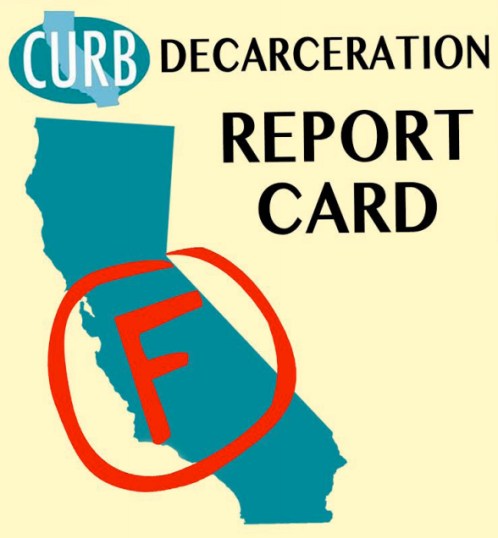
On top of realignment was, one year ago, Prop 47 which downgraded several non-violent felonies to misdemeanors and reducing sentences for thousands in the process. So, at a state level, the statistics read as though the Golden State is putting fewer people in boxes. But the picture isn’t so rosy, as the latest “Decarceration Report Card” from Californians United for a Responsible Budget (CURB) shows.

READ THE REPORT

This is the third time CURB has graded California counties on whether they’re reducing the number of people incarcerated and investing in community solutions, or whether they’re building new jails.

“This year, for the first time, every county received a failing score,” says CURB. “Since 2007, $2.2 billion of jail construction funding has been approved by the state for local jail construction. Twenty-three counties are already building new jails. Five are building two or more jails. And thirty-two counties are applying for the current round of jail construction funding.”

THE APPROPRIATION OF LANGUAGE … AND MONEY

The correctional system employs hundreds of thousands of people; it has a labor capital to nurture and a workforce perversely both exploit and “protect”. This means, the system must move with the times and move where the money is. With a nation now enlightened to how racist, classist and abusive prisons and jails are, the new common consensus is that we must treat, educate and rehabilitate prisoners, not merely lock them away. As such, treatment and rehab is a new-found “boom sector.” The state has adopted the reform language of anti-prison activists, twisted it to their own rhetoric, and are chasing the increasing number of dollars being earmarked for rehab.

“These jail projects are being promoted as ways to help incarcerated people and their families–improving mental health treatment, adding classroom space, and providing so-called gender-responsive care,” says CURB.

Do not be fooled. #AllJailsAreFails. We don’t need better jails, we need fewer jails.

The highest judges in the country ruled California’s prisons as unconstitutional and medically negligent. What makes us think that the state agencies can provide a functional version of rehab or treatment? Or even that citizens would willingly trust the agencies that incarcerate to treat?

READ THE REPORT

CURB

Californians United for a Responsible Budget are the best. So far, the report has received the following coverage:

Report Blasts Jails Building (Sonoma Union Democrat)

Orange County Blasted For Seeking Jail Expansion Over Alternatives to Incarceration (OC Weekly)

California Spending Billions on New Jails (TeleSur)

Pacifica Evening News. Starts at 25:33 (KPFA)

HOW TO STOP A JAIL

Do you live in California? Is your county trying to build a new jail? Check out CURB’s tool-kit, How to Stop a Jail in Your Town!

READ THE REPORT

1

DOUBLE METAPHOR

“Being in the prison system is like you go into a maze and never come out,” said an incarcerated to man to artist Sam Durant in the months preceding Open Source, a city wide public art project in Philadelphia.

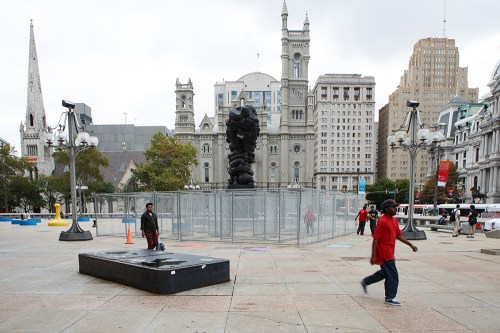
Durant has erected Labyrinth, a 40x40ft maze of chain-link fence, in Thomas Paine Plaza, across the street from City Hall. The public have been hanging personal responses on the maze fence using it as a stage to consider mass incarceration. Durant intended that the structure which begins as transparent will gradually become opaque with the publics additions.

Philadelphia is a sadly fitting venue. The prison industrial complex has had a particularly acute effect on Philly communities and Pennsylvania as a whole. PA has one of the largest and strictest prison systems. Philadelphia has a jail system with a history of beatings, discrimination and scandal.

It would be folly to think that politicians are going to correct the problems of a bloated, abusive system without the help of the citizenry.

“The maze functions as a double metaphor, symbolizing not only the struggle of criminals caught in the Department of Corrections but for how, as a society, we are all navigating the labyrinth of mass incarceration,” says the Open Source website.

During his recent visit, the Pope didn’t take the opportunity to publicly shame City Hall and those who work within, but Durant’s sculpture obliquely does.

I like this art.

2014-048_OS_Durant_19

2014-048_OS_Durant_01

Sam Durant

Sam Durant is a multimedia artist whose works engage a variety of social, political, and cultural issues. Often referencing American history, his work explores the varying relationships between culture and politics, engaging subjects as diverse as the civil rights movement, southern rock music, and modernism. He has had solo museum exhibitions at the Museum of Contemporary Art, Los Angeles; Kunstverein für die Rheinlande und Westfalen, Dusseldorf, Germany; S.M.A.K., Ghent, Belgium; and the Govett-Brewster Art Gallery, New Zealand. Durant shows with several galleries, including Blum and Poe, Los Angeles; Paula Cooper Gallery, New York City; Praz-Delavallade, Paris; and Sadie Coles Gallery, London. His work can be found in many public collections, such as the Art Gallery of Western Australia, Perth; Tate Modern, London; Project Row Houses, Houston; and the Museum of Modern Art, New York. Durant teaches art at the California Institute of the Arts in Valencia.

CREDIT

Photos by Steve Weinik.

aa

On Thursday, the Federal Communications Commission will vote on prison phone calls. It will be streamed live on the FCC website on Thursday, October 22nd at 10:30am EST.

The event will be live tweeted at #PhoneJustice.

Help spread the word so folks tune-in to the vote. It easy for you to help and yell about this, with the #PhoneJustice Thunderclap campaign. I just did and an automated tweet will go out to my followers.

hurford

FOLLOW HCAH ON INSTAH

I’m being facetious of course. Playful, yes. And earnest, oh yes.

Love the Hurford Center for Arts and Humanities (HCAH). Over at HCAH, they’ve got Matthew Callinan the hardest working man in the Greater Philadelphia area and the fellow who gave me my big break.

FOLLOW HCAH ON INSTAH

Callinan, the campus exhibitions coordinator at Haverford College, builds four shows every year, from the ground up. He’s interested not in the big names per se but the emerging ideas of curators, artists and collectives who’ll connect Haverford students to the world as it is now.

And there’s a good amount there for photo-lovers, too. For example, the recent The Past is a Foreign Country a solo show for François-Xavier Gbré and Possible Cities, curated by Ruti Talmor including the work of photographers Sammy Baloji, Pieter Hugo, Salem Mekuria, Sabelo Mlangeni, Guy Tillim and IngridMwangiRobertHutter.

Check out the archive. There’s Zoe Strauss and Hank Willis Thomas, too.

Oh, and how could I miss the current show?!?! The Wall In Our Heads is a themed show about the Berlin Wall, curated by the legendary Paul M Farber who has written extensively on the TV show, The Wire. Do not miss Farber’s paper The Last Rites of D’Angelo Barksdale: The Life and Afterlife of Photography In The Wire.

How better to follow this hotbed of innovation than through the Instah?

FOLLOW HCAH ON INSTAH

Free-Prison-Reform-Graphics1

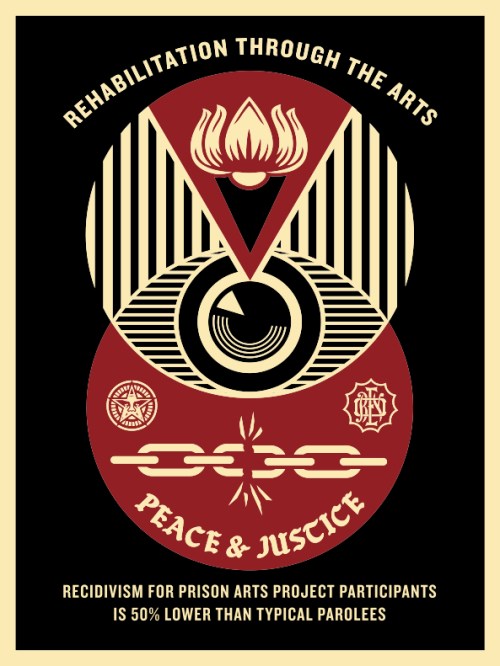
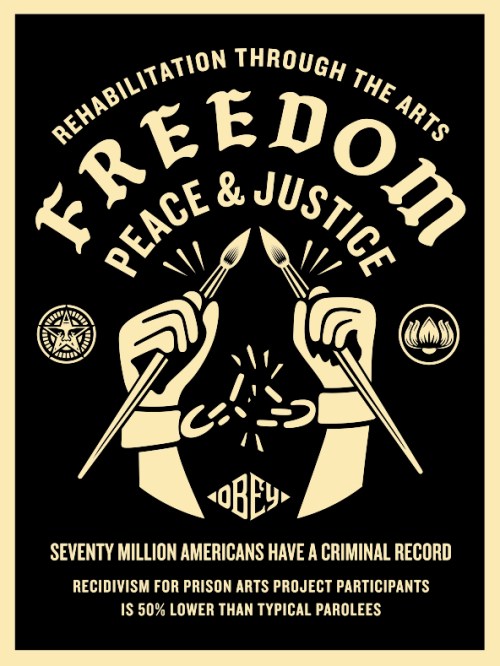
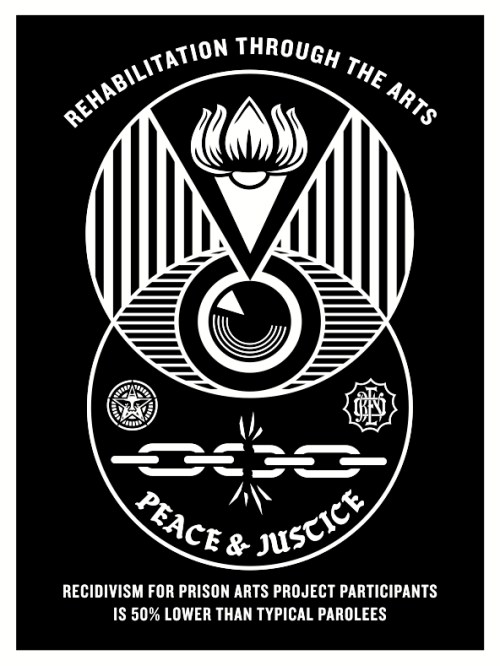
The high priest of street art just dropped half-a-dozen posters for use by your good selves against the prison industrial complex. #abolishprisons.

Made as part of the Philadelphia Mural Arts-organized Open Source project, they are classic Fairey, but the are free. And they are weapons in the fight.

“Open Source is a month-long, citywide celebration of innovation,” says Mural Arts. “Curated by Pedro Alonzo, the 14 projects of Open Source reveal aspects of Philadelphia’s urban identity. Open Source encourages artists to engage in community-centered explorations, addressing a variety of topics, including immigration, recycling, mass incarceration, the environment, community reinvestment, and displacement.”

The 14 artists at large in Philly are the Dufala Brothers, Sam Durant, Shepard Fairey, JR, Ernel Martinez & Keir Johnston, MOMO, Jonathan Monk, Odili Donald Odita, Michelle Angela Ortiz, Sterling Ruby, Jennie Shanker, Shinique Smith, Swoon and Heeseop Yoon.

Did I mention OBEY Fairey’s works were FREE? Download a PDF of the graphics here.

Free-Prison-Reform-Graphics3

Free-Prison-Reform-Graphics

Free-Prison-Reform-Graphics4

Free-Prison-Reform-Graphics2

Free-Prison-Reform-Graphics5

©GrantBlankenship2

Reporting on the prison industrial complex requires many tactics of approach in order to sustain audiences’ attentions and emotions. For all the constant misery, shame and violence the prison systems of America mete out, that relentless mood of defeat cannot dominate the flow of reported stories. Prisons are scary enough without giving people added fatigue and an easy option to turn away from stories heated the same beat-down drum. I guess this applies to all serious issues and is why human interest stories exist in journalism.

Human interest stories are great, but they have their place. Within the prison system are human interest stories ones that journalist find or are they ones fed to them? We’re headed into the weekend here and the sun is up so I don’t want to be a debbie-downer but I want to flag this contested context before celebrating Grant Blankenship’s latest human interest story, Say a Prayer for the Barber.

1©GrantBlankenship8

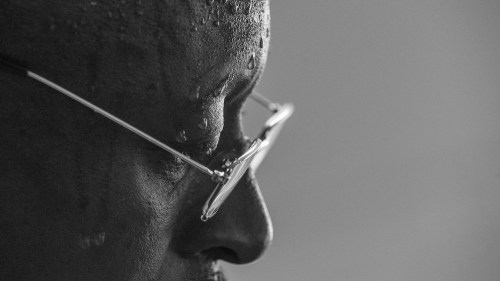
Anthony Ponder spent many years in prison in Georgia. He was released on August 18th. Not knowing where to go he spent his first night out asleep in the truck outside his uncle’s house. While he was inside he was the prison barber.

“Population barber. So I’ve got plenty of practice. Unfortunately.”

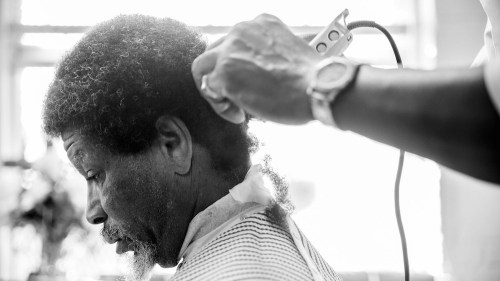
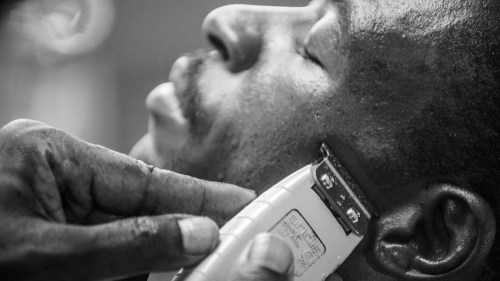
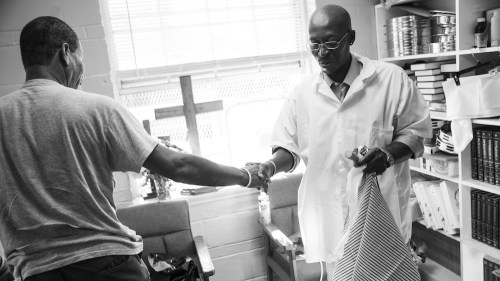
Anthony wasn’t afforded much help when he got out form the state. But two churches in the town of Macon, GA did; Centenary Church and Vineville United Methodist Church gave him clippers, scissors and a chair and a space to cut hair. Every Sunday morning, Anthony cut the hair of men.

Every Sunday morning, Anthony cut the hair of men who are making the transition, as he did, from prison or jail back into society.

“I was attracted to the story because of its simple reciprocity. A man is given a hand up and he returns the favor,” says Blankenship. “I was not assigned the story, but when I heard about Anthony I jumped on it pretty quickly.”

The full piece, including audio is titled Say a Prayer for the Barber. Recommended.

Anthony’s “shop” is located in Centenary Church which works with a number of men, providing transitional housing and other services. Eric, an organizer at Centenary, asked Anthony if he would like to volunteer but Anthony couldn’t imagine how to without the gear he had had before his incarceration.

“So Mr. Eric, we had a conversation he said he had a way that he could buy all the tools for me if I worked so many times cutting hair he would donate them to me,” recounts Anthony in Blankenship’s story.

©GrantBlankenship12

1©GrantBlankenship5

©GrantBlankenship10

Blankenship a staff audio and visual reporter for Georgia Public Broadcasting is at the forefront of highlighting, through images, the issues of incarceration to Georgians.

“Public policy regarding former prisoners is shifting,” says Blankenship, who stresses he no expert on prison issues. “For example, my community of Bibb County, GA recently adopted a ban questions on job applications about felon status in an attempt to make hiring practices more immediately meritocratic.”

At the state level, new programs are slowly being introduced to aid returning citizens’ reintegration into communities and the wider economy. I’ve heard anecdotally, from photographers who’ve worked in Georgia’s prisons, that they’re below par, threatening and without significant programs. Georgia’s prisons are overcrowded. Reentry efforts will have to be redoubled to scale back on the damage done by an out of control system.

“Time will tell how those efforts pan out,” says Blankenship of reentry projects.

The state is making moves toward accountability.

“Though it has yet to be tested, a bill passed this year is touted as making the parole process, and even the granting or denial of clemency for death row inmates, more transparent,” says Blankenship who reported on the vague language of a new death penalty pardons bill here and here. “We are in the midst of a subtle but perceptible cultural shift. That’s the eight mile high view.”


©GrantBlankenship7

©GrantBlankenship3

In the mean time, we can hope for the best for Anthony and other men and women rejoining society after long stints away. Thanks to some imaginative thinking on the part of some church leaders, Anthony can connect with others in one of their most difficult moments.

“I want to give him some hope. Like I have. That’s my aim. Give him hope. Let him know there is hope. There’s a better way. If he’s down and depressed and discouraged, let him know there’s a better way.”

It’s an uplifting story, but returning to me opening caution. We must remember that people make it out of prison and stay out in spite of the system not because of it. As heartwarming as Anthony’s story is and as easy it is to connect with his warmth and generosity, we must not be distracted from seeing the larger systemic inequalities at play that.

That said, Blankenship’s cracking images and Anthony Ponder’s words of wisdom are the hook by which we are all snagged. And here we are talking about Georgia’s prisons.

The story was only positive for Blankenship. A joy to work on.

“I am grateful to Anthony for sharing so much with me for no good reason,” says Blankenship. “I’m left wanting the absolute best for him. He’s a kind man.

©GrantBlankenship1

Read and listen to Blankenship’s full report Say a Prayer for the Barber.


terror

Screengrab of a Google image search for “terror”

ONE HELL OF AN OPENER

One of the more amazing ledes to a story you’ll see:

Fourteen years of wars, interventions, assassinations, torture, kidnappings, black sites, the growth of the American national security state to monumental proportions, and the spread of Islamic extremism across much of the Greater Middle East and Africa. Fourteen years of astronomical expense, bombing campaigns galore, and a military-first foreign policy of repeated defeats, disappointments, and disasters. Fourteen years of a culture of fear in America, of endless alarms and warnings, as well as dire predictions of terrorist attacks. Fourteen years of the burial of American democracy (or rather its recreation as a billionaire’s playground and a source of spectacle and entertainment but not governance). Fourteen years of the spread of secrecy, the classification of every document in sight, the fierce prosecution of whistleblowers, and a faith-based urge to keep Americans “secure” by leaving them in the dark about what their government is doing. Fourteen years of the demobilization of the citizenry. Fourteen years of the rise of the warrior corporation, the transformation of war and intelligence gathering into profit-making activities, and the flocking of countless private contractors to the Pentagon, the NSA, the CIA, and too many other parts of the national security state to keep track of. Fourteen years of our wars coming home in the form of PTSD, the militarization of the police, and the spread of war-zone technology like drones and stingrays to the “homeland.” Fourteen years of that un-American word “homeland.” Fourteen years of the expansion of surveillance of every kind and of the development of a global surveillance system whose reach—from foreign leaders to tribal groups in the backlands of the planet—would have stunned those running the totalitarian states of the twentieth century. Fourteen years of the financial starvation of America’s infrastructure and still not a single mile of high-speed rail built anywhere in the country. Fourteen years in which to launch Afghan War 2.0, Iraq Wars 2.0 and 3.0, and Syria War 1.0. Fourteen years, that is, of the improbable made probable.

Fourteen years later, thanks a heap, Osama bin Laden. With a small number of supporters, $400,000-$500,000, and 19 suicidal hijackers, most of them Saudis, you pulled off a geopolitical magic trick of the first order.

Read Tom Engelhardt’s 14 Years After 9/11, the War on Terror Is Accomplishing Everything bin Laden Hoped It Would

Tonight between, 8-9pm ET (that’s 5-6pm PST), I’ll be part of a VICE News Skype Group Chat about prisons.

Me and a bunch of others will be discussing education, law, some policy and inequality — all the stuff that has shaped a broken prison system.

I’ve been told “a Skype Group Chat is a virtual, text-based discussion falling somewhere on the spectrum between chatroom and Reddit AMA.”

It’s part of VICE’s ongoing, month-long focus on prison in the U.S.

“On September 27th, VICE on HBO aired a special report entitled Fixing The System which investigated mass incarceration in America, and the mounting civil rights crisis surrounding our prison population. Set against the backdrop of President Obama’s historic visit to El Reno Federal Correctional Institution in Oklahoma, VICE co-founder Shane Smith spoke with inmates, as well as community reformers, and members of the judiciary about the structural failings of our criminal justice system and the challenges that lie ahead for those who aim to fix them.” says VICE.

That spirit of fixing things continues here. Although we’ll see if “fixing” is the right approach. How about disassembling?

The chat will be moderated by members of the VICE News and team, including the producers of Fixing the System BJ Levin, Alex Chitty, Jana Kozlowski, and Matt Horowitz.

Might you tune in?

See Fixing The System trailer  and VICE’s America Incarcerated

EMAIL

prisonphotography [at] gmail [dot] com

Prison Photography Archives

Post Categories