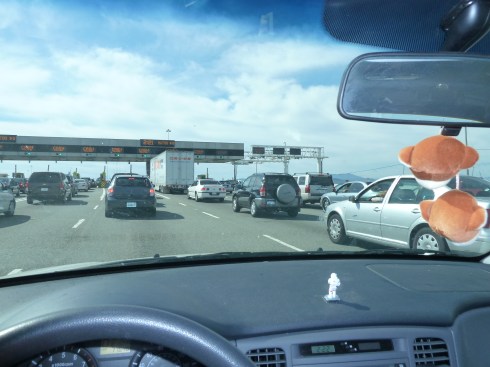
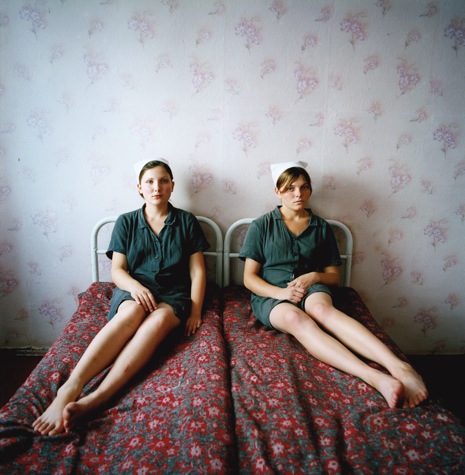
Name that toll booth?

Two weeks in, eleven interviews down, three published and eight in the can.

I can only anticipate getting more and more busy. My discombobulation may be interrupted by episodic bouts of fear, exhilaration and self-doubt.

Fortunately, technology will offer consistency.

All audio interviews will be hosted on Podbean at http://prisonphotography.podbean.com.

If you so desire, sign up for the ‘Prison Photography’ on the Road Podbean RSS feed.

‘Prison Photography’ on the Road is licensed under a Creative Commons Attribution-NoDerivs 3.0 Unported License, making all the audio published at http://www.prisonphotography.podbean.com available to the prison reform and photography communities free of charge. Please download and share responsibly.

All audio interviews will be linked to here on Prison Photography, sometimes with little juicy behind the scenes extras, and often with phenomenal galleries of work by the photographers I meet.

As ever, I’m throwing out tweets at @brookpete. Furthermore, I’m using the hashtag handle #PPOTR to let you know about the all the incidentals.

Come ride with me.

3 Years out of a Death Row Sentence (river)

It may have been her family member sucked into the U.S. prison system or it might be Amy Elkins‘ curiosity about the darker undercurrents of humanity that led her to pick up a pen and write to Americans on death row and serving life without parole.

Four years ago, Amy opened up communication channels with seven prisoners. “My original fascination was with the idea of being pulled away from society and how that affects people; how it affects memories,” said Amy during a sun-drenched interview in the garden of a Portland coffee shop.

“The whole project has been about searching,” says Amy. “I searched out these men on the internet, then I had to search my motives as to why I write these.” Later, Amy searched news clips and court transcripts to piece together the stories of the persons to whom she’d reached out.

26/44 (Not the Man I Once Was). Portrait of a man having thus far served 26 years in prison (18 of which were out of a deathrow sentence), where the ratio of years spent in prison to years alive determined the level of image loss.

13 Years out of a Death Row Sentence (river)

Unlike the fates of her condemned correspondents, Amy’s project Black is the Day, Black is the Night has no prescribed end-point.

As she has got know her pen-pals, collaborations have developed; common cell-house objects constructed, photographed and bought; portraits made from the last words of the executed; obscured quotes from the poems of her pen-pal friends; pixelated portraits of dead men walking, whose stories are dominated by the narratives of courts and institutions. Black is the Day, Black is the Night contributes new chapters … in some cases they might ultimately double as eulogies.

Of most interest to Prison Photography are Elkins’ composite landscapes. The catalyst for each is the description of a memory by one of Amy’s pen-pals – childhoods spent under cloudless skies, a born-again fascination with baptism rivers of the South, and wide open desert. Inmates had no access to images and Amy had only access to these scenes through their words. If reality exists for them or us, it’s a feeble reconstruction several steps removed. Searching again, this time through Google images.

To create the distorted landscapes and pixelated portraits, Amy uses a couple of mathematical formulas driven through photoshop. The numbers involved in each formula relate to the age of the pen-pal and the numbers of years they’ve been incarcerated. Amy wants to keep the algorithm under her hat, but it appears the longer they’ve been locked-up the more vague the visages become.
13/32 (Not the Man I Once Was)
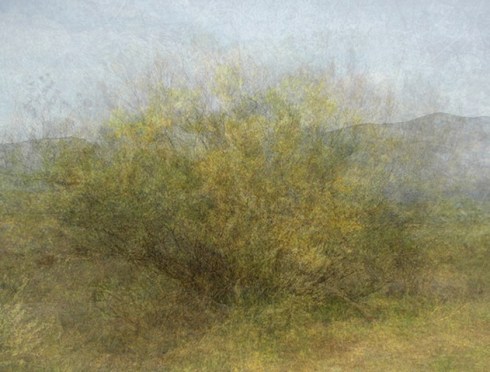
12 Years out of a Death Row Sentence (Dying Wish Retama Tree)

14 Years out of a Death Row Sentence (Dying Wish Retama Tree)

Currently, there are approximately 1,500 American citizens on death row.

“To be honest I’d never considered that this country has such a huge population of people on death row,” says Amy.

She began her research by signing up to one of the many online prison pen-pal services. The prisoners are categorized; one option ‘DEATH ROW INMATES’. “I clicked it and it was 50 pages; a sea of faces looking back at me. […] to click on one button and get hundreds of people looking for contact with the outside world. […] it’s difficult to describe. Nerve-racking and unnerving?”

Simultaneously engrossed and “freaked out”, Amy was conscientious in how she progressed. “It was never a photo project! I was just writing. I wrote with them for a year before I did anything with it. […] Part of that had to do with creating my own comfort levels,” explains Amy. “I deliberately contacted people who’d been in for 13 years or more. I didn’t want to write with someone who was angry. I wanted to be in touch with people who were at some sort of peace with the situation, who could look back and have some perspective.”

Of her seven original corespondents, three remain.

One was executed. The letters stopped coming and the news was confirmed through internet news stories. “No one went to his execution – no one from his family, no one from the victim’s family. He was poverty stricken. There was doubt in his case. He very well could not have done any of the things he was accused of. Every letter he wrote said ‘I am innocent’.”

Another pen-pal was released after serving 15 years, “He never contacted me [post-release]. He’s getting on with life. I hope he’s doing well,” says Amy.

A third pen-pal in Nevada wrote to explain that he was working on a novel and had developed a romantic writing relationship with another woman. He broke it off. “I was fascinated by that. It’s weird to be out here free and have them in there with relatively nothing and see them decide not to write. I respect that. They have so little, but they are careful about their time,” says Amy.

Amy’s pen-pal at San Quentin is erratic in his letters, writing after long periods of silence and often emerging from one [mental health] crisis or another. Amy has never felt that they’ve been able to develop a sustained relationship.

Her pen-pal in Mississippi writes on the 10th of every month but his letters are shorter now as he presses his last remaining options for appeal against execution. “From his letters he’s describing that it’ll be up before the year is out,” sighs Amy.

The sixth is in Georgia.

17/35 (Not the Man I Once Was) Portrait of a man having thus far served 17 years out of a deathrow sentence, where the ratio of years spent in prison to years alive determined the level of image loss.
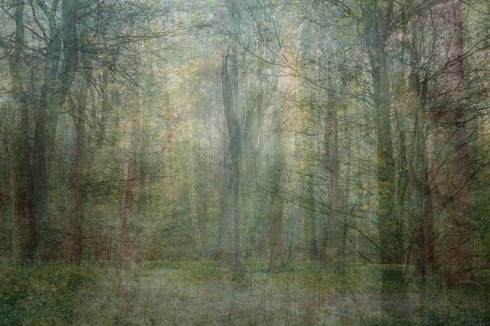
7 Years out of a Death Row Sentence (forest)

9 Years out of a Death Row Sentence (forest)

The most sharing, personal and colorful letters are from a lifer in the renowned Secure Housing Unit (SHU) at California’s Pelican Bay State Prison. Pelican Bay was America’s first SuperMax and currently the focus of the California Prisoners Hunger Strike. Of all her pen-pals, Amy can predict most this man’s future “The guy in Pelican Bay is going nowhere.”

On any given day in the U.S., there are 20,000 people held in solitary confinement.

“In California, solitary is a 6’x9′ cell with no windows and a steel door. I don’t think anyone would do well in that situation. People are extracted [from general population] and placed into these cells already upset and then they left to themselves. I don’t think prisoners are going to read the bible 30 times and then be okay,” speculates Amy, “I go stir crazy if I’m in my house for a day without going outside.”

Amy describes the Pelican Bay prisoner’s letters of unusual “formal British” tone. Unusual because he is originally from Tijuana, Mexico. “He must have been reading a lot of books?” wonders Amy.

“His first letter was 15 pages long and he said, very poetically, that he sits in his cell 23 hours a day. Once a day, he is shackled, walked down a corridor, on his own, and let into a concrete pen with 25 foot walls and a metal grate over it. He doesn’t describe it like ‘this is all I have, I can’t stand it here.’ He says he has 60 minutes of freedom, where he just gazes up at the sky; the only aspect of the outside world he can have. And even still, he watches the sky through a metal grate so it is not a pure version of open sky.”

Amy put out an open call for people to send her pictures of the sky. “I started making composites and sent them to him,” says Amy. “He didn’t understand the computer or photoshop. He hung them all up in his cell and wrote me back about how excited he felt being surrounded by skies. That was the first person I made something for and got feedback on. It felt like a collaboration. I started pulling images from other people’s letters. Other guys shared things about past experience, in some case decades prior. I’d repeat the process, make composites and send them.”

The prisoner at Pelican Bay has been in prison for 21 years, in solitary for 16 years. He has experienced another of Amy’s intrigues – juvenile offenders sentenced as adults.

“He went to Juvie, and he’s had no break in his incarceration,” says Amy.

“His mugshot was of him as a 13 year old boy. His profile read ’34 year old man, Pelican Bay State Prison’. But that was the last photo taken of him in the system. I’ve never been politically driven or hugely into criminal law. I’m just a portrait photographer interested in psychology and cultural anthropology. There is something about someone in that level of isolation, I just wanted to reach out. If that makes any sense.”

15/30 (Not the Man I Once Was)

4 Years Out of a Deathrow Sentence (ocean). A penpal 26 years into his sentence in a landlocked prison, described an early childhood memory that haunted him, of walking further and further into the ocean during low tide until the sudden depth and darkness before him overcame him with fear.
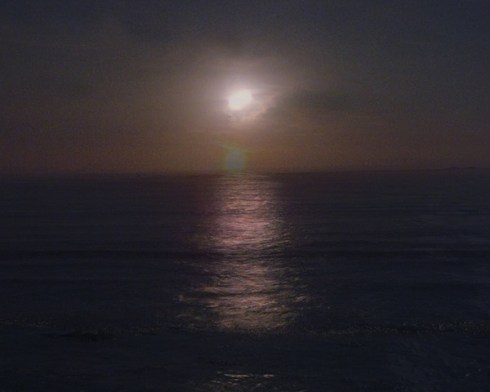
26 Years out of a Death Row Sentence (ocean)

Questions of whether or not Amy’s project in some way exploits these men have been floated before. She worked on the Black is the Day, Black is the Night “obsessively” during her Lightwork residency earlier this year.

“During my exit interview, the director expressed concern. How could I be this person in the world, who is fortunate enough to live a nice life, have a gallery, have nice things and focus on these individuals? He wanted to make sure I was ready for those types of questions. But, those question could be asked of all documentary work. It’s not about that; it is about getting the stories out in the world and having people think. I don’t know what people have in their minds [about me]. I’m not some “privileged girl” writing to “savage men”. No. I didn’t come in the project with any type of judgement. I like that I can talk about their stories in a way that’s not conventional. I think it’s correct that we can write; be trusting and share. […] I always write them back and I’m pretty open about my life as well.”

And the pen-pals reactions? “I don’t know if it’s that they’re bored or genuinely fascinated, but they’ve always expressed that they find it intriguing,” says Amy. “They’ve been sought out and they’re being interacted with. I’m not a housewife or someone for a church reaching out in those ways. I am their age and I’m reaching out with mail that’s perhaps a little more interesting than the average.”

Correspondence

To date, Amy has never profited from the project, but if – in the future – someone wanted to pay $10,000 for a landscape? “I’d sell. I’d send them the money. I have sent money to my pen-pals in the past. I have become friends with these men.”

The title, Black is the Day, Black is the Night, derives from a quote in a poem Amy received. “It spoke about that environment so well. The idea of being pulled away from anything. Experiencing no variance. Everything is the same; everything is dark. The poem is mind-blowing. Better for him to describe the situation than me.”

As the afternoon sun waned, and Amy and I squinted at the sky, that much was obvious.

All images © Amy Elkins

Danny Lyon, Guns Are Passed to the Picket Tower, Ferguson Unit, Midway, Texas, 1968

During a brief speech made upon receiving the Missouri Honor Medal in Journalism, documentary photographer Danny Lyon made an astonishing call for insurgency in America:

“I just heard the Occupy Wall Street demonstrations are spreading … I heard they will march on Washington on Oct 15th. You students should go!” then he paused. “I hope [there] will be blood in the streets!”

“There, I said it, ” he added.

Lyon evokes the blood spilt as matter of course to forward the campaigns of the American revolution, the civil rights movement, and the anti-Vietnam protests.

I cannot argue with his politics but I am not ready to make a call for “blood on the streets.” Maybe, I am not brave enough; maybe I am still hopeful that meaningful change can occur in America through non-violent means. I just know if a right-winger made similar calls, I’d be repelled.

I bring this up because Lyon and I are scheduled for an interview in December and his comments must be revisited and tested.

For the benefit of the media, Lyon penned an 11-point “laundry list” of issues he wishes to see addressed – jail terms for the bankers responsible for the economic crash; rights for immigrant workers; jobs to enrich the environment. Items 9 and 10 caught my eye:

9) Abolition of the American prison system as it stands.
10) Immediate reviews and interviews inside state or federal prisons by public committees and parole boards with any inmates that have been inside prison for twenty calender years.

Prisons have grown as a result of social division, greed and flawed abstract notions of justice – seemingly, the same damaging forces in *free* society to which Lyon responds.

(Silent movie)

… Joseph Bristow from Harrogate, UK!

The four books will wing their way to you as soon as you provide a mailing address.

The 25 entries came in from 9 different countries. And for those 13 U.S. entrants, I might just be tapping you up for a couch in the next 10 weeks.

That was fun. Enjoyed that.

Videography by Sye Williams

Blimey! It’s actually happening. Prison Photography on the Road is fully funded … and then some.

I’ve got the cash, the collaborators and the car. All I need are places to lay my head.

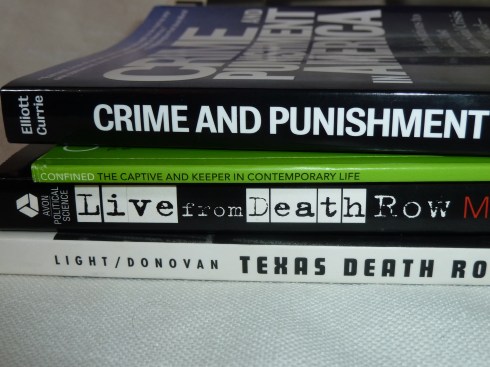
To make the prospect of opening your place to an itinerant more appealing I’m offering four books to sweeten the deal:

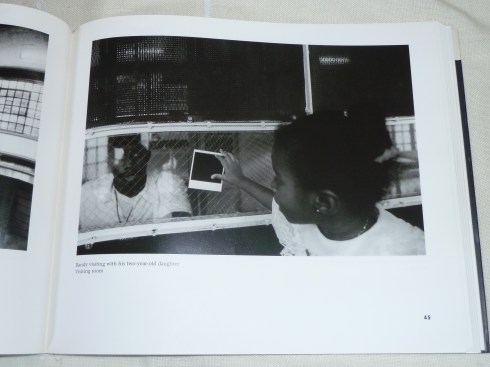
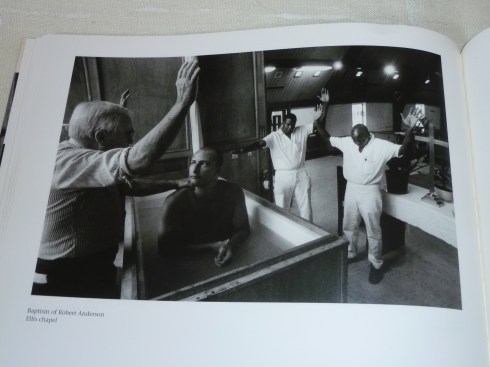
Texas Death Row by Ken Light and Suzanne Donovan – one of the most remarkable photobooks of prison subject matter given Light’s unprecedented access.

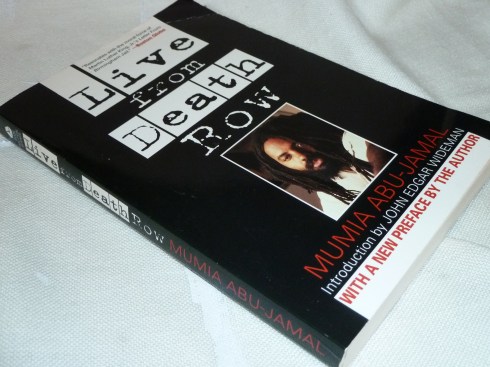
Live from Death Row, by Mumia Abu Jamal – commentary on the physical and psychological hardship of death row and on the U.S. prison systems by America’s most famous incarcerated activist. A landmark work.

Crime and Punishment in America, by Elliott Currie – one of the earliest analyses of the growing U.S. prison system written for the lay person. “Currie concludes that America can combat the problem of violent crime if it wants to. The question is, are affluent Americans willing to make the effort, or will they continue to set up their own ermine-lined ghettos, while pouring tax-money into prisons rather than schools,” says Timothy Mason.

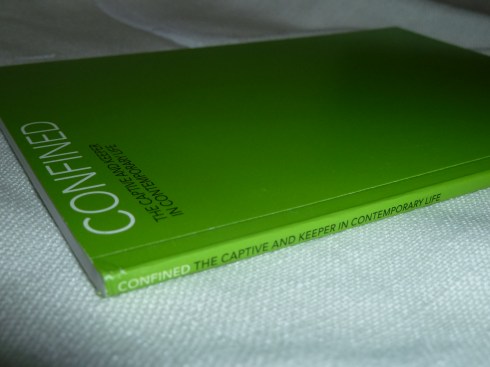
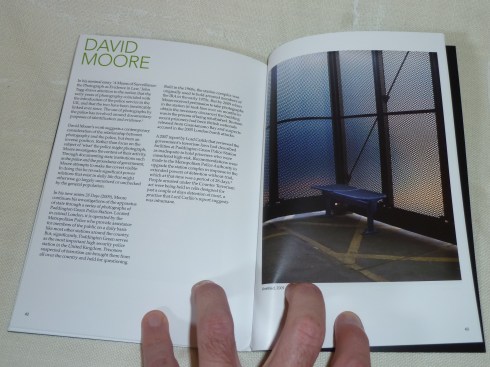
Confined exhibition catalogue including the work of photographers Juergen Chill, Edmund Clark, John Darwell, Dornith Doherty, Ben Graville, David Maisel and David Moore. And with a foreword by yours truly.

LEGALESE

All you have to do to be entered into the draw for these four books is to send an email with your name and home city to me at prisonphotography [at] gmail [dot] com. Please include ‘PPOTR Book Giveaway’ in the subject line.

The PPOTR book giveaway is open to anyone in the world.

For those of you who enter and live in the U.S., know that by doing so there’s a chance I’ll be taking up temporary residence on your sofa.

The winner will be announced a week from today, on the 4th October.

PICTURES!

Magnum photographer, Mikhael Subotzky has made available a print at the $1,000 funding level of my Kickstarter project Prison Photography on the Road.

It is a framed photograph made by a student during one of his photography workshops in South African prisons.

Photographer: Incarcerated student of Mikhael Subotzky
Title: Maplank in the Workshop, Pollsmoor Prison, 2005
Year: 2005
Print: B&W, silver gelatin print on fiber paper, 35x50cm (frame approx 50x65cm)
Edition: # 1/9

Print, PLUS postcard, mixtape and self=published book = $1000. BUY NOW

A NOTE ON THE PRINTS SALE

As with all the unsold prints if Mikhael’s doesn’t get snapped up, it’ll return to its maker, and possibly a darkened drawer.

There is one week left of fundraising. Even though I’ve passed my fundraising target, I don’t want to see the figure stop rising as I have very special plans for the extra dough in the form of spin off projects (the scope of which all depend on who much extra is secured).

Please visit this page for all the details on available prints. Tell all your loaded photofolk friends to pay a visit and pick up a print.

Last month the New Yorker Photobooth ran a sneak preview of Michal Chelbin‘s tentatively titled Locked series. At the time, I responded with some personal frustration that her portraits didn’t tell me enough of the subject’s experience. Having invited Chelbin to answer a few questions it is clear she uses ambiguity and mystery as tactics in her photography.

Q & A

When I first saw works from Locked I was fascinated, but I was also frustrated because I know so little about this region of the world. This was compounded by the incredible beauty of your portraits. After people have seen your portraits, what do you hope people will do, go on to think, talk about or read?

While I shoot almost all my work in Russia or the Ukraine, I feel that my interest is not social or geographical, but rather a mythological one. I return to these countries because they provide me with the visual contrasts that are the basic set up I am searching for – between old and new, odd and ordinary, as well as fantasy and reality.

When I record a scene, my aim is to create a mixture of plain information and riddles so that not everything is resolved in the image. A series of questions is asked when looking at these photographs – Who is this person? Why is he dressed like this? What does it mean to be locked? Is it a human act? Is it fair? What do we see when we look at a locked person? What do we usually think of when we hear the word “prison?” Do we try to find that his living conditions are reasonable, to comfort ourselves? Do we punish him with our eyes? Can we guess what a person’s crime is just by looking at his portrait? Does a killer still look like a killer? Is it human to be weak and murderous at the same time?

My intentions are to confuse the viewer and to confront him with these questions, which are the same questions with which I myself still struggle with.

You’ve worked on this project for three years. You’re obviously very committed. Why prisons? Why prisoners?

Three years ago, while visiting the Ukraine, I passed along a high brick wall. Next to it stood two men. Our eyes crossed and I can still remember their eyes today – they expressed this mesmerizing human blend of fear and cruelty. I was later told this was a men’s prison and from that moment I wanted to see what was inside.

Why three years?

All my projects take more than one year to complete usually. I didn’t just go to one prison for several days and that’s it – this might have worked for a documentary photographer, but not for portraits, at least not for me. I shoot a lot in each trip but chose very few so to have a complete body of work require several trips. I wanted to visit several prisons, which meant [spending] more time. It takes time to organize.

How does Locked relate to your earlier bodies of work?

I think it is a direct continuation of Strangely Familiar and The Black Eye. I try to focus on people who have what I refer to as a legendary quality about them – a mix between odd and ordinary. I search for faces and eyes who express the complexities of life and for a gaze that transcends from the private to the common. I found it in the prison too.

From the series Strangely Familiar © Michal Chelbin

From the series The Black Eye © Michal Chelbin

How did you get inside the prisons?

Unfortunately, due to the nature of the project and the subject matter, I can not disclose how I got access.

You asked the subjects what they had been sentenced for. Is this information you’ll share with us, the audience?

I asked each subject what was he sentenced for, but only after the photo session was over. I didn’t want to this knowledge to influence me while shooting. I am thinking quite a bit about whether to share or not share this information. Usually people who see the images ask me what this person did and most viewers do want to know. But I don’t want it to become something “documentary”, like “this is a portrait of a rapist etc”.

I think that when the work will be shown in an exhibition, I will put this info available for the viewers but not next to the photograph (like in a separate list). Same in the monograph – maybe a list of plates in the end of the book, but not next to the image.

What makes a good portrait?

God … I wish I knew. Well, I can say that my images take the form of portraits and focus on visual contrasts. I find people to be the perfect subjects; they possess contrasting qualities that seemingly cannot co-exist in them as humans.

I like it when a photograph leaves a taste of mystery, or in other words, I think it works when an image presents more questions than answers. For me, the image is like a gate to thousand possible stories, some appealing and some troubling.

People often ask me about my interpretation to my photographs, since the images can be read in different, sometimes contradicting ways. My answer is that I honestly don’t know, and my opinion doesn’t really matter.

Were there any surprises or difficulties during the project?

There were hardly any difficulties with the subjects. Most of them agreed to be photographed. Especially in portraiture, it is impossible to photograph someone who doesn’t want to be photographed. So if someone refused, I respected it.

POSTSCRIPT

I neglected to ask Chelbin why the majority of her subjects are youths. As she said, Locked is a continuation of her other series Strangely Familiar and The Black Eye which are about gymnast/circus performers and young athletes, respectively. Through her lens, juveniles encapsulate contradiction.

I found this quote (my bolding) by Chelbin from an interview with Creative&Live about Strangely Familiar in which she describes her approach:

“Many of my subjects are adolescents, in this difficult age between innocence and experience and I try to create an informal scene, in which they directly confront the viewer. As performers I think they mature very quickly – with the seductive costumes, the show it self might be more for adults then for kids. They always had a fake smile on their face, “a mask”, so my first instruction was to tell them not to smile. It allowed me to focus on them as individuals.”

I am left to wonder if – outside the frame of her portraits – any of Chelbin’s incarcerated subjects have cause to smile?

FURTHER READING

A Conversation with Michal Chelbin, on Nympthoto

Interviews: Michal Chelbin and The Black Eye, on photo-eye

Spoken Word: Michal Chelbin, on Workprints

Sailboats and Swans: The Prisons of Russia and Ukraine, on TIME’s Lightbox

Families of youth incarcerated at the Walnut Grove Youth Correctional Facility in Mississippi listen to testimony at a hearing about alleged inmate abuse. © Phoebe Ferguson/NPR

A couple of months ago colleagues and I discussed Inside San Quentin, Inmates Go To College, a story about the San Quentin Prison University Project, aired on NPR. Our discussion wasn’t about the content of the story as we’re all very familiar with that excellent education program. (I do encourage you to listen to the piece).

Rather we noted the sharp increase in the number of stories about prisons on NPR over the last 12 months.

I wanted to point it out for my own peace of mind. In several interviews recently I have bemoaned the lack of meaningful national media coverage of prisons and sentencing issues. I don’t want to mislead anyone and suggest that good analysis is entirely absent because that isn’t true. It’s just that NPR is doing the heavy lifting at the moment.

Stories in the past year have included: female entrepreneurs in an Oregon prison; Laura Sullivan’s two-parter on private prisons and immigration in Arizona (one and two); Buddhist meditation in an Alabama prison; youth incarceration in Mississippi, in two parts (one and two); and the sanctuary of prison libraries.

The difficulty of re-entry was at issue in the segment For Many Ex-Offenders, Poverty Follows Prison.

Not to mention Laura Sullivan‘s heroic journalism – in three parts – on the inequities of the bail bond system (one, two and three.)

This American Life has had at least two stories about the criminal justice system. One on a corrupt juvenile court in Walnut Grove in Mississippi and the other about a father/son adoption story behind prison walls.

There’s also the series Prison Diaries from a while ago.

Glad I got that off my chest.

EMAIL

prisonphotography [at] gmail [dot] com

Prison Photography Archives

Post Categories