The video-pitch for any Kickstarter proposal is key, so I was very lucky to have Tim Matsui offer his time, advice and skills in multimedia for the filming of the video pitch. In offering his help, Tim became the first official supporter of the project so please allow me to say a few words about Mr. Matsui.
Tim was the very first photo-bloke I met when I arrived in Seattle three years ago. At that point, I already new of his committed and extended investigations into human trafficking.
By coincidence, an old university friend of mine worked at a Phnom Penh NGO that Tim had liaised with. As both Tim and I were in the same city, my friend urged us to connect.
Tim knew nothing of me.
Late in 2008, I had just launched Prison Photography and Tim, like many in those early days, was totally baffled about what it was. But he still agreed to meet for coffee. We spoke about Bergen-Belsen concentration camp, Tuol Sleng prison, Blue Earth Alliance, and the mores of the digital age. We didn’t see much of each other for well over a year, but we developed a mutual respect for each others work.
Last month, when I put out the call for help with filming (via the NW Photojournalism group) Tim didn’t hesitate. Two weeks later, he was over at my house with a two camera set up, separate audio track and a set of tricky questions.
Tim wears his heart on his sleeve. He works hard, and he’s also got a bunch of great ideas for his next story telling projects; the only thing holding him back is the hours in the day.
If you want to get to know Tim’s take on the world, photography and storytelling then his blog is a great place to begin. There you’ll find writing about his successes (his recently published Kivalina work, his Emmy nominated Mediastorm multimedia project for the Council for Foreign Relations); about breaking journalism relating to previous stories; about important pioneer projects in journalism such as BaseTrack; and about pressing global issues relating to our digital age, such as reports on conflict minerals in tech-manufacturing industry. You should also check out his very fun docu-short Sasquatch or Bust.
Dana Mueller ‘s series The Devil’s Den are studies of former prisoner-of-war camps in which German POWs were put to work by the US military. At the end of WWII, there were over 400,000 prisoners who worked on local farms and in small industries.
From Mueller’s project statement:
“There is an irony where these German soldiers, both high-ranking Nazi officers and foot soldiers, were tilling the fields, cutting the lumber, picking apples, taking care of the American soil. This caring, benign work with the land stands in complete contrast to the horrific actions by Nazis and German soldiers in Eastern Europe of that time, such as Hitler’s scorched earth policy. […] Romanticism has played a role in understanding the relationship of Germans to the landscape. In some photographs the land is overgrown appearing in a kind of primal state, suggesting the return to the original forest. It also suggests a Fascist aesthetic of purity promoted by pre-war German culture. Innocence and purity can be seen as a natural desire to regress after one has become corrupted.”
I was fascinated by this little known chapter of U.S. history. Dana answered a few of my questions.
How did you arrive at this subject?
History, politics, memory and our understanding of individual experiences verses collective memory of past events, especially war, always interested me. As East German, my ‘German’ identity was shaped by the two wars. I talked at length with Art Space Talk about my personal responses.
As much as this is a personal investigation I want there also, ideally, to be a collective engagement with places of our past. With passage of time comes nostalgia and romanticism, which is a very complex way of relating, looking at the past.
Jeff N. Wall – for Southern Photography – recently wrote about one photograph of mine; it was wonderful to know that someone would spend actual time discussing a photograph and as an American to relate it to his own American history.
Camp Edenton field, Northeastern Regional Airport, Edenton, North Carolina, 2009, Photograph by Dana Mueller and Bonnell Robinson.
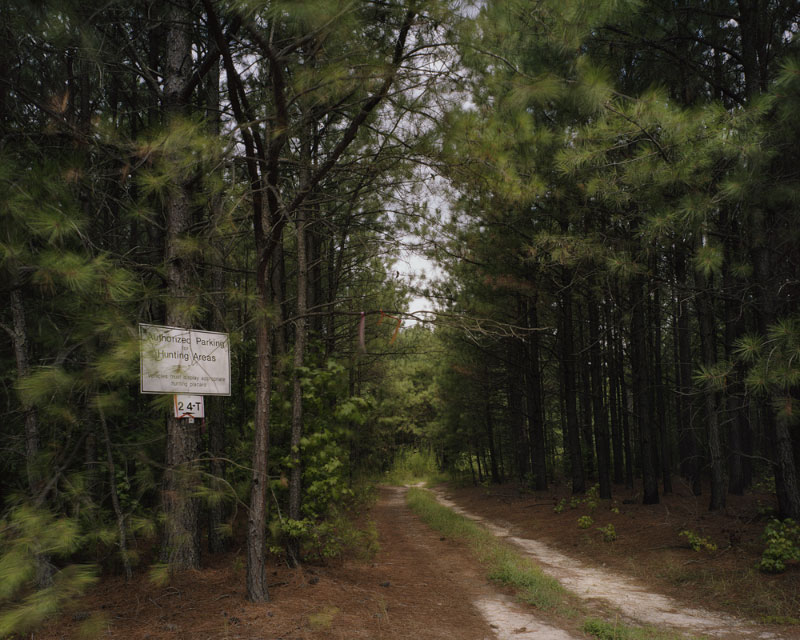
Near Camp Camden, Kershaw County, South Carolina (branch camp under Fort Jackson, SC) 2010.
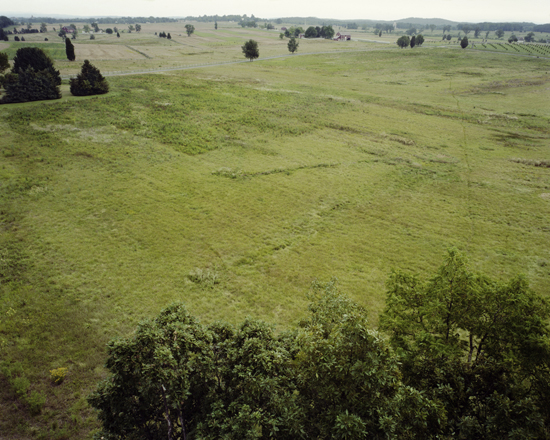
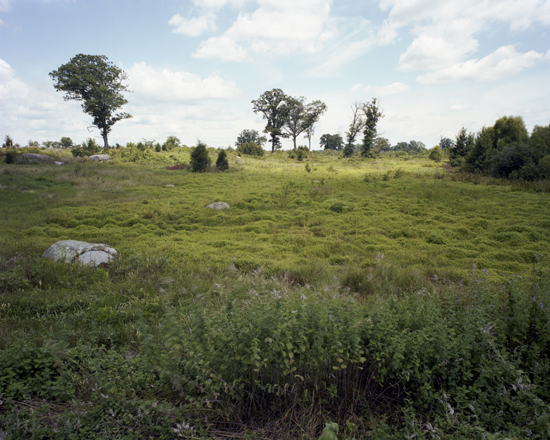
Site of Pickett’s Charge, Gettysburg, Adams County, Pennsylvania, 2009. In 1944 tents for a German prisoner-of-war camp were erected on the field of Pickett’s Charge.
How do you think of landscape?
There is power at just looking at a landscape knowing that an event took place at one time, it is not what we see that sparks our fascination with the past, it is what remains invisible.
Photography is often about witnessing and revealing, but not here. In The Devil’s Den I suggest and contemplate; in relation to the experiences the soldiers had, the American guards had and the civil population who had them work on their farms, married their girls, etc.; in relation to the landscape and German identity – both the mythical and very real ties to the land, the homeland which define one’s nationality, and the irony that German soldiers found themselves here.
I am interested in crossing historical planes, i.e. the site of Pickett’s Charge is not only relevant to my ideas but also to American [Civil War] history, and those two come together; both relate to war, participation, consequences and follies.
What are your influences?
Romanticism in literature: all W.G Sebald’s works, especially Rings of Saturn, Emigrants and On the Natural History of Destruction, Simon Schama’s Landscape and Memory, and many others that not necessarily discuss memory and landscape but have Eastern European backgrounds, i.e. Brodsky, Eva Hoffman, Milan Kundera, Czeslav Milosz. Also, the visual works of Anselm Kiefer and Casper David Friedrich.
How were the prisoners originally captured?
The North African Campaign by the allies began in 1940, between the Brits and the Italians. The Germans moved in in 1941. The U.S. got involved in late 1941 and militarily in 1942. Shortly after, the US Army created a prisoner-of-war camps all over the U.S. for captured German soldiers, many of whom were from Rommel’s African Tank Corps.
Others were captured at sea as German U-Boats neared the east coast, but there were not that many, and it happened sporadically. Many Germans were shipped from interim camps for German POWs in Normandy, France.
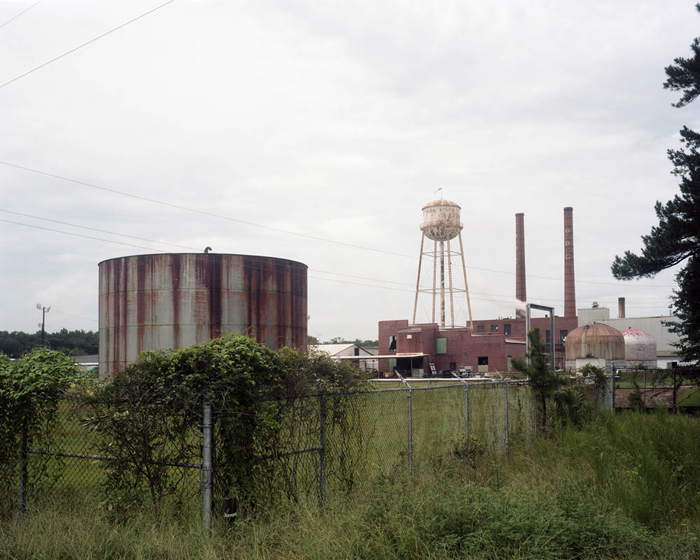
PPC factory near Camp Camden, Kershaw County, South Carolina, 2010. German prisoners-of-war worked at PPC factory between 1942 and 1946.
Camp Lee at Fort Lee Military Base near Petersburg, Virginia, 2009.
Camp Edenton, Northeastern Regional Airport, Edenton, North Carolina, 2009. North Carolina received its first group of POWs when German sailors were rescued from U-boat 352 that sank off the coast on May 9, 1942. The War Department eventually set up seventeen base and branch camps of Fort Bragg including Camp Edenton.
What happened to the prisoners?
Most prisoners were sent back to Germany after the war ended or a year later. The camps were in general also seen as rehabilitation facilities, where the American government wanted to re-educate the Germans in terms of democratic societies. As I talked to some historians, they mentioned that the foot soldiers and those less tied to Hitler’s ideology were stationed in camps on the east coast, higher ranking Nazi officers were send down south or west (Texas for instance).
Within a camp if there were a mix of soldiers, those who had allegiance to Hitler and never wavered and those who were happy to get out of the war, tensions existed and fights broke out. Therefore, they separated them depending on how ‘re-habitable’ they were. Nazis would rally at times in the camps but it never got out of hand as guards prevented revolts.
Most prisoners made friends with the Americans, they had their own newsletters, celebrated their holidays and some married American women. There were isolated escapes, most were caught soon after they fled. Most escapes were a result of the soldiers not wanting to return to Germany because Germany was completely devastated and life was better here, or Nazis knew they were not welcomed at home. Most prisoners had to return home unless, as I said, they married but those were very isolated instances.
Camps maintained strict guidelines and soldiers were treated well – times have changed when we look at Guantanamo Bay today.
Prisoners were used for labor, and some made even a little money so they could buy cigarettes and such. Off-and-on, some former German POWs come back to visit the camps and celebrate anniversaries even today. It’s strange to imagine that anyone would want to come back to where they were imprisoned. Not all was rosy – there were tensions between American guards and the prisoners, but overall the soldiers contributed to lumbering, harvesting, laboring in factories, etc and were tolerated by most of the American public. Of course, there were many Americans who thought ‘Why spend money to keep these people here?’ but as long as the prisoners contributed in terms of labor the practice became more accepted.
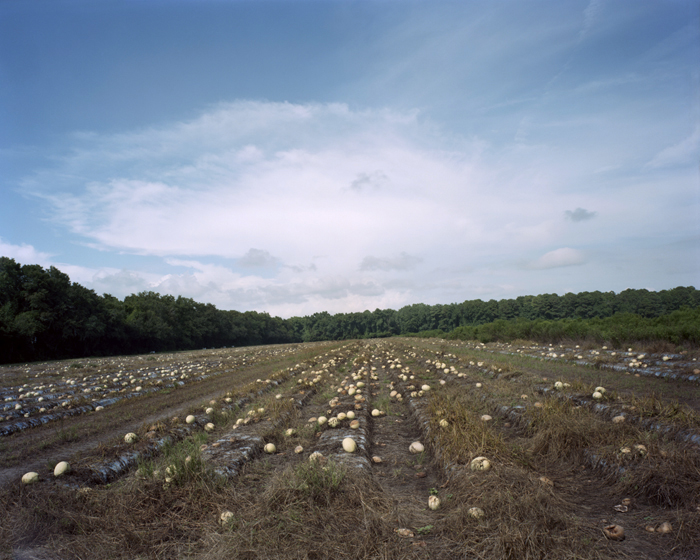
Melon field, St. Helena Island, South Carolina, 2010
Tomato field, St. Helena Island, South Carolina 2010. German prisoners-of-war stationed in Beaufort, SC, lumbered forests, worked in the fields and on farms at St. Helena Island.
Gettysburg, Adams County, Pennsylvania, 2009.
Are these sites marked?
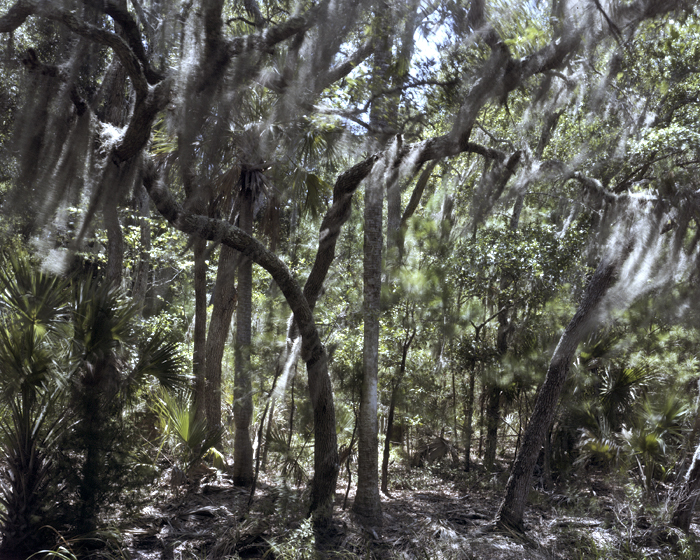
Not all of them are forgotten. Only some are marked and some are just known to be sites by locals or at the Historical Societies in towns. For example, the site of Pickett’s Charge which is imbued with American Civil War history was also, amazingly, the field where they decided to put up a German POW camp. I found a sketch of the camp in Gettysburg. In 1944, it was mostly just tents. Once winter arrived, they moved POWs to more solid structures, some existed on military bases already and others were built for them, such as Camp Pine Grove, Cumberland County, Pennsylvania. The foundations of the camp’s facilities are still visible underneath the overgrowth.
Other areas where prisoners actually worked I found through coincidence as I traveled along and inquired, for instance Sheldon’s farm and cotton field was owned by an American family whose son I met by chance near Elizabeth City, NC and who told me that he remembered the prisoners working in the field. His parents treated them well and the soldiers seemed content.
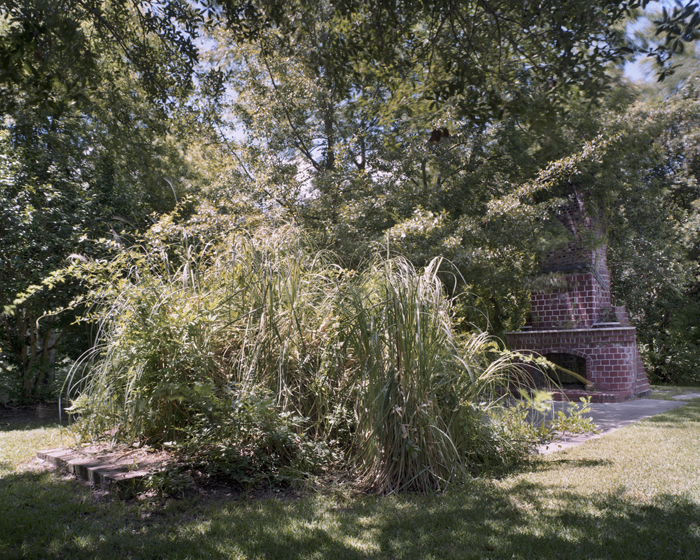
Camp West Ashley (below) is only place I photographed that had a marker. The ruin, which consists of a chimney, was saved by the residential neighbors who petitioned to save the historical spot instead of having it torn down, moved and the small piece of land used for development.
Other places are still working military bases, such as Camp Peary in Virginia (below) which I had no access to because today it’s the location of a covert CIA training facility known as “The Farm.” and I needed to improvise and find other ways of photographing it.
The camp at Beaufort, SC (below) was very interesting as the camp was located where is now a recreational park and structures of the building were only recently demolished, which made local news. So in terms of finding things, I base my direction of where I go on facts from literature, see below, or I just go to areas that are known to have had prisoners and I talk to people who might know the local history and then they tell me stories, or I find references at the local library or Historical Society.
Camp West Ashley, Charleston County, South Carolina 2010. The remaining chimney marks one of five prisoner of war camps established in the Charleston area toward the end of World War II. The West Ashley camp existed for only two years and consisted mostly of tents.
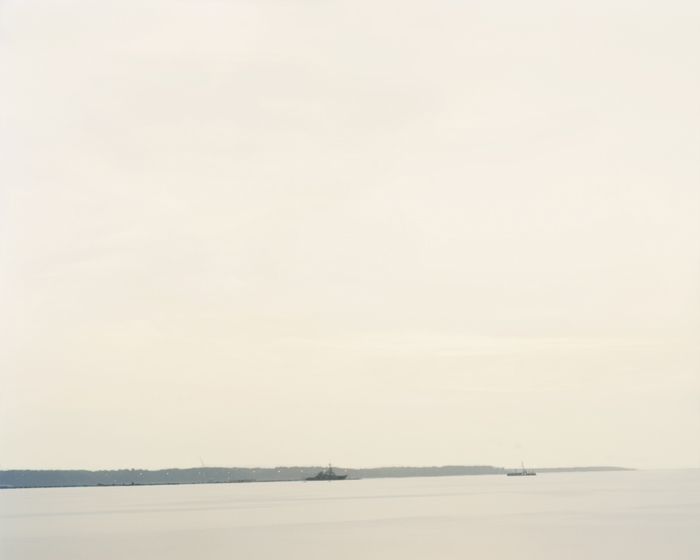
Camp Peary across the York River, York County, Virginia, 2009.
Site of former German prisoner-of-war camp, Beaufort, South Carolina 2010. The camp was located at Pigeon Point Park where barracks of the camp were recently demolished.
And finally, what resources exist for readers who want to know more about his shrouded episode of American history?
In regards to contemporary American politics, Hendrik Hertzberg at the New Yorker wrote Prisoners, a very interesting article some months ago. As for books, I recommend: Stark Decency: German Prisoners of War in a New England Village, Allen Koop Nazi Prisoners of War in America, Arnold Krammer Hitler’s Soldiers in the Sunshine State: German POWs in Florida (Florida History and Culture), Robert D. Billinger Jr. Stalag Wisconsin: Inside WWII Prisoner of War Camps, Betty Cowley We Were Each Other’s Prisoners: An Oral History Of World War II American And German Prisoners Of War, Lewis H. Carlson Behind Barbed Wire: German Prisoner of War Camps in Minnesota, Anita Buck Guests Behind the Barbed Wire, Ruth Beaumont Cook The Barbed-Wire College, Ron Theodore Robin Nazi POWs in the Tar Heel State, Robert D. Billinger Jr.
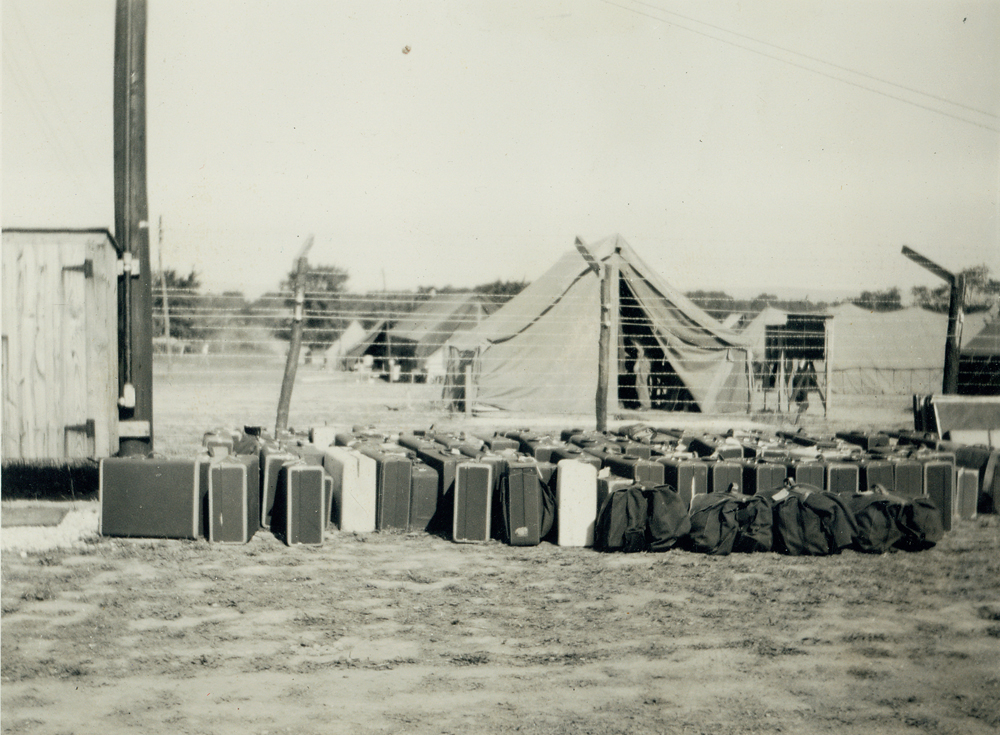
Local libraries and Historical Societies have references to communities that housed German POWs. Both will have actual news materials and old photographs available. I found these original photographs of German POWs and campsites in Pennsylvania, at the Adams County Historical Society, PA.
Copyright: Adams County Historical Society, Gettysburg, PA.
Copyright: Adams County Historical Society, Gettysburg, PA.
*There’s some irony in the fact that one of the U.S. camps Mueller photographs is called Edenton. Eden? Paradise it was not. Likewise, in the UK, the most famous former POW camp is Eden Camp in Yorkshire, which is now a heritage museum.
I won’t lie, it’s been a lot of work to co-ordinate all the information among potential interviewees, and the photographers who’ve donated prints, and those practitioners whose will be included in the self published book.
Info on half a dozen prints (available to funders of the project) is still outstanding. No fear, I’ll turn a negative to a positive and feature the photographs and the print info here on the blog as and when it arrives. At the same time, I can make repeated calls for support.
The Minneapolis based wunder-couple Jenn and Tim – a.k.a. Ackerman Gruber Images – were the first photographers to respond to my early inquiries about collaboration. Then there was silence. They’re a little late to the party because they’re down in Brazil on assignment. No worries guys.
I’ve written about Jenn’s series Trapped here on Prison Photographybefore. Tim and I have played email tag for two years trying to conjure a nice format to discuss his series Served Out.
I propose a 12-week road-trip across America meeting many of the leading photographers who, in the past 40 years, have documented the rise of the U.S. prison industrial complex. I’ll also be speaking with some of the leading practitioners in prison arts, prison education and advocacy.
This is a journalism project, the product of which is the approximately 40 interviews I will conduct. They’ll be made available, via Creative Commons license, to any and all in the photo and prison reform communities. In addition, my writings will be free to distribute with attribution to interested parties.
Fundraising begins today and continues for the next 36 days.
Please visit my Kickstarter page to read more about Why, Where, What and How.
INCENTIVES
This Kickstarter is a little different to others as I have secured many generous and talented photographers as collaborators who’ve put forth prints to help me raise money. Huge thanks to all of them.
In that there’s only one item for each of the incentive levels above $200, the thing operates like a “buy now”-priced auction.
The incentives at $10, $20, $50, $75 and $125 are self-explanatory.
On my Kickstarter page, the prints available between $200 and $1,000 have full descriptions. Those same descriptions and the currently available images are below.
Every supporter who buys a print more than $200 in value also gets a postcard, mixtape and self-published photobook Prison Photography in the Era of Mass Incarceration (56 pages).
ALL who donate – at any level – become official supporters and have their names listed on my website and in the acknowledgements of the self-published book.
Print PLUS a postcard, mixtape (CD) and a self-published book – $600 BUY NOW
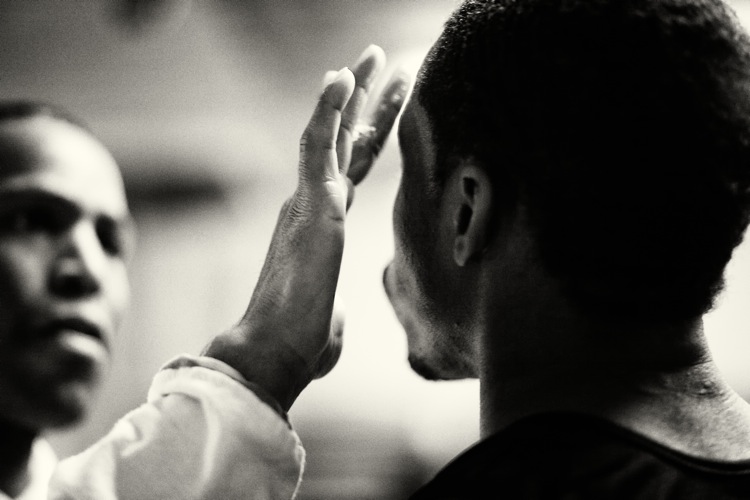
FRANK MCMAINS
Photographer: Frank McMains
Title: Untitled #1, from ‘Angola Boxing’ series
Year: 2010
Size: 8″x12″
Print: B/W digital print on archival paper
Signed, uneditioned.
Print PLUS a postcard and a mixtape – $100. BUY NOW.
– – – – – – – – – – – – – –
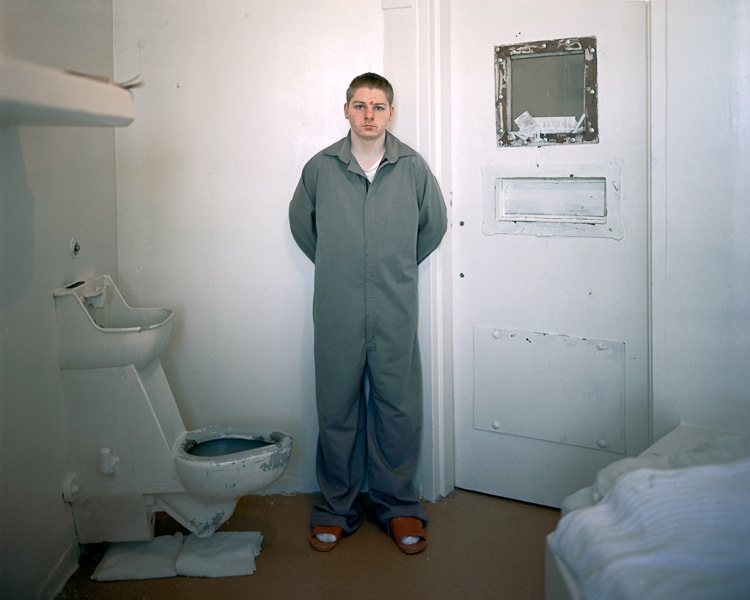
STEVE DAVIS
Photographer: Steve Davis
Title: Untitled #1, from ‘Captured Youth’ series
Year: 2005
Size: 8″x10″
Print: Color, heavyweight archival paper
Signed, special edition of 4.
Print PLUS a postcard, a mixtape and a self-published book – going for $300. BUY NOW.
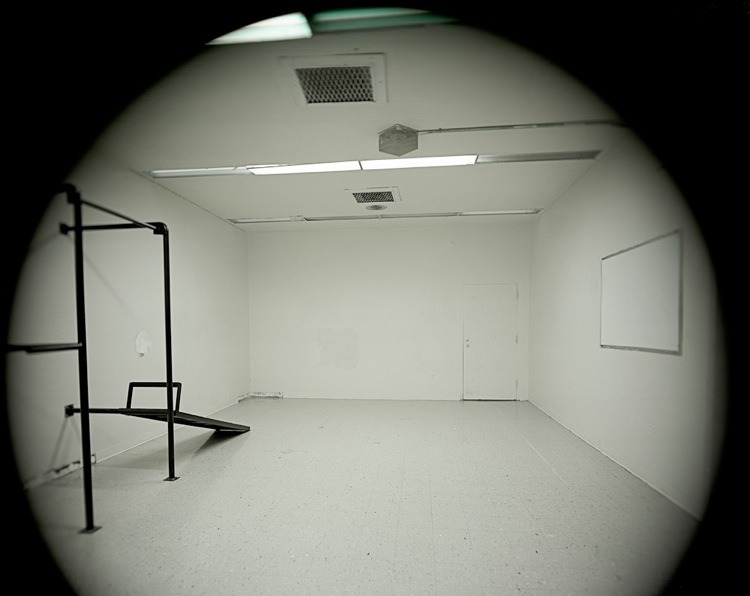
Photographer: Steve Davis
Title: Untitled #2, from ‘Captured Youth’ series
Year: 2005
Size: 8″x10″
Print: Color, heavyweight archival paper
Signed, special edition of 4.
Print PLUS a postcard, a mixtape and a self-published book – going for $300. BUY NOW.
Photographer: Steve Davis
Title: Untitled #3, from ‘Captured Youth’ series
Year: 2005
Size: 8″x10″
Print: Color, heavyweight archival paper
Signed, special edition of 4.
Print PLUS a postcard, a mixtape and a self-published book – going for $300. BUY NOW.
Photographer: Steve Davis
Title: Untitled #4, from ‘Captured Youth’ series
Year: 2005
Size: 8″x10″
Print: Color, heavyweight archival paper
Signed, special edition of 4.
Print PLUS a postcard, a mixtape and a self-published book – going for $300. BUY NOW.
Photographer: Richard Ross
Title: ’12-year old at Harrison County’
Year: 2009
Size: 9″x12″
Print: Color, Epson digital print on enhanced matt
Signed
Print PLUS, self-published book, postcard and mixtape = $1,000. BUY HERE
– – – – – – – – – – – – – –
BRUCE JACKSON
Photographer: Bruce Jackson
Title: ‘Dominoes. Death Row, Texas’
Year: 1979
Size: 12.5″x17″ on 13″x19″ paper
Print: B&W, Ilford Gallerie Gold Fibre Silk Paper.
Edition: #3 of an edition of 20
Signed
From Bruce Jackson and Diane Christian, “In this Timeless Time”: Living and Dying on Death Row in America (University of North Carolina Press, 2011)
Print PLUS, self-published book, postcard and mixtape = $800. BUY HERE
Photographer: Victor Blue
Title: ‘Closing a Wound, Mara 18’
Year: 2005
Size: 11″x14″
Print: Color, archival print
Signed
Print PLUS, self-published book, postcard and mixtape = $200. BUY HERE
Photographer: Lori Waselchuk
Title: ‘Prison Guard Watches from the Levee, Angola Prison’
Year: 2007
Size: 12″ X 24″
Print: B&W, archival pigment print
Edition: #2 of an edition of 15
Signed
Print PLUS, self-published book, postcard and mixtape = $400. BUY HERE
Photographer: Lori Waselchuk
Title: ‘Lloyd Bone Drives the Funeral Hearse’
Year: 2007
Size: 7″ x 14″
Print: B&W, archival pigment print
Edition: #7 of an edition of 25
Signed
Print PLUS, self-published book, postcard and mixtape. SOLD
Photographer: Jan Sturmann
Title: ‘Juvenile Prison Sweat Lodge’
Year: 2005
Size: 8″x10″
Print: Color, archival inkjet print
Not editioned
Signed
$50
– – – – – – – – – – – – – –
ARA OSHAGAN
Photographer: Ara Oshagan
Title: ‘Liz, 21 years old, Chowchilla State Prison, CA, 2003’
Year: 2003
Size: 30″x8″
Print: Color and B&W, archival pigment ink print (Giclee)
Edition #2 of 10
Signed
Print PLUS, self-published book, postcard and mixtape = $400. BUY HERE
– – – – – – – – – – – – – –
STEPHEN TOURLENTES
Photographer: Stephen Tourlentes
Title: Comstock, NY State Prison
Year: 2009
Print: 11″x14″ B&W, Archival Pigment Print
Aritist’s Proof, Signed
Print PLUS, self-published book, postcard and mixtape = $500 – BUY NOW
– – – – – – – – – – – – – –
SYE WILLIAMS
Photographer: Sye Williams
Title: ‘The Four’
Year: 2001
Size: 11″x14″
Print: Color
1st edition 2/25
Signed
Print PLUS, self-published book, postcard and mixtape = $900. BUY HERE
– – – – – – – – – – – – – –
ADAM AMENGUAL
Photographer: Adam Amengual
Title: ‘Adrien Caceres’ from the “Homies” series
Year: 2011
Size: 11″x14″
Print: Color, archival inkjet print
Edition #2 of 10
Signed Print PLUS, self-published book, postcard and mixtape = $750. BUY HERE
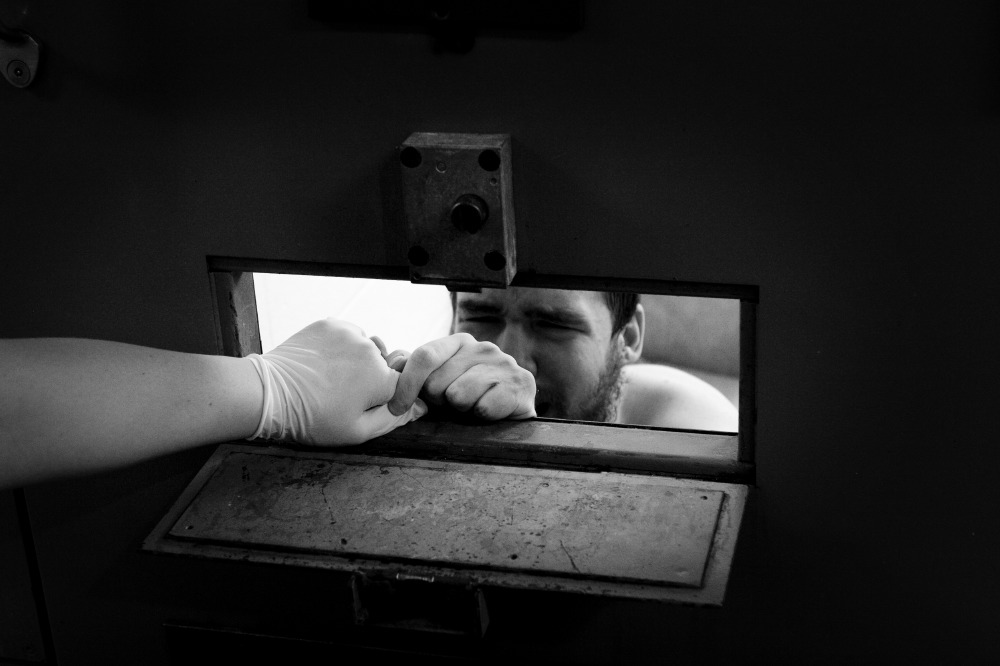
Photographer: Jenn Ackerman
Title: ‘A Hand to Hold’ (2008) from the series, Trapped.
Print: 11×14. B&W, archival matte.
Edition: #2 of an edition of 25.
Signed.
Print PLUS, self-published book, postcard and mixtape = $600.BUY HERE
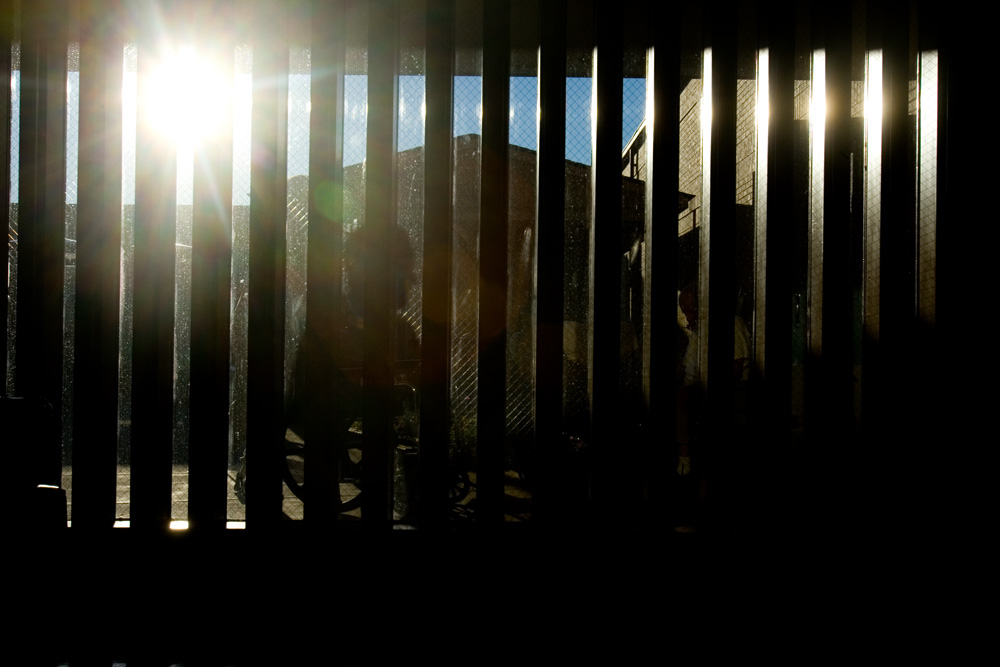
Photographer: Tim Gruber
Title: ‘Sunset Behind Bars’
Year: 2008
Print: 14×11″ B&W, archival pigment print on matte paper.
Edition: #1 of an edition of 25.
Signed.
Print PLUS, self-published book, postcard and mixtape = $500.BUY HERE
MAX WHITTAKER
Any photo from Max Whittaker‘s archive, signed and printed at 11″x17″.
Print PLUS, self-published book, postcard and mixtape = $200. BUY HERE
– – – – – – – – – – – – – –
ADAM SHEMPER
Photographer: Adam Shemper
Title: ‘In the Wheat Fields, Louisiana State Penitentiary, Angola, Louisiana’
Year: 2000
Print: 9″x9″. B&W on archival paper
Signed Print PLUS, self-published book, postcard and mixtape = $325. BUY HERE
Please forward the link to this page and my Kickstarter page to anybody whom you think may be interested in the project and potentially donating. Cheers!
Here’s a YouTube version of my Kickstarter pitch for those of you who can’t embed from any other video sites (don’t worry the WordPress video upgrade is on its way)
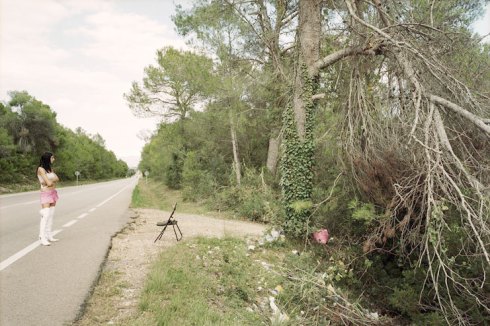
Following on from my comparative analysis of Mishka Henner and Paolo Patrizi’s documenting of Italian roadside prostitutes, a reader directed me to Txema Salvans‘ Spanish Roads.
I wanted to alert you of this series and suggest that the impact of this work and that of Henner and Patrizi for American (and in my case, British) audiences is the shock of the new. It is a surprise to see scenes of prostitution in public and plain view. The juxtaposition of illicit activity and wide open vistas is jarring and it corrects the over-romanticisation of Mediterranean culture that often occurs in the U.S.
Indeed, with Salvans’ work, one can begins to think that roadside prostitution may not be an uncommon part of the contemporary southern European landscape. From Salvans’ statement:
“These are the beings we fleetingly glimpse when our comings and goings in our safe cars allow us to perceive the scars of a landscape where both the city and the country disappear; uncertain scenarios that expose the cruelty of a breakneck productive culture that invents uninhabitable spaces that are nonetheless lived in.”
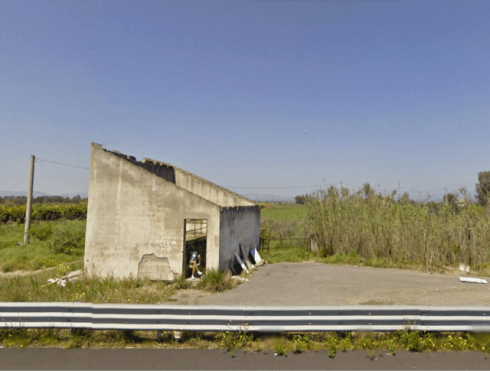
This week, I wrote two pieces for Wired on Google Street View. The first was a gallery of the various projects spawned by GSV, and the second was a piece about authorship and the repetition of nine scenes in two of the most well known GSV projects (Jon Rafman’s Nine Eyes and Michael Wolf’s A Series of Unfortunate Events and FY.)
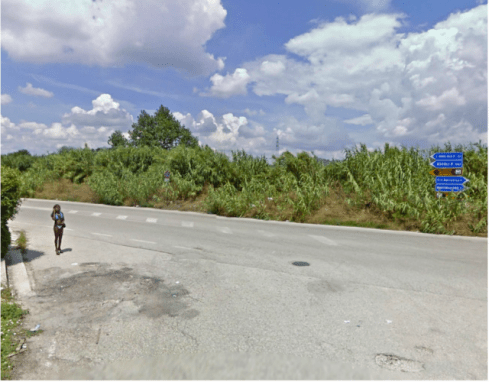
Anecdotally, the photo-thinkers out there are converging on Doug Rickard’s A New American Picture as the most robust work. A close contender though is the relatively new No Man’s Land by Mishka Henner.
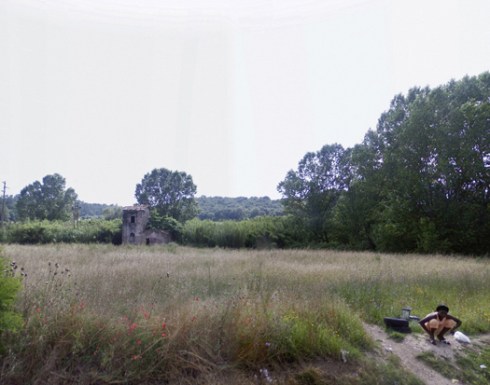
No Man’s Land (more images here) is a disturbingly large selection of GSV screen-grabs of (presumably) prostitutes awaiting customers on the back roads of Italy. Henner says:
I came across communities using Street View to trade information on where to find sex workers. I thought that was the subject to work with. Much of my work is really about photography and this subject tapped into so many aspects of it; The fact the women’s faces are blurred by the software, that they look at the car with the same curiosity that we have when looking at them, and finally, that the liminal spaces they occupy are in the countryside or on the edge of our cities – it all has such great symbolism for our time. And that’s aside from the fact these women have occupied a central place in the history of documentary photography.
But for traditionalists, No Man’s Land is a long way from the spirit of documentary photography. Of Henner’s work and of all GSV series generally, the ever-outspoken Alan Chin says:
“Google Street Views is a navigational tool, an educational resource, and sure, it can reveal a lot about a place and a scene at a given moment in time. But if you, the artist, are really so interested, then go there and take some pictures yourself. This is about as interesting as cutting out adverts from magazines that have some connection and then presenting your edit as a work of art. Post-modern post-structuralist post-whatever denizens of of the art world and academia love this shit. Which is well and good for the university-press industry. But it has little to do with actual reporting and actual documentary work in the field.”
Well, just last week, I came across Paolo Patrizi documentary photographer that actually took himself to those byways.
For Migration, Patrizi has keenly researched where these women have come from and where, if anywhere, they may be going. From the project statement:
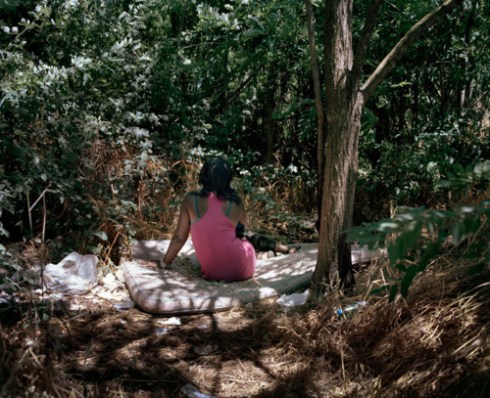
“The phenomenon of foreign women, who line the roadsides of Italy, has become a notorious fact of Italian life. These women work in sub-human conditions; they are sent out without any hope of regularizing their legal status and can be easily transferred into criminal networks. […] For nearly twenty years the women of Benin City, a town in the state of Edo in the south-central part of Nigeria, have been going to Italy to work in the sex trade and every year successful ones have been recruiting younger girls to follow them. […] Most migrant women, including those who end up in the sex industry, have made a clear decision to leave home and take their chances overseas. […] Working abroad is therefore often seen as the best strategy for escaping poverty. The success of many Italos, as these women are called, is evident in Edo. For many girls prostitution in Italy has become an entirely acceptable trade and the legend of their success makes the fight against sex traffickers all the more difficult.”
Patrizi is interviewed on the Dead Porcupine blog and talks about the unchanging situation, the pain experienced by the women, their reactions to him, and the destruction of woodland by authorities in attempts to literally expose the illicit encounters. It’s a must read.
The images in Migrations are inescapably bleak; therein lies their power.
Patrizi’s Migration induces a visceral shock; images of the littered make-shift sex-camps turn the stomach. When human fluids are dumped, it is not usual that humans continue to function in and around them. These workstead pits of dirt, tarps and abuse are shrines to the shortcomings of globalisation and the social safety net.
By contrast, Henner’s work allows us to keep a safe distance. He even saves us the trouble of finding these scenes on our own computer screens; we’re detached one step beyond. We are cheap consumers.
Patrizi’s photography with its clear evidence of his boots on the ground don’t allow us to share Henner and Google’s amoral and disinterested eye.
On Henner’s virtual tour, we cruise, at 50mph. We don’t stop, we don’t get out the car and we don’t get too close. We might as well be in another country … which of course we are. Patrizi’s work walks us by hand to the edge of the soiled mattresses and piles of discarded condoms.
Patrizi’s images counter the washed out colours, the flattening effect of wide-angle lenses, and the perpendicular viewpoint of GSV. Instead, they involve texture, depth, legitimate colour, details and different focal points along different sight-lines. In other words, Patrizi’s Migration engages the senses and the basics of human experience. Patrizi’s photographs return us to the shocking fact that that these women are human and not just bit-parts in the difficult social narratives of contemporary society. Works full of threat, fear, flesh and blood.
Chelbin’s doleful portraits are striking – something different – and, of course, given their subject matter I was compelled to mention them here. However, without any specialist knowledge of the prisons in Russia and Ukraine, I struggled to think of a worthwhile statement to accompany with them. Is it enough for me just to say that work is beautiful and interesting? I don’t think so.
Therefore, this conundrum becomes the focus of this short post.
The way Chelbin describes it, her portraits are the first step on a journey (of undetermined length) to at least attempt to “know” her subjects:
“When I record a scene, my aim is to create a mixture of plain information and riddles, so that not everything is resolved in the image. Who is this person? Why is he dressed like this? What does it mean to be locked up? Is it a human act? Is it fair? Do we punish him with our eyes? Can we guess what a person’s crime is just by looking at his portrait? Is it human to be weak and murderous at the same time? My intentions are to confuse the viewer and to confront him with these questions, which are the same questions with which I myself still struggle.”
It seems to me that this the type of curiosity we should expect of all photographers and their works; it’s partly how we are drawn into the previously unknown.
But the unknown has its dangers. As Fred Ritchin stated:
“Photography too often confirms preconceptions and distances the reader from more nuanced realities. The people in the frame are often depicted as too foreign, too exotic, or simply too different to be easily understood.”
Beautiful photography is easy to come by these days, and so, for me at least, viewing beguiling portraiture becomes an act of enjoying the beauty but then stepping further and using it to get at something deeper. That might involve a dialogue with someone over coffee; it might be to find comparative examples [1, 2, 3, 4, 5, 6, 7]; it might be to read up on the conditions for juvenile prisoners in Russian prisons; it might be to read the photographer’s statement or even contact the photographer directly to seek the missing pieces.
Photographs, and particularly portraits, are often a door unlocked but often in our busy lives we don’t even try the handle.
Perhaps now is a good time to return to some thoughts on what makes a great portrait, here and here.























 Prison Photography