Nancy Lilia Núñez, 22, and her daughter, Claudia Marlen, 3. Ms.Núñez is in prison on a kidnapping charge.. © Katie Orlinsky

Katie Orlinsky‘s photographs, including her incredibly powerful portraits from El Cereso, the Ciudad Juárez prison, in Mexico accompany Damien Cave’s New York Times Sunday Review article Mexico’s Drug War, Feminized.

Cave:

Ms. Núñez is only 22. She grew up here, in one of the world’s most crime-infested cities. But was she just hanging out with the wrong crowd, or is she a criminal deserving decades behind bars? With her case and others, this is what Mexico is struggling to figure out. The number of women incarcerated for federal crimes has grown by 400 percent since 2007, pushing the total female prison population past 10,000. No one here seems to know what to make of the spike. Clearly, the rise can partly be attributed to the long reach of drug cartels, which have expanded into organized crime, and drawn in nearly everyone they can, including women.

With 80% of the female inmates at Ciudad Juarez Prison imprisoned for narcotics related crimes, the war on drugs cartels is certainly having results – one wonders though if the results in terms of incarceration are having an effect on lessening the organised crime. A pessimistic position would suggest that these women (and their children) are easily replaced by others to be used by the cartels in identical ways.

One of the most common threads I’ve observed through photographs of female prisoners is the solidarity and sisterhood that exists in female prisons. Whether or not this truly exists is another matter, but in a world where many women are locked up because of men, in institutions usually associated with (violent) men, the notion that the majority of women are victims and only have each other is one worth pondering.

Particularly, Orlinsky’s portraits against a white prison wall are powerful introductions to the personalities of women who’ve lived lives of – and through – severe conflict. More of Orlinksky’s documentary shots can be seen at her website.

FEMALE PRISONERS ELSEWHERE ON PRISON PHOTOGRAPHY

Sweethearts of the Prison Rodeo
Former Prisoner, Diana Ortiz, Inspires Confidence and Healing in Female Inmates
Photography Workshop for Romanian Women Prisoners Produces 14,000 Images
Women’s Prisons in Afghanistan
Women Behind Bars: Jane Evelyn Atwood’s ‘Too Much Time’
Women Behind Bars: Vikki Law
Women Behind Bars: Silja J.A. Talvi
“Angels Without Wings” Momena Jalil
Fabio Cuttica: Colombian Prison Beauty Pageant
“It was like being in front of a mirror.” Melania Comoretto and Women Prisoners
Neelakshi Vidyalankara
Patricia Aridjis: The Black Hours / Las Horas Negras
Prison Nursery, Ohio Reformatory for Women, by Angela Shoemaker

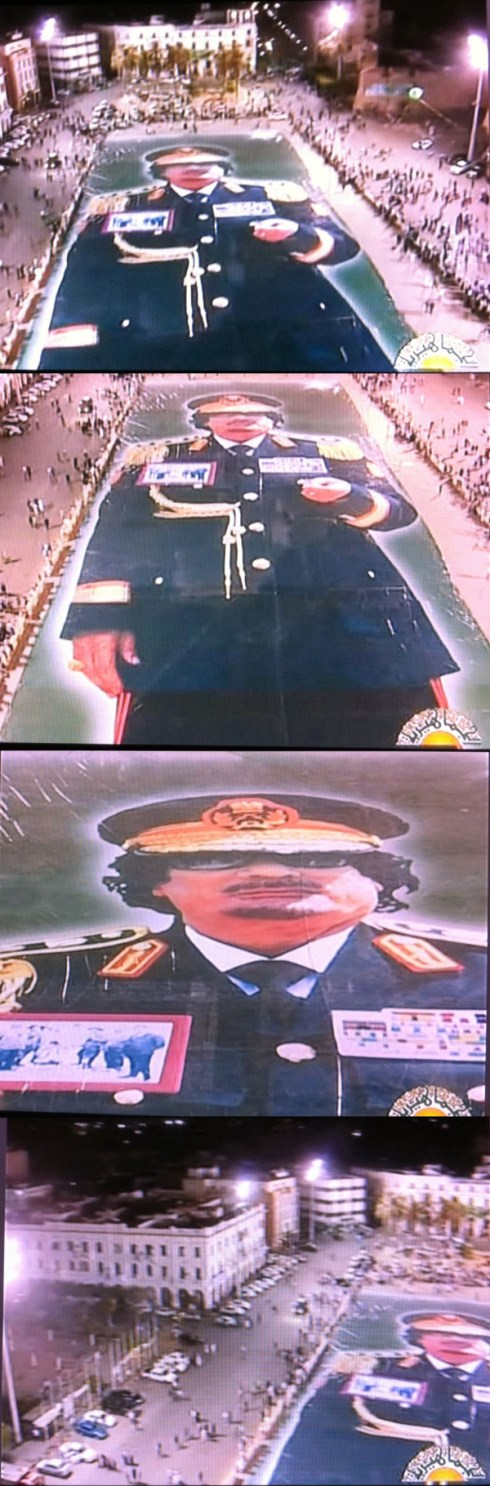
Late last night, I heard a report by a BBC World Service journalist from Tripoli. Escorted by a government liaison officer, the journo only met members of the public who were fervent Gaddafi supporters (one of Gaddafi’s information officers was captured by rebels last week and estimated 70% of people in Tripoli supported Gaddafi.)

During the report, he spoke with men piecing together a huge “photo” of Gaddafi in Green Square. I had heard nothing of this so this morning jumped on my computer to see for myself.

If it weren’t for the BBC report, I may have considered the above images an elaborate hoax – a) because I’d not heard of this month-old photo-stunt, and b) because it just seems so bonkers.

The images are screengrabs from Libyan TV made Sate Hamza ساطع, whose Twitter profile reads, “Syrian-Canadian dermatopathologist practicing in Winnipeg. Lived in the US. Enjoy comedy, world music & multimedia. Follow global news & current affairs. Vegan.” He blogs here.

Sate, whose Twitter handle is sate3 posted the screengrabs to TwitPic on 24th July with the message, “Giant photo of Gaddafi in Green Square in Tripoli unveiled yesterday (July 22, 2011), on Libyan TV. #Libya

So, I ask for a bit of feedback. Had anyone else heard of this massive photograph? If so, can you help me with some more resources. If not, why not? How does this compare to other examples from history of nationalistic/cult of the personality shows of strength?

UPDATE: Two images from Reuters here and here.

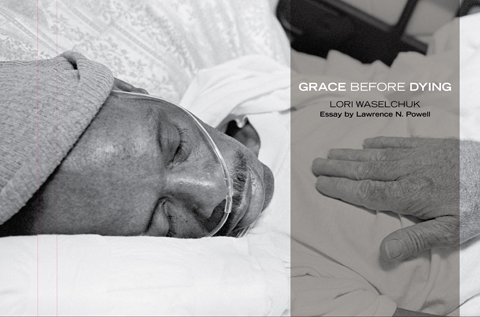
Grace Before Dying by Lori Waselchuk is a rare thing. It is a prison photography project that holds a mirror up to only acts of compassion and dignity. The love – in the form of palliative care – shared among incarcerated men at Louisiana State Penitentiary (known commonly as Angola) is not as rare as we might think among America’s imprisoned classes.

But, the hospice at Angola may be as rare as it seems.

Angola is not like other prisons. Some of the harshest State sentencing laws in the country mean that 85% of prisoners will never be released from the penitentiary. Angola more than most prisons has a burden of responsibility to its aging and dying lifers. The end-of-life care is given by a team of trained medical professionals and inmate-volunteers.

Waselchuk describes the preciousness of touch:

And then something happened. The carpenters eager to demonstrate their love for their friend, started to take over the care-giving tasks. Massaging Richard’s swollen wrist, Randolph explained that the rubbing helped circulate his blood and reduced the swelling. Very timidly, Joseph picked up the other arm, and Carlo began to rub Richards ankles.

The physical contact between these men was new territory. For Richard, this moment seemed beyond description … it seemed to me that he felt overwhelmed by it. It was profound moment of grace, during which these men allowed themselves to break physical boundaries and accept physical expressions of friendship.

I witnessed how the Angola prison hospice team sparked a movement of empathy that not only spread throughout the prison population, but also influenced the prison’s security and medical staff.

We as a society have a choice to make if we think prisons are suitable environments for the infirm and the dying to see out their days. The prisoners have their own decisions to make as to how they interact while we mull those decisions. And they act daily.

But the circumstances of daily routines are shaped by past events.

The frighteningly thorough foreword by Lawrence N. Powell describes the unrest, corruption and social violence both inside and outside Louisiana prison walls through history. In the 19th century, Major Samuel L. James, with the state governor “in his pocket”, ran Angola for profit, “When James died in 1894, he was worth a cool $2.3 million, or nearly $60 million in modern day equivalents.”

The early 20th century in Angola was brutal. In 1933 alone, 1,547 floggings with hickory sticks or leather bats were administered. A grand total 23,889 blows. By 1941 the floggings-per-year had climbed to over 10,000. Powell asks, “Who was doing the counting?”

Throughout the 60s and early 70s, conditions went form bad to worse. The early 70s “represented a nadir in modern Angola history. Inmate cliques and gangs tore the place apart. There was a raft of serious knife wounds and stabbing deaths.”

In 1975, a federal judge and magistrate in Louisiana declared the states confinement “cruel and unusual”. Even then political games were played. Funds for improving the fabric of Louisiana’s prison were appropriated for an extension on the LSU stadium. Then governor, David Treen attempted to legally sanction double-dunking as a solution to overcrowding; the courts rejected his proposal as ludicrous.

The big prison boom came in the 90s when former governor Edwin Edwards convinced the legislature, while incarcerated himself, to float bond issues to pay for prison expansion and decentralization. It was the biggest prison boom Louisiana ever witnessed.

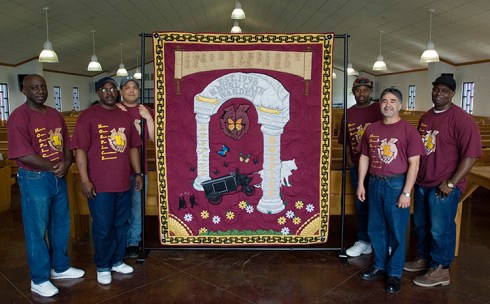
Waselchuk’s photography is an act of witness but it does not ensure the ongoing operations of this sanctuary of humanity. The hospice is partly supported by the fundraising efforts of a cadre of prisoner-quilt-makers. Full colour reproductions of the quilts have their place in Grace Before Dying.

Just as I praised Edmund Clark for giving over a large portion of his book If The Lights Go Out to the letters of Guantanamo detainee Omar Deghayes, so too I praise Waselchuk for giving pages of the book over to the quilt-makers. The auction of these quilts allows volunteers to buy coffee machines, radios and books for the isolation cells now serving as hospice rooms. Purchased items such as sweatpants, specialty foods and slippers provide the same small comforts we’d all hope for at our hour.

A quilt covers every casket on its way to the grave.

The prison atmosphere weighs heavy on anyone inside. Add to that, the gravity of death and burial, one might think Waselchuk’s book is hard to love, but as she asserts, ” This project is not about death. It is about life, its limits, and the choices made within those limits.”

Her photographs draw out the exhaustion, discipline and friendship of the volunteers, the physical pains and emotional toil of the dying and the persistent community from incarcerated and non-incarcerated persons working in the hospice. Grimaces are balanced by grins and past indiscretions are obliterated by present duty … some might call it heroism.

As close as we can get try to understand the tumult of emotions within those locked into a cycle of friendship and loss in a prison in the floodplains of Louisiana, these photos are the starting point.

__________________________________________________________

Grace Before Dying. Umbrage Books, Hardcover / $39.95 USD, 11″ x 8.5″ / 120 pages / 47 B&W photographs, June 2011, ISBN: 978-1-884167-22-5

View the Grace Before Dying website. You can see large online images at the Critical Mass website.

The Grace Before Dying exhibition is currently on tour. Lori is presently in Boise, Idaho and the show will continue to the Corcoran Gallery of Art in Washington D.C., where Lori will speak on September 9th.

BIOGRAPHY

Lori Waselchuk is a documentary photographer whose photographs have appeared in magazines and  newspapers worldwide, including Newsweek, LIFE, The New York Times, and The Los Angeles Times.  She has reproduced photographs for several international aid organizations including CARE, the  UN World Food Program, Médecins Sans Frontières, and the Vaccine Fund. She is a recipient of the Aaron Siskind Foundation’s 2009 Individual Photographer Fellowship, a 2008 Distribution Grant from the Documentary Photography Project of the Open Society Institute, the 2007 PhotoNOLA Review Prize, and the 2004 Southern African Gender and Media Award for Photojournalism. Waselchuk was also a nominee for the 2009 Santa Fe Prize for Photography, a finalist in the 2008 Aperture West Book Prize, and a finalist in the 2006 and 2008 Critical Mass Review.

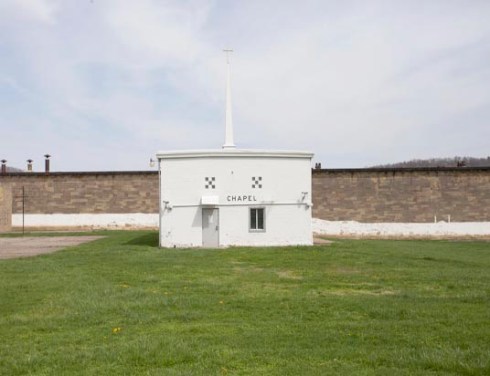
Church within West Virginia Penitentiary, 2011

Emily Kinni, recent recipient of a Tierney Fellowship, has an intriguing project named Where Death Dies for which she has photographed former execution sites and decommissioned execution chambers, electric chair and death apparatus.

New Jersey State Prison was the site of executions until the Garden State outlawed the death penalty in 2007, and West Virginia Penitentiary ceased as the site of state executions in 1959.

West Virginia Penitentiary itself was decommissioned in 1986 and has since become a tourist destination; on view is ‘Old Sparky‘, the prison’s once-used electric chair. Kinni photographed a basketball court where the execution chamber used to be sited.

This is a young project and potentially still in the making. Having being named a Tierney Fellow though, it is likely Kinni will move away from this subject matter. The primary goal of the Tierney Fellowship is:

“to find tomorrow’s distinguished artists and leaders in the world of photography and assist them in overcoming the challenges that a photographer faces at the beginning of his or her career. […] At the end of the one-year grant period, recipients are expected to present a new body of work.”

We’ll keep our eyes peeled.

As a footnote, comparable projects on death chambers would be Lucinda Devlin’s Omega Suites and Mark Jenkinson’s Death Row.

Thanks to Hester for the tip off. View the other 2011 Tierney Fellows here.

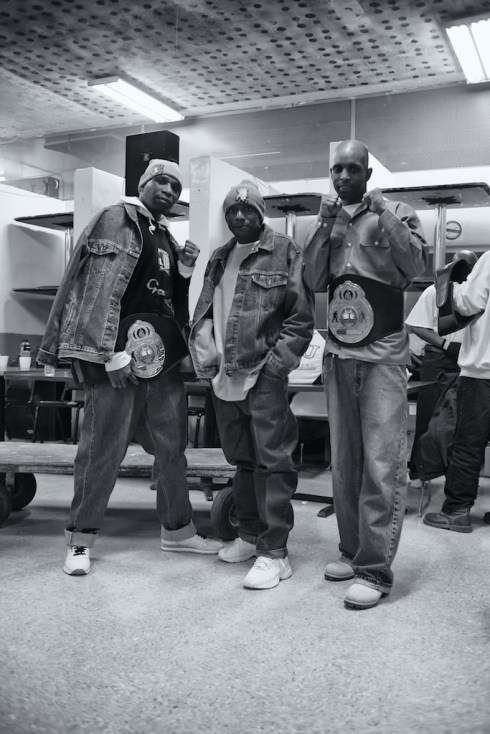
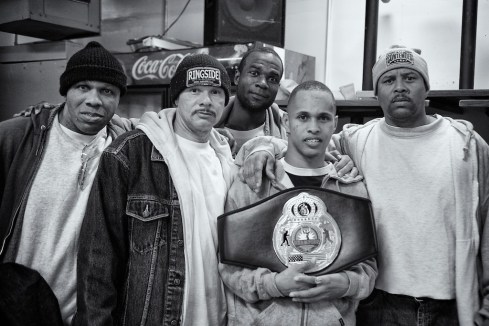
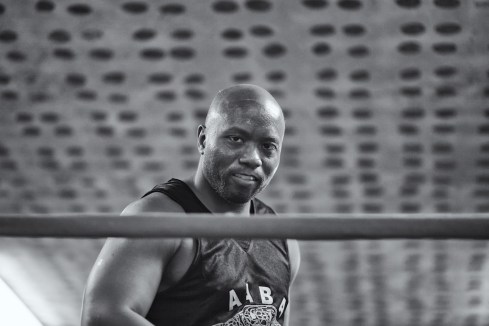
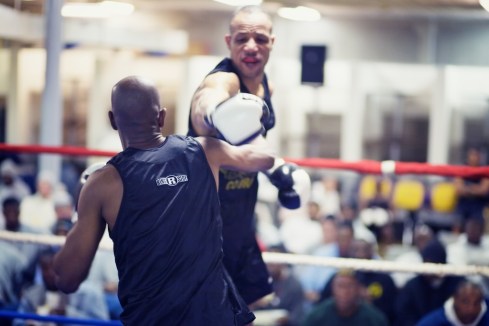
In the management of prisons, fighting is an activity prohibited by the authorities (bar some exceptional instances) and a sign that the regime and control measures are failing. However, at Louisiana State Penitentiary (commonly known as Angola), the Angola Amateur Boxing Association provides equipment and space for prisoners to spar and bout. From the Louisianan Dept. of Corrections website:

“The prison’s boxing program sponsors “fight night,” held every few months with boxing teams from other state prisons competing for corrections department championship belts. The Angola Amateur Boxing Association has held more belts in all weight classes through its 25-year history than any other prison boxing club in the state. The organization is a member of the Louisiana Institutional Boxing Association.”

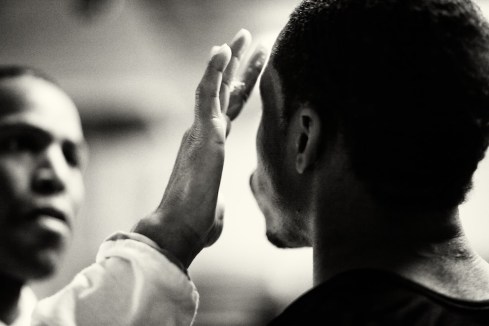
In February of 2010, Baton-Rouge based photographer Frank McMains went to Louisiana State Penitentiary to document the club, the fighters and a bout. I asked him a few questions about the experience. [Underlining added by me]

How did you hear about the boxing club?

I had heard about prison boxing through another photographer who had attended a bout at a different prison in Louisiana. Oddly enough, he went without his camera. There is also a documentary about a volunteer boxing coach at Angola and I happen to know the guy who put that together. In short, among those who are interested in such things, boxing at Angola and intra-prison boxing between different prisons in Louisiana is somewhat widely known.

Did you do the story on assignment or of your own volition?

These shots were taken because of my interest in Angola and my interest in the boxing specifically. I pitched it to a few national magazines and one picked it up, but the folks at Angola were uncomfortable with the magazine that was interested in running the photos and article. They felt it was not a serious enough venue for the subject, so the photos remained un-published.
How did you gain access?

Angola is surprisingly accessible for a maximum security prison. I can’t say I have tried to get access to any others, but my sense is that they welcome outsiders who want to report on what is going on there. Over the course of several articles about different activities at Angola I have built a relationship with some of the wardens and staff. As a result, I didn’t really have to negotiate for access so much as plan around their schedule. Recent funding cutbacks meant that Angola’s boxing team did not fight teams from other prisons as they had in the past. There just wasn’t the money to transport the prisoners. So, the whole program was kind of in flux for a while, but once they confirmed a date, I wasn’t going to miss it. The staff at Angola are very professional and they are clear about what sort of interactions you can have with inmates as well as what sort of things you can bring into the prison. I have had my gear searched before but the prisoners who are allowed to participate in events like the rodeo or boxing matches are ones the prison administration feels are less of a threat. They basically would not let you into an area with prisoners who they didn’t trust and they also wouldn’t let someone into the prison with a bag full of gear with whom they didn’t feel comfortable.

How many individuals were involved?

There were about eight bouts so that means 16 boxers. However, there were about 150 prisoners who were there to watch the event and cheer on their friends. In the room with us there were probably four guards who sort of came and went as well as a few staff members and the warden with whom I was acquainted.

How did the prisoners talk about the AABA? Had it changed their behaviour or outlook?

One of my real regrets about this project is that I didn’t get a chance to talk to the boxers in more depth. As they were warming up for the fights they were focused on the what was ahead of them and I didn’t want to interfere with that. After the fights were over I spoke with several of the fighters and coaches but it was very informal.

It has been my experience that prisoners are much more interested in talking about where their family might see the photos and things that don’t pertain to their life in prison. Most of the conversations I had after shooting these photos were about people’s families, not about their lives behind bars.

I would like to follow up with the guys involved, but it was sort of outside of the scope of this shoot.

Some people might think boxing is not the right activity for prisoners; that it is violent. What would you say to people with these reservations?

Some people will always object to boxing as a brutal activity whether that is in prison or in Las Vegas. I get that objection, although I see it as graceful and pure in a way that many sports are not, but you can’t deny that it is violent. Last I checked that was a component of the human condition.

When it takes places in a prison I think it is understandable that some people would balk at what could be construed as violence piled on top of violence. It has been my experience that anything that the prisoners get to do is a step towards socializing them and giving them some hope in the face of a pretty bleak future. Angola has an unusual approach to punishment; they try to engage the prisoners in as many activities as possible. The prisoners work the land there to feed the prison population, they maintain the facilities and even staff the prison museum and gift shop. There is also a prisoner run newspaper and radio station. So, if you remove the fact that it is boxing from the equation then I think that an approach to incarceration that does something other than let people rot away in a cell is a good thing; boxing is a commitment to rehabilitation.

The other aspect of life at Angola is that most of the prisoners will die there, simply put. Most are serving life sentences without the possibility of parole. I understand the punishment-as-vengence argument that some might have. It is understandable to look at a murderer and say, “Who cares if they have any dignity.” I think the staff at Angola see a path for redemption for the prisoners that runs through many different courses. It might be boxing, it might be prison ministry. They seem to think that engaging the prisoners is preferable for all concerned to treating them as de-humanized creatures who simply have to be warehoused until the end of their days. From that perspective, Angola seems to run pretty well. Less than a quarter of the inmates are housed in cells and they spend their days working to make the prison run. That, to me, speaks for itself.
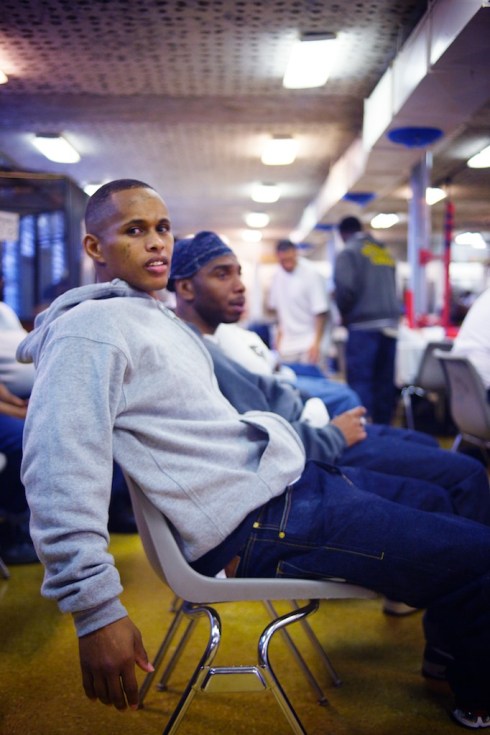
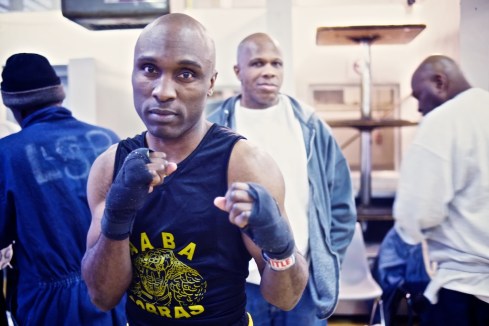
Did you get any sense of what the boxers wanted from you as a photographer? Did they want to convey any message to the eventual viewers?

Yes, every time I have photographed at Angola it is pretty clear that the prisoners want to be portrayed as retaining some of their human dignity. Beyond that, they long for connections with the outside world, their family in particular. You can’t forget that the prisoners at Angola have committed horrible crimes, but it is hard to not feel some sympathy for the incredible loneliness and isolation they all seem to share. Maybe they deserve that, it isn’t really for me to say what justice should look like.

How was, and how is Angola? What’s the culture like? How is it perceived?

All of my experiences at Angola have been unsettlingly mundane. In my mind, I expected to see prisoners rattling tin cups on metal bars and walking around in leg-irons or something. But, they are mowing the grass, cooking food, painting buildings, essentially participating in their own, highly-unusual little community. When people think about Angola, if they think about it outside of the rodeo, it seems that they imagine a dreary place of routine horror. I am sure that it is rough out there, very rough in many respects. But, it does not have the feeling of an armed camp where gangs are pitted against each other, where races are seething to tear into one another or where the guards are everywhere searching for escape tunnels. It’s culture will confound your expectations. Or, it did mine anyway. I didn’t grow up with any sense of prison life outside of film and television. If Angola is anything, it is unlike those scenes from popular entertainment. That is not to say it is bucolic or some penal Club Med. It is a sad but necessary place where the passage of time and the intrinsic nature of humanity do not conform to the normal rules.

It seems there have been many photographers who’ve shot at Angola (I might go so far to say it is the most media-present prison in America). Would you agree? What would one attribute that to?

In a word, yes. It is a thoroughly media documented prison. I think that is for two reasons. First, it is highly unusual in its approach to incarceration as I have spelled about above. They just do things differently there in terms of engaging prisoners rather than just warehousing them.

Secondly, it seems that the administration at Angola, starting with warden Burl Cain and running all the way down, are genuinely empathetic to the prisoners. They know that some of them have been changed, and perhaps redeemed, by the way Angola does things and they want people to know about it. I think they are also keenly aware of how the lack of hope not only destroys the human spirit but also makes prisoners much more difficult to handle. If the prisoners have a reason to get up in the morning then they see a value in toeing the redemptive line that Angola is pushing.

The staff know it is expensive and pointless to incarcerate grey-haired old men who are no longer a threat to society. It seems that Angola is trying to re-humanize prisoners in the eyes of the general public in an effort to change the way our legal system approaches punishment and justice.

Thanks Frank.

Thanks Pete.

_________________________________________________________

Frank McMains is a jack of many trades. He’s got a lot of Flickr. I thank Frank for his time to share his work and thoughts. You can read more about Frank’s time photographing at Angola at his own website Lemons and Beans.
If you don’t know about Documerica on Flickr yet, you should.

“For the Documerica Project (1971-1977), the Environmental Protection Agency (EPA) hired freelance photographers to capture images relating to environmental problems, EPA activities, and everyday life in the 1970s.”

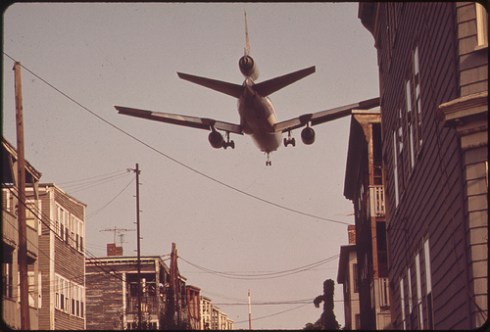
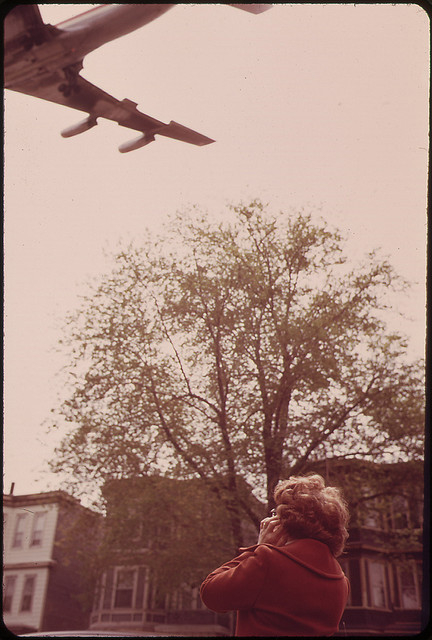
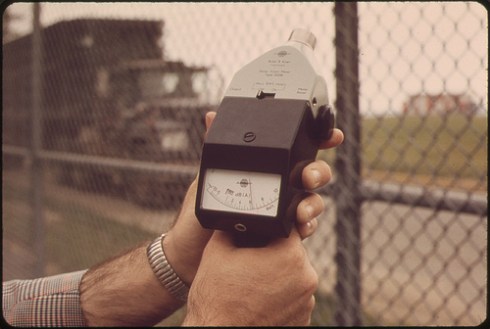
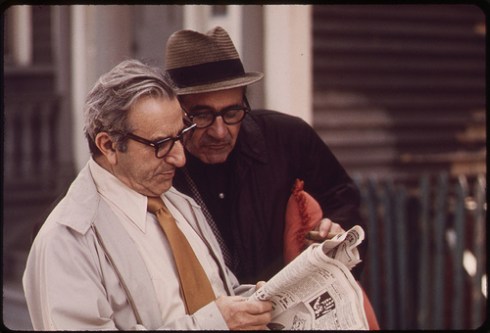
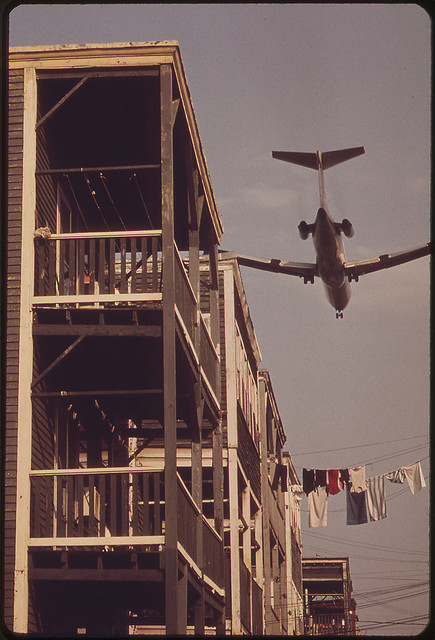
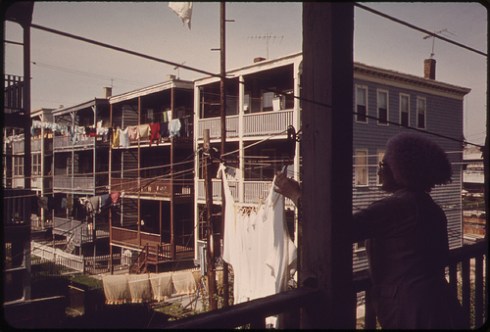
I particularly appreciated the 100 photos by Michael Philip Mannheim which document noise pollution and structural damage within the community around Neptune Road in Boston.

We live in a time in which imagery of aeroplanes in close proximity to buildings wheedle at our unconscious; the pregnant threat of collision is always with us. Mannheim’s subjects on Neptune Road share a different type of agitation. They’ve seen an extra runway inserted, their neighbourhood split in two and a rail link nestled against their properties. The noise, vibrations and ever-presence of aircraft for these folk is menacing but for very different reasons.

Just wanted to share.

Shack on the outskirts of town @ Jehad Nga

Last year, in response to Jehad Nga‘s Turkana portfolio, I said, “consumers of media haven’t changed enough, and Nga has hardly changed at all.” My criticism was that Nga had adopted the same chiaroscuro technique for the Northern Kenyan tribesmen as he had U.S. Marines, Somali pirates and Kenyan boxers.

It was my first real foray into negative criticism* and to my surprise Nga emailed and said he could agree with a lot that I said. That opened up a year long dialogue that resulted in an interview recently published for Wired.com.

In the Wired interview, Nga explained he had recently been on special assignment with a second unit crew on the shoot of a feature length drama. Nga who lives mainly in Nairobi, with an apartment in NYC, has spent most of his professional life in the heat and bustle of North Africa, sub-Saharan Africa and the Middle East.

“It’s very different to Africa,” Nga told me, “Barrow, Alaska was important to me; it’s inhospitable, it’s a challenge to survive. Aesthetically, it is lush for picture taking. It is stark and apocalyptic, but I responded to the bleakness. The harshness isn’t because of violence or outside incursion. It’s seasonal, it just is.”

I was pleased to see then that John Bailey‘s well-written and meaty blog for the American Society of Cinematographers (ASC) had featured a selection of Jehad’s work.

See for yourselves how this work differs wildly, and read in my interview why Nga really needed a change.

______________________________________________________

* If you recall, Marc Feustel took umbrage at the prevalence of overly positive reviews)

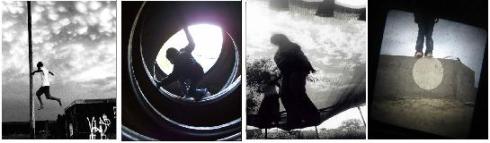
Founded in 2005 by by Emily Schiffer, a Magnum Foundation Emergency Fund grantee, My Viewpoint on South Dakota’s Cheyenne River Reservation, is a youth photography initiative “invested in young people’s inherent visual curiosity.” The images from Seeing is Fun are captivating.

The program has students (ages 6-20) apprentice with professional photographers, working in both analog and digital photography and printing their images in an onsite darkroom

My Viewpoint is run through the Sioux YMCA in Dupree, SD, and in partnership with Daylight Community Arts Foundation.

From the Daylight Magazine blog:

Shipping and Receiving: Photographs and Letters Between Venice, CA and Dupree, SD
August 6–September 30, 2011
Venice Arts Gallery in Venice, California
Opening Reception: Saturday, August 6, 5-8 p.m.

This exhibit features the photographs taken by students in the My Viewpoint photography program, and highlights a collaborative photographic exchange between the youth in the My Viewpoint program and youth at Venice Arts, conducted over 2010 and 2011.

Children of the Cheyenne River
July 23–September 4, 2011
Fovea Exhibitions in Beacon, New York
Opening Reception: Saturday, July 23, 5–7 p.m.
Artist Reception & Talk with Emily Schiffer: Second Saturday August 13, 5–9 p.m.

This exhibit is comprised of medium format black & white photographs of the students in the My Viewpoint photography program by the program’s founder Emily Schiffer, accompanied by a narrative text that explores Schiffer’s perspective on her evolving relationship with them, as well as photographs and text from the students.

EMAIL

prisonphotography [at] gmail [dot] com

Prison Photography Archives

Post Categories