
You are currently browsing the tag archive for the ‘Portland’ tag.

“The world does not yet know the importance of Missy Prince’s photography,” is a tweet I sent out last month with a link to her Flickr account. Missy has only been making images earnestly for 4 or 5 years, but she’s loyal to film, has nailed down an aesthetic and (though she probably won’t acknowledge it) has nurtured an admiring photo-public.
Like most Portland photographers, I first met Missy at a Lightleak meeting. She wears cowboy boots and straight, straight blonde hair. No fuss. I don’t know what she drives but looking at Missy’s photographs you’d reckon it a Vanagon, Lincoln Towncar or a veggie-oil bus. Her wheels have to be fun as she gets out into landscape often.
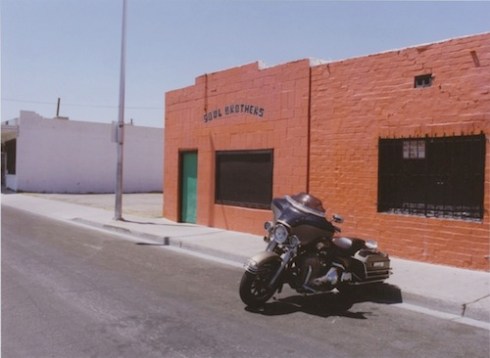
Now, I’m not one to romanticise Portland or the Pacific NW, but if you are looking for a photographer who can capture the allure of the outdoors in a modest, meaningful and evergreen way then Missy’s the one. So verdant are many of her photographs, she could be a one-woman tourist-board for Oregon. Logging roads, trucker hats and fields of wildflowers; it’s the misty, damp images of the PacNW, Missy is known for but I wanted to feature some of her new stuff.
These four photos are from West Las Vegas which, remarkably, is just a stones throw from the strip. Historically it is a Black neighbourhood. It has been largely overlooked during Vegas’ tumorous, gilded growth and accommodates its fair share of the social problems that go along with economic marginalisation.
But in these images of sun-bleached streets there is the same appeal that exists in her work from Cascadia. Missy plays with time. Part of it is due to the texture of film, but part of it is her attention to the vernacular and the overlooked. Missy celebrates Americana; she does not patronise it. And, how does she always find that classic car?

Her photographs gently point out what is all around us, if we can be bothered to get out the front door. Not idealised views, not scenes intended to manipulate, just straight up, well-composed vignettes. She treats photography like an exploration and you too might encounter within it moments of discovery.
What exactly is Missy’s background? In a 2011 interview with LPV magazine, she said:
“I haven’t studied the medium’s history in any formal manner but I think I have a fair grasp of it. My intake is haphazard, I go through phases of not looking. Many of my influences are film makers. David Lynch’s take on The Pacific Northwest in Twin Peaks occupies some prime real estate in my brain. The photography of Tarkovsky and Wim Wenders have stayed with me over time. Road movies and westerns. Two Lane Blacktop, The Passenger, The Hired Hand.”
You check out her other interviews with American Elegy, Orange Juice and The Great Leap Sideways. I only had one question for her.
How do you characterise the Portland photo scene?
The photo scene in Portland is pretty vibrant. There are a lot of photographers here. There are also a lot of galleries, publishers, and events, and there are thankfully still public black and white and color darkrooms. It’s a very photography friendly city, maybe partly because it is surrounded by land that begs to be photographed. I’m probably not a very good judge of the overall scene. What largely attracts me to photography is being out in the environment I am photographing, the meditative solitary experience. Taking photos is almost secondary. I could just as easily be out there sketching what I see. I’ve only been taking photos in earnest for a few years. A little over a year ago I was invited into a collective called Lightleak, which meets once a month to share work and talk about photography in a very relaxed atmosphere. It’s probably the deepest I’ve immersed myself in the scene. The great thing about those guys is they are all fellow film devotees who print their own work. As much as I enjoy the exchange with like minds, I have not deliberately sought many other photo-centered associations. I like when connections happen naturally. So far the internet has been my main resource for looking and sharing. I’ve actually become friends with a few local photographers whom I first encountered online. Perhaps that so many online roads seem to lead back to Portland is evidence of its enthusiasm for photography.
Missy is a faithful Flickrer and has Tumblr is Sea Of Empties. You can buy prints here.


Continuing Eye on PDX, my weekly series about Portland-based photographers, I speak with Lisa Gidley. Featured here are photographs from across her many portfolios.
Prison Photography: How do you characterise the PDX photo scene?
Lisa Gidley: I only know some of the people doing photography in Portland. I know the folks in the photo groups Lightleak and the Portland Grid Project. Even in these groups, we all have different aesthetics and approaches – analog/digital, B&W/color, portraits/other scenes. What we have got in common is that we usually capture recognizable pieces of the real world.
Although I love lots of postmodern art, photography that’s been obviously Photoshopped isn’t my thing. I feel a pretty strong allegiance to the more realistic and unfiltered style of photography, and I’ve got excellent company in Lightleak and Grid. Plus, they’re all cool people and talented photographers who keep me on my toes. Our regular photo meetings motivate me to make some decent work each month, since I know they’ll all be bringing some terrific prints. It’s great to have a photo community that spurs you to keep shooting. Like sharks with cameras: shoot or die.
PP: An Instax photograph of yours was featured atop Joerg Colberg’s recent piece The Single Photograph. You’ve been using this “Polaroid equivalent” for some time and I’ve witnessed the joy of Faulkner Short, Blake Andrews, yourself and others when using this instant-film camera. You’re involved with instaxgratification, a Tumblr of Instax photos by Blake, Faulkner, yourself and others. What’s with the Instax Camera craze?
LG: I think the appeal is similar to that of genuine old Polaroids. Especially in this digital age, there’s a thrill to immediately having a cool little physical object that doesn’t exist anywhere else (at least until you scan it). Once you’ve taken a shot, that’s it: no cropping or color balancing or special effects added after the fact. That finality is nice. The prints are compelling to look at and to handle — they’re proportioned well and have a satisfying heft. Plus, the Fuji lenses are sharp, the color saturation’s good, and from what I can tell, the prints are fairly long-lasting. It’s a fun system.
PP: Why do you make photos?
LG: It’s a compulsion! I love looking at all sorts of photographs, and I love the challenge of trying to make photos I’d like to look at myself. With the type of photography I usually do — where I rove around different places and shoot whatever interesting scenes I come across — the main appeal is the thrill of the hunt. It’s fun to wander with a camera with no idea of what I’ll find, if anything. I typically shoot on film so it’s a few days of anticipation before I know if I’ve captured anything decent. Getting the developed film back is the best thing. After that, it’s also satisfying to make prints and share the images online and otherwise try to get my photos out into the world, but those activities are secondary to the process of shooting. I’m usually antsy to get back out again. There’s always something else to photograph.
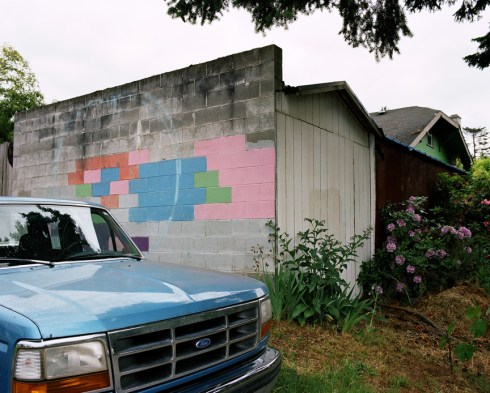


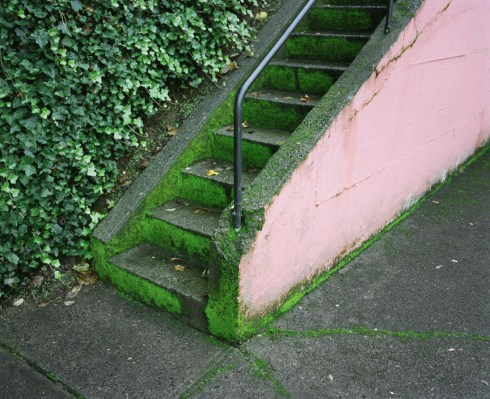

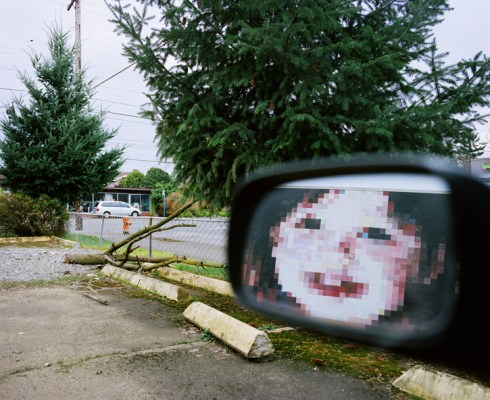

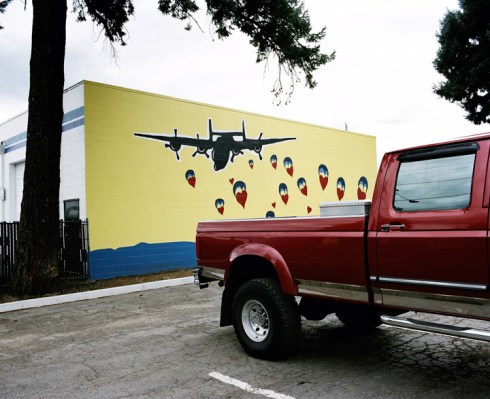


Zachary Allen moved to Portland more recently than I, which is recent indeed. I knew of his work and I was aware he had studied with Ian Van Coller in Bozeman, Montana, and that Zachary had also assisted Ian in South Africa in 2010. When I found out he was here in PDX I didn’t hesitate to contact him and grab a coffee.
In some ways, Zachary’s work is difficult to feature because much of his work is in-process; he stresses that Roseland (my personal favourite of his portfolios) is a twenty year project! Roseland is about land-use and residential planning in Virginia.
Still, I asked Zachary to pull together some images and pen a quote to introduce himself to the Portland photo scene.
Zachary:
“Over the last couple of years I’ve been making photographs documenting my trips into the landscape. I’ve been attempting to stay away from a strict theme based project, which seems like the only acceptable form of photography these days. I kinda ended up with a bunch of mini projects at the end of three years. These mini projects explore several themes, such as nests, town relocations, and the intersection of nature and human influence, but the main thread has been the idea of being a “photographer” in the field. I’m interested in how we as photographers approach the landscape and interact with it. The photos from In The Field explore both my personal outings into the landscape and trips I have accompanied other photographers on. I think there is something really interesting when several people go out into the field just to have a look.”


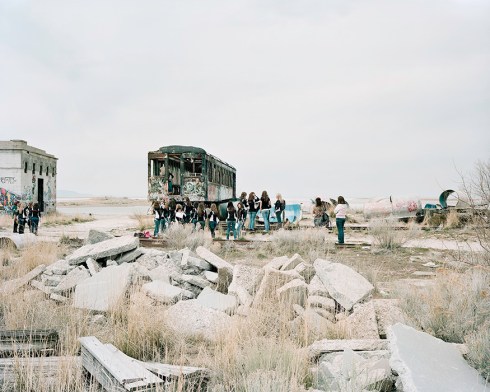

Zachary Allen is a photographer, printmaker, and educator currently based in Portland, OR. He can be contacted on zachary@zacharysallen.com. Follow his work: Twitter, Book Experiments, and Broken Spine, a Tumblr exploring artists’ books.

– – – – – – – – – – –
Eye on PDX is a continuing, weekly series that features images and brief statements by photographers currently living in Portland, OR.
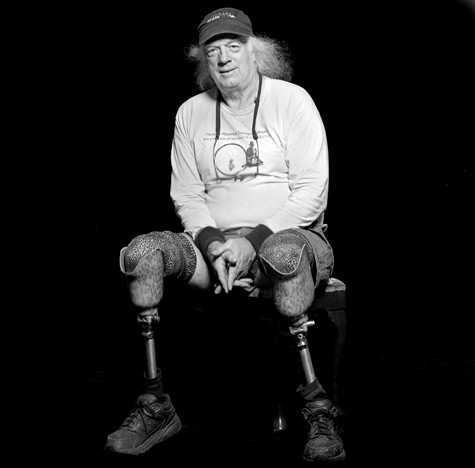
On September 1, 1987, while engaged in a protest against the shipping of U.S. weapons to Central America in the context of the Contra wars, S. Brian Willson and other members of a Veterans Peace Action Team blocked railroad tracks at the Concord, California Naval Weapons Station. An approaching train did not stop, and struck the veterans. Willson was hit, ultimately losing both legs below the knee while suffering a severe skull fracture with loss of his right frontal lobe. Subsequently, he discovered that he had been identified for more than a year as an FBI domestic “terrorist” suspect under President Reagan’s anti-terrorist task force provisions and that the train crew that day had been advised not to stop the train.
Mark Colman has lived in Portland, Oregon for five years. In the past 12 months, he has been working on a portrait project called Faces of Occupy. Each portrait is accompanied by words from the sitter; many of them thoughtful, loving and persuasive statements.
In addition to many original Portland Occupiers, Colman has photographed international figures including Ralph Nader, Dr. Vandana Shiva and Chris Hedges.
Please spend some time with each of the individuals upon whom he has trained his lens. As we know, Occupy touches upon many complex issues, and these are issues that deserve time. Any summary from me would be reductive. I did just have one question for Mark though. I asked what Occupy meant to him.
“Occupy is a way to spread awareness of many things that are wrong for 99% of Americans,” says Colman. “Whether it’s corporate personhood, Wall Street bailouts, illegal bank foreclosures, the government’s increasing attempts to take away our freedoms and constitutional rights with legislation such as the National Defense Authorization Act (NDAA), police brutality, lack of a livable minimum wage. The list is long, but the sooner people wake up, the sooner we will begin to solve these problems.”
So far, Colman has made 43 portraits.
“I plan on having 99 people by year’s end,” he says.

Chris Hedges: “The Authorization to Use Military Force Act, the Patriot Act, the FISA Amendment Act, you know it’s just one piece of legislation after another to strip Americans of their most cherished constitutional rights. I mean even the Obama Administration has not found it within itself to restore habeas corpus. All of this was put in place by Bush, but it was codified by the Democrats. In some ways Obama is worse because he’s used the Espionage Act now six times to go after whistle blowers and leakers.”

“A united educated public is the biggest threat to those that seek to exploit us for power and profit. We are learning and evolving. Where Occupy is headed is up to those who take a stand and get involved. We can take care of each other and work together to improve our quality of life.”
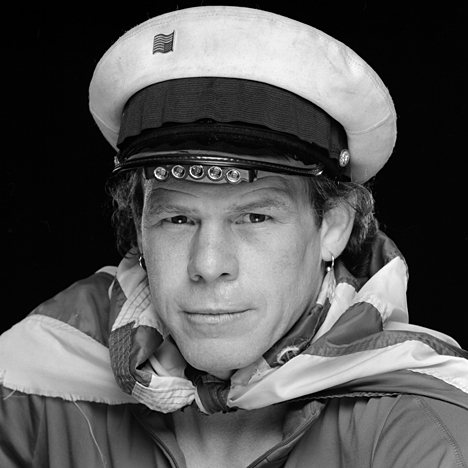
“My first civics lesson came at five years old: I couldn’t watch any cartoons – the Watergate Hearings were on every channel.”
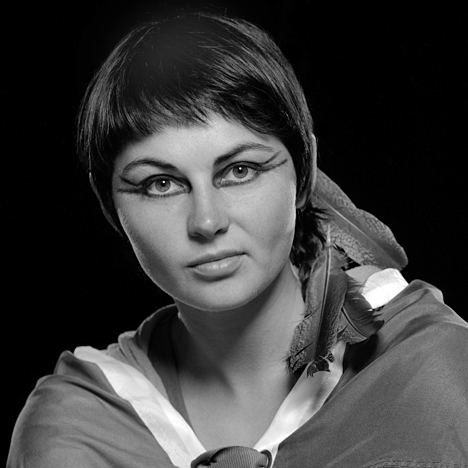
“We the people of Cascadia are learning – some slowly, some quickly – what it takes to live in harmony with the land; the principles of permaculture permeate. The blue, white and green stripes and symbolic doug fir of our flag acknowledge what is true wealth. Clean water, clean air, healthy ecosystems – that is what makes healthy, loving people. We say enough with greed, corruption, and exploitation.”

“Label us socialist, communist, trouble-makers, even Al Qaeda, just rest assured that we, The 99-percenters, will go away only when you, The Monopoly Capitalists, become content with being only millionaires instead of multimillionaires and when you allow some viable form of Democratic Socialism to become America’s form of government.”

Ward Shortridge makes portraits in Portland and other cities, but mainly in Portland, Oregon where he lives. Ward used to work as a psychiatric social worker. Good portraits often come from the same place as good counselling.
“The best photographs, like the best therapy, occur when I don’t talk too much, when I engage my subjects with unconditional acceptance and love, when I let go of my desire for a particular result and take my direction from the life that is presented to me,” says Ward.
This post is the second in a new series called Eye on PDX. Once a week, I’ll post some images and words by a different photographer working in Portland, the town I now call home. Think global, shoot local.
Ward Shortridge’s website and blog.
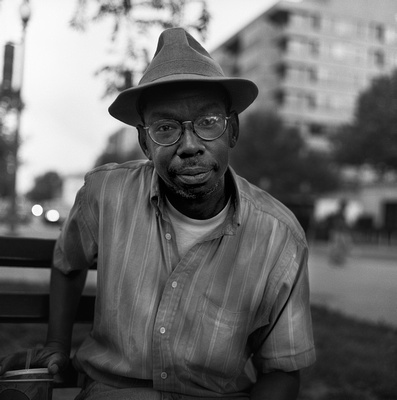

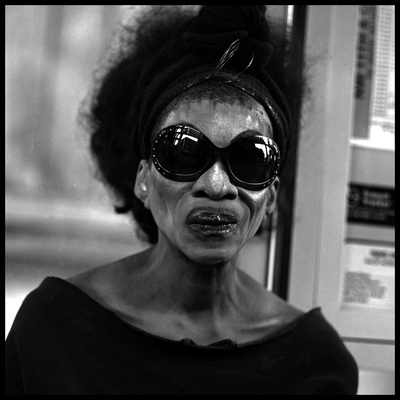

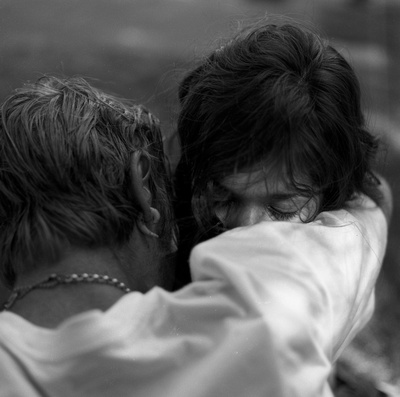

Alabama & Gracen © 2011-12 Bobby Abrahamson
North Portland Polaroids, Bobby Abrahamson
St. John’s is one of the more interesting neighbourhoods in Portland. Geographically isolated from the rest of the city, many people in St. John’s – for the longest time – considered themselves distinct from the rest of the city. That sentiment still remains, but throughout the nineties and early noughties there was an influx of youngsters looking to make home and St. Johns in the historically more blue-collar North Portland afforded the cheapest homes. This isn’t to say that gentrification has taken place – by the standards of other cities, the curious and lovable outpost of St. Johns cradles as much of it’s original modesty and allure to outsiders (me and others like me) than ever before.
Photographer, Bobby Abrahamson, bought a house in St. Johns just over a year ago, but his making of portraits using 5×7 Polaroid film preceded his move into the neighbourhood. North Portland Polaroids is a gentle homage to the photographer’s immediate surroundings and supports the theory that one needn’t travel the earth to make interesting photography.
As well as being acquainted with Bobby and really liking the work, another winning factor is the Portland-based collaborative championing of North Portland Polaroids. It is currently being shown at two stalwarts of the PDX photo-scene – Blue Sky Gallery (downtown) and Ampersand (Alberta Arts District, NE).
Abrahamson was in discussions with Myles Haselhorst at Ampersand about producing a book before a show at Blue Sky was confirmed. When Blue Sky said ‘Yes’, instead of the two venues competing against one another they coordinated their ventures. Ampersand is a bookstore with gallery space and finely curated photobooks and ephemera, whereas Blue Sky is a more traditional gallery space with programming and workshops. In terms of international exposure, Blue Sky is the place in this city, but in terms of making books with local binderies and a keen curatorial eye, Ampersand fits the bill.
Just as Weegee “took over” New York last Fall, now is Abrahamson’s moment in Portland. North Portland Polaroids is of and for this town.
I’d like to hear readers’ suggestions of other keenly local projects that have been embraced by the locals, the subjects. [Comment below, please]
I should take this opportunity to say that living in Portland has worked out very well for me; the photography community here is active but relaxed; intelligent and open. Ampersand, The Grid Project, Lightleak, NewSpace, Blue Sky and Critical Mass/Photolucida are all PDX businesses, non-profits and ragtag bunches of friends with capital in the culture of photography. I digress but perhaps those observations speak to my own fondness for photography in Portland … and as to why I write this post.
LISTEN
Bobby Abrahamson, Julia Dolan (Minor White Curator of Photography curator at the Portland Art Museum) and Myles Haselhorst (Owner, Ampersand) on KBOO Portland Community Radio. Here.
LOOK
BOOK: NORTH PORTLAND POLAROIDS
Buy the book at the Ampersand website.
5 x 7 in.
Perfect bound soft cover
100 pages
46 photographs
Printed on Mohawk Superfine paper
Foreword by Julia Dolan, The Minor White Curator of Photography, Portland Art Museum
Designed & published by Ampersand
Printed & bound in Portland, Oregon
Edition of 150

Last year, in the article Photographing the Prostitutes of Italy’s Backroads: Google Street View vs. Boots on the Ground, I compared the work of artists Mishka Henner and Paolo Patrizi both of whom were making images of prostitution on the back roads of Spain and Italy.
I argued that the photographs by Patrizi, due to their physical and emotional proximity had more relevance. Patrizi actually went to the roadside locations whereas Henner, making use of Google Street View, had not.
Around the same time, Joerg Colberg posted some thoughts about Henner’s No Man’s Land.
Shortly thereafter, Mishka Henner emailed me and mounted an impassioned defense of his work. Henner felt he had been “thrown to the cyber-lions.” Not wanting to see anyone with his or her nose bent, I offered Henner a platform on Prison Photography for right of reply.
CONVERSATION
PB: What was your issue with the commentary on No Man’s Land?
MH: There’s a section of the photo community judging No Man’s Land according to a pretty narrow set of criteria. So narrow they’re avoiding one of the elephants in the room, which is what role is left for the street photographer in the age of Google Street View? Comparing No Man’s Land to other projects on sex workers could be interesting but the way it’s done here is resulting in a pretty narrow discussion about whether it’s valid, ethical or just sensationalistic. I don’t see how that helps move documentary forwards. All the projects you mention, including mine, assert themselves as documents of a social reality. But in your discussion, this is secondary to how they make you feel and Colberg even argues Patrizi’s approach makes you care. My motivation isn’t to make you feel or to care – it’s to make you think.
MH: No Man’s Land uses existing cameras, online interest groups, and one of the subjects interwoven in the history of photography. And I think the ability to combine these elements says something about the cultural and technological age we live in. In some photographic circles, that’s the way it’s being discussed and I’m surprised Colberg and yourself have dismissed it in favour of more reactionary arguments that seem to hark back to what I see as a conservative and nostalgic view of the medium.
PB: Well, if preference for boots on the ground and a suspicion of a GSV project is reactionary, then okay. Why did you use GSV for No Man’s Land? Are you opposed to documentary work?
MH: This is documentary work, how can it not be? And what’s this suspicion of GSV? Would you have been suspicious of Eugene Atget walking the streets with his camera? I’m sure many were at the time but that suspicion seems ridiculous now. And your response is reactionary because it validates and dismisses work according to quite spurious and nebulous criteria. What does it matter if I released the shutter or not? A social reality has been captured by a remote device taking billions of pictures no one else ever looked at or collected in this way before. You’re only seeing this record because I’ve put it together. The project is about the scale of a social issue, not about trying to convince a viewer that they should have pity for individual subjects. Yet in these circles, the latter uncritically dwarfs the former as though it’s the only valid approach.
MH: Paolo Patrizi’s A Disquieting Intimacy is evidently an accomplished visual body of work, as is Txema Salvans’ The Waiting Game but to argue they offer a deeper insight into the plight of sex workers is, I think, generous to say the least.
MH: The assumption underlying much of the critiques of No Man’s Land (in particular Alan Chin’s) is that there’s no research and it’s a lazy, sensationalistic account of something fabricated. But what if I told you it was researched and took months to produce; what basis would there be then for dismissing it? Doesn’t research inform 90% of every documentary photographer’s work (it did mine, maybe I wasn’t doing it right)?
What’s left unsaid in these critiques is that No Man’s Land doesn’t fit a rather narrow and conservative view of what one community believes photography should be. The fact we’re drowning in images and that new visions of photography are coming to light are a scary prospect to that community, hence the reactionary and defensive responses. But there’s more to these responses than simply validating boots on the ground. You’re prioritising a particular way of seeing and rejecting another that happens to be absolutely contemporary.
PB: I think we can agree Patrizi is accomplished. I was deliberately lyrical in my description of his work and I meant it when I was personally moved by Patrizi’s work. That is a personal response.
MH: That’s fine, but what does Patrizi tell us that is missing from No Man’s Land? Is the isolation and loneliness of a feral roadside existence and the domestication of liminal spaces really that much more evident in one body of work than the other? Surprisingly – given your sympathy for Patrizi’s’ approach – even the women’s anonymity is matched in each project. No captions, no locations, no names, and no personal stories. Just a well-researched introductory text that refers in general terms to the women’s experiences. I think you’re viewing the work through rose-tinted spectacles.
PB: I can’t argue with your point about anonymity. There may be an element of gravitating toward [Patrizi’s] familiar methods. This might be because reading the images resultant of those methods is safe for the audience; they find it more easily accessible, possibly even instructive in how they should react?
MH: Working in documentary for many years, I can’t deny I aimed for these lofty aspirations. But I now consider the burden of sympathy expected from a narrow language of documentary to be a distracting filter in the expression of much more complex realities. Pity has a long and well-established aesthetic and I just don’t buy it anymore. In themselves the facts are terrible and I don’t need a sublime image to be convinced of that. In the context of representing street prostitution, striving for the sublime seems a far more perverse goal to me than using Street View and much more difficult to defend.
MH: Alan Chin’s comments surprised me because I wouldn’t expect such a knee-jerk reaction from an apparently concerned photographer. But his work is a type of documentary that I’m reacting against; a kind of parachute voyeurism soaked in a language of pity that reduces complex international and domestic scenarios into pornographic scenes of destruction and drama. It’s the very oxygen the dumb hegemonic narrative of terror thrives on and I reject it. Why you would pick his critique of my work is beyond me – we’re ships passing in the night.
PB: I quoted Chin because he and I were already been in discussion with others about the many photo-GSV projects. He represented a particularly strong opposition to all the GSV projects including No Man’s Land.
MH:No Man’s Land is disturbing, I agree. And it troubles and inspires me in equal measure that I can even make a body of work like it today. But it isn’t just about these women, it’s also about the visual technologies at our disposal and how by combining them with certain data sets (in this case, geographic locations logged and shared by men all around the world), an alternative form of documentary can emerge that makes use of all this new material to represent a current situation. It appeals to me because it doesn’t evoke what I think of as the tired devices of pity and the sublime to get its point across.
PB: It’s not that I don’t like No Man’s Land, but I prefer Patrizi’s A Disquieting Intimacy; it is close(r) and it is technically very competent work. There’s plenty of art/documentary photography that doesn’t impress me as much as Patrizi’s does. A clumsy photographer could’ve dealt with the topics of migration and the sex industry poorly. I don’t think Patrizi did.
MH: I don’t know what you mean by clumsy. If by clumsy you mean a photographer who shows us what they see as opposed to what they think others want to see then bring it on, I’d love to see more of that. No Man’s Land might seem cold and distant, it might even appear to be easy (it isn’t), but it’s rooted in an absolutely present condition. What you consider to be its weakness – its inability to get close to the photographic subject, its struggle to evoke pity – is what I consider to be its strength.
PB: The detachment is the problem for all concerned. People may be using your work as a scapegoat. This would be an accusation that I could, partly, aim at myself. Does your work reference the frustration of isolation and deadened imagination in a networked world?
MH: At first, I reacted strongly to your description of my work as anemic but now I think it’s a pretty good description of the work. And it’s an accurate word for describing what I think of as the technological experience today, our dependence on it and its consequences.
PB: Consequences?
MH: I know, like most working photographers, that for all the fantasies of a life spent outdoors, much of a photographer’s workload happens online. And if you’re a freelancer, the industry demands that you’re glued to the web. It’s not the way I’d like it to be; it just happens to be the world I’m living in. And anyone reading this online on your blog is likely to share that reality. So it seems natural and honest that as an artist, I have to explore that reality rather than deny its existence.
PB: For audiences to grasp that you’re dealing – with equal gravity – two very different concerns of photography (the subject and then also contemporary technologies) opens up a space for confusion. Not your problem necessarily, but possibly the root of the backlash among the audience.
MH: Well, it’s surprising to me that few critics have actually discussed the work in relation to the context in which it was produced, i.e. as a photo-book. If even the critics are judging photo-books and photographs by their appearance on their computer screens, then I rest my case.
PB: What difference does the book format make to your expected reactions to the body of work?
MH: For one thing the book takes the work away from the online realm and demands a different reading. That in itself transforms it and turns it into a permanent record. Otherwise I’d just leave the work on-screen. I recently produced a second volume and intend to release a third and then a fourth, continuing for as long as the material exists.
PB: On some levels, people’s reactions to your work seem strange. If people are so affronted, they should want to change society and not your images?
MH: Too often, I find that beautifully crafted images of tragedy and trauma have become the safe comfort zones to which our consciences retreat. It’s something people have come to expect and it doesn’t sit easily with me. When I think of No Man’s Land, I keep returning to Oscar Wilde’s preface to The Picture of Dorian Gray:
No artist has ethical sympathies.
An ethical sympathy in an artist is an unpardonable mannerism of style.
All art is at once surface and symbol.
Those who go beneath the surface do so at their peril.
Those who read the symbol do so at their peril.
It is the spectator, and not life, that art really mirrors.
Diversity of opinion about a work of art shows that the work is new, complex and vital.
When critics disagree the artist is in accord with himself.
– – – – – – – – – – – – –
No Man’s Land will be on show – from May 3rd until 27th – at Blue Sky Gallery, 122 NW 8th Avenue, Portland, OR 97209. Tuesday – Sunday, 12-5 pm.
As you may know, I’ve recently relocated to Portland, Oregon. The Portlandia TV comedy narrative would have you believe this is a town full of loveable counter-culture stereotypes; under-employed dreamers, kombucha-swilling hippies, and coffee-obsessed yoga-rock-climbers, to name a few.
But …
PORTLAND IS NOT PORTLANDIA
It is fair to say that on the West Coast, the tech boom of the nineties – centred on Seattle, San Francisco and Silicon Valley – bypassed Portland. And the joke is that people pursued fire-eating, tattoos and weed instead of HTML and Java-code.
But Portland is not a harmless bubble populated only by self-aware, contented contrarians. Portland has the same problems with failing schools, violence and inequality as many large U.S. cities. Furthermore, the State of Oregon as a whole has seen dwindling public funds for education as measured against its burgeoning law enforcement and corrections budgets.
As a reality check, I’d like to recommend two articles.
Firstly, Our preoccupation with incarceration costs us in education, by Naivasha Dean in Street Roots:
Oregon is one of only a handful of states in the nation that spends more money on prisons than on higher education, a statistic that is often met with dropped jaws by students struggling for financial aid. The Department of Corrections has been one of the fastest growing state agency budgets that is eating up an ever-increasing percentage of the state’s General Fund. This does not bode well for Oregon’s future and represents a deeply misplaced set of priorities and an archaic approach to addressing crime and public safety.
Why is Oregon’s prison spending so out of control? Oregon can trace the trend directly back to 1994, when voters approved Ballot Measure 11. Measure 11 established mandatory minimum sentences for approximately 20 “person-to-person” crimes, and it automatically sends youth charged with any of those crimes, aged 15 and over, directly to adult court. Mandatory minimums are a one-size-fits-all approach to criminal sentencing that prevent judges from using their discretion and prevents Oregon from using smarter approaches to accountability and crime prevention.
Shortly after the passage of Measure 11, Oregon’s governor and legislature approved plans for more than 8,000 new prison beds, including siting for six new prisons. Since then, the legislature has authorized more than $1 billion for prison construction. As anticipated, Oregon’s prison population exploded — from 6,000 inmates in 1995 to more than 14,000 today, and the Department of Corrections budget more than tripled.

Secondly, Portland, the US capital of alternative cool, takes TV parody in good humor, by Paul Harris. This Guardian article, partly, dispels the temptation to get carried away with TV’s version of PDX life:
Portlandia is not the whole picture of life in Portland. Not everyone is white, urbane, child-free and in their 20s, or acting as if they are. In fact the city is 8% black and 9% Hispanic– communities that often live in poorer neighbourhoods that are gentrifying with newcomers who push out long-established families who can no longer afford rents.
Portland also has a problem with gang violence. […] One man who sees this side of Portland close-up is John Canda, founder of gang outreach group Connected. “I personally have been to 358 funerals,” he said of two decades working in the field. Connected, formed last year after a series of shootings, seeks to lessen violence by having volunteers walk the troubled streets, reaching out to Portland’s youth.
“Our message is talk with us. It starts with a greeting,” he said. For Canda, as a native black Portlander, the world of Portlandia and its concerns over recycling and organic food seem unreal. “It is like a parallel universe,” he said.
Graph courtesy of the Prison Policy Initiative.

 Prison Photography