
You are currently browsing the tag archive for the ‘Robert Gumpert’ tag.

Bob Gumpert‘s Locked and Found portraits are on show at HOST Gallery for the next month (April 7th – May 7th).
On the 13th April, there’s a panel discussion on three different projects made in, around and about jails and prisons, with Bob, Edmund Clark and Guardian writer Erwin James.
HOST’s blurb:
Robert Gumpert has been documenting the criminal justice system in San Francisco since 1994. We are delighted to bring his matchless archive of convicts, cops and courthouses to HOST gallery, where it will be exhibited for the first time in the UK.
Gumpert’s project began with an idea to photograph a homicide detective, but quickly expanded to cover numerous other aspects of the criminal justice system. After he exhibited the work in San Francisco in 2000, he thought that was the end of it, until he received a call from the sheriff’s office. California’s oldest jail was about to close, and for Gumpert, whose photographic roots were planted in the social activism of the 70s, this was a piece of history he felt compelled to document.
“‘Old Bruno’ was built in 1934 as an example of progressive incarceration, but it had become a toxic dump of a place where deputies and prisoners where expelled. Over the years the courts had ordered its closure and finally in August of 2006 everyone moved to the adjacent new Bruno. I documented the old jail, its closing and the opening of the new one,” says Gumpert, who then sought and received permission to continue his photographic quest across six county jails.
As his work progressed, so too did his attitude towards his subjects, the majority of whom were incarcerated men (he also photographed police officers and prison guards). From an ‘us and them’ relationship, his modus operandi evolved to one of participation, as Gumpert conducted audio interviews with everyone he photographed, in a kind of reciprocal exchange: a picture for a story.
Robert Gumpert has been working as a photographer since 1974, when he documented the coal miners’ strike in Harlan County, Kentucky. Since then he has worked on a series of long-term projects, including studies of the US criminal justice system and emergency health care in the United States.
For more information contact Anna Pfab on anna [at] foto8.com or 020 7253 2770.
HOST Gallery, 1-5 Honduras Street, EC1Y 0TH, London,UK
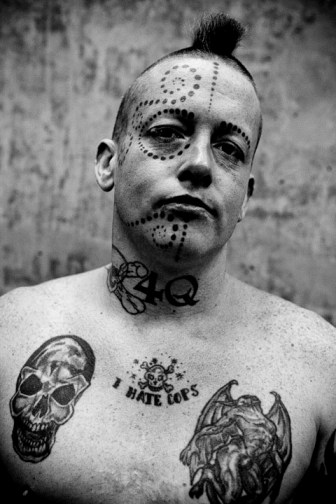
© Robert Gumpert
I’ve talked recently about photographers Bob Gumpert and Deborah Luster. A couple of months ago, upon my recommendation, Bob actually bought Luster’s monograph One Big Self.
The next day he emailed me to say that one of Luster’s sitters from Transylvania, Louisiana in May of 2001, he had photographed in San Francisco County Jail in February of 2009. Bob interviewed the man yesterday and posted the audio.
This is the first instance I’ve come across in which two independent photographers have photographed the same prisoner. I don’t know if it is significant or not?…

Page from Deborah Luster's 'One Big Self'
Since getting to know photographer Robert Gumpert his discomfort with the current world of journalism has been a constant. He doesn’t gripe about technologies like some photojournalist elders (which I don’t have a problem with, by the way), but Bob can’t see a way back from slipping standards as we veer toward the bottom-line priorities of “Newsonomics.”
Bob says:
From the beginning there has been a fight in journalism over where the “firewall” between advertising and the newsroom should be and, as a related question, “what is news?” Is news what readers need to know, or what they want to know?
And so these two articles caught my attention.
The first is At Yahoo, Using Searches to Steer News Coverage. It’s a good headline and pretty much says it all. Yahoo will be using what the reader wants to know to determine content. This is now called democratizing content. In the past it was called tabloid news. […]
[Secondly,] “Gaps in Watchdog Journalism Reflected in News From a Trial.” You could not ask for a better example of why good aggressive journalism is needed and what happens when it isn’t around. The article concerns the coverage of a police torture case in Chicago by John Conroy. Everyone should read this article. I say read this article instead of his regular pieces because no one is employing Mr. Conroy anymore, and few news outlets are doing his kind of investigative reporting.
We are all, individually and as a country, more vulnerable for it.
Here, here! It’s a pleasure to know you Bob.
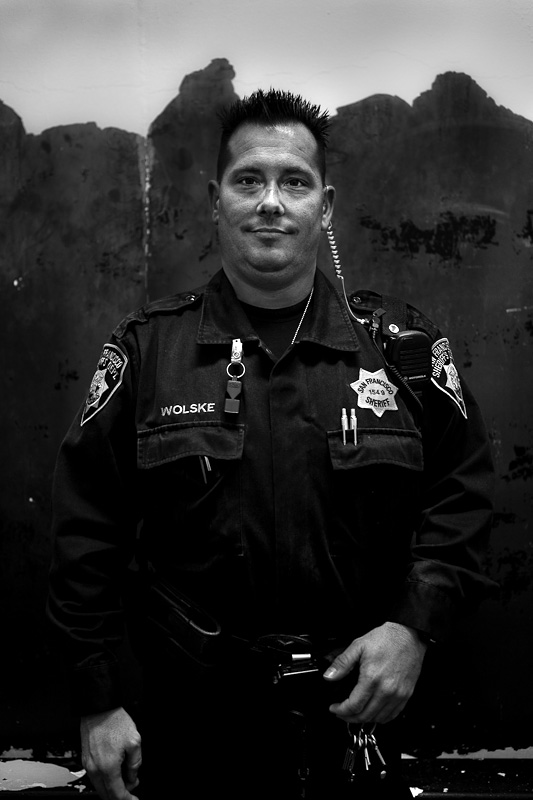
A few months ago Bob Gumpert and I sat down and talked at length about the reasons why photographers should endeavour to tell the stories of social movements, workers rights, crime, justice and injustice. The conversation rolled and rolled which partly explains why the edited interview hasn’t surfaced yet.
Bob’s activism emerged in the Labor Movement of the 1970s. He began documenting the criminal justice system by following police officers and public defenders in the San Francisco Bay Area. From there he traversed to tell the stories of people in the jail and probation systems.
This morning I received this email:
As some of you know, since 1994 I’ve been documenting the criminal justice system. There is now a website for the latest segment of “Lost Promise: The Criminal Justice System.”
“Take A Picture, Tell A Story” is where you can find portraits and recorded stories from the two major projects of my 35 years in documentary photography. In “Locked and Found” prisoners in the county jails of San Francisco tell stories of their circumstances, hopes and sorrows. In “Tales of Work” workers tell of their lives and their jobs.
Bob
So don’t wait for my interview to familiarise yourself with Bob’s work. Listen to the tales he’s recorded – they reflect the complexities that rattle about in an inevitably inflexible system that deals with hundreds of thousands of individuals.

 Prison Photography