
You are currently browsing the monthly archive for February 2010.
I am currently obsessed with Alex Webb and the way he piles everything on top of everything else. Working on a post last week, I was reminded of a commercial shoot I saw last year.

© Alex Webb/Magnum Photos. CUBA. Sancti Spiritus. 1993. Baseball fans.

@ Ben Baker. FedEx Board of Directors
UPDATED
Since going to press, University Behind Bars has changed its name to University Beyond Bars. The new website for UBB can be found at http://www.universitybeyondbars.org/.
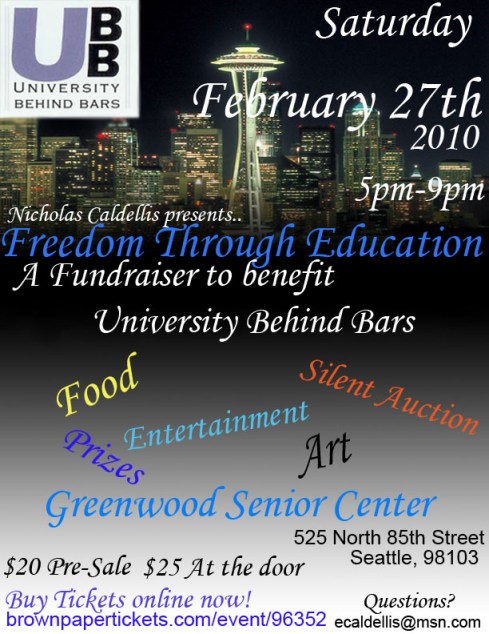
FREEDOM THROUGH EDUCATION
The Prisoners Education Network is hosting FREEDOM THROUGH EDUCATION, a fundraiser for its main program, University Behind Bars.
Greenwood Senior Center is the venue for an evening of music, fine foods and silent art auction. Many students from my art class have donated paintings and other from outside the class have made crafts for auction. Local families and a local church group have pooled resources to make this happen. If you want to know why so many different people are invested, I think it is because they share PEN’s values and mission.
Buy tickets at Brown Paper Tickets
Freedom Through Education on Facebook
BACKGROUND
The Prisoners Education Network (PEN) is five years old. I have been with PEN for nine months now. In this current quarter, the University Behind Bars (UBB) offered is widest selection of courses – including Art, Business Law, Child Development/Psychology, English Composition, Human Geography, Intro to Math, Music Theory and Sociology.
PEN is the only organisation in Washington State providing college level education and credits to prisoners.
PEN is currently expanding its UBB program to preserve its widened curriculum. All teachers are volunteers and 98% of donations go directly toward tuition fees and books. Our teachers are passionate professionals, but our students are the heart of the program. Via the correspondence course set-up, students receive credit from Ohio University. Beyond matters of credit, the students are building a shared community of learning within Washington State Reformatory at Monroe Correctional Complex.
This is the first big fundraiser of the year. It would be great to see you there, but if you can’t attend because you are in another state or on another continent, please consider donating to PEN via the website.
Thank You

© Eugenio Espino Barros. 'Orphan's Asylum, Mexico City'
Alejandro Cartagena delights again with his introduction to Eugenio Espino Barros‘ work.
Barros designed his own cameras, which might explain why his subjects look more and more like cardboard cutouts toward the edges of the picture.
His official bio states, “At the age of sixteen he built his first camera, using cardboard and using the lenses from binoculars as his camera lens.”

© Caroll Taveras, 2009
I think America has too many guns. It is not something that fits really with Prison Photography so I stay away from the topic.
But I came across Caroll Taveras‘ photographs of a quick draw competition for children in Colorado, and was compelled to post.
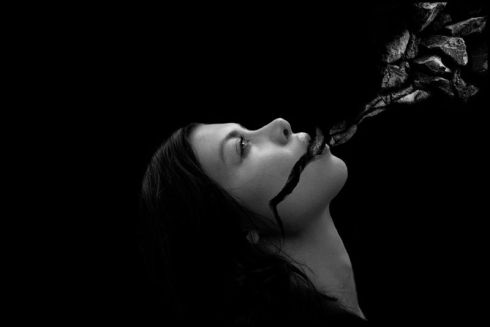
© Zoriah Miller. Model Laura Peterson's negative sandwiched with an image of devastation in Lebanon after the 34-Day Summer War.
CHANGING DIRECTION
Zoriah Miller has put aside his photojournalist work to pursue photocollage full time.
Zoriah’s statement declared photojournalism “rigid and stagnant … obsessed with rules, hiding behind “ethics” in order to produce nothing but formulaic, generic press photography.”
“What if you could create works of art that would not only stun people visually, but also educate people about a subject that they may otherwise ignore or find too depressing to pay attention to?” asks Zoriah.
Zoriah explains that he has been “shooting models and celebrities to work on creating composite images of beauty, sex and fame mixed with conflict, crisis and disasters.”
Zoriah and all models and celebrities involved in the project donated their time and the proceeds from the project will benefit refugees of conflict.
HOW TO POSITION THE WORK?
Judging by the example offered above the composite results will be incongruous mixtures of elements. Seemingly, Zoriah has traded his prior claims toward humanitarianism for the language of Dada.
Zoriah’s position is conflicted. The way in which he suggests putting images together is antagonistic, which is fine if you’re willing to argue away meaning as many agitators do, but Zoriah is trying to bring about attention to the issues surrounding the images of death which he then obscures with images of sex appeal. Do you see his problem?
Anyone want to have a stab at throwing these two images together on photoshop?*
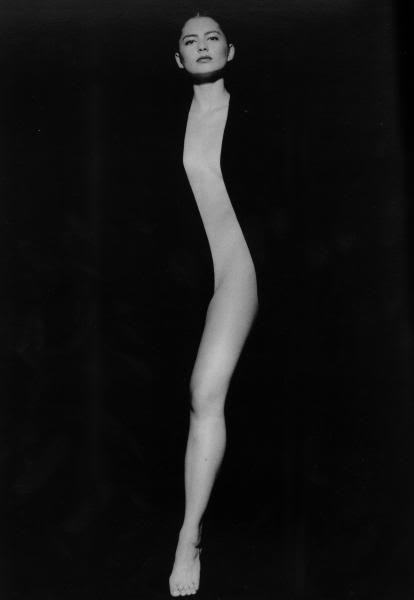
© Tono Stano, 'Sense'

© Yannis Behrakis/Reuters. A Palestinian worker repairs a bullet-ridden wall damaged during the three-week offensive Israel launched last December, at a factory in the northern Gaza Strip November 2, 2009.
If one experiments often enough fusing images together visually intriguing results will ensue. However, visual interest is cheap these days so it alone is not enough to prove an image ethical (I use that word knowingly) and/or effective.
I can see what Zoriah plans. It just doesn’t make a lot of sense.
QUICK THOUGHTS
1. Following the Haitian workshops debacle and in the face of unforgiving and acerbic name-calling, I think Zoriah argued his early corner quite well. To unleash this bizarre move is either total stupidity or unrelenting self-confidence. Either way, I would have liked to have heard and seen more works and reaction from Haiti and from his students before this.
2. Whether or not photojournalism is in a pickle – as Zoriah insists – the questionable cocktail of “sex and fame mixed with conflict, crisis and disasters” is, in my opinion, not the answer.
3. Likely, Zoriah’s future claims of being a journalist will be met only with derision.
4. Zoriah’s efforts at a thanaphilic fashion photography are not without precedent. Zoolander’s poor-taste DERELICTE fashion collection, a homeless aesthetic wrapped in the glitz and lights of the catwalk was great satire. So good it inspired Vivienne Westwood and the late Alexander McQueen. Etnies also had a good go at bad taste with its Hobo Ad campaign. I suppose Vice readers have been getting off on photographs of blood stained victims for years now?…
5. The greatest problem with this issue is that is inflates the importance of photography as an agent of change. No matter how much we recognise a need to raise attention about global issues, photography is not the sole answer, nor is photojournalism. The mode of photography Zoriah suggests is an unholy marriage. Who is the audience for this hybrid approach? What does he expect audience reactions to be? It would seem to me that consumers of images are turned on and off by visual cues. It is very easy to hook them with slick tried-and-tested commercial cliches. It is one thing grabbing a viewers attention for a second or two, it is another mutating that into a long and complex engagement with the real issues.
6. As offensive as this manouver may be to some folk, it isn’t the first time (and won’t be the last) a photographer oversteps logic and accepted practice with great hopes to change the cultural landscape.
7. I suspect there’s a reason why the worlds of fashion and photojournalism are distinctly separate. I can also think of many other more subtle ways in which art and marketing has been used as part of photojournalist careerism.
8. Given the consumer climate in America it is not unlikely that Zoriah will succeed in raising substantial funds. Ultimately, it will become an issue of the project’s branding and delivery.
9. If all else fails, it’s a good start for an Onion feature, right?
What do you make of all this? The “Leave a comment” button is at the top of the post.
*NB. Zoriah is using Negative Sandwiching
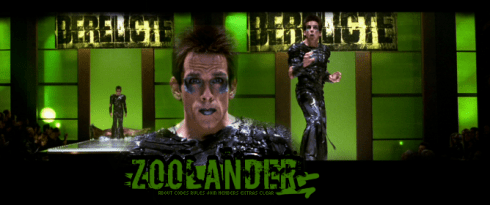
Derek Zoolander launches the DERELICTE collection. Image source: http://www.uninvitedgrace.com/zoolander/
Magnum and Haiti intersect in a number of portfolios. Having done a lot of looking recently (here, here and here) Alex Webb‘s photography stands out.
Webb’s photography is unmistakable; he carries his busy compositions across the globe – Turkey, Santo Domingo, Mexico, Haiti …

Alex Webb. TURKEY. Istanbul. 2001. View from a barbershop near Taksim Square.

Santo Domingo. 1980. ©Alex Webb/Magnum Photos

© Alex Webb, Ponce, Puerto Rico, 1990

© Alex Webb/Magnum photos. TURKEY. Istanbul. 2004. South of Uskudar. Along the sea wall in the late afternoon.
I’ve often wondered what Webb’s thinks when he approaches groups of people and accoutrements. Indeed, I’ve wondered if (at this point) sniffing out these hectic visual environments is an unconscious practice.
On his blog today, Webb responded to a reader’s question about the framing of his images:
Saying “to run an anatomy of the scene” makes the process sound highly analytical. Nothing could be further from the truth.
My process is not about thought, not about analysis, but rather about feeling the totality of a scene and responding intuitively, emotionally, non-rationally. I have sometimes used the word “smell” in this context (and I think I am paraphrasing Cartier-Bresson) specifically because smell is sensory, not rational. The process can be a bit mysterious. When I photograph, I sense the possibility of something — something about the feel of a place, the situation, some impending moment, the light, the color, the space, the shapes — and I often hang out and wait, hoping that something will happen, something will emerge. But I’m never sure quite what this something is.
For me, the elements that go into the picture are often emotional elements: not just what is in fact “happening” in a situation (the purported “subject” of the image), but the space, the color, the light. Form isn’t just form, it can be emotion. Color isn’t just color for color’s sake, it, too, carries emotion. Sometimes a shape in the foreground becomes some kind of transformative element, sometimes an empty space strikes a special emotional note, sometimes the color changes what wasn’t an evocative scene into something very different.
[My underling]
The term composition is more appropriate to describe Webb’s photography than that of his contemporaries. He stalks opportunities to frame multilayered compositions, in that he puts himself in the best spot and then lies in wait. And his compositions, akin to music, “strike emotional notes”.
Webb states his process is not analytical, but I wouldn’t say it isn’t disciplined.
View Webb’s Magnum portfolio and a sumptuous Webb selection of images with high contrast compositions from The Edelman Gallery.
In a blog post, Shawn Rocco covered yesterday’s exoneration of Greg Taylor
Rocco says, “Exonerating innocent men is a storyline that is sadly becoming all too common in this state over the past few years. Darryl Hunt, Joseph Abbitt and Dwayne Dail were in the courtroom today to hear the verdict and welcome another man into their unique group. DNA (or lack thereof) helped their cases. It did to a certain degree with Taylor. But it was the lack of any substantial evidence that led the the three-judge panel to their decision.”

© Shawn Rocco
For more the full article read here and Rocco’s accompanying photo gallery is here.
_________________________________________________
Regarding exonerations, I have previously featured James Estrin’s New York Times story on Jeffrey Deskovic.
Ken Light is a career photojournalist and a professor of photojournalism at Berkeley. If anyone is going to push back against the abuse of photographers rights, it’d be him right?
Well, he did. He won a small but symbolic $558
Last year, Light licensed his image of Cameron Todd Willingham to several media outlets coinciding with The New Yorker‘s exposé of dodgy arson forensics and the probable innocence of Willingham.
Current TV was not one of those he dealt with, yet they displayed Light’s image for a couple of months.
Light avoided federal court because it is costly and long-winded and filed a small-claims suit in San Francisco. PDN explains:
What is interesting here, is Light wonders avoiding the impractical, less-reflexive, federal route could be a better option for photographers:
“Yes, I got much less than I thought I deserved. [But] Maybe if we attacked in small claims courts and won, some of these companies might be more careful,”
I think Light has a good point and proven a repeatable tactic.
___________________________________________
Postscript: In the summer, I did multiple interviews and one of those was with Light about photographing on Texas’ death row. Everyday, I look at that untranscribed audio file and beat myself up that I haven’t published yet. It’s coming … I promise.

 Prison Photography