
You are currently browsing the monthly archive for February 2010.
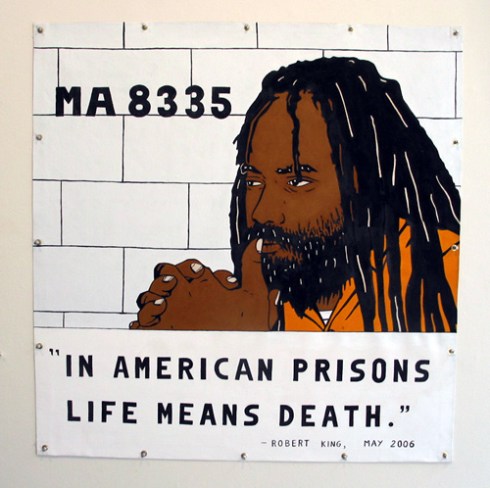
Source
I just came across one of Rigo‘s works in a book about prisons, but I can’t find it online so I wanted to share that which I could find.
I wondered if Rigo had done anything else. Turns out he has and he’s passionate about criminal justice abuses. Aside of his piece above in support of Mumia Abu Jamal*, Rigo has done works to rally support for America’s other most famous political prisoner, Leonard Peltier*.
Rigo also painted TRUTH (2002), an epic mural on Market Street in San Francisco, which I used to cycle past most days a without knowing its reason for being. It commemorates the 2001 quashed conviction of Robert H. King, one of the Angola 3, after 32 years of incarceration, 29 of which were spent in solitary confinement.

(Source)
* Yes, I know I could have chosen from thousands of links for Mumia and Peltier, but I chose their Twitter profiles with my eyes open to how bizarre it is. I have wondered if we live in a post-revolutionary world in which our radicals are reduced to blips of 140 characters, but then I figure the famous and infamous of the past have always survived on soundbites. I guess I ask that you use Mumia’s and Peltier’s Twitter feeds as one of many starting points for learning about their cases.

In November, Daniel Shea published the first offerings of his Baltimore series. As subjects go, the people and objects within America’s industrial-urban cities are common, but Shea’s edit had enough variance that I took note.
By studying people writ large and small in their environments, photographers such as Mark Steinmetz and Paul Graham have produced monographs in the past year that tread this familiar territory without repeating past sentiment.
Shea has prevailed in a tough domain; the two most common elements of photography being people and the street, it is difficult to create something that is novel to the viewer AND faithful to the subject.
My problem with much contemporary American photography is that it is rarely geographically anchored. Of course the monotony of elements within the great American conurbation is an identified problem many photographers have paid particular attention to – mainly through the adoption of typology.
Shea was thinking differently. He thought of his subject in terms of the tableaux and when you see the bent telegraph pole you can’t help but think of Hogarth’s upturned chiars.
Despite Shea’s uncertainty. I think he has created something unique, whether it is something Baltimore is yours to debate.
Q & A
Outside of its own region, Baltimore is one of the least well-known and least-recognised American cities … and now it is the least well-known American city to feature in The Wire. My first question, why Baltimore?
I lived in Baltimore for five years, four years going to school, and one year teaching. A few months before I moved to Chicago, it occurred to me that I had never done an extensive photography project about Baltimore.
This project started with a very simple premise. I wanted to apply the loose narrative style I was developing in other bodies of work to Baltimore. However, originally I was interested in removing all overt political undertones and topical-driven readings to create images that clearly demonstrated the process. The process was also simple, walk around, talk to strangers, find objects and situations that presented themselves as interesting and/or sublime, etc. In other words, one of the most basic ways photography is used.
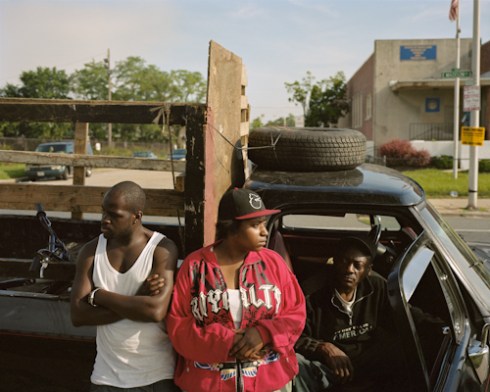
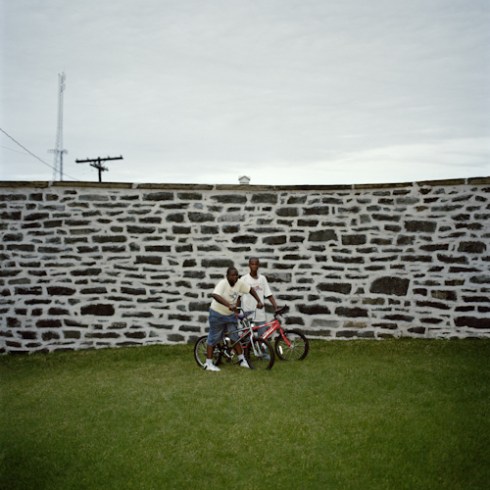
Why is the project ongoing?
Before moving, I worked on this for about three months. At that point I had an edit that felt too rushed and too simple. I realized Baltimore had many interesting elements that needed to be considered more carefully. In the summer of 2009, I revisited the city, this time shooting large format and considering the landscape as a tableaux. Additionally, I was shooting on the fly, continuing to interact with people and following my instincts. With a new edit after that trip, I feel like I’m finally comfortable with the narrative that I’m developing. In the next month (March, 2010) I’m headed back to photograph again.
What sort of reactions did you get from your subjects?
The interaction normally begins with my quick line – what I’m working on and why I’m interested in photographing people. Sometimes I just talk to people about the same everyday shit we all talk about. When I feel it’s appropriate, I’ll simply take someone’s photograph without asking. People are overwhelmingly willing to participate. I end up talking to a lot of people about their history in Baltimore.
How do you hope your narrative of Baltimore will crystallize over time?
I don’t have strict political intentions. There are people much more suited for delivering a guided narrative of Baltimore to the public, like David Simon and the writers of The Wire.
That being said, I am interested in saying something specific, and I’m on the verge of figuring out what that is exactly. It feels much more philosophical than political.

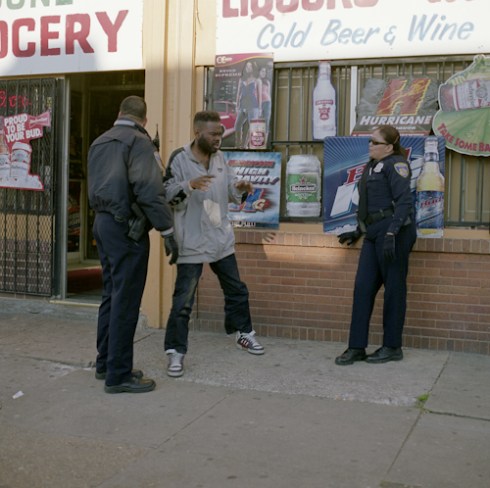
Could you be taking photos like these in any American urban area?
This is a great question and something I ask myself every time I’m out shooting or editing these photographs. I strongly believe in the responsibility of authorship, especially when people are paying attention to what you are doing.
Here’s the problem with this series: the photographs feel place-specific to me, and I don’t know if these details are effectively rendered. Baltimore subtly expresses its character in ways that I hope to capture in the images, but I don’t know if that will translate to a larger audience.
Lately I’ve been photographing impoverished, underserved, etc areas of Chicago for a much more politically driven project about food, and when I was showing some of my friends the images, they jokingly suggested that I slipped some of them in the Baltimore series.
By focusing wholly on the decaying element of an urban environment (which, as a side note, caters so nicely to my misanthropy), it’s easy to see the work as commentary on the social infrastructure of inner city America. That’s why the people are important in this series. The people in the series are nurtured by Baltimore. And some of the landscapes have really conflicting elements, and that too feels very specific. People who look at a lot of photography will understand that this is about Baltimore because I made it, but I still have to account for a larger audience.
Is this a project about poverty?
By default, of course. I think about poverty constantly. I’ve worked in several inner city schools, and as an outsider, I understand the perverse effects of living in poverty. It’s profound stuff. In terms of fixating causes to oppressions, we can quantify poverty as the most crippling and baseline element. Baltimore is at large a city affected by poverty, and it would be impossible for me to avoid taking pictures that reference poverty’s long-standing determination.
The other side to this is of course the fact that poverty doesn’t need to be the defining element in a project about inner-city America, a pitfall that sometimes feels hard to avoid.
[My underlining]

PART THREE IN A SERIES OF POSTS DISCUSSING PHOTOGRAPHERS’ ACTIONS AND RESPONSES TO THE KILLING OF FABIENNE CHERISMA IN PORT-AU-PRINCE, HAITI ON THE 19TH JANUARY 2010.
Michael Mullady just gave an interview to CALIBER SF, the second half of which reflects upon his recent experience in Haiti.
The image atop the interview is of Fabienne Cherisma, the 15 year old girl shot dead by police in Port-au-Prince. I have talked about the circumstances and the photographing of her death here and here before.
In addition to Garcia-Rawlins, Grarup and Laban-Mattei, I did not know that Mullady had also followed her corpse down the street.
Warning: The image is graphic. It is so close in. I should’ve offered the same caveat in my earlier posts. The more I deconstruct the images of – and pass on information surrounding Fabienne’s death – the more I feel like an intruder into a scene that should never have been.
WORDS
Read Mullady’s interview
Mullady talks generally about his career and then moves on to talk frankly about why he went to Haiti (last minute), how he wasn’t prepared for it, and how he now has a commitment to telling the stories of Haitians in the “immediate future”. He offers observations on the social/security fabric of Port-au-Prince.
On Fabienne:
“One day while covering the situation, a young girl was shot just a few feet from where I was standing. People had jumped onto a collapsed building and were running over roofs to get inside stores were merchandise was buried. It was a split decision, but I decided to follow the people to get more intimate images. Putting myself into that situation was possibly something I should have thought more about. In the moment, getting the photograph was all I was thinking about, not my life. That bullet could have been in my head. It was that serious. The cops were not looking at who was in the crowd, they were just shooting. To think I could have lost my life in an instant is terrifying. That day I realized the dangers of working in hostile situations as a journalist and that any day could be your last. When I saw that girl laying on the ground and the agony on her families face, I thought about my own family and the agony I put them through every time I leave the country to work. I never want my parents to have to go through losing there only son. That situation impacted me very deeply and I have yet to speak to anyone in detail about it, you guys are the first. I will share one of my images from that day with you guys.”
On Jim Nachtwey?!:
“I always admired James Nachtwey. Believe it or not, I actually got to meet him in Haiti. It was surreal to look over one-day and see him working next to me. Wow. I couldn’t believe it was really him. Everything I had dreamed about and strived towards became real in that moment. He was no longer a golden god in my eyes but a colleague, working to illustrate the same situation I was.”
On the day-to-day situation:
“The way I see things in Haiti is very different then I imagine you guys to see it through the news. Aid is here, but there are so many people in need and not everyone is receiving proper attention. Things have definitely positively progressed, but it’s going to take more time to help everyone in need.”
“Haiti is plagued by corruption. I have witnessed it first-hand, police stealing aid supplies and keeping them for themselves or selling them to wealthy people. This type of thing is a reality in Haiti. I’ve seen it on many occasions.”
“Before the earthquake, Haiti was in a bad situation so after this I fear for their future. Many Haitians whom I’ve spoken with express they want to become and American colony, such as Puerto Rico. Being an American, it’s been difficult to answer those questions for people and even more difficult knowing that if I told them what I really thought, it would not be what they wanted to hear.”
CLOSING THOUGHTS
Mullady’s candour is to be acknowledged. He could do to turn-down the Nachtwey-worship, though.
After reading the article and seeing the picture, however, I cannot shake his earlier quote:
“Many people believe photojournalists to not be artists and consider other genres of photography to be “art.” What I strive to do is bleed these lines. First and foremost, I would consider myself an artist, a visual artist whose subject matter is humanity. I live for light, obsess over sophisticated compositions and spend as much time as needed to make the exact frame I’m envisioning. A large distinction is that I intend to make images for the world to see, via publications, not images just to hang on a wall.”
Is to “bleed the lines” an incontestable perspective on one’s photojournalism? What happens when one is framing a composition of a murdered teenager? Has this perspective been more common than we’d like to acknowledge in recent images of Haiti?
– – –
ALSO IN THE ‘PHOTOGRAPHING FABIENNE’ SERIES
Part One: Fabienne Cherisma (Initial inquiries, Jan Grarup, Olivier Laban Mattei)
Part Two: More on Fabienne Cherisma (Carlos Garcia Rawlins)
Part Four: Yet more on Fabienne Cherisma (Linsmier, Nathan Weber)
Part Five: Interview with Edward Linsmier
Part Six: Interview with Jan Grarup
Part Seven: Interview with Paul Hansen
Part Eight: Interview with Michael Winiarski
Part Nine: Interview with Nathan Weber
Part Ten: Interview with James Oatway
Part Eleven: Interview with Nick Kozak
Part Twelve: Two Months On (Winiarski/Hansen)
Reporter Rory Carroll Clarifies Some Details
Part Fourteen: Interview with Alon Skuy
Part Fifteen: Conclusions
© Olivia Wyatt
Recently, I panned the Magnum: In Motion piece on Haiti. Afterward, I went back to put a name to the disaster. Olivia Wyatt.
Then I felt guilty. I meant to attack Magnum, not an individual … who has a name … which is stated clearly at the end of the piece.
To allay may guilt, I feverishly went in search of other stuff to support the notion that Wyatt was piss-poor at what she did. I was sorely disappointed.
QUALITY
Olivia Wyatt has her lens and mic up in some good projects. As well as producing Jonas Bendiksen’s Nepal Maoists and the Magnum group’s Merry Christmas (with choice tunes from the Trans-Siberian Orchestra) she was also the producer on Christopher Anderson’s Capitolio Magnum: In Motion piece that played its part in getting everyone hot and bothered last summer.
Silicon Forest, the other Anderson piece Wyatt worked on fizzes and pops with the same disjointed eye that Anderson lent to Akademgorodok (Academic City), Siberia.

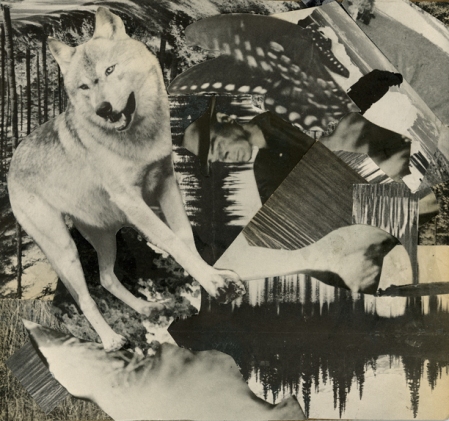
© Olivia Wyatt
THERE’S MORE
Then after unearthing some classy collage works, I came across Wyatt’s unexpected polaroids from Ethiopia (pages 46-54).
After all this, her Vimeo channel walks me straight into another dimension where Eraserhead meets Jesus Camp meets Point Break.
Seeking the Spirit is about Pastor Richard Philips and the congregation of the Celestial Church in Christ meeting at the Beach 96th Street, Rockaway, New York to observe an all night ceremony of prayer and cleansing.

Screen grab. Seeking the Spirit, by Olivia Wyatt
All great work. I am chastened.
Just a quickie. All of these names can be found on my list The Talent, but I figured they can get lost in there and I’d push them up to the surface for you all.
Scan the names and see if you’re missing out on the important/irrelevant bleatings of these notable camera-lords and camera-ladies.
| StephenVoss | ||||
| Steven Voss, Washington, DC | ||||
| andrewcutraro | ||||
| Andrew Cutraro, Washington, DC | ||||
| edkashi | ||||
| Ed Kashi | ||||
| heislerphoto | ||||
| Todd Heisler | ||||
| rspencerreed | ||||
| Ryan Spencer Reed | ||||
| JasonEskenazi | ||||
| Jason Eskenazi | ||||
| AlanSChin | ||||
| Alan Chin, Brooklyn, NY | ||||
| davidb383 | ||||
| David Burnett, Washington DC | ||||
| stevebloomphoto | ||||
| Steve Bloom, England | ||||
| dpeveto | ||||
| Daryl Peveto | ||||
| evanvucci | ||||
| Evan Vucci | ||||
| jmott78 | ||||
| Justin Mott, Hanoi, Vietnam | ||||
| StrazzPOY | ||||
| Scott Strazzante, Yorkville, IL | ||||
| jonkgoering | ||||
| Jon Goering, Lawrence, KS | ||||
| sinclair_photo | ||||
| Mike Sinclair, Kansas City | ||||
| PhotoPhilan | ||||
| PhotoPhilanthropy, California | ||||
| radical_images | ||||
| Radical Images, East Midlands UK | ||||
| Kastenskov | ||||
| Henrik Kastenskov, Vejle | ||||
| maisiecrow | ||||
| Maisie Crow, New York | ||||
| jturnley | ||||
| James Turnley | ||||
| juansierraphoto | ||||
| Juan Sierra, Germany | ||||
| OLOLtoo | ||||
| Kendrick Brinson, Atlanta, GA | ||||
| AaronJoelSantos | ||||
| Aaron Joel Santos, Hanoi, Vietnam | ||||
| jeffcurto | ||||
| Jeff Curto, Chicago, IL | ||||
| martincregg | ||||
| Martin Cregg, Dublin | ||||
| consumptive | ||||
| James Luckett, Ohio | ||||
| jesshurdphoto | ||||
| Jess Hurd, London | ||||
| VizJournalist | ||||
| John Waskey, Portland, OR | ||||
| tomtveitan | ||||
| Tom Tveitan, Norway | ||||
| fotofugitive | ||||
| Tim Humble, Noosa, Sunshine Coast | ||||
| photomorel | ||||
| Daniel Morel, Haiti | ||||
| davidalanharvey | ||||
| David Alan Harvey, NYC, Outer Banks | ||||
| FredoDupoux | ||||
| Frederic Dupoux | ||||
| wemarijnissen | ||||
| Wendy Marijnissen, Islamabad, Pakistan | ||||
| dascruggs | ||||
| Daniella Scruggs, D.C. Metro Area | ||||
| themexican | ||||
| Raul Gutierrez | ||||
| sheimages | ||||
| Sheila Pree Bright | ||||
|
||||
|
||||
| jeffantebi | ||||
| Jeff Antebi | ||||
| mattshonfeld | ||||
| Matt Shonfeld, Bath, UK | ||||
| jonsnyder | ||||
| Jon Snyder, San Francisco | ||||
| americanyouth | ||||
| American youth book, NYC | ||||
| douglaslowell | ||||
| Douglas Lowell, Portland, OR | ||||
| imaclellan | ||||
| Ian MacLellan, Lincoln, MA | ||||
| EmilyShur | ||||
| Emily Shur | ||||
| JaneFultonAlt | ||||
| Jane Fulton Alt, Chicago | ||||
| brazil_photos | ||||
| Ricardo Funari, Rio de Janeiro, Brazil | ||||
|
||||
|
||||
| adamvlau | ||||
| Adam Lau, San Francisco | ||||
|
||||
| DannyGhitis | ||||
| Danny Ghitis, Brooklyn, NY | ||||
| pangeaphoto | ||||
| Pangea Photo | ||||
| prospektphoto | ||||
| Prospekt, Milan, Italy | ||||
| terakopian | ||||
| Edmond Terakopian, UK | ||||
| NoBarriersPhoto | ||||
| No Barriers Photogrphy, Vancouver, BC | ||||
| CollegePhotog | ||||
| CPOY, Columbia, MO | ||||
| dsheaphoto | ||||
| Daniel Shea, Chicago | ||||
| dominicnahr | ||||
| Dominic Nahr, Kenya | ||||
| mrubee | ||||
| Michael Rubenstein | ||||
| greglutze | ||||
| Greg Lutze, Pacific Northwest | ||||
| reduxpictures | ||||
| Redux Pictures | ||||
| johnkeatley | ||||
| John Keatley, Seattle, WA | ||||
| hillerphoto | ||||
| Geoffrey Hiller, Dhaka, Bangladesh | ||||
| ChrisHondros | ||||
| Chris Hondros, New York, NY | ||||
| tammydavid | ||||
| Tammy David, Manila, Philippines | ||||
| vigbalasingam | ||||
| Vignes Balasingam, Kuala Lumpur, Malaysia | ||||
| timmatsuiphoto | ||||
| Tim Matsui, Seattle, WA | ||||
| coreyfishes | ||||
| Corey Arnold, Portland, OR | ||||
| jimbourg | ||||
| Jim Bourg, Washington, DC | ||||
| stupilkington | ||||
| Stuart Pilkington, High Wycombe, UK | ||||
| Donaldverger | ||||
| Donald Verger, Portland, Maine | ||||
| NickTurpin | ||||
| Nick Turpin, France | ||||
| noahkalina | ||||
| Noah Kalina, Brooklyn, NY | ||||
| terukuwayama | ||||
| Teru Kuwayama | ||||
| benrobertsphoto | ||||
| Ben Roberts, Bournemouth, UK | ||||
| alvarezphoto | ||||
| Stephen Alvarez, Charlotte, NC | ||||
| davidsolomons | ||||
| David Solomons, London | ||||
| erikborst | ||||
| Erik Borst, Amsterdam, Holland | ||||
| squarerootof9 | ||||
| Trey Hill, Dallas, TX | ||||
| quesofrito | ||||
| Emiliano Granado, NYC | ||||
| 50statesproject | ||||
| 50 States Project, USA | ||||
| RachelPapo | ||||
| Rachel Papo, Brooklyn, New York | ||||
| alphabetproject | ||||
| Alphabet Project | ||||
| danielemattioli | ||||
| Daniele Mattioli, Shanghai | ||||
| shawnrocco | ||||
| Shawn Rocco, Raleigh, North Carolina | ||||
| jaredsoares | ||||
| Jared Soares, Roanoke, Virginia | ||||
| yingang | ||||
| Ying Ang, Melbourne, Australia | ||||
| jennyjimenez | ||||
| Jenny Jimenez, Seattle, WA | ||||
| hinius | ||||
| Hin Chua, London | ||||
| photogjack | ||||
| Jack Kurtz, Phoenix, AZ | ||||
| renaudphilippe | ||||
| Renaud Philippe, Québec | ||||
| thetravelphotog | ||||
| Tewfic El- Sawy, NYC/London | ||||
| A_Jax | ||||
| Andrew Jackson, Birmingham, UK | ||||
| alvarezmontero | ||||
| Carlos Alvarez Montero | ||||
| Peter_Marshall | ||||
| London | ||||
| mellyvanilla | ||||
| Melanie McWhorter | ||||
| ptrbkr | ||||
| Peter Baker | ||||
| dellicson | ||||
| Davin Ellicson, Bucharest, Romania | ||||
| OlivierLaude | ||||
| Olivier Laude, San Francisco | ||||
| matgrandjean | ||||
| Mathieu Grandjean, Los Angeles | ||||
| noahbeil | ||||
| Noah Beil, Oakland, California | ||||
| demotix | ||||
| Global | ||||
| claytoncubitt | ||||
| Clayton Cubitt, New York |
||||
| benblood | ||||
| Ben Blood, Seattle, WA | ||||
| ianvancoller | ||||
| Ian van Coller, Bozeman, MT | ||||
| natelarson | ||||
| Nate Larson, Baltimore, MD | ||||
| mrthibs18 | ||||
| Brandon Thibodeaux | ||||
| gracegelder | ||||
| Grace Gelder | ||||
| andrewquerner | ||||
| Andrew Querner, Alberta | ||||
| jonfeinstein | ||||
| Jon Feinstein, NYC | ||||
| hellenvanmeene | ||||
| Hellen van Meene, Heiloo, Holland | ||||
| bendrum | ||||
| Benjamin Drummond, Seattle, WA | ||||
| tonystamolis | ||||
| Tony Stamolis | ||||
| liankevich | ||||
| Andrei Liankevich | ||||
| davewyatt | ||||
| Dave Wyatt, Somerset, UK | ||||
| coombskj | ||||
| Kevin Coombs | ||||
| miketsangphoto | ||||
| Mike Tsang, London | ||||
| lgreen66 | ||||
| Lauren Greenfield | ||||
| KatharinaHesse | ||||
| Katharina Hesse, Beijing | ||||
| aphotostudent | ||||
| James Pomerantz, New York | ||||
| NadavKander | ||||
| Nadav Kander, London | ||||
| visualjourn | ||||
| Brent Foster, Delhi, India | ||||
| balazsgardi | ||||
| Balazs Gardi | ||||
| rogercremers | ||||
| Roger Cremers, Amsterdam | ||||
| shahidul | ||||
| Shahidul Alam, Dhaka. Bangladesh | ||||
| chrisdebode | ||||
| Chris Debode, Amsterdam | ||||
| abbiets | ||||
| Abbie Trayler-Smith | ||||
| foreilly | ||||
| Finbar O’Reilly, Dakar, Senegal | ||||
| rasermus | ||||
| Espen Rasmussen | ||||
| stevesimon | ||||
| Steve Simon, NYC | ||||
| borutpeterlin | ||||
| Borut Peterlin, Slovenia | ||||
| moooose | ||||
| Mustafah Abdulaziz, Philadelphia | ||||
| oeilpublic | ||||
| Oeil Public, Paris, France (Now out of business) | ||||
| gallagher_photo | ||||
| Sean Gallagher, Beijing, China | ||||
| jennackerman | ||||
| Jenn Ackerman, New York | ||||
| Amivee | ||||
| Ami Vitale, Miami | ||||
|
||||
| luceo | ||||
| Luceo Images, US, Southeast Asia, Mexico | ||||
| mattlutton | ||||
| Matt Lutton, Belgrade, Serbia | ||||
| Nathan_Armes | ||||
| Nathan Armes, Denver, CO | ||||
| timgruber | ||||
| Tim Gruber, New York | ||||
| timhussin | ||||
| Tim Hussin, Washington D.C. | ||||
| alan_w_george | ||||
| Alan W George, San Francisco | ||||
| MrToledano | ||||
| Phillip Toledano, New York | ||||
| mattslaby | ||||
| Matt Slaby, Denver | ||||
| wearemjr | ||||
| MJR, Brooklyn, New York | ||||
| caryconover | ||||
| Cary Conover, Lower East Side, NYC | ||||
| robot_operator | ||||
| Dalton Rooney, Brooklyn, NY | ||||
| loujones2008 | ||||
| Lou Jones, Boston, MA | ||||
| gerik | ||||
| Gerik Parmele, Columbia, MO | ||||
| benlowy | ||||
| Benjamin Lowy, Brooklyn, NY | ||||
| tom_leininger | ||||
| Tom Leininger, Texas | ||||
| tomasvh | ||||
| Tomas van Houtryve | ||||
|
||||
PART TWO IN A SERIES OF POSTS DISCUSSING PHOTOGRAPHERS’ ACTIONS AND RESPONSES TO THE KILLING OF FABIENNE CHERISMA IN PORT-AU-PRINCE, HAITI ON THE 19TH JANUARY 2010.
Following up on last months post about Fabienne Cherisma’s murder, it is apt to note Natasha Elkington’s Reuters Photographers blog post.
Amidst a very serious opinion piece about the hardships of childhood in Haiti and Kenya, Elkington includes a comment from the photographer of the renowned image of Fabienne Cherisma.
I spoke to the Reuters photographer in Haiti, Carlos Garcia Rawlins, who took the pictures of Fabianne to find out who shot her and why. He had no answers. By the time he got there she was already dead. She could have been shot by the police or armed security guards hired to protect property, he said. Witnesses said they didn’t know if she was targeted or hit by a stray bullet when police fired into the air to disperse a hungry mob.
What Rawlins did say is that people around her continued looting and would only stop for a moment to look at her body. “I couldn’t believe the indifference of the people around her,” he said.
Which is a different response to that of Jan Grarup.
– – –
ALSO IN THE ‘PHOTOGRAPHING FABIENNE’ SERIES
Part One: Fabienne Cherisma (Initial inquiries, Jan Grarup, Olivier Laban Mattei)
Part Three: Furthermore on Fabienne Cherisma (Michael Mullady)
Part Four: Yet more on Fabienne Cherisma (Linsmier, Nathan Weber)
Part Five: Interview with Edward Linsmier
Part Six: Interview with Jan Grarup
Part Seven: Interview with Paul Hansen
Part Eight: Interview with Michael Winiarski
Part Nine: Interview with Nathan Weber
Part Ten: Interview with James Oatway
Part Eleven: Interview with Nick Kozak
Part Twelve: Two Months On (Winiarski/Hansen)
Reporter Rory Carroll Clarifies Some Details
Part Fourteen: Interview with Alon Skuy
Part Fifteen: Conclusions
While much recent debate has been about if bloggers, indie-writers and stopgap-journos can find ways to make money, Brian Ulrich asks if many of us actually deserve to:
“It’s become fairly commonplace for one to put together a website or blog. Ask several questions of an artist by email, spellcheck and publish them.”
and
“An interview is not a questionnaire and all too many of these interviews are distilled down to a manufactured series of questions where it may even be obvious that the person asking the questions hasn’t even looked to see if those questions were answered somewhere else before. ‘What got you interested in photography?’, ‘tell me some of the inspiration behind your current project _____’, etc…. I hasten to say it but we would not stand for that sort of journalism in the printed press why should we stand for it online?”
and
“I feel we have a responsibility as publishers and broadcasters of media today. If we’re going to do it, let’s make it right, give us something we can learn from.”
[Bolding mine.]

Photographer Matt Writtle traveled to Cambodia with the charity EveryChild and gained unique access to some of the country’s provincial prisons and children incarcerated there.
Writtle narrates a slideshow and explains the unknown prospects for the boys. Of the nine youths sharing a cell, six are in for serious crimes and three for petty theft.
The common factor among the group is that none have been given legal representation and none of them are aware of their rights.
One boy, Sam Nang, didn’t know whether his brothers or sisters would be able to visit him, but given the requirements to bribe prison officers to secure a visit it was unlikely. Sam Nang and his siblings have no definable income.
Cambodia has no juvenile justice system, so youths are processed as adults. I have voiced concern about the safety of adolescents in South East Asian prisons before, specifically in the Philippines (see end of article).

 Prison Photography