
You are currently browsing the monthly archive for August 2011.

Ex-Clandestine Centre for Detention, Torture and Extermination Automotores Orletti, Buenos Aires. Plug used for the picana eléctrica (cattle prods) in the torture chamber. © Erica Canepa
The Remaining by Erica Canepa is mostly interior photographs of the sites used for detention and torture during Argentina’s Dirty War (1976-1983). Also included are a few portraits of survivors, notably Victor Basterra whose photos taken while he was prisoner have been used in trials for crimes that occurred at the main prison, The School of Naval Mechanics (ESMA).
Canepa’s title for the series comes from a quote by Basterra:
“The military dictatorship began with the idea of culturally changing Argentinian people. It has been a progressive change towards a more individualist, selfish and insensitive society that reached its apogee during the Nineties, but where the basis was brutally planted during the dictatorship era. What you see outside the window is what’s remaining, what we are left with. It is today’s Argentina, that shows the indelible marks of genocide, but in which I can still see the ideals that we fought for.”
– Victor Basterra, ex detainee of the Clandestine Centre for Detention, Torture and Extermination ESMA, 2011.
Though not apparent in the photographs alone, Canepa’s project is not just a tribute to the students, university professors, intellectuals, artists, sports men, workers and others who opposed the Jorge Rafael Videla military dictatorship, but also a call for us to view the aftermath of extreme political violence. It is about the acknowledgement and attachment – or not – of subsequent generations.
Canepa’s work is laudable but the photographs are surely just an entry point to the massive and terrifying details of the Dirty War (1976-1983), a terror that “disappeared” over 30,000 Argentinians. Canepa’s lengthy accompanying text would suggest she is aware of the limitations of photography:
The junta did not achieve its goal, the deletion of a generation’s ideals. The lives of the ex-desaparecidos are living proof of this. […] Sometimes, a smell takes them back to the horror, sometimes a tear rolls down their cheek. They cannot explain the reason why they survived and they ask themselves this question every day. They are alive, and they feel the responsibility to help justice make its course. […] The country is rebuilding the truth and owning it, learning how not to commit the same mistakes, learning how to live without fear. The scar left by the military dictatorship is painful, but not crippling. The survivors are no longer victims. They resisted: they went back to school, they now have families and they have careers.
What you can see outside the window, what you can read in people’s eyes is the strength and the courage to believe in a fresh start.
What you can see outside the window is ‘the remaining’: it’s today’s Argentina.
If you are interested by this topic you should look also at the photographs of Paula Luttringer and Joao Pina.
Sin Olvido is an archive of photographs and descriptions of 3,400 victims of the Dirty War.
IT just went up a notch.
The opinionated and fiercely political legendary photojournalist/writer Danny Lyon has just boosted the fundraising efforts of Prison Photography on the Road (PPOTR) by offering a modern print that would usually go for about three or four thousand dollars. You can buy it.
Danny emailed:
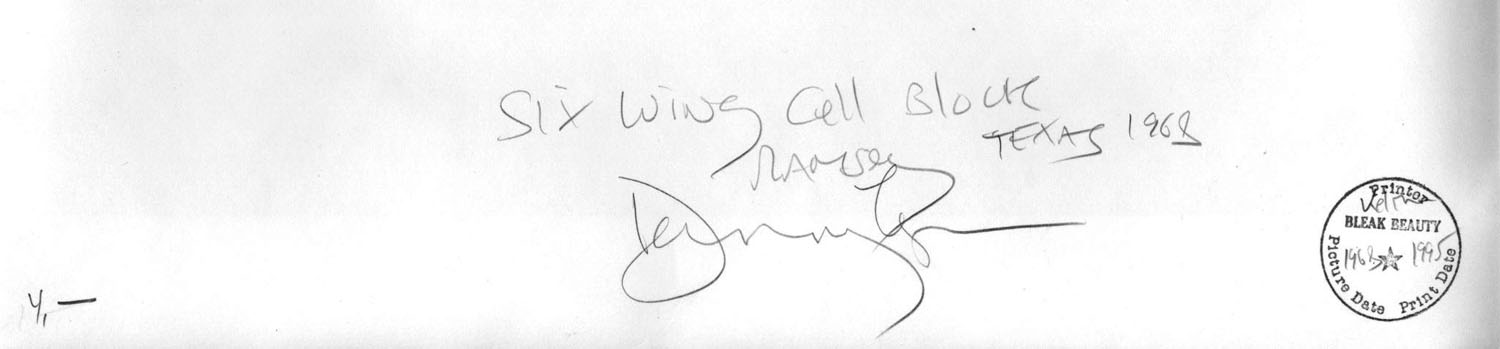
“This is a 1995 modern print made by Kelton. The negative was made by me in 1968. Ramsey Prison Cell Block, Texas Prison, 1968 was published on p.121 of [the book] Conversations with the Dead with the caption ‘Six Wing Cell Block’. List the selling price as $1,750.00. The whole point is to get money for your project.”
Quite the endorsement of PPOTR and a gesture of great generosity.
ANTICIPATION
I’ll be meeting Danny in November during PPOTR. Judging by the frankness and wit of this interview, it’ll be a fierce and fun dialogue. Danny on the Civil Rights movement:
“The Civil Rights movement is now regarded as a turning point in our history. I was there in the midst of it, and I was still a student, only 20 years old at the time. My parents were both immigrants, and the Russian side, which had participated in the first and second Russian Revolutions, were very vocal about justice, history and what we now call human rights. So I went. In retrospect, it was one of the more intelligent decisions of my life. Let this be absolutely clear: My parents did not encourage this, it frightened them. My teachers did not encourage this, they wanted me to stay in school and earn a degree. The Civil Rights movement was not popular; it was unpopular. And it was illegal. Almost everything the early Civil Rights movement did, and the group I joined did, was illegal. That is why [we] were being arrested. Present-day Congressman John Lewis, who was my roommate in Atlanta in 1963, was arrested forty times. He was arrested because he was breaking the law. This was exciting, it was visually powerful [and] it was “news” ─ though few national news outlets realized this when I began ─ and it was history, unfolding right in front of me. I was a history student and a photographer. I went.”
And when asked to give young photographers some advice:
“Leave school and go out and do something and stay away from New York City.”
ACQUISITION
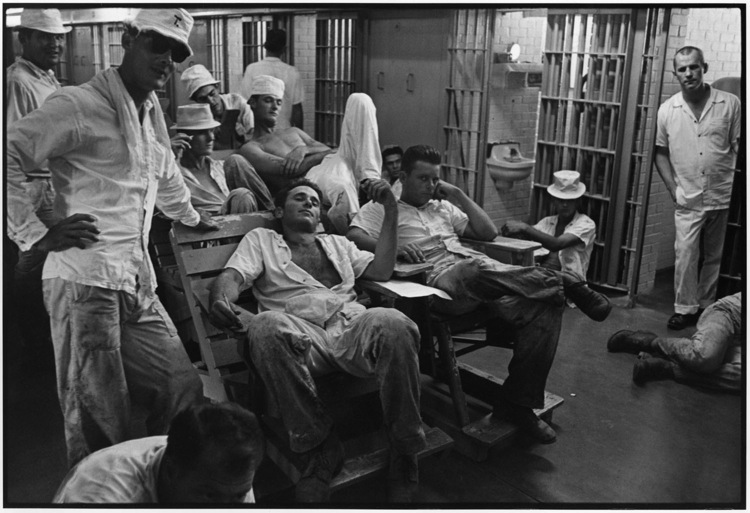
Photographer: Danny Lyon
Title: ‘Ramsey Prison Cell Block, Texas Prison, 1968’
Year: Neg. made 1968, printed 1995.
Size: 11″x14″
B/W modern-print, signed (verso)
Print, PLUS postcard, mixtape and self-published book – $1,750 – BUY NOW
Another day, another Kickstarter incentive to peddle.
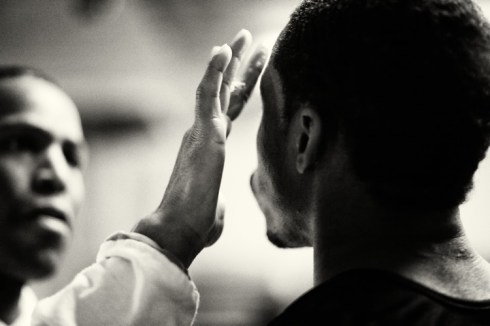
Frank McMains‘ B&W digital print on archival paper (8″x12″) is available at the $100 funding level. And I’ll throw in a postcard from the road and the PPOTR mixtape (CD). BUY NOW.
You can read more about Frank and the AABA in Exclusive: Photos of the Angola Amateur Boxing Association, Louisiana State Penitentiary, previously on Prison Photography.
Visit Frank’s website Lemons and Beans to read more about his time photographing the AABA.
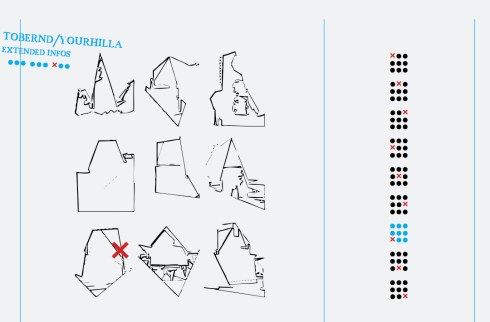
You might be asking what’s the funny doodle in the new banner?
I should precursor my answer with a history of pain as regards the banner image. Back in 2008, I used a detail of a crumbling wall – a poor metaphor of the hundreds of thousands of carceral sites if there ever was one. Soon after, I abandoned that for the commonly-used image of a line-up of book spines. But, still, the books were a mere representation of knowledge … and of whose knowledge, it wasn’t exactly clear.
So, when I learnt about the project TOBERND,YOURHILLA, with it’s distribution of etch-a-sketch-like graphics relating to the Becher’s oeuvre I was tempted. The tickling generosity of TOBERND,YOURHILLA toward the photoblog community is also a nice touch. I decided I was happy to give over the banner to some sort of distant artistic force.
Dider Falzone quotes the introduction to the 2008 exhibition “Bernd and Hilla Becher: Landscape/Typology” at The Edward Steichen Photography Galleries, to put TOBERND,YOURHILLA in context:
“The Bechers are best known for their “typologies”: grids of b/w photographs of variant examples of a single type of industrial structure. […] At each site the Bechers also created overall landscape views of the entire plant, which set the structures in their context and show how they relate to each other. The typologies emulate the clarity of an engineer’s drawing, while the landscapes evoke the experience of a particular place.”
Falzone draughted nine of these landscape plans (see above) with the intention that each would become a calling card on photography blogs. He adds, “each slot of the 3×3 logo grid evokes one of the storage silos arranged into grid for comparation of form and design. Once the nine logos are assigned, the digital manipulation will mirror itself in a systematic auto-generated community.”
That might be grand language for what I appreciate as a cheeky game and badge of membership to a club of like-minded, whimsical bloggers. I got to the party late, but was lucky enough to snag Slot ●●● ●●● ×●●. The only other remaining slot has since been claimed. As such, Prison Photography finds itself in good company; below are seven photoblogs also part of this doodle-based nonagon group.
Slot ●×● ●●● ●●●

Slot ●●× ●●● ●●●
Lenscratch

Slot ●●● ×●● ●●●
Sister I’m A

Slot ●●● ●×● ●●●
Melanie Photo Blog

Slot ●●● ●●× ●●●
Mrs. Deane

Slot ●●● ●●● ●×●
On Landscape

Slot ●●● ●●● ●●×
MOSSfull
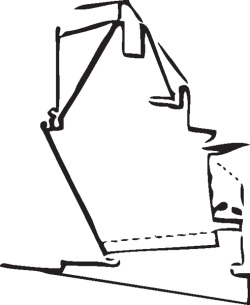
INTRODUCING THE NEW LOGO

The Prison Photography logo (above) is a pretty solid walled-in shape. It reminds me off some modern prison cells that have gone beyond the four-wall cuboid (below). I also like the fact it resembles an arrow pointing down to everything else that will pass through the pages of Prison Photography; whatever goes on between the lines and limits of this blog, you can always be reminded ‘You Are Here’.
Q. How long will the logo last?
A. As long as life continues without a better alternative and – given the fun and oblique references of the TOBERND,YOURHILLA project – I expect that to be quite some time.

© Steve Davis

Untitled #1, by Steve Davis. From his ‘Captured Youth’ series. 8×10 on a 10×12 heavyweight archival paper, for $300. Signed. Special Edition of 4.
Steve Davis is an old buddy. I shouldn’t have been surprised he quadrupled-down on the generosity. He’s kindly offered a selection of prints to sell in order to raise money for my Prison Photography on the Road Kickstarter project.
Our conversation went something like this:
Pete: I didn’t want to ask, because I don’t want to interview you. You’ve answered everything I can think to ask. I mean we could talk about photography non-stop, but about prisons … (tails off)
Steve: What do you need?
Pete: Well, ideally some mid-level incentives, something around $300.
Steve: No problem, I’ll find some images, probably a couple that have not been seen before. We’ll print them small in a special edition of four, four of each, that way you can offer “a choice of one from four”.
Pete: Thanks Steve.
Steve: No problem.
Pete: No, really, thanks Steve.
Steve: No, really, no problem Pete.
– – – – – – – – – – – – – –
A Steve Davis print PLUS a postcard, a mixtape and a self-published book – going for $300. BUY NOW.
– – – – – – – – – – – – – –
CLICK ON IMAGES FOR LARGER VIEW
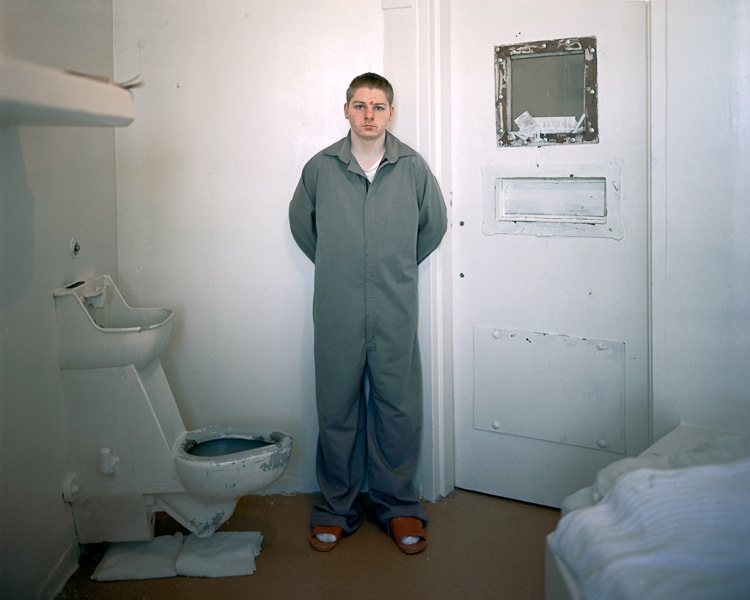
Untitled #2, by Steve Davis. From his ‘Captured Youth’ series. 8×10 on a 10×12 heavyweight archival paper. Signed. Special Edition of 4.

Untitled #3, by Steve Davis. From his ‘Captured Youth’ series. 8×10 on a 10×12 heavyweight archival paper. Signed. Special Edition of 4.
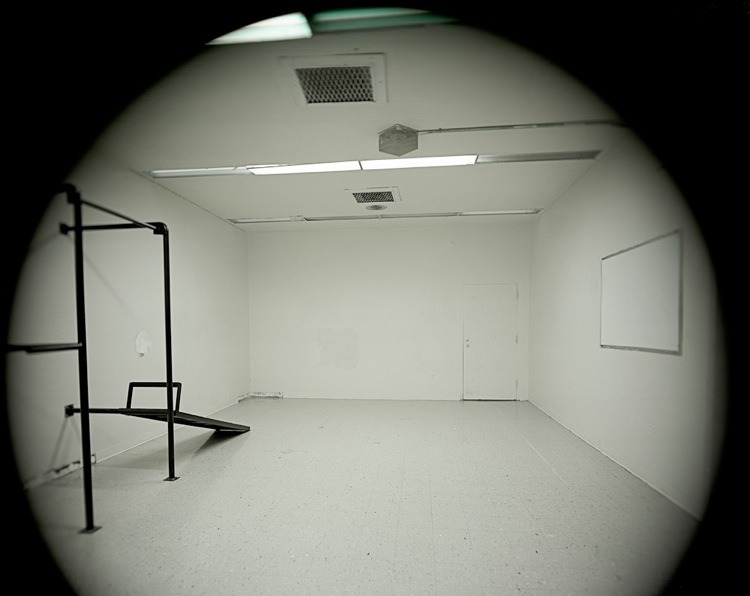
Untitled #4, by Steve Davis. From his ‘Captured Youth’ series. 8×10 on a 10×12 heavyweight archival paper. Signed. Special Edition of 4.
A Steve Davis print PLUS a postcard, a mixtape and a self-published book – going for $300. BUY NOW.
– – – – – – – – – – – –
See all available prints as part of my Kickstarter fundraising campaign.

IT has been going for 5 days now and I am floored to type (almost make real) the fact $2,000 has been pledged to my blogging-road-interview-trip-extravaganza.
Erica McDonald has inserted my talking head front, top and centre (at least for a few more days) of the rapidly growing DEVELOPphoto YouTube Channel.
Julie Grahame, a.k.a. aCurator says, “This is an important project that deserves your backing if you are in any way concerned about or interested in the business of incarceration in the United States.”
Meanwhile, with typical meandering, meaningful context, Hester Keijser over at Mrs. Deane ties my project, and all those like it, to the need to realign the priorities (and associated funding and opportunities available) in capitalist society, “Photographers or artists who refuse to side with who is on either side of whatever divide have a hard time finding private sponsors, precisely because there are very few individuals of wealth and power who are capable of the gusto needed for funding such undertakings, and who can afford to be disinterested. This might be one of the reasons why micro-funding models like the US-based Kickstarter are so important.”
It means so much to get support, words of encouragement and validation during this nerve racking five weeks of fundraising. If you want to get in on the public show of love, please visit the ‘Prison Photography’ on the Road: Stories Behind the Photos Kickstarter page.
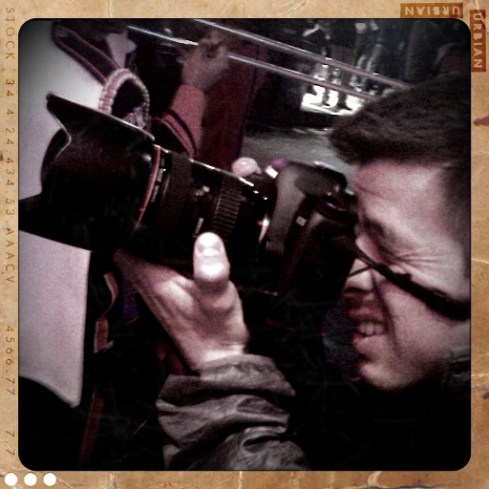
As many of you will know, I recently pitched Prison Photography on the Road on Kickstarter.
The video-pitch for any Kickstarter proposal is key, so I was very lucky to have Tim Matsui offer his time, advice and skills in multimedia for the filming of the video pitch. In offering his help, Tim became the first official supporter of the project so please allow me to say a few words about Mr. Matsui.
Tim was the very first photo-bloke I met when I arrived in Seattle three years ago. At that point, I already new of his committed and extended investigations into human trafficking.
By coincidence, an old university friend of mine worked at a Phnom Penh NGO that Tim had liaised with. As both Tim and I were in the same city, my friend urged us to connect.
Tim knew nothing of me.
Late in 2008, I had just launched Prison Photography and Tim, like many in those early days, was totally baffled about what it was. But he still agreed to meet for coffee. We spoke about Bergen-Belsen concentration camp, Tuol Sleng prison, Blue Earth Alliance, and the mores of the digital age. We didn’t see much of each other for well over a year, but we developed a mutual respect for each others work.
Last month, when I put out the call for help with filming (via the NW Photojournalism group) Tim didn’t hesitate. Two weeks later, he was over at my house with a two camera set up, separate audio track and a set of tricky questions.
Tim wears his heart on his sleeve. He works hard, and he’s also got a bunch of great ideas for his next story telling projects; the only thing holding him back is the hours in the day.
If you want to get to know Tim’s take on the world, photography and storytelling then his blog is a great place to begin. There you’ll find writing about his successes (his recently published Kivalina work, his Emmy nominated Mediastorm multimedia project for the Council for Foreign Relations); about breaking journalism relating to previous stories; about important pioneer projects in journalism such as BaseTrack; and about pressing global issues relating to our digital age, such as reports on conflict minerals in tech-manufacturing industry. You should also check out his very fun docu-short Sasquatch or Bust.
Tim, thanks for the integral help with Prison Photography on the Road. You are a gentleman.

The subjects of The Living Road, Noel Jabbour‘s portrait of prostitution on the Italian roadside, are not anonymous like those women in Mishka Henner, Paolo Patrizi and Txema Salvans‘ photography.
Other notable projects in Jabbour’s portfolio are Palestina, Palestinian Interiors and One Million $ Homes.
Thanks to Hester for the tip off.

 Prison Photography