
You are currently browsing the monthly archive for December 2014.

Image: White Construction.
SMALL STEPS TO A BIG PROBLEM
If we’re ever wondering how and when we transformed into a society supporting a Prison Industrial Complex, then we can and should look to events in Karnes County, Texas this week.
Playing out in Karnes Co. this week is a scene that we’ve seen thousands of times before. And ultimately, we’ll see a decision to build or not to build.
For every one of the 6,000+ prisons in America (Federal penitentiaries, State prisons, County Jails, private prisons and ICE detention facilities) there has been a process of planning, discussion, budgeting and approval. The degree to which these political mechanics are visible and accessible to the public and the degrees to which public are aware or activated for and against prison in their earliest proposal stages, of course, differs wildly. But, I want to make the point here that prisons don’t simply emerge as a natural consequence of crime. Prisons are buildings with construction and operating costs. Prisons are places of labor and sites of capital. Prisons are designed and they are manufactured by men who want to assume some type of responsibility for them.
PRISONS FOR IMMIGRANTS IS A BOOMING BUSINESS
I argue that GEO’s motive, in Karnes Co., for assuming the responsibility of an expand family detention facility is profit. This autumn, GEO Group stock hit a 52-week high.
The GEO Group, a corporation with a long history of poorly-run facilities and abuse of prisoners on its watch stands to benefit most from the proposed expansion of the facility from 532 women and children to more than 1,300.
Watch Karnes Co. this week, because it is in its Commissioners’ offices that the absolute decision by some humans to put more humans behind chain-link and razor-wire will be made.
Watch Karnes Co. this week because this is one of thousands of current battle sites in the nation, right now, in which activists are intervening and slowing or stopping our insane march toward incarceration.
Watch Karnes Co. this week because those opposing the expansion are true American heroes.
Watch Karnes Co. this week because not since WWII internment has the United States put so many non-criminal women and children behind bars.
According to local channel KSAT, opinions are split, but in the VT those in favour were making simple arguments based upon the jobs the GEO prison would bring. Opposing views are nuanced and based in a broader and ethical perspectives.
When the family prison opened in 2012, NPR did its best to distinguish it from other places by describing it as “less like prison.” Well, such a *new dawn* and such an enlightened approach to the sick practice of looking up women and children has not yielded results. This new type of prison, apparently, leads to a bigger prison and not *a solution* to the perceived problem!
WHAT TO DO
If you’re concerned sign the petition. Your letter will go directly to the Karnes County Commissioners.
Watch a 30-minute documentary about the Karnes facility. Here’s the trailer.
If you would like to show the film in your commnunity, email tuff@grassrootsleadership.org
PETITION
Again, please, sign the petition.
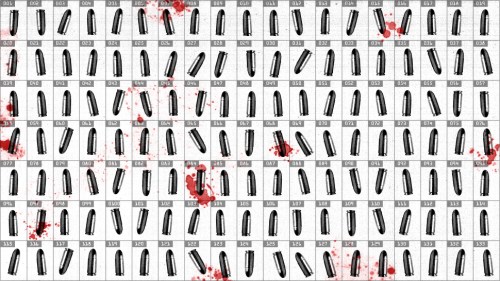
Journalist D. Brian Burghart of the Reno News & Review was aghast to discover that there is no national database about the killing of citizens by law enforcement.
As a result, he decided to make one. With our help. Burghart explains his reason to Gawker:
The biggest thing I’ve taken away from this project is something I’ll never be able to prove, but I’m convinced to my core: The lack of such a database is intentional. No government—not the federal government, and not the thousands of municipalities that give their police forces license to use deadly force—wants you to know how many people it kills and why.
It’s the only conclusion that can be drawn from the evidence. What evidence? In attempting to collect this information, I was lied to and delayed by the FBI, even when I was only trying to find out the addresses of police departments to make public records requests. The government collects millions of bits of data annually about law enforcement in its Uniform Crime Report, but it doesn’t collect information about the most consequential act a law enforcer can do.
How do you help?
Go to www.fatalencounters.org.
Research one of the listed shootings, fill out the row, and change its background color. It’ll take you about 25 minutes. There are thousands to choose from, and another 2,000 or so on Burghart’s cloud drive that he haven’t even added yet.
After your additions, Burghart will fact-check and fill in the cracks. Your contribution will be added to largest database about police violence in the country. Check out what has been collected about your locale’s information here.
Fatal Encounters can be found here, and is on Twitter at @FatalEncounters.
It’s been a long week. Spending most of ones time in front of a screen can get isolating. Built into online publishing is the ever-present wonder about how ones work is received on the screens and in the minds of readers.
That’s why letters such as this are the perfect tonic for doubt and fatigue. Sustaining words.
Hi Mr. Pete Brook
I like your webpage so so much. Thank you. I didn’t think there was a webpage for prison pics till my good friend Samara from my 12-step group showed me. I really love your new article about the two brothers. It is my favorite of yours articles so far. I was incarcerated. My dad has been locked up. Mom has been locked up. My bros have been locked up. I feel like I could put my own family in those pics from the two brothers project and it would be the same emotions. I really love that project. The pics brought tears to my eyes cause I felt grief sadness that I don’t think about much. I felt my innocence. I did feel peace looking at them 2.
Thanks for reading my letter Mr. Brook. Have a blessed Christmas and New Years 2015.
Maria.
And onward to next week. And the one after that.
2041
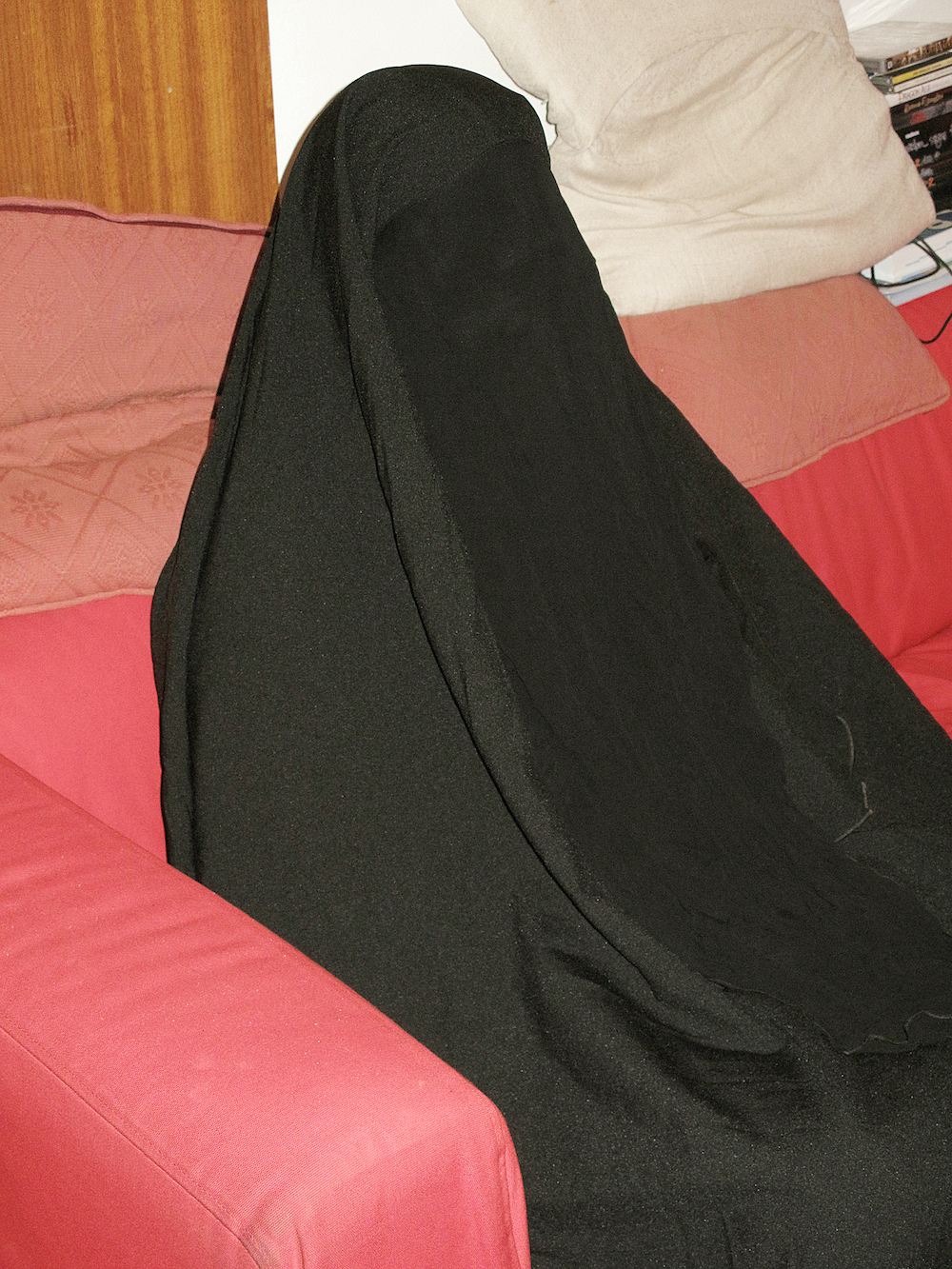
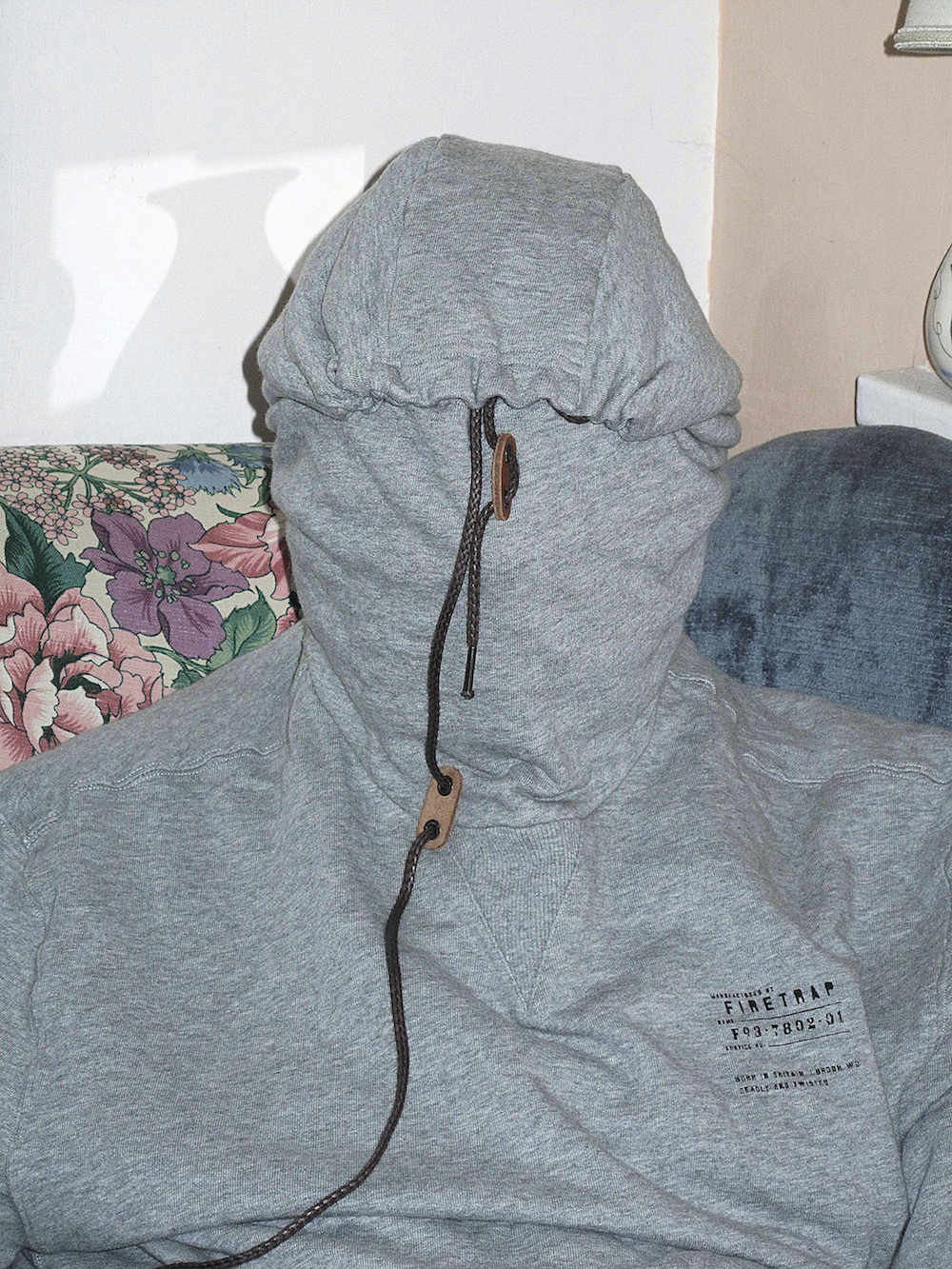
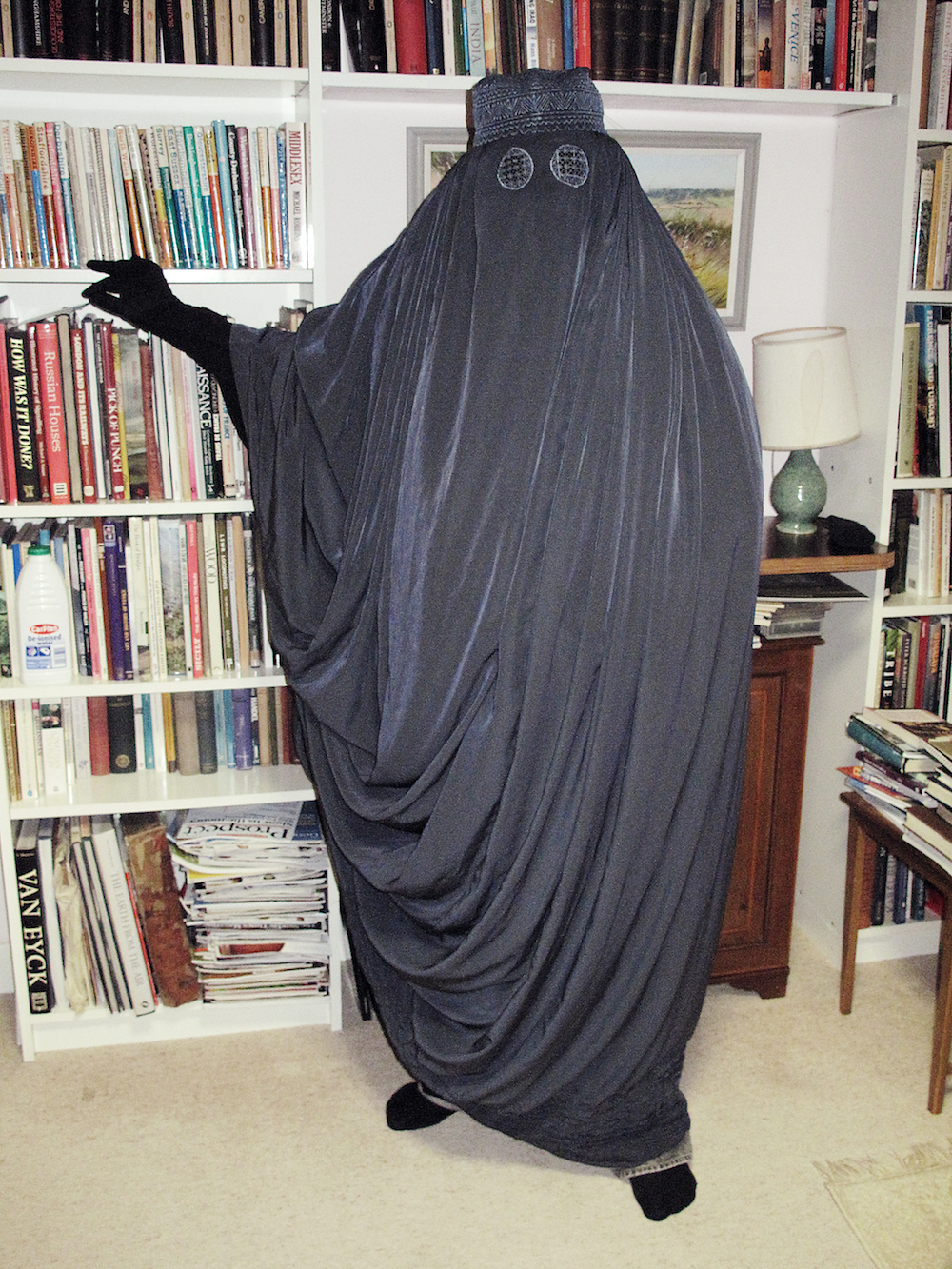
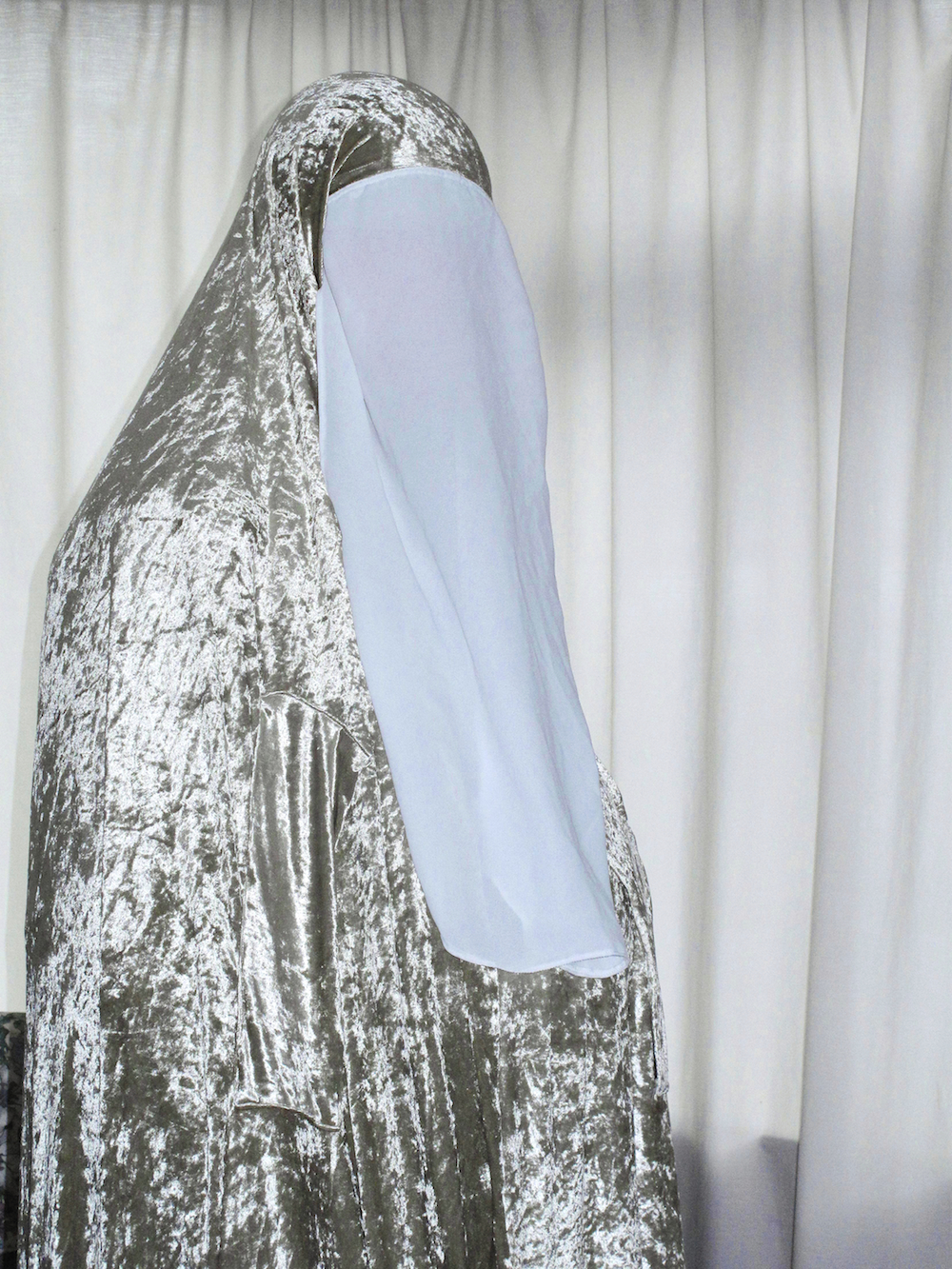
HERE PRESS has done it again; it has produced a book that allows us an irresistible glimpse into foreign space and psychology. 2041 is a collection of self-portraits, made by a man, donning makeshift burqas and niqabs, in his home in England.
The title 2041 refers to the name by which the man is known. “2041” made thousands of images with the express intent to share them online with fellow full-coverage enthusiasts.

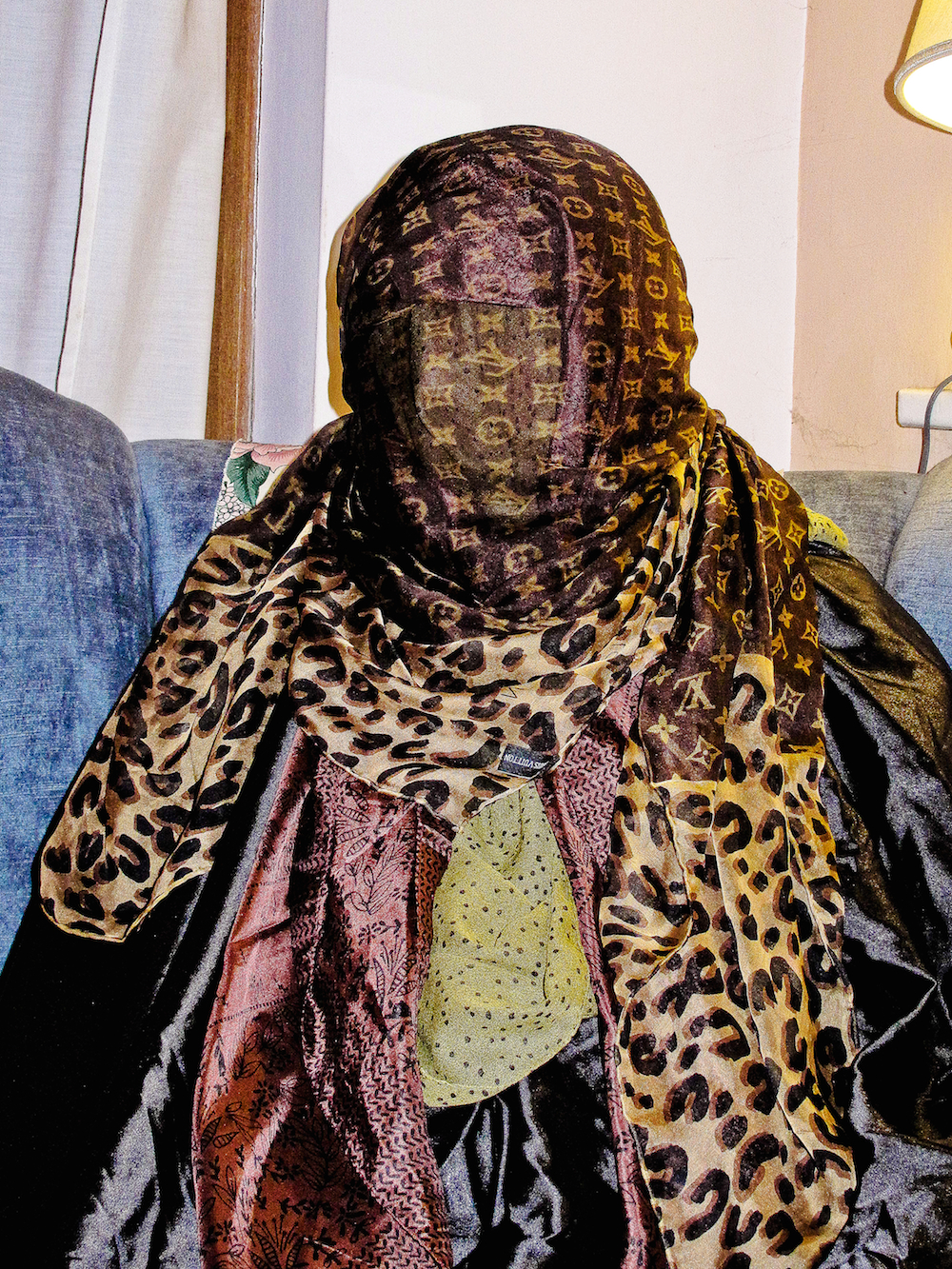
“Using the camera to articulate a passion he has secretly indulged for decades, the artist appears dozens of times without ever disclosing his image or identity,” says the HERE press release. “Long before 2041 bought his first real burqa online, he began crafting his own versions from draped and folded fabrics in a rich array of textures and colours … ranging from the traditional to the theatrical.”
2041 is part of a connected online community of men and women from across Western Europe and the Gulf States. They are Christians, Muslims and without religion.

This is a gripping book and look into a world that cannot be fully known, nor can be fully verified. What is interesting, therefore, is that without identifiable subjects, the veracity of photography collapses. Or, at the least, we have to completely shift our expectations about what photography provides. The book 2041 is working on, and with, many levels. There’s a motivation by HERE to celebrate photography by revealing its limits and capacity. Despite a reliance on images to connect themselves, 2041 and his cohorts are inhabiting the unphotographable.
As such, 2041 is a playful but earnest exposé of the photographic medium as much as it is this small web of like-minded folks.
A similar type of mood persists in previous titles by HERE. Harry Hardie and Ben Weaver skirt the outer territories of our photo-landscape and delineate the edges. Edmund Clark’s Control Order House took us inside the ordinary domestic spaces of a terror suspect under house arrest. Power was described precisely by what was not photographed. Jason Lazarus’ Nirvana took us into grunge-infused personal histories; the photographs were just a foil to get subjects feting up about beautiful and traumatic pasts.
I, for one, am getting quite excited by HERE’s growing catalogue of ever-so-slightly-disconcerting photobooks.
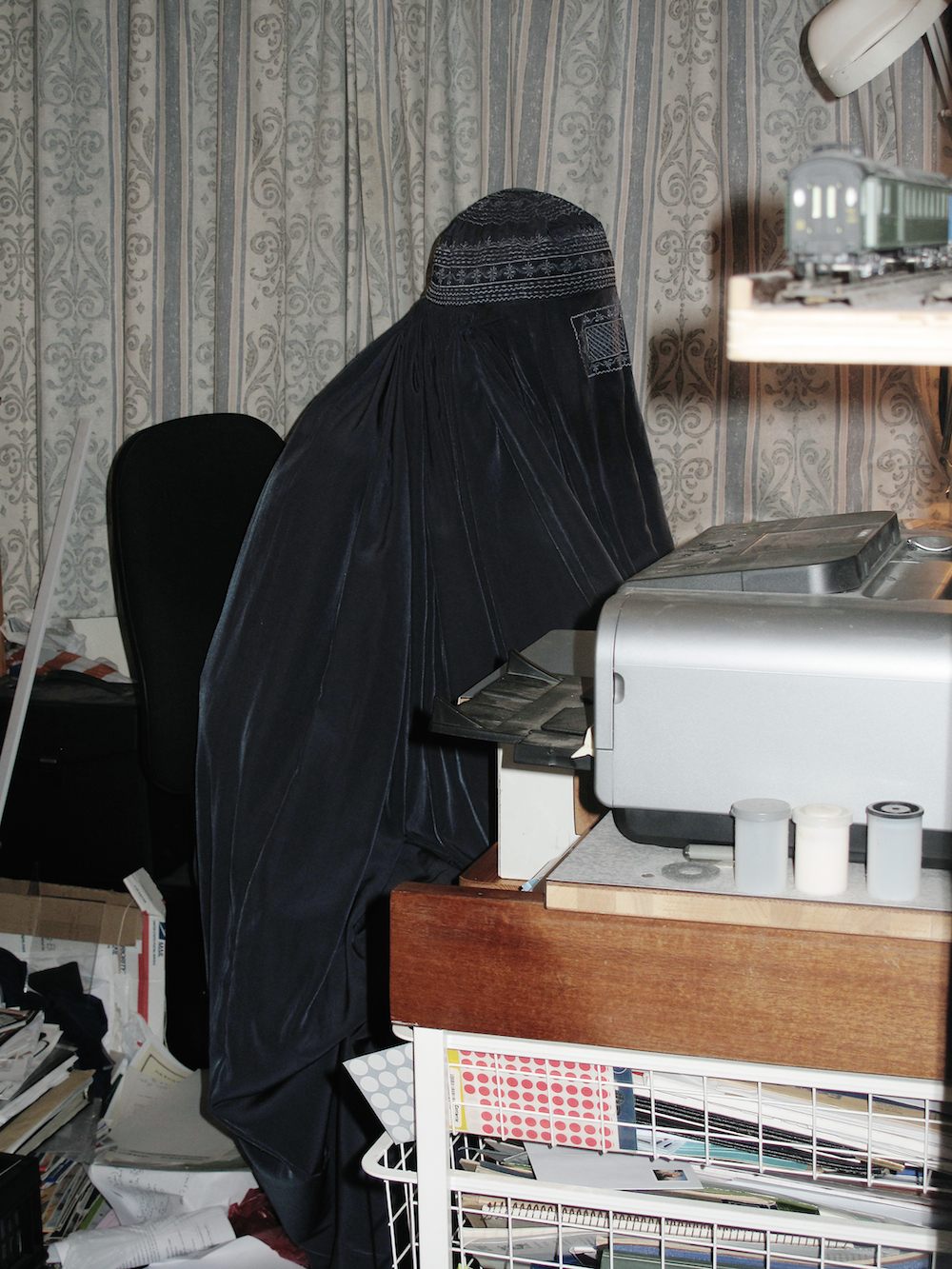
Between the internet and the veil 2041’s anonymity folds and billows. He remembers the enveloping cassocks and cottas he wore as a choirboy. As an adult, he moved toward total covering. In the early millennium, 2041 his bought his first computer and plugged into an online community that shared his passion.
“What almost all [of the people covering themselves] seem to crave is transcendence of the physical self – or at least being judged on the physical – coupled with the excitement of observing the world unseen, safely cocooned in luxuriant fabrics,” says HERE. “This is the burqa seen in a celebratory light.”
Naturally, I have lots of questions so I dropped Harry at HERE PRESS a line. He put me in touch with Lewis Chaplin who is co-founder of Fourteen Nineteen, but more importantly co-editor of 2041.
Scroll down for our Q&A


Q&A
Prison Photography (PP): Where did you first see and hear about 2041’s photographs?
Lewis Chaplin (LC): I first found these images almost four years ago, while researching emergent subcultures of fetishists/obsessives who were finding community and likemindedness through the internet. Many of these people use Flickr in particular to indulge in their private desires, and it was here that I found 2041’s images. I was struck by the rigidity, flatness and compositional skills that his images had. Compared to most who used the image more as a byproduct or vehicle to access their fetishes, 2041’s images seemed more like the images were performed for the camera and the camera only, for the sake of documentation, rather than for anything else.
PP: Is the book 2041 made in collaboration with the subject? If so, how did you make contact, build trust, ensure discretion?
LC: Yes, it is fully collaborative. Contact was made initially by Harry Hardie , who introduced himself as a publisher, and then I was bought into the conversation. I began a regular correspondence with him, which culminated in a face-to-face meeting and then visits to his house, where we collaborated and photographed each other, and I went through his image archives.
PP: Have all the pictures been verified? Can we know it is the same person under the burqas and niqabs in all the pictures? Does verification matter? Is not knowing something in absolute certainty one of the facets of the images and their use?
LC: I can verify 90% of them through their EXIF data, as we have had access to raw camera files. However, it is not necessarily the same person concealed. I think it is this lack of verification that is the titilating point of these images. Beneath the veil, your physical identity shrinks into a few gestures and outlines, and you can take on the form and countenance of another.
Even now there are images which Ben Weaver (HERE PRESS) and I cannot decide whether they depict our protagonist or others. To be certain though – this form of image-making is a firmly social practice, one based around solid online and offline networks. A few images in the book give this away, and were you to find 2041 online you would find images of me concealed, for example.


PP: Why did you want to make this book?
LC: Because I think that unlike many of the images made by people with strange interests on the internet, these images say something very complex about photography. What I like about these images is that there is that they are purely performative gestures – but yet they give nothing away. They reveal the presence of an individual, but not their likeness, or an accurate representation. Something about the concealment of desire, or the hiding of the true likeness of an object in these images actually feels like a very nuanced statement on photography, that at no stage in the process ever actually tries to use the camera to bear any details, or describe anything accurately.
PP: How many potential subjects and/or images did you have to choose from in making the book? What makes 2041’s images special — some aspects of aesthetics, or merely their availability?
LC: It wasn’t so much a matter of choice, more that these images asked for some kind of sequencing and exploring. There is definitely an aesthetic dimension of these images that is appealing – the composition and contrast between flatness and texture, the shapes are unlike others I have seen – and there is also a lot of time and effort that has gone into these. 2041 is also an actor, and a painter. You can see the influence of classical painting on some of his poses and crops. He is also akin to humour and self-deprecation, you can see it sometimes.
PP: 2041 wishes to remain anonymous. Obviously, as the editor, you’re a legitimate proxy to whom I can talk. I want to ask what 2041 thinks of the book?
LC: Let’s ask him once he has seen it!


PP: What do members of the online burqa fetish community think? What do you think they might think?
LC: I don’t think it has made its way through to these channels, but I would hope that what they see here is that we are not trying to ridicule or pass judgement through our scrutiny. This book I hope comes off as a sincere tribute to photography being used in a genuinely interesting way that talks about self-perception, the way images are used on the internet and so many other things, through the prism of a very personal, domestic and specific application of the camera.
PP: Do we understand what the burqa is and what it does?
LC: In these images the burqa, niqab or any other Muslim garment is a means to an end in some way. You can see in some of 2041’s experimentations that it is just about complete coverage through any means. He is not wearing a burqa in most images, in fact. The removal of physical presence is the goal here – it is never about using the burqa in a subversive or political way.
PP: Thanks, Lewis.
LC: Thank you, Pete.

2041, the book
170 x 240mm, 120pp + 6pp insert
72 photographs + 1 illustration
Offset lithoprint on coated & uncoated paper Sewn in sections with loose dust jacket
Foil title
Choice of 3 cover ‘photo insert’ cards
Text, illustration & photographs by 2041
Edited & designed by Lewis Chaplin & Ben Weaver Edition of 500.

When I was growing up, the dad of some kids at my school worked at the local prison. I had no idea what his day-to-day responsibilities were. Still don’t. This despite the fact I’ve since worked with, been on holiday with, and spent many weekends with the brothers and sisters in the family.
I have no idea, if the dad was involved in some extra curricula or fraternal pursuits; I don’t know if he wanted to even hang out with his co-workers outside of the prison. His job was a fact, but an unexplored and little discussed fact in the parish.
I also had no idea that the England Prison Service Football Association (EPSFA) existed. Not until Positive Magazine featured Riccardo Raspa‘s photographs did I learn of this 40-year-old organisation.
These are the best footballers in the country who happen to work as full-time prison guards.
The EPSFA arranges games between it and RAF, Army, and university football teams and other. It is fed by four regional teams made of the prison guards with the silkiest skills. Raspa photographed a single game and also followed one prison officer inside to photograph him at work. As such the information sways between the recreational tone of sport and the more serious business of control and power behind the bars.

Positive Magazine quotes, Michael Hayde, the England Prison Service coach as saying, “If a prisoner finds out what you are involved in and to what level it does make a difference to how they react and treat you.” And I can believe it. Football, particularly in Britain, is the great equaliser. It’s as accessible as chat about the weather or what you had for your dinner last night.
I’m almost inexplicably drawn to this project. The pictures are quite ordinary but they’re shot with care and some respect.
My care is probably due to nostalgia for the smells and sounds of an evening football match in Blighty and the unexpectedness of this project. (This story would never emerge in America).
But also, the prison staff are humanised here. I’ve said many times before that prisons, especially in America, are toxic places and everyone suffers to some degree. Prison staff are derided as second rate cops or, worse still, glorified babysitters. It’s a tough job and the disproportionately high levels of relationship/marriage failure and drug & alcohol abuse among prison employees testifies to that. Yes, there are corrupt officials and yes, abusive state employees are less seen — and possibly even ignored — because of the feared population they work with. That said, we cannot decarcerate and we cannot radically scale back on prisons if we are not focused on alternatives to incarceration. Bile and hatred for a profession will get us nowhere; it will only distract our energies from finding solutions. And that’s coming from someone who is well aware of the messed-up-shit prison guards have done when no-one is watching.
It is precisely because Raspa’s photographs ask us to view prison officers as individuals that I wanted to include it on the blog. It’s a tough proposition in many ways.
Megan Slade, author of the Positive Magazine, article thinks the EPSFA has got short shrift in the media.
“Despite being a national football team,” writes Slade, “little or rather hardly any press has been covered of the EPSFA, whether due to the nature of the profession this team is part of, or perhaps mainstream football leagues overshadow lesser known associations, they seem to go unnoticed.”
This is not surprising. I guess the quality of football is only just a small step above sunday league stuff. The operations of an amateur football team rarely warrant media spotlight — it has to be an exceptional case.
The lack of coverage here is nothing to be surprised or appalled by. In fact, it is wholly consistent with the distribution of everyday prison stories — you know the ones not about escape, riots, celebrity inmates, serial killers or dog-training programs.


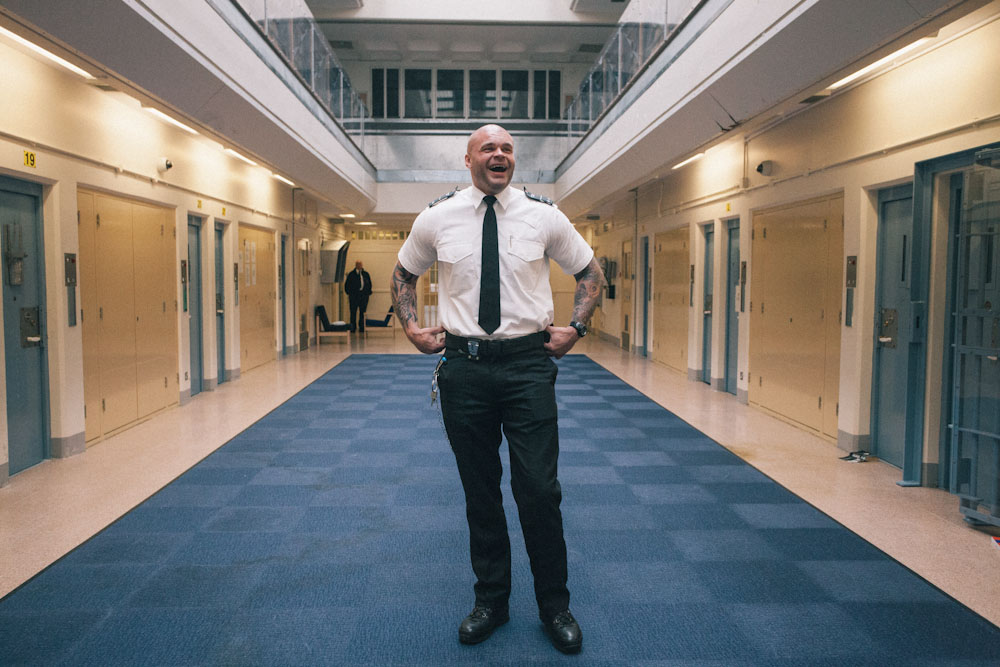


All images: Riccardo Raspa.
You can follow Riccardo Raspa through his website, on his Tumblr, and Twitter.

 Prison Photography