
You are currently browsing the monthly archive for March 2015.
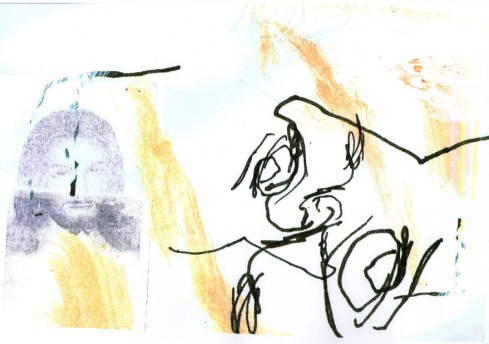
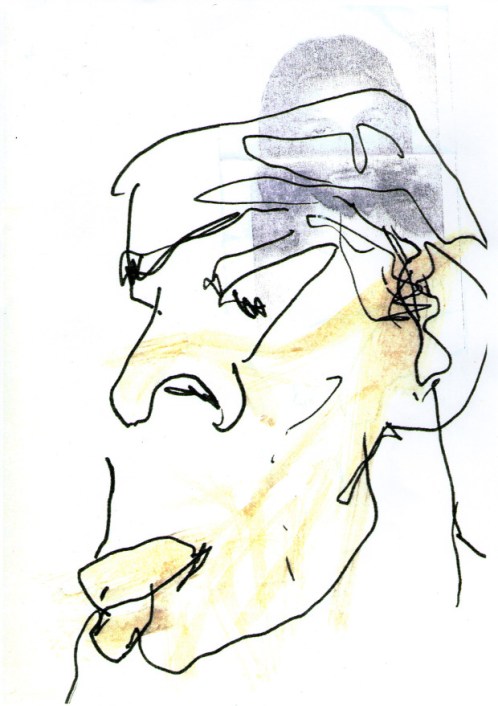
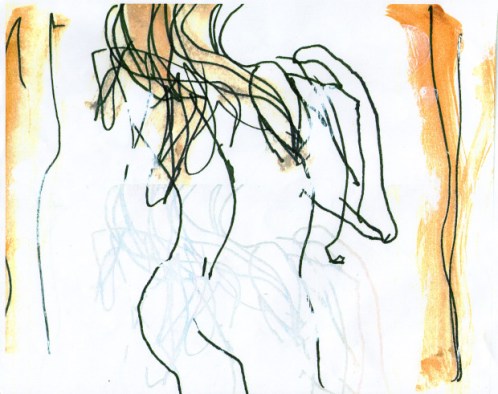
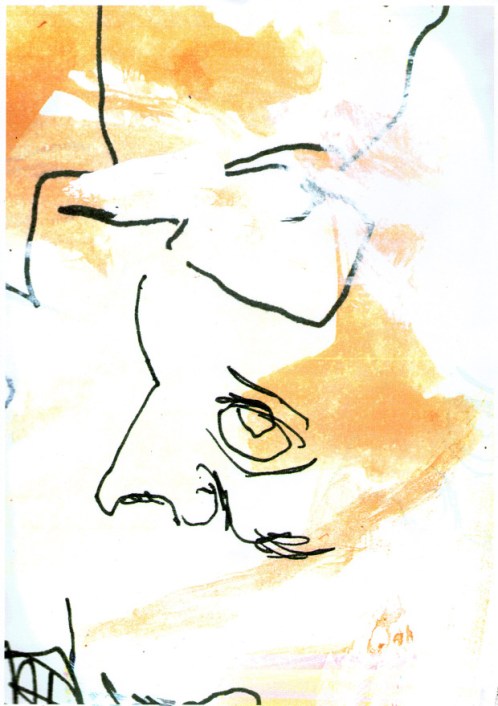
I realised last week that my banner for my Twitter profile was enlarged and pixelated and looked a bit naff, so I put a call out for suggestions for a new one. Out of left-field came artist David Kelly-Mancaux a.k.a. Erkembode who offered any of his sketches from his series Prison Fights. I took the opportunity.
If you’re confused by them, I am too. David tells me they are based upon prison photographs, presumably portraits. He made them in response to his friend’s book Prison Fights about people who’d got into violent altercation. They’re from 2011.
I think, but am not sure, they are the product of a process David calls Visual Translation which seems to me like a mandatory type of doodling. Whenever, wherever. David has made visual translations of poems, poetry reading, Egon Schiele paintings; I don’t think there’s anything off bounds.
I might not fully understand the motives and the process but I don’t understand the world so it works. Also, the process by which I came across the Prison Photography logo was of equal abandon and random.
See the banner at my Twitter account.
And thank you to David Kelly-Mancaux!
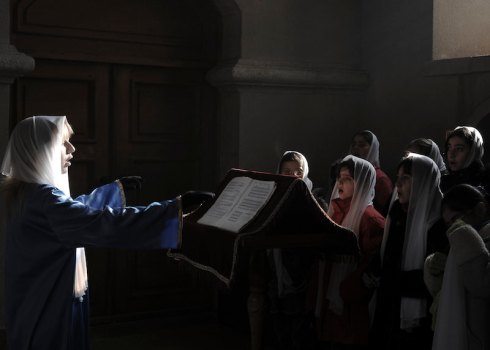
A church choir sings during a sparsely attended Sunday mass in Shushi. Shushi was primarily an Azeri city of cultural significance. Once home to 30,000 people, only 3,000 people call it home now.
My article When a Country Is Not a Country about Narayan Mahon’s series Lands In Limbo just went up on Vantage, for Medium.
Mahon travelled to Abkhazia, Northern Cyprus, Transnistria, Nagorno Karabakh, and Somaliland — five nations that are not formally recognised by the international community as states.
Lands In Limbo defies genre. It is partly documentation, but not complete documentary. Some of the images look like news photos but Mahon has a stated artistic intent. Here is an inquiry about huge geopolitical forces in a globalized 21st century … but it is based upon momentary street photos and portraits.
“I wanted to see what these countries’ national identities looked like, [learn] what’s it’s like to live in such an isolated place,” says Mahon.
Read the full article and see Mahon’s image large at Vantage.

Friends enjoy an afternoon on the Black Sea coast of Abkhazia. Much of the Abkhaz coastline is littered with rusting ships and scrap metal.
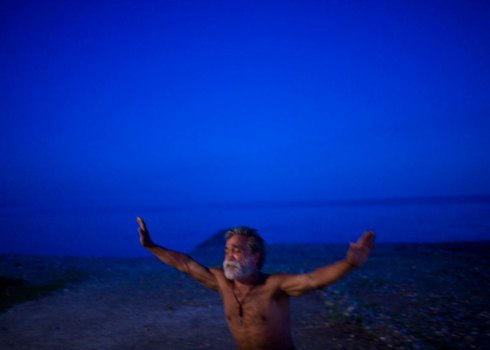
An Abkhaz man, known as “Maradona,” yells obscenities about Georgian politicians and declares the freedom of Abkhazia.

A man walks into a small store in the center of Stepanakert, the capital of Nagorno Karabakh. Stepanakert lost nearly half it’s population to forced deportation of Azeris during the breakaway war.
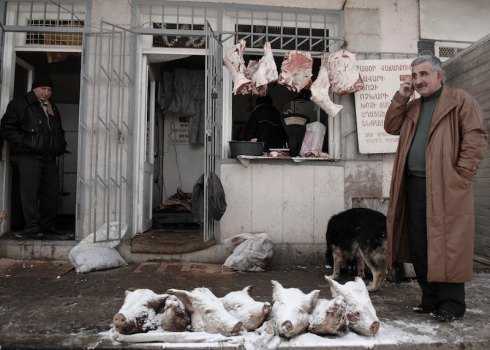
A man stands among snow covered pig heads in Stepanakert, the capital of Nagorno Karabakh.
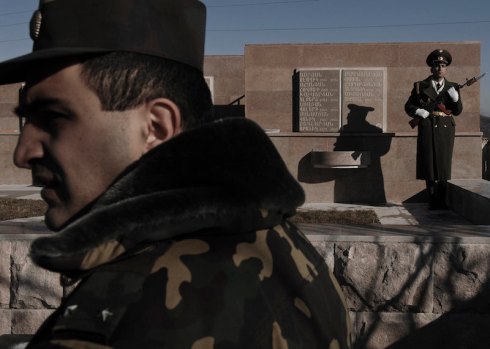
Karabakhi soldiers stand guard at a war memorial in Kharamort, a village that was once evenly populated by ethnic Azeris and Armenians. The village is now half the size since the Azeris fled and their homes were burned.
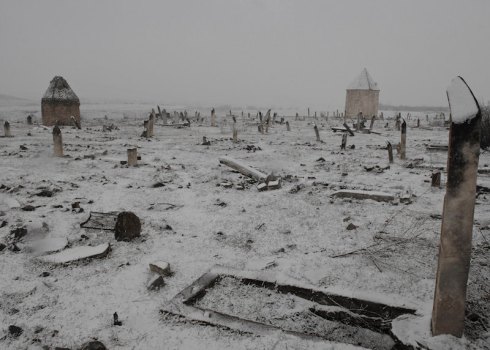
During and after the breakaway war with Azerbaijan, Karabakhi-Armenians burned and destroyed not only Azeri villages and town quarters but also desecrated Azeri muslim mosques and cemeteries. This is common practice throughout the Caucasus, used as a deterrence for people wanting to return to their homes.
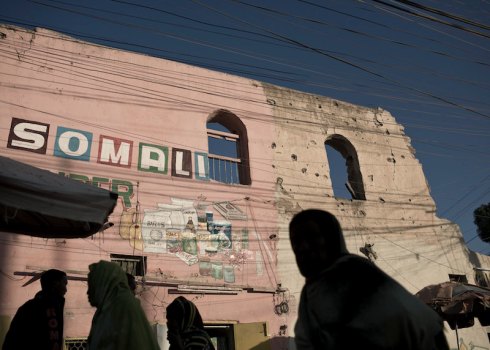
Men and women walk through the bustling central market in Hargeisa, passing war-damaged buildings.

Shabxan, a young Somali girl living in rural Somaliland, does chores in the home.

A young Somali boy checks himself out and fixes his hair in the mirrors of a small barbershop in Hargeisa.

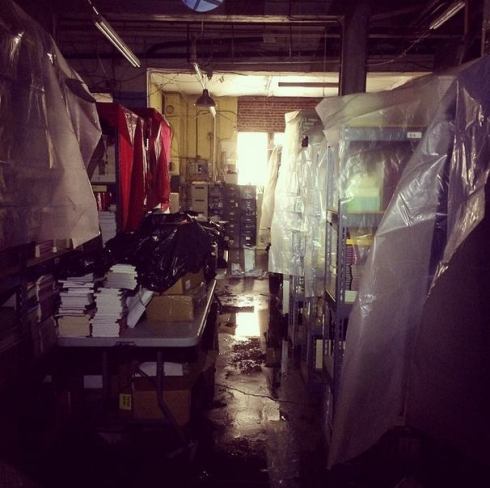
AK Press stock after the fire
ATTENTION
Stop what you’re doing. Listen up. Help out.
There was a massive fire in Oakland this weekend. Two people died. 30 people have been relocated from the now charred, smoky, water-damaged buildings. This is a costly tragedy from every angle you look at it. My respects go out to the victims and the victims’ friends and families.
The structure that went up was behind and attached to a building in which AK Press and 1984 Printing — two of Oakland’s phenomenal political publishing operations — operated. They lost paper stock, computers, presses, book inventory and more.
Here’s why they are both so impressive and this is why you should throw them some cash.
AK Press has published and distributed anarchist literature since 1990. It is worker run and collectively managed. Over the years, it has put out some of the staples of my library — including Captive Nation by Dan Berger, Resistance Behind Bars by Vikki Law, and Are Prisons Obsolete? by Angela Davis.
AK has consistently raised the bar for analysis of the prison industrial complex, state violence, violence against women and many other social justice urgencies. AK has built community and audience for radical writers. Precisely because the work has to be in the world, AK has to be in the world. Nobody does it better.
1984 Printing is one of the very few all-women-owned businesses I know. They’re happy, open, dog-loving crafts folk who turn the presses not to turn profit but to build knowledge for a better society. Amy and Richard know all their clients by first name and care for each and every project.
1984 does the best offset printing around — they’ve printed the two Carville Annex Press books So Many Mountains But This One Specifically, by Junior Clemons and It Hasn’t Stopped Being California Here, by Jordan Karnes. They also printed Rian Dundon’s Out Here series.
Yesterday, buildings were redtagged by the City of Oakland, meaning both operations are prohibited from occupying the warehouse and shops and shut down until further notice.
AK is raising money. GIVE
1984 is raising money. GIVE
If all you have between now and sanity is beer money and a punk spirit there’s a fundraising outlet for that with a benefit gig at 924 Gilman on May 9th.
Follow the situation at AK Press’ Facebook and Twitter and blog.
Follow 1984 on Facebook and the blog.


There’s a 6 x 12 foot cell in the library at Marquette University in Milwaukee. It’s made of wood not cinderblocks. The toilet mimics the stainless steel of actual cells. This mock-up is intended to grip students and activate petitions and political awareness. Hey, if it’s good for politicians, it’s good for college kids.
I guess the installation — made by the theater department at Madison’s Edgewood College — relies on part shock & awe and part compassion. Students can step inside for a few minutes or can elect a 45 minute stint alone with a Bible or Qur’an and pen and piece of paper, just like prisoners. An iPad and headphones play the sounds of incarceration — the audio comes from a Frontline story on solitary.
I’ve questioned the frequent use of the cell floor-plan at prison art exhibitions (here, here and here), but mapping out the confines of a human-cage isn’t the worst tactic to snag people and have them think about the issue. The United Nations has defined solitary confinement for more than 15 days as torture. People in long term solitary suffer damage comparable to traumatic brain injury. A 6-sided box, with a door might be very effective in provoking response.
Built last year, the cell at Marquette has previously shown on the Capitol steps in Madison and at churches and schools in Wisconsin. Organizers hope more communities and schools will want to display the prison cell. So do I. Let’s get replicas made and installed at every seat of learning in the country. Youngsters need to know about the brutal, crushing systems older Americans have danced into law. Along side many others, the young adults we anoint with education, privilege and upward mobility are important constituents in the resistance movement.
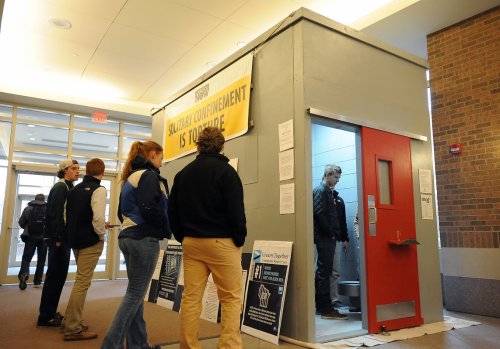


All images by Michael McLoone / Journal Sentinel.
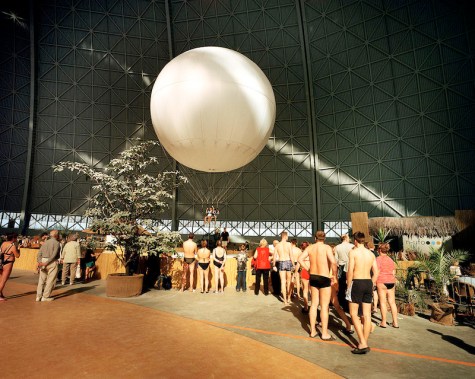
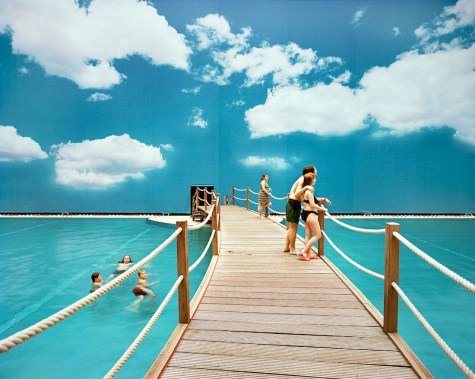
My article Surreal Photos from Inside the “Fake Vacation” Industry about Reiner Riedler’s series Fake Holidays just went up on GONE, the travel section of Medium:
It’s hot, the water’s warm, and blue skies stretch as far as the eye can see. Which actually isn’t very far at all since, all sensory evidence to the contrary, we’re indoors — clustered inside a giant plastic globe in one of the oldest industrial centers of Northern Europe.
Read the full piece and see some nice big images here.




TEACHING PHOTOGRAPHY INSIDE
I’ve known about Vance Jacobs work in a Medellin Prison for as long as it has been in published form, but this recent post by StoryBench reminded me of the excellent and brief video reflection Jacobs gives about his time teaching prisoners to use cameras to document their own lives. Originally, Jacobs was going to be the only person photographing, but at the eleventh hour the sponsoring NGO for thre project changed the concept and he was asked to educate a dozen men in prison.
“You could tell it had been a long time since the prisoners in my class had received this much attention. But I also had high expectations and those expectations led to it being a very important experience. They started taking a tremendous amount of pride in their work and they started to understand that criticism could be a really important part of their work and theta they could grow from it,” says Jacobs.
This type of introspection and self-documentation is vital, in my opinion.
At the final exhibit inside the prison of 35 images, 5 went missing. “To have a photo stolen was a badge of honor,” says Jacobs. “It meant someone thought they were worth stealing.”
BIO
Vance Jacobs, a San Francisco-based photojournalist and filmmaker whose work has appeared in The New York Times, National Geographic Books and Esquire magazine. He talks about his creative process and behind the scenes details of his different shoots at his ‘Behind the Lens’ YouTube channel. Follow him on Facebook and Twitter.
See features on Jacobs’ work at GOOD, WonderfulMachine, Photographer on Photography and PDN Online.

Of all the prison photographers in all of the U.S., Richard Ross is the probably the best at getting his work in front of eyeballs. I think that’s because he asks a lot and often.And because his images are compelling.
This past week, Ross showcased works form his latest book Girls In Justice on PBS News Hour.
By virtue of the sheer breadth of his survey of juvenile prisons, here’s a case of a photographer actually showing us things we wouldn’t otherwise see. The photographic medium is often hailed as being (almost magically) revelatory, but how often is that actually the case. It’s harder and harder to show people something they’ve NEVER seen before. That’s why closed prisons such as systems provide such an interesting locus for inquiry and why I continue my research.
I digress.
Go check out Ross’ work at PBS, and at the Juvenile In Justice website.
“I’m not a sociologist, I’m just the schmuck on the floor trying to make sense of all this,” says Ross.
–
Also, check out my essay What Are We Doing Here? (cross-posted to Medium) for the current Try Youth As Youth (TYAY) exhibition as David Weinberg Photography in Chicago. Ross is one of four artists in TYAY, a gallery show that is forcing the debate forward, and endorsing the ACLU in Illinois’ latest campaign against trying children as adults.
–
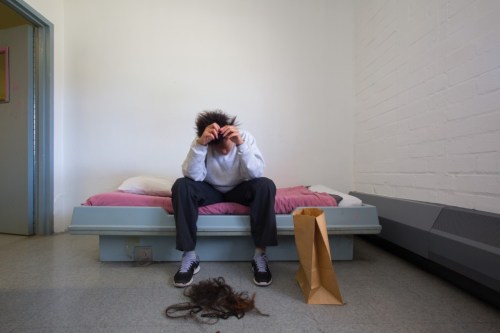
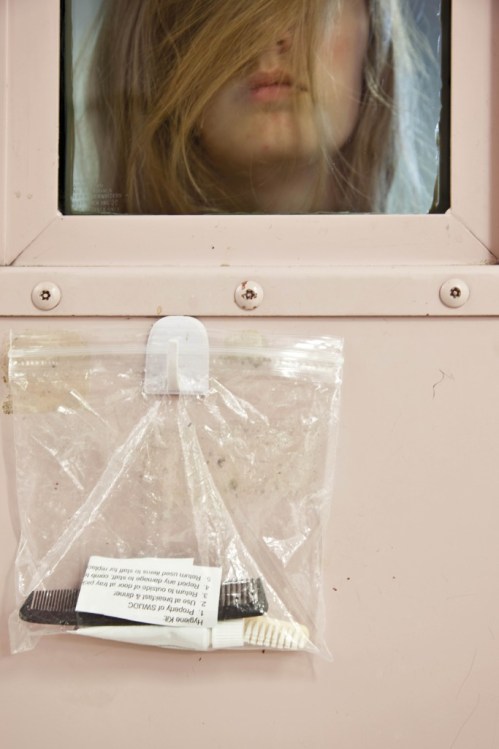
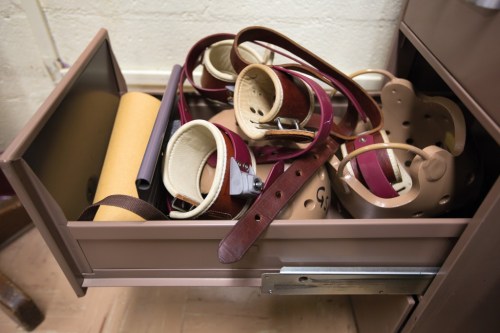
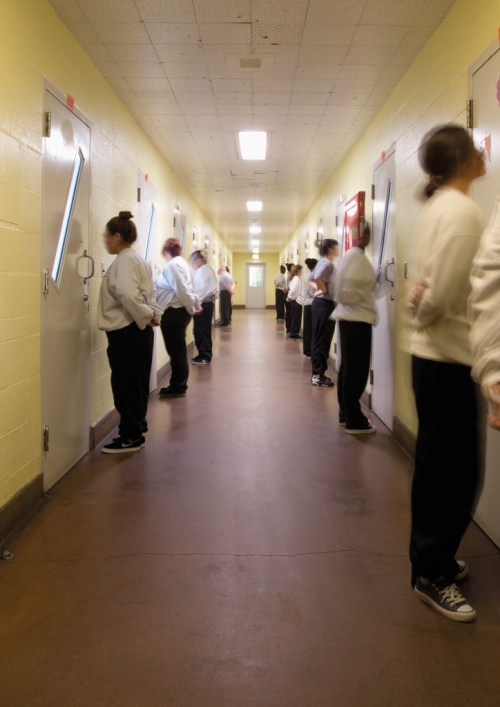
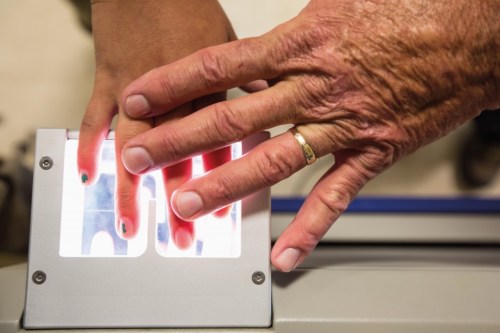

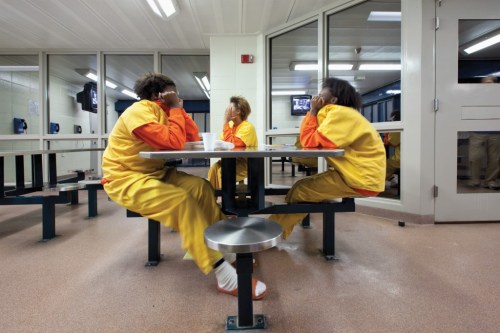


Pamela, by Morgan Campbell (’15), recipient of the first Diane Dammeyer Scholarship for socially engaged photography.
Never heard of this award before. It is substantial and it seems likely that it’d create the type of photographic portraits in which I am interested.
Diane Dammeyer Fellowship in Photographic Arts and Social Issues
The Diane Dammeyer Fellowship in Photographic Arts and Social Issues is a unique collaboration between the Photography Department at Columbia College Chicago and Heartland Alliance, a leading global anti-poverty organization.
This postgraduate fellowship creates a space for socially engaged artists to produce a compelling and dynamic body of work highlighting human rights and social issues. The goal of the fellowship is to use photographic practice as a point of departure for dialogue and engagement, elevating awareness of social, economic, and cultural issues by connecting subject, audience, and community to inspire positive social change.
A $25,000 stipend will be awarded for the 2015-2016 academic year to support a talented individual who has completed an MFA in photography and who is committed to active immersion and participation in this collaborative opportunity. The fellow will be expected to work closely with a Columbia Photography faculty mentor and Heartland Alliance project sponsor, culminating in a public presentation/exhibition/publication upon completion of the fellowship period.
APPLY
Deadline: April 1, 2015.
Go here to apply and for information on eligibility, review criteria, selection process, award and notification process.
Questions? Email: dammeyerfellowship@colum.edu
THE FELLOWSHIP
The Diane Dammeyer Fellowship is administered under the auspices of both Columbia College Chicago and Heartland Alliance, two internationally recognized institutions with deep roots in Chicago dating back more than 120 years. As a pioneer in arts and media education, Columbia combines its internationally recognized experience teaching creative students to develop authentic voices and meaningful skills in partnership with Heartland Alliance’s history of advocating for the rights of the world’s most vulnerable populations.
The fellowship is supported by Columbia alumna Diane Dammeyer, whose experience as a photographer for Heartland Alliance inspired her to create both an undergraduate scholarship and a postgraduate fellowship in the hope that emerging artists would conceive creative ways to use their skills to help a nonprofit organization better realize its goals.
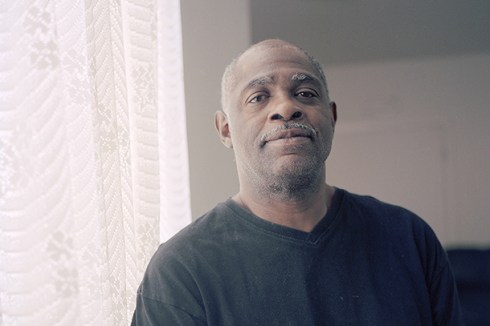
Gus, by Morgan Campbell (’15), recipient of the first Diane Dammeyer Scholarship for socially engaged photography.
Heartland Alliance
The leading anti-poverty organization in the Midwest, Heartland Alliance believes that everyone deserves the opportunity to improve their lives. Each year, it helps ensure this opportunity for nearly 1 million people around the world who are homeless, living in poverty or seeking safety. Because the causes of poverty, injustice and lack of opportunity are interrelated and interlocking, Heartland Alliance’s programs are similarly comprehensive and integrated, allowing the unusual synergy in meeting its participants’ needs. In addition to direct service, Heartland Alliance partners with lawmakers and organizations to shape public policies that fit the needs of everyone, ensuring that even the most vulnerable can realize a brighter future.
Diane Dammeyer
Upon finishing a career in real estate on Chicago’s North Shore, Diane Dammeyer enrolled at Columbia College Chicago to develop her skills in photography. Through her work at Columbia, she established herself as a philanthropic photographer, capturing images of children and young adults and their economic circumstances around the world.
After moving on from Columbia in the mid-1990s, Dammeyer worked as a volunteer photographer with the Chicago-based Heartland Alliance for Human Needs & Human Rights. She traveled all over the world, recording images of children in impoverished, war-torn settings like Rwanda. Her experience as a photographer for the Heartland Alliance inspired her to create both an undergraduate scholarship and a postgraduate fellowship at Columbia College Chicago, in the hope that emerging artists would conceive creative ways to use their skills to help a nonprofit organization better realize its goals.


 Prison Photography