
You are currently browsing the monthly archive for January 2016.
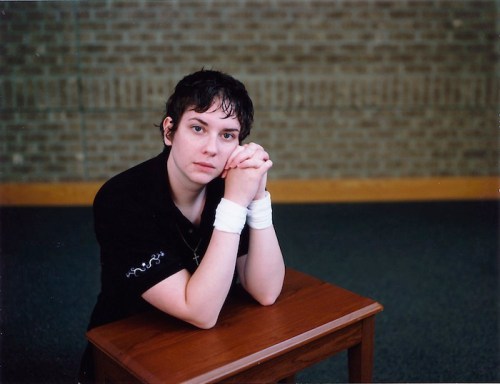
Photo: Kristen S. Wilkins, from the series Supplication
–
Bit of housekeeping folks! I need to let you know three things about Prison Obscura:
- Prison Obscura is going to Washington State.
- Prison Obscura is going to Oregon.
- Prison Obscura will be retired in June, 2016.
WASHINGTON
The exhibition opens at Evergreen State College in Olympia Washington this Thursday, January 16th, from 4pm-6pm. I’ll be there giving a curator’s talk.
Evergreen is hosting Prison Obscura as part of Kept Out/Kept In, a series of talks, shows and presentations examining carceral culture.
–

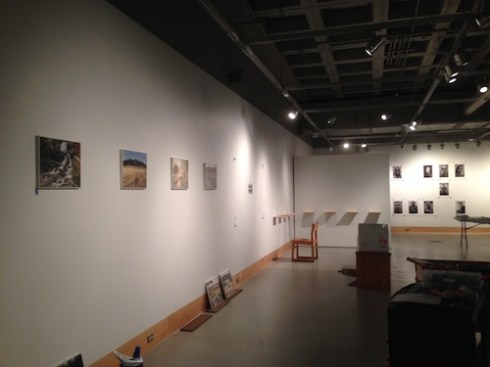
Prison Obscura Installation in progress, Evergreen State College.
The show is up January 14 – March 2 at Evergreen Gallery, Library 2204, Evergreen State College, 98505 (Google Map)
–
OREGON
Between April 1 – May 28, Prison Obscura is on show at Newspace Center for Photography in Portland, Oregon.
Mark your calendars waaaaaaay in advance for the opening reception 6-9pm on Friday, April 1st (no joke). I’ll be in Portland all weekend, giving a curator’s talk at the opening and then convening with others for events and panels.
1632 SE 10th Ave., Portland, OR 97214. (Google Map)
–
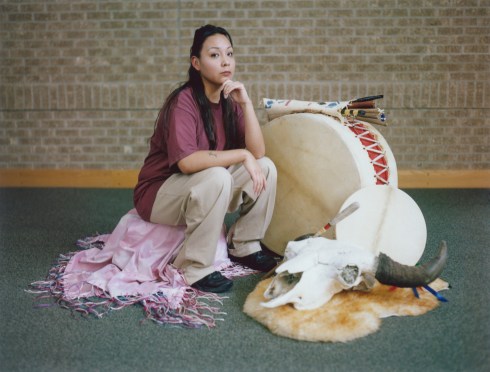
Supplication #4, Landscape. From the series ’Supplication.’ “The Pryor Mountains. It is so special to me because I am from Pryor and I miss home. Castlerock at sunset.” Photo: Kristen S. Wilkins.

Supplication #4, Landscape. From the series ’Supplication.’ “The Pryor Mountains. It is so special to me because I am from Pryor and I miss home. Castlerock at sunset.” Photo: Kristen S. Wilkins.
–
RETIRING ‘PRISON OBSCURA’
To say that the Cantor Fitzgerald Gallery at Haverford had never travelled a show before, they–namely Matthew Callinan–have done a magnificent and utterly-indispensible job in administering Prison Obscura over what will be seven venues.
I didn’t know exactly what was involved in traveling a show such as this and I’m so so grateful that Callinan had the support of his peers at Haverford College to produce an exhibition that could stretch beyond Philadelphia where it all began. We learnt together.
It’s been a great run. After Olympia and Portland though, it’s time to say goodbye. I celebrate Prison Obscura‘s unexpected and gratifying success, but I know that after 2-and-a-half years, it’s time to move energies on to other things. I need to step back and to think about what next, if anything, is appropriate for a prison-based exhibition.
There are massive amounts of vital work and organizing being done around prison activism, policing, power and community-empowerment. I’d like to learn more; take the time to hear and see. Observe and act more; perhaps talk and type less–for a while, at least.
No doubt, I’ll have more to say when Prison Obscura wraps up in Portland, the final show, toward the end of May. For now, I hope that if you are in the Pacific Northwest you’ll be able to check out the show and engage with the ideas its artists propose. Thanks to Alyse Emdur, Robert Gumpert, Steve Davis, Mark Strandquist, Kristen S. Wilkins, Josh Begley and Paul Rucker and the City of Philadelphia Mural Arts Program and the men of the Restorative Justice Project at Graterford Prison.
–
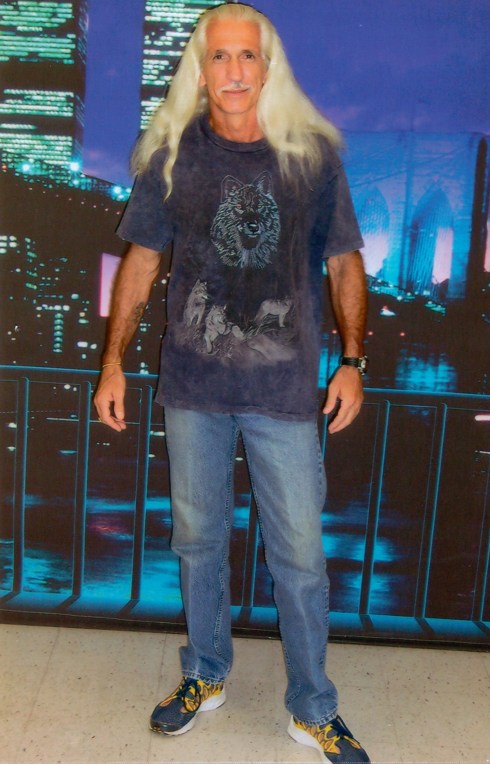
David Wells, Thumb Correctional Facility, Lapeer, Michigan. From the series ‘Prison Landscapes (2005-2011).’ Photo: Anonymous, courtesy of Alyse Emdur.
Even though 1,000 were printed, they’re somewhat of a rarity these days. Hundreds were given out for free during the opening exhibition at Haverford College and they’ve made their way into comrades’ hands, collections and supporters bookshelves ever since.
I have only 18 remaining in my possession.
Fortunately, the physical scarcity needn’t be mirrored in the digital world. Now, via the Haverford Exhibits Prison Obscura page, you can download a PDF of the catalogue.

48 pages of pretty pictures, a foreword by Kristen Lindgren and a whopping 5,000-word essay by yours truly.
I’m thrilled by the prospect of people reading on the printed page as opposed to these here screens.

© Mark Strandquist, from the series ‘Some Other Places We Have Missed’

From the Brown v Plata/Coleman lawsuit.

© Josh Begely, from the series ‘Prison Map’
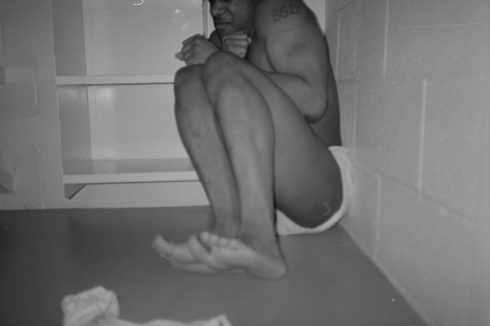
Photo: Made by a student of Steve Davis during a photography workshop in Washington State juvenile detention facility.
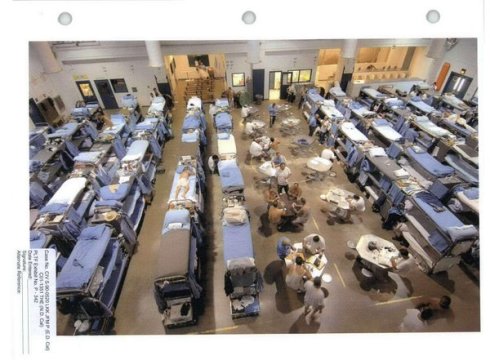
From the Brown v Plata/Coleman lawsuit.
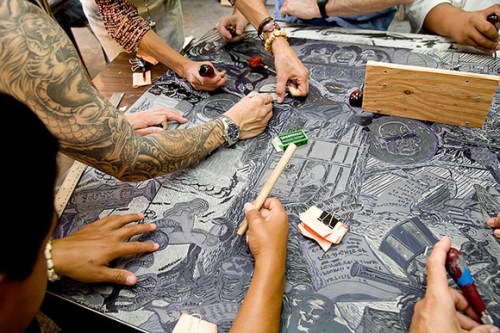
Carving a linoleum block, printmaking class, San Quentin State Prison, California. Photo: Peter Merts.
Do you work in prison arts? Have you got thoughts, advice and problem-solving or teaching techniques you’d like to share?
The William James Association alongside The Prison Arts Coalition and a host of other partners have launched the National Prison Arts Survey to crowdsource all the knowledge and strategies that exists out there in all of your heads and teaching manuals.
CLICK HERE for the National Prison Arts Survey
There is talk about whether to form a national organization of prison arts organizations and your input it crucial at this early stage.
Over recent years, the William James Association and California Lawyers for the Arts has been committed to research into effective prison arts teaching. Most notably they put out the paper Art Practice and Its Impact in California Prisons, by Larry Brewster.
It is thought that a national organization could offer the following to members:
Raise awareness of programmatic efficacy
Host national or regional conferences
Share best practices
Foster community
Support, collect and disseminate relevant research
Offer professional development opportunities
The 5-minute survey is designed to help better understand the need for a national prison arts association and how it might serve potential members like you.
CLICK HERE for the National Prison Arts Survey
The survey was developed with input by prison arts advocates and practitioners, including:
Cynthia Gutierrez – Barrios Unidos Prison Project
Ella Turenne – Artist, Activist, Educator; Occidental College
Freddy Gutierrez – Community Worker, Performing Artist
Illya Kowalchuk – Pop Culture Classroom
Jonathan Blanco – Oregon State Penitentiary Hobby Shop
Laurie Brooks – William James Association
Lesley Currier – Marin Shakespeare Company
Nate Henry-Silva – Imagine Bus Project
Nathalie Costa Thill – Adirondack Center for Writing
Treacy Ziegler – An Open Window
Victoria Sammartino – Voices UnBroken
Wendy Jason – Prison Arts Coalition
Alma Robinson – California Lawyers for the Arts
Weston Dombroski – California Lawyers for the Arts
CLICK HERE for the National Prison Arts Survey
Responses are kindly requested by January 29th.

© Kate Peters
Here we are at the end of the first week of 2016. How’s it going so far? I spent the holidays lying in, reading stuff and watching my team Liverpool at silly hours of the morning. When at my desk, I was putting together a series of year end proclamations for Vantage.
It was a marathon, and by marathon I mean a six-parter. Still, that was more than 10,000 words and scores of images.
Part 1: The Best Nature Photos of 2015
Part 2: The Best Photobooks of 2015
Part 3: The Best San Francisco Street Photographer of 2015
Part 4: The Best Portraiture of 2015
Part 5: The Best GIFs of 2015
Part 6: The Best Photography Exhibition of 2015
Are these actually the best of the year? Are these the most watertight objective statements? Of course not, and I admit as much in the pieces. What they are though is my strongest arguments as to why these projects and ideas are more relevant, caring (even), fruitful and connecting.
Put your feet up. Have a glance.
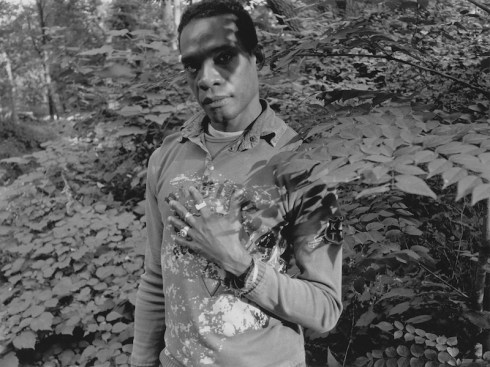
© Thomas Roma

© Alan Powdrill

© Troy Holden

© Suzanne Opton

© Thomas Roma

© Vicente Paredes

Book cover of Vicente Paredes’ Pony Congo

© Brandon Tauszik

© Sara Terry + Mariam X
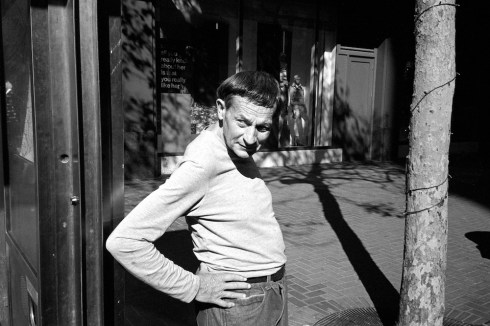
© Troy Holden

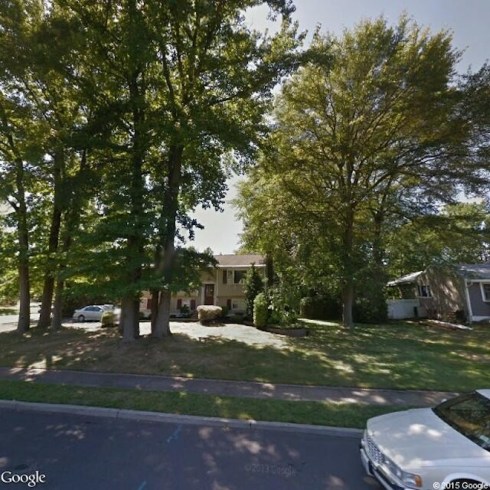
Michael Ireland – Springfield, MO
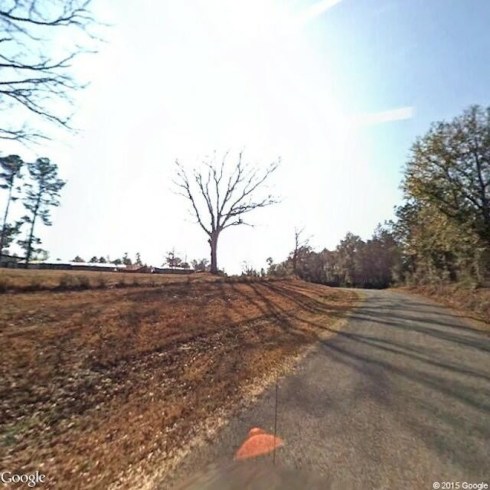
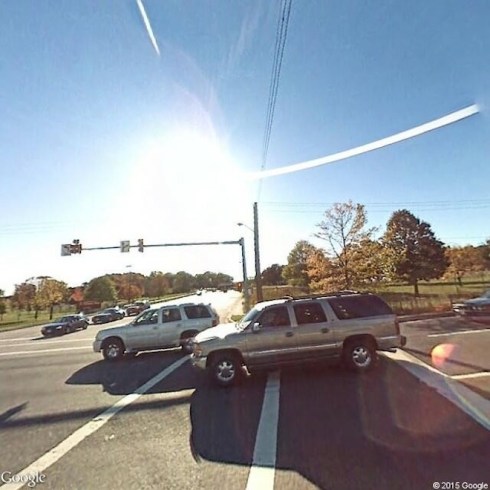
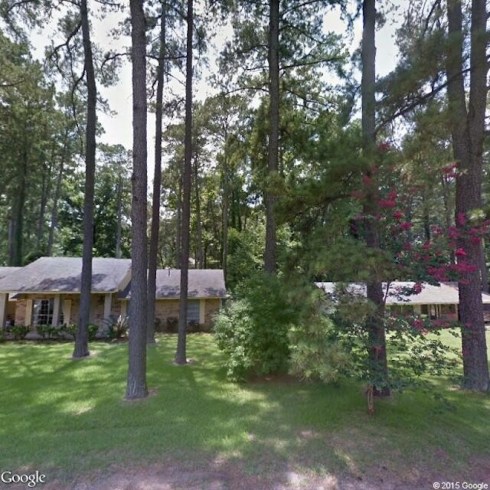
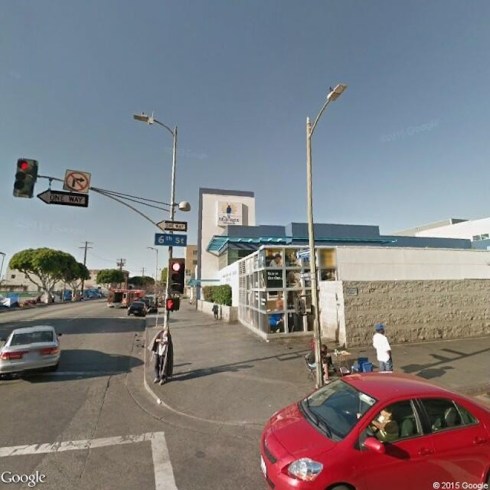
“A cookie-cut subdivision, a mall parking lot, a rural country road. Linking these unremarkable pockets of America, and hundreds of places just as ordinary, is the fact that they’ve all been sites where people were killed by U.S. police officers.”
In my first piece for TIME, I write about Josh Begley‘s project Officer Involved.
Like many of Begley’s previous works, he makes use of third party (activist/research/journalism) data to image a geographically-disparate but nationally-important issue. For Officer Involved he used The Guardian’s data from The Counted.
In 2016, there were 1,138 deaths in which a U.S. law enforcement officers was involved.
Read: Visualizing ‘Officer-Involved’ Deaths Across America





 Prison Photography