
You are currently browsing petebrook’s articles.

João Silva, 44, a South African photographer on contract with The New York Times, stepped on the mine while accompanying American soldiers patrolling an area near the town of Arghandab in southern Afghanistan on October 23rd, 2010. Despite immediate help from medics, both his legs were lost below the knees. He is now recovering at Walter Reed Medical Center in Washington, DC.
Friends have set up a new website to sell his prints and raise funds for him: http://joaosilva.photoshelter.com/.
Please consider helping him. He is one of the major conflict photojournalists of our time, a husband and a father.
For all his work past, present and future let him know you’re thinking of him.
UPDATED: 9:30AM PST, NOV. 10TH
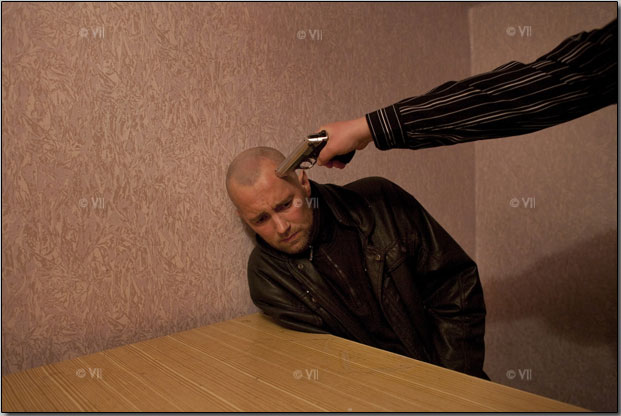
Car thief. © Donald Weber / VII Photo
Since first coming across Donald Weber‘s series Interrogations, I wondered how the hell Weber got the shots and how he handled the ethics of the work. Colin Pantall tapped him up and got some answers.
Weber:
“Watching the methods was not pleasant. Humiliation, violence, degradation. How could you not be repulsed? But the reasons I was there were not for judging them, but was to actually show something very special in the terms of the secrecy of the act. I made a special document precisely because it was about the ‘absence of the void,’ that it showed humans at their most vulnerable and most cruel. This series could easily be judged along the same lines as a war photographer that constantly gets criticized for not doing anything, for not jumping into the fray.”
I’m going to sit on the fence on this one, but I can see a lot of criticisms heading in Weber’s direction. I will say that this is not a cheap project; Weber has demonstrated his commitment to the former Soviet countries.
If we demand photographs to make us think, photographs to show us things we would not otherwise see and for photographers to be cognisant of – and close to – communities in which they work, these are the types of images that will result.
UPDATE
9:30AM PST, NOV. 10TH
As you know, so often I think it is important that a photographer really describes the circumstances of their work. Donald Weber must be aware that I harp on about access (as it relates to photography in prisons) because he emailed me and asked me to pass on this information:
Weber:
“As you know, I’ve spent almost six years living and working in this area. On my very first trip I met a police detective with whom I got along with. Over time, we developed a bond and a trust. Every trip I would bring him photographs and was always very upfront with my work, who I was and what I was doing. Never hiding the results, however critical they may be of him and the methods the police employ.”
“About five years ago I witnessed my first interrogation, and was utterly shocked at its violence, not just physically but mentally as well. Solzhenitsyn talks for almost a third of his book The Gulag Archipelago about the nature of interrogation, and the importance of the interrogation not just through Soviet history, but universally. He would think everyday about the moment of his interrogation how he was broken, and everyday about the moment of his execution. So, the seed for this story was planted.”
“For obvious reasons I could not just ask to photograph inside an interrogation. As my work progressed, so did my police contact, who rose over time to the rank of Major. He had gained a position of authority to grant permission. Since we had spent so many years together photographing, he was aware of my methods and how I worked. We rarely spoke to each other, during work or after hours. I felt it best to maintain as much distance as possible but still respectful of his role. When he finally granted permission he still made me work for the access to the actual accused.”
“I sat almost everyday for four months on a bench in a hallway of the police station waiting with the people who were to be interrogated. The first month, not a single frame was photographed. Each day I would show up 9am, and leave approximately 12 hours later. Most days were spent with nothing to photograph, many of the accused were not interested in having there photo taken. On average, I was lucky to photograph maybe two people a week over a four month period.”
“This was not simply a case of walking in saying hello as a privileged Westerner and flashing my camera around. This was a project five years in the making. So before anybody rushes to quick judgement, I felt the facts as to how the work was created should be shared.”
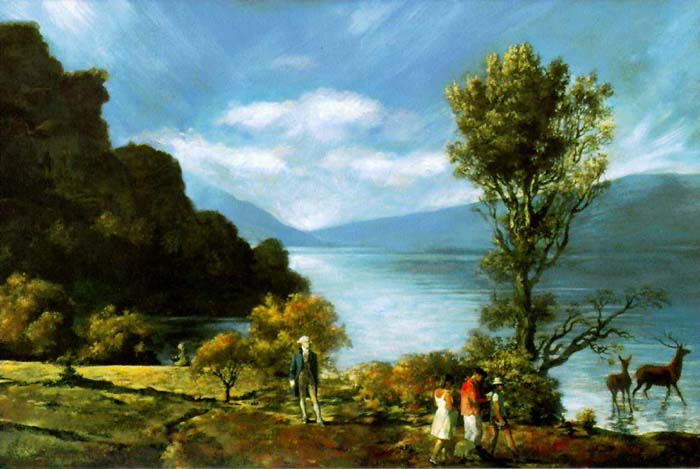
Komar & Melamid UNITED STATES: MOST WANTED PAINTING.
I am not asking here about photographs of America’s Most Wanted, I am asking quite literally about what photograph America most wants.
This question has virtually nothing to do with the most expensive photographs, as that list only tells us the dollars put behind one person or groups’ well-heeled want.
The question is not so ridiculous, nor should it be totally subjective. In 1994, Russian artists Komar and Melamid embarked via online survey to discover the appearance of the most and least wanted/desired paintings for people across different countries. George Washington chilling with three kids and a couple of wading deers (above) is – according to the science – America’s most wanted painting.
Komar and Melamid asked preferences toward colours, modern or traditional styles, old or new subjects, wild or domestic animals, natural or portrait, outdoor or indoor, realistic or different looking (if different whether exaggerations of real objects or imaginary objects were better).
They asked whether paintings should teach a lesson, relate to religion, be relaxing. They asked if paintings should be textured or flat, colors blended or separate, brush strokes or smooth paint, serious or festive, busy or simple, large or small. They asked if the painting should include geometric or random patterns. If the painting was of people should they be famous or ordinary, nude or clothed, working or at leisure, historic or recent figures, single people or groups.
Komar and Melamid asked for opinions on Picasso, Pollock, Dali, Monet, Rembrandt and Warhol. They also asked if they preferred black and white or colour.
[By the by, the letters about the survey are hilarious!]
If we were to do the same with photography on what criteria would we canvas response? As you think on that you may want to listen to America’s Most Wanted Song, as determined by a similar Komar and Melamid survey. If that doesn’t convince you about the wisdom of crowds then America’s Least Wanted Song will. We can, it seem, all agree on what is terrible!

I really would like to develop a list of criteria for defining what we want from a photograph:
B&W or colour; celebrity or ordinary people; pets or wild animals; square or rectangle shaped; people that look like you or people that look different to you; street or interior; with caption or no caption; candid or posed; family and friends or strangers; part of a story or single image; realism or abstract; In focus or blurry; historical or recent scenes; with or without border/sprocket holes; large objects or fine detail, obvious or hidden objects; visual pun or dry as a bone, film or digital, pixels or no pixels, starving or healthy environments?
Should a photograph be amusing, moralistic, quick to understand or engaging over time; deliver a message, educate, allow the viewer to escape, assist with dreams, show you things you know or things you don’t.
As for the touchstone photographs to gauge taste by? Opinions on the works of Steichen, Leibowitz, Apollo mission photographers, photobooths, Matthew Brady, school portraits, war photographers’ works, Joel Sternfeld, newspaper or magazine photographers, Gerhard Richter, Miroslav Tichy, porn videographers’ stills?
What would be – what is – America’s Most Wanted Photograph?
Below, for your viewing pleasure are the most wanted paintings of various other countries.
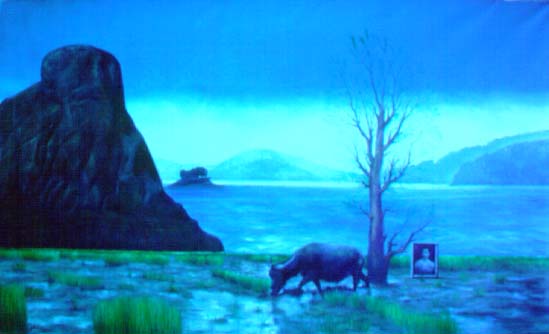
Komar & Melamid CHINA: MOST WANTED PAINTING
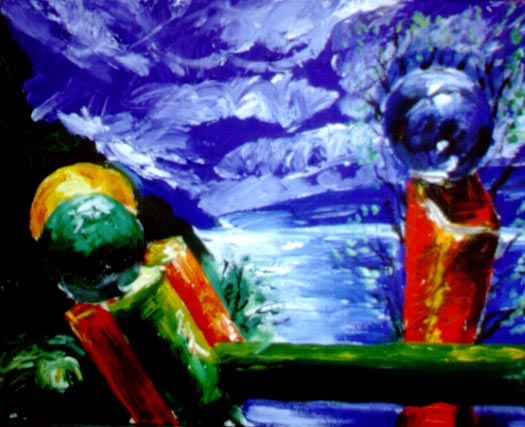
Komar & Melamid ITALY: MOST WANTED PAINTING
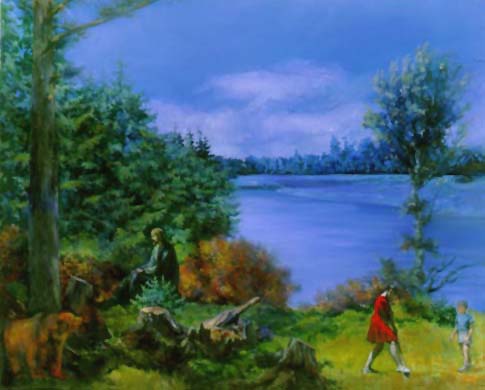
Komar & Melamid RUSSIA: MOST WANTED PAINTING
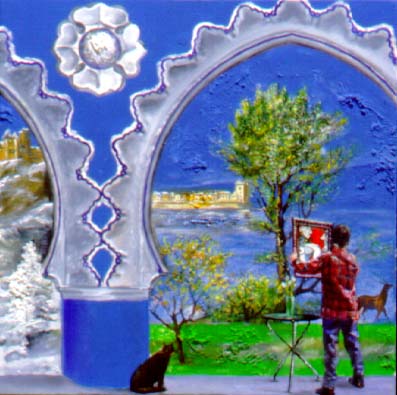
Komar & Melamid GERMANY: MOST WANTED PAINTING

Komar & Melamid FRANCE: MOST WANTED PAINTING
Painting by Numbers: Komar and Melamid’s Scientific Guide to Art, JoAnn Wypijewski (Editor) is available at all good thrift stores (and Amazon)
This time last year, I talked about the torture of Iraqis by the UK Army. The issue at hand then was specifically the death of Baha Mousa.
As part of court proceedings against the British Army into Mousa’s death, hundreds of films from the British interrogation centre in Basra have been released.
The Guardian has this report. [Warning: Content may be disturbing to some viewers.]
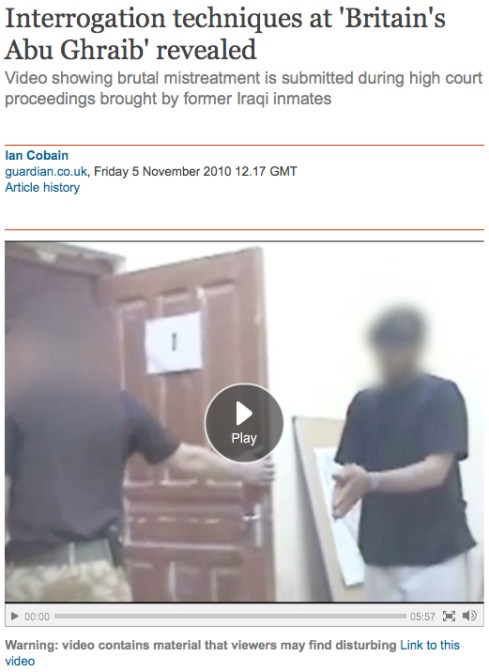
Only last week, I also noted the late to surface reports of US complicity in Iraqi upon Iraqi torture in Samarra.
It seems now we are starting to “see” a more varied picture of violence in Iraq. This is not the images of violence through the lenses of embedded journalists or through the sights of military aircraft, but images/footage of bullying; personalised verbal and physical abuse of men behind closed doors.
Without doubt, the most indelible images of the Iraq war are those from Abu Ghraib; they are the images the world remembers, will always remember.
Likewise, these videos of interrogation and of the uninhibited darker side of standard operations are key to understanding the facts of the Iraq War.
Also read: British troops use torture – even if it is by another name
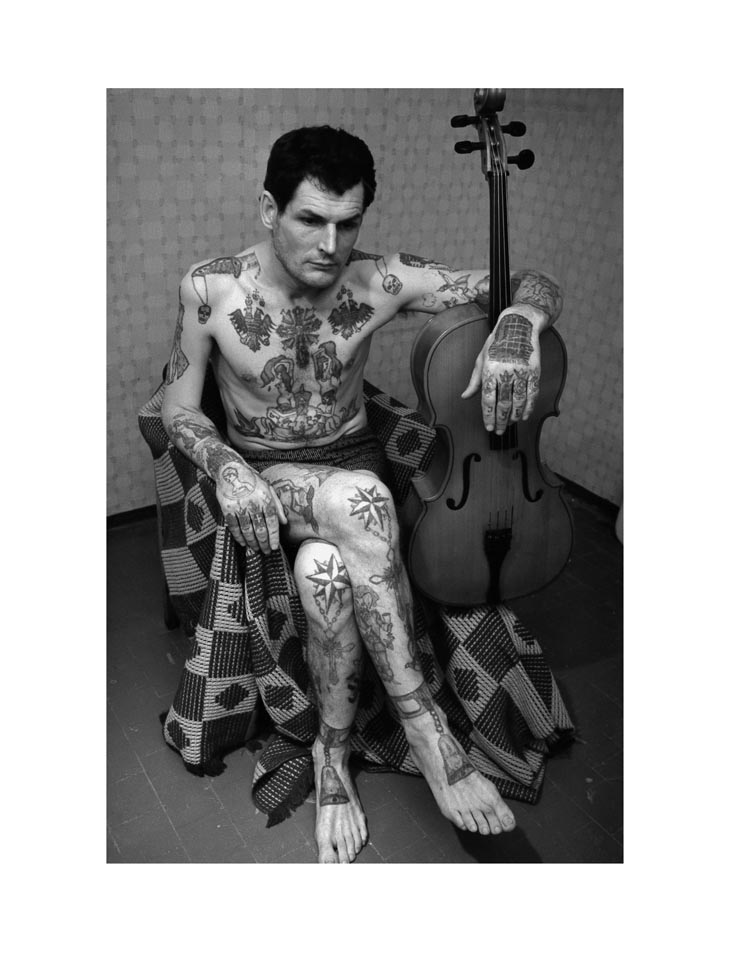
Sergei Vasiliev‘s photographs of Russian Criminal Tattoos are part of a three part encyclopaedia/archive on the subject. Vasiliev photographed between 1989 and 1993 in prisons and reform settlements across Chelyabinsk, Nizhny Tagil, Perm and St. Petersburg.

Vasiliev’s portraits are accompanied by over 3,000 tattoo drawings made by Danzig Baldaev during his time as a prison guard between 1948 and 1986. Baldaev had supported of the KGB who used his illustrations to develop intelligence on the convict class.
Three volumes of the encyclopaedia have since been published by FUEL Designs:
” [The documentation of] Tattoos were Baldaev‘s gateway into a secret world in which he acted as ethnographer, recording the rituals of a closed society. The icons and tribal languages he documented are artful, distasteful, sexually explicit and provocative, reflecting as they do the lives and traditions of convicts.”
“The accompanying photographs by Sergei Vasiliev act as an important counterpart to Baldaev’s drawings, providing photographic evidence of their authenticity. […] In these images the nameless bodies of criminals act as both a text and mirror, reflecting and preserving the ever-changing folklore of the Russian criminal underworld.”
Baldaev’s drawings and Vasiliev’s portraits are currently being exhibited at 4 Wilkes Street, London E1 6QF (30 October to 28 November 2010).
The Guardian has this review of the book/exhibition. More about Baldaev in particular at Design Observer.
RESOURCES
Image gallery.
From FUEL Publishing are three video shorts [1], [2], [3] of the drawings and photographs.
More can be found on Vasiliev‘s work at Michael Hoppen Gallery, Saatchi online (images) and the PhotoEye book review.
Found via Eight:48.com


PREVIOUSLY ON PRISON PHOTOGRAPHY
I’ve posted before about prison tattoos:
Prison Tattoos and the Photographers’ Intrigue
Klaus Pichler: Central European Prison Tattoos, Taxidermy and Beguiling Portraits of Odessans
Detached, formaldehyde-soaked, preserved, studied: The tattooed skin of Polish prisoners
Bob Gumpert on Foto8, on Prison Tattoo Codes
BIO
Sergei Vasiliev was born in 1937 in Chelyabinsk, Russia. After graduating from the MVD Academy, Moscow, he became a staff photographer for the newspaper ‘Vecherny Chelyabinsk’, where he has worked for the past thirty years. he has received many honours including International Master of Press Photography from the International Organization of Photo Journalists (Prague, 1985), Honoured Worker of Arts of Russia, and the Golden Eye Prize. His work has been exhibited internationally and is held in numerous museums’ collections. He is author of more than twenty books, including ‘Russian Beauty’, (1996) and ‘Zonen’, (1994).
The pile is my system. Sort and pile. Sort and pile. Until the piles have disappeared.
– Kristan Horton
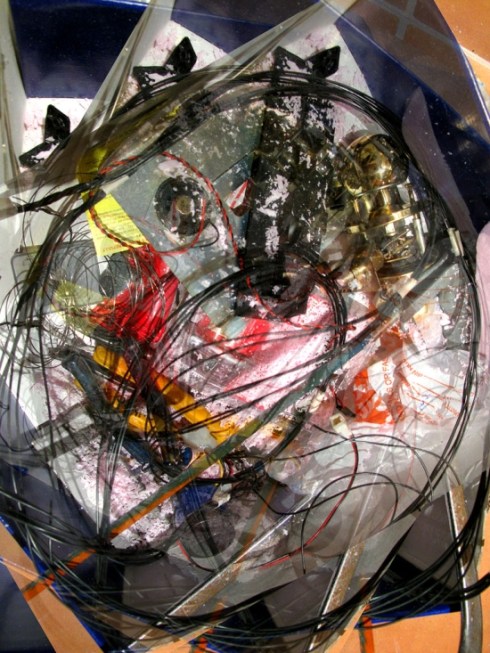
Orbit (doorknob), 2009. Digital colour photograph, Ed. 5. 134.5 x 101.5cm/ 53 x 40in. © Kristan Horton
Well, I guess this announcement saves me the review I was going to post … er, in a way. Kristan Horton has won the Grange Prize.
Earlier this week, I spent a couple of hours looking over the four shortlisted artists and watching the Grange Prize directed videos on youtube. I also had a listen to this slightly unsatisfying panel discussion among the artists.
Alongside Moyra Davey, Horton was my joint favourite. Josh Brand will make some important work with his photogram experiments but his time is yet to come. Leslie Hewitt‘s photography was not personal enough for me – her statements on history were far more expansive than Horton’s more personal musings about time. I think that subtle difference may endeared Horton to the voting public.
Oh, by the way, what should we think of a $50,000 prize for photography voted for entirely by the public?
Back to Horton. I dig his nervous energy, I dig the fact he’s not a “trained” photographer, and quite simply I like the composite-prints he has made of piles of stuff in his studio. I think they are nice objects.
What intrigued me about this prize was that the shortlisted artists were all gentle thinkers and their work was quite solitary. Maybe the humour in Horton’s sugar lump and popcorn models for Dr. Strangelove, Dr. Strangelove also swayed my preference?
All in all, the shortlisted works by the four artists were quite inaccessible required a lot of digestion (which, isn’t really a criticism). The videos and the audio also proved to me that sometimes artists are not the best people to speak about their work. They are so close they see and speak every nuance which can get in the way of immediate appreciation.
Sometimes objects can speak for themselves, which I think Horton’s do.

Left: According to photographer D.K. Langford, this is the Texas vehicle inspection sticker designed from his photograph. Right: This photograph is exhibit A in Langford’s suit vs. the Department of Public Safety and the Texas Department of Criminal Justice. (Source)
At last. I’ve been waiting for one of these legal disputes to have a prison angle! From the My San Antonio News:
“A photographer is suing the state over roughly 4.5 million vehicle inspection stickers that appear to incorporate, without his authorization, an image of a saddle-toting cowboy he created in 1984. Plaintiff David K. Langford wants the court to block the Department of Public Safety from further use or issuance of the stickers, the design of which he says is based on his copyrighted photo, Days End 2.”
“The stickers were produced by state prison inmates under a Texas Department of Criminal Justice (TDCJ) contract with the DPS. […] The suit says Langford’s photo was illegally appropriated by an inmate who scanned it from a copy of Texas Parks and Wildlife Magazine in 1998.” [My bolding.]
Langford, the photographer, seems quite tenacious here. He argues simply that the State of Texas should be more careful about how it sources its images.
I want to avoid the lazy joke about a prisoner “stealing”. It’s just a shame that when prisoners working for the Texas Correctional Industries which is, for some, a form of modern slave labor (I withhold comment), the products of their work are at the centre of a substantial lawsuit.
This story was brought to my attention by Bob, who says, “I guess Texas is always full of unintended ironies.”
The TDCJ refused to comment, and of course there’s no response from the prisoner. I would want to hear from the prison-artist who originally ripped Langford’s image. He ended up producing a nice piece of graphic design!
With 4.5 million stickers in circulation, the prisoner has quite the visible profile. There’s more of a story here. Texas journalists! Get on it.
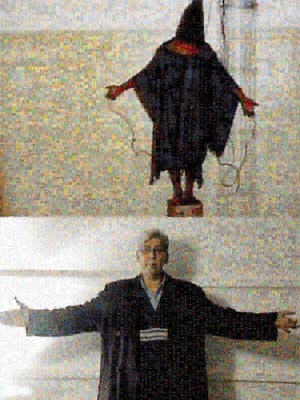
Joan Fontcuberta describes his work as “anti-authoritarian.” He is a self-taught artist and former journalist who has adopted the tricks and issues of media manipulation/propaganda into his work.
Fontcuberta’s Googlegrams are “large, colorful photo-mosaics that construct a metaphor for the internet-era’s liaisons between mass media and our collective consciousness. Using Google to blindly cull images from the internet by controlling only the search engine criteria, Fontcuberta then assembles them by another computer program into a larger photomosaic image of Fontcuberta’s choosing.” (Source)
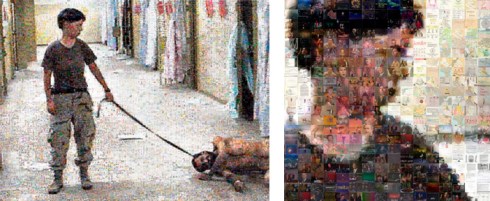
Fontcuberta’s an iconoclast, a philosopher and doesn’t trust the image. He encourages people to distrust, but ultimately recognises that people must believe: “people need information.” (Which may relate to the necessary reinsertion into – and commitment to – the image Joerg’s calling for.)
It’s all about healthy skepticism and filtering. He’s the furthest thing from a pessimist; he teaches photographic history and adores the medium. But he is not a sap.
Fontcuberta’s work deliberately fictionalises and questions. Jim Casper’s well-metred audio interview and VICE‘s interview flesh out his approach and motives.
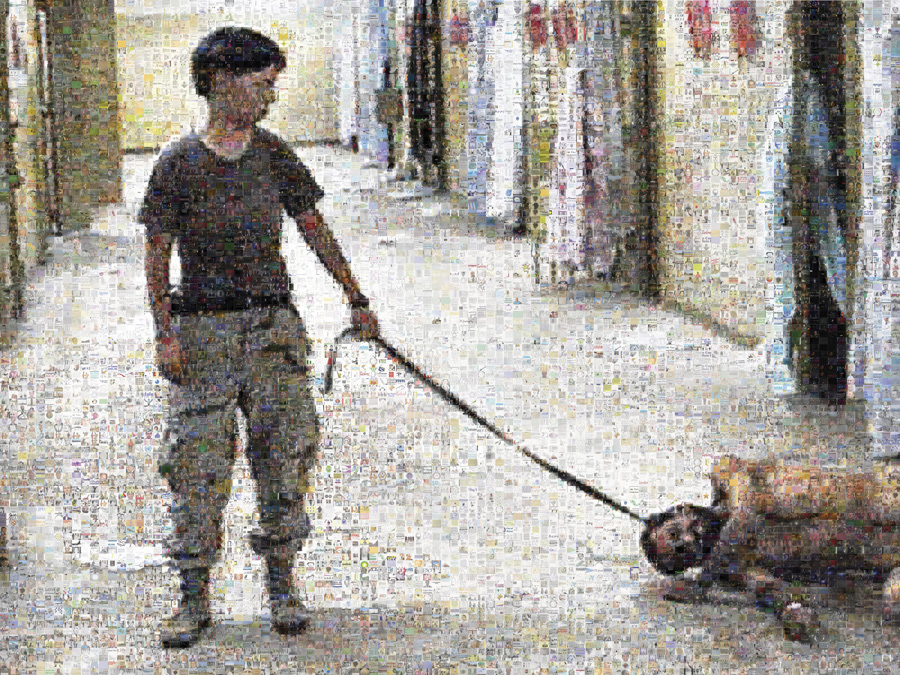
What I admire about Fontcuberta is that having abandoned the urge to fight against the crimes of photoshop, advertising and image politics, he plays them at their own game. His ideas are uninhibited; it doesn’t matter if the lost Japanese soldiers of WWII in the Philippines jungle that he went in search of exist or not. Fontcuberta puts the exploration of an idea before the pressure to produce an end product. “The look of my work is not important,” he says.
Fontcuberta is playful and really jolly. I’d love to see him take on a cryptozoology expedition!
BIO
Joan Fontcuberta was born in 1955 in Barcelona, where he continues to live and work. He has exhibited extensively at museums and galleries in the U.S., Europe, and Japan, and has been associated with Zabriskie Gallery since 1981. His work is in numerous institutions, including the New York Museum of Modern Art, the San Francisco Museum of Modern Art, and the Art Institute of Chicago. He contributes regularly to scholarly journals and has published many books, including Fauna, Sputnik and Miracles and Co.

 Prison Photography