
You are currently browsing petebrook’s articles.
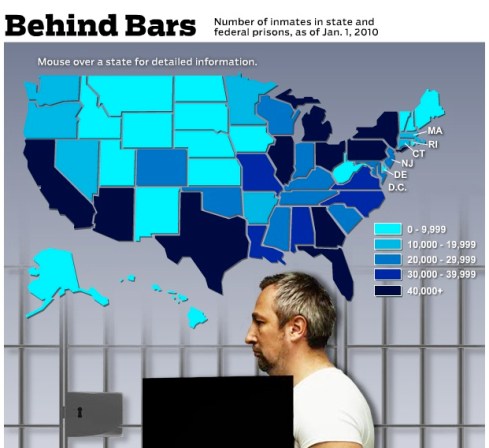
Now I know we all struggle to comprehend millions vs. billions for bail-outs, quarterly profits and deficits.
And I know we are all juggling gallons vs. barrels (US and UK measures) and official and industry estimates as the gushers spew out oil and gas in the Gulf of Mexico …
… but this next figure is simple and devastating. There are 2.3 million Americans in prison. That is more than 1 in every 100 adults. Think on that figure. Simple graphics such as this one by The Pew Center on the States make it easier.
– – –
Even among my close friends, the penny only dropped this week.
Kevin Carter committed suicide in 1994. The Manic Street Preachers made this in 1995. I saw them play it live in 1996.
Bit of a dodgy (dated) video, but sweet song. Feel the trumpet. And, then, watch them get shot down by a camera!

© Kevin Miyazaki
Last year, I met Kevin Miyazaki. I told him of my project at Prison Photography and he told me off his recent project Camp Home.
Before I deal specifically with Kevin’s personal project of insistent history, let me briefly set some context for thinking about photography as it relates to WWII Japanese internment. Kevin and I discussed the well known photographers who visited the internment camps in California – Clem Albers, Dorothea Lange and Ansel Adams.

“Richard Kobayashi, farmer with cabbages, Manzanar Relocation Center, California.” Ansel Adams, photographer. Photographic print, 1943. Reproduction numbers: LC-USZC4-5616 (color film copy transparency); LC-A35-4-M-31 (B&W film negative)
Adams’ was often criticised for his seemingly apolitical – almost bucolic – images of internees. The accusation was that Adams made the place look like a site of vacation and not of incarceration; this was a criticism I held too … until I met Kevin.
Kevin explained that Adams purposefully avoided depicting the internees as victims; Adams knew his (government-assigned) photographs would reach a large population, and into that population internees would eventually return. Adams’ intention was to protect, promote – even elevate – the dignity of his subjects.
One astonishing fact from this era, is that over two thirds of internees were American citizens.
Kevin and I also talked about Andrew Freeman, Mark Kirchner (both dealing with Manzanar) and the late and great Masumi Hayashi.

CAMP HOME
During WWII, at the age of thirteen, Miyazaki’s father was interned at Tule Lake in the Klamath Basin, CA, just shy of the Oregon border. Kevin work deals with the physical and domestic remains of that historical moment and movement:
“The barracks used to house Japanese and Japanese American internees were dispersed throughout the neighboring landscape following the war. Adapted into homes and outbuildings by returning veterans under a homesteading movement, many still stand on land surrounding the original camp site. In photographing these buildings, I explore family history, both my own and that of the current building owners – this is physical space where our unique American histories come together. Because photography was forbidden by internees, very few photographs of homelife were made by the families themselves. So my pictures act as evidence, though many years later, of a domestication rarely recorded during the initial life of the structures”, explains Miyazaki.
Well, I’d like to share with you a few Library of Congress images (1, 2, 3 & 4) I located on Flickr.

Japanese-American camp, war emergency evacuation, [Tule Lake Relocation Center, Newell, Calif. 1942 or 1943] 1 transparency : color. Collection: Library of Congress.
While looking at these Russell Lee attributed photographs consider these words about Miyazaki’s Camp Home by Karen Higa, Adjunct Senior Curator of Art at the Japanese American National Museum, wrote:
“President Franklin Roosevelt Delano Roosevelt ignored his own administration’s intelligence and in February 1942 issued Executive Order 9066, a presidential decree that paved the way for the largest mass movement of civilians in modern American history. Initially Japanese Americans were forbidden from living in western coastal regions; weeks later the US government began moving more that 110,000 civilians into temporary detention centers and finally to permanent camps. Over 700 government issued barracks were constructed o the dry lake bed at Tule Lake creating what amounted tot he largest population in a region of wind-swept sage brush.”
“The people that settled in Klamath after the war may not bear the specific responsibility of incarceration, but they share a generalized sense that something happened. their homes have a prior life worth recognizing.”

Japanese-American camp, war emergency evacuation, [Tule Lake Relocation Center, Newell, Calif. 1942 or 1943] 1 transparency : color. Original caption card speculated that this photo was part of a series taken by Russell Lee to document Japanese Americans in Malheur County, Ore. Re-identified as Tule Lake because of similarity to LC-USW36-789, which shows Abalone Mountain. Title from FSA or OWI agency caption. Photo shows eight women standing in front of a camp barber shop. Transfer from U.S. Office of War Information, 1944.

Japanese-American camp, war emergency evacuation, [Tule Lake Relocation Center, Newell, Calif. 1942 or 1943] 1 transparency : color. Original caption card speculated that this photo was part of a series taken by Russell Lee to document Japanese Americans in Malheur County, Ore. Re-identified as Tule Lake because of similarity to LC-USW36-789, which shows Abalone Mountain. Title from FSA or OWI agency caption. Photo shows eight women standing in front of a camp barber shop. Transfer from U.S. Office of War Information, 1944.

Japanese-American camp, war emergency evacuation, [Tule Lake Relocation Center, Newell, Calif. 1942 or 1943]. 1 transparency : color. Original caption card speculated that this photo was part of a series taken by Russell Lee to document Japanese Americans in Malheur County, Ore., and showed people transplanting celery. Re-identified as Tule Lake because of similarity to LC-USW36-789, which shows Abalone Mountain. Title from FSA or OWI agency caption. Transfer from U.S. Office of War Information, 1944. Repository: Library of Congress, Prints and Photographs Division, Washington, D.C. 20540 USA, hdl.loc.gov/loc.pnp/pp.print Part Of: Farm Security Administration – Office of War Information Collection 12002-55 (DLC) 93845501.
ELSEWHERES
It’s uncanny how the internet works sometimes. This image was the subject of some debate over at the Oregon State University Flickr Commons archive. Unsurprisingly, Kevin’s work was noted and praised there too.

KEVIN
As well as an excuse to wade through the various photographic approaches to Tule Lake internment camp, this post was to bring attention to Kevin’s ongoing contributions to the photo community. Kevin extends his teaching beyond his Milwaukee classroom and does us all a service by listing the interviews he serves up his class, on the class blog. Last week, Flak Photo called out for some more suggestions to the pile.
Kevin also launched collect.give last year which offers choice prints by respected photographers for prices no-one can quibble. All proceeds to good causes.
– – –
Kevin J. Miyazaki (b. 1966, USA) is a freelance editorial and fine art photographer based in Milwaukee, Wisconsin. He began his career on the staff of The Cincinnati Enquirer, and later became the photography director at Cincinnati Magazine. He went on to become the photographer at Milwaukee Magazine. His publication credits include, Time, Newsweek, Forbes, Fortune, National Geographic Traveler and numerous others. He is represented by Redux Pictures.

Gary King, Computer Technician, Disabled. “Over the last eight years, these two plates are the only family memories I have left. Only by the Grace of God have I been able to hang onto them. They’re hand painted. I believe that both of these plates were done by my dad’s mom. The one I especially wanted to hang onto was especially done for me. It was stolen when the storage unit got busted into.”
– – –
Daylight Magazine granted us sneak preview of Susan Mullally‘s upcoming book What I Keep: Photographs of the New Face of Homelessness and Poverty, by way of Elin o’Hara Slavick’s introduction.
o’Hara Slavick says:
“Susan Mullally’s unforgettable color photographs of people who gather together in their “Church under the Bridge of I-35″ make visible something we usually choose not to see. There is a young woman holding a photograph of her sweet baby girl with whom she cannot live because she does not have a place to live. There is a picture of an African-American woman holding her Junior High School diploma. This is the first time the woman has ever shown it to anyone. There is an unemployed carpenter who collects any stuffed animal that he finds so he can give them to the children he encounters during his homeless days.”
and,
“Mullally respects her subjects, many of whose lives are constantly disrupted by serious challenges such as homelessness, incarceration, drug addiction, alcoholism, mental illness and poverty. Mullally simply asks each person what he or she keeps and why it is valued and she makes a color photograph of them holding that object of subjective value.”
– – –
What I Keep: Photographs of the New Face of Homelessness and Poverty, Susan Mullally is published by Baylor University Press and due for release Summer, 2010

I plan to keep a close eye on Jason Lazarus‘ clever online plea for all those photographs that are simply ‘Too Hard To Keep’.
Lazarus pledges to collect vernacular photographs that – leaden with emotion – must be deaccessioned from personal albums. This project combines many of the cute attractions of informal photo exchange – web-based, cathartic, bittersweet, reusable, romantic in its view of photography and with a potential for serendipity.
If you’d like to be a contributor, Lazarus explains:
I have started an archive of photographs deemed “too hard to keep.” This may include photos or photo albums of:
ex’s, photos of deceased friends/family/pets, places/objects too hard to view again, etc. The reason you can’t live with the photo or photo album I do not need to know…
I am creating a repository for these images so that they may exist without being destroyed. You may dictate whether the images you submit to the archive are:
- images not to be shown again, or
- images that may be exhibited in the future with other submissions to the archive.
If needed, I can pay shipping costs to send any photos to the repository in Chicago.
Jason Lazarus
810 n Wood, 3f
Chicago, IL 60622
I am happy to answer any questions and hope this project helps you part with something in a more graceful manner.
Last Thursday, from two blogs of consistent quality, my Google Reader threw up these two images in quick succession.

© Pedro Ramos
Source: TooMuchChocolate. Jackson Eaton interviews Pedro Ramos.
The body of an American paratrooper killed in action in the jungle near the Cambodian border is raised up to an evacuation helicopter in War Zone C, Vietnam, in 1966. © AP Photo/Henri Huet
Source: The Online Photographer. Random Excellence: Henri Huet
– – – – –
View the Prison Photography archive of Convergences.

LEFT: Henry Montgomery, who has served 23 years in prison for homicide, serves the ball during a match at San Quentin State Prison. RIGHT: Guards stand watch over inmates in San Quentin’s recreational yard, which now includes a tennis court. © Rick Loomis LA Times
TENNIS AND THE CALIFORNIA DEPARTMENT OF CORRECTIONS
Last year, whilst featuring photo essays (here & here) on the San Quentin Giants baseball team, the photographer Emiliano Granado mentioned seeing tennis matches.
San Quentin sits on a Marin County promontory; every day, in the surrounding well-heeled communities deuce and lemonade are being served, but it was a stretch even for my imagination to envision games, sets and matches playing out inside those walls.
Kurt Streeter – for the Los Angeles Times – went to San Quentin to play a match and profile Don DeNevi, San Quentin’s 72 year old recreation director. DeNevi is largely responsible for the construction of the prison’s tennis court. Read Tennis is serious sport in San Quentin Prison.
THE PHOTOGRAPHS
Rick Loomis created a photo essay Tennis Inside the Walls of San Quentin of his own; the two works of journalism are a nice compliment.

LEFT: Henry Montgomery, 43, center, laughs with other inmates during a break in play. RIGHT: Raphael Calix watches the activity on one of the blocks at San Quentin. Calix is a regular on the tennis court. © Rick Loomis/Los Angeles Times
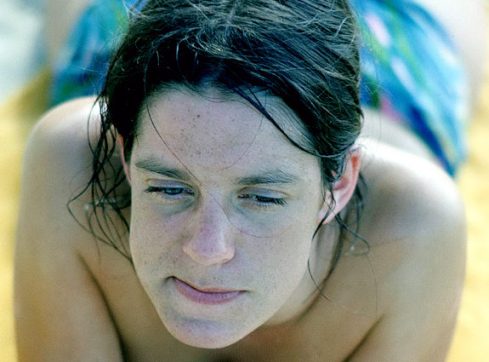
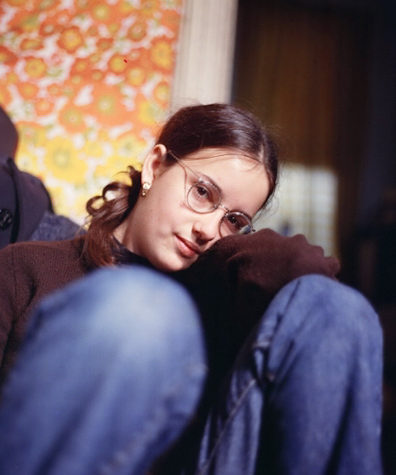
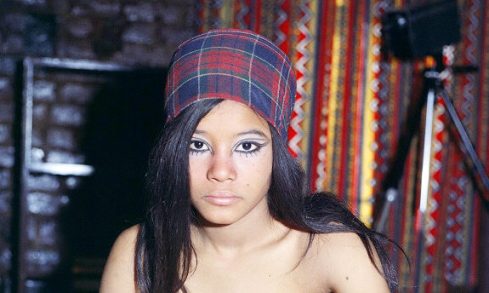
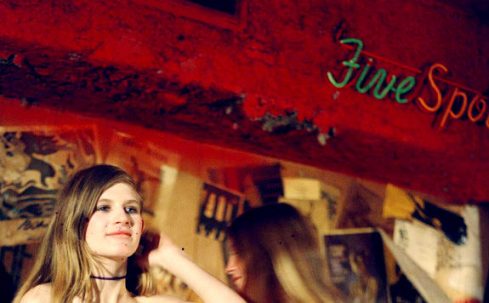
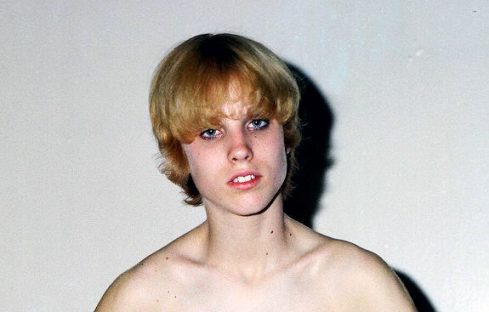
The NYPD has released 215 photographs taken by convicted serial killer Rodney Alcala in an attempt to secure identifications and restart cold case inquiries.
Alcala was recently sentenced to death for three murders in California in the late seventies. In the early seventies, Alcala lived intermittently in New York; some of the photographs found in his storage upon his arrest are thought to be from his time in New York
“They should be in every newspaper, on TV and on the Internet,” Sheila Weller, cousin of victim Ellen Hover, said before the NYPD decided to release the pictures.
RESPONSE
The collection is one of the most discomfiting things I’ve been audience to. To look at these photographs is to ready oneself the very limited likelihood of recognizing someone. It is a very grave and uneasy type of involvement with the image and the serious context by which it has come to be viewed.
Usually, personal portraits have their story shared and history mutually written, but – in viewing these previously unknown images of unknown persons – the viewer potentially writes the story’s end.
The public release has already yielded results:
The photos were kept quiet until Alcala was sentenced to death last month. “We needed an unbiased jury,” said retired Huntington Beach Detective Steve Mack.
Last month, Huntington County cops posted 137 of the less graphic pictures online. So far, 21 have been identified, often by the women themselves.
Four families of missing women say they recognized their loved ones, but police have not yet been able to confirm a link.
Most of the photos sent to the NYPD were not among those posted online. They include details that suggest they were taken in New York, sources said.



Found via Elizabeth Avedon
– – – –
NY Daily News coverage
NYPD not releasing pictures taken by sicko serial killer Rodney Alcala of possible victims (April 20th, 2010)
NYPD releases serial killer Rodney Alcala’s photos of women — seeks public’s help in ID’ing them (April 21st, 2010)
Gallery: NYPD seeks clues from photos taken by serial killer Rodney Alcala (April 21st, 2010)

 Prison Photography