
You are currently browsing the category archive for the ‘Activist Art’ category.
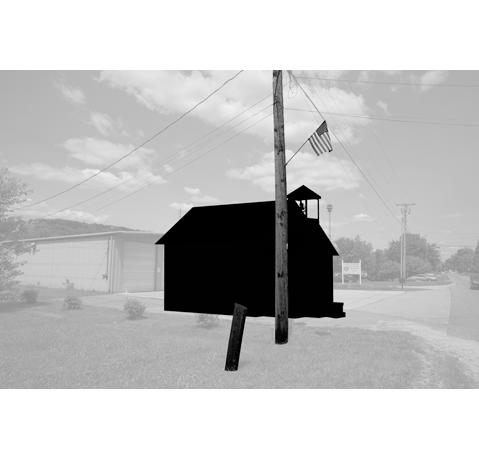
Happy Birthday America.
Precisely because “The Land of the Free” is a term now inseparable from rhetoric and politicking from any and all quarters, I’ll keep this brief.
America, like every nation on this earth, is and continues to be a work in progress. “Freedom” is a relative term, and if photographers in America do some things well, one of them is to remind us that by law (until very recently) some were freer than others.
I am always happy to promote socially-conscious photography that deals with racial injustices of the past and our need to address those injustices still. Furthermore, there are many good photographers who are working on inequalities today, based not in law, but in attitudes. Again, we are all works in progress, right?
WENDEL WHITE
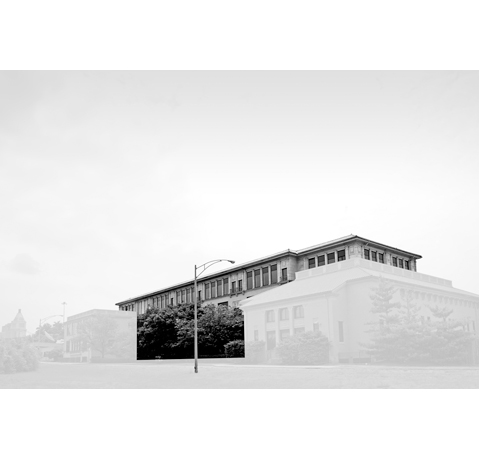
Wendel White‘s Schools For The Colored depicts the landscape and architecture of historically segregated schools in northern states.

ONE BIG SELF
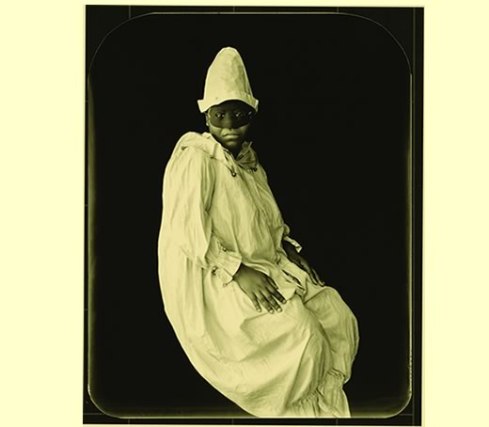
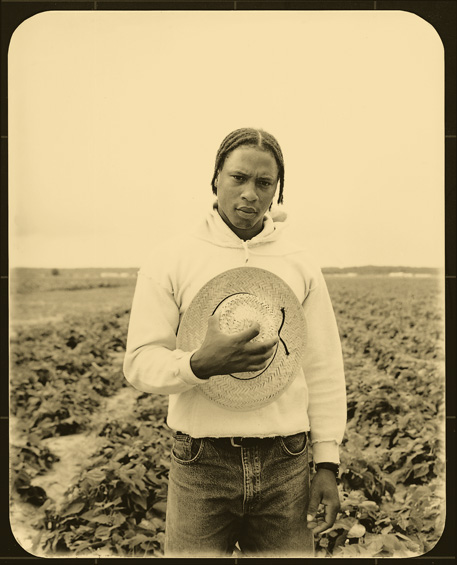
I have told many people in person that Deborah Luster’s One Big Self is the most impressive prison photography endeavour to date. I have been slow to state as such on this forum because the scope, details and inspiration of the project are so overwhelming.
Every portrait deserves an essay, but that obviously is not possible. Rather than delay any further, my aim here is to present many of Luster’s portraits, describe the bare facts, and provide some further resources to understand the work.
THE FACTS
Completed between 1998 and 2003.
Portraits taken in many different prisons – mens and womens facilities; minimum to maximum security throughout Louisiana; and with different levels of supervision.
Tens of thousands of portraits taken.
Luster estimates she gave away 25,000 portraits to prisoners over the course of the project.
Luster worked fast – 10 to 15 portraits per hour. At a point working in sheer volume became the only reasonable way to respond to the size of the prison population with which she was engaged.


BACKSTORY
Luster got involved in this longitudinal study through a chance request. Luster’s emotional standing at the time of beginning was – is – atypical and unexpected.
Luster’s mother was murdered in 1988; “Although I was interested in photography prior to that time, I didn’t study or practice it. I began photographing in response to her murder.”
Luster did not deliberately go in search of the subject. In 1998, she was driving near Lake Providence, Louisiana when she came upon East Carroll State Prison Farm. She literally knocked on the front gate. There and then Warden Dixon gave her sanction to begin the endeavour.



VIDEO & AUDIO
SFMoMA has done us a great service in recording and publishing the following video shorts.
In four videos, Luster describes the ORIGINS of the project, elements of ACCIDENTAL PERFORMANCE, printing on ALUMINIUM PLATES, and comments on INDIVIDUAL WORKS.
Remarkable tales.


RESOURCES
Deborah Luster is represented by Catherine Edelman Gallery, who present the best online selection of her portraits.
Good background information is provided by Doug McCash of the New Orleans Times Picayune; David Winton Bell Gallery at Brown; and Grace Glueck of the New York Times.
In 2000, One Big Self was exhibited at the Center for Documentary Studies at Duke, providing an overview and gallery of the project.
INTERVIEW
The best in-print interview with Luster is included in recent publication, PRISON/CULTURE (City Lights), which I reviewed two months ago.
THE BOOK: ONE BIG SELF
The book is at a premium now and you’ll struggle to find it for under a $100. It is published by Twin Palm Press.

IMAGE/WORDS
Luster collaborated with writer/poet C.D. Wright. Luster’s images and Wright’s poetry are a great complement to one another. Listen to Wright read her poetry from the project.
A PROJECT ONGOING
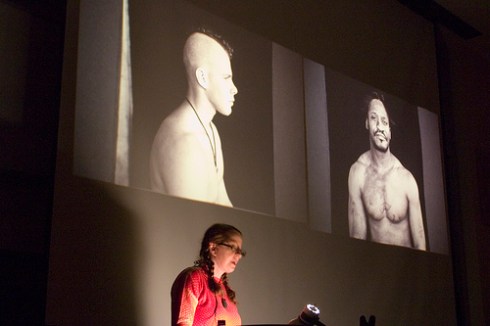
Despite the passage of seven years since the projects official closure, Luster’s career continues to be defined by her ground-breaking, genre-defining project. Her lectures are vital in that she describes the many facets of the project – from security arrangements, to gear (she generally worked with digital), to processing (she made use of tintype imitation technique printing onto small metal sheets), to the specifics of exhibition.
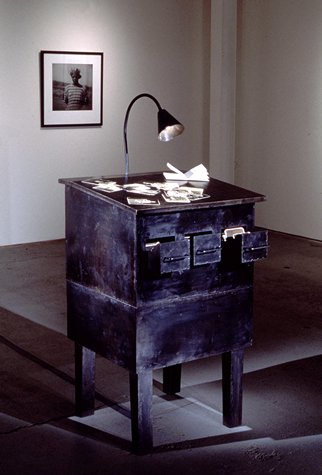
The image below shows a steel cabinet and lamp (containing 288 silver-emulsion aluminum plates) as it was displayed at the San Francisco Museum of Modern Art and other institutions. Luster wanted to create a tangible viewing experience in which the audience were required to handle the archive of human life in the same way the state of Louisiana organised and disciplined the bodies under its supervision.
In the video (below) Luster talks us through the senses and noises of the exhibit design.

In October of last year, when I posted on Jane Evelyn Atwood‘s documentary work from women’s prisons across the globe, the pictures and the message were well received.
Better still, is to listen to Atwood discuss the her photography and its lessons for us all. Her common observation across all women’s prisons is women are very often incarcerated because of the men in their life. They are abused, pimped into prostitution, inducted into crime, manipulated emotionally, and backed into corners – from which retaliatory violence is their only remaining option.
Persevere through the irritating, news-studio interview formula and you’ll be rewarded with Atwood’s insight.
Atwood is currently campaigning on behalf of Gaile Owens, the only woman on death row in Tennessee. During the original trial Owens did not testify to the full degree of the domestic abuse she suffered; she wanted to protect her children from the truth. The result was the absense of mitigating circumstances during consideration of the verdict.
Owens’ execution date has been set for September 18th, 2010. A movement is underway to see her death sentence commuted to life without parole. Visit http://www.friendsofgaile.com/ for all the information on the case and the opportunity to sign a petition.
Atwood is emotionally submerged in her work, close to her subjects. Any distinction between photographer and subject maybe unwanted; “Gaile is a battered woman on death row. And she needs our support.” This statement, as with Atwood’s work, goes to the heart of the most urgent advocacy – that which is motivated by empathy and kinship.
Watch Atwood’s France24 TV interview.


I just received an exquisite collection of prints by the Just Seeds Collective in celebration of Critical Resistance’s 10th anniversary (which was in 2008).
So stoked.


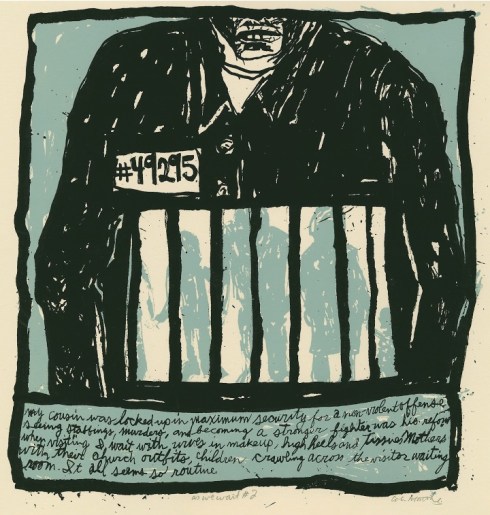
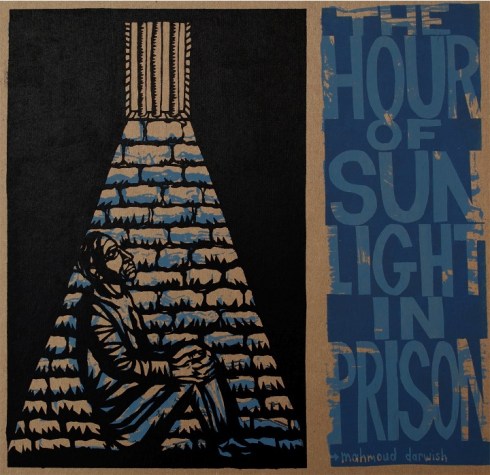
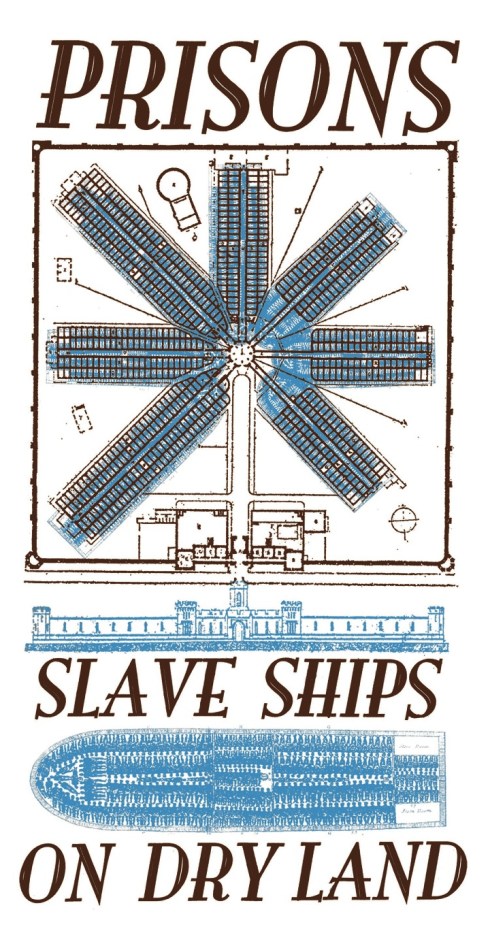
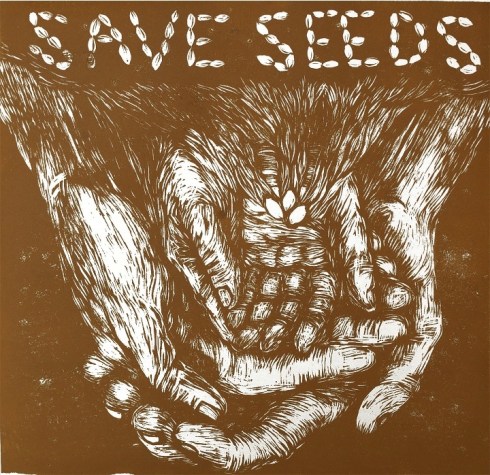
Artists (from top to bottom): Alec Icky Dunn; Lydia Crumbley; Jesse Purcell; Colin Matthes; Erik Ruin; Andalusia Knoll; and Meredith Stern.
From CONTACT blog:
James Mackay‘s project ‘Even Though I’m Free I am Not’ is a confrontational investigation into Burma’s political prisoners. Travelling across the globe, Mackay documents Burma’s former political prisoners.
Visit CONTACT for an interview with James about the project.
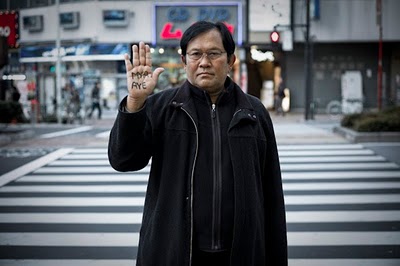
Dr Aye Chan, Insein Prison, Tharawaddy Prison, 7 years © James Mackay
UPDATE: Matt emailed me to let me know of the second chapter in this story. View it here.
THE ROMA

A young man in the Stara Gazela camp. © Matt Lutton
Friend Matt Lutton has presented words and images in the latest Lens Culture (Issue #26). His story is about the destruction of a settlement in Belgrade and the subsequent relocation of the Roma inhabitants.
I know that Matt has been working on this story for a long time and it matters very much to him. In September of last year, Matt put together a small edit of the work with a caveat that he was still working through the project. Matt recommended this local Serbian article for background on the issue.
Matt’s words:
Gazela was an isolated community of over 200 Roma families living abjectly difficult lives under the Gazela road bridge in Belgrade, Serbia. They made their living from the recycling of metals and refuse, and the landscape around their homes was filled with toxic mounds of rotting waste. It was a ghetto split on the banks of one of the region’s most important rivers and on premium real estate eyed by the elites. This photo story begins with the community living under the bridge before its destruction and partial relocation on August 31, 2009.
The people living there, depending on their legal status, would either be given a new container to live in on the outskirts of the city, free transport back to their villages or if they had no papers, an unceremonious trip to the curb and likely a home in another improvised camp.

A girl runs through smoke near a suspected arson in an abandoned home in Nova Gazela, a camp on the New Belgrade side of the Sava River. The fire happened on the day before the relocation and destruction of the settlement. © Matt Lutton
Matt’s task, if he is to compete with other storytellers is tough. The Roma people exist across Europe and have fascinated generations of photographers. The bar was set high by Josef Koudelka upon the 1975 publication of Gypsies.
ROMA ACROSS NATIONS
In recent years, Carlo Gianferro‘s Roma Interiors showed us wealthy Roma residences.
Over seven years, Danish photographer, Joakim Eskildsen, traveled with writer, Cia Rinne, through seven Roma countries (Hungary, India, Greece, Romania, France, Russia, and Finland). Resulting in the book, The Roma Journeys. (Elizabeth Avedon write up).
Amanda Rivkin travelled to Slovakia to photograph Roma theatre productions.
Hungarian, Zsuzsanna Ardó, photographed the Roma travellers in her home country. (Video, via The Rights Exposure)
Similarly to Matt, Sanja Knezevic documented Roma people in Belgrade.
Marco Baroncini (whose work I’ve noted before) photographed the Roma in Italian capital Rome. Most of the 15,000 Roma are immigrants from the Balkans. This work impressed James Estrin and thus received Lens blog exposure.
Most recently, some Roma youth have taken up cameras empowering themselves to self-representat. Greg Ruffing gave a very good summary of the Chacipe Project:
“One project in particular this year has really intrigued me — Chacipe: An Exploration of Roma Images and Identity, which features selected images from the Chacipe Youth Photography Contest. The contest was organized by OSI’s Roma Initiatives and the Open Society Archives as part of the Decade of Roma Inclusion 2005-2015, an international initiative to bring together governments, NGOs and Roma civil society to work towards improving the welfare of Roma communities.”
CONCLUSIONS
If you are Matt, flourish in this rich photographic heritage. If you are not Matt, follow his work!
Carlan Tapp‘s project on the TVA Coal Ash Spill, December 2008, featured on BURN April, 2009. Click below.

THE COAL WAR

The Coal War, a “documentary about hope, change, and one unstoppable grandmother”, is looking for funding.
Chad Stevens heads a team of familiar names.
QUESTION OF POWER

Carlan Tapp’s Question of Power project began in 2005. It delivers photographic essays and “the voices of individuals, families, and communities affected by the mining, processing, burning, and storage of waste materials created by coal for the generation of electricity in America”.
MINING ON NATIVE AMERICAN LANDS
“Carlan is a descendant of the Wicocomico Tribe, Taptico family. His strong belief and respect for the earth and all creatures is the continual theme in his work.”
Carlan’s documentation of the mining activities and environmental destruction on Navajo land is startling. I particularly advise viewing the 42 images and captions of Coal Production. Mining kicks up toxic dust, pollutes the earth and water, causes respiratory problems in the local population and causes structural weakness in homes.
As a point of comparison, watch Aaron Huey’s TEDxDU presentation. Huey’s talk about the broken treaties, chronic poverty and human rights abuses wrought upon the Lakota people of Pine Ridge in the Black Hills area of South Dakota (a place he describes as “ground zero for Native issues in the US”) was well received – largely due to the fact he passionately presented a history we rarely hear. It is likely the legal and environmental rights of the Native Americans in Tapp’s coverage are under attack by similar forces.
Especially in light of the Gulf of Mexico disaster, we must ask the same questions of coal, oil and all non-renewables with regard our own consumption habits.
Carlan blogs here. He has been on the Gulf Coast since last month. Good write up by Elizabeth Avedon.

 Prison Photography