
You are currently browsing the category archive for the ‘Activist Art’ category.
How often when a teenager does something totally awesome does it get acknowledged? Not often enough?
This is awesome.
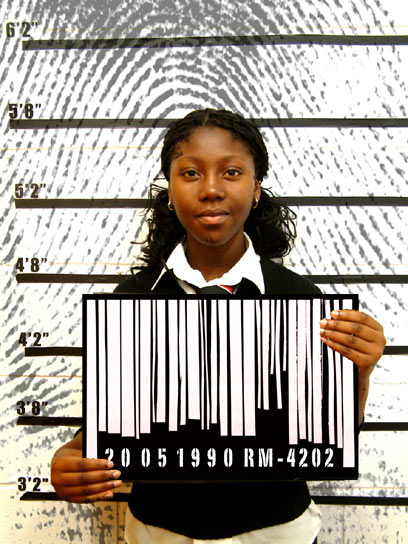
"Prison" by Siever Karim, 2005. As part of the Image & Identity Young People’s Conference at the V&A.
Siever’s Statement:
‘My ideas were based on conformity, and the suppression of cultures and personal individuality by being a number, wearing a uniform, being trapped in the cages of the social machine. I created my own police height chart and got my classmates to stand in front of it. I also made digital barcodes to symbolise the gathering of information which can be accessed so easily today.’
Image & Identity Artwork Project, Victoria & Albert Museum, 2006
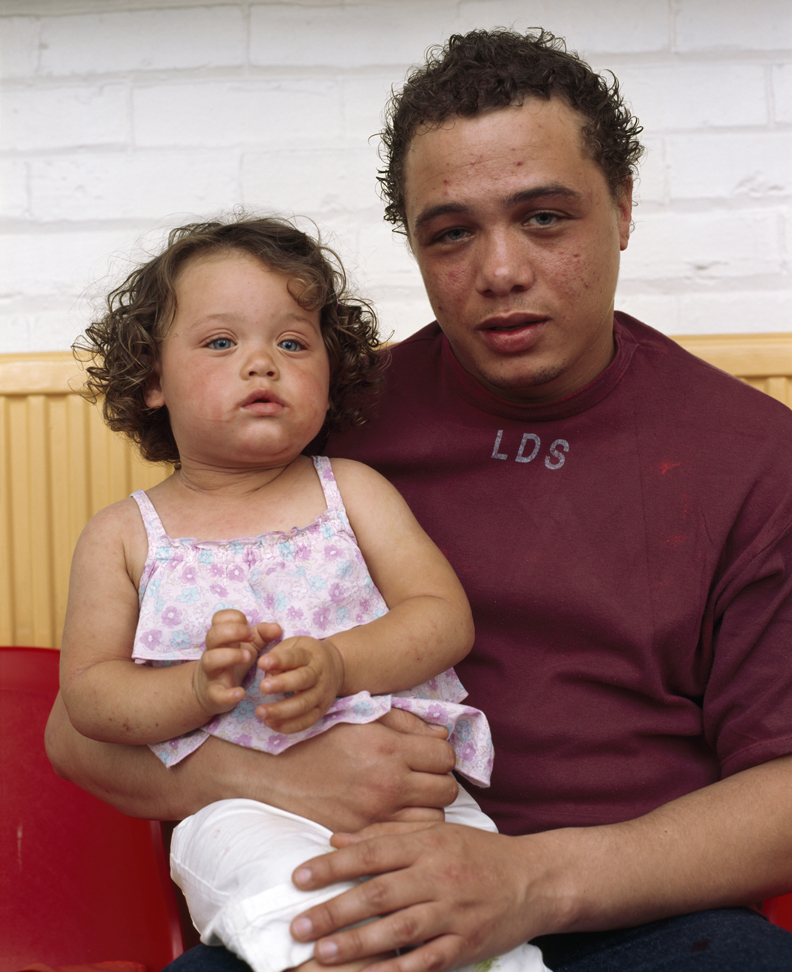
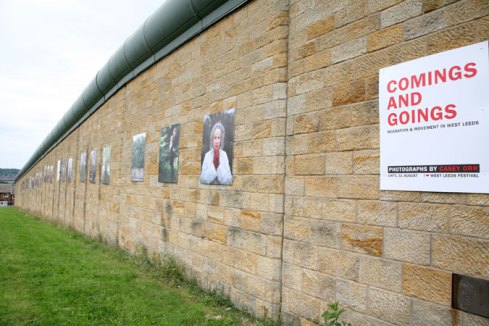
Casey Orr‘s Comings & Goings is an inquiry into movements and migration. Comings & Goings is a photographic series in three parts. Families considers the prisoners and their loved ones at Her Majesty’s Prison Leeds, UK.
Caged Birds depict the imported pigeons and parrots and parakeets of West Yorkshire, while Migrant Women portrays the recent newcomers to Orr’s county.
Orr insists the three parts be considered together – they are a whole, cannot be separated, and toy with the idea of interconnectedness Orr has grappled with throughout her career.
Comings & Goings proposes that foreign and indigenous are not so far apart. As Orr puts it we all share “a desire to be free, an instinct to nest, to seed, to move and be alive”.
Orr’s work requires time and care to navigate – it is as delicate as it is pioneering. Prints from all three parts were displayed was on the outside walls of HMP Leeds. It was the first time the wall of a UK prison has been used as a gallery space.
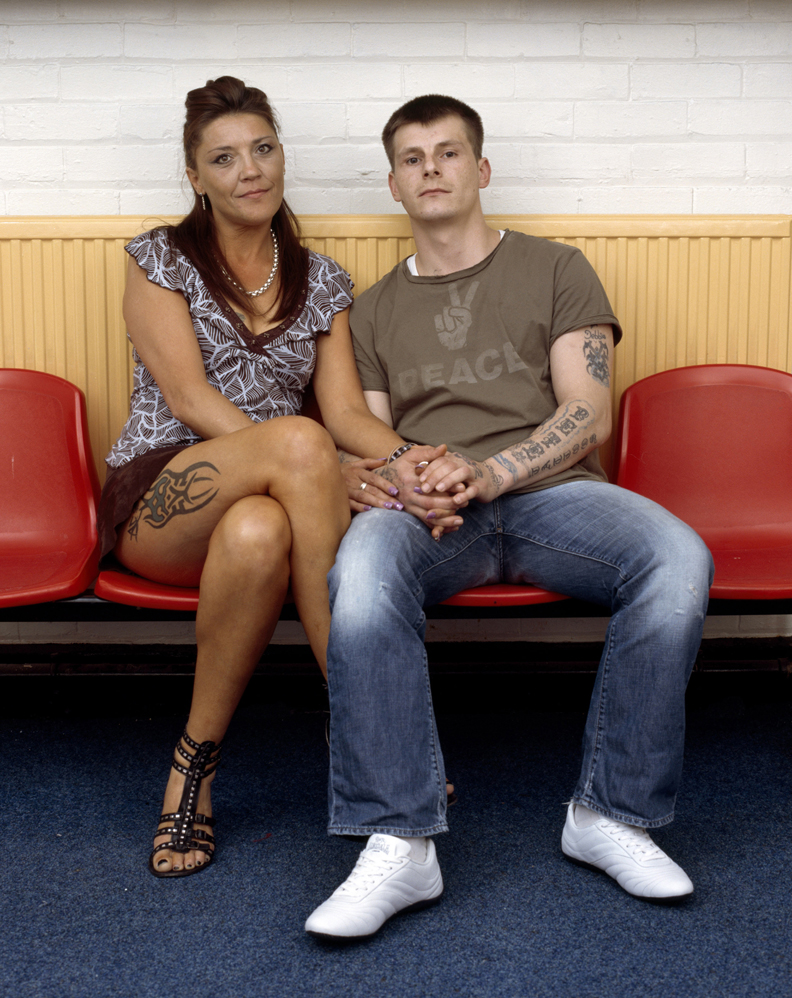
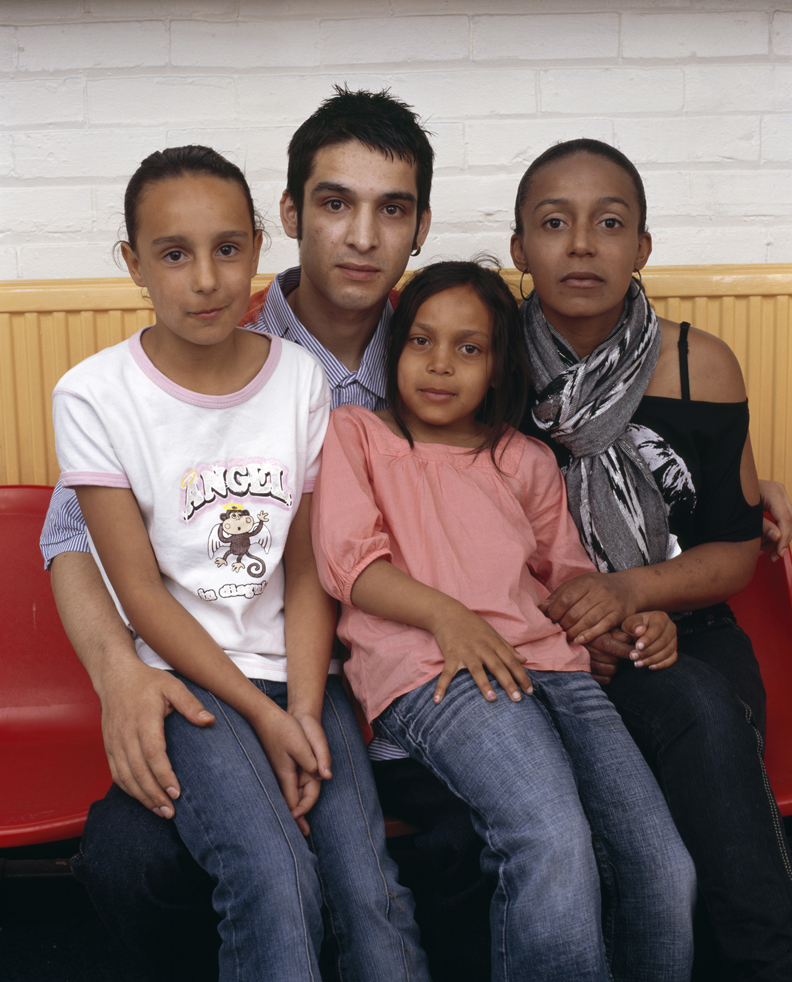
I wanted to know a bit more and so emailed Casey.
Q & A
Why did you decide to incorporate H.M.P Leeds into your Comings and Goings project? Was it the subject or the challenge of working within a prison or a mixture of the two?
My photographic work makes connections to my community and to my experience of living here in Armley, Leeds. My interest in the prison came from other projects I’ve done here. I’m always looking for the connection between the things and people I photograph, the systems that operate and seem to run through everything.
The town of Armley is very much built from the systems of power that came through the Industrial Revolution; Armley Mills, once the largest mill in the world, is now the Leeds Industrial Museum; the Leeds Liverpool Canal is now used for leisure; and the incoming migrant communities are moving from their countries for very contemporary reasons, the jobs available to them (and everyone else in Leeds) having much more to do with information technology than agriculture or textiles.
Within all of this movement, stands HMP Leeds, known locally as Armley Jail. It sits on a hill, built in 1847, so that workers in the surrounding mills could be reminded of what would happen if they stepped out of line. The prison (along with a massive, imposing Victorian church) is one of the few buildings around here still used for its original purpose.
The systems of power associated with the panopticon are still firmly in use in the prison. The prison walls, inside my community, seem to be impenetrable, and enclose a community of thousands of prisoners and workers. My interest was in the walls and how to find the connection into the prison, how to link the people inside with all of the flows of life going on outside.
I found that connection through families, through children. Hundreds of families visit their fathers, sons and brothers every week. The families and loved ones are a direct link with the communities outside. I wanted to exhibit the family portraits on the outside walls of the prison because the prison walls are such a architectural staple of this community they can become invisible, people can forget about them and the people behind them. The exhibition was shown on the interior walls as well so that the people inside were seeing the same thing, the same ideas were being shared; walls penetrated by ideas, and by art.

What negotiations did you go through to gain access? Who did you meet? How did it come about?
As a documentary photographer, very little of my time is actually taking pictures, mostly I am trying to gain access to people and places. Before contacting the prison direct I talked to many people in this community and finally went to the Jigsaw Project, the family support unit. From there I met many of the workers who support the families. They were sympathetic to my ideas and introduced me to the Head of Security. From there I met the Governor. All of this took many months. The work, finally shown on the walls as a public art installation as part of the West Leeds Arts Festival in 2009, went through many security checks.
How many times did you go to the visiting room to make the portraits?
I spent a few months in the visitors centre, talking to families, and asking who would like to be a part of the project. Obviously, I got to know them better than the prisoners who I met briefly during the sessions. I spent four days in total in the visiting room.
How did the prisoners and staff respond to your project?
Most people were really supportive of the idea. the thing about photography is that it has uses on many different levels. So this record of families I wanted to make could also be a part of their personal family archive. The fact that I’m able to give something back to people, something useful, like a family portrait, makes me feel better about the fact that I’m asking so much of people, to use their image for one of my ideas. Everyone involved received copies of whichever pictures they wanted from the sessions.
Has your work dealt with systems of detention in the past?
No, my work is about systems of power, photography being very much implicated in that, in the recording and filing of people. So the prison system is always implicated in that, as are all currents of capitalist power.
What’s next?
I’m just completing a book about Comings & Goings and another body of work following the traces of an age old ritual lingering in the English festivity of Bonfire Night.


BIO
Casey Orr (b.1968) is originally from Pennsylvania. She has lived in England for 14 years working as a freelance photographer and Senior Lecturer at Leeds Metropolitan University.Clients include Diva Magazine, Channel 4, EMI Records, Universal Records and Sports Council England. Orr has exhibited at the University of The Arts, Philadelphia, Pa. and Jen Bekman Gallery in New York. She is the recipient of an Arts Council England grant.
Read more about Orr’s exhibition at HMP Leeds in Armley at the Guardian.
I have talked in the past about the politicisation of immigrants, their reduction to visual cliche and indeed there is a lot more to be said on Tent City, Maricopa, AZ particularly.
I even began this blog way-back-when with musings on physical & psychological borders and unseen landscapes that define flux, unknowns and action.
AIDING IMMIGRANT PASSAGE: The Transborder Immigrant Tool
I just received an email from Bryan Finoki about some unpleasant political muscling down in San Diego.
I am proud to support Ricardo Dominguez and to add my signature to the petition to save Professor Dominguez’s tenure:
Target: UC President Mark Yudof, UCSD Chancellor Marye Anne Fox, UCSD SVC Paul Drake
Sponsored by: UC Multi-Campus Research Group in Internationalism and Performance
Ricardo Dominguez (Associate Professor, Visual Arts, UCSD) is currently being threatened with criminal action and the revocation of his tenure by UCOP and several UCSD senior administrators. This is a long, rapidly-developing story. Time is of the essence. Please sign now!
UC Office of the President has reportedly been upset over Ricardo’s involvement in the Transborder Immigrant Tool – these are recycled cell phones loaded with software that points border-crossers to caches of fresh water in the desert, obviously saving lives. It’s a controversial project, to say the least; and Ricardo has received death threats from people in the SD community and beyond. The project was picked up by the national and international presses, and CNN named Ricardo one of its “Most Interesting People” of 2009 because of the project. Several Republican congressmen also recently sent a letter to UCSD demanding that the project be ceased and Ricardo be censured. In response to this, the university has been scrambling to find a way to shut it down. Importantly: the project has been included in every one of Ricardo’s professional reviews over the last few years, all of which have gone successfully (and have been signed off on by this very SVC); in addition, the project has been FUNDED by UCSD (and yet again, signed off on by this SVC). Now that the controversy has gotten attention in DC, they’re reversing course.
More recently, as part of the March 4 actions, Ricardo’s bang.lab created a virtual sit-in on the UCOP web site. A virtual sit-in works in this way: participants go to a specified web page, which continuously “refreshes” connections to the target web page (in this case, ucop.edu). This obviously increases traffic to that site — much like a live sit-in at a specified locale — with the potential effect of making it too busy to accept new incoming connections. It is similar, in form, to what’s called a “Distributed Denial of Service Attack” (DDOS). There are several critical difference between a virtual sit-in and a DDOS: a DDOS is prolonged and unending, used by various governmental groups to censor a wide variety of free speech groups, activist groups, etc, and non-transparent (the creators of the DDOS set up virtual robots to blast a given site with millions of hits, and hide the creators behind various firewalls and filters. A virtual sit-in is open, does not use such “robots,” and the creators are identified freely).
SIGN THE PETITION
Please sign the petition below to protect academic freedom and tenure from politically-motivated attacks.
http://www.thepetitionsite.com/1/stop-the-de-tenuring-of-ricardo-dominguez
THE RESEARCH
Click on the sheet below for a larger version.


Etching from Goya’s series “The Disasters of War:”
Lebbeus Woods posted some interesting thoughts today about Francisco Goya’s meditations on war.
My reading and interpretation of Woods’ words is based on the presumption that photography is the visual “raw material” of a war and art can be something distinctly different – as Woods argues something more transformative and powerful. I am knowingly playing devil’s advocate.
Woods:
“Instead of creating propagandistic art, extolling glorious military heroism, Goya focused on the atrocities of the armies, committed against ordinary people. He knew that when soldiers get into a killing craze, they murder and rape indiscriminately, often just for the hell of it.
If there were an Iraqi or Afghan Goya working today, he or she would not make journalistic photos of the slaughter of people who just happen to be there, but would draw and paint it, becoming selective, ‘aestheticizing’ the atrocities, in order to elevate them to a serious level of reflection.
The artist does not merely present us with raw material, which is always difficult to confront and understand—indeed, it is easier to dismiss it with only a shudder—but instead creates indelible images, which cannot be gotten out of the mind.”
It seems to me that Woods’ may have a point – that general publics may be turned off to the photojournalist product and more shocked when the depicted horror has come from the end of paint brush or lithography set, and thus by the way of a fellow human’s imagination.
What says you?

Jake and Dinos Chapman, 'Disasters of War' (1993)
Incidentally, a couple of friends and I went to see Goya’s Disasters of War etchings exhibited alongside Jake and Dinos Chapman’s sculptures of homage of the same title. It was simple … and singularly the best art exhibit I’ve seen in a long time.

Armed police barricaded the gates of Drik Gallery to prevent the exhibition Crossfire, organisers opened the exhibition on the streets outside of the Drik Gallery. March 22, 2010. © Saikat Majumder/DrikNews/Majority World
Since the March 23rd censure and closure of Shahidul Alam’s exhibition at the Drik Gallery by Bangladeshi police, events have been well reported and BLOGGED!
Robert Godden who writes the The Rights Exposure Project blog looked forward to the exhibition but warned it may face closure. David Campbell noted Rob’s foresight with his post ‘Crossfire’ censored – the power of documentary photography (cross-posted on A Developing Story blog)
LENS Blog followed up its preview by catching a soundbite of Alam‘s and reflecting his pride in the mobilisation of protestors:
“It really has galvanized public opinion. People were angry and ready — they just needed a catalyst. The exhibit has become in a sense iconic of the resistance.”
Peter Marshall has been as diligent as ever with two posts – Crossfire and More on Crossfire
100Eyes also had the scoop with a large image of the human chains an d protestors. Robert Godden returned to the issue highlighting the very serious issue of Death threats issued to organisers. Eyeteeth (a new favourite of mine) also followed the shut-down.
Of course, if you only have time for one source it should be Shahidul Alam’s own blog, to which two posts have been posted – firstly, Siege of Drik Gallery and secondly Drik: Photo power.
– – –
What’s my point? My point is that if we bloggers are to be be labelled prairie dogs (here and here), perhaps we should be noted for our hard work, solidarity and a long gaze that goes further than the end of a trustee’s vault?
“We never sat down, as far as I know, and came up with a grand strategy. Everything was very reactive. That’s how you get to a situation where you pick people up, send them into a netherworld and don’t say, ‘What are we going to do with them afterwards?’ “
Former senior US intelligence officer. (Source)

Mihail Kogalniceanu air base. Romania. @ 44.36043300, 28.49149700
Since 2001, the US has operated a program of rendition, illegal torture and operated a network of secret prisons and CIA “Black Sites”.
Men captured as part of the Bush and Obama administrations’ program were are interrogated, physically & psychologically beaten and denied human rights.
Images of these secret prisons are not common, but I’ve peppered this piece with a few just for the sake of the exercise.
At the top of this article is Mihail Kogalniceanu air base, Romania. It was used for “high-level” detainees from as early as 2005. Beneath is Kiejkuty Stare an illegal CIA prison just 20 miles away from Szymany airport, Poland. (source) It was used as early as 2005 and its function was confirmed in 2007. (source)
Khalid Sheikh Mohammed, “the mastermind of 9/11”, claims he was submitted to waterboarding 183 times over a one-month period. New evidence suggests he was interrogated in Poland. (More from Der Spiegel here and here).

Kiejkuty Stare
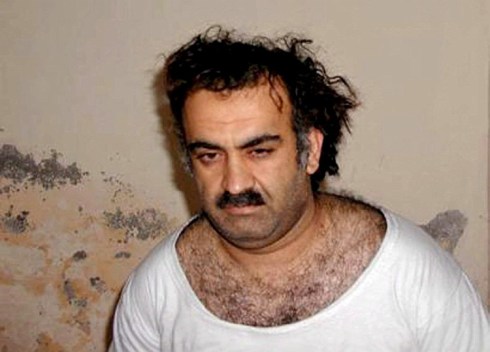
Khalid Shiekh Mohammed
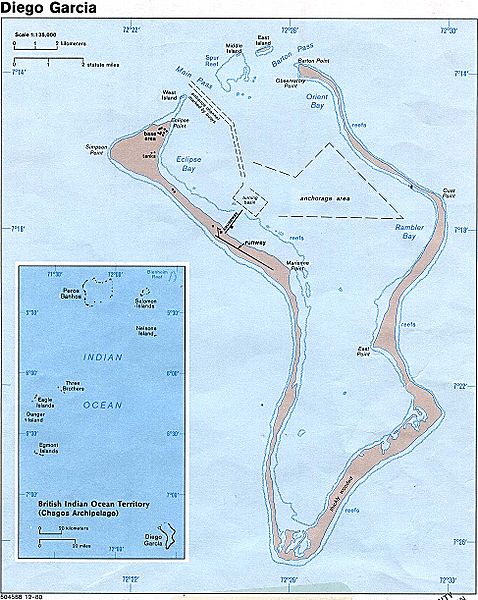
Diego Garcia Island, Indian Ocean, United Kingdom Territory. Rendition Flights Refuelled on the Island in 2002.
The UK Government provided infrastructural support for America’s extraordinary rendition program allowing rendition flights to refuel on Diego Garcia (above), a British territory in the Indian Ocean. (More here and here).
– – –
Below is the plan of a cell used during the 19 month illegal detention of Mohamed Farag Ahmad Bashmilah, a Yemeni national. Salon reports:
Bashmilah’s story also appears to show in clear terms that he was an innocent man. After 19 months of imprisonment and torment at the hands of the CIA, the agency released him with no explanation, just as he had been imprisoned in the first place. He faced no terrorism charges. He was given no lawyer. He saw no judge. He was simply released, his life shattered.
In 2007, Salon did a thorough job in describing his detention and its aftermath, even presenting plans based on Bashmilah’s descriptions of torture and interrogation rooms. No-one knows for certain where these cells were, but it is suspected they were within Afghanistan.
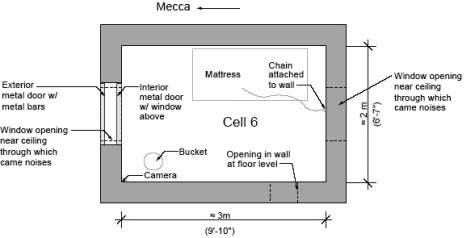
Exhibit I: Rendering of Mohamed Farag Ahmad Bashmilah's first cell in Afghanistan (based on Bashmilah's own drawings). Source: Salon.com
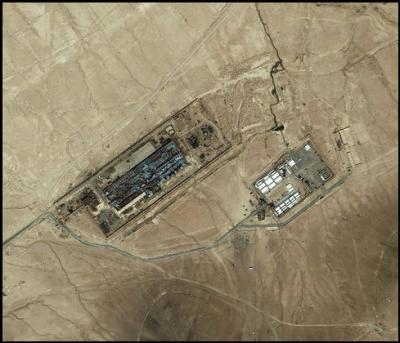
In Afghanistan, the largest CIA covert prison was code-named the Salt Pit, at center left above. (Space Imaging Middle East). Source: Washington Post
The most notorious Black Site in Afghanistan is referred to as ‘The Salt Pit’.
The Salt Pit brings us to Trevor Paglen‘s geography, photography and investigative academics, but first let me point out a couple more excellent resources.
When the details of rendition broke in 2007, Jane Mayer led the exposé with her book The Dark Side. Read a book review here and her extended New Yorker essay here.
FRONTLINE produced this astonishing interactive graphic showing all the illegal prisons and all the US aviation front-companies used for the rendition flights. That map is part of a larger presentation with interviews, time-lines and further resources.
More recently, Anand Gopal has revealed the US military’s still recent tactic against the Taliban in Afghanistan of by-night kidnappings. The result? The US has lost the support of the Afghan people toward the American project. Read America’s Secret Afghan Prisons here.
Just this month, Stephen Lendman summarised the January 26th UN Human Rights Council (HRC) report ‘Joint study on global practices in relation to secret detention in the context of countering terrorism’ which details practices by various countries “including America, by far the world’s worst offender in its war on terror.” The full report is here (Word) or here (pdf).
Lendman’s words The truth is shocking:
“Besides Guantanamo, Afghanistan and Iraq, HRC said the CIA runs scores of offshore secret prisons in over 66 countries worldwide for dissidents and alleged terrorists – in Egypt, Algeria, Jordan, Morocco, Syria, Libya, Tunisia, India, Pakistan, Russia, Uzbekistan, Sudan, Zimbabwe, Ethopia, Djibouti, Kenya, Poland, Romania, Bosnia, Kosovo, Thailand, Diego Garcia, and elsewhere.” (Source)
Onward. Now, Paglen …
TREVOR PAGLEN
The two images below are by Trevor Paglen. The first is the Salt Pit and the second is a military jail in Kabul. They are also his most ordinary of images … the only images he could capture in the circumstances.
Paglen isn’t primarily concerned with prisons; he is concerned with all the unseen activity of the military industrial complex – aviation companies, air strips, covert ops, air bases, Pentagon annual budget projections, spy satellites, shadow NASA reconnaissance agencies … the list goes on.
After meeting Emiliano Granado last Summer, he posted a good one-stop description of Paglen’s work. Granado also posted some good examples of Paglen’s Limit Telephotography and The Other Night Sky series. Check those out and then skip to Paglen’s lecture at the foot of this post.
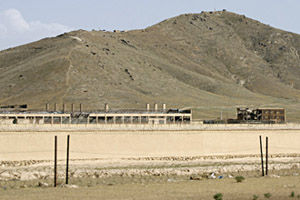
The Salt Pit, Shomali Plains Northeast of Kabul, Afghanistan. Trevor Paglen: The Salt Pit is located in an old brick factory a few miles northeast of Kabul, along an isolated back-road connecting Kabul to Bagram.

Black Site, Kabul, Afghanistan. Trevor Paglen: This site was brought to my attention by Afghan journalists and human rights activists in Kabul. The code name of this site remains unknown.
LECTURE
I have waited for a long time for an online presentation of Paglen’s oeuvre to which I could refer PP readers. (Thanks Alejandro!)
It’s quite the thrill to be brought in on Paglen’s sleuth work, as he walks us through the various public records used to piece together the rendition program. If you can spare an hour this weekend, you’ll be thankful for the education!
FORTHCOMING BOOK
Paglen’s work is to be published by Aperture in a book titled INVISIBLE. You can see Paglen and publisher Lesley Martin discussing the project here.

JAIL GUITAR DOORS, headed by Billy Bragg, is a program that bring musicians and instruments to prisons in the UK. Thanks to a conversation between Bragg and the superintendent of Travis County Correctional Complex, JAIL GUITAR DOORS expanded its program into American jails.
Bragg and Tom Morello of Rage Against the Machine among other musicians played live and collaborated with inmates at the Austin jail. The theory is one of music therapy. Bragg left six guitars inside the institution.
Bragg began JAIL GUITAR DOORS in 2007 naming the program after The Clash song of the same title. Since its inception, 32 prisons and more than 300 guitars have been part of the program.
Listen to the full story on NPR, visit the website for JAIL GUITAR DOORS, link up on the JGD’s Facebook page and a bit of local news here.

Screengrab
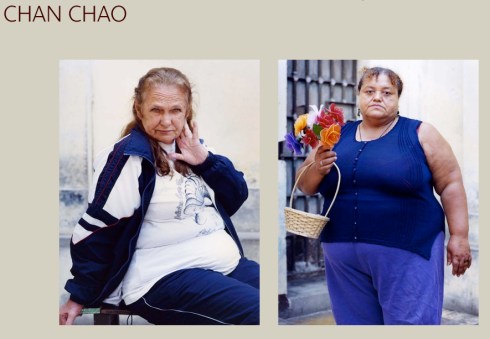
Chan Chao‘s portraiture is about the intimate moment he allows the viewer with his subject. For Chao portraiture is “communication through body language and facial expression.”
Santa Monica features the women of Santa Monica Prison, Lima, Peru. The prison is recognised as the site of detention for women caught and implicated in drug smuggling activities. There are dozens of foreigners from all over the globe. Santa Monica Prison contains an unusually diverse convergence of lives, stories and needs.
Not just in Santa Monica but in all his series, Chao intersperses his portraiture with environmental studies and in so doing expresses the inescapable strong-arm of military, government and judiciary.
In the portrait studies, Chao deliberately deemphasises the background; backdrops are evocative but not descriptive. The women of Santa Monica Prison are thus gifted something quite precious by Chao, their stage for a moment, and individual acknowledgment outside of a carceral context.
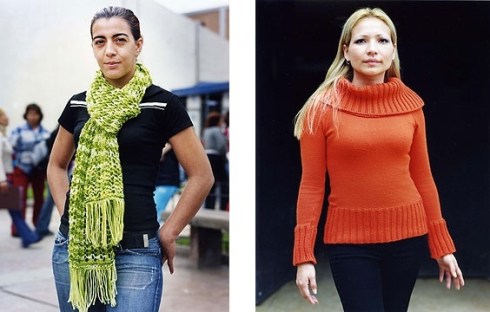
Two portraits from the 'Santa Monica Prison' series. © Chan Chao
Chao is well known for his nude studies for Echo, and his three-trip project to the border camps of Burma, his country of birth (See Chao describe his Burma project). Cyprus, again, reverently, deals with the portrait sitter.
All of Chao’s series should be viewed; together they create an winsome cloud of emotional sound. Wrap yourself up.
BIOGRAPHY
Chan Chao (born 1966 in Kalemyo, Burma) is an American photographer known for his color portraits. He and his family left Burma for the United States in 1978. Chao studied under John Gossage at the University of Maryland, College Park. When he turned 30, Chao decided to visit Burma for the first time since his family left but was denied a Visa. Instead, he travelled to the Thai-Burma and Indian-Burma borders where he photographed Burmese rebel and refugee camps. These images comprise his books Burma: Something Went Wrong and Letter from PLF, both published by Nazraeli Press. Nazraeli also published Chao’s book of female nudes entitled Echo. His Burma portraits were included in the 2002 Whitney Biennial. Chan Chao lives in the Washington, DC area. He teaches photography at George Washington University.

 Prison Photography