
You are currently browsing the category archive for the ‘Documentary’ category.

Refuge by Joanne Mullin “explores the nature of domestic conflict by examining shelters across Northern Ireland. It is a contemplative observation of a temporary place that allows for women and children to have a period of transition.”
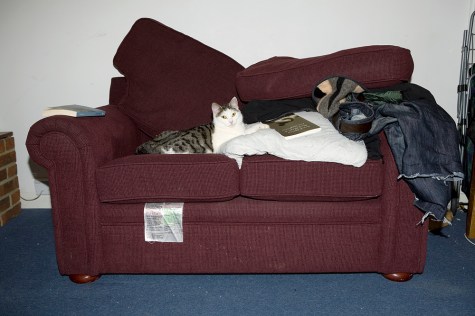
A few weeks ago I wrote, for Wired, a piece about Edmund Clark‘s latest body of work Control Order House. The piece carried the irreverent title This Incredibly Boring House Is a U.K. Terror Suspect’s Lockdown but the details of the project it gets into – two years of negotiating access, Clark’s process which riffs on surveillance and forensic photography, Clark’s the decision to present every photograph he took in the order he took them, etc. are important, mildly complex and worth getting one’s head around.
The house Clark documented belonged to a pre-trail UK terror suspect, under house arrested, referred to in legal documents as CE.
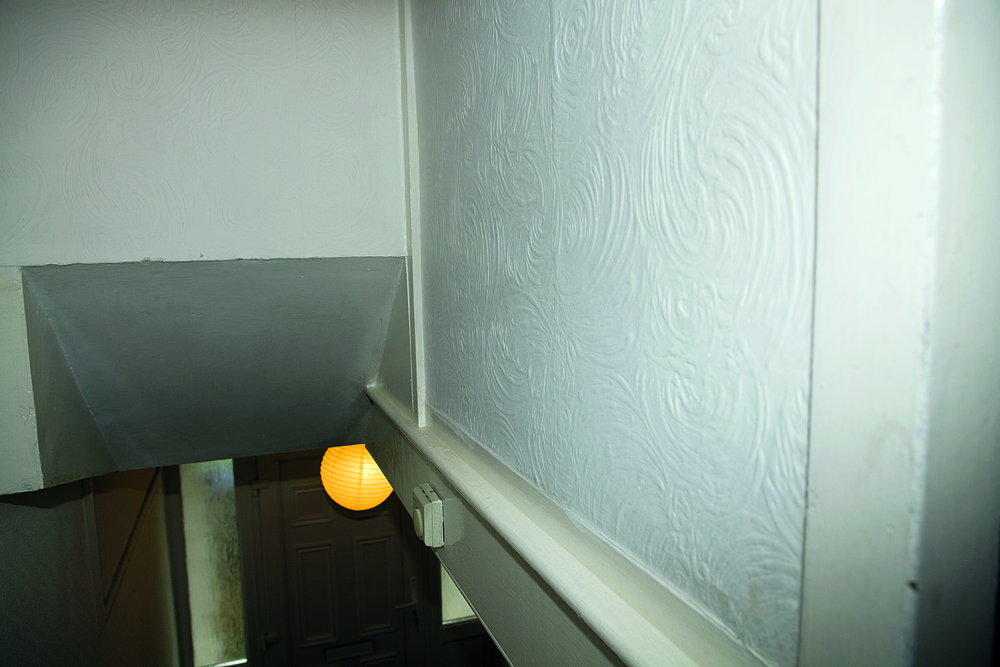

I wrote:
Control Order House is the only existing photographic study of a residence occupied by a person under a UK control order. It is not an exposé, however. Given the legal sensitivities, every image was vetted by UK government officials. Clark was not allowed to reveal the identity of the terror suspect — referred to in legal documents as “CE” — nor his location.
“To reveal CE’s identity would be an offence and in breach of the court-imposed anonymity order,” says Clark. “All the photographs I took or the documents I wanted to use had to be screened by the Home Office.”
For Clark, the project is best appreciated in its book form. Control Order House was published by HERE Press and released May 2nd.
Clark refers to the book as an “object of control” because at a point, he accepted that, with so many attached limitations, his photography was almost an extension of the state power he was documenting. All of his equipment had to be itemized and registered with the UK Home Office before his three visits.
Wired created a Scribd document (that has no URL, but is embedded in the article) with six pages of Clark’s correspondence with both the terror suspect and the UK Home Office employees.
“Even CE’s lawyers made it clear to me that the I had to careful about what I spoke to him about because the house was (very probably) bugged and that my telephone communication with him would be monitored,” explains Clark. “All my material, even my words here [in this interview] could become part of CE’s case.”

Control Order House is a finely balanced project. It is hampered by so many obstacles to unfettered depiction that our traditional notions of what photography is supposed to do are frustrated. It is not exposé; it is completely descriptive of its own limitations. It’s these limitations from which we must depart in thinking about photography in highly policed spaces. Control Order House should kick-start considerations of lesser seen photographs from the Global War On Terror (GWOT), namely, images of drone strike aftermath, Aesthetics of Terror (as, in this case, distilled by artists), redacted images in magazines distributed at Guantanamo (scroll down), Kill Team trophy photos, American personnel’s own vernacular war photography, and Jihad suicide posters.
Control Order House is about the act of photography. It’s self-referential as kids’ MFA work that deconstructs photographic process, but — unlike those studio experiments — it has roots in a clearly identifiable political territory. It shows us more than we knew but not as much as we would like to know. In so doing it reminds us of all the operations, violence and war crimes carried out on our tax dollar that we never see, never know.


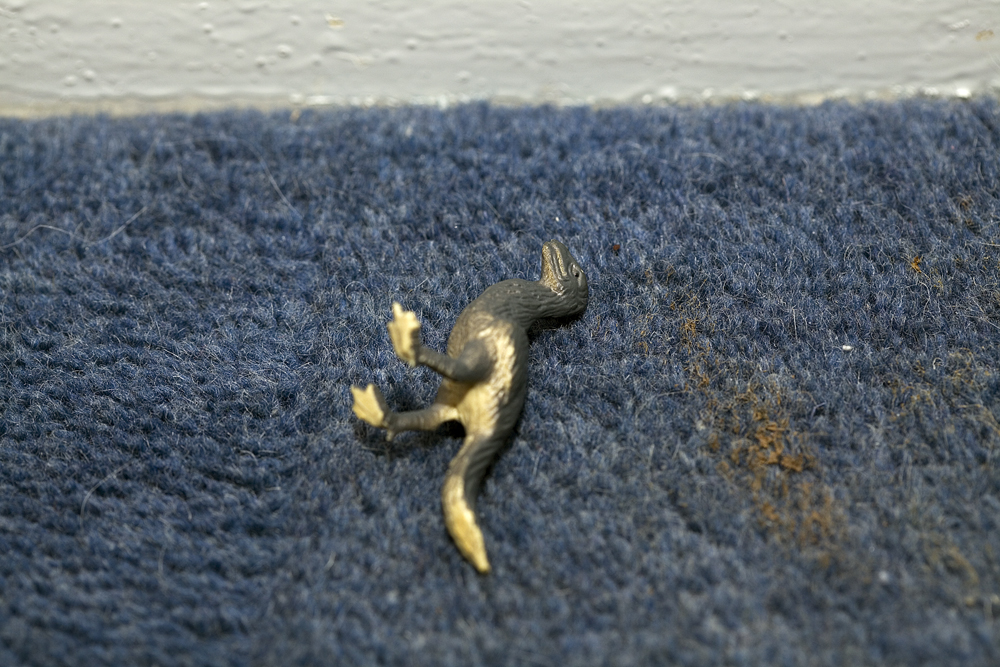
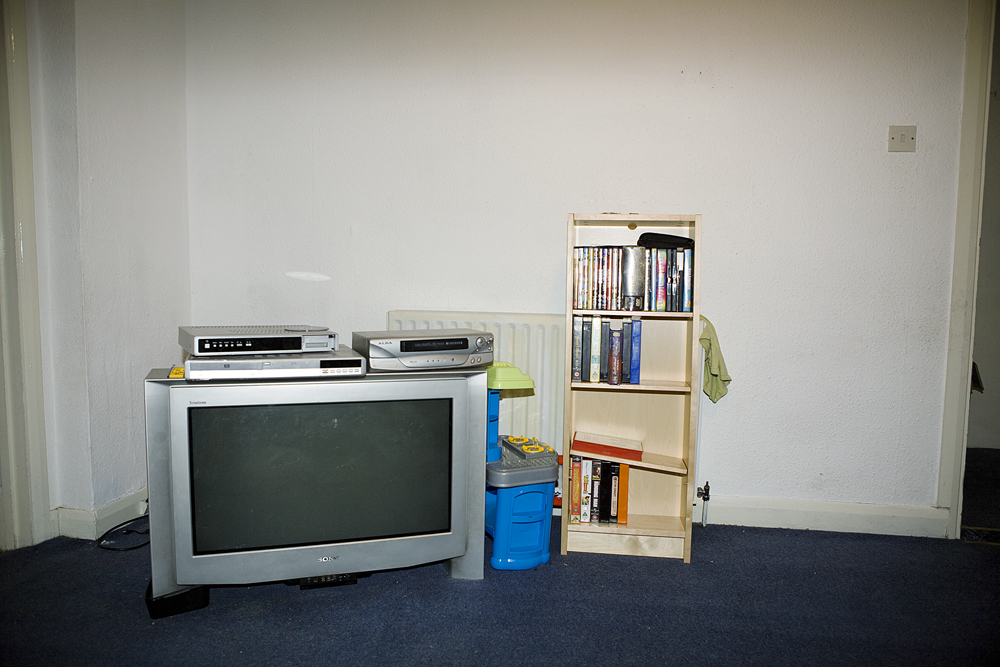




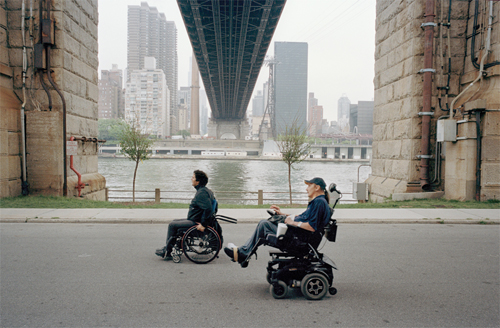
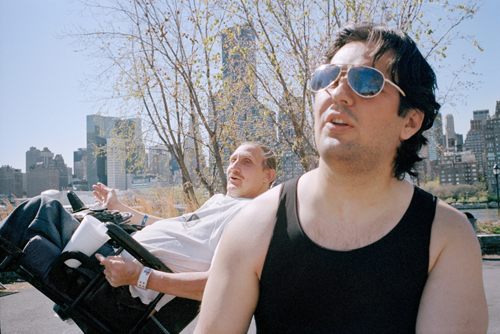
Armand Xama, 31, and Bryan Duggan, 51, are best friends. They both suffered broken necks in diving accidents. Xama and Duggan are just two of 800 patients at Goldwater Hospital, on New York’s Roosevelt Island. Almost every patient at the state-run facility is on Medicaid.
Throughout 2012, photojournalist Daniel Tepper followed Xama and Duggan through their days on and off Roosevelt Island.
In the summer of 2013, Goldwater will be closed and demolished to make way for Cornell University’s new science center. Patients have not yet been to told to where they will be relocated.
“This is a developing and underreported issue,” says Tepper. “The people who call it their home have no way to advocate for themselves and let others know what is happening to them. They are at the mercy of the city’s Health and Hospital Corporation that isn’t doing a great job in handling the closing and relocation.”
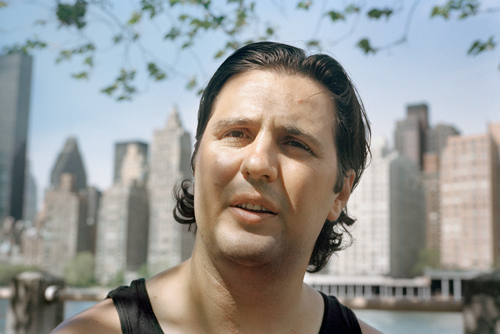
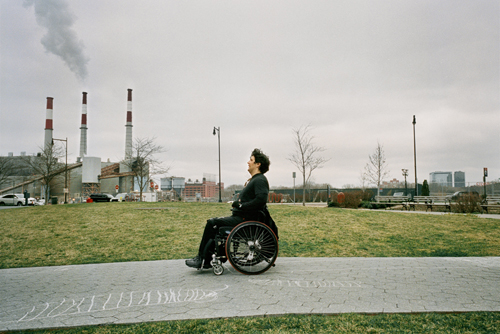
With over 400 individuals who have neck and spinal injuries, Goldwater is home to the largest community of such persons in the New York hospital system.
“The closing of Goldwater is just the tip of the iceberg,” explains Tepper. “Opponents to the science center are alarmed that the development is projected to cost $2 billion dollars and take decades to complete, especially at the time when many city workers don’t have contracts and the schools and hospitals are badly in need of funding. This is a big issue that will change everyone who lives on Roosevelt Island but the first people to feel the effects will be the patients at Goldwater.”
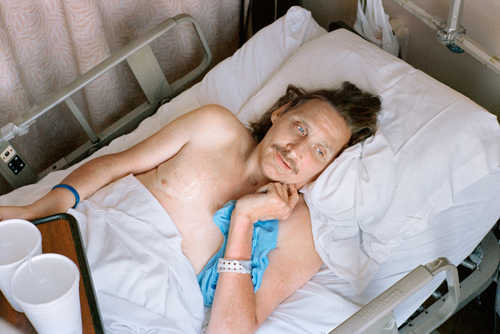
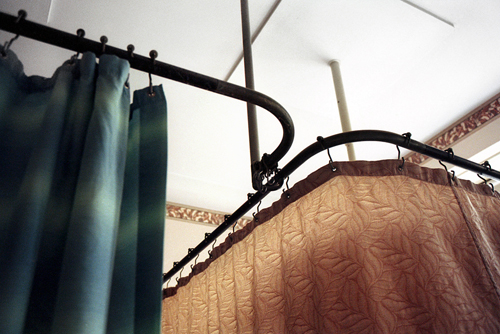

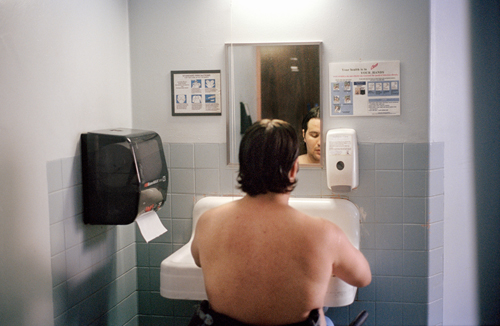
Tepper wrote for the Gothamist about the background to the Cornell science center planning.
In July 2010, the city stated that it was planning to relocate some of Goldwater’s patients and staff to a facility in Harlem.
Five months later, Mayor Bloomberg announced Goldwater’s location as a possible site in a tech campus competition. In December 2011, the mayor named Cornell and Technion universities the winners of a bid to construct a sprawling science and engineering campus where the hospital now stands. This massive, two billion dollar project will take decades to complete and cover nearly one-third of the island. It will radically transform Roosevelt Island and affect all 12,000 of its residents, but the first ones to feel the impact will be the residents of Goldwater. Cornell has said they plan on using some of the rubble from Goldwater’s demolished edifice to raise the level of their campus site out of the floodplain.
The closure of Goldwater Hospital and the imminent relocation have received little media coverage. “This is a really old story and it’s done before,” Evelyn Hernández, the director media relations for the city’s Health and Hospitals Corporation told us over the phone. “I wanted to make sure you know that the story’s been done before, a long time ago. We’ve announced it in press releases.”


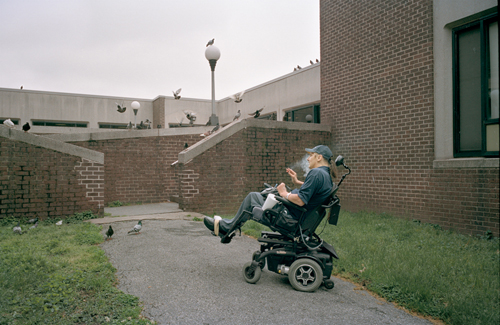

In April, 2013, Tepper returned to Goldwater to catch up with Xama and Duggan – men he now considers his ‘buddies.’
“I was struck by how little their lives have changed since I began this project last year,” reports Tepper. “The daily lives of both men has fallen into a strict routine that I think happens to most people living in a state-run facility, whether it’s a prison or hospital. A times I found myself feeling photographic deja-vu, as a scene I have already captured repeated itself in front of my camera. Both guys are still in the dark about where they will end up and when they will be moved.”
“But they are both as optimistic and good-humored as always.”


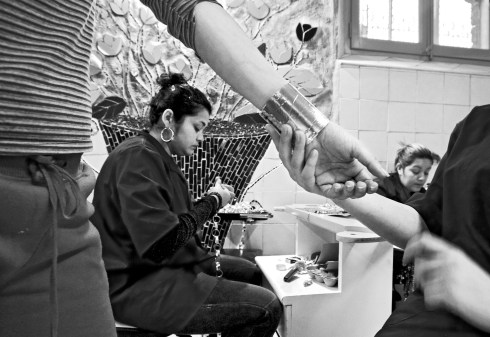
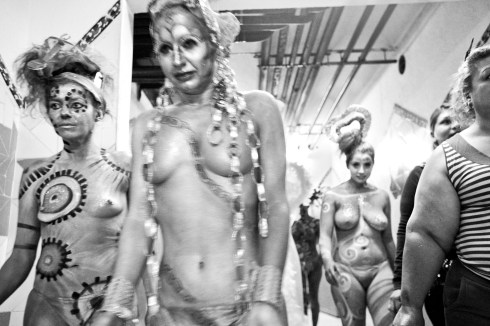
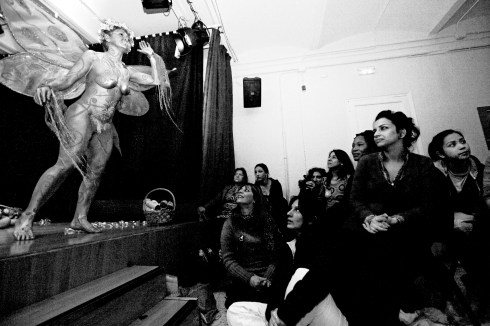
Spanish photographer, Bandia Ribeira Cendán‘s images of vibrant body-painted theatrics inside a Barcelona jail in celebration of International Women’s Day are startling. They might even encapsulate hope. Yet, as Bandia describes in our Q&A it was a fight to gain access to the jail, a struggle to achieve semblance of artistic freedom, and difficult to overcome staff skepticism. Bandia’s biggest frustration was her inability to deeply connect with the women in limiting circumstances. The paucity of support and materials, and some initial reluctance from women prisoners limited the accomplishment of her goals for her photography workshop Corners (Racons). Nevertheless, Corners was recognised as a valuable participatory arts projects at the City Of Barcelona Awards in 2012.
I’ve extolled the benefits of photography workshops in prisons and the empowerment that comes about through self-representation. My views are based somewhat on anecdotal information and also the feedback of people (photographers) always directly involved with such projects and, therefore, perhaps a narrative to perpetuate. Thus, it is pause for thought to hear Bandia say, “I don’t think that a prison is the best place for the rehabilitation […] Photography inside the jail can just be a way of evasion, a way to pass time and to avoid thinking about the own problems.”
I appreciate Bandia’s realism. I also appreciate that she has shared these images with Prison Photography as she has been rounded censored from publishing her photographs in print in Spain.
Scroll down for our conversation.

Q&A
What is the public attitude toward this prison and the women inside?
This is a “transit” prison with a special section for mothers and little babies. That means that people inside are waiting for a trial and once they got it they are sent to a “permanent” prison or they are set free.
The attitude toward the prison, as you can imagine, is not very positive. Once someone steps into a jail he or she is seen as a criminal and stigmatized by the society. Most of these women are gypsies or citizens of South American countries and the majority are here because of drug traffic, so they belong to the lowest strata of Spanish society. Most of them were victims of violence by their husbands, boyfriends or relatives and it’s not common to meet someone with an education.
I met women who couldn’t even write and had problems reading correctly. We are talking about people with really hard lifes and usually from very poor families. Victims of the social injustice.
Our society doesn’t deal with poverty and margination as a part of itself, so instead of looking for solutions we turn our eyes to another place and try not to see these kind of problems. The people in jails are excluded from our society.
You were working as a photo teacher there. Tell us about your work with the women.
It was really an enriching experience for me to share a time with the women. Initially, some of them rejected photography because it was included in their internet workshop and they didn’t see the utility of knowing how to use a reflex camera, which I understand perfectly.
But with the passage of the time, they started to go inside and enjoy it. We built the learning around a common project called “Corners” and I proposed to them to shoot the best and the worst corners of the prison, and even the good and the bad corners of themselves.
A good corner for most of them was the toilet room, where they can smoke cigarettes and chat for a while far from the eyes of the guardians. A bad corner for many of them was the playground, where they have the obligation to spend few hours every day even when it’s raining or very cold weather, and this is especially hard for those women of advanced age who suffer some form of sickness. At the end we made a little exhibition in the jail which people really enjoyed.
During my visits to the center the people were preparing a theatrical production with body painting. They proposed I shoot the process. I accepted with enthusiasm because I had the opportunity to make photos far from the guards’ control, limited to the jail’s hair-dressing room.


Can photography be a tool for rehabilitation?
I don’t think so. First of all, I don’t think that a prison is the best place for the rehabilitation of any single person. Photography inside the jail, in my opinion, can just be a way of evasion, a way to pass time and to avoid thinking about the own problems.
Photography is positive as a weapon of expression, but for this you must go inside the technical skill-set and we didn’t have the means and the time. We only had one camera for 10 persons. No one helped me to get more cameras for the girls. We are talking about a public institution and a NGO who gets money from the government and they were not able to buy materials for the workshop.
You were finally able to make a reportage, with all the limitations that it takes to work in this kind of places. What negotiations did you go through to take photographs inside?
It was a real mission. First of all I sent my project to the authorities of the Government of Catalunya and didn’t get any answer. I knocked on many doors. Afterwards, I got in touch with some theater companies who make workshops inside and offered to document their activities. Again, no success.
After months and months of trying and almost abandoning the idea, one of my school-mates introduced me to a woman from the Fundació per l’Innovation Social Action (FIAS) which organizes activities inside the jails in the city of Barcelona to introduce prisoners to the new technologies. Here was the key for me. She liked my ideas and proposed that if I wanted to shoot inside I had to offer something, so we decided that making a workshop of photography would be the best.
After 9 months of searching I could go inside this prison.
What celebration was occurring that led to body paint and theatre?
They were celebrating the international day of the working women, the 8th of march. Every year, they host a party in the prison. There are a few activities such as a picnic in the playground, live music, and an exhibition of photography about Africa. The women inside get really involved in this party.
Does this body painting drama take place annually?
Yes, they have done it for a few years. It’s a collaboration between the people from the hairdress workshop and the people from the fitness class; the teachers and the women make the show together. Generally, there are plenty of activities from the morning until evening; school to get a basic education and also working areas in which they earn a very minimum salary.


Are colorful activities such as those you document common in all Spanish women’s prisons?
I don’t really know but I don’t think so. This prison is very small with around 150 prisoners. The population changes frequently. I’ve been told that the tranquil ambience is an exception inside Spanish prisons. Still, when you step inside, some depressing feeling invade you and the celebrations have a touch of sadness. The women get really involved because they don’t have many similar events throughout the rest of the year.
In other prisons there’s not such an offer of activities and they use to have problems of overpopulation. Spain has the largest imprisoned population of all Western Europe, although behind other countries with biggest criminality tax. This means that in Spain the low delinquency is highly punished. And the jail is the solution, instead of the social actions.
What have been the reactions to your images from staff, women prisoners and the public?
Some of the staff didn’t like so much and they said that the images were not as “artistic” as they expected. What I understood from this reaction was that they supposed that I would “hide” more the jail situation and customise a view. However, it was my intention from the beginning to show a sad reality.
The women prisoners were happy about the photographs, and happy that I could show the images while I was working there – I know that after this there was no one from the staff who showed them the final work.
About the public, I’m not allowed to show these photos in my country.
Jail policies are so stringent that the authorities don’t want that these photos go out from the walls of the prison, even when I’m not showing anything about the life conditions inside. It looks amazing that this facts happen in a so called “western democracy”. This hermetism is unbelievable.


What are your thoughts on prison policy in Spain? What is being done correctly and what could improve rehabilitation for women prisoners?
My thoughts are not positive. First of all, the jail penalties for small delinquency are too harsh. This increases the prison population making it overcrowded. In the last 10 years, Spain’s prison population has doubled. The consequence is the deterioration of conditions and the welfare of the people inside.
Another facet [of prison management] which is denounciable is the FIES regime, an isolation regime used to condemn prisoners considered “dangerous.” This term “dangerous” sometimes gets very flexible. This isolation makes the prisoners more vulnerable and includes violent episodes from the guards and we have lots of files from humanitarian associations, like International Amnesty, denouncing FIES.
Rehabilitation is not possible when people are condemned to 20 years in FIES. They lose their identity, values and sometimes dignity as a persons; this goes against rehabilitation.
Were there any downsides to your experience?
I missed out on making very close contact with the women. We were controlled all the time by someone from the jail and it was impossible to have long conversation outside of the workshop. I listened to some stories and made surface-level inquiries but did not really get deep inside.
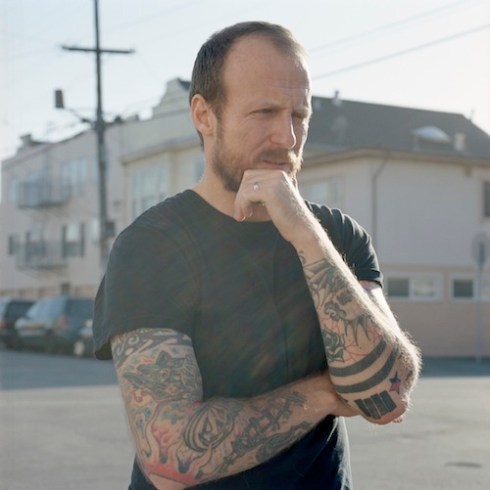
What happens when you’re a soldier and you are asked to fight in a war your conscience tells you is immoral?
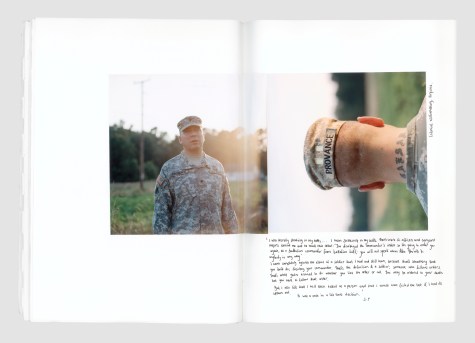
Jo Metson Scott‘s series The Grey Line and accompanying book interrogates this conundrum and those that lived – and continue to live – it.
I’m not from a military background and I always opposed the Iraq War, so it was a stretch for me to empathise with Jo’s struggling subjects who, to me, simply made – and continue to justify – rational assessments. How difficult or taxing can common sense be? To get me out my own head, I called on Jo to explain this emotional minefield of a topic.
Scroll down to read our Q&A.

Q&A
Prison Photography (PP): Where does the title come from?
JMS: The title is to try and explain the difficult position so many of the soldiers found themselves in. Nothing is ever black and white, nothing is ever as simple as right or wrong, and these people were having to make a decision between what they were contractually obliged to do and what they felt was the right thing to do. I felt The Grey Line was a way of explaining the difficult line they were choosing to walk.
PP: You say some of the soldiers were imprisoned for their views?
JMS: Actually, none of the soldiers were imprisoned for speaking out against the Iraq war. Some of the soldiers refused to fight in the Iraq war and were imprisoned for going AWOL, but not for speaking out.
Each person’s story is very different, so I’m always nervous about generalizing. So instead, I’ll give an example. Kevin Benderman was one of the older and higher rank soldiers I interviewed and he was very opposed to the Iraq war. He was deployed to Iraq for a short period. Over there his opinions really became clear and he felt strongly that being in Iraq was the wrong thing to do. When he came back he applied for Conscientious Objector status but it was denied. So he refused to go back. He was court martialed and given a 15 month prison sentence.
Kevin said he always knew that he would get a prison sentence. It was fascinating to hear how his morals were so strong he was compelled to go against the military and risk his career. It wasn’t that he was a pacifist, or had found God, he just strongly believed that what America was doing in Iraq was wrong. That’s what really impressed me about some of the people I interviewed, they really stayed true to how they felt. Kevin knew if he spoke out and refused to fight, his career would be ruined, he’d be accused of being a coward and he faced imprisonment, but he still refused to go to Iraq.
It’s like another person I met who refused to deploy to Iraq. He was openly gay, and could easily have got out through the ‘Don’t Ask Don’t Tell’ Policy, but he felt if he wanted to leave for moral reasons it would be wrong as he would see it as taking the easy option. Instead, he applied for Conscientious Objector status, which was denied, so was then imprisoned for refusing to be deployed.
Kevin Benderman can explain his situation so much more clearly that I ever will. He said to me:
“Have you heard the term, “I cannot in good conscience do that…?” Well, that’s how it was for me.
I took a look around when I got over there. We weren’t fighting an army, there were no weapons of mass destruction. None of that stuff was there. We were just bullying the civilians. We weren’t fighting soldiers; we were just kicking doors down of civilians’ houses and taking them out and that’s not what I joined the army to do. I mean, if there had been a soldier over there I would have fought a soldier, but that’s not what we were doing… not at all[…]
There was no doubt in my mind that I’d go to prison. I had to be made an example out of. I mean, I was an NCO for one. I wasn’t a young kid and they knew that if I was able to do what I was trying to do it would only strengthen my argument. They had to make an example out of me so that no one else would try it.
With all the charges they were trying to give me I could have got seventeen years. They tried to charge me with larceny, desertion, missing movement. I knew it was a bunch of bullshit. I knew they weren’t gonna be able to stick all that stuff on me. I was convicted of missing movement by design, which carried a fifteen month sentence. It was a dishonourable discharge but it was upgraded to bad conduct. But that still isn’t very good. I mean you can’t really do a whole lot with a bad conduct discharge.
I know I did the right thing but it just didn’t really change anything, you know? I invested twelve years of my life in the military. I gave that away. I gave away my retirement. I lost my home, my wife … I can’t really find a … well, I’m stuck here driving a truck.
I had more trouble with my family – sisters, brothers and brother-in-law – than with people in general.
My family didn’t even want to hear my reasons for doing what I was doing and they still don’t. Most of the ones who have openly criticised me have never served and don’t know what they’re talking about. More soldiers and veterans agree with me than my own family do. But I’m not really concerned about their opinion and that makes them mad. You know, that was part of the stress; my own family chose George Bush and his stupid ass doing something illegal over defending me, and they wouldn’t even hear my reasons why. […]
There’s still people who say I’m a hero. Well no, I’m not a hero. I was just doing what I thought was right and I really thought that people who made noises about the constitution and the law would stand up for that instead of just wanting someone to be a figurehead for them. […]
A few years ago I took a job in Afghanistan as a civilian contractor. I wanted to go back was because I know I’m a good mechanic and there’re still soldiers over there and I figured they deserved somebody who was conscientious about the work. I had given them the best vehicles that they possibly had. I didn’t leave the military to abandon the people that I served with, but I knew that it didn’t matter. Whether or not it was right to be there […] I’m a good mechanic and they’re still over there. They’re not coming back and we’re not prosecuting Bush and I wanted to make sure that they had the best possible vehicles. Should we be there? No. Are we there? Yes.


PP: Benderman’s is one story of how many? What was the number of soldiers you met?
JMS: Over the space of 5 years I met in total 45 soldiers. 29 are in the book.
PP: Has the story of conscientious objectors been adequately told?
JMS: Before I started the project, I had only associated the term Conscientious Objector to the first and second world war – to times of conscription. So I was intrigued to know why someone would need to apply for conscientious objectors status when they had willing signed up. Meeting with the veterans and doing this project made me realise that of course people who are in the military can have a change of morals and principles just like any ones else does, and some people also realise that they no longer want to be a part of war.
But not all of the people I met with were conscientious objectors. Many of them didn’t even know that the process existed. I was interested in meeting people who had moral doubts about their involvement in the Iraq war, not all were conscientious objectors.
Some people choose to whistle blow and speak out to the media about their experiences, others simply refused to fight and went AWOL. Others chose to keep quiet until they left the military and then spoke out. Speaking out from within the military is a very difficult thing to do. The quote below is from a veteran called Ryan. He was in the Marine Corp and was deployed for 7 months to Iraq. After he was honourably discharged from the military, he decided to speak out about his experiences in the military and about what he came to see as atrocities that he and his colleagues committed in Iraq.
After I made my public testimony, my brother disowned me on Facebook for everyone to see. He said I was a traitor and I wasn’t his brother anymore, that I wasn’t even a man.
Every single person that I served with in the war found out about my testimony and have publicly said that I’m a liar, a bitch, that I’m full of shit, that I’m a fucking American flag-burning, troop-hating, communist.
I understand why a lot of these guys did what they did; they’re not ready to accept that what we did was wrong … because it’s hard. It’s hard to accept that what you believed in was wrong. And not just wrong like two plus two is five, but wrong like you fucking killed somebody and that’s something you have to live with for the rest of your life. Some people just aren’t ready to live with that yet.

PP: What do you hope to communicate with The Grey Line?
JMS: Many of the people I spoke to were very torn between their duty, the bond with the people they fought with and their own belief that what they were doing was wrong. Several soldiers talked about being ordered to do things that they felt very uncomfortable about doing, but that they knew were legal.
I spoke to one soldier who had been a military Intelligence officer in Abu Ghraib. He had absolute faith in the military, but was feeling very uncomfortable with what he was being asked to do. In the quote below, he talks about his experiences of interrogating a young detainee.
He was 16; just a kid, scared to death, and skinny as a rail. We went out to get him from the ‘general population’ [prisoners who aren’t in solitary confinement] area to interrogate him. The general population area was right next to the questioning booth, but they still wanted me to put one of those sacks over his head to transport him. It wasn’t like a normal sack, it was like a plastic sand bag with sand all over it. It barely fit on his head and he was shaking as I put it over him. We used it so he couldn’t see where we were taking him, even though we could see the booth from where we were standing. We had to cuff him too, but his wrists were so skinny you couldn’t put the handcuffs on him. So he just kind of carried them instead. I felt so rotten.
The weirdest thing was when we were in the room with the kid and an MI guy came in and gave the interrogating officer a handful of Jolly Ranchers. It was meant to be put on the table like, if you talk we’ll give you some apple Jolly Ranchers, you know? The kid knew nothing. He was just this guy’s son. Originally we were supposed to interrogate his father, a general in Saddam’s regime, which was why I had agreed to be a part of it. It sounded interesting. But then when we got there, they told us that he had already been ‘broken’ and as a sort of consolation we were told we could interrogate his son.
I only found out afterwards what they had done to break his father. His son had been doused in cold water, driven around in a truck in the freezing cold night, and covered in mud. I guess, at the same time his father was being interrogated somewhere else and from what I understand they told him that they’d take a break from the interrogation and let him see his son.
So the general’s thinking he’s gonna see his son and have some kind of a reunion with him, but instead they just allowed him to see his son naked, shivering, and covered in mud.
A lot of people will probably wonder why I didn’t say something publicly right away, but it would have been pointless. Even though I thought what was happening was wrong, doesn’t mean that it was illegal anyway.

PP: What are your thoughts on the Iraq and Afghanistan wars, Jo? Was it wrong, justified, legal or illegal? Is your opinion of importance? Does it come through in the work? Or need to come through?
JMS: I was shocked when Tony Blair took my country to war. I couldn’t believe that he could go against the majority of the country’s wishes. I was shocked that he didn’t listen to the advice of the UN. Maybe it was naive of me, but that is how I felt. I think that is why I became interested in the soldiers stories. I had really believed in Tony Blair when he had come to power. I never would have dreamt he would have taken us into a war like Iraq. And that’s why I wondered how some soldiers must have felt. Many people join the military having complete faith in their government, so what happens if then the government goes into wars you think are wrong? As a soldier you have no choice.
People will always say. “You can’t have military that questions every order their given,” but on the flip side what if it was you? If it was you being asked to do something you felt in the bottom of you stomach was wrong? Something you felt went against everything you been taught? Do you ignore that feeling and carry out your contractual obligation or do you listen to your conscience?
In the end I didn’t particularly want to look at the politics of the Iraq war (though a lot of issues are raised in the book). What I wanted to explore was how an individual deals with the doubts they have in times of war. I wanted to look at the more complicated issues affecting a soldier’s decision. There are so many other things that affect one ability to make a decision – commitments to colleagues, expectations of family, financial implications, confusions of loyalty and legality. The aim of the book was to explore the complexity of their situation. There wasn’t a right way or a wrong way of doing things.
PP: How does The Grey Line fit in with your other work? You’ve recently been in Sri Lanka, you hang out with Beth Orton. I mean, to me, all your work is gentle, warm and purposeful so I’m not asking about the style or aesthetics in The Grey Line, I’m asking about its purpose for you as an artist.
JMS: I love doing commercial work and the challenges and opportunities it brings. But my approach and my purpose in doing commercial work is different to my personal work, and its difficult to compare them.
I am interested in people and because I have a camera it allows me to enter their lives in a unique way. I like to tell other peoples stories through my photographs.
For a long time now the theme of morality is something that I have questioned and explored – my own sense of morality and other people’s sense of morality, and how that affects their decisions… I think that I was unintentionally looking for way of exploring this theme with my photography, and when I first met Robert, something clicked.
PP: Can you imagine not having explored this issue? Can you imagine not having made this statement to the world?
JMS: It doesn’t really feel like I made a statement, or at least it wasn’t my statement to make. The men and women that were in the military and had the courage to question are the people making a statement.
PP: Thanks Jo.
JMS: Thank you, Pete

BOOK LAUNCH
On 20th March (6.30 -10pm) The Grey Line, published by Dewi Lewis, is having a book launch at Fishbar Gallery, 176 Dalston Lane, E8 1NG.
[Right click on the images below to view them larger.]


BIOGRAPHY
Jo Metson Scott is a portrait and documentary photographer whose work highlights the relationship between people and their communities. She has been commissioned by organisations including The New York Times, The Telegraph and The Photographer’s Gallery and her work has been exhibited in both the UK and Europe, including Arles Photography Festival, Nottingham Castle Art Gallery, Hereford Photography Festival and the Venice Biennale Fringe. She is repped by Webber Represents. Jo lives and works in London.
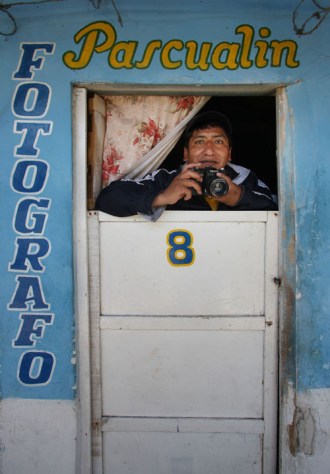
Photographer Pascualin in his Fotografo studio, San Pedro Prison, La Paz.
San Pedro Prison in Bolivia’s capital La Paz, is well-known. It is also well-visited. It is renowned for being a society within itself.
Access to the prison – which holds 1,500 men – is generally not a problem. Persons in the media visit regularly. More astonishingly, access for tourists is common. Over three years ago, I wrote extensively about prison tourism at San Pedro. Changes in security, scrutiny and administrations sometimes close the gates temporarily for tourists, but over the years an open gate policy at San Pedro is the norm.
TThe open gate policy is for the benefit of families. Many women and children live with husbands and fathers locked up, but are free to come and go to school, work and recreate. Without the informal economy – driven by family input – that feeds and clothes the prisoners, San Pedro would grind to a halt. There is also tolerated drug use – and even rumours of manufacture – in San Pedro.
In this context, Toby Binder‘s image are slightly less remarkable. The issue of access is almost obsolete, but the breadth of his study does provide valuable information on the daily lives of prisoners and their families.
San Pedro is probably not the best example of a foreign prison to ask Americans to draw comparison to with U.S. prisons. Maybe, we should think about how the visibility of this Bolivian prison compares with U.S. prisons. But, then again the two culture and visibility are probably forcibly linked.
What I want to do most after seeing Binder’s work is fly to La Paz and interview Pascaulin, the prison portraitist (above.)
Thanks to Toby for sharing his full portfolio. Captions by Binder, edited by myself.
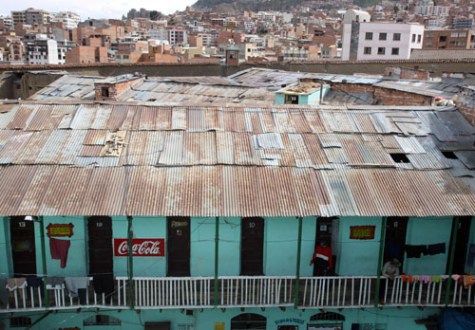
Right in the city center, there is a 12-meters high wall surrounding one whole block. Locals and tourists can be seen on the plaza in front of the main gate which is heavily guarded by policemen. Inside, seven cell blocks with 1,300 prisoners surround a courtyard in the center.

The cell is kitchen, living-room, bedroom and workstation for the whole family.
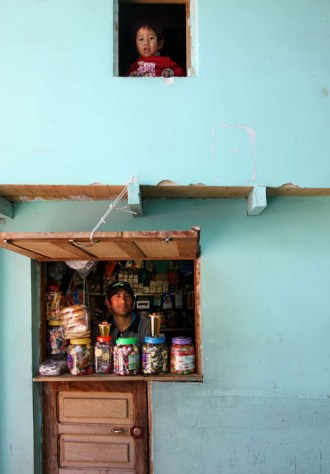
This man runs a kiosk out of his cell. The family sleeps upstairs.

Each of the seven blocks can fields two teams in San Pedro’s soccer tournament,. The tournament is taken very seriously and highly organized. Sometimes, skilled players are headhunted by another block, thus enabling him to live a more comfortable life.

Andres (39), photographed here with his son Andres Junior, earns a living by making wooden toys which his wife later sells outside.
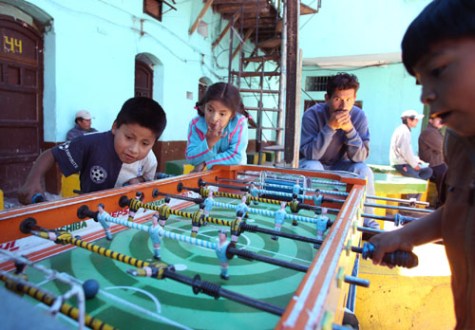
Children play table football.
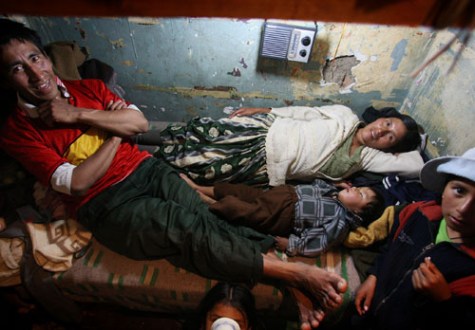
Ramiro Quispe and his family in his 4metre square cell. Ramiro (31) was caught with 5 kilos of cocaine in El Alto, the city on the altiplano above La Paz. He serves his time in cell 39 in the “San Martin” block. While two of his children live here with him, his wife, his baby and his oldest son are in El Alto, trying to continue to run a smallholder’s business. Eva (5) spends her time in San Pedro playing. Mirabel (10), her sister, leaves the prison every morning in order to go to school – children are allowed to pass the gate from 9 am to 6 pm every day.

Eva in the corridor in front of her father’s cell.

Washing day next to the pool.

There are lots of playmates for Eva and Mirabel in San Pedro. Up to 300 children live in the prison with their families. “Despite the food rations for all family members, scores of children suffer from malnutrition or neglect”, says Inge Alvensleben, a German pediatrician in San Pedro. Since drug consumption and violence among the prisoners is a daily occurrence it is especially the weak who suffer, whereas those who are better off enjoy a life with good food, expensive clothes and a sauna in their cell block.

Prisoners working in the kitchen – there is a free lunch for every person living inside San Pedro.

The shops are run by the prison- ers and their families. At Nicol’s shop, for instance, chicken broth is offered today.

Kiosk selling ice cream, vegetables and medicine.

Eva’s favorite place in San Martin is a candy store.
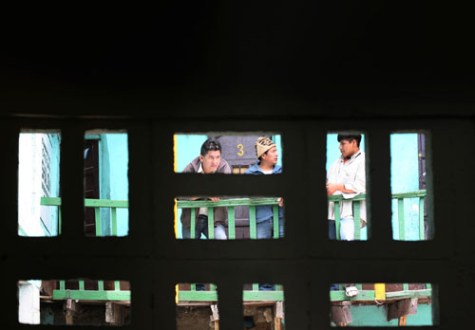
Although there is lots of business inside the prison, boredom is a daily companion of the prisoners.
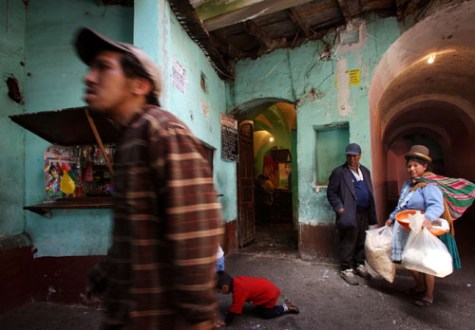
In San Pedro there are restaurants, kiosks, hairdressers, shoemakers, and a photographer. Only the cells remind one of being in a prison and not in any district of La Paz.
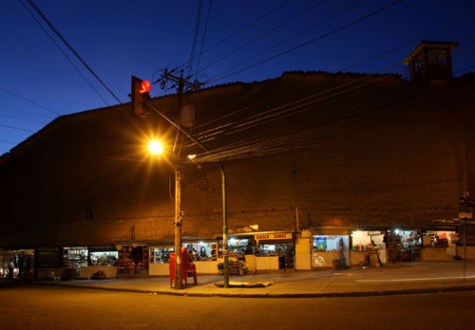
The gates connecting the seven blocks – named Prefectura, Palmar, Cancha, San Martin, Guanay, Alamos, and Pinos – are only closed at night. During the day, the inmates are allowed to move freely in the whole facility.
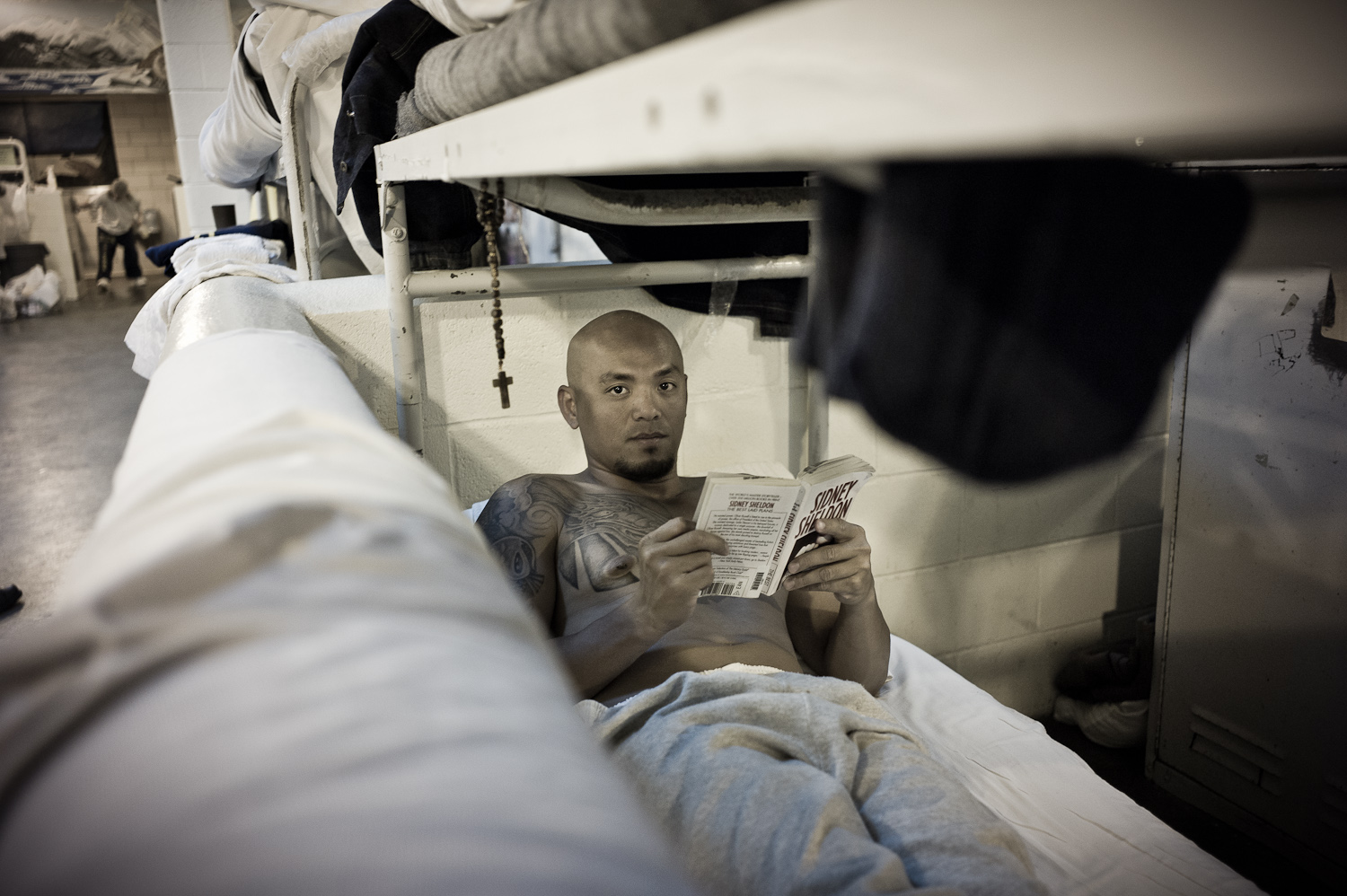
Prisoner reads a book to pass the time during head count, California.
Unlikely Friends is Leslie Neale‘s third feature length film about prisons, so she knows a thing to two. I have spoken before about the difficulty in photographing the two distinguishing features of prison, namely violence and boredom. The former is rare and the latter endemic. Neale observed the same.
“The subjects of my photos aren’t in Unlikely Friends – they are just photos I managed to click off between directing the crew and interviewing people,” says Neale. “Whenever I go into prisons, I am always struck by the culture created by so many living so close together. Even though the threat of violence is a constant presence, there is a calm peace and the mundanity is palpable.”
These photographs were made in prisons in California and Florida. They’re not the best images, but I don’t think Neale claims them as such. They simply show moments. These are not stolen moments as the rigamarole and boredom of prison is persistent.
Before scrolling down through the images, I encourage you to pay the Unlikely Friends website a visit and view the trailer. Neale has hit upon a theme that is often discredited in the discussion of prisons – that of forgiveness.
Forgiveness is at a premium in the criminal justice system – not because people are incapable, but rather because the system doesn’t facilitate it. The system keeps victims and offenders at great distances. Those distances often have good reason, but in the event that victim and offender wish to embark upon a restorative process, it can be an uphill battle. This difficulty is something that cropped up in my PPOTR discussion with Gail Brown. Advocates such as Brown do not want to see blind forgiveness for perpetrators of serious crimes but they want to see feasible routes for prisoners to take to make as best amends as is possible and also to come to full accountability for their actions. Forgiveness is wrapped up in hearing the effects of ones crime and learning from victims the often life-changing and deeply saddening repercussions crime can have. I applaud Neale for taking on this unlikely and complex aspect of humanity within an inhuman system.
– – – – – – – – – – – – – – – – – –
As a side note, I first heard of Neale’s filmmaking when I interviewed photographer Ara Oshagan. He shot B-roll on set in Californian juvenile lock-ups during the production of Neale’s documentary Juvies.
– – – – – – – – – – – – – – – – – –
You can also see a few more images by Neale here.
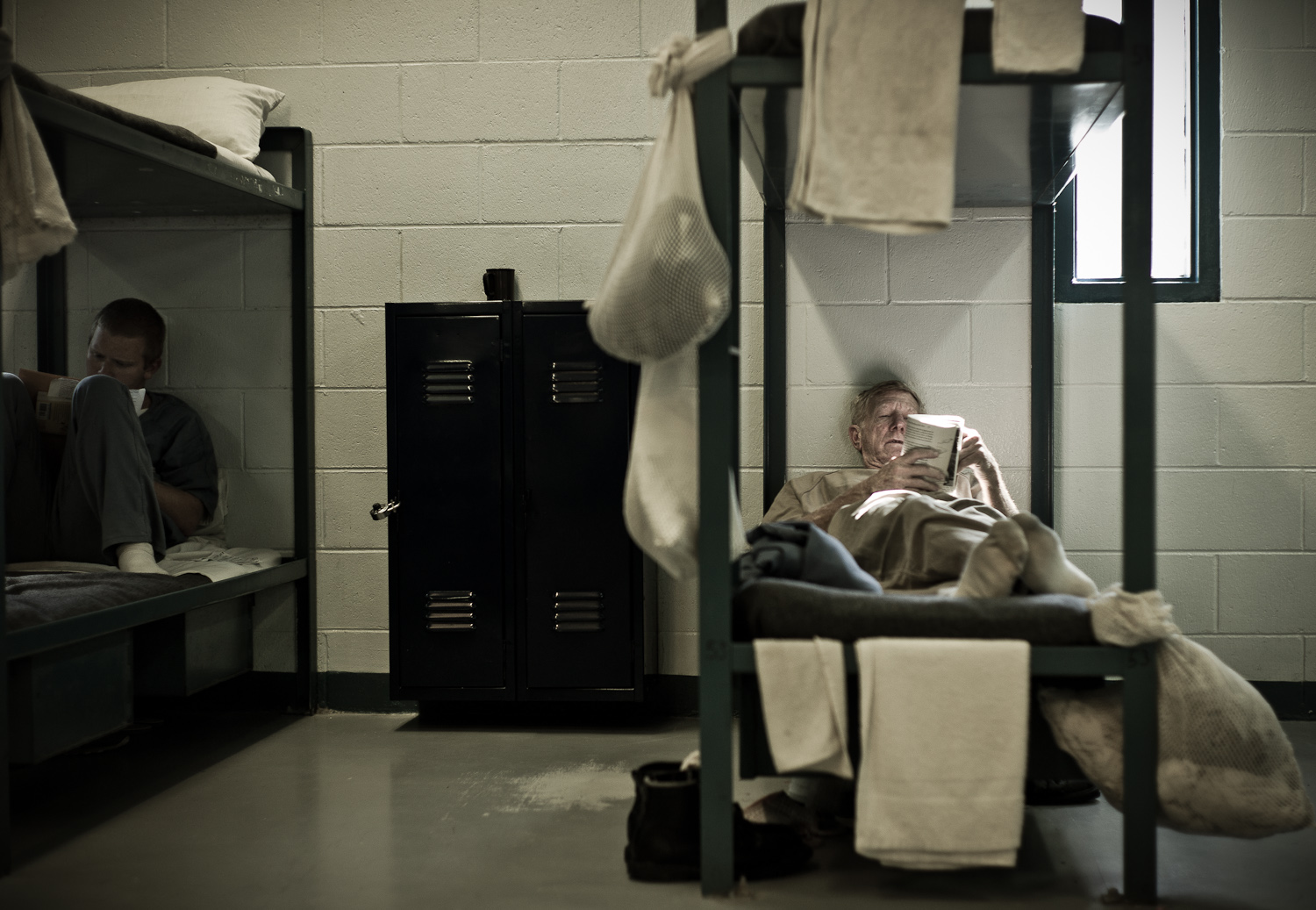
Prisoners read in a dorm room of Moore Haven State Prison, Florida.
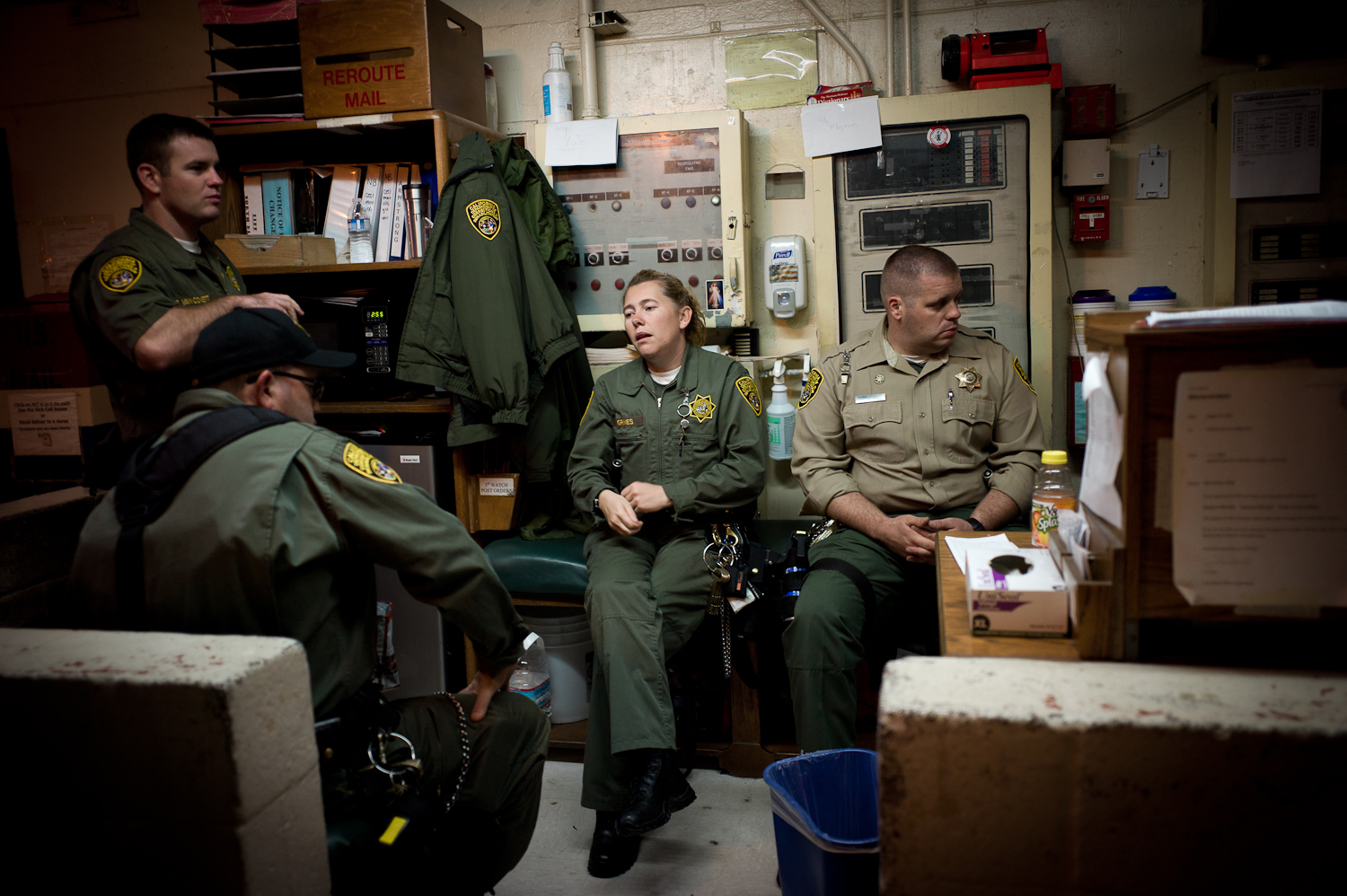
Correctional officers at San Quentin State Prison.
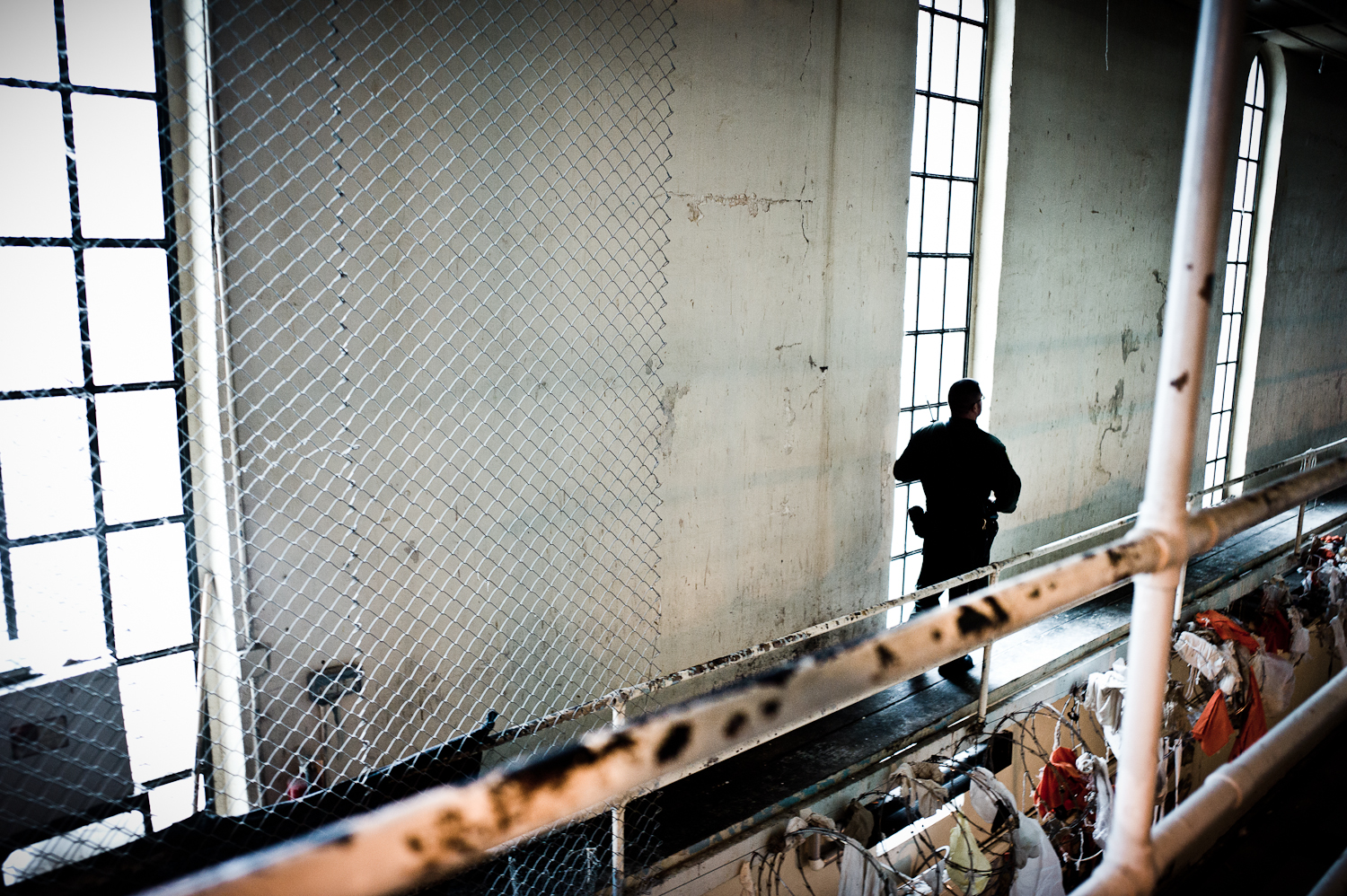
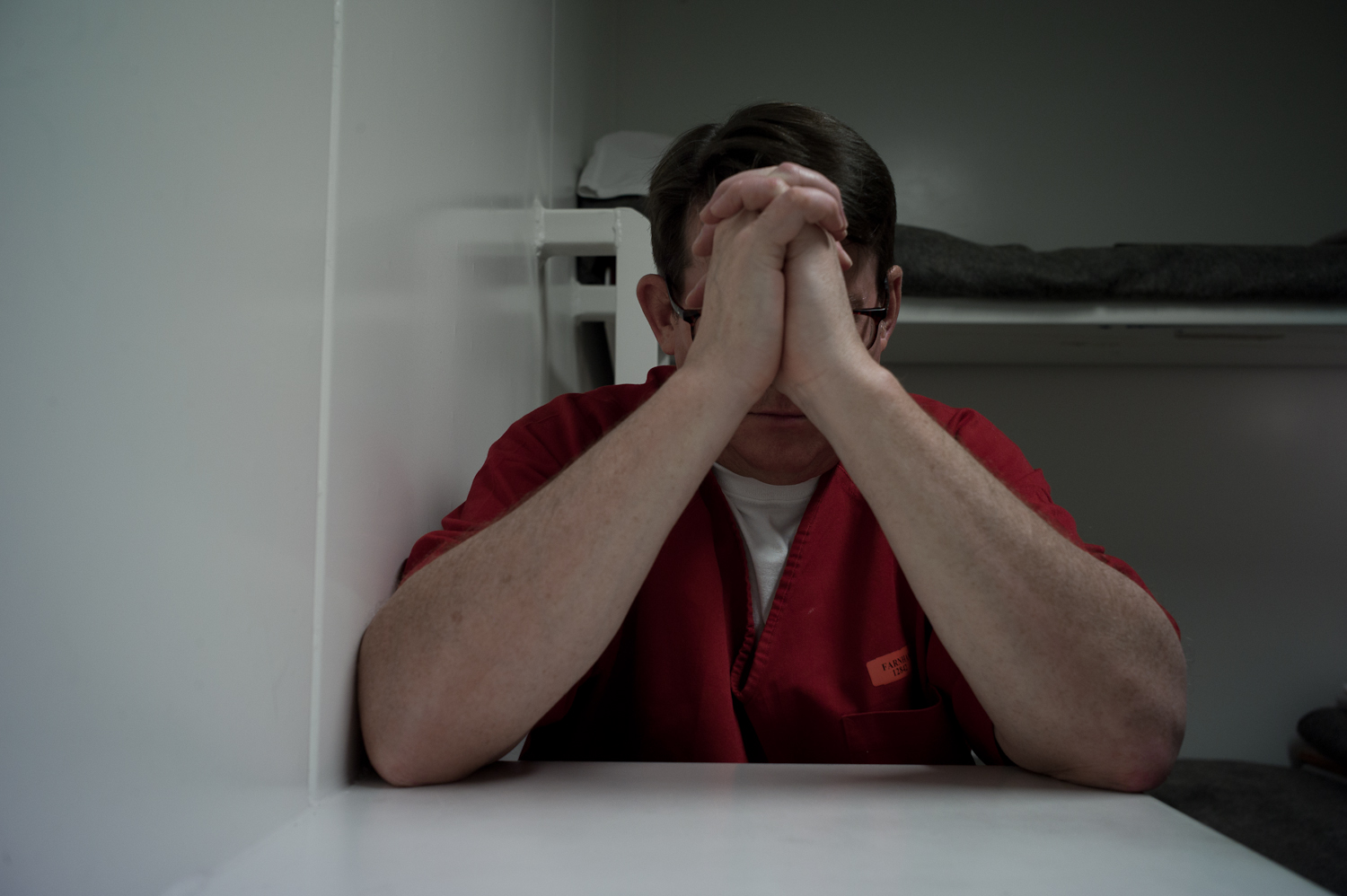
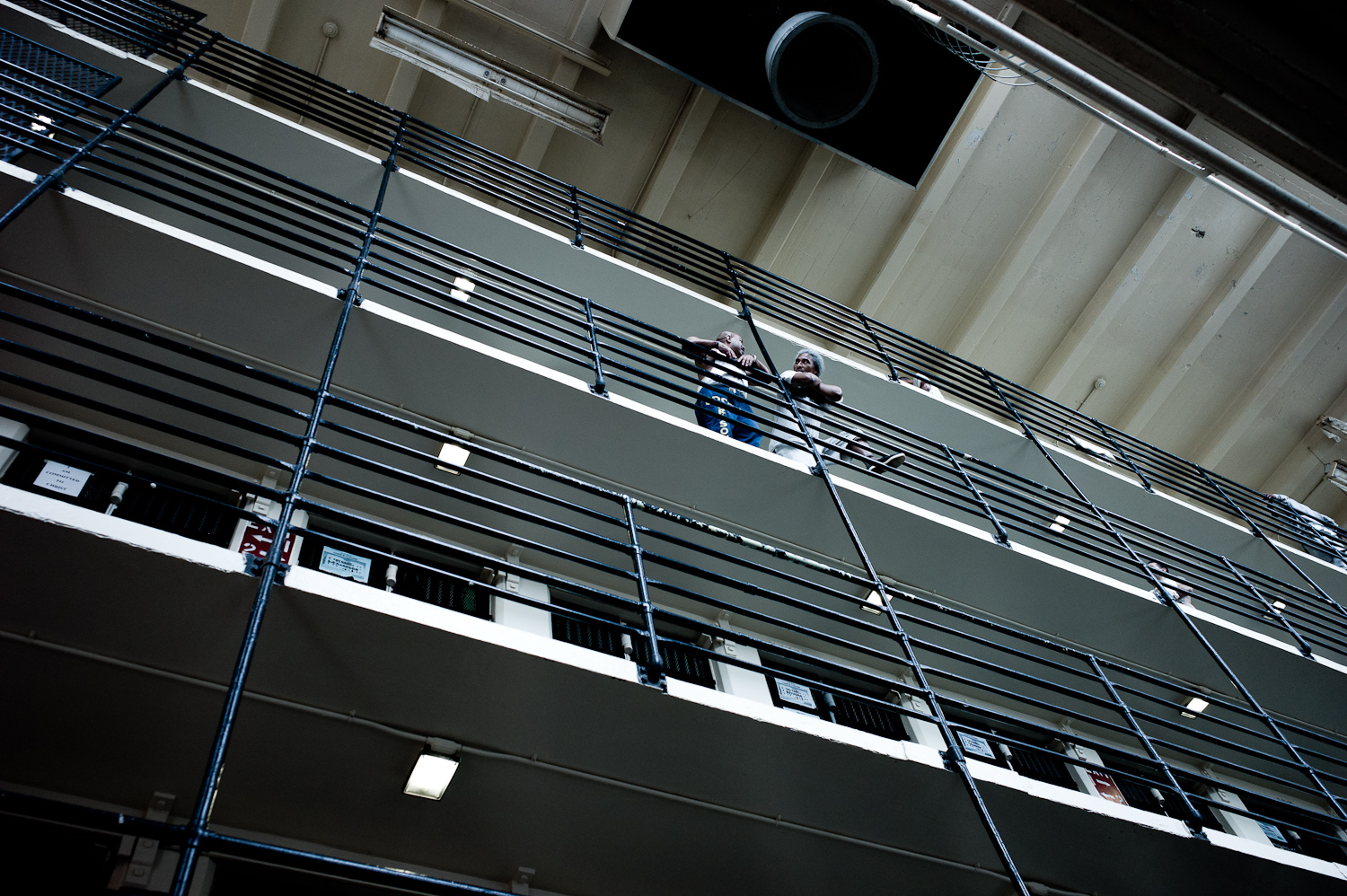
Two prisoners outside their cells on a tier in San Quentin State Prison, California.
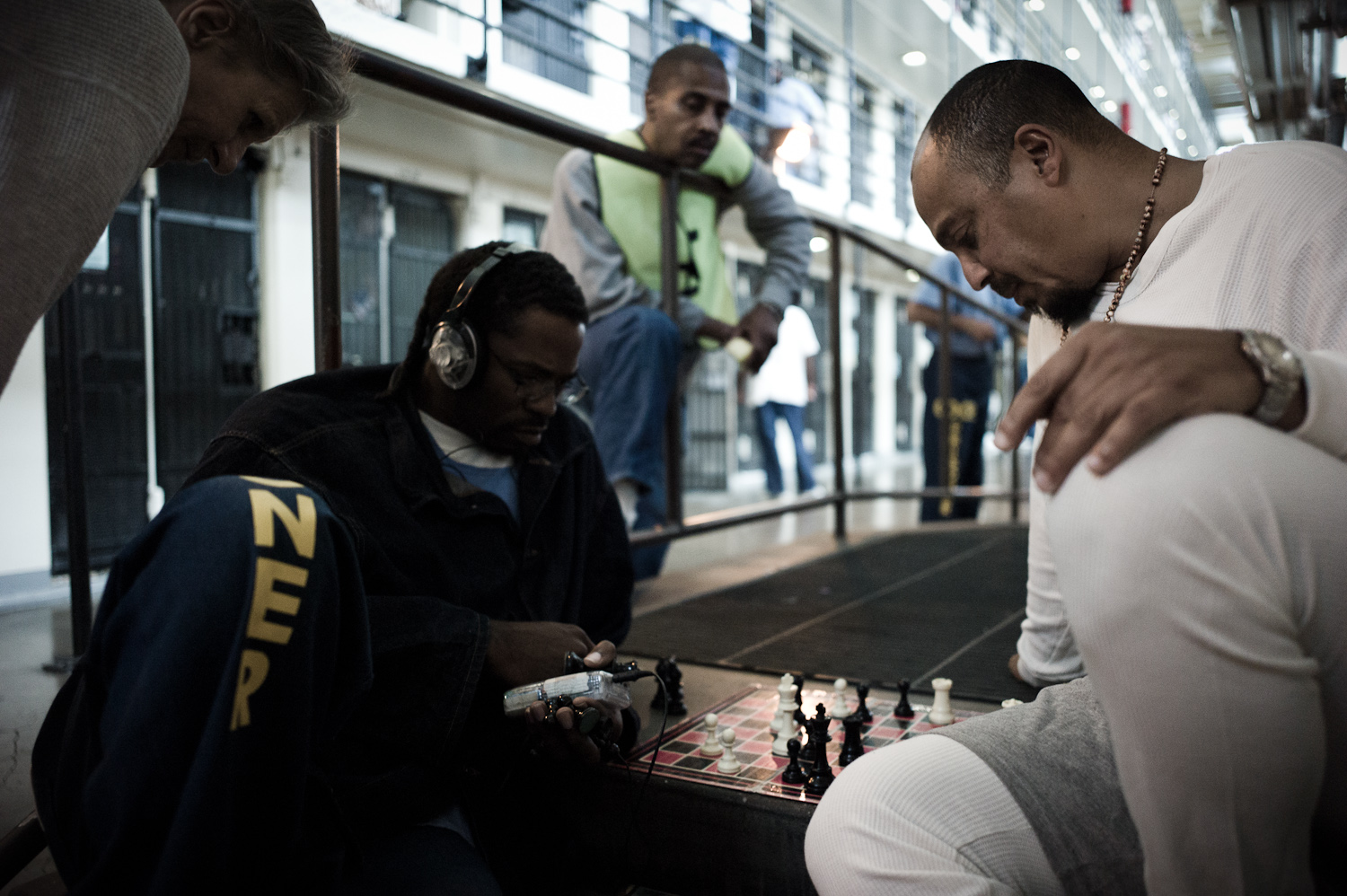
Prisoners play chess in San Quentin State Prison.
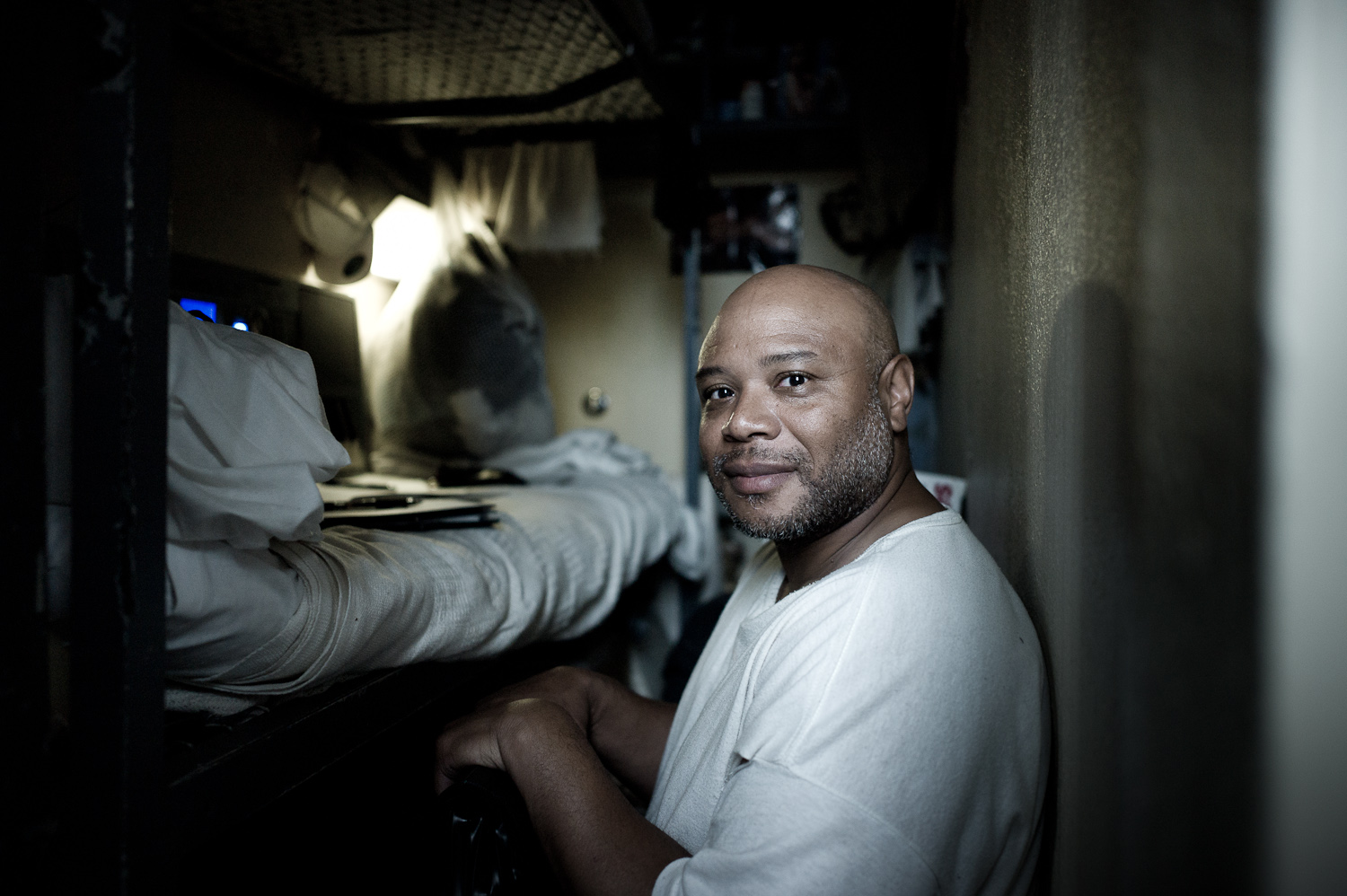
Prisoner working in his cell at a makeshift desk, San Quentin State Prison, California.
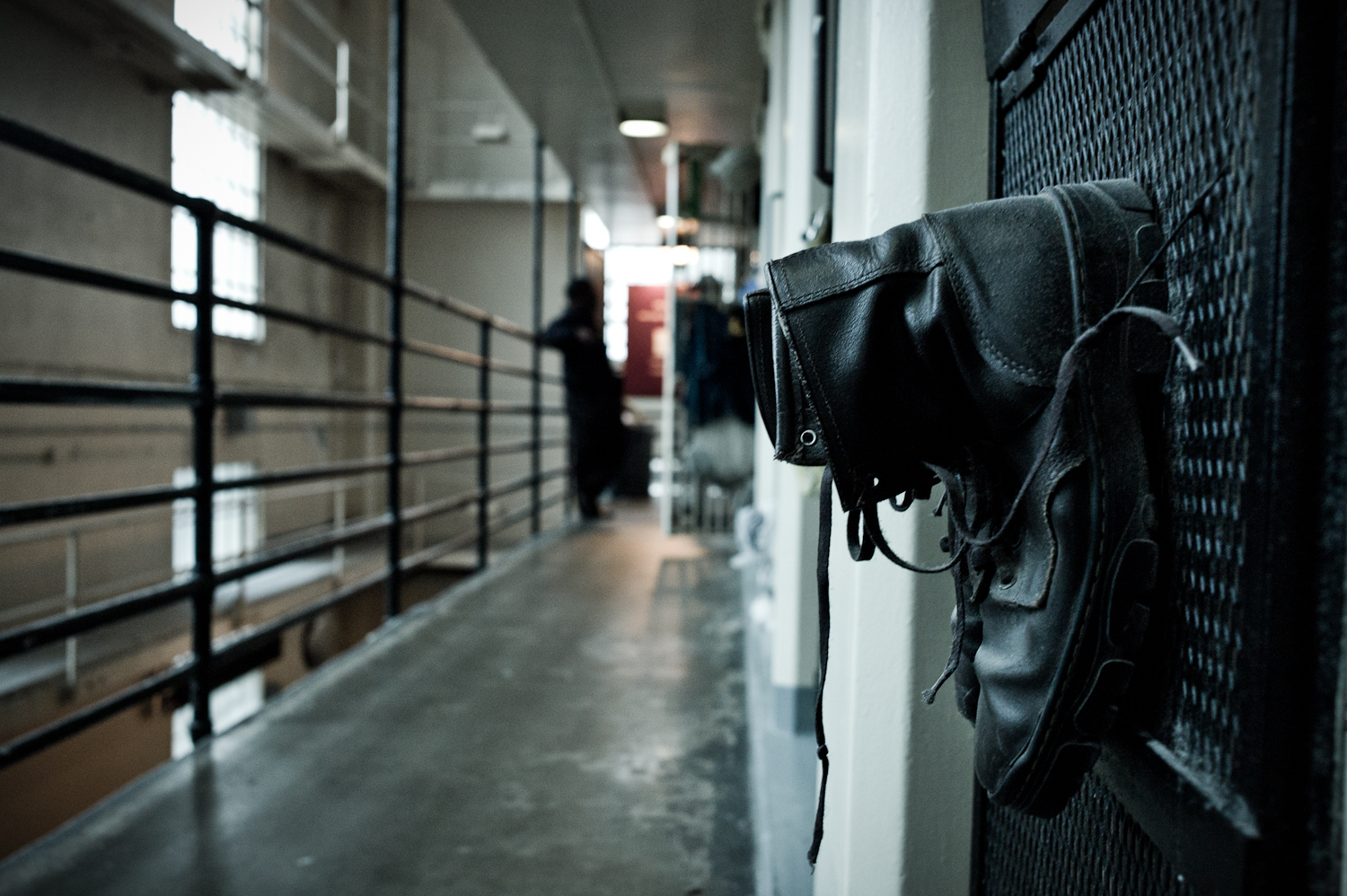
Boots hang outside a cell in San Quentin State Prison, California.
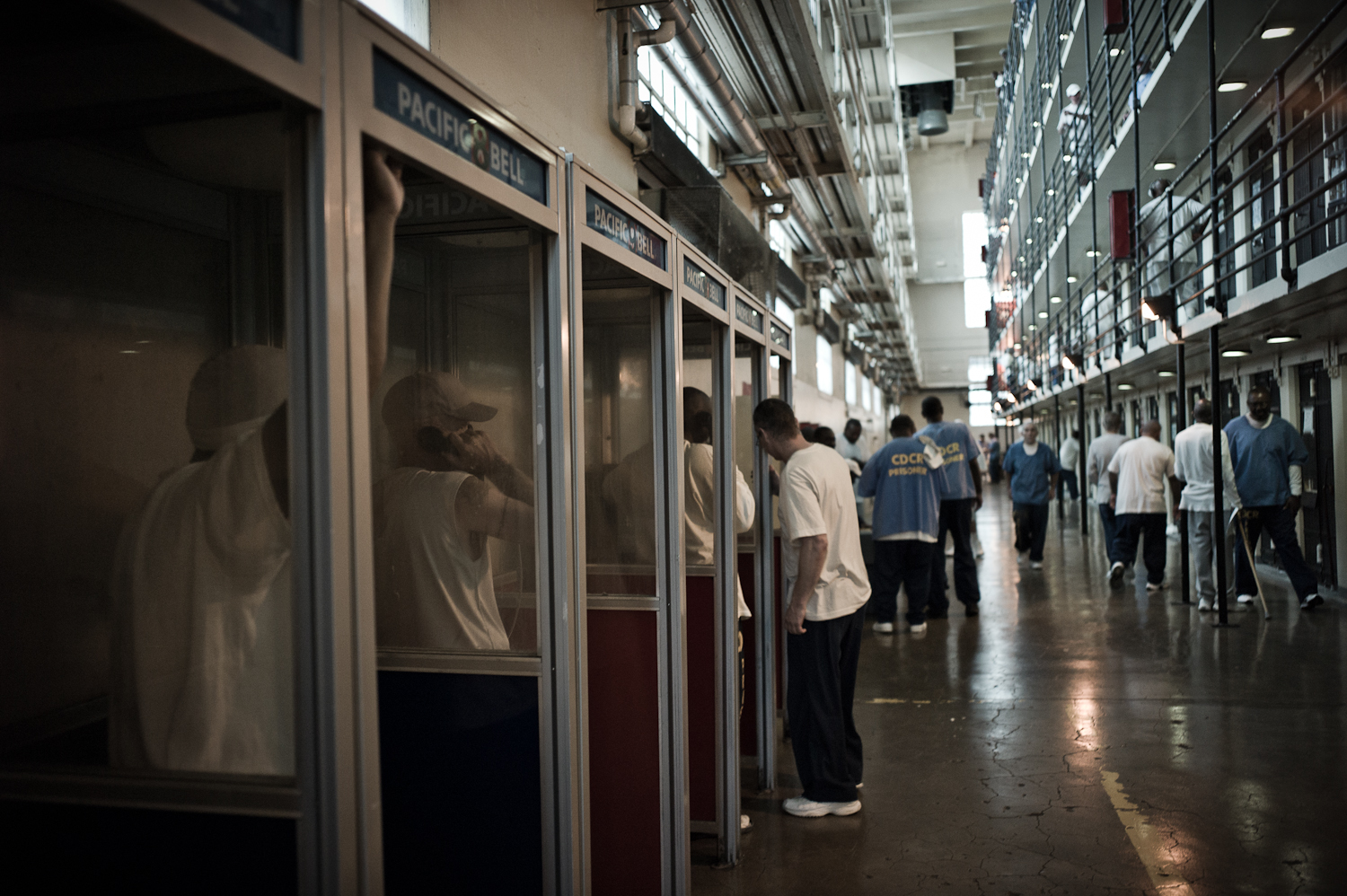
Prisoners in San Quentin State Prison use the phones.
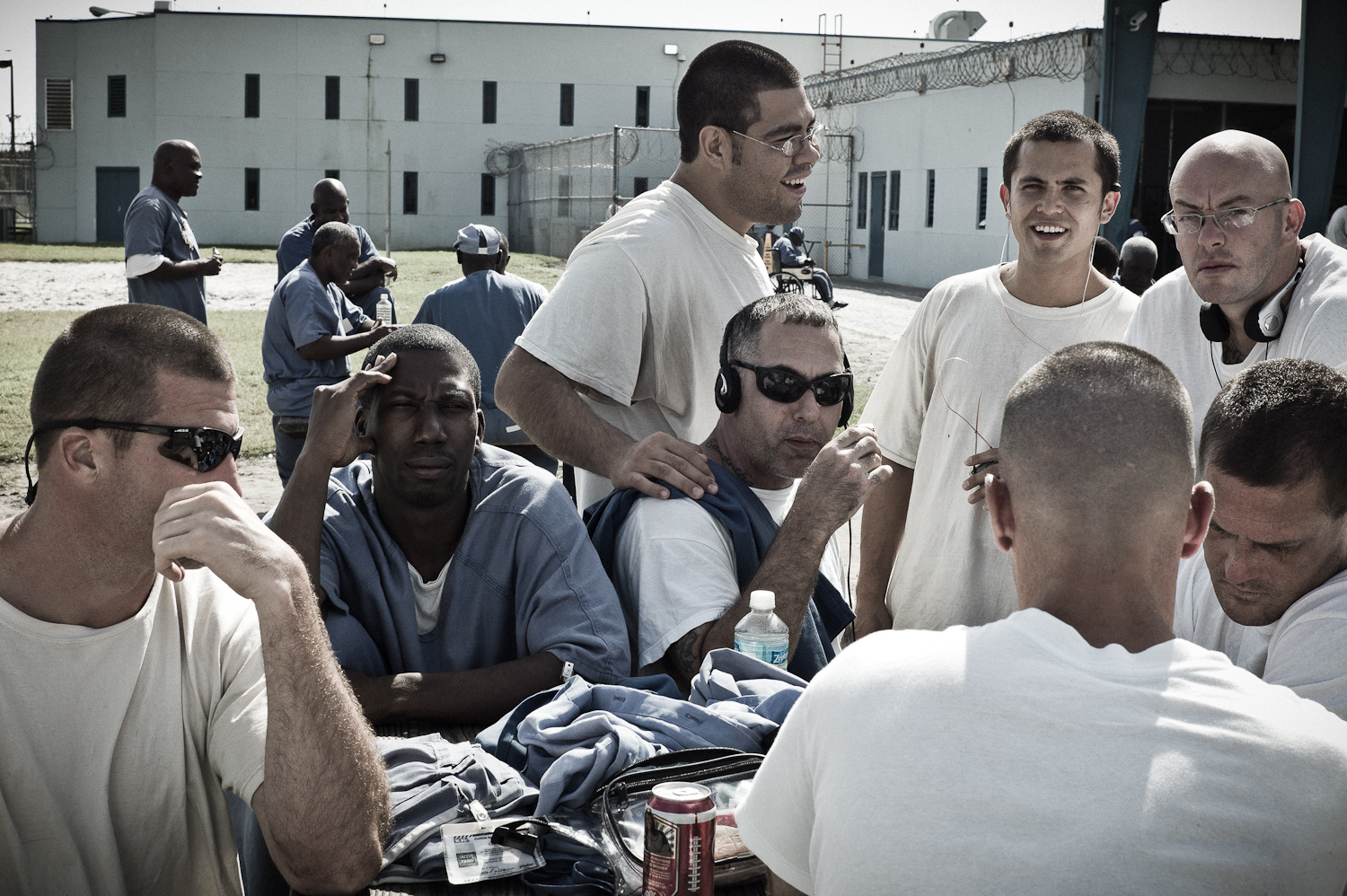
Recreation time for prisoners on the yard of a Florida State Prison.
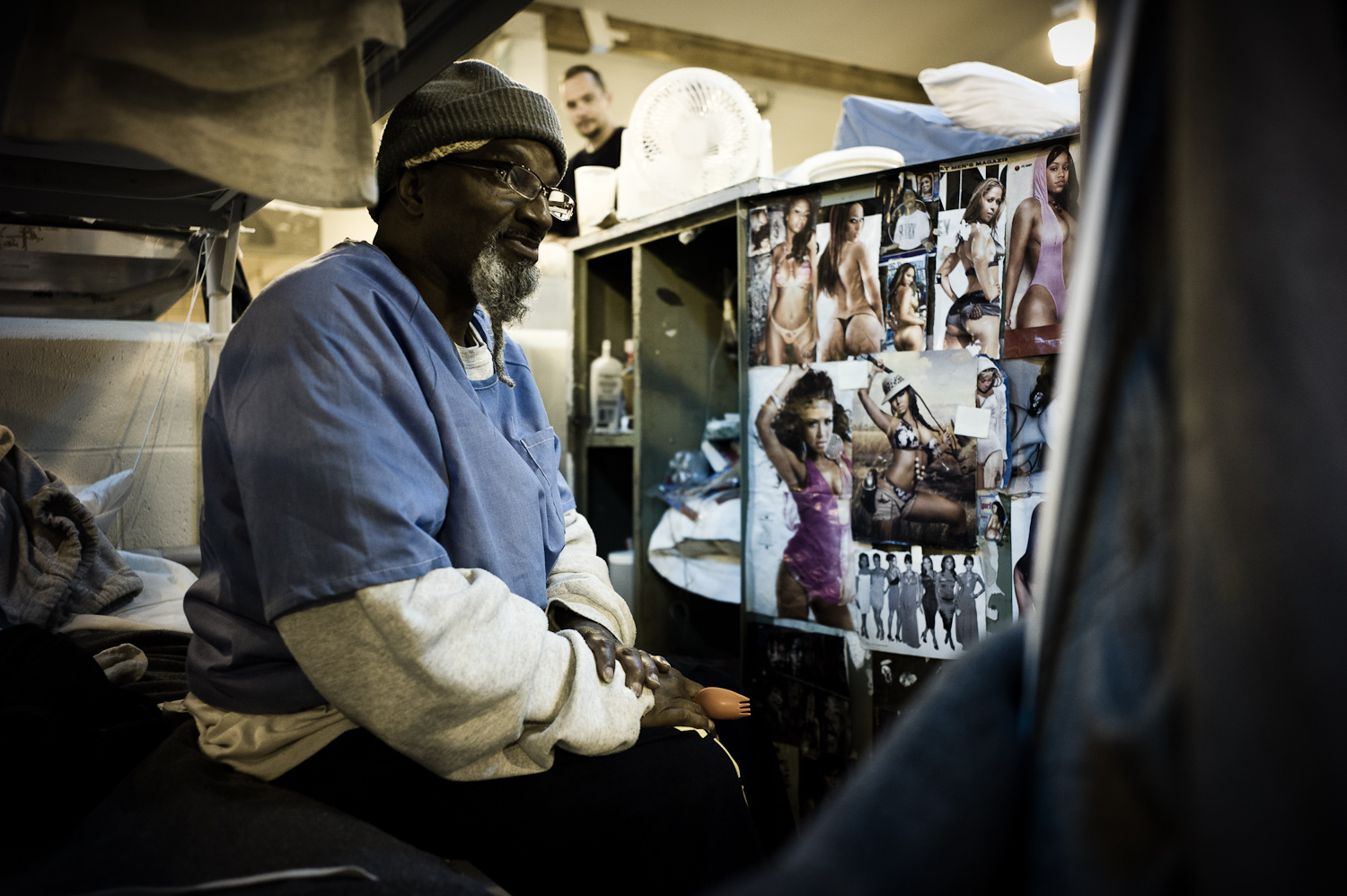
An old man sits on his bunk in a California State Prison.
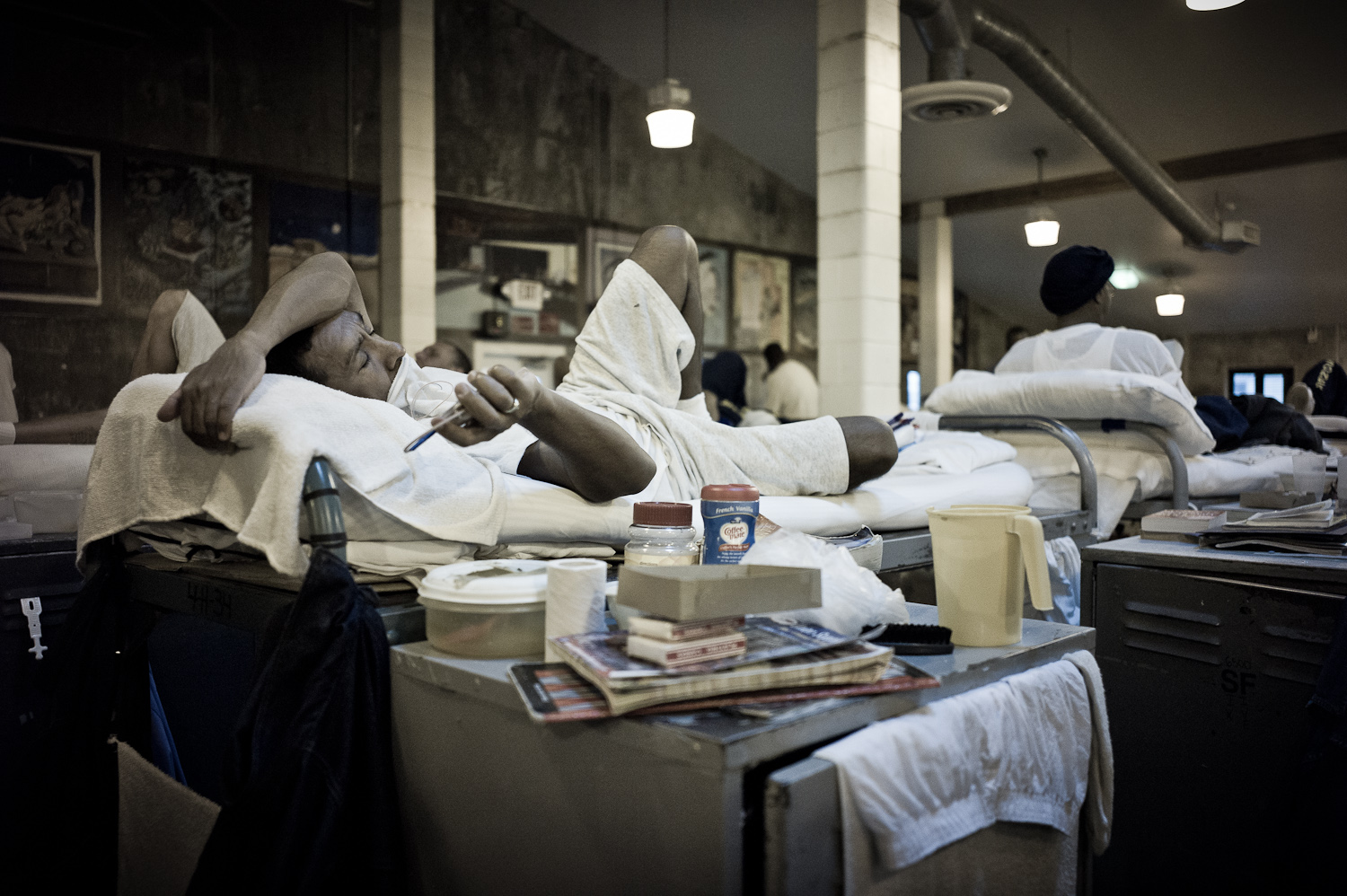
“Life lived in dorm housing in a California State Prison.”

Death Row with Inmate Mural (Sad Clown) in Sing Sing Correctional Facility. New York, 2011.
My parents are thinking about moving out of the house I grew up in. They asked me how I felt about it. In truth, I don’t mind one bit. Still, I appreciate them asking. Places hold memories, for sure, and it was mindful of them to ask my brothers and I how we felt about the house, its relationship to our memories, and a future without it. We Brooks, though, are a pragmatic bunch and feel that as soon as the house is vacated it stops being a home and just bricks and mortar for others to occupy and make their own memories. Likewise, we Brooks will make newer memories in my parents’ new home when we gather for holidays and so forth.
This occurred to me as I was browsing Emily Kinni‘s series Sites Of Execution. Kinni is interested in how quickly the function and memory of places change and her pictures demonstrate how rapidly change can occur. She has photographed not just former sites of execution in the U.S. but, specifically, the former sites of execution in the 17 states that have abolished capital punishment. If the places in Kinni’s hold memories they are violent, sad, retributive and final.

Original Execution Chamber. Electric Chair and Lethal Injection. Now Unused Conference Room in the New Jersey State Prison. New Jersey, 2011.
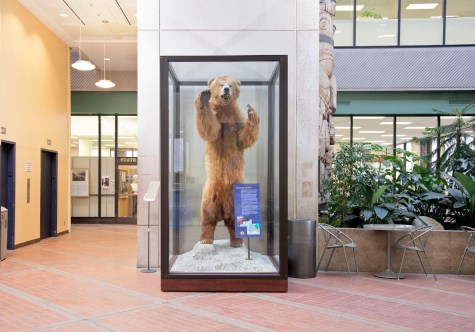
Original Site of Execution. Hanging. Lobby of the State office Department. Alaska, 2011.
I noted Kinni’s work 18-months ago, with criticisms that the series was not complete and that her statement was unintentionally misleading. I am pleased to report that my ‘Watch This Space’ caution has been met with a well-rounded project. Kinni’s survey of the sites (which took over two years) is thorough and her elusive images require work by the viewer to decipher what’s going on. The variety of reused spaces are convincing reminders of how fleetingly history and memory deal with even the most traumatising events.
Interestingly, Kinni is not a crusader for the abolition movement; her images are not intended as a call to challenge death penalty laws in 33 states … and nor do they read that way.
“My affinity for these sites, cannot be considered without the political and historical issues of the death penalty, but it isn’t where it begins,” says Kinni. “My interest is in the evolution of these sites – how places for execution are changed and what the sites become eliminating their historical relevance.”
Many photographers have dealt with memory and landscape by contrasting their images of seemingly benign sites with captions that describe past horrors or crimes. Four worth mentioning would be Eva Leitolf‘s Looking For Evidence – a survey of hate crimes in Europe; Jessica Ingram‘s A Civil Rights Memorial – photographs of hate crimes in America; Joel Sternfeld‘s Landscape In Memoriam – photographs of interpersonal, corporate and environmental crimes; and Taryn Simon‘s The Innocents – an obfuscation of memory and testimony.
Tensions between apparently innocuous images and their factual captions will always capture my attention. Such purposeful tensions are engaging.
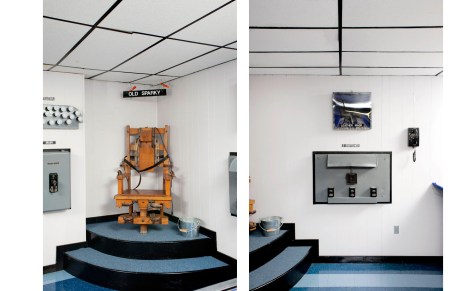
Old Sparky, West Virginia Penitentiary. 2011 (left); Leather Mask and Three Switches, West Virginia Penitentiary. 2011 (right).
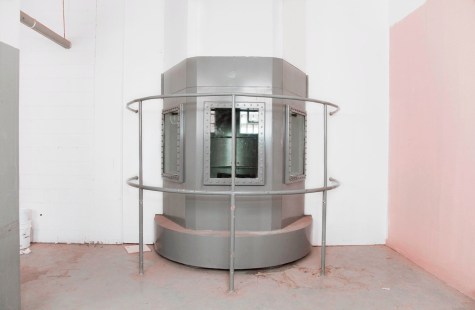
Gas Chamber on the Spectator Side. Gas Chamber. Still sits in the now abandoned New Mexico State State Penitentiary. New Mexico, 2011.

Original Execution Chamber. Electric Chair. Now a Vocational Space in Sing Sing Correctional Facility. New York, 2011.
Some of Kinni’s sites are no longer prisons and she was helped with her research by local experts.
“I was fortunate enough to meet people among a select few – if not the only people living – who possess facts and documents about where the last executions took place,” says Kinni. “They owned historical evidence within their personal collections and homes that didn’t exist elsewhere. Without their knowledge, I would have been at a huge loss.”
In other cases, where prison space has been repurposed, Kinni experienced the same labyrinthine negotiations common of prison photography projects.
“The level of negotiation varied state by state,” she says. “The hardest negotiations were in states where people I had begun communication with particular officials, who changed positions or retired unbeknownst to me.”
I like this project. Take a look.

Original Site of Execution. Hanging. Now a Janitorial Break Room. Minnesota, 2011.

The Original Site of Execution. Hanging. Now a parking lot in the Oahu Community Correctional Center. Hawaii, 2012.

Original Site of the Last Execution. Hanging. Now a Department Store. Rhode Island, 2012.

Original Site of Execution. Hanging. Now a Residence. Wisconsin, 2012.

Original site of the Execution Chamber. Was last used as a basketball court for inmates until the Prison closed. The chamber has been recreated using original materials inside the prison walls in its own museum. Electric Chair. West Virginia Penitentiary, 2011.
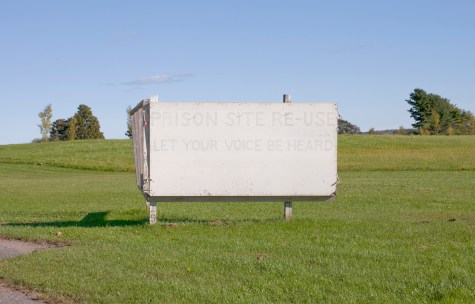
Original Site of Execution, Hanging. The prison was torn down and buried below the field which is now in it’s place. A Sign raises a question of what will be next for the site. Maine, 2012.
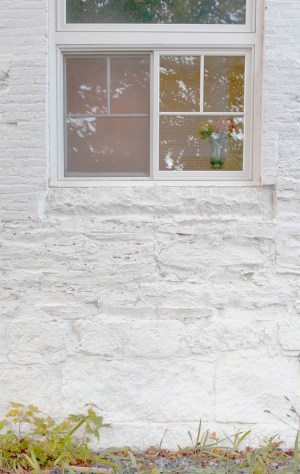
Original Site of Execution. Electric Chair. Now a Retirement Home. Vermont, 2012.
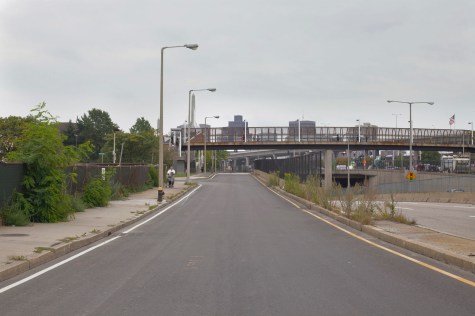
Original Site of Execution, Electric Chair. The prison was torn down and is now a highway lane. Massachusetts, 2012.

Gas Chamber, Closed, New Mexico State Penitentiary. 2011 (left); Gas Chamber, Open, New Mexico State Penitentiary, 2011 (right).


 Prison Photography