
You are currently browsing the category archive for the ‘Documentary’ category.
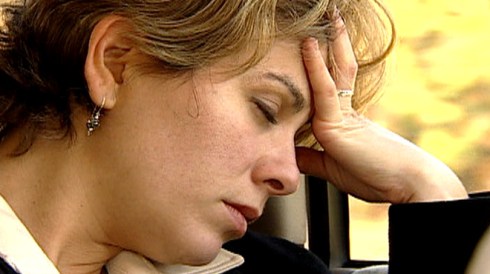
Still from Sentencing the Victim
It is my stated mission to discuss the unprecedented growth, size and activities of the American prison system. I believe that there are better solutions to solving transgressions in our society than warehousing people. I especially believe this with regards to people sentenced to non-violent crimes.
However, prisons should exist for people who are a threat to public safety. I worry that sometimes people may mistake me for an apologist for all criminals. This is not the case.
For heinous crimes – such as rape, kidnap, torture or pre-meditated murder – prison is a fitting punishment.
WOMEN & GIRLS LEAD ONLINE FILM FESTIVAL
As part of Women’s History Month, PBS and Independent Lens – in a series named Women & Girls Lead – are making available (only during the month of March) online films that amplify the voices of women and girls acting as leaders, expand understanding of gender equity, and ‘focus, educate, and connect citizens worldwide in support of the issues facing women and girls.’
There is a vast array of films, some about criminal justice. Me Facing Life is about a 16-year-old sentenced to life for killing a man who picked her up for sex and Troop 1500 is a participatory documentary about, and made by, the daughters of mothers who are serving time for serious crimes, giving them a chance to rebuild their broken bonds.
SENTENCING THE VICTIM
Very different in tone and very difficult to watch, Sentencing the Victim tells the story of Joanna Katz who was gang-raped in 1988. Following the trial of her five attackers, she is required to appear before the North Carolina parole board for each and every parole hearing. The film fluctuates between her account of the ordeal and the repeated visits and legal mantra by parole board members. The inflexibility of a system means the parole hearings of her assailants are not heard at the same time. This difficult process is something Katz and her incredibly supportive and wise parents go through five times as many times as should be reasonably expected.
Katz is now an advocate for all victims of rape and it is a testament to her strength that she produced this film; it is for all our educations. The film was instrumental in streamlining the legal process and lessening the burden on victims.
What I expect of a prison system is that it makes possible for every individual sentenced the opportunity to take full account of their responsibilities. Joanna’s assailants don’t feature in the movie, nor should they given its purpose to roundly describe the victims experience. Violence is a learned behaviour and it can become a disease of communities. It is much easier to continue a life of violence than it is to educate oneself and see the destructive and unforgiving reach of violence for what it is.
Taking responsibility for ones actions is transformative and positive; prisons need to allow the space and the environment for remorse and accountability to surface. Some prison do that and others engender violence further.
To deny liberty to the most predatory of criminals is a reasonable expectation of prisons. But there is too much violence in the world and prisons shouldn’t be incubators of violence. Even for the worst of the worst – especially for the worst of the worst – prisons should be places of self-examination, apology and healing.
ABOUT SENTENCING THE VICTIM
On June 17, 1988, Joanna Katz and another woman were abducted at gunpoint, taken to an abandoned house in Charleston, South Carolina, and brutally raped, beaten and tortured by five men for more than five hours. Sentencing the Victim is the story of how a blood-soaked 19-year-old was able to walk away from her attackers, save her friend from certain death, and continue fighting for the convictions of her assailants — and for the rights of crime victims everywhere.
Under South Carolina law, felons convicted prior to 1996 can eventually be considered for parole every two years. Despite their 30-to-35-year sentences, Katz’s attackers were eligible for parole after serving only a fraction of this time. And in a particularly cruel twist, criminals in South Carolina who participate in a group assault receive separate parole hearings on separate days. Victims who wish to oppose parole for their attackers must subject themselves to an emotionally agonizing experience that must be repeated year after year. In order to ensure that her attackers would remain behind bars, Joanna Katz had to travel more than 100 miles from her home numerous times every year to attend separate parole hearings for each of the men who assaulted her.
The hearings continue until the criminals are either paroled or complete their sentences and are released back into the community. Each hearing reopens old wounds. With each hearing, Katz wonders who was really sentenced: was it her attackers, up for parole after serving a minimal sentence, or was it her, forced to relive her trauma over and over again?
Through April 1st, view the WOMEN & GIRLS LEAD ONLINE FILM FESTIVAL and visit the website.
– – –
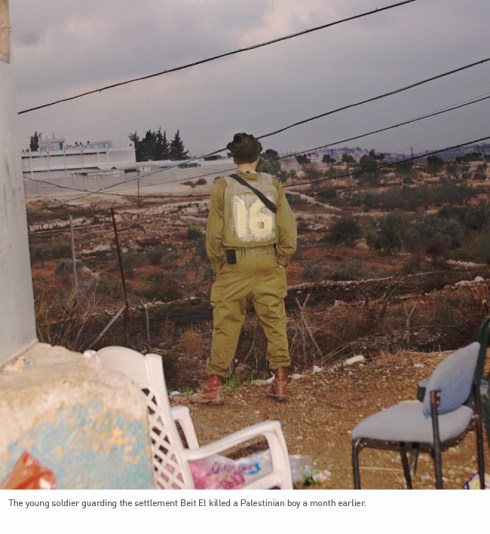
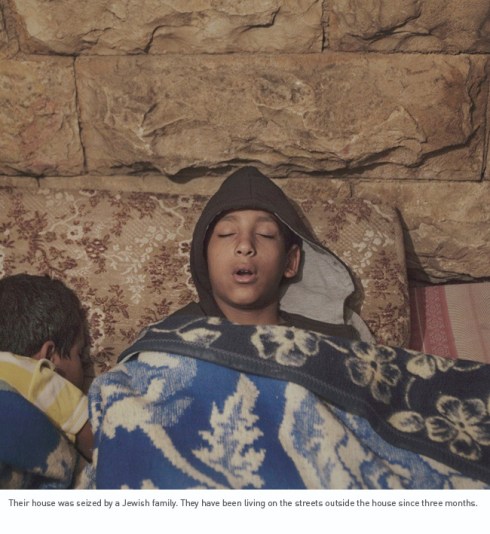
Life’s A Blast is a personal meditation on Israel and Palestine as seen through the lens of a young Swedish visitor. Linda Forsell visited Israel, Gaza and the West Bank several times between 2008 and 2010. She returned with a selection of images that read like a journal.
I first became aware of Forsell’s work when Life’s A Blast was shortlisted for the 2010 Magnum Expressions Award. I’m a big fan. I, therefore, did not hesitate to write a foreword when invited to do so by Linda. Below, punctuated by Linda’s images, is the I essay I wrote the new-release book Life’s A Blast.
– – –

– – –
“He lowered the glasses and pulled down the cotton mask from his face and wiped his nose on the back of his wrist and then glassed the country again. Then he just sat there holding the binoculars and watching the ashen daylight congeal over the land. He knew only that the child was his warrant. He said: If he is not the word of God, God never spoke.”
— Cormac McCarthy, The Road
It’s fair to speculate that all photography surfacing from Israel and Palestine is about land. Knowing what we do about land disputes, settlements and segregation in the region, it’s difficult not to ascribe images a political position favoring the land claims of either the Israelis or Palestinians. This is understandable in a climate of contemporary opinion that has roundly rejected the idea of photography and photographer as objective agents.
Linda Forsell’s photographs are not landscape photographs in the traditional sense. However, the beguiling vignettes within the pages of this book do return us to issues of land, and to the discomfiting realisation that no one in Israel or Palestine has a grounded or reliable relationship to the land.
In considering the surety of land-claims – claims backed with violence – in Israel and the Palestinian Territories, it may seem absurd to describe peoples’ connections to land as without root. Perhaps, the word ‘ambiguous’ more faithfully describes the disconnect. Between the certainty of established political positions and the uncertainty of physical existence in the region there exists a vast gulf of ambiguity.
Life’s A Blast is a challenge to convention and photographic authority, a sustained and deliberate visual wobble.
Within a photograph of an older man teetering atop a wall, the wobble is literal. In the photographs of children wielding weapons and playing among destroyed buildings, the imbalance is allegorical. Men, women and children in Forsell’s work maintain relationships among themselves, but struggle to find their feet.
The tropes of photography – particularly photojournalism – in Israel and Palestine are well known; the checkpoint; the rock-slinging youth; the huddled mother; the wall; the distant settlements on a desert hillside; the coffin raised high at a funeral; and – perhaps with most appearances on international newspaper front pages – the flag. The flag is often accompanied by some billowing smoke.
These tropes persist because, within the boundaries of a news story, these scenes are the illustrative of the quote/unquote action. As consumers of images, we must keep at the forefront of our minds that living in Israel and Palestine goes on outside the boundaries of news column inches.
– – –


– – –
We have begun to see a small but noticeable response by contemporary photographers who have consciously moved away from “crisis photography” – I’m thinking here of recent work and publications by Irina Rozovsky and Yael Ben Zion – toward subtler observations of subtler gestures.
Forsell’s concern for the individual is noticeably different to the drawn back and almost cartographical response by celebrated photographers such as Sophie Ristelbuehler, Willie Doherty, Paul Seawright, Simon Norfolk and Richard Mosse. Of this group, curator and critic Charlotte Cotton says:
“Rather than being caught up in the chaotic midst of an event, or at close quarters to individual pain and suffering, photographers choose instead to represent what is left behind in the wake of such tragedies, often doing so with styles that purpose a qualifying perspective.” [1]
Equally committed to ideas of scarification and dislocation, Forsell, by contrast, takes us closer to people, not further away. In so doing, we encounter the personal and psychological; a soldier who doesn’t want to be there, an old man perplexed by border-point paperwork, the laughter of military-men, a side-street pat down and the confused glances of children. There’s vanity amid the daze and haze, too, in the form of rock-throwing demonstrators that look like they’re dressed for a violent-chic photoshoot. It’s only disconcerting if you accept there are no easy answers for the people of Israel and Palestine.
Too often, repeated news images provide us the excuse to think that events don’t change and can’t change. Worse still, is the trap to think that Israelis and Palestinians are different from us. Such thinking allows us to rationalise ongoing abuses. In discussing atrocities generally, lawyer and feminist scholar Catherine McKinnon characterises attitudes:
“If the events are socially considered unusual, the fact that they happened is denied in specific instances; if they are regarded as usual the fact that they are violating is denied; if it is happening, it’s not so bad, and if it’s really bad, it isn’t happening,” [2]
McKinnon describes the trap and illogic of apathy. The exit door from denial is to first see the victims of abuse as humans. To identify common emotions and thus ourselves in Forsell’s subjects is our responsibility to them … and her gift to us. Turning these pages is to shake the foundations of our excusatory logic.
Life’s A Blast is a significant contribution to the visual discourse of Israel and Palestine. It abandons literal depiction of the region and, instead, looks toward emotional territories.
It is the prior exploration of these emotional lands that will provide the most reliable base on which to stand for those who desire to debate the geopolitics of the region’s contested borders, laws and land.
– – –
1. Charlotte Cotton, ‘The Photograph as Contemporary Art’, p.167. Thames & Hudson, October, 2004.
2. Catharine McKinnon, ‘Are Women Human?: And Other International Dialogues’, p.3, Belknap Press, 2007.
– – –


– – –
Life’s a Blast (106 pages) 10 x 13 inches.
Published by Premiss Förlag.
Printed by Elanders Fälth & Hässler.
ISBN: 9789186743055
Available at the Premiss Förlag website.
Life’s a Blast does not yet have U.S. distribution, so if you want to buy a copy in cold-hard-cash-dollars you’ll have to email Linda and ask nicely: linda@lindaforsell.com
– – –

Execution Chamber, Walls Unit, Huntsville (1994), from Texas Death Row @Ken Light
In early October, Ken Light and I sat down to discuss his project and book Texas Death Row (University Press of Mississippi, 1997).
Light was invited to photograph that dark hole of the Lonestar State by Suzanne Donovan, then the Director of the American Civil Liberties Union (ACLU) of Texas. “I said ‘yes’, knowing it would never happen!” Ken was proven wrong when Donovan’s groundwork and contacts sealed access – Light to the cell tiers and Donovan to the visiting room for interviews.
Texas’ death row is no longer located at the Ellis Unit, which murdered people since 1965. In 1999, the Texas Department of Criminal Justice (TDCJ) moved death row to the Polunsky Unit, West Livingston, TX.
Light describes the body of work, which consists of 13,000 images, as a historical document. The archive maintains it’s relevance proven recently by the case of Cameron Todd Willingham, of whom Light had “seven or eight photographs.” Light provided an image to the New Yorker for the article Trial By Fire, which explained how bunk arson forensics led to the execution of an innocent man.
Light estimates that between 55 and 65 of the men he photographed have since been executed. He felt a responsibility to inform with his camera. His aim was “to humanise the prisoners; to put a human face on the [death penalty] issue,” says Light “The public face of a death row inmate is the mugshot. When they go to appeal, it’s their mugshot; in the news, their mugshot; and when they’re executed, it’s their mugshot. We wanted to know who these men were. How can you have a discussion about the death penalty when you pathologise these men?”
This issue of invisibility, for Light, extends to prison culture in the U.S. as a whole.
“If the public knew about it and understood it then maybe the culture would change. Maybe we’d invest more in education and in rehabilitation. When it’s out of sight, it is out of mind. If you say someone is going to prison, it doesn’t really mean anything,” says Light.
Even so, Light recognises the limitations of the environment, “The prisoners are going to let you see what they are going to let you see.”
Ken and I talk about his liaison with the TDCJ and then Executive Director Wayne Scott (who now has a prison facility named after him); we talk about the power he asserted on assignment with both inmates and guards; the reactions of staff toward his activity; and his “surreal” meeting with Kerry Cook following Cook’s exoneration after 22 years of wrongful imprisonment. Cook is now a campaigner against capital punishment and prison rape.
LISTEN TO OUR DISCUSSION AT THE PRISON PHOTOGRAPHY PODBEAN PAGE
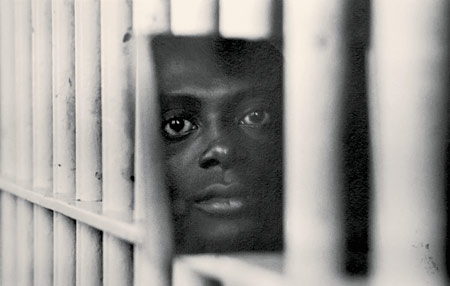
Prisoner with mirror (1994), from Texas Death Row © Ken Light
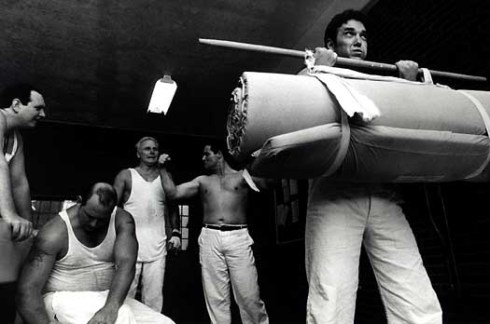
Weight-lifter with makeshift barbells, H-20 wing, work-capable cellblock (1994), from Texas Death Row © Ken Light

Death row inmates in Texas’s Ellis I Unit, with Perry Mason on the TV (1994), from Texas Death Row @ Ken Light

Cameron Todd Willingham on his bunk, in the work-capable cellblock (1994), from Texas Death Row © Ken Light
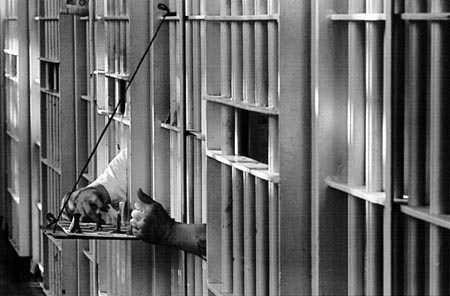
Inmates playing chess on handmade board, in the administration segregation cellblock (1994), from Texas Death Row. @ Ken Light
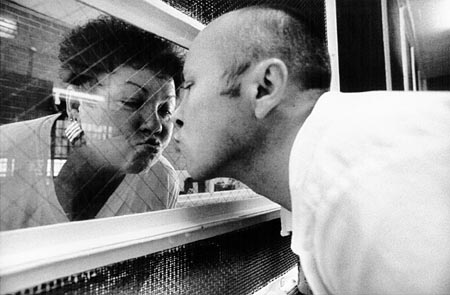
Martin Draughon greeting his mother through glass in the visiting room (1994), from Texas Death Row. © Ken Light

Strip Search in the “Shakedown Room” of the visiting area (1994), from Texas Death Row. © Ken Light

Night view of H-Wing cellblock (1994), from Texas Death Row © Ken Light
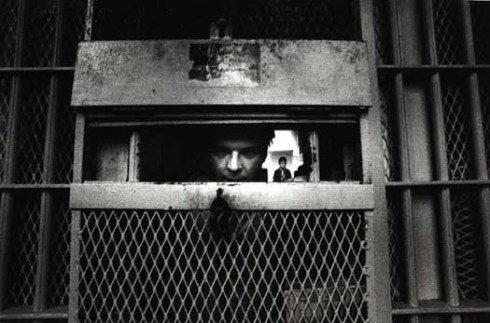
Bobby West with his cub-scout photograph (1994), from Texas Death Row © Ken Light
– – – – – – – – – –
Valley of Shadow and Dreams (2012)
Ken and his wife Melanie have just released Valley of Shadow of Dreams. The book is a photography and literary exploration of California’s Central Valley in the 21st century. Melanie and Ken look at life before, during and after the economic crash and touch upon overlapping issues: the oppression of immigrant workers, agribusiness’ effect upon communities and the environment, unemployment, families, economic volatility and home foreclosures.
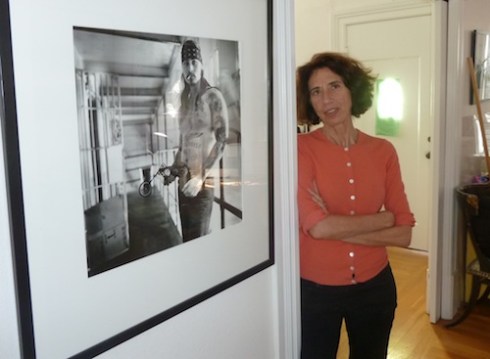
There were two categories of interviewees I planned to connect with during PPOTR – photographers and prison reformers. I didn’t expect to meet many individuals who satisfied both definitions. Ruth Morgan does.
Morgan became director of Community Works, a restorative justice arts program in the San Francisco Bay Area in 1994. Prior to that, she was director of the Jail Arts Program, in the San Francisco County Jail system (1980-1994).
It should be noted that the county jail system is entirely different to the state prison system and operate under separate jurisdictions. County jails hold shorter term inmates.
For three remarkable years, Morgan and her colleague Barbara Yaley had free reign of San Quentin State Prison to interview and photograph the men. In 1979, it was the sympathetic Warden George Sumner who provided Morgan and Yaley access. In 1981, a new Warden at San Quentin abruptly cut-off access.
“I think there were a few reasons [we were successful],” explains Morgan. “Despite the fact I was a young woman, I had a big 2-and-a-quarter camera and a tripod and so they took me seriously. That helped us get the portraits and the stories we did.”
The San Quentin News (Vol. I.II, Issue 11, June, 1982) reported on Morgan and Yaley’s activities. The story Photo-Documentary Team Captures Essence of SQ can be read on page 3 of this PDF version of the newspaper.
Ruth and I talk about how the demographics of prison populations remain the same; her original attraction to the topic; the use of her photographs in the important Toussaint v. McCarthy case (1984) brought by the Prison Law Office against poor conditions in segregation cells of four Northern California prisons; why she never published the photos of men on San Quentin’s Death Row; and the emergence, funding for, and power of restorative justice.
LISTEN TO THE DISCUSSION WITH RUTH MORGAN ON THE PRISON PHOTOGRAPHY PODBEAN PAGE
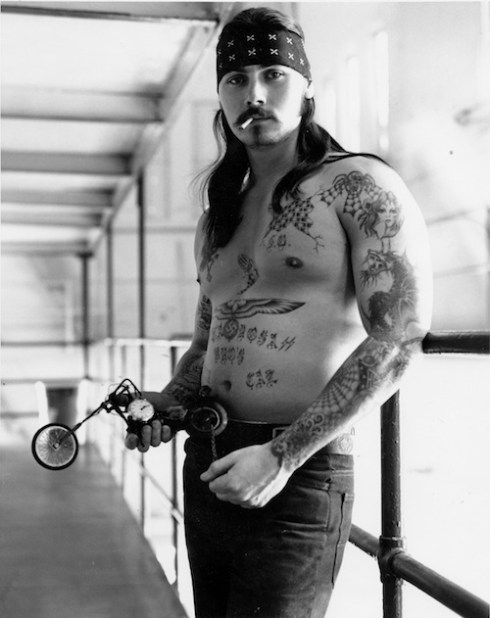
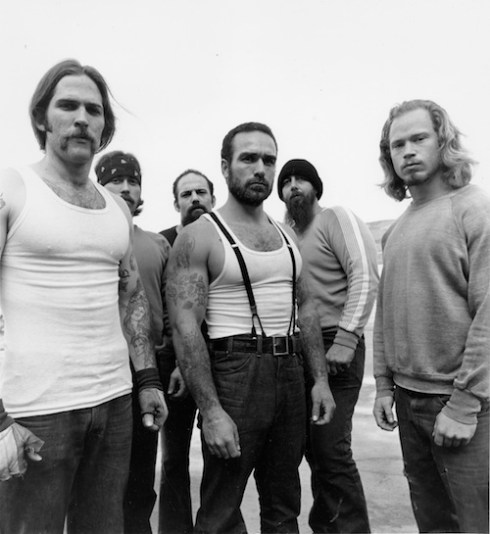


“The unseen subject of these photographs is Power. They show us the human limits to the understanding of Power. There are many things we don’t know about Power. We don’t know if Power is the same everywhere, if its manifestation in one place and time is meaningful, measurable, subject to the same laws as another.”
– – Donald Weber, ‘Confessions of an Invisible Man’, Interrogations, pg. 158
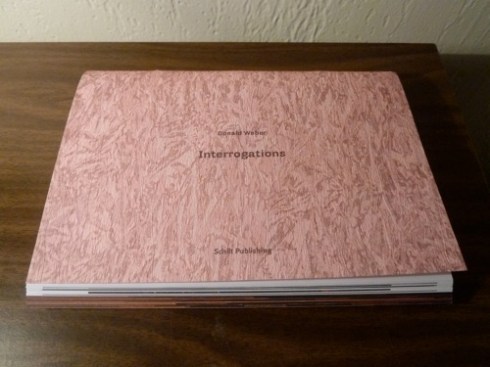

Given that Donald Weber‘s Interrogations has just been awarded a World Press Photo award in the Portraits category, now is a good time to look at the book of the project.
– – –
At passport control my fingerprints flagged an “interaction” with the police authorities five months prior. Directed to a waiting room, I was told to take a seat and remain there until a customs and immigration officer could clarify the details of said interaction.
I wasn’t told how long the wait would be.
Thumbing around in my bag for some reading material to pass the time, I broke a wry smile when I pulled out Donald Weber’s Interrogations. He’d mailed it a few weeks prior. This was the first chance I’d had to look it over.
– – –
Held by a stitched spine, the 160 pages taper to the centre on the outside edge of the book (see image above).
Weber and publisher Schilt also made the decision to bind it in the same wallpaper stock that hangs on the wall behind many of the detainees. Weber has come to see the modern State as “a primitive and bloody sacrificial rite of unnamed Power.” The choice of the outmoded wallpaper is an unnerving nod to the Power of a throwback era and brings us closer to the outmoded policing within these outmoded spaces.
Weber spent months – possibly years – building a rapport with the police department in order to sit in on their questioning and to make photographs. “I would just sit there from 9am in the morning to the evening, and just wait. I went days without actually taking pictures. It’s a game of chicken, and I always flinch last,” Weber told Colin Pantall. I’m a little disappointed Weber doesn’t provide the name of the station or town it is in. All we know is that it is in Ukraine.
Interrogations is an unorthodox, shocking and depressing portraiture project. A juvenile, with words scrawled on his forehead in black marker-pen, sobs; a woman in a dirty sheepskin coat resembles more a carcass than a human; in a sequence of three images we witness one detainee first, terrified; second, threatened by an open palmed strike; and third, with a gun to his temple.
– – –
I was sat awaiting the inconvenience of an unnecessary interview, but I was certainly not awaiting the psychological and physical abuse meted out to Weber’s subjects.
After our brief chat, the immigration officer asked me if I had any questions and assured me I wasn’t on camera. In a relatively powerless position, to not be recorded was a small victory, I considered.
– – –
This idea of being seen during an interview goes to the heart of Weber’s series.
– – –
Here I was, subject to networked systems of law enforcement and U.S. Homeland Security, but I could be sure I’d not face the intimacy of abuse depicted in Weber’s photographs.
– – –
The strength of Interrogations is that it teeters on an ethical dilemma: should Weber have been present? In attendance, was Weber complicit? Are his photographs further abuse and violation?
The answers to these questions are ones that Weber is happy to take on and he has done so in public forums here on Prison Photography and also at Colin Pantall’s blog and at DVAFOTO.
The answers are also easier to find than we might think.
I’d argue Weber’s presence had little to no effect on the behaviours of the interviewers. Given the time he spent in interrogation rooms (evidenced by 51 portraits no less) I’m inclined to subscribe to the reasoning that eventually a photographer’s presence is taken for granted/forgotten and behaviour is less and less effected by the camera-wielding observer.
Diane Smyth, for BJP, describes the interrogations as violating theatre, “Igor and his partners play good cop, bad cop (“or actually, really bad cop, and bad cop”), using threats and intimidation to break the suspects they are questioning in the seemingly anodyne pink room.” Weber sat in the stalls, watching.
One presumes that if Weber’s attendance did alter activities it was to lessen the abuse, not escalate it?
When we are faced with decidedly uncomfortable (abusive) scenes in photography, we cannot help ourselves but to think of the photographer as in some way complicit. This is a sure way to derail inquiry; it is an emotional response that centres on the act of photography instead of the subject. As Susie Linfield lays out in The Cruel Radiance, photography of atrocity can as easily provide an opportunity to dismiss the act, distance ourselves from the images, and move away from topic at hand.
Weber’s work is in our face, but that doesn’t mean we should turn away. An illustrated prologue of Weber’s six years in the former Soviet provide some context for Interrogations. These darker, exploratory more ambiguous images temper a presumption that Interrogations was a smash-and-grab job; we know Weber spent years in the region and that he built-up to this particular project.
Similarly, Weber’s essay, ‘Confessions’ and Larry Frolick’s epilogue provide insight into living within the milieu of policing, crime and punishment in Russia and Ukraine. These elements of the book together provide opportunities for us to enter into the complex society in which Weber lived and worked.
Bluntly put, the superimposed dilemma of a photographer’s ethics are the least of the concerns for the people in the region and in Weber’s photographs.
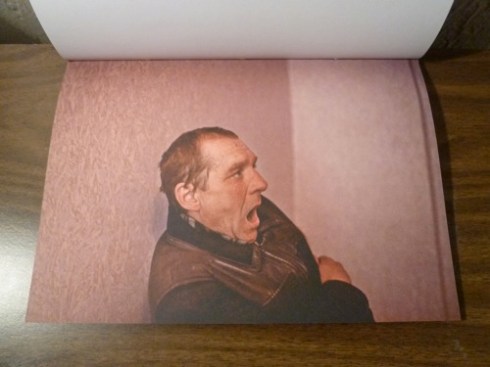
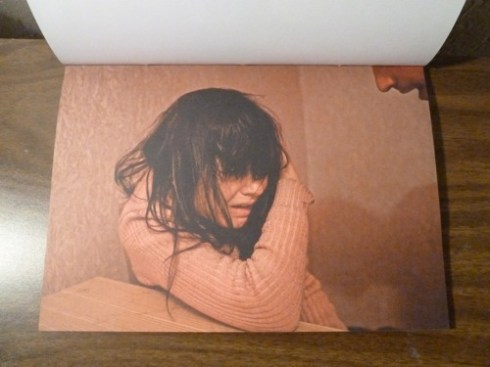
Weber provides no caption information for his subjects. Did he ever have access to it?
In his brief essay, Weber is aware of his role as photographer within a web of power (with a capital P); how else would he be granted entry to interrogation rooms? Weber puts the meaning of his photographs not fully on the lives of his unknown subjects, but in the context of institutional power.
“We do know that Power is dangerous and exhilarating,” says Weber in the book’s essay, “It expands in proportion to its invisibility.”
With that, instead of asking what does it mean for a photographer to witness institutional abuse, we should be asking what does it mean when there is no witness, photographer or otherwise?
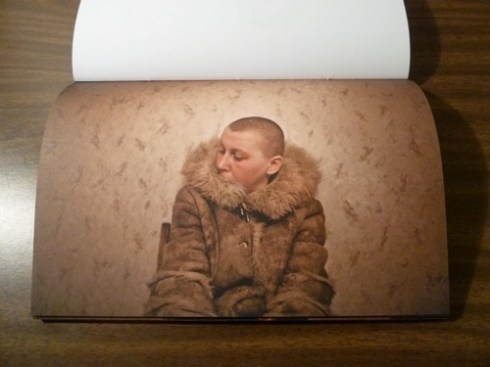
Interrogations, (160 pages) by Donald Weber (2011)
Published by Schilt, Amsterdam.
Designed by Teun van der Heijden of Heijdens Karwei, Amsterdam.
Printed by Wachter GmbH, in Bönnigheim, Baden-Württemberg, Germany.
Distributed by Thames & Hudson worldwide. Distributed by Ingram in North America.
Amy Elkins invited me to curate an online exhibit for Women in Photography, a group now under the umbrella of the Humble Arts Foundation.
My choice of twelve female photographers – Jenn Ackerman, Araminta de Clermont, Alyse Emdur, Christiane Feser, Cheryl Hanna-Truscott, Deborah Luster, Britney Anne Majure, Nathalie Mohadjer, Yana Payusova, Julia Rendleman, Marilyn Suriani, and Kristen S. Wilkins – are a eclectic mix of artists with different approaches to photography in sites of incarceration. Among their works you’ll find fine art documentary, found photography, alternative process, painted photographs, collaborative portraiture, dreamy landscape, photojournalist dispatches and social activism.
Some ladies’ work I’ve featured before on Prison Photography; some are relatively new discoveries; others I met during Prison Photography on the Road; and a few are included in the ongoing Cruel and Unusual show at Noorderlicht.
Thanks to WIPNYC co-founders Amy and Cara Phillips for providing an avenue with which to disseminate photography that counters stereotypes and informs audiences of lives behind bars. Thanks also to Megan Charland for formatting the exhibition.
From my curatorial statement
In the past 40 years, America’s prison population has more than quadrupled from under 500,000 to over 2.3 million. This program of mass incarceration is unprecedented in human history. Women have born the brunt of this disastrous growth. Within that fourfold increase, the female prison population has increased eightfold. You heard right: women are incarcerated today at eight times the number they were in the early 1970s. Are women really eight times more dangerous as they were two generations ago?
Please, browse the gallery, bios and linked portfolios.

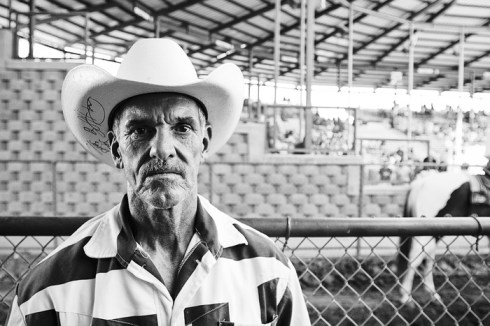
Photo: Darryl Richardson, from the series Nothing To Lose (Angola Prison Rodeo)
I was given a media tour of Angola Prison while in Louisiana during Prison Photography on the Road. The arrangements were straightforward and the administration very welcoming. The warden’s office is set up for requests and visits like mine. The prison even puts on tours for high school kids; they come in their thousands every week.
I put it to Cathy Fontenot, the Assistant Warden, that Angola was the most photographed prison in America. She said that was probably the case. (Look through the PP archive for examples.)
The Angola administration are proud that they can accommodate photographers and journalists in the numbers they do. Naturally, a discussion must exist about the level to which journalists gain access – what they see and what they don’t see – but this is for another time.
In the case of the Angola Rodeo, access for journalists is as easy as it is for the tens of thousands of public who attend each autumn. Florida based photographer, Darryl Richardson, went to Angola in October 2011. He, like others before him, focused on the visual spectacle of the rodeo. He attempted to draw a metaphor between the “combative livestock” and an unforgiving public; the prisoner always under attack.
Personally, I like Richardson’s portraits.
Take the portrait above. Whose is the signature on the hat? That’s a nice hat. Does the prisoner own it? Was it a gift or a prize? I’m drawn into the story behind that hat and behind that photograph.
The Angola Rodeo is a complex thing. At the arts fair, it is a chance for prisoners to interact with society and hawk their crafts; the rodeo is a big event that focuses energies of prisoners (Angola Prison is always looking for activities to occupy the thoughts of 4,500+ men that will die within its parameters); and it is about commerce. I was told by prison authorities that the rodeo raised $2.5million for the prison [programmes] last year. As the event grows, so does the figure year-on-year.
Richardson told me in an email, “I’m in the process of going back to Angola to connect with other inmates and take a look at other areas inside the penitentiary.” I wish him luck. For our sakes, we need to see more of Angola Prison than this wild public event. We’ll see what emerges.
… in the Feature Multimedia Category.
Mike Davis that is. A man who 3 days ago almost gave up on multimedia. For which, I said he had failed logic.
Is this all a ruse; a brilliant marketing strategy? Had he forgotten he’d photo edited Leah Nash‘s work with which Ian McCluskey was to work his producer magic? Is Davis self-loathing?
More to the point, well done to Leah Nash for some wonderful images, for giving her subject wide scope to describe her own experiences, and for securing the funding for this story along with four other parts. The series was published by Portland newspaper Street Roots, which provides vending opportunities, income and housing for 100s of people in Portland, OR.


 Prison Photography