
You are currently browsing the category archive for the ‘Documentary’ category.

Camilo Cruz, Untitled from the Portraits of Purpose series, 56 x 45 inches. Courtesy of the artist.
–
ARE WE HITTING PEAK-PRISON-ART-SHOW?
Of course, I’m being provocative, but the rise and rise of prison criticism and reflection (and commodification) in the cultural sphere bears consideration.
Here is not an exhaustive list but a few examples — Life After Death and Elsewhere, curated by Robin Paris and Tom Williams at apexart; To Shoot A Kite curated by Yaelle Amir at the CUE Foundation; Voices Of Incarceration at Loyola Marymount University in Los Angeles; Try Youth As Youth curated by Meg Noe at David Weinberg in Chicago; Site Unseen: Incarceration curated by Sheila Pinkel; The Cell and the Sanctuary put on by the William James Association in Santa Cruz, CA; and my own Prison Obscura.
–
This weekend, Inside/Outside: Prison Narratives will end its 10-week run at the Wignall Museum of Contemporary Art at Chaffey College in Southern California. Inside/Outside is a relatively large survey of prisoner art, prison photography and visual activism that brings together the work of Sandow Birk, Camilo Cruz, Amy Elkins, Alyse Emdur, Ashley Hunt, Spencer Lowell, Los Angeles Poverty Department (LAPD), Jason Metcalf, Sheila Pinkel, Richard Ross, Kristen S. Wilkins, Steve Shoffner, the Counter Narrative Society and students at the California Institute for Women.
It’s a great exhibition.
As many of the names in Inside/Outside: Prison Narratives are familiar, I felt a review by me would be redundant; it’d be dominated by applause to the committed artists I see as asking the right questions … because they’re the questions I’ve ask too.
Instead, I wanted to focus on the recent uptick in fine art exhibitions orbiting the issues of prisons.
Rebecca Trawick, Director of the Wignall Museum and co-curator of Inside/Outside and I were in touch a while before I realised that this should be what we should discuss. And how the cultural production of art around, and about, the prison industrial complex propels, inspires, derails (and much else besides) dialogue about mass incarceration in America.
Kindly, Trawick and her co-curator, Misty Burruel, Associate Professor of Art at Chaffey College accepted my invite to answer some questions. The Q&A is peppered with artworks from Inside/Outside: Prison Narratives.
Scroll down for our discussion.
–

Camilo Cruz, Untitled from the Theater of Souls series, 56 x 45 inches. Courtesy of the artist.
Q & A
Prison Photography (PP): Why did you make this exhibition?
Rebecca Trawick (RT): Incarceration was an issue that I kept returning to in my research.
As a curator, I’m specifically interested in shedding light on important but difficult social issues through the lens of contemporary art. I love how artists can take an unwieldly topic and consider it thoughtfully, often personally, and in really compelling ways that allow the viewer a chance at transformation, or expansion of, thought and perspective.
Because we work at an institution of higher education, these exhibitions become a safe space to start difficult discussions about issues such as incarceration, and they become a tool to educate and inform. This kind of exhibition (if done well) can demonstrate the value of art to transform ideas, minds, and communities.
Misty Burruel (MB): Because it was a challenge. On the heels of a number of incarceration exhibitions in southern California that focused on works by incarcerated artists and artists confronting the criminal justice system, it was appropriate to look at it through the lens of education.
We are confronted daily with students that have either been incarcerated or have family who are incarcerated. It was time to have difficult discussions about the role of education in the penal system, our responsibility as citizens to each other, and how parolees reintegrate into yet another system.

Spencer Lowell, La Palma prison, Arizona
PP: Is incarceration a “hot topic” right now? Why?
RT: As Misty and I mention in our remarks in the printed takeaway, we seem to be experiencing a unique convergence of policy discussions in the US as well as popular culture interests, so we feel like the conversation is already happening in certain circles.
We hope our exhibition helps to expand the discussion and dig a little deeper into some of the topics looked at in contemporary documentary (think the recent Vice episode, Fixing the System, in which President Obama – the first sitting US President to do so – visited a federal prison) to the popularity of Orange is the New Black.
MB: Jenji Kohan’s, Orange is the New Black, portrayal of incarcerated women created a splash on Netflix and revealed through mass media the complexities of a system within a system. The women were all too real and relatable. We live in the Inland Empire and have two prisons at our footstep.
PP: California Institute for Men and California Institute for Women.

Jason Metcalf, Cheeseburger, French Fries, Iced Tea (Dwight Adanandus), 2013, archival pigment print, 16 x 24 inches. Courtesy of the artist.
PP: Is Inside/Outside about incarceration or is it about the representation of incarceration?
RT: The exhibition is about the many issues surrounding incarceration that we hope our viewers will consider more deeply after viewing the work on view. Issues include the value of rehabilitation behind bars; juveniles in justice; death penalty, segregation, prison labor, and isolation as systems of control, among others.
PP: How did you select the artists?
RT: The Wignall Museum mainly draws from Southern California for practical reasons–funding limits us to local pickups mainly. In some cases (Kristin S. Wilkins, for example) agreed to ship the work to us so we were able to include her. We’re often limited regionally, which explains the SoCal bias. We would have loved to include works outside our region, if possible. (see next question for a list of some we would have included if possible.) The one thing I remind myself is that we’re not trying to be essentialist in what we portray or explore, but rather offer some really amazing work to assist us in digging a little deeper into the state of incarceration today.
MB: We are in a human warehousing gridlock. The works collectively focus on how the system of control does not discriminate (women, men, and youth detention).
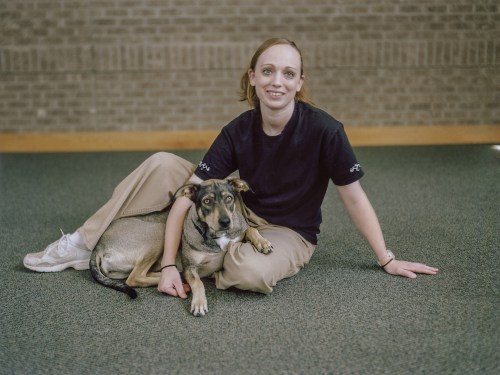
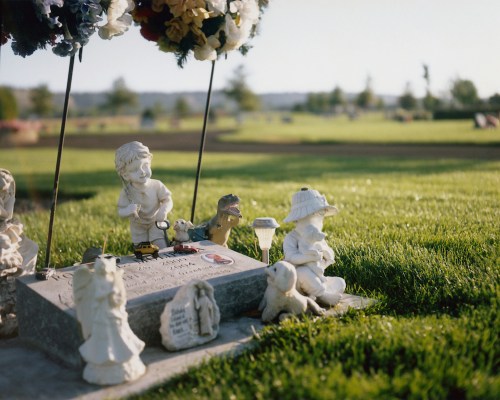
Kristen S. Wilkins, Untitled #10. From the series ‘Supplication’ (2009-2014) “Grand Ave. by Shiloh (Cemetery). Left side of water fountain. Has colorful wreath with flowers. It is where my son is @. He is the best thing that happened to me in my life. He was my world.”
PP: Were there any artists or works out there that you’d wanted in the show but couldn’t for whatever reason?
RT: Yes! Many. The list includes Deborah Luster, Dread Scott, Jackie Sumell’s The House That Herman Built, and Julie Green’s Last Supper installation all immediately come to mind. There were many others, but those three stand out for me.
MB: We wanted to have more guest speakers, but funding always seems to be a hurdle. We can certainly look at the issue, but we really wanted to talk about it.
PP: Really? From the outside that you had a phenomenal amount of programming. I applaud you. How important was programing around the exhibition?
RT: Programming is critical. Because we’re limited in many ways in terms of what we can show – due to spatial and fiscal restrictions – programming allows us to bring in experts in the field to further contextualize and expand the themes of the exhibition. It also allows community engagement and for other voices to join in the conversation, often in a public forum. That ability can’t be underestimated, I think.
MB: When the discussing an exhibition about incarceration we were most focused on programming. Rebecca and I are collaborative by nature and we were able to find others who were very interested in asking difficult questions within their own disciplines (Sociology, Philosophy, Correctional Science, Administration of Justice).

© Sheila Pinkel
PP: I’ve been asked a number of times “Who are you (a white, cis-gender, male, college graduate) to speak to these issues?” Every time by a highschooler — God, I love them. Were you ever challenged over your role and/or position while putting Inside/Outside: Prison Narratives together?
RT: As a curator at an institution situated on the campus of a Community College I feel strongly that it is our responsibility to explore a wide array of topics in our exhibitions and to look from a place of diversity – diversity of media, content, viewpoint, race, ethnicity, etc. – and through the lens of contemporary art, but it is critical that we do so in a way that is thoughtful and multifaceted.
Philosophically we try to schedule our exhibitions and programs in a way that expand outside of our own limited perspectives. We also try to use multiple guest voices – guest curators, guest speakers, etc. to expand the discourse around an exhibition. But the long and the short of it is, I try to always be conscious of my privilege and to present diverse voices. That said, my own experience/perspective was never called into question during the exhibition planning or implementation phase.
MB: The college has wholeheartedly embraced the exhibition and its programming.

Amy Elkins. 26/44 (Not the Man I Once Was), 2011. Portrait of a man twenty-six years into his death row sentence where the ratio of years spent in prison to years alive determined the level of image loss.
You’ve said the response so far has been positive. More than other Wignall shows? More among the student body, or beyond? How do you measure response/success?
RT: This exhibition definitely has seemed to link to something that is personal and relatable for many of our students, faculty and community visitors, evident by the verbal responses and reactions we’ve seen in the galleries. We’ve held a number of panel discussions, engagement activities, a film screening, and dozens of tours. Unequivocally, discussions always seem to lead to the personal and comments suggest that the ability to discuss a somewhat taboo topic has been relevant.
MB: This work is incredibly personal and relevant to the Inland Empire.
PP: Can you see the successes and failures of the show already? Or is it too soon for that type of assessment?
RT: Success can be measured in qualitative and quantitative ways … (as of course, can failure). Due to the high level of programming, and the sheer number of student tours we’ve conducted, we can see an increased level of engagement. Our visitor numbers are up, the number of students speaking up during tours has increased a great deal, and the unsolicited feedback from students/faculty/staff we’re getting has been remarkable.
We also ask all students who visit us as part of a tour to fill out a short survey. Results won’t be tabulated until the close of the exhibition, but I feel the results will mirror the anecdotal evidence we’re seeing. As a curator, however, I’m always thinking about what we can improve upon – from the curatorial practice, to layout and installation, to printed collateral and programming…reflection is key.
MB: I think the museum does an amazing job of allowing artists to ask difficult questions and explore relevant social and political issues.

The Wignall Museum hosted workshops and discussion led by Mabel Negrete and the Counter Narratives Society.
PP: Anything you’d like to add?
RT: We hope that Inside/Outside and the many other excellent exhibitions and artists looking at incarceration with a critical perspective will encourage the questioning of the system as it is, and that it might even encourage engagement in our communities in ways that can make real change in the world.
–
Follow the Wignall Museum at Chaffey College on Facebook and Twitter.

Sean O’Hagan writes:
Lyon was a pioneer of what might be called immersive photojournalism, steeping himself in his subject matter in the manner of pioneering 60s writers of the New Journalism school such as Tom Wolfe and Hunter S Thompson. He builds the visual narrative around extended personal accounts by selected inmates, the often intimate descriptions of life inside illuminating his already powerful images. “The text of the book, compiled from prison records and convict writings, presents the lives of a few of these men,” he writes in his introduction. “They are the heroes of this book. I knew each of them as well as a free man can.”
[…] On every level, then, Danny Lyon’s approach flies in the face of detached documentary reporting, but it is this that also makes his work so viscerally forceful.
Read the full piece: Conversations With the Dead: Book review – 60s prison life in the US

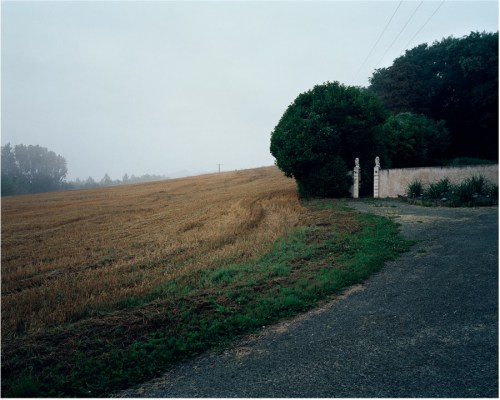
Up against the wall, tied to a post, kneeling at a ditch, hundreds of WWI allied soldiers were killed for desertion. Photographer Chloe Dewe Mathews visited 23 sites of execution and made photos at the same time of day and the same time of year.
Shot At Dawn is halting and haunting.
I just wrote about the series for Vantage: WW1 Allied Soldiers Remembered In Photos Made At Sites Of Execution:
Particularly on this day, Armistice Day, Memorial Day, it is worth meditating on Shot At Dawn. The history of photography is indelibly tied to that of war. Too often we’ve seen graphic images from which we turn away and too often photography has been used as a tool by murderous regimes. Yet, we must seek out photographic projects that bring context, calm assessment, forgiveness of ourselves and empathy for our enemies. It’s take great skill to make relevant and poetic images about death that resonate; it takes greater skill to illuminate the suppressed personal histories of the past’s forgotten victims. Shot At Dawn is an artwork for the ages.


Chloe Dewe Mathews: Shot at Dawn was commissioned by the Ruskin School of Art at the University of Oxford as part of 14–18 NOW, WW1 Centenary Art Commissions.
Shot At Dawn is on show at the Irish Museum of Modern Art in Dublin (25 August 2015–17 January 2016) and at Ivorypress in Madrid (27 May–16 July 2016).
The book Shot at Dawn is published by Ivorypress.
Read the full piece: WW1 Allied Soldiers Remembered In Photos Made At Sites Of Execution.
GENIUS COLLIDES
Two of my fave up-and-coming photographers had a chat with one another.
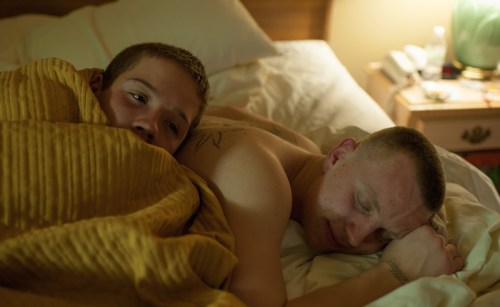
Zora J. Murff interviewed Isadora Kososfky, for Murff’s co-joint venture Strange Fire Collective. They’ve already an impressive archive of interviews with photographers. Murff was asking for the back story of Kosofky’s series Vinny and David.
One of the many things the interview illuminates is the different attitudes toward images subjects and photographer may hold.
Kosofsky says:
Documentary photography, for me, is a journey of both loneliness and overcoming loneliness for both photographer and subject. Most people want to be seen, and, if they deny wanting to be exposed, they usually just fear being seen. As David from “Vinny and David” once said, “I’ve never really liked pictures. Pictures don’t lie. A photo is evidence.”
It’s a good read, check it out.
BACK IN THE DAY
I wrote about Murff’s work for The Marshall Project, Tracked.
I wrote about Kosofsky’s work for Vantage, Subjected To Prison, Defined by a Brother’s Love.

Photographer Tony Fouhse photographed his hometown of Ottawa. Then he made a newspaper of his images and gave all 2,000 of them away for free. The project is called Official Ottawa.
I dig Fouhse’s images of politics, power, pomp and circumstance in Canada’s capital. The concept was great, the execution fine and the distribution in cafes and at truck-stops brings a smile to my face.
FREE FOTOGRAFY WILL SET YOU FREE!
I interviewed Tony about the project for Vantage in a piece titled Control and Containment in the Canadian Capital.
About Ottawa, Fouhse says:
“There is a kind of pervasive fear that percolates through the city. Not a fear of getting mugged or anything, rather, a fear of saying or doing the wrong thing. Workers here seem to know which side of their bread is buttered and who is buttering it; they certainly wouldn’t want to put their pensions at risk. An atmosphere like that dampers a lot of healthy thinking and questioning and certainly precludes action.”
–
Read Control and Containment in the Canadian Capital.

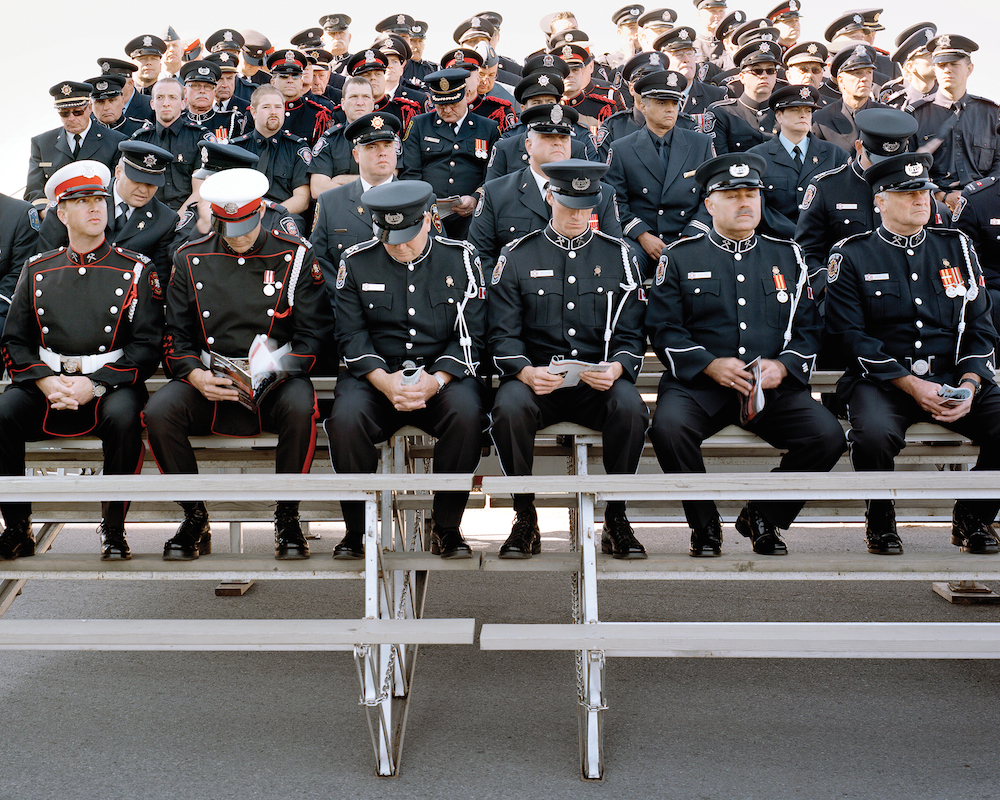


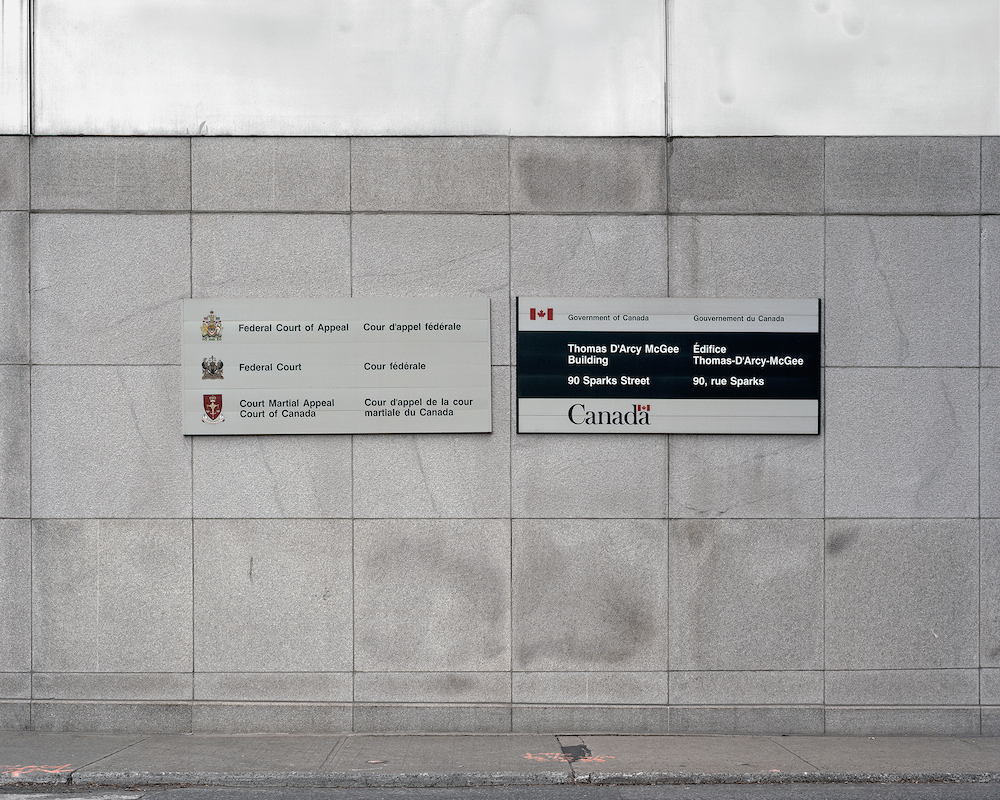



There’s a couple of interviews with a couple of photographers I greatly admire currently up on Vice.
WASHINGTON STATE
Photographing America’s Pregnant Prisoners is a conversation with Cheryl Hanna-Truscott, nurse, midwife and photographer who for 12 years has made double-portraits of incarcerated women and their babies at the Washington Corrections Center for Women (WCCW).
In the past, I have flagged Hanna-Truscott’s work, curated it into a pop-up show about Washington State prisons, and featured it in online exhibitions. Hanna-Truscott has recently released Purdy a documentary film about the WCCW mothers and babies unit. Hanna-Truscott volunteers at WCCW.
A note on the film’s title: Purdy is the local town in which WCCW sits. Purdy is also how the prison is known to locals. Additionally, “purdy” is a hokey variation of the word pretty. I think it’s a clever title for this project which simultaneously challenges stereotypes, pays homage to maternal cycles, finds care and within a punishing institution but neither ties the issue off with easy answers.
Hanna Truscott’s photographs are moments of solace amid what she describes as beyond difficult circumstances for the mothers.
“A lot of the women are traumatized. Sometimes they have learning disabilities or they’ve never had anyone who could vouch for them – so they have low education levels and no skills. Which means they also have employment issues when they get out. When they’re released, get $40, a change of clothes and a bus ticket. So they have to start a new life — and for the women I work with, that’s also with a baby.”
Visit Hanna-Truscott’s devoted site Protective Custody.
NEW YORK STATE
Photographing Trips to Visit Family Members in Prison is an interview with Jacobia Dahm. I’ve spoken with Dahm previously (cross posted to Vantage) and her work has proved very popular since its release earlier this year.

Families have suffered most from the politicised decisions on where to construct prisons. Granted many Upstate New York prisons predate mass incarceration (1980-) but many many more have been constructed in recent decades. Across the nation prisons have been built in remote locations.
Dahm says:
“Your crime has no bearing on the fact that you are still one of the most important people if not the most important person in a child’s life. In ways, it is costly not to support these family bonds, for the generation in prison and for their offspring. Children should have easy access to their parents, and vice versa, and it is something that other prison systems around the world manage to take into account and work with.”
If prisons had been used as jobs programs for depressed post-industrial American towns then we might have seen them built closer to the communities from which the prisoners have been extracted.
A NOTE ON VICE
Remember when VICE used to be nothing but public humiliation, photos of homeless, Dos & Don’ts and pre-hipster snark? Well, it is changing. By my reckoning. It’s going to take a lot to get out from under those punk-ass early years but they’re equipped to do it. VICE Media is worth $2.5 billion and I think I read somewhere that VICE has 1,500 staff and freelancers operating out of its New York HQ alone.
So, now what we have at VICE is genuine concern beyond the snark. This is something that Stacy Kranitz reflects on in a She Does Podcast published this week. It’s a great conversation all-round reflecting upon the many sides of things.
As for VICE and prison coverage, it looks like we’ll get more investigative reporting and less stereotypes and cheap gags. An overdue sea change. The VICE series America’s Incarcerated runs throughout October.

Susan Stellin and Graham MacIndoe are raising money to fund the exhibition of their project American Exile at Photoville this autumn.
DONATE TO AMERICAN EXILE HERE
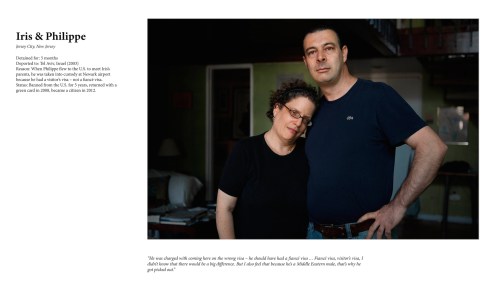
American Exile is a series of photographs and interviews documenting the stories of immigrants who have been ordered deported from the United States, as well as their family members – often, American citizens – who suffer the consequences of the harsh punishment and are sometimes forever separated from a parent or partner transported to foreign lands.
These are people who, ostensibly, have — just as you or I — lived, worked and paid taxes in the U.S. for extended periods. Bar fights that occurred 20 years ago, Visa paperwork deadlines missed, and other minor matters have sometimes led to deportation.
The tumorous growth America’s prison industrial complex goes back four decades whereas the focus of Graham and Susan’s work — the establishment of an extended archipelago of Immigration and Customs Enforcement (ICE) detention facilities — is a much more recent, post 9/11 phenomenon. It is utterly contemporary and it meets the desperate need for journalism that probes ICE procedures.
DONATE TO AMERICAN EXILE HERE
MacIndoe spent five months in immigration detention in 2010, facing deportation because of a misdemeanor conviction – despite living in the U.S. as a legal permanent resident since 1999. After winning his case, he and Susan began gathering stories of families caught up in deportation proceedings, including asylum seekers, green card holders, and immigrants trapped in the bureaucracy of adjusting a visa.
I love Graham and Susan. They have a very comfortable couch. We’ve been friends for several years. Susan has a keen sense of justice and nous for a story and the will to bend an industry to our needs, not its. Graham is an addict who got clean, a street shooter, an artist, a great teacher (by all accounts) and a bit of a curmudgeon for all the right reasons.
–
DONATE TO AMERICAN EXILE HERE
–
BIOGRAPHIES
Graham MacIndoe is a photographer and an adjunct professor of photography at Parsons The New School in New York City. Born in Scotland, he received a master’s degree in photography from the Royal College of Art in London and has shot editorial and advertising campaigns worldwide. He is represented by Little Big Man Gallery in Los Angeles, and his work is in many public and private collections. Follow Graham on Instagram and Twitter.
Susan Stellin has been a freelance reporter since 2000, contributing articles to The New York Times, New York, The Guardian, TheAtlantic.com and many other newspapers and magazines. She has worked as an editor at The New York Times and is a graduate of Stanford University.
In 2014, Susan and Graham were awarded a fellowship from the Alicia Patterson Foundation for their project, American Exile, and are collaborating on a joint memoir that will be published by Random House (Ballantine) in 2016.
–
DONATE TO AMERICAN EXILE HERE

Yesterday, I included an existing Medium story, by Peter Schafer, in the Vantage publication. Diary of a Sex Tourist is a very unusual account. Firstly, a man is speaking frankly about his use of sex workers in the Dominican Republic. Secondly, the man is a photographer who chose to pay for services in order that he could get closer and, by his appraisal, make better images. Thirdly, the work ends up focusing not so much on the sex industry as a whole but on private moments between Schafer and D_____ throughout their three year association.
It’s very unusual not because these things don’t happen but because these things are rarely admitted to or spoken of in public.
The images exist between amateur modeling, devotional portraits, candid shots, reportage, phone snaps and voyeurism. They are many things at once just as Schafer’s position on his work and the issue of sex-work is generally. The piece ends with advocacy. Yes, advocacy. Of sorts. Schafer calls supports the Global Network of Sex Work Projects‘ call to Amnesty International to support a move to decriminalise all sex work. They’ve launched a petition which (at the time of writing this) has 8,000+ signatures. It reaches far further than previous moves to decriminalise sex work.
Schafer believes the change will empower women. Many leading female celebrities who have figure-headed campaigns for women’s rights oppose the petition, but Schafer fairly notes that the recommendations to Amnesty International were made based upon feedback provided by sex-workers themselves. Molly Smith writing for the Guardian asks that Amnesty International not be bullied out of acting upon its own findings by Meryl Streep and others.
Asking women who work in the sex trade about the laws that are required to protect them most seems like good policy making.
Opponents to wider decriminalisation, that this petition proposes, worry that it will merely shield pimps and abusive men from the law and not improve women’s lives significantly. Streep, Steinem, Winslett et al. want to maintain the Nordic model of decriminalisation as the policy for worldwide progressive standards. “Legalisation keeps pimps, brothel keepers, and sex-slavers in freedom and riches. Criminalisation puts the prostituted in prison […] What works is the ‘third way’, the Nordic model, which offers services and alternatives to prostituted people, and fines buyers and educates them to the realities of the global sex trade,” says Steinem.
Smith and other supporters of widening decriminalisation, say the Nordic model–also known as the Swedish model–has serious problems. The Nordic model decriminalises the selling and keeps the buying as an offense, but it is applied inconsistently in some cases used by police against vulnerable migrant sex-workers.
The Nordic model also strips the sex-worker of agency. It assumes that all clients are enacting a type of male violence. So, the model is designed to slowly counter that, reduce demand and eradicate the sex trade. Schafer on the other hand believes that paid sex can be an equal exchange, a loving exchange and even part of friendship.
Ultimately, where you stand comes down to what type of interactions you think characterise the sex-industry most and which ones should be protected by, and combatted by, law enforcement. Currently we’re on the lefthand-side of this 4-bit chart. Most pliticans are reluctant to venture toward the righthand side.
Criminalisation / Decriminalisation / Wider decriminalisation / Full legalisation
If you feel that all, or nearly all, interactions between women and male clients and pimps are coercive and abusive, decriminalisation can still break and discourage those interactions. The criminalisation of sex-work (still very common) targets male clients and pimps the same, but has proven very unsafe for female sex workers.
I don’t know what the answers are. I do know that there are many women and men who make good and safe livings from sex work. Equally, there are many, many women who are coerced into sex-work and “trafficked” quickly becomes the best term to describe their circumstance. But even then those two simple binaries are not a reliable reflection of matters. In Schafer’s case, it doesn’t seem like there is a pimp involved in his exchanges with D____. She seems in control. That said, D____’s voice, except a couple of paraphrases by Schafer, is absent. In the pictures, D____’s bottom features in a disproportionate number of the pictures.
In places that have decriminalised sex-work, they’ve done so by putting in place legal qualifiers, paperwork and parameters of operation. These things have been found to obstruct safe practice of safe sex-work. Molly Smith writing for the New Republic notes that New Zealand is an example to follow and has been extensively praised by the U.N. for its removal of bureaucracy and an approach that forefronts women’s safety and access to services. “The director of the U.N. Development Programme’s HIV, Health and Development Practice observed, in accidentally amusing phrasing, “I would like to be a sex worker in New Zealand“,” recounts Smith.
Clearly, there is a debate to be had. I’d like to see that debate led by the sex-workers themselves, but given how marginalised they are it seems unlikely. I know I’ll be following the thoughts of Molly Smith from here on out.
–
One final thing, I cannot talk about sex-work, without mentioning Red Light Dark Room; Sex, Lives & Stereotypes, a stellar photography and book project by Gemma Rose Turnbull.
Turnbull, during a residency with non-profit organisation St Kilda Gatehouse, taught, photographed and interviewed street sex workers. Red Light Dark Room is a collaborative, frank look at sidelined and denied lives by those who live them. Importantly, the work doesn’t victimise, or claim to save, or preach; it describes and lays out the details for audiences to find connection.

 Prison Photography